Tag: Carpal Tunnel Syndrome

  • Carpal Tunnel Syndrome Self-Test: 3 Signs Your Morning Numbness Is Nerve Compression

    Carpal Tunnel Syndrome Self-Test: 3 Signs Your Morning Numbness Is Nerve Compression

    SummaryIf your morning hand numbness spares your pinky finger, it may be worth trying a carpal tunnel syndrome self-test. Check out the Phalen test method, how to tell it apart from a herniated neck disc, and habits that can help ease symptoms.

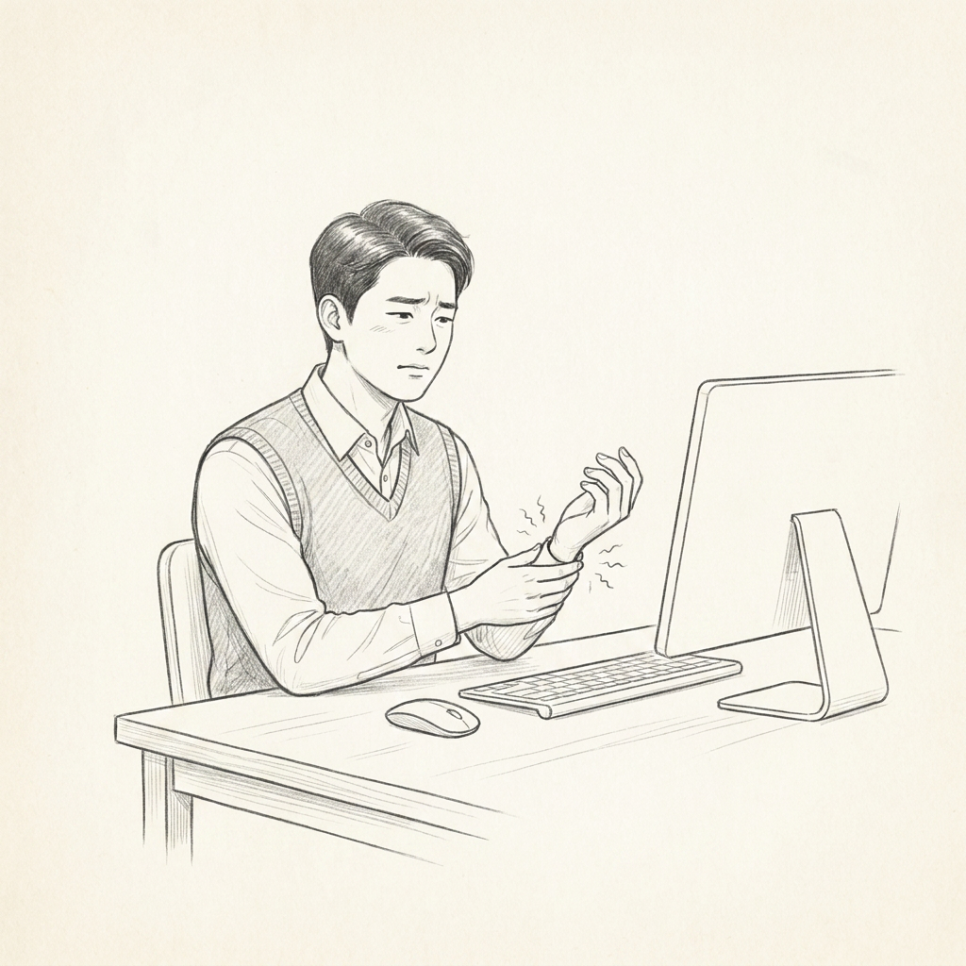
    Waking up with a tingling, numb feeling in your fingers is a common experience for many people.
    But if only your thumb, index, and middle fingers feel numb — while your pinky feels completely normal — that’s a different story.

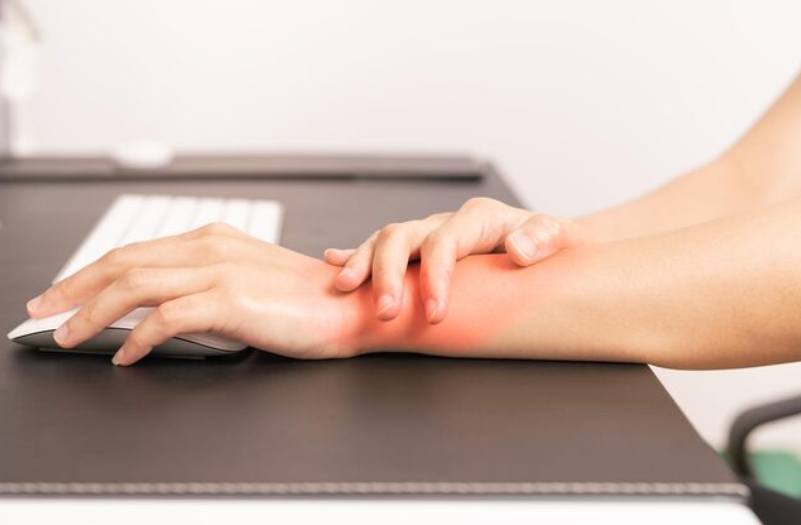
    It might not just be poor circulation from sleeping in an awkward position. It could be a sign that a nerve inside your wrist is being compressed.
    carpal tunnel syndrome self-test

    At first, it’s easy to blame your pillow. But if the same symptom shows up every single morning, it’s worth taking a closer look.

    In cases like this, looking into the condition and trying a simple self-test at home can help.

    carpal tunnel syndrome self-test related image 2

    In this article, we’ll walk you through the Phalen test — a carpal tunnel syndrome self-test you can try at home — to help you check the cause of your morning hand numbness, explain how to tell it apart from a herniated neck disc, and share everyday habits that may help ease symptoms. We’ll also cover the warning signs that suggest it’s time to see a doctor.

    What Causes Morning Hand Numbness?

    Morning hand numbness is commonly associated with carpal tunnel syndrome, a condition in which the median nerve in the wrist becomes compressed.
    At the front of the wrist is a narrow passage called the carpal tunnel, through which tendons and the median nerve both pass.

    When your wrist stays bent for long stretches during sleep, pressure builds up inside this tunnel and compresses the nerve — which is why the numbness often feels worse in the morning.

    That said, nerve compression at the wrist isn’t the only possible cause.
    A herniated disc in the neck can also irritate a nerve root and send tingling sensations all the way down into the hand.

    carpal tunnel syndrome self-test related image 3

    That’s why it helps to first note which fingers go numb and which positions make the symptoms worse.

    Category Carpal Tunnel Syndrome Herniated Neck Disc (Cervical Disc Herniation)
    Numb area Mainly the thumb, index, and middle finger; pinky is spared Numbness spreading through the whole hand or arm
    Aggravating position Bending or repeatedly using the wrist Tilting the head back or turning it to the side
    Accompanying symptoms Weakness in the thumb muscle at the base of the palm Neck pain and shoulder stiffness
    Key Points
    1. Numbness that spares the pinky finger points toward carpal tunnel syndrome.
    2. If your hand goes numb when you tilt your head back, a herniated neck disc may also be worth considering.
    3. If your finger joints are swollen and painful, it’s worth checking for rheumatoid arthritis as well.

    How Do You Do a Carpal Tunnel Syndrome Self-Test at Home?

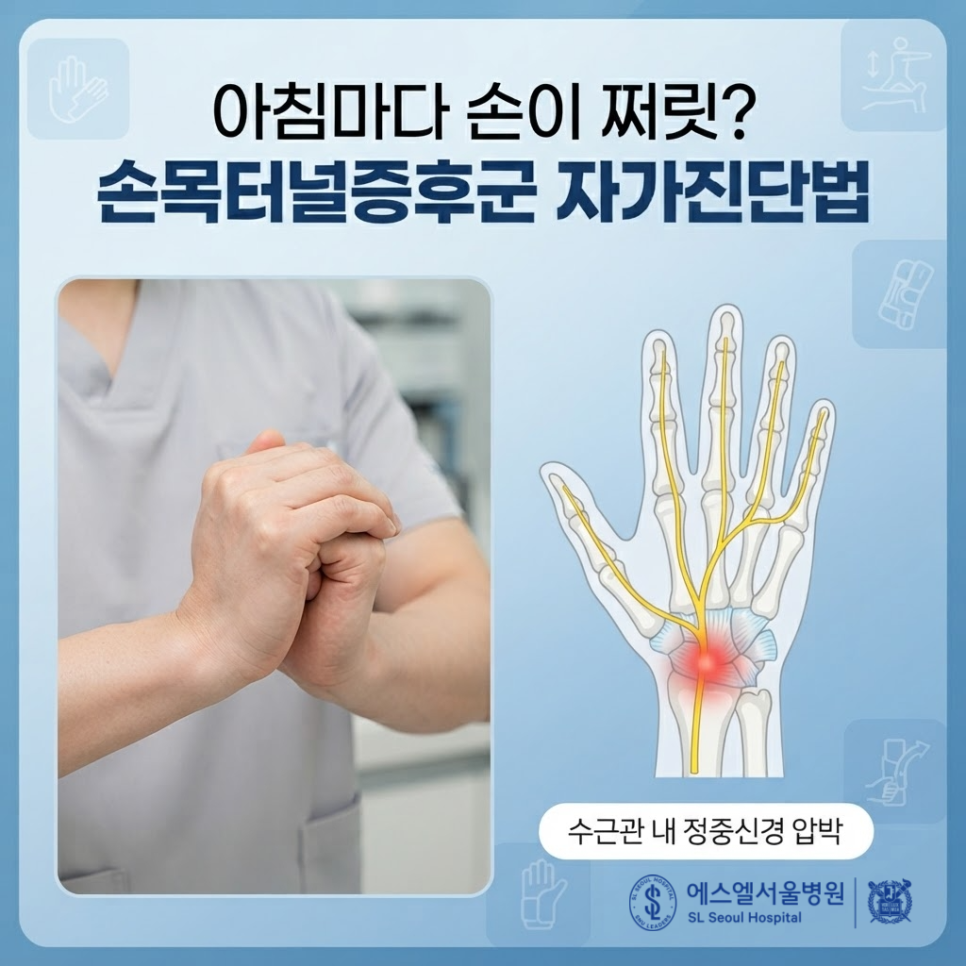
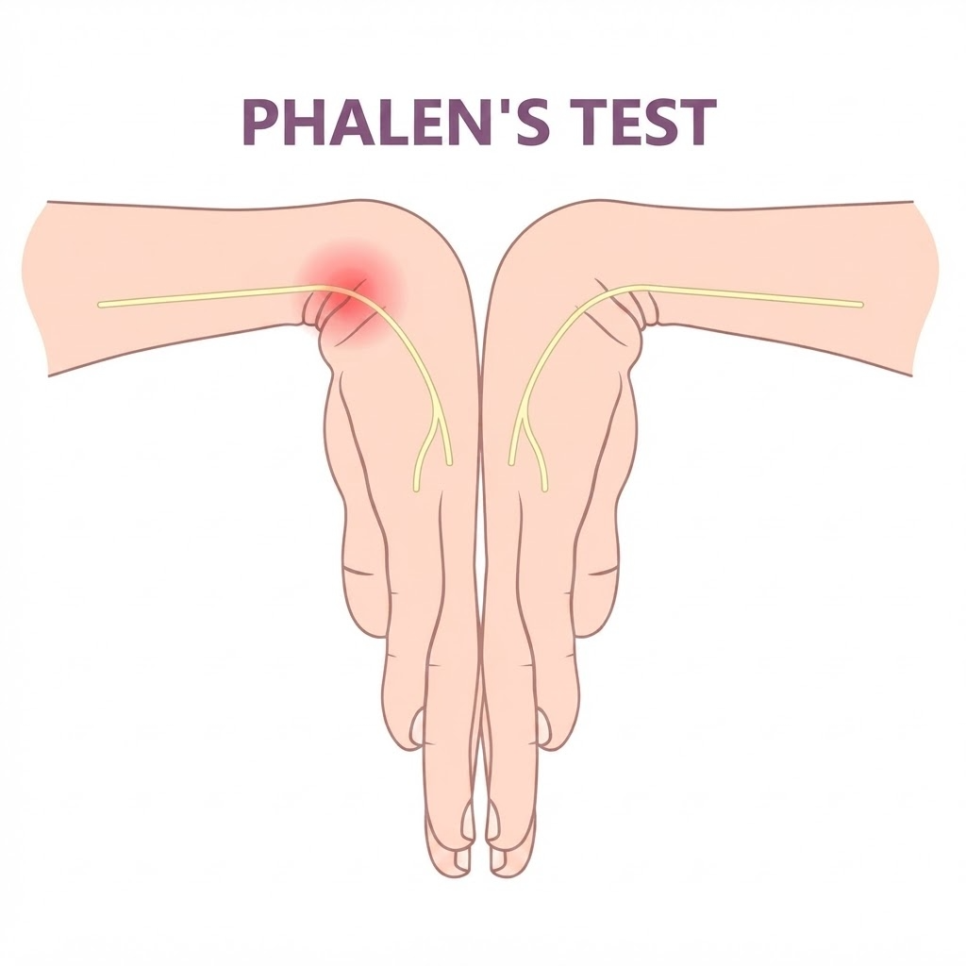
    A simple carpal tunnel syndrome self-test is the Phalen test, done by pressing the backs of both hands together and holding the position for one minute.
    Keeping your wrists bent this way raises the pressure inside the carpal tunnel, reproducing the nerve-compression symptoms.

    As you hold the position,
    a tingling sensation may appear in the tips of your thumb and index finger after around 30 seconds.
    carpal tunnel syndrome self-test related image 4

    Checklist
    ✅ Press the backs of both hands together and bend your wrists downward.
    ✅ Hold this position for a full minute.
    ✅ Check whether your thumb, index, and middle fingers feel numb or tingly.
    ✅ A sharp tingling sensation or altered feeling may point to nerve compression.

    If discomfort becomes severe during the test, stop right away.
    Pushing through the pain can put unnecessary strain on the nerve.
    carpal tunnel syndrome self-test related image 5


    What Habits Help Relieve Hand Numbness?

    In its early stages, simply changing how you use your wrists may help reduce numbness.
    The most basic step is avoiding overusing your wrists.

    If you spend long stretches on your phone or computer, be sure to give your wrists regular breaks.
    Warm compresses may also help support circulation.
    carpal tunnel syndrome self-test related image 6

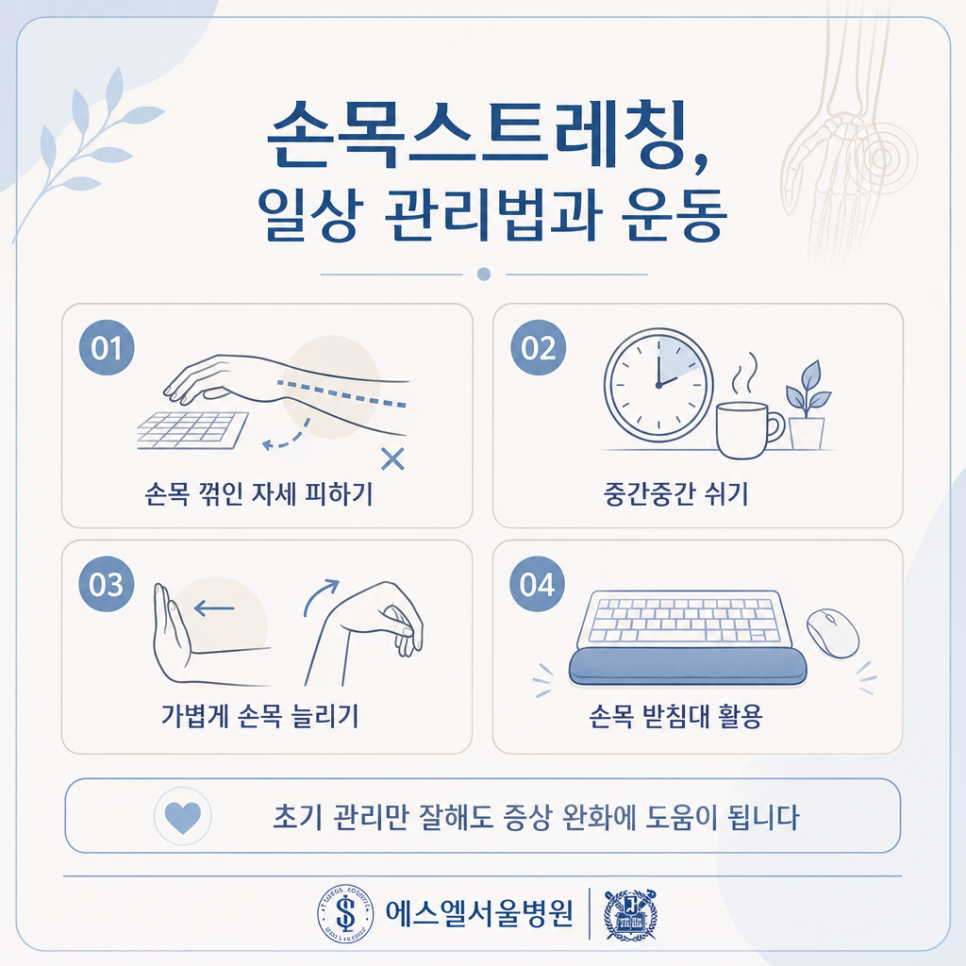
    Wrist Care Tips
    · Wear a wrist splint: Keep your wrist from bending while you sleep.
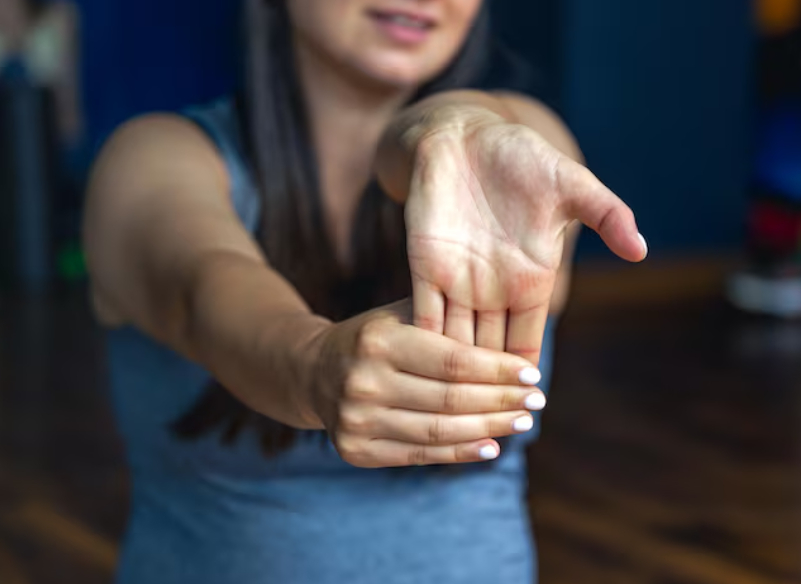
    · Stretch: With your palm facing forward, use your other hand to gently pull your fingers back toward your body.
    · Warm compress: Apply a warm pack to the wrist joint for about 15 minutes a day to help it relax.

    When Should You See a Doctor for Hand Numbness?

    It’s a different story if the pain is severe enough to wake you at night,
    or if your fingers feel so weak that you keep dropping things.

    In cases like these, it’s best not to delay — seek an accurate diagnosis from a medical professional.
    Identifying the cause early can also help shorten your recovery time.

    carpal tunnel syndrome self-test related image 7

    A Note of Caution
    If muscle weakness or numbness shows up alongside your symptoms, lifestyle changes alone may not be enough.
    It’s advisable to get an accurate diagnosis so you can find an approach suited to your specific symptoms.

    If wrist or neck pain keeps coming back, you can find related care information at the SL Seoul Hospital of Spine & Joint homepage.


    Frequently Asked Questions

    1. Will circulation medication help morning hand numbness?
    Answer: If the numbness stems from nerve compression (such as carpal tunnel syndrome or a herniated neck disc) rather than simple poor circulation, supplements or circulation-boosting medication alone are unlikely to resolve it. Identifying the exact cause comes first.

    2. Why does the numbness feel worse right after waking up?
    Answer: During sleep, you may unknowingly keep your wrist bent or flexed for long periods. This raises the pressure inside the carpal tunnel and compresses the nerve, which can make symptoms feel more pronounced in the morning.

    3. Do medicated patches help?
    Answer: Medicated patches may offer temporary anti-inflammatory and pain-relieving support. However, they don’t address the underlying nerve compression, so it’s best to get care aimed at the actual cause.

    4. Can a carpal tunnel syndrome self-test alone confirm a diagnosis?
    Answer: The Phalen test is a useful at-home reference, but it isn’t a diagnostic tool on its own. A proper diagnosis requires clinical evaluation such as a nerve conduction study.

    carpal tunnel syndrome self-test related image 8


    References

    · Asan Medical Center, “Carpal Tunnel Syndrome,” Disease Encyclopedia. Read more
    · Apollo Hospitals, “Phalen’s Test – Purpose, Results, and Normal Range,” Diagnostics & Investigations. Read more
    · Hyunmyoung Neurosurgery Clinic, “Could Numb Fingers Actually Be a Neck Problem?” Cervical Disc Information. Read more

    This article is intended for general health information purposes only and is not a substitute for individual diagnosis or treatment. If you’re experiencing symptoms, please consult a medical professional.

  • Carpal Tunnel Syndrome Self-Test: 5 Signs to Watch For

    Carpal Tunnel Syndrome Self-Test: 5 Signs to Watch For

    SummaryCarpal tunnel syndrome occurs when the carpal tunnel narrows and compresses the median nerve, causing pain and numbness. This guide covers a carpal tunnel syndrome self-test checklist, diagnostic methods like Tinel’s sign and Phalen’s test, treatment timing, and when to see an orthopedic doctor. It also looks at the common causes of wrist numbness.

    Many people worry that wrist numbness will eventually lead to surgery,
    and that fear alone keeps them from seeing a doctor.

    In reality, though, it’s often the opposite.
    In the early or moderate stages, medication and physical therapy alone are often enough to bring improvement.

    Ignoring carpal tunnel syndrome is actually the far riskier choice.

    This article covers the causes of carpal tunnel syndrome, a carpal tunnel syndrome self-test checklist, the exams performed at an orthopedic clinic, and stretches you can do at home to protect your wrists.
    Let’s look at what signs suggest it’s time to see a doctor when wrist numbness lingers.

    Carpal Tunnel Syndrome Self-Test Basics: What Exactly Is This Condition?

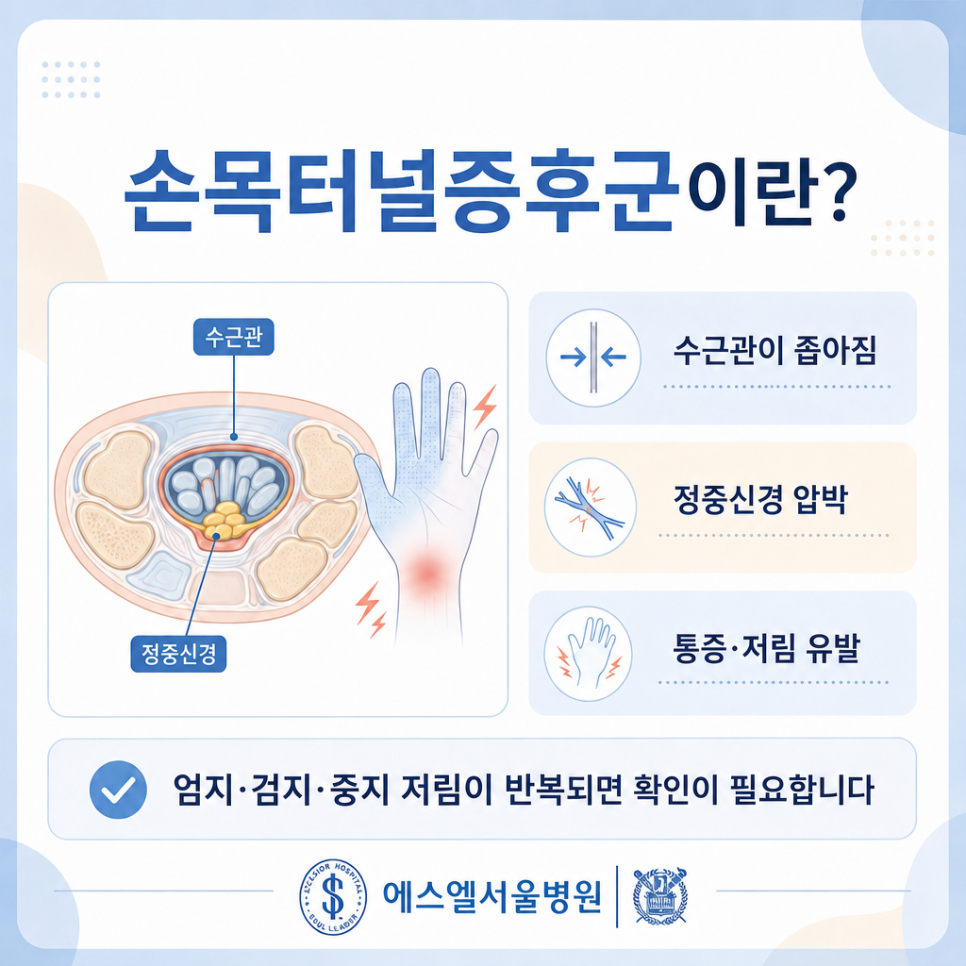
    Carpal tunnel syndrome is a condition in which the carpal tunnel, a narrow passage on the inside of the wrist, becomes compressed and puts pressure on the median nerve, causing pain and numbness.
    It’s also commonly referred to as median nerve compression, and a simple carpal tunnel syndrome self-test can help you spot it early.

    Carpal tunnel syndrome self-test illustration

    With how often we use computer keyboards and smartphones these days, this is a genuinely common symptom.

    Brushing off a tingling fingertip as nothing serious can end up making the treatment period longer instead of shorter.

    If it’s dismissed as ordinary fatigue and left alone, the nerve can stay compressed long enough for sensation to become dulled.
    If your job involves repetitive wrist movements, it’s worth paying a little extra attention.

    Carpal tunnel syndrome related image 2

    The Areas the Median Nerve Controls

    Key Point
    The median nerve controls sensation in the thumb, index finger, middle finger, and half of the ring finger.
    If tingling is especially noticeable in these areas, it may be worth considering whether the carpal tunnel is compressed.

    How Do You Do a Carpal Tunnel Syndrome Self-Test? 5 Early Symptoms to Check

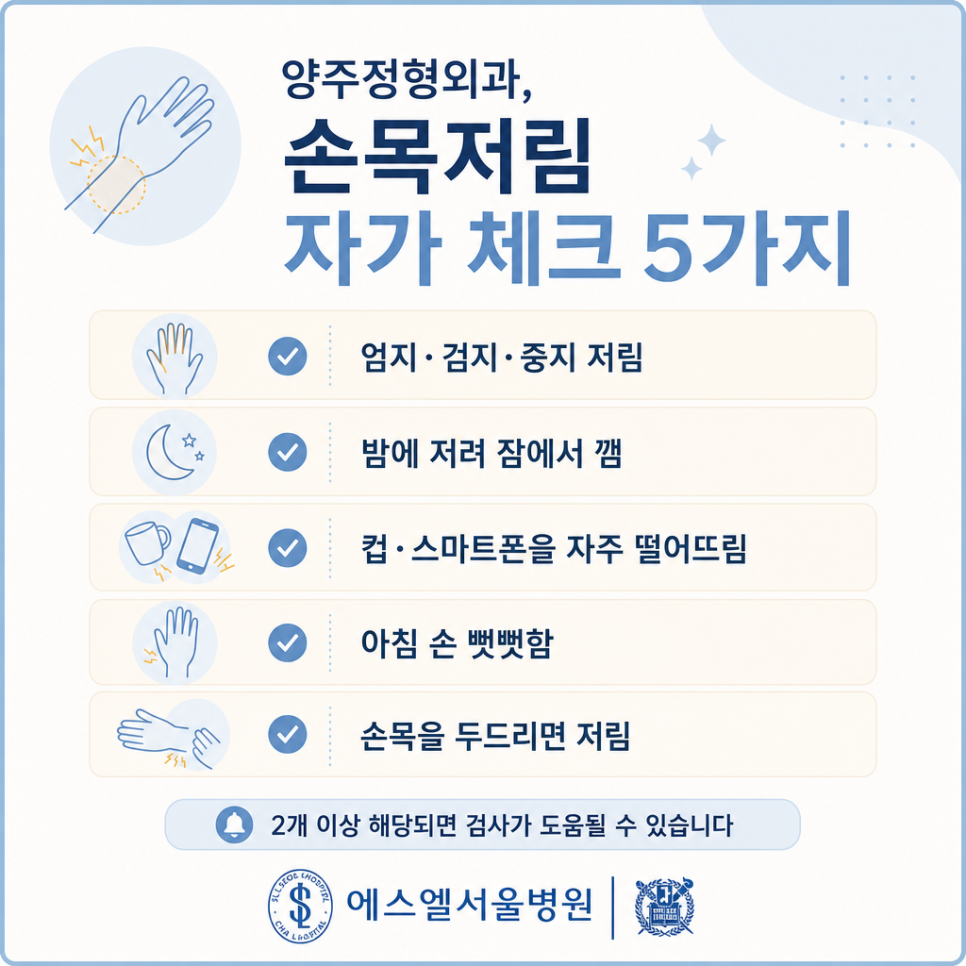
    If two or more of the five items in this carpal tunnel syndrome self-test apply to you, it’s a good idea to get examined.
    Go through them one by one below.

    Carpal tunnel syndrome related image 3

    Carpal Tunnel Syndrome Self-Test Checklist
    ✅ The tips of your thumb, index, and middle fingers feel tingly or numb
    ✅ You often wake up at night because your hand feels numb
    ✅ You’ve dropped a cup or your phone without meaning to
    ✅ Your hand feels stiff in the morning
    ✅ Tapping the inside of your wrist sends a tingling feeling outward

    Carpal tunnel syndrome related image 4

    Why a Carpal Tunnel Syndrome Self-Test Matters: Common Contributing Habits

    Overusing the wrist with repetitive motion, housework, and long hours on a smartphone are among the most common causes.

    It tends to show up especially often in jobs that involve working with the wrist bent for long stretches.
    Women, as well as people with diabetes or thyroid conditions, may also be relatively more prone to it.

    Carpal tunnel syndrome related image 5

    Caution
    The longer symptoms go untreated, the greater the risk of thumb muscle atrophy and permanent nerve damage.
    If numbness keeps recurring, it’s best not to put off getting checked.

    After a Carpal Tunnel Syndrome Self-Test: How Are Orthopedic Exams and Treatment Carried Out?

    If symptoms keep coming back, it’s a good idea not to just tough it out, especially when a carpal tunnel syndrome self-test raises concern, and instead get a thorough exam at an orthopedic clinic.
    Depending on your symptoms and condition, the exams below are typically carried out step by step.

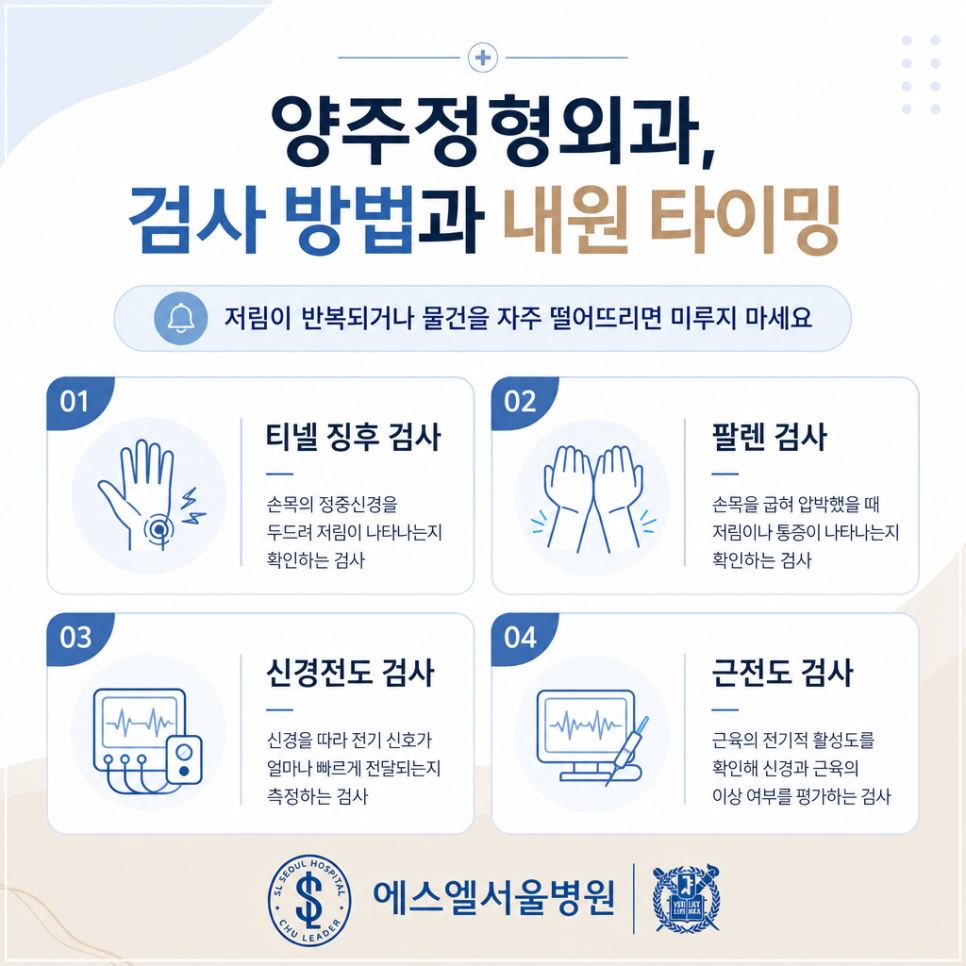
    Carpal tunnel syndrome related image 6

    Test Method Purpose
    Tinel’s Sign Test Gently tapping the inside of the wrist Checks for a median nerve stimulation response
    Phalen’s Test Holding the wrist bent for about one minute Checks whether numbness is triggered
    Nerve Conduction / EMG Study Measuring the nerve’s response to electrical stimulation Evaluates the degree of nerve damage in detail
    Key Point
    When caught early, non-surgical options such as medication, physical therapy, or injection therapy are often enough to bring improvement.
    Checking the extent of nerve damage through testing comes first.

    Carpal tunnel syndrome related image 7

    If you’d like more information on diagnosis and treatment options, you can find details on the clinic page at SL Seoul Spine & Joint Hospital.


    How Can You Protect Your Wrists in Daily Life?

    Simply keeping up good daily habits can help ease symptoms.
    The key is reducing the strain placed on your wrists.

    When using a mouse or keyboard, use a wrist rest to keep your wrist from bending, and check your monitor height and chair position as well.

    Carpal tunnel syndrome related image 8

    4-Step Wrist Stretch

    1. Extend your arm straight out in front of you.
    2. Bend your wrist so your fingertips point toward the floor.
    3. With your other hand, gently pull the back of your hand and hold for about 15 seconds.
    4. Repeat 3 to 5 times on each wrist.
    Result
    Consistent stretching can help lower pressure inside the carpal tunnel and loosen tight ligaments and muscles.

    For anyone curious about the treatment environment, here are a few photos of the clinic space.

    Carpal tunnel syndrome related image 9

    Carpal tunnel syndrome related image 10

    Carpal tunnel syndrome related image 11

    Carpal tunnel syndrome related image 12

    Carpal tunnel syndrome related image 13

    Carpal tunnel syndrome related image 14


    Frequently Asked Questions About the Carpal Tunnel Syndrome Self-Test

    1. Does wrist numbness always mean I’ll need surgery?
    Not necessarily. In the early or moderate stages, non-surgical options like physical therapy or injection therapy can often bring enough improvement.

    2. Does applying heat at home help?
    Heat can help with everyday stiffness, while a cold compress may help more when pain and swelling are severe.

    3. What should I watch out for to help prevent it?
    Avoid working with your wrist bent for long stretches, use a wrist rest when using a mouse or keyboard, and repeat a carpal tunnel syndrome self-test regularly to catch changes early.

    4. How long does recovery take?
    It varies from person to person, but consistent management often leads to improvement over time.

    5. Can carpal tunnel syndrome come back?
    If repetitive strain on the wrist continues, it can recur, which is why managing your posture and habits going forward matters.

    Carpal tunnel syndrome related image 15

    Carpal tunnel syndrome related image 16

    Carpal tunnel syndrome related image 17

    Carpal tunnel syndrome related image 18


    References

    · Korea Disease Control and Prevention Agency, “Carpal Tunnel Syndrome,” National Health Information Portal. View source
    · Asan Medical Center, “Carpal Tunnel Syndrome,” Disease Encyclopedia. View source

    This article is intended for general health information purposes only and is not a substitute for individual diagnosis or treatment. If you have symptoms, please consult a physician.