You felt fine right after the accident,
but a few days later your neck feels stiff and your fingertips start to tingle.
Even when you get an X-ray at the hospital, car accident aftereffects often don’t show up on bone imaging alone.
That’s because subtle damage to muscles, ligaments, and nerves doesn’t appear on film.
If a normal X-ray has made you hesitate to get checked out of fear it’s an overreaction, the information below may help.
· We explain why car accident aftereffects don’t show up on X-rays, and how whiplash injury actually happens.
· We cover exactly when to visit a Dongducheon orthopedic clinic and what a detailed exam typically involves.
· We also go over daily habits that may support recovery and precautions worth keeping in mind.
What Are Car Accident Aftereffects?
Car accident aftereffects refer to delayed pain that shows up after tissue in the body is subtly damaged by the impact of a collision, often not appearing until some time has passed.
At the moment of impact, stress hormones like adrenaline are released, which can temporarily dull pain.
That’s why many people feel fine immediately after a crash.
But once the body relaxes over the following days, damage to muscles and ligaments can gradually surface as pain.
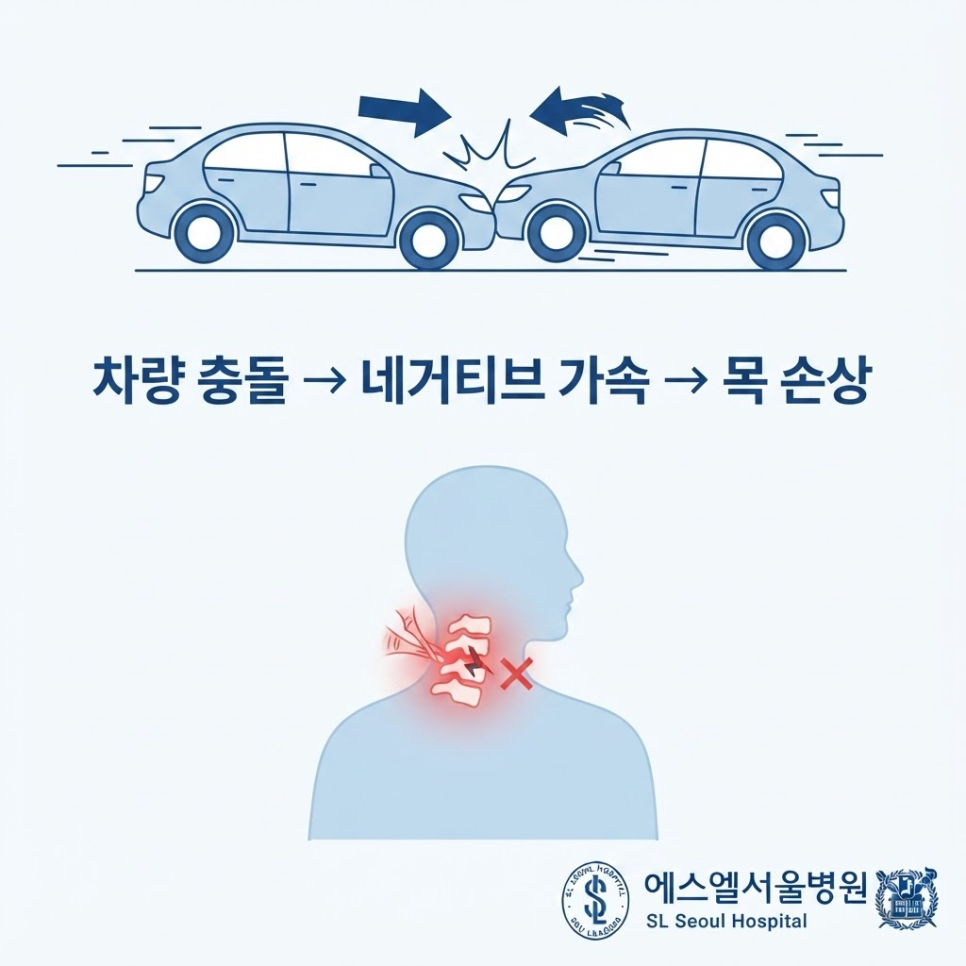
At the moment a vehicle collides, the body undergoes sudden acceleration and deceleration at the same time.
The neck snaps forcefully back and forth, and the ligaments and muscles around the cervical spine can stretch or tear — a pattern known as whiplash injury.
The name comes from the whip-like motion of the neck, and whiplash injuries of this kind are commonly associated with car accidents.
This is why patients can feel severe pain even when an X-ray shows no problem with the bones themselves.
If mistaken for a simple bruise and left unaddressed, whiplash may progress into chronic neck, shoulder, and back pain, along with headaches and dizziness.
When Should You Visit a Dongducheon Orthopedic Clinic?
Because symptoms often appear days after the accident rather than right away, many people miss the right time to get checked.
So what specific signs mean it’s time to visit a specialized medical center such as a Dongducheon orthopedic clinic?
If stiffness and tightness in your neck and shoulders continue for several days, it’s best not to put off a visit.
The same goes for tingling in your hands or feet, or unexplained heaviness in your back.
If nausea, insomnia, or unexplained fatigue show up alongside these symptoms, nerve damage should also be considered.
If even one of these signs sounds familiar, it’s wise to see a medical professional rather than wait it out.

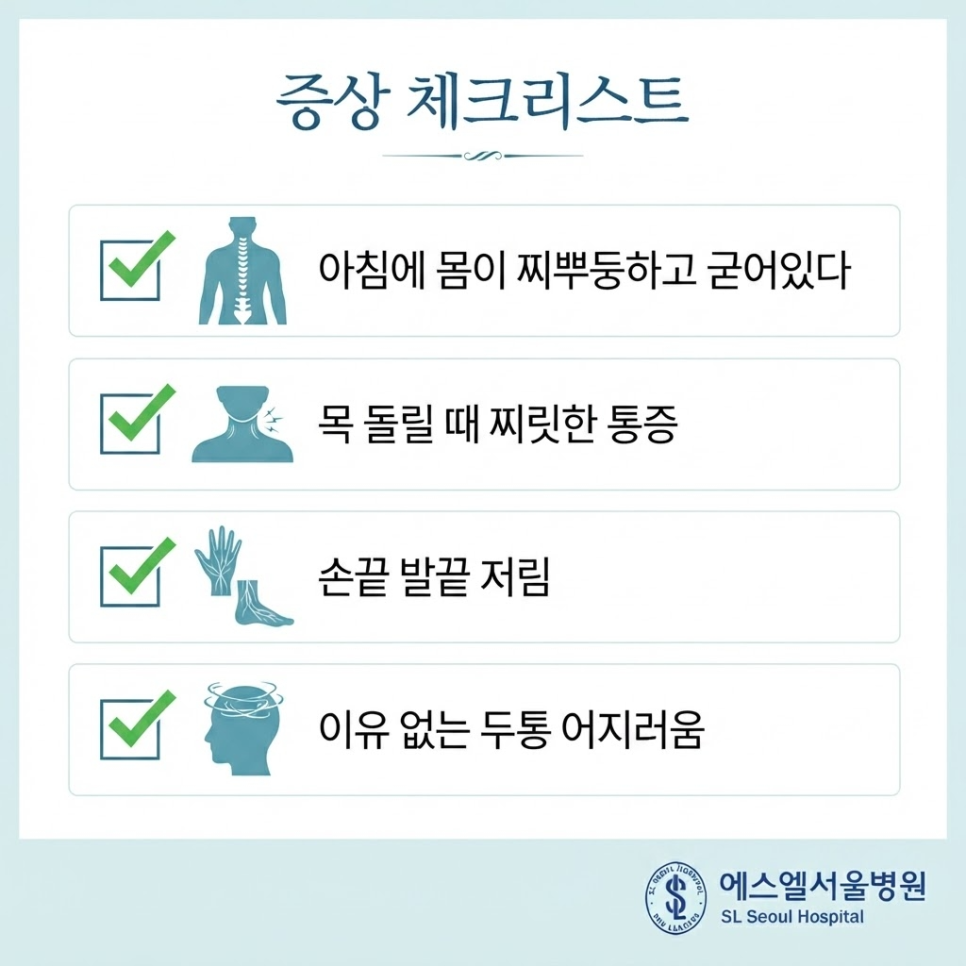
✅ Your body feels stiff and achy when you wake up in the morning
✅ You feel a sharp, shooting pain when turning or bending your neck
✅ Your fingertips or toes feel numb or tingly
✅ Unexplained headaches or dizziness come along with it
How Do Detailed Exams and Care Work?
A detailed exam is a diagnostic process aimed at finding hairline fractures and soft-tissue damage that are hard to catch with the naked eye or a standard X-ray.
These exams are typically carried out in stages, as outlined below.
Whiplash symptoms often become more pronounced 2 to 3 days after the accident rather than right away, which is why identifying the extent of the damage early through a detailed exam matters.
What Order Do the Exams Follow?
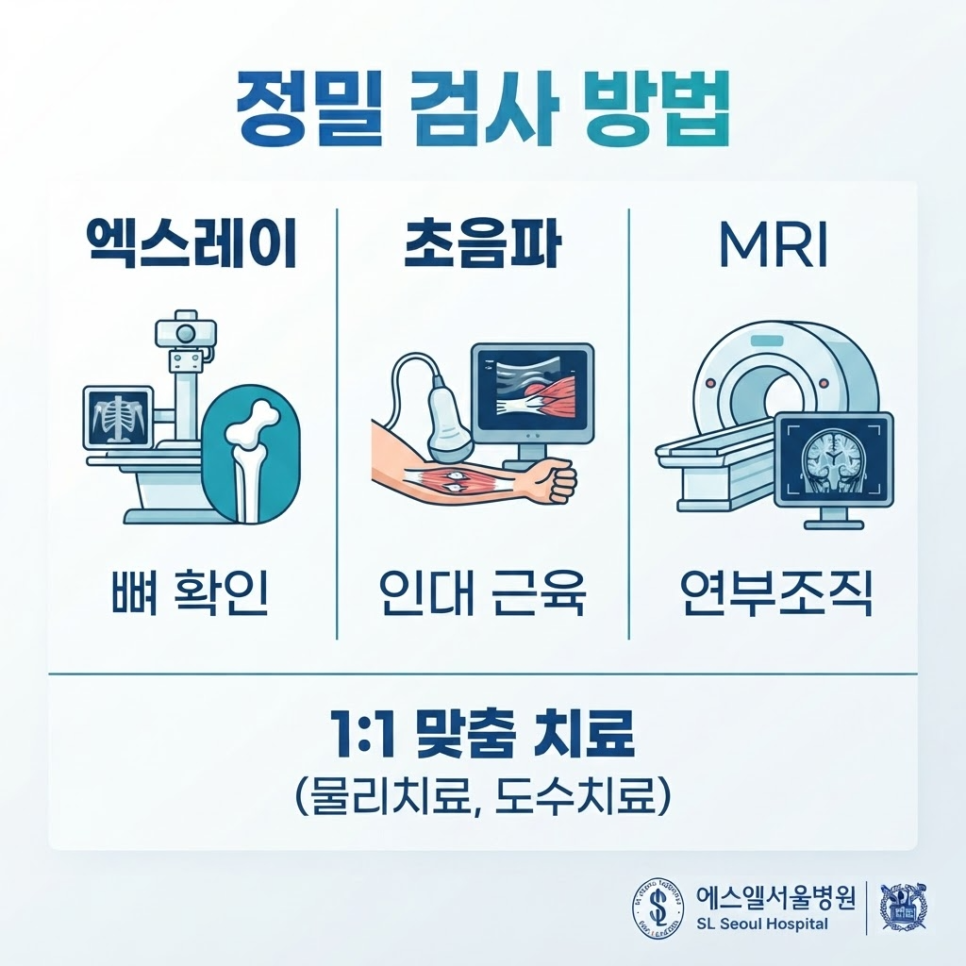
| Stage | Exam | What It Checks |
|---|---|---|
| Stage 1 | X-ray | Structural bone issues such as fractures |
| Stage 2 | Ultrasound | Inflammation and damage in muscles and tendons |
| Stage 3 | MRI | Detailed evaluation of soft tissue such as ligaments and nerves |
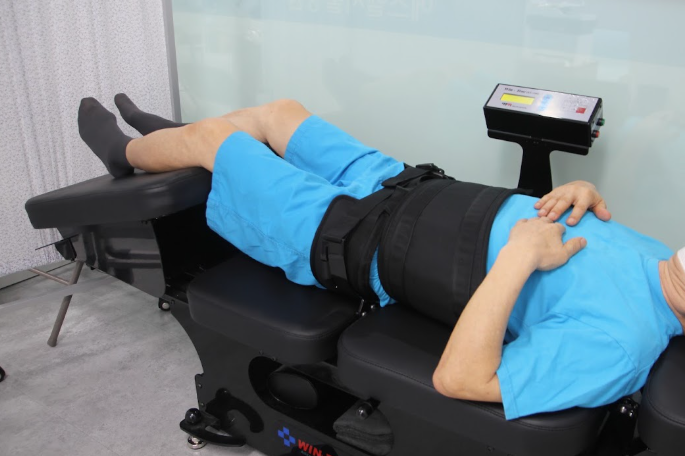
Based on the exam results, care is tailored one-on-one to each patient’s condition.
Options range from physical therapy to ease pain to manual therapy that gently loosens tight muscles.
The SL Seoul Spine & Joint Hospital website also walks through this step-by-step care process in more detail, if you’d like to take a look.

Care is focused on reducing inflammation and restoring joint range of motion, tailored to each person’s pain pattern and degree of injury.
What Daily Habits Can Support Recovery?
Day-to-day habits matter just as much as treatment itself.
The habits you build can make a real difference in how quickly you recover.
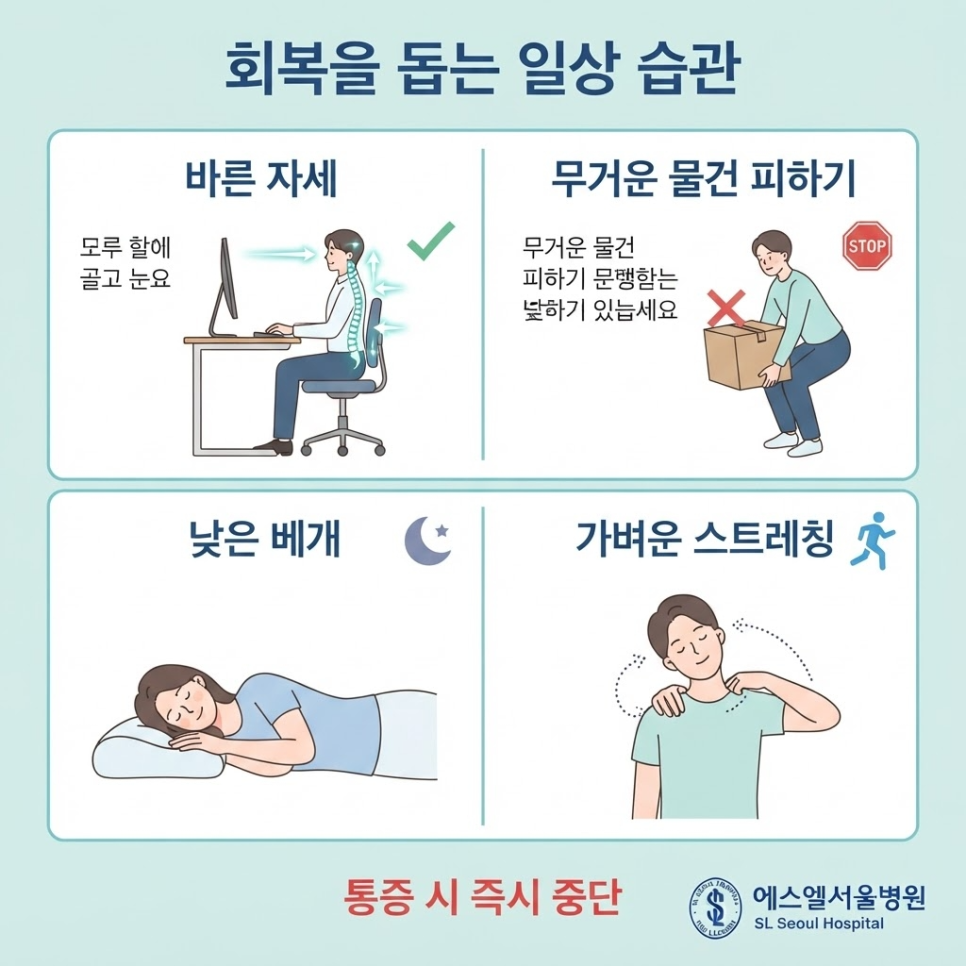
Maintain good posture during the day, and avoid lifting heavy objects when you can.
At night, use a pillow that isn’t too high to ease the strain on your neck.
Gentle stretching may help relax tight muscles.
Try repeating slow, pain-free neck and shoulder rotations on a regular basis.

Stop right away if you feel pain during exercise — pushing through a movement that hurts can slow your recovery instead of helping it.
Frequently Asked Questions
1. I didn’t feel any pain right after the accident — can it still show up days later?
Yes, this is common. Right after a crash, the body is often too tense to register pain clearly, and symptoms tend to surface later once that tension eases.
2. My X-ray looks normal, so why does it still hurt?
An X-ray only shows problems with bones, so it can’t reveal subtle damage to muscles, ligaments, or nerves. Soft-tissue injury may be the underlying cause.
3. How long does recovery usually take?
It depends on the severity of the injury, age, and individual factors, but consistent care and treatment over several weeks to a few months is often needed.
4. When can I get back to my normal routine?
Avoid strenuous activity, but it’s fine to gradually resume light daily activities while keeping an eye on your pain levels.
5. What should I look for in a Dongducheon orthopedic clinic?
It’s worth checking whether the clinic offers detailed imaging beyond X-rays — such as ultrasound and MRI — along with personalized physical and manual therapy options.


References
· Hidoc Expert Column, “교통사고 후유증으로 인한 경추 손상…’편타손상 증후군’이란?” [Cervical Spine Injury from Car Accident Aftereffects… What Is ‘Whiplash Syndrome’?], Hidoc, 2022. Read more
· BioTimes, “검사 결과 이상 없다는데 왜 계속 아플까…교통사고 후유증 주의” [Test Results Show Nothing Wrong, So Why Does It Still Hurt… Watch Out for Car Accident Aftereffects], BioTimes, 2026. Read more
· Hidoc Expert Column, “교통사고 후유증, 언제부터 언제까지 관리해야 할까?” [Car Accident Aftereffects: From When to When Should You Manage Them?], Hidoc, 2026. Read more
This article is intended for general health information purposes only and is not a substitute for individual diagnosis or treatment. If you’re experiencing symptoms, please consult a medical professional.