Have you ever reached up to wash your hair,
only to feel your arm lock up in pain?
If one shoulder has grown stiff for no clear reason — no fall, no bump —
and the pain keeps you up at night, it may be more than simple muscle fatigue.
In that case, it’s worth considering frozen shoulder, a condition caused by inflammation of the joint capsule,
since the symptoms can easily be confused with a rotator cuff tear or shoulder impingement syndrome.
Before getting into frozen shoulder treatment options,
it helps to start with a self-check checklist to assess your own shoulder.
For anyone weighing frozen shoulder treatment, this article lays out
how to tell the symptoms apart, what causes the condition, and
stage-by-stage management and exercises for the acute and chronic phases, in order.
Read on to see how inflammation in the joint capsule tends to progress,
and which exercises you can safely try at home.

What Exactly Is Frozen Shoulder?
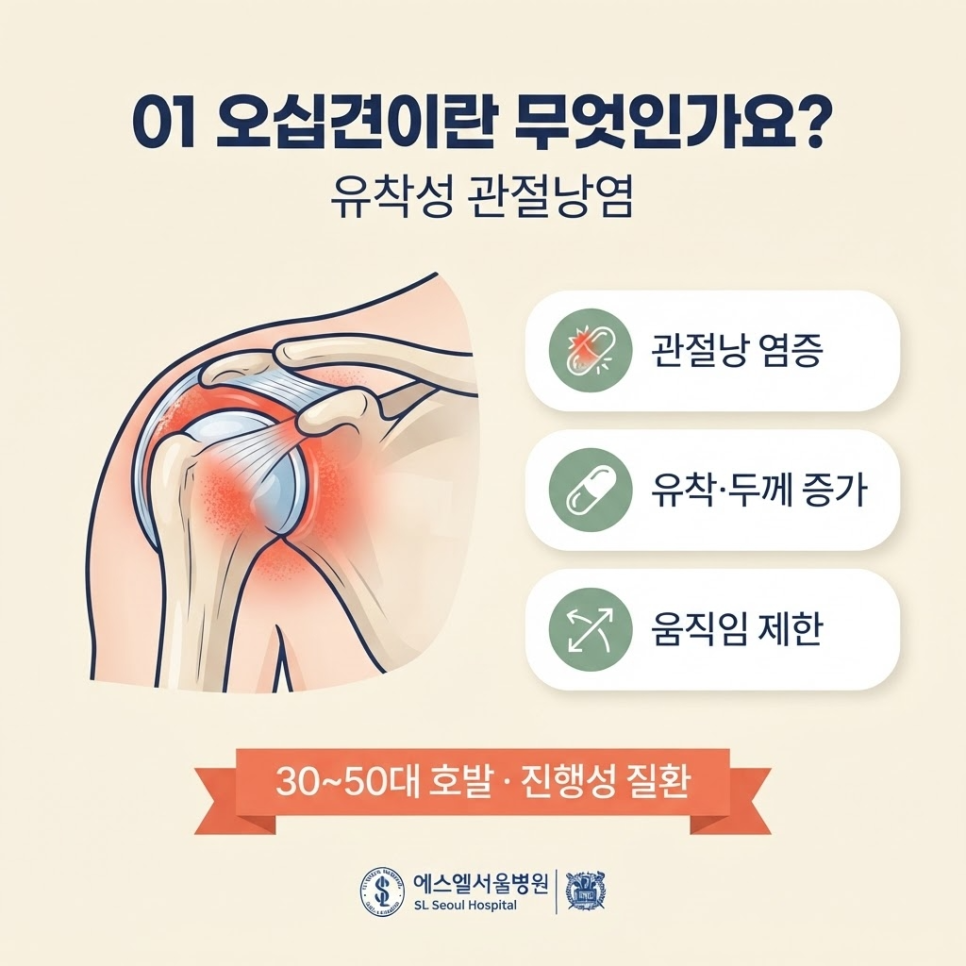
Frozen shoulder is a condition in which the joint capsule surrounding the shoulder becomes inflamed, thickens, and stiffens.
Frozen shoulder, medically known as adhesive capsulitis, occurs when inflammation in the joint capsule limits both active and passive shoulder movement.
According to Korea’s National Health Information Portal, frozen shoulder affects roughly 2% of the general population, making it a fairly common shoulder condition.
It typically develops after age 50 without any specific injury.
That said, younger adults who spend long hours on computers and smartphones can also report shoulder pain,
so it’s worth paying attention to symptoms regardless of age.
The longer frozen shoulder goes untreated, the more the joint capsule can thicken and stiffen,
and this progressive condition may eventually make it hard to raise your arm on your own.
Starting frozen shoulder treatment early, as soon as symptoms appear, tends to support a smoother recovery.
What Are the Symptoms, and How Is It Different From Other Shoulder Conditions?
Not all shoulder pain is frozen shoulder.
Rotator cuff tears and shoulder impingement syndrome can cause similar pain,
so an accurate diagnosis matters.
The key difference: with frozen shoulder, the arm still won’t lift all the way even when someone else raises it for you.
With a rotator cuff tear, the arm can often move further when someone assists.
| Category | Frozen Shoulder | Rotator Cuff Tear |
|---|---|---|
| When someone else lifts the arm | Doesn’t lift all the way | Lifts partway |
| Pain pattern | Restricted motion in every direction | Weakness in specific directions |
| Night pain | Common | May also occur |
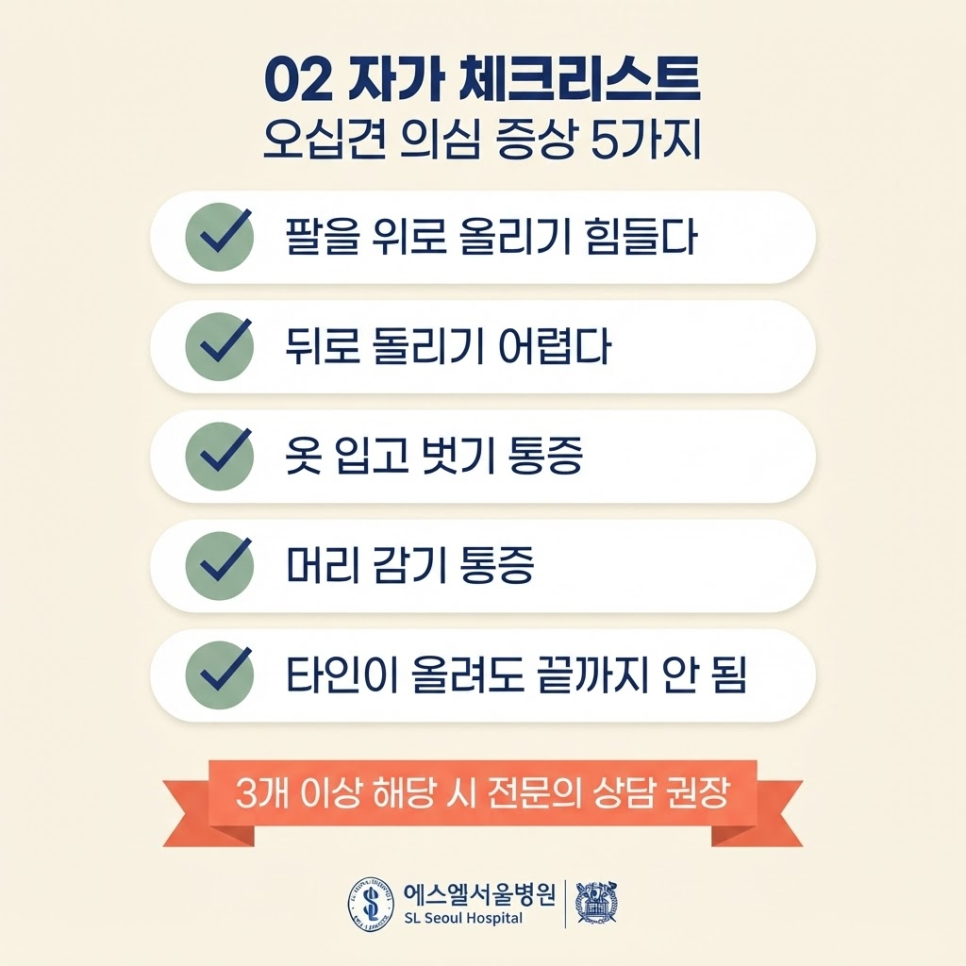
✅ Difficulty lifting your arm overhead or rotating it behind your back
✅ Pain when getting dressed or washing your hair
✅ Pain that radiates from the shoulder down to the elbow
✅ Trouble sleeping when lying on the affected side
✅ Your arm still won’t lift all the way even when a family member or someone else raises it for you
What Causes Frozen Shoulder?
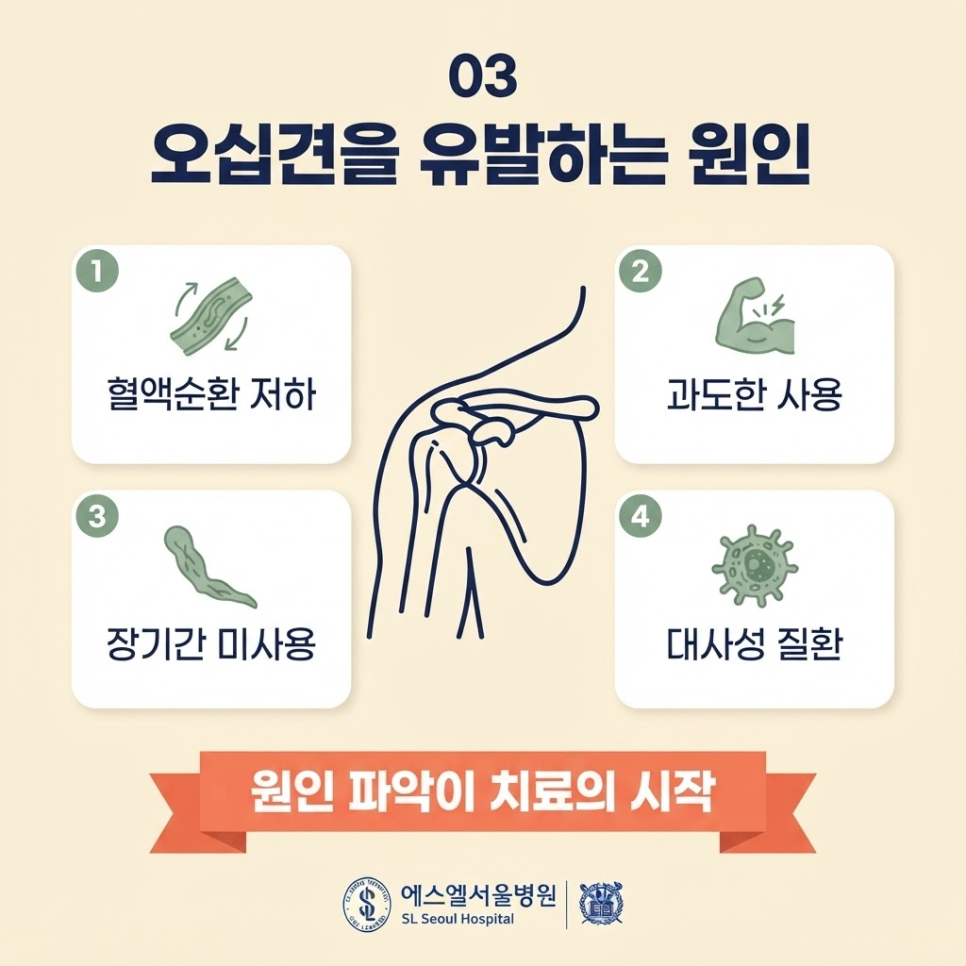
The main causes of frozen shoulder are reduced blood flow around the joint and an inflammatory response.
The joint capsule can stiffen from overusing the shoulder — or, just as often, from not moving it enough over a long stretch of time.
Age-related degenerative changes are also a major factor,
and some reports suggest that metabolic conditions such as diabetes or thyroid disease can raise the risk of developing frozen shoulder.
One orthopedic specialist has noted that having diabetes may raise the risk of frozen shoulder by more than fivefold.
How Is Frozen Shoulder Treatment Done?
Frozen shoulder treatment approaches differ depending on the pain stage.
During the acute phase, when pain is at its worst, calming the inflammation comes first. Once pain eases into the chronic phase, exercises to loosen the stiffened joint can begin.
To pinpoint the correct stage, a doctor will first assess the pain pattern,
and imaging may be used if needed to check the extent of adhesions inside the joint.
Treatment typically follows each stage in order, with exercises kept within a comfortable, non-strenuous range.
Forcing a stretch past the point of pain can actually make the inflammation worse.
The general rule is to move gently only up to just before pain begins.
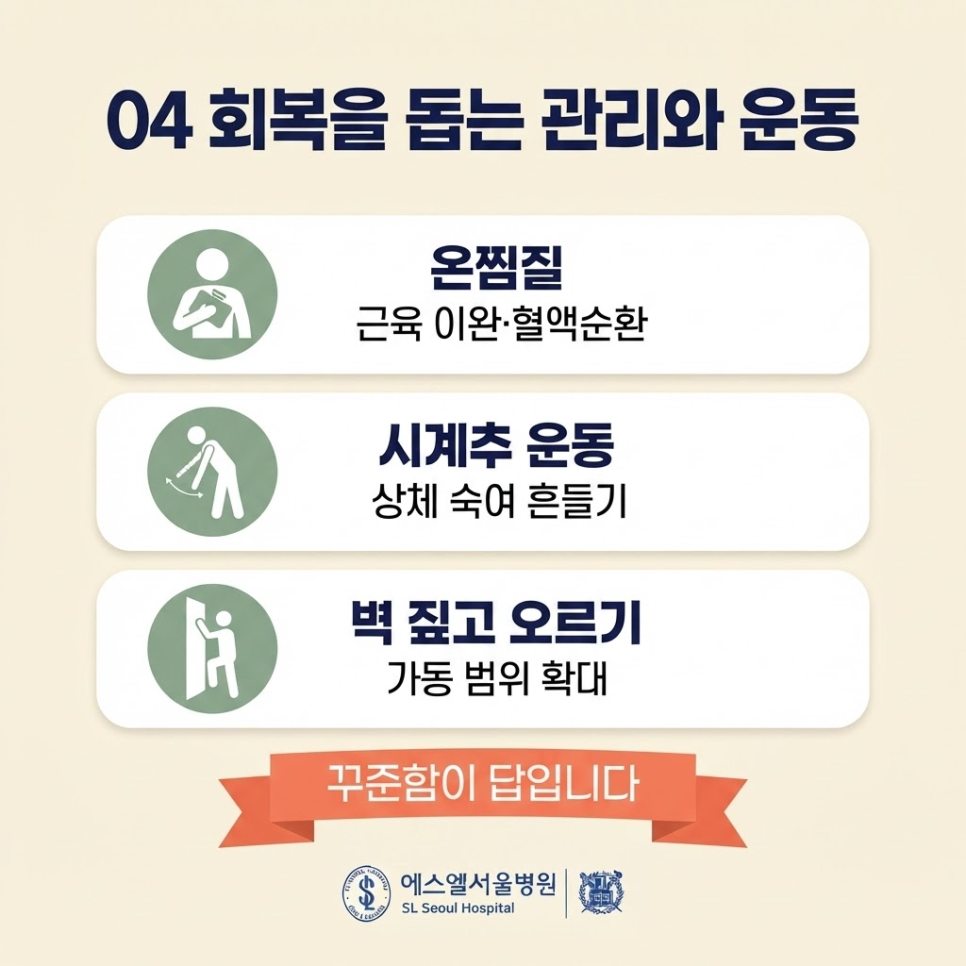
- Warm compress: Helps relax muscle tension and supports blood circulation.
- Pendulum exercise: Gently hold the affected arm with your unaffected hand, lean your upper body forward, and let the arm swing slowly like a pendulum.
- Wall climb (finger walk): Face a wall and slowly walk your fingers upward, gradually increasing your range of motion.
With consistent, stage-appropriate management, shoulder range of motion tends to gradually improve over time.
Recovery speed varies from person to person, though, and can typically take anywhere from several months to one or two years.
If it’s hard to judge the exact cause and stage on your own,
we recommend having a specialist evaluate your current condition first.
You can find related care information on the SLS Seoul Hospital Spine & Joint Center homepage.
Frequently Asked Questions
1. Does frozen shoulder go away on its own?
Some cases do ease with time, but if left untreated, the shoulder can stiffen with reduced function or develop additional pain, so consulting a specialist is recommended.
2. Is more exercise always better?
No. Forcing your range of motion past the point of pain can make the inflammation worse. The key is to move within a controlled range and stop just before pain sets in.
3. How is frozen shoulder treatment carried out at a hospital?
Since shoulder pain can have many different causes, exercising on your own without an accurate diagnosis can make things worse. It’s safer to have an orthopedic specialist assess the pain pattern — and imaging, if needed — before setting a treatment plan.
4. Can you tell frozen shoulder and a rotator cuff tear apart at home?
If your arm still won’t lift all the way even when someone else raises it for you, frozen shoulder is more likely, but imaging is needed for an accurate diagnosis.
SLS Seoul Hospital supports patients with accurate diagnosis and stage-by-stage management of shoulder pain.




References
· Korea Disease Control and Prevention Agency, “Frozen Shoulder (Adhesive Capsulitis),” National Health Information Portal. View source
· Asan Medical Center Newsroom, “Exercises for Frozen Shoulder Treatment,” Asan Medical Center. View source
· MediPana, “Frozen Shoulder Linked to Diabetes and Thyroid Disease — Caution Advised for Those 40 and Older,” MediPana News. View source
· Hankook Ilbo, “Leaving Frozen Shoulder Untreated Can Lead to Chronic Pain — Treatments That Shorten Recovery Time,” Hankook Ilbo, 2025. View source
This article is intended to provide general health information and is not a substitute for individual diagnosis or treatment.
If you have symptoms, please consult a specialist.