Have you ever felt a sharp, stabbing pain in your shoulder while changing clothes or reaching overhead?
It’s easy to brush off as nothing serious,
but leaving the underlying shoulder pain causes untreated can let it progress into a condition like frozen shoulder or a rotator cuff tear, both of which take far longer to treat.
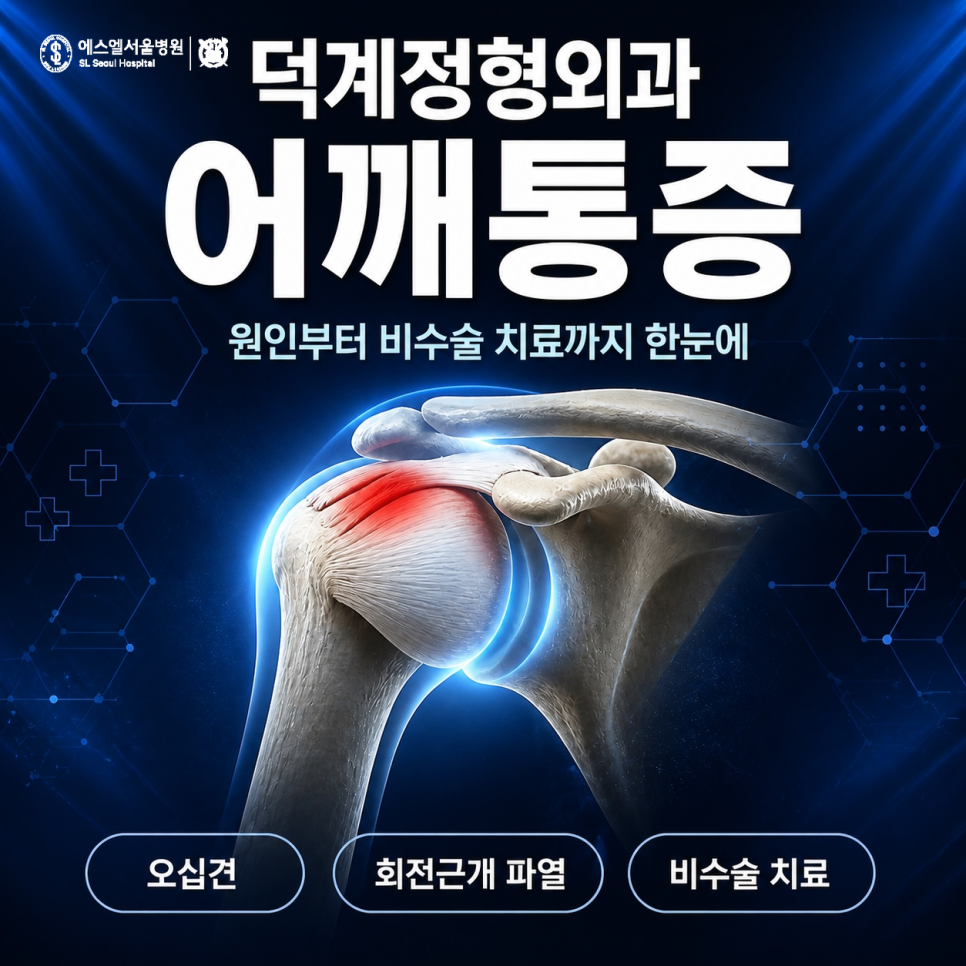
Key Takeaways
Shoulder pain causes generally fall into three categories — frozen shoulder (adhesive capsulitis), rotator cuff tears, and calcific tendinitis — and they tend to show up differently depending on age and daily habits.
This article walks through a self-check method for telling these causes apart by symptom, the non-surgical treatments orthopedic clinics use, and daily habits that help prevent a recurrence.
Shoulder Pain Causes: What Are They?
Shoulder pain causes generally break down into three types: inflammation of the joint capsule, tendon damage, and friction between bone and tendon.
The shoulder is the only joint in the body that rotates through nearly 360 degrees,
and that wide range of motion is exactly what makes it so easy to injure.
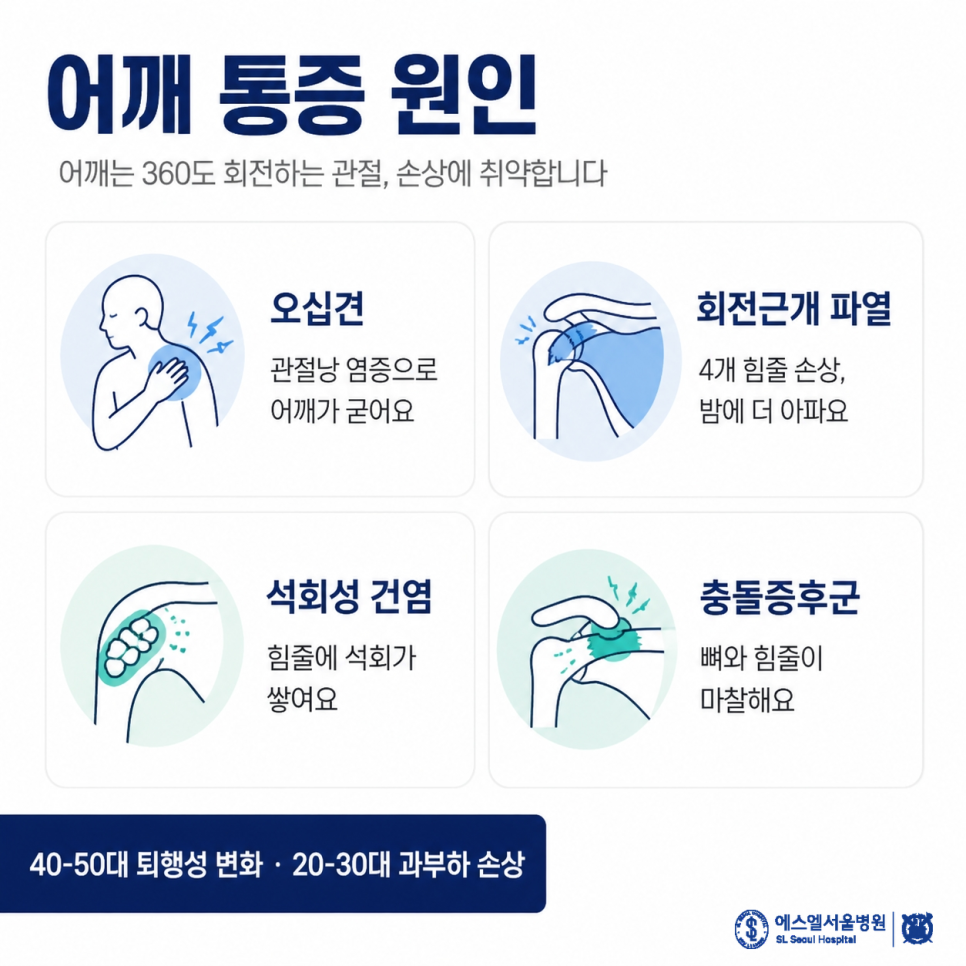
The 3 Most Common Causes of Shoulder Pain
- Frozen shoulder (adhesive capsulitis) — Inflammation of the capsule surrounding the joint causes the shoulder to stiffen up. A defining feature is that the arm won’t lift easily, whether you try to raise it yourself or someone else helps.
- Rotator cuff tear — One or more of the four tendons that support the shoulder becomes torn or damaged. Pain typically worsens when lifting the arm to a specific angle, and night pain is common.
- Other conditions — Calcific tendinitis, where calcium deposits build up in the tendon, and impingement syndrome, where bone and tendon rub against each other, are also common causes.
✅ Ages 40-50 and up: Frozen shoulder and degenerative changes in the rotator cuff are cited as the leading causes.
✅ Ages 20-30: Sports injuries or repetitive shoulder overuse from smartphone and computer use can also be a factor.

These age-related patterns are general reference information — the actual cause needs to be confirmed with a detailed examination.
National statistics show that shoulder pain is far from a rare problem.
According to Korea’s Health Insurance Review and Assessment Service, the number of frozen shoulder patients rose from 731,346 in 2015 to 789,403 in 2019 — a 7.9% increase over five years.
Over the same period, the increase among male patients was 12.51%, more than double the rate for women (4.93%), and clinic visits peaked in March each year.
According to the Korea Disease Control and Prevention Agency’s health information portal, frozen shoulder is a common condition affecting about 2% of the general population.
How Do You Tell Frozen Shoulder Apart From a Rotator Cuff Tear?
With frozen shoulder, the joint itself is stiff, so it won’t move freely even when someone else lifts your arm for you. With a rotator cuff tear, there’s pain, but the arm can still be raised with assistance — that’s the key difference.
Both conditions are easy to mistake for simple muscle soreness early on, which is why an accurate diagnosis matters.
Frozen Shoulder vs. Rotator Cuff Tear
| Category | Frozen Shoulder | Rotator Cuff Tear |
|---|---|---|
| When someone else lifts your arm | Doesn’t lift easily | Lifts relatively well |
| Pain pattern | Stiffness throughout the whole shoulder | Concentrated when moving in a specific direction |
| Course | Most cases improve within 1-2 years | Tear can widen if left untreated |
“Frozen shoulder is one of the most common conditions causing chronic shoulder pain and restricted movement, and it resolves on its own in most cases within one to two years.”
That’s how the Korea Disease Control and Prevention Agency’s health information portal describes frozen shoulder.
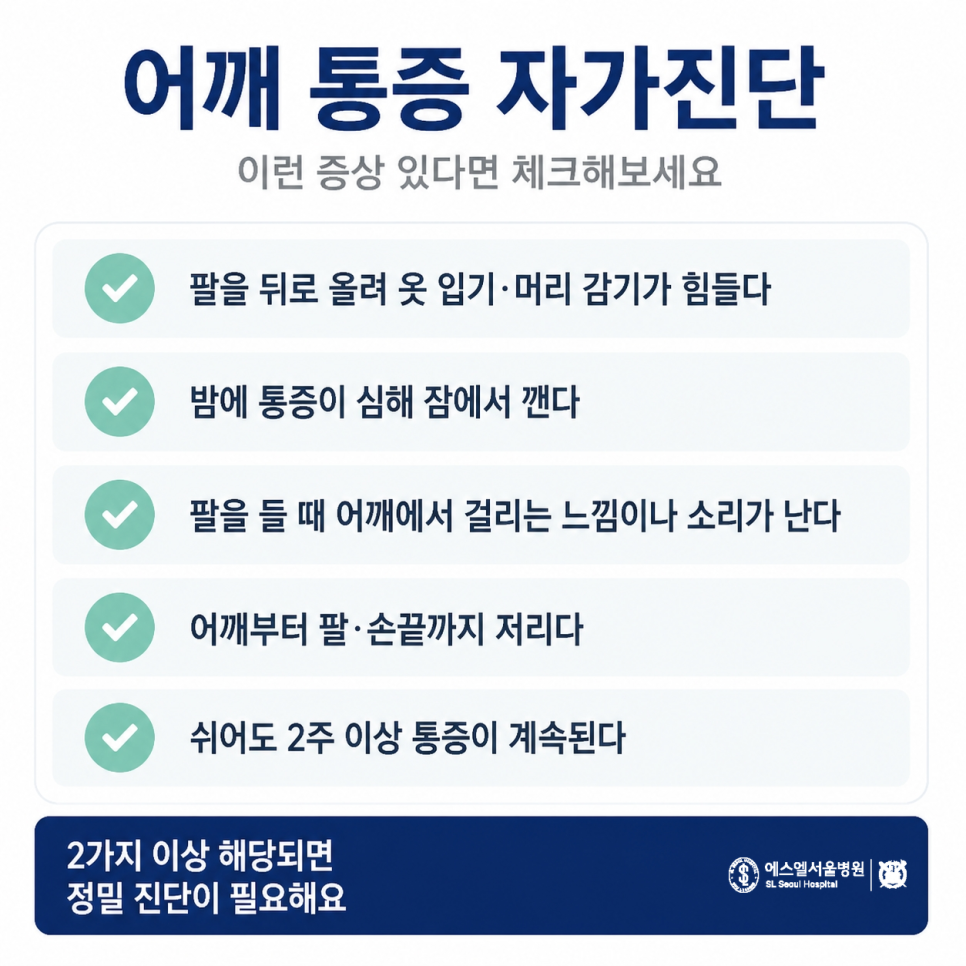
Check These Signs If You Have Shoulder Pain
✅ It’s hard to reach behind your back to get dressed or wash your hair
✅ Pain gets worse at night and frequently wakes you up
✅ You feel a catching sensation or hear a clicking sound inside the shoulder when raising your arm
✅ A tingling or numb feeling spreads from the shoulder down the arm to the fingers
✅ The pain continues for more than 2 weeks even with rest
If two or more of these apply to you, it may be more than simple fatigue — we recommend getting a thorough evaluation at an orthopedic clinic.
What Non-Surgical Treatments Do Orthopedic Clinics Use?
Seeking care early means non-surgical treatment alone may be enough to see improvement.
Orthopedic clinics typically start with an X-ray or ultrasound to assess the condition, then choose a treatment approach based on the symptoms and extent of damage.
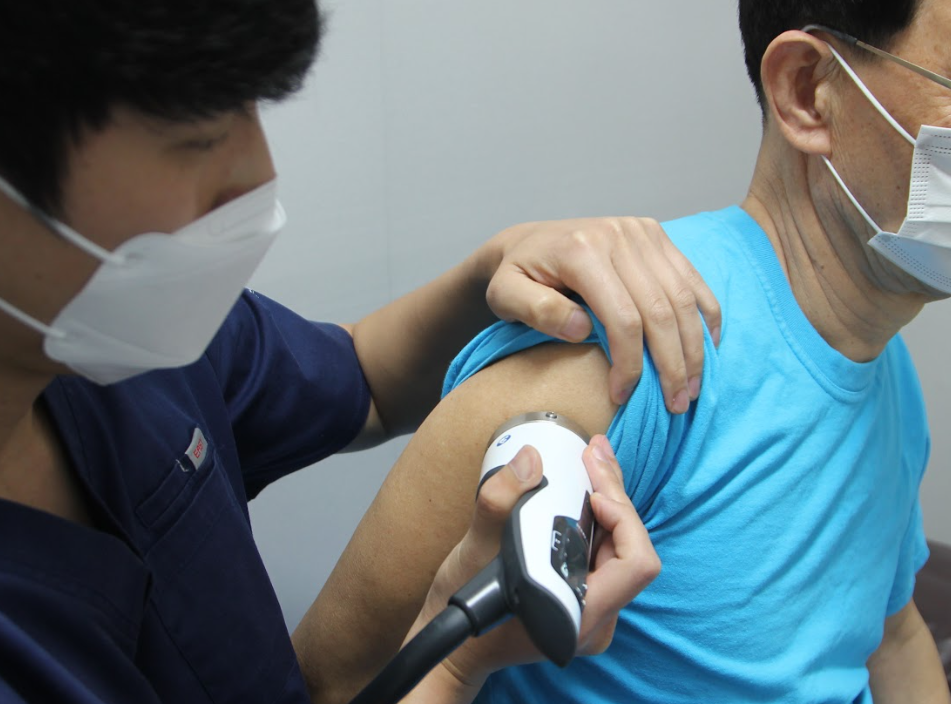
3 Common Non-Surgical Treatments
| Treatment | How It Works |
|---|---|
| Extracorporeal Shock Wave Therapy (ESWT) | Delivers high-energy sound waves to the painful area to help improve blood flow and encourage tissue repair |
| Manual Therapy | A physical therapist uses hands-on techniques that may help increase joint range of motion and relieve muscle tension |
| Injection Therapy | Medication is injected directly into the inflamed area to help reduce pain and support recovery |
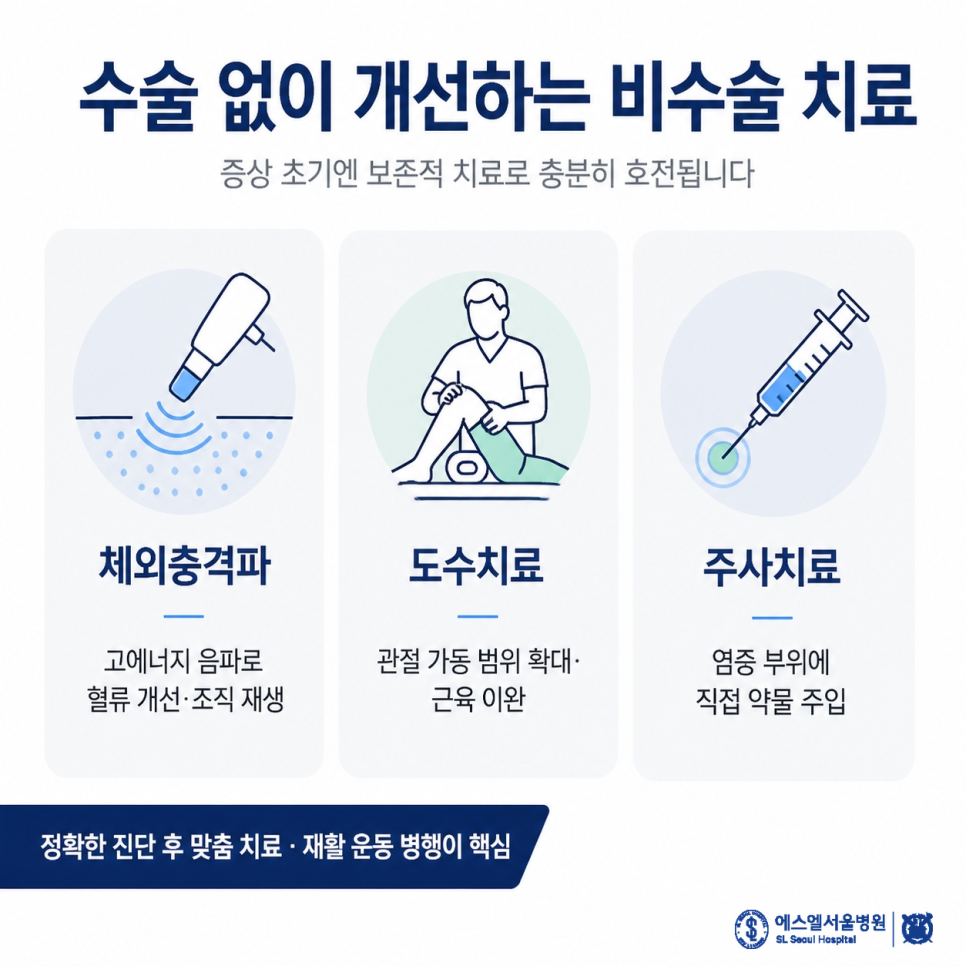
In orthopedic care, surgery isn’t usually the automatic first recommendation — non-surgical treatment is typically tried first, alongside rehabilitation exercises.
That said, in cases such as a complete rotator cuff tear, where the tendon isn’t able to heal on its own, a detailed exam is needed first to check how far the damage has progressed.
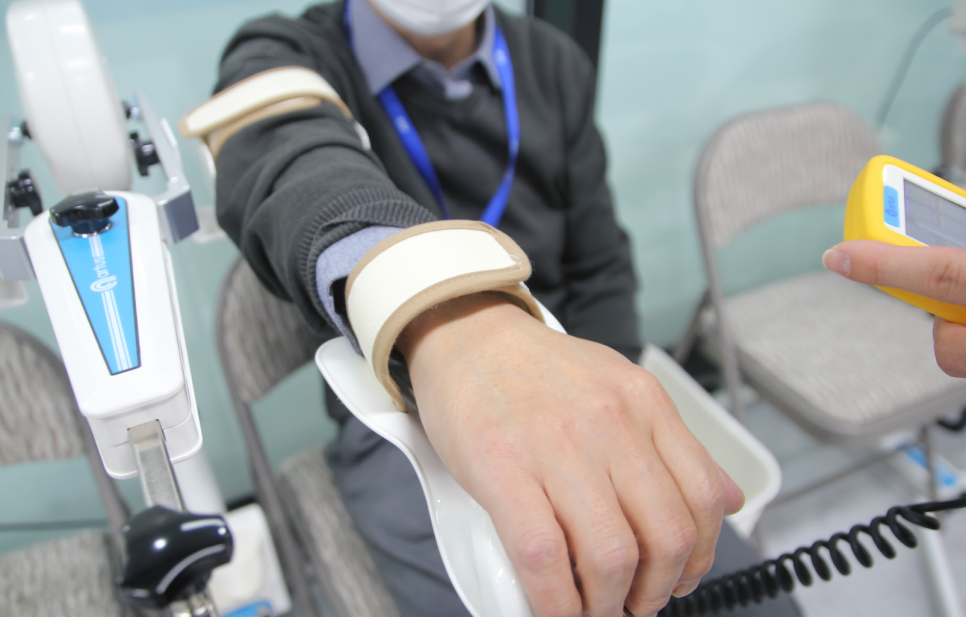
How Do You Choose a Good Orthopedic Clinic, and How Should You Manage Your Shoulder Day to Day?
Shoulder joint treatment calls for a careful, individualized approach, so it’s worth looking at how a clinic is set up rather than choosing one just because it’s nearby.

✅ Whether a board-certified orthopedic specialist provides the care directly and has solid clinical experience
✅ Whether the clinic has detailed diagnostic equipment and offers one-on-one rehabilitation programs
✅ Whether the clinic looks beyond pain relief to address the underlying cause and daily habits
Aftercare matters just as much as the treatment itself.
Without it, symptoms can easily come back.
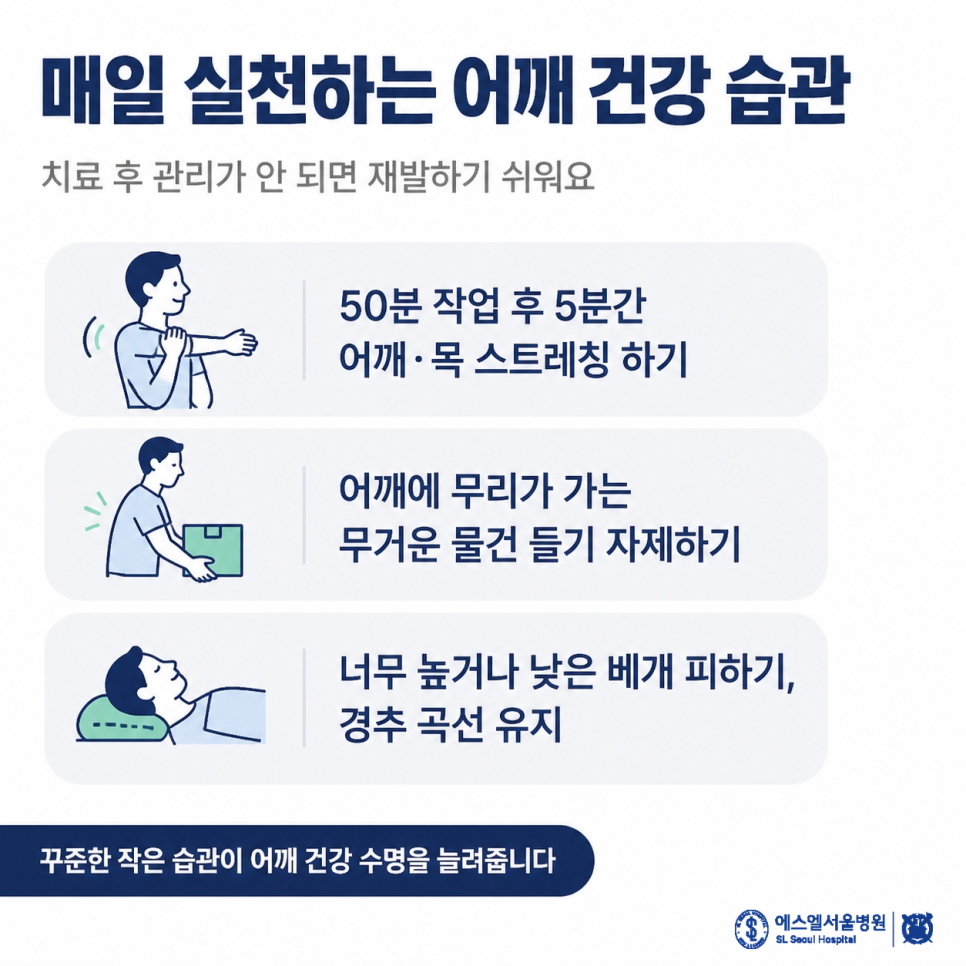
Daily Habits That Support Shoulder Health
- After 50 minutes of work, take a 5-minute break to gently stretch your shoulders and neck
- Avoid lifting heavy objects that strain the shoulder whenever possible
- Use a pillow that supports the natural curve of your neck instead of one that’s too high or too low

If your discomfort continues and you’re not sure what’s behind your shoulder pain, don’t hesitate to get evaluated by an orthopedic specialist.
For more information on spine and joint health, visit the SLS Seoul Hospital for Spine & Joints homepage.



Frequently Asked Questions
1. Should I just rest completely when my shoulder hurts?
Rest is important during the acute inflammation phase, but staying still for too long risks stiffening the joint. It’s best to combine rest with gentle stretching, within a range that doesn’t aggravate the pain.
2. Does rotator cuff damage heal on its own?
With a partial tear or simple inflammation, conservative treatment can bring noticeable improvement, but a completely torn tendon is unlikely to reattach on its own. A detailed exam is needed to check how far it has progressed.
3. Is extracorporeal shock wave therapy very painful?
You may feel some mild soreness or discomfort as the shock wave energy is delivered. The intensity can be adjusted during treatment, so just discuss it with your therapist.
4. How can you tell frozen shoulder apart from a rotator cuff tear?
With frozen shoulder, the joint itself is often so stiff that the arm won’t lift even with someone else’s help. With a rotator cuff tear, there’s pain, but the arm can still be raised with assistance.
References
· Korea Disease Control and Prevention Agency, National Health Information Portal, “Frozen Shoulder (Adhesive Capsulitis).” View source
· Newsis, “Frozen Shoulder No Longer Just a Condition for Women in Their 50s,” 2020. (Citing Health Insurance Review and Assessment Service data) View source
· Korean Orthopaedic Association, “Rotator Cuff Tear.” View source
· NCBI PMC, “Health Care Utilization for Common Shoulder Disorders: Analysis of the 2010–2019 National Patient Sample Data from the Health Insurance Review and Assessment Service in Korea,” 2024. View source
This article is intended for general health information purposes only and is not a substitute for individual diagnosis or treatment. If you have symptoms, please consult a specialist.