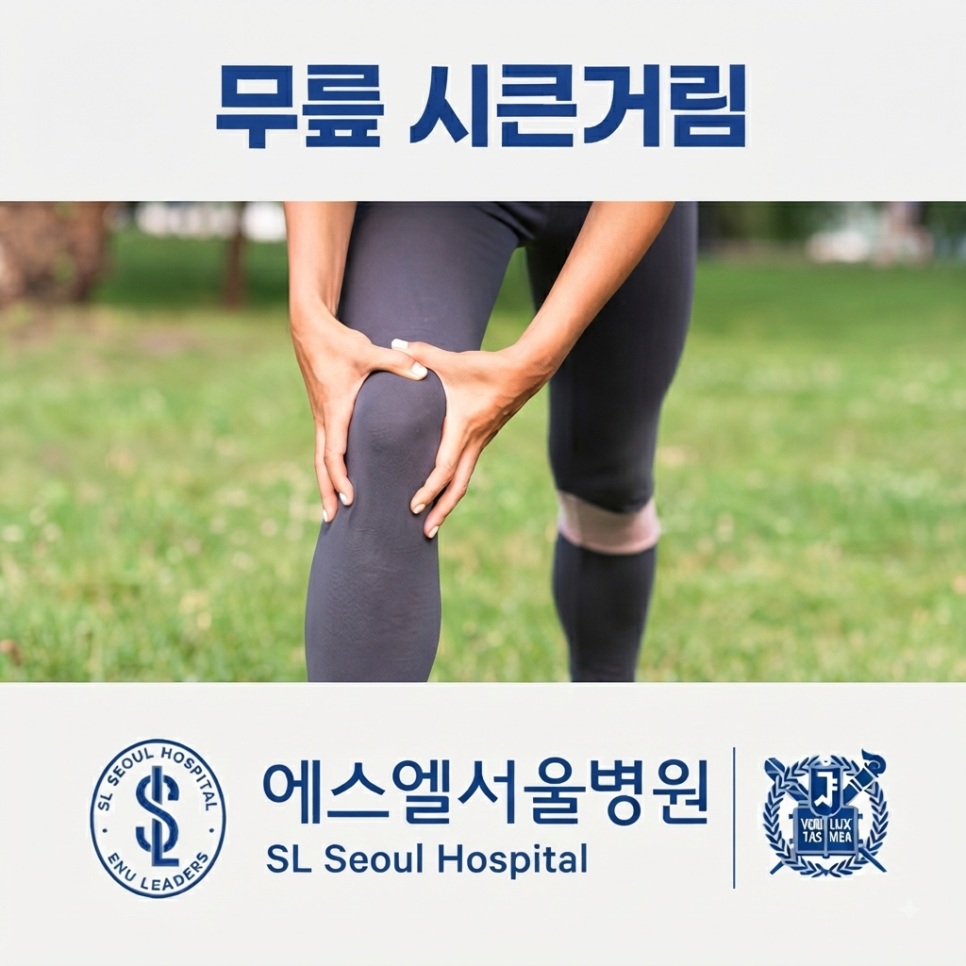
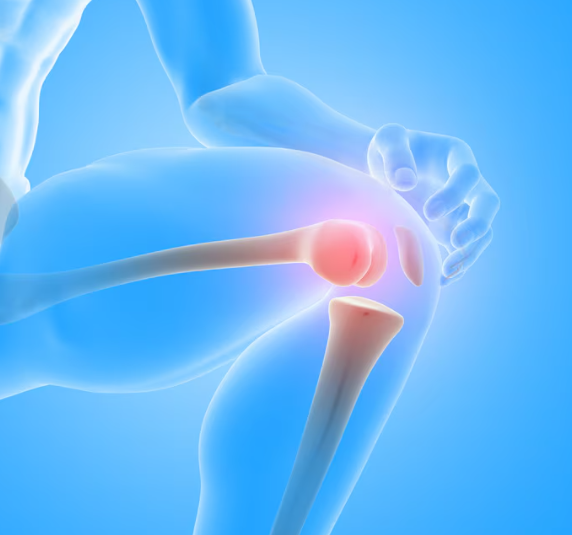
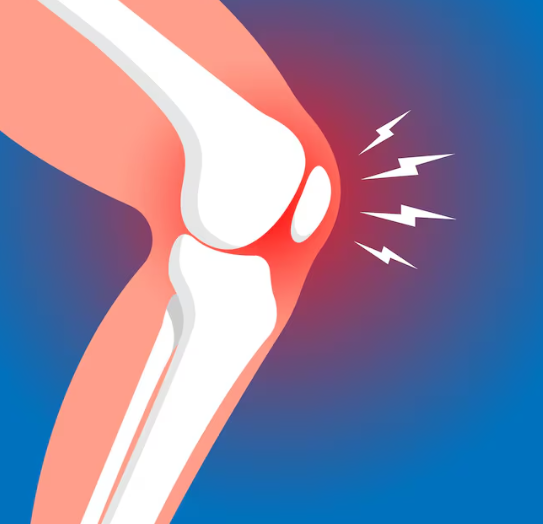
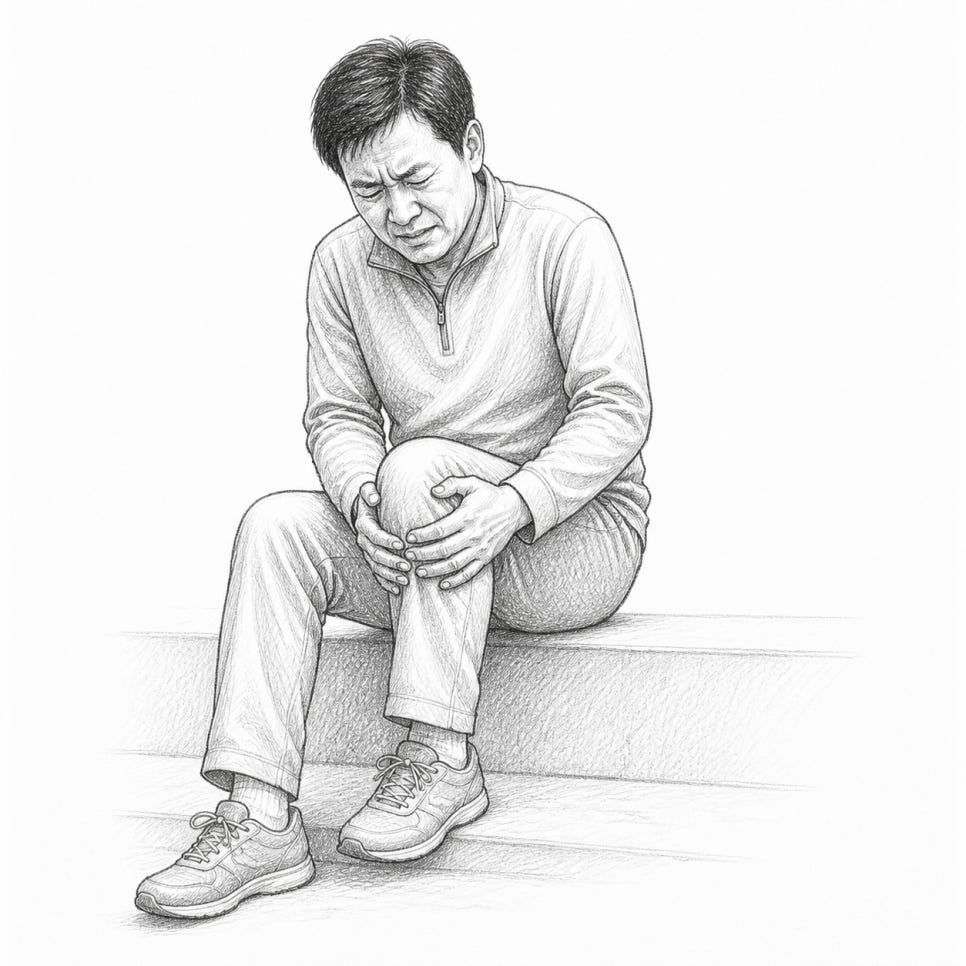
Most of us have felt that sharp, tingling twinge in the knee while walking down stairs at least once.
It’s tempting to assume a few days of rest will fix it,
but many people put off dealing with the pain and only see a doctor once it’s become a bigger problem.
According to a Newspim report citing Health Insurance Review & Assessment Service data, the number of patients treated for degenerative arthritis rose from about 4.04 million in 2019 to roughly 4.33 million in 2023.
Pain that feels like ordinary muscle soreness can actually be microscopic damage to a ligament or tendon.
A sharp twinge in the knee when climbing or descending stairs can be a sign that microscopic damage has built up in the cartilage, ligaments, or tendons.
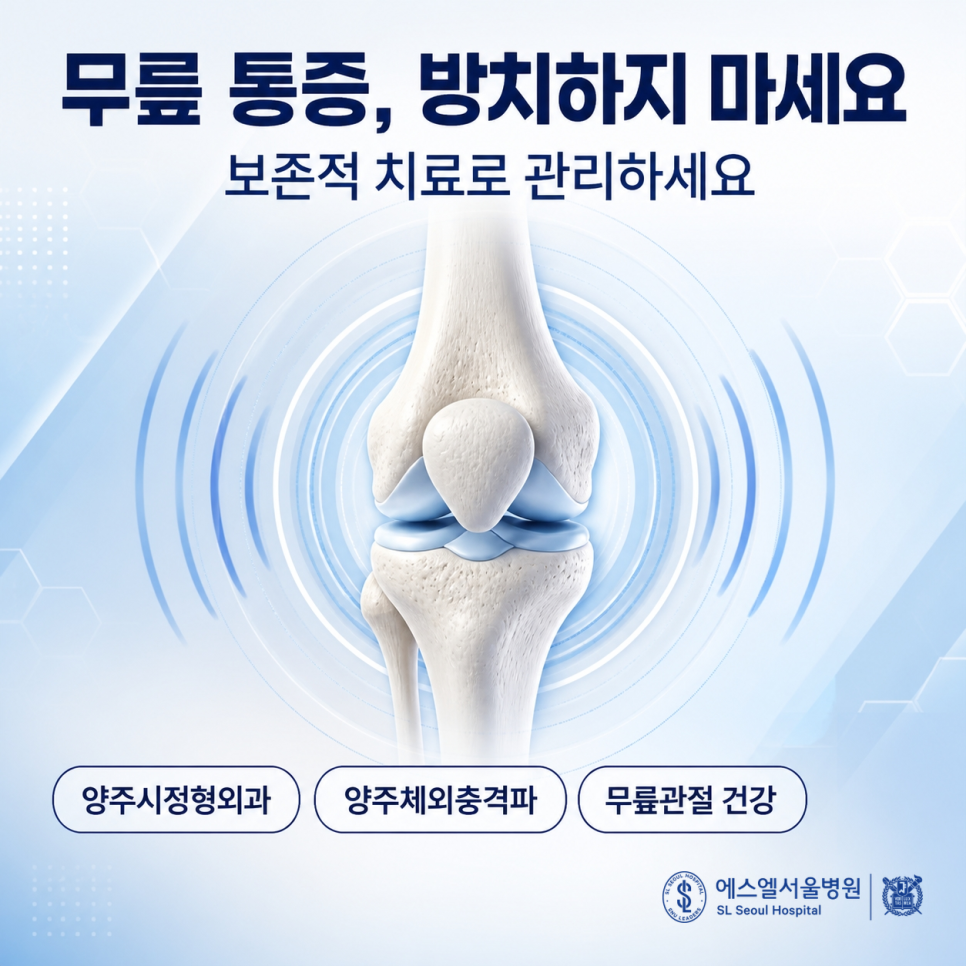
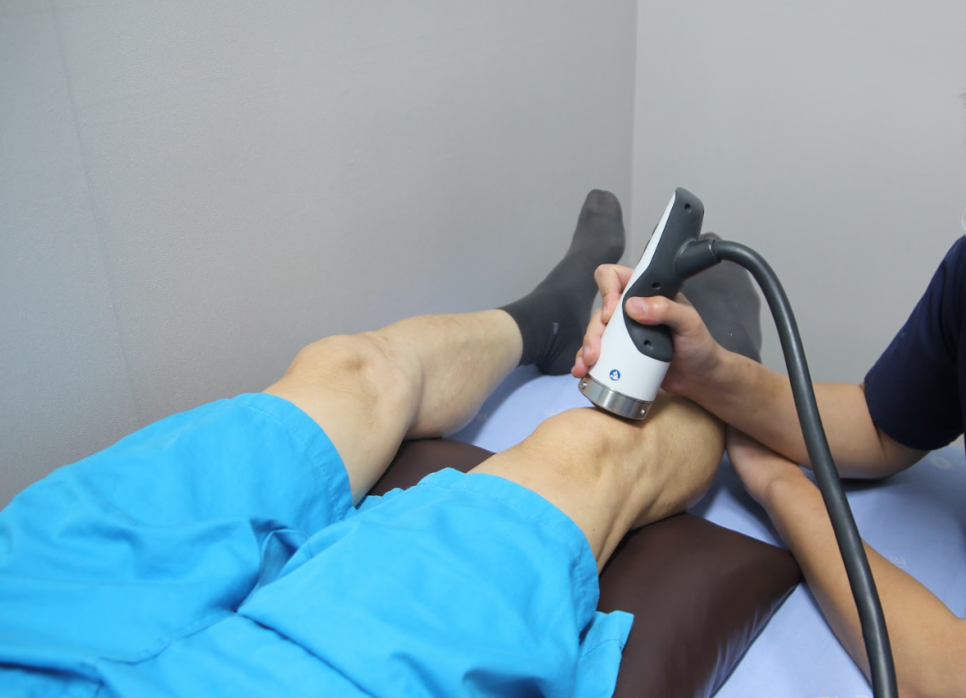
Knee shockwave therapy is a conservative treatment that uses high-energy sound waves to support blood flow and tissue regeneration, without any incision or anesthesia.
If symptoms last more than 2 weeks, it’s important to get a thorough exam to identify the underlying cause first.
Why Is It Risky to Ignore Knee Pain?
The short answer: the longer you dismiss early pain as ordinary fatigue, the more your joint’s range of motion narrows, making it easier for the pain to become chronic.
Knee pain doesn’t only come from degenerative arthritis, where the cartilage wears down —
it can also stem from tendinitis, ligament damage, and a range of other causes.
The Korea Disease Control and Prevention Agency’s National Health Information Portal describes osteoarthritis this way.
Osteoarthritis is a condition in which the cartilage that cushions the impact between the bones of a joint gradually deteriorates or undergoes degenerative change, causing secondary damage to the bone, joint capsule, and surrounding ligaments — resulting in pain, deformity, and functional impairment.
The agency also notes that there is currently no treatment that can fully restore a joint that has already undergone degenerative change back to normal.
That’s exactly why
identifying and managing the cause of pain early matters so much.

Cartilage, ligaments, and tendons all have limited blood supply, which gives them a relatively low capacity for self-repair.
According to the same Newspim report, 82.3% of degenerative arthritis patients are age 60 or older, and the condition tends to become more common with age.

✅ You feel a sharp twinge in the knee when climbing or descending stairs
✅ Your joint feels stiff when standing up after sitting for more than 30 minutes
✅ The area around the joint is frequently swollen or feels warm
✅ You hear a sound from your knee while walking, along with pain
If even one of these applies to you, it’s worth seeing an orthopedic specialist to pinpoint the exact cause.
What Is Knee Shockwave Therapy and How Does It Work?
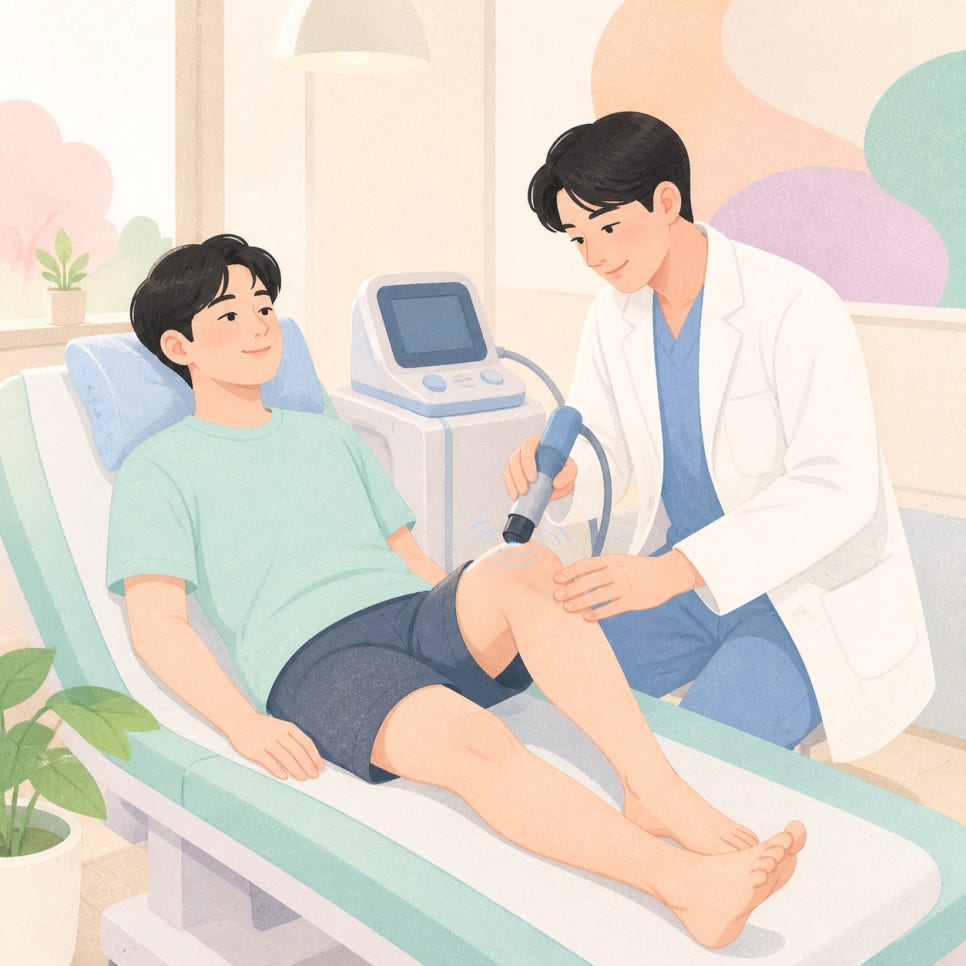
Extracorporeal shock wave therapy (ESWT) is a non-surgical, conservative treatment that delivers high-energy sound waves to the affected area to help reactivate cells and improve blood flow.
Because it’s a non-invasive method involving no incision or anesthesia, it places relatively little burden on the body.
A session typically takes only about 10 to 15 minutes,
so even busy professionals can fit it into their schedule and return to normal activities right afterward.
Because the depth of the affected tissue and each patient’s pain tolerance differ,
it’s important for the shockwave intensity to be precisely adjusted on an individual basis.
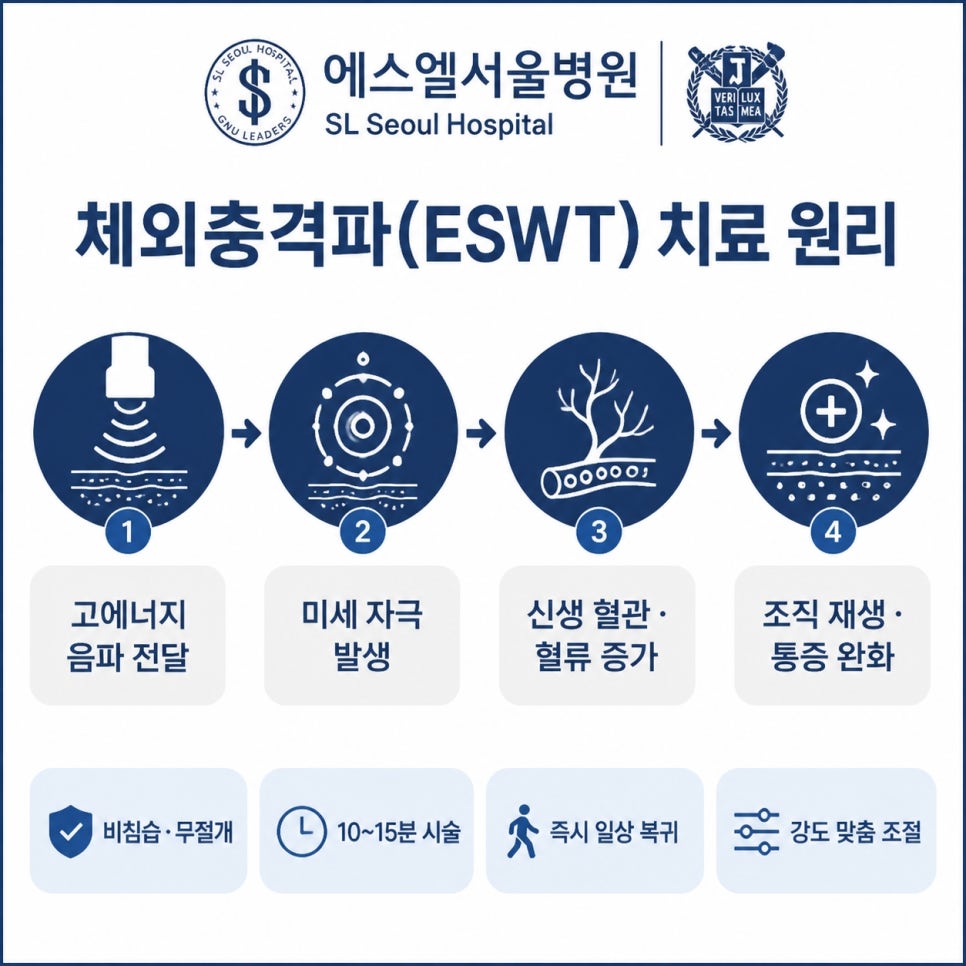
✔ A non-invasive treatment performed without incision or anesthesia
✔ A short procedure time, typically around 10 to 15 minutes
✔ Intensity can be adjusted based on tissue depth and pain tolerance
High-energy sound waves are delivered to the affected area → this creates micro-stimulation → which is reported to promote new blood vessel formation and increase blood flow → helping support tissue regeneration and pain relief
That said, shockwave therapy isn’t applied the same way to every area or every type of pain.
According to a Nate News report, the body parts classified as eligible under the private supplemental insurance guidelines established in 2026 are listed below.
| Area | Representative condition |
|---|---|
| Shoulder | Calcific tendinitis, rotator cuff tendinopathy |
| Elbow | Lateral epicondylitis, medial epicondylitis |
| Hip | Greater trochanteric pain syndrome |
| Knee | Patellar tendinitis |
| Ankle | Achilles tendinitis |
| Foot | Plantar fasciitis |
| Spine | Cervical/lumbar myofascial pain syndrome |
According to the same report, the guideline recommends up to 6 sessions per area and 12 sessions per year as the standard treatment frequency.
It was also reported that a single session typically involves 2,000 or more shocks, administered in principle once a week — but it’s best to confirm the exact criteria with your treating medical institution.
What Should You Check When Choosing a Yangju Orthopedic Clinic?
Effectively improving knee pain takes more than just reducing the pain itself —
it starts with a systematic diagnosis and a tailored management plan.

- Thorough imaging evaluation — Even when symptoms look similar, the extent of internal joint damage varies from person to person, so check whether the clinic builds a tailored treatment plan based on an accurate diagnosis.
- Non-surgical, conservative treatment first — Look at whether the clinic combines shockwave therapy with other conservative options suited to your condition, such as medication or physical therapy.
- Follow-up care and lifestyle guidance — Proper knee stretching and posture correction after treatment are essential for preventing symptoms from coming back.
If you’d like more detailed guidance on non-surgical treatment options, you can find more information on the SL Seoul Spine & Joint Hospital homepage.
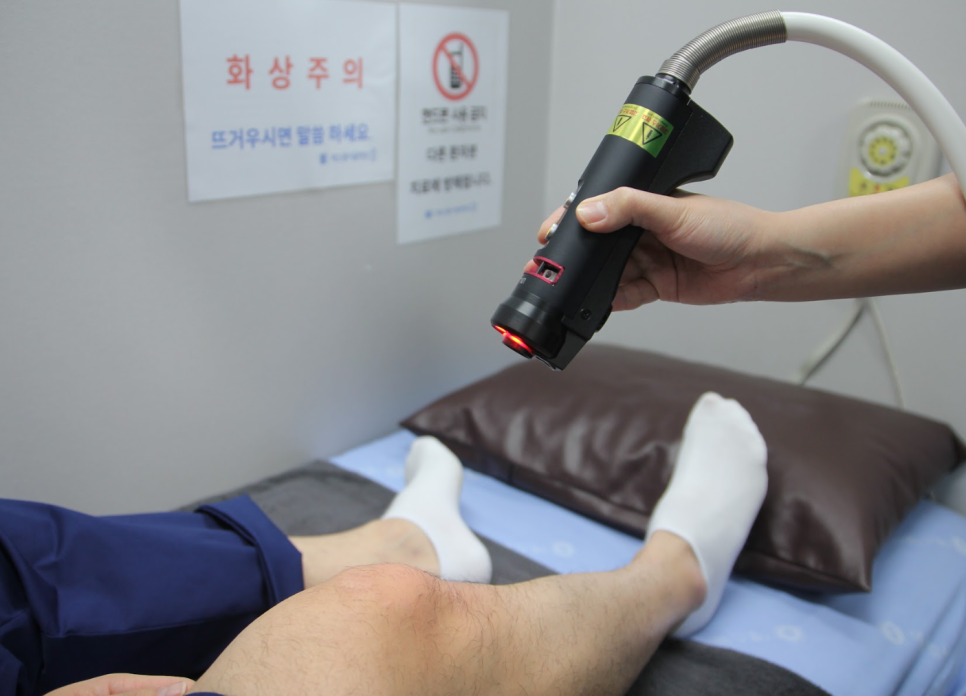
After knee shockwave therapy, you may temporarily notice some stiffness or slightly increased soreness.
This can be a normal part of the tissue-repair process, but if the pain continues, be sure to discuss it with your treating physician.
Frequently Asked Questions
1. Does knee shockwave therapy hurt a lot?
Answer: Because the treatment stimulates the affected area directly, you may feel some mild soreness or discomfort. The intensity is adjusted to match each patient’s pain tolerance.
2. How many sessions are needed, and how often?
Answer: Treatment is generally given once or twice a week. Reports indicate that under the 2026 private supplemental insurance guidelines, up to 6 sessions per area and 12 sessions per year may be covered. It’s best to confirm the exact number of sessions and the latest coverage criteria with your medical provider.
3. Can I return to daily activities right after the procedure?
Answer: Because it’s a non-invasive treatment, you can typically go back to your normal routine immediately afterward. That said, it’s best to avoid intense exercise or excessive joint use on the day of the procedure.
4. Are there cases where someone can’t receive shockwave therapy?
Answer: Treatment may be limited for areas with severe acute inflammation or skin conditions, as well as for pregnant patients or those taking blood thinners, so a consultation beforehand is essential.
5. Is the cost covered by supplemental insurance?
Answer: Shockwave therapy is not covered by national health insurance and is billed as an out-of-pocket procedure. Reports indicate that under the 2026 guidelines, private supplemental insurance often only covers up to 6 sessions per area per year and 12 sessions total per year, so it’s worth checking your policy’s terms in advance.


References
· Korea Disease Control and Prevention Agency, “Osteoarthritis,” National Health Information Portal, 2026. Link
· Newspim, “Degenerative Arthritis Patients Surpass 4 Million — Caution Advised as Winter Worsens Symptoms,” 2026. Link
· Cheon Dong-il et al., “Recent Advances in Extracorporeal Shock Wave Therapy,” Journal of the Korean Orthopaedic Association, 2024. Link
· Nate News, “Shockwave Therapy Recommended at Up to 6 Sessions per Area, 12 Sessions per Year — Exceeding the Limit Excludes Insurance Coverage,” 2026. Link
This article is provided for general health information purposes only and is not a substitute for individual diagnosis or treatment. If you’re experiencing symptoms, please consult a medical professional.