Tag: Lifestyle Habits

  • Shoulder Pain Causes: 5 Warning Signs of Frozen Shoulder or Rotator Cuff Tear

    Shoulder Pain Causes: 5 Warning Signs of Frozen Shoulder or Rotator Cuff Tear

    SummaryShoulder pain causes include frozen shoulder, rotator cuff tears, calcific tendinitis, and more. This guide covers the risks of leaving it untreated, a self-check checklist, non-surgical orthopedic treatments, and national health insurance statistics.

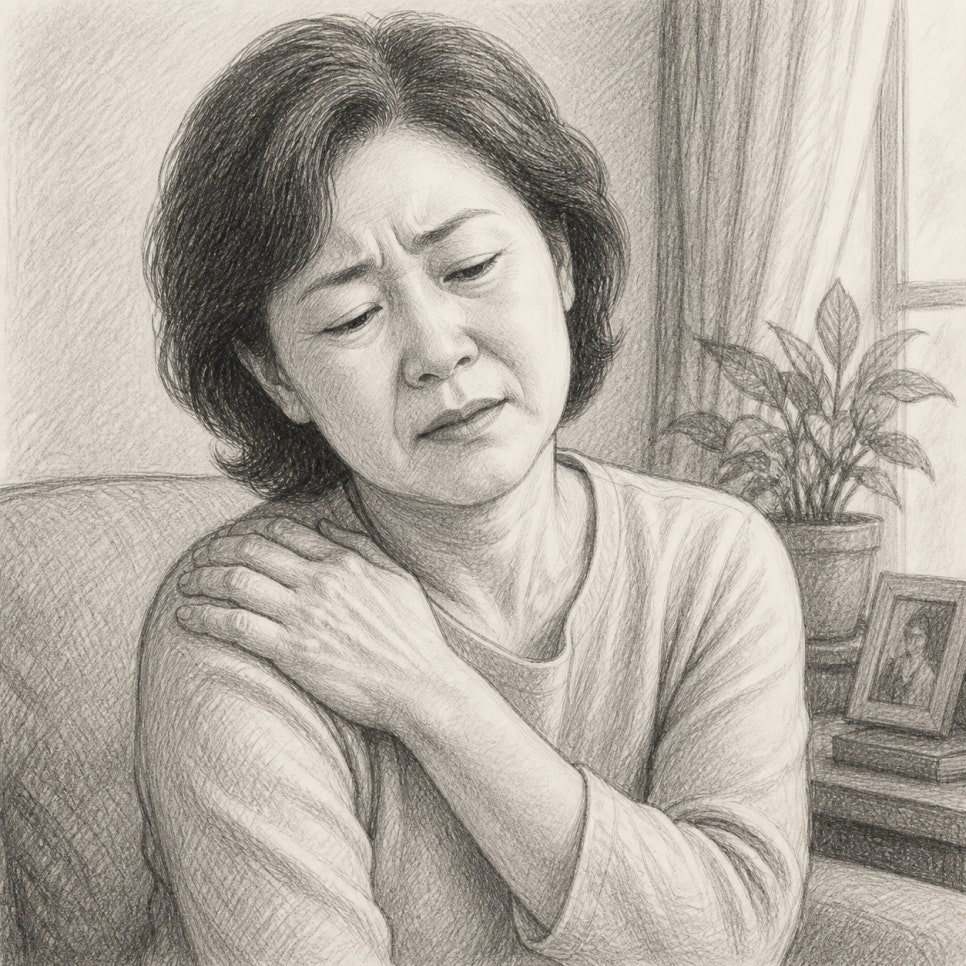
    Have you ever felt a sharp, stabbing pain in your shoulder while changing clothes or reaching overhead?

    It’s easy to brush off as nothing serious,
    but leaving the underlying shoulder pain causes untreated can let it progress into a condition like frozen shoulder or a rotator cuff tear, both of which take far longer to treat.
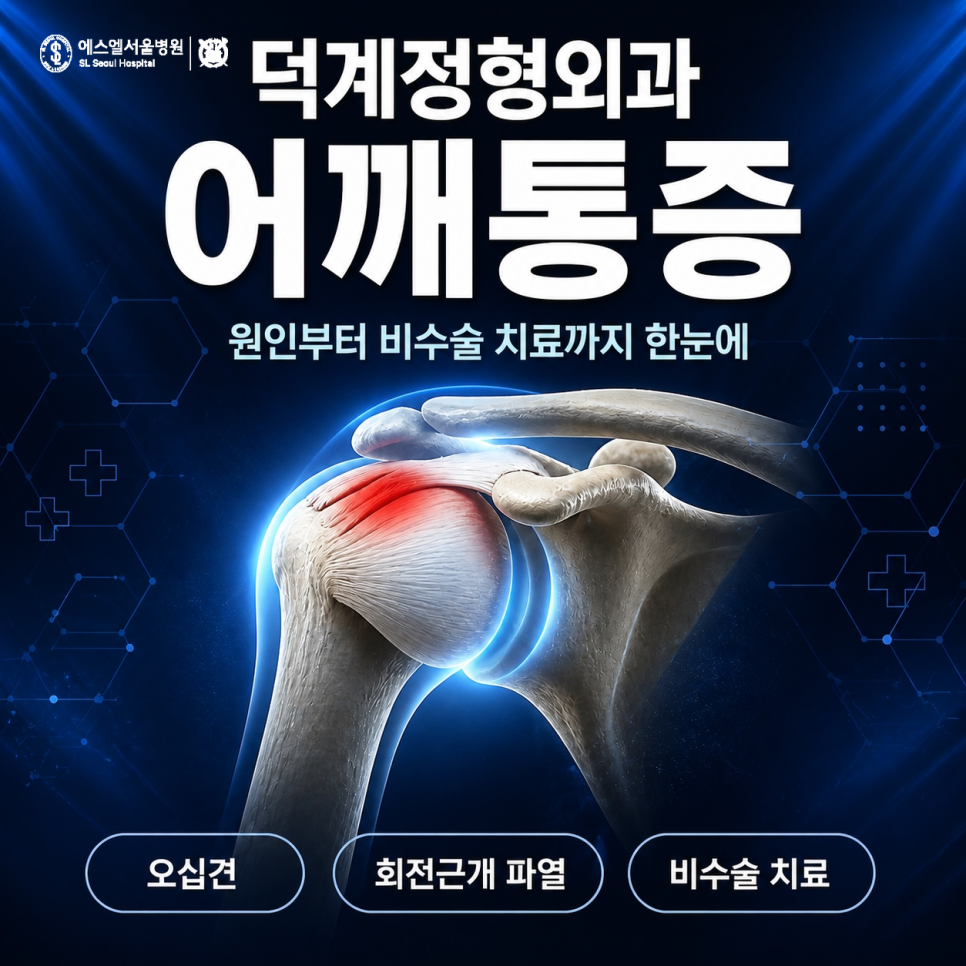
    shoulder pain causes

    Key Takeaways
    Shoulder pain causes generally fall into three categories — frozen shoulder (adhesive capsulitis), rotator cuff tears, and calcific tendinitis — and they tend to show up differently depending on age and daily habits.
    This article walks through a self-check method for telling these causes apart by symptom, the non-surgical treatments orthopedic clinics use, and daily habits that help prevent a recurrence.

    Shoulder Pain Causes: What Are They?
    shoulder pain causes illustration 2

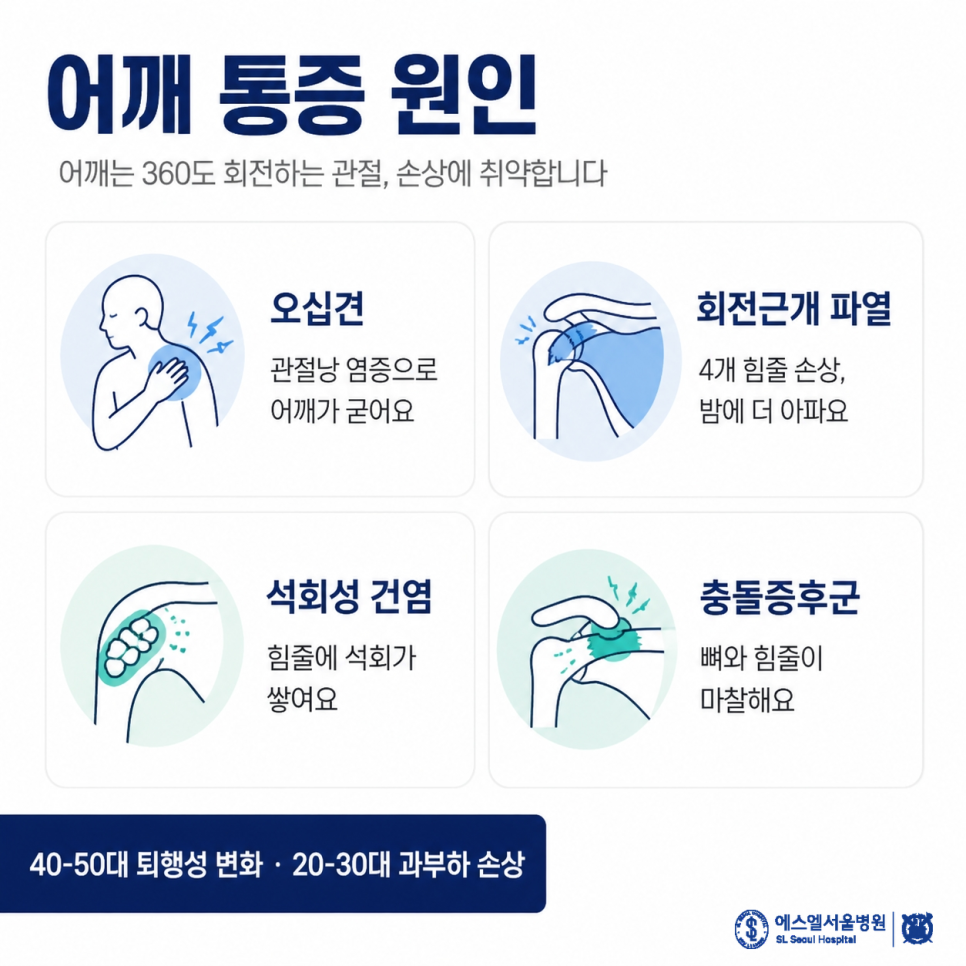
    Shoulder pain causes generally break down into three types: inflammation of the joint capsule, tendon damage, and friction between bone and tendon.

    The shoulder is the only joint in the body that rotates through nearly 360 degrees,
    and that wide range of motion is exactly what makes it so easy to injure.
    shoulder pain causes illustration 3

    The 3 Most Common Causes of Shoulder Pain

    • Frozen shoulder (adhesive capsulitis) — Inflammation of the capsule surrounding the joint causes the shoulder to stiffen up. A defining feature is that the arm won’t lift easily, whether you try to raise it yourself or someone else helps.
    • Rotator cuff tear — One or more of the four tendons that support the shoulder becomes torn or damaged. Pain typically worsens when lifting the arm to a specific angle, and night pain is common.
    • Other conditions — Calcific tendinitis, where calcium deposits build up in the tendon, and impingement syndrome, where bone and tendon rub against each other, are also common causes.
    Key Points
    ✅ Ages 40-50 and up: Frozen shoulder and degenerative changes in the rotator cuff are cited as the leading causes.
    ✅ Ages 20-30: Sports injuries or repetitive shoulder overuse from smartphone and computer use can also be a factor.

    shoulder pain causes illustration 4

    These age-related patterns are general reference information — the actual cause needs to be confirmed with a detailed examination.

    National statistics show that shoulder pain is far from a rare problem.
    According to Korea’s Health Insurance Review and Assessment Service, the number of frozen shoulder patients rose from 731,346 in 2015 to 789,403 in 2019 — a 7.9% increase over five years.
    Over the same period, the increase among male patients was 12.51%, more than double the rate for women (4.93%), and clinic visits peaked in March each year.

    According to the Korea Disease Control and Prevention Agency’s health information portal, frozen shoulder is a common condition affecting about 2% of the general population.


    How Do You Tell Frozen Shoulder Apart From a Rotator Cuff Tear?

    With frozen shoulder, the joint itself is stiff, so it won’t move freely even when someone else lifts your arm for you. With a rotator cuff tear, there’s pain, but the arm can still be raised with assistance — that’s the key difference.

    Both conditions are easy to mistake for simple muscle soreness early on, which is why an accurate diagnosis matters.

    Frozen Shoulder vs. Rotator Cuff Tear

    Category Frozen Shoulder Rotator Cuff Tear
    When someone else lifts your arm Doesn’t lift easily Lifts relatively well
    Pain pattern Stiffness throughout the whole shoulder Concentrated when moving in a specific direction
    Course Most cases improve within 1-2 years Tear can widen if left untreated

    “Frozen shoulder is one of the most common conditions causing chronic shoulder pain and restricted movement, and it resolves on its own in most cases within one to two years.”

    That’s how the Korea Disease Control and Prevention Agency’s health information portal describes frozen shoulder.
    shoulder pain causes illustration 5

    Check These Signs If You Have Shoulder Pain

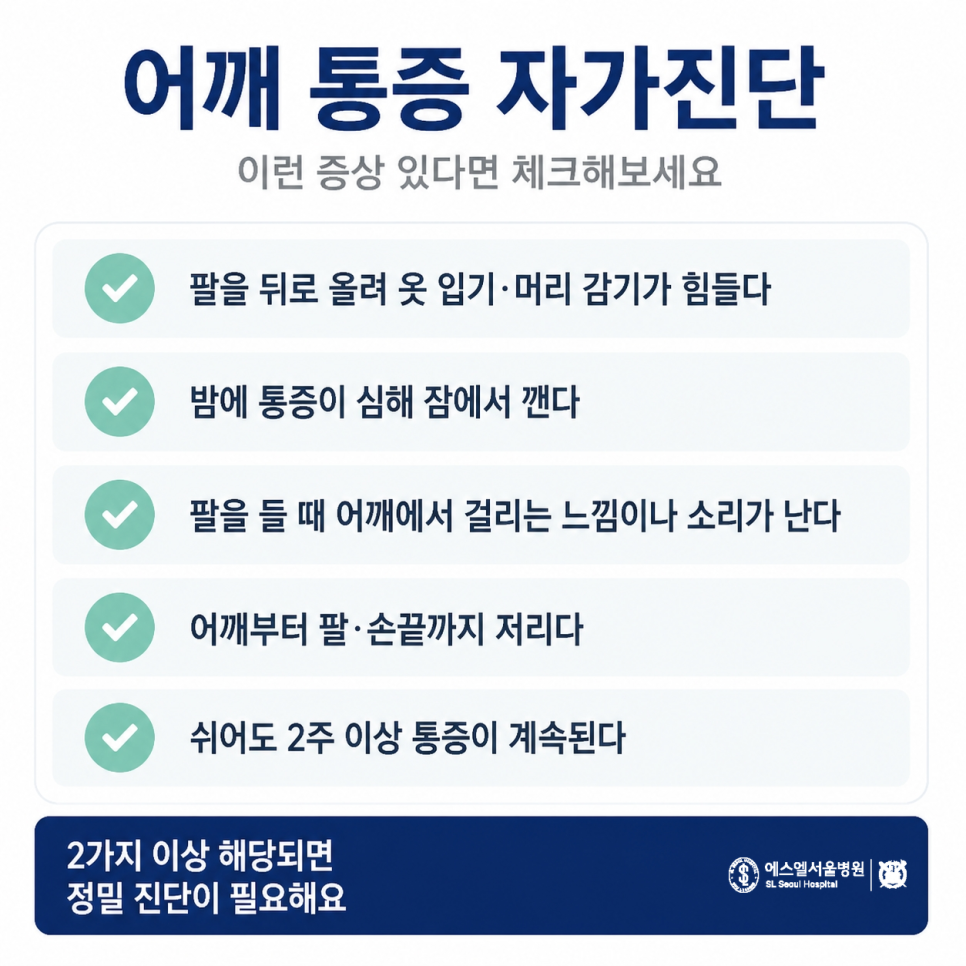
    Self-Check Checklist
    ✅ It’s hard to reach behind your back to get dressed or wash your hair
    ✅ Pain gets worse at night and frequently wakes you up
    ✅ You feel a catching sensation or hear a clicking sound inside the shoulder when raising your arm
    ✅ A tingling or numb feeling spreads from the shoulder down the arm to the fingers
    ✅ The pain continues for more than 2 weeks even with rest
    Important
    If two or more of these apply to you, it may be more than simple fatigue — we recommend getting a thorough evaluation at an orthopedic clinic.

    What Non-Surgical Treatments Do Orthopedic Clinics Use?

    Seeking care early means non-surgical treatment alone may be enough to see improvement.

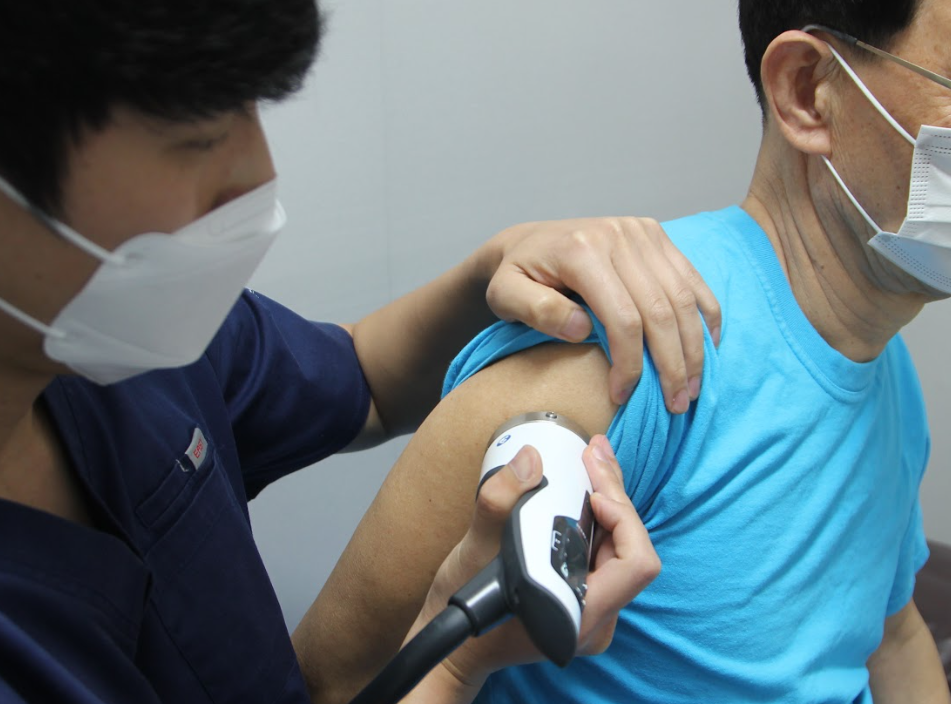
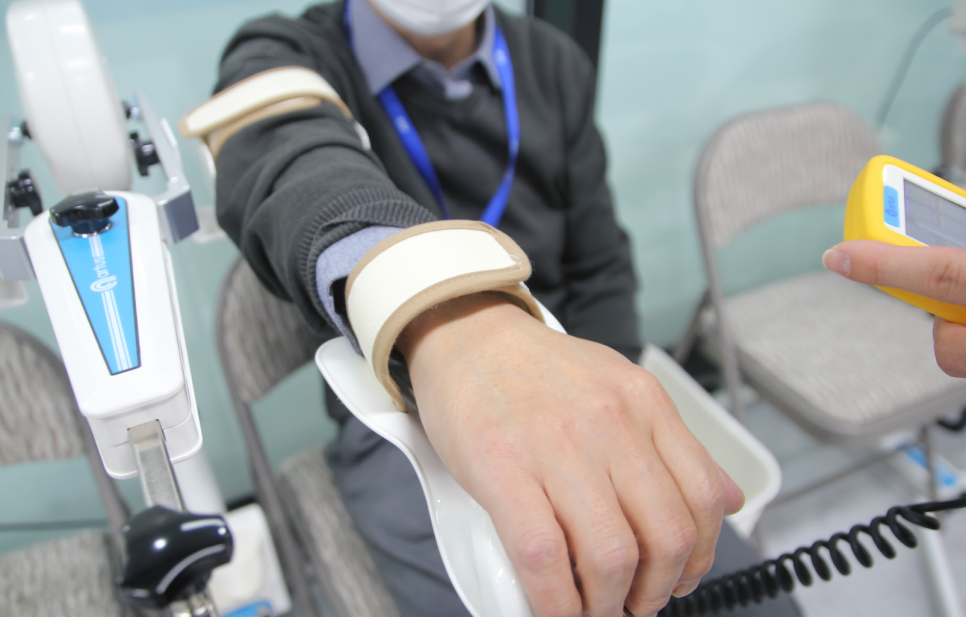
    Orthopedic clinics typically start with an X-ray or ultrasound to assess the condition, then choose a treatment approach based on the symptoms and extent of damage.
    shoulder pain causes illustration 6

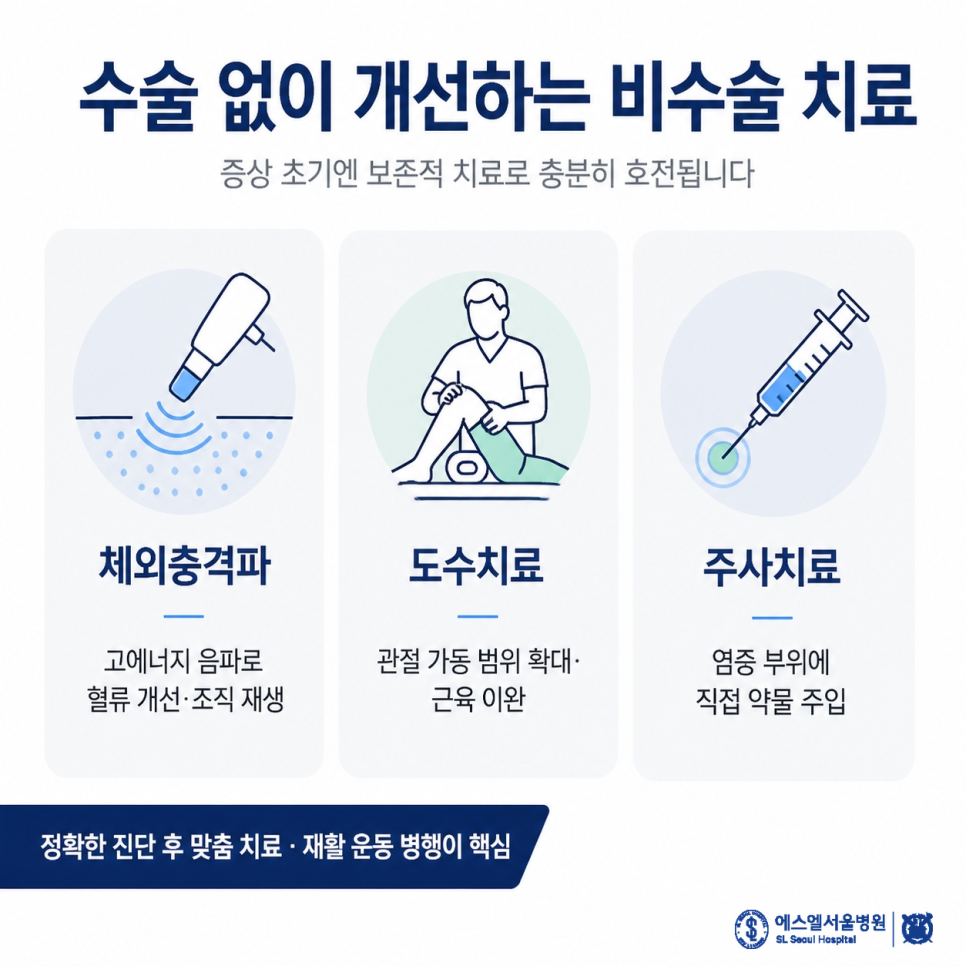
    3 Common Non-Surgical Treatments

    Treatment How It Works
    Extracorporeal Shock Wave Therapy (ESWT) Delivers high-energy sound waves to the painful area to help improve blood flow and encourage tissue repair
    Manual Therapy A physical therapist uses hands-on techniques that may help increase joint range of motion and relieve muscle tension
    Injection Therapy Medication is injected directly into the inflamed area to help reduce pain and support recovery

    shoulder pain causes illustration 7

    In orthopedic care, surgery isn’t usually the automatic first recommendation — non-surgical treatment is typically tried first, alongside rehabilitation exercises.

    That said, in cases such as a complete rotator cuff tear, where the tendon isn’t able to heal on its own, a detailed exam is needed first to check how far the damage has progressed.
    shoulder pain causes illustration 8


    How Do You Choose a Good Orthopedic Clinic, and How Should You Manage Your Shoulder Day to Day?

    Shoulder joint treatment calls for a careful, individualized approach, so it’s worth looking at how a clinic is set up rather than choosing one just because it’s nearby.

    shoulder pain causes illustration 9

    Key Points
    ✅ Whether a board-certified orthopedic specialist provides the care directly and has solid clinical experience
    ✅ Whether the clinic has detailed diagnostic equipment and offers one-on-one rehabilitation programs
    ✅ Whether the clinic looks beyond pain relief to address the underlying cause and daily habits

    Aftercare matters just as much as the treatment itself.
    Without it, symptoms can easily come back.
    shoulder pain causes illustration 10

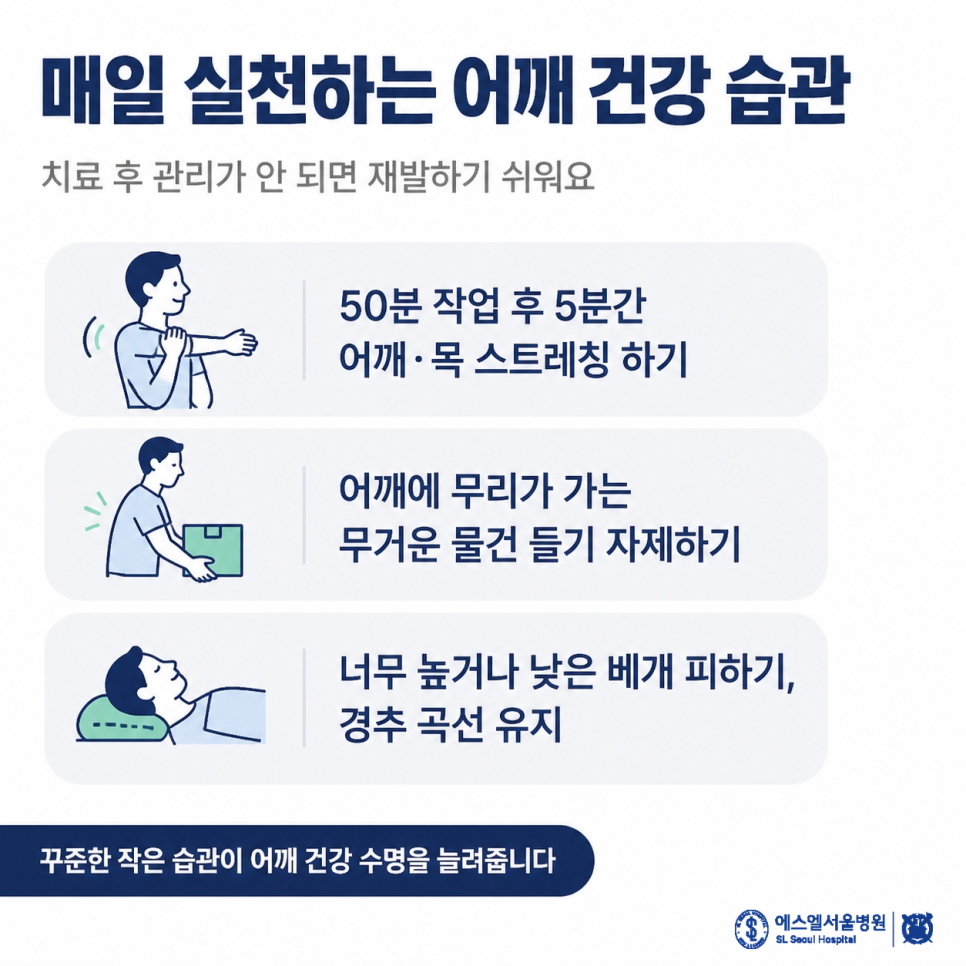
    Daily Habits That Support Shoulder Health

    • After 50 minutes of work, take a 5-minute break to gently stretch your shoulders and neck
    • Avoid lifting heavy objects that strain the shoulder whenever possible
    • Use a pillow that supports the natural curve of your neck instead of one that’s too high or too low
    Keeping up these habits consistently can help maintain your recovery after treatment and lower the risk of recurrence.

    shoulder pain causes illustration 11

    If your discomfort continues and you’re not sure what’s behind your shoulder pain, don’t hesitate to get evaluated by an orthopedic specialist.

    For more information on spine and joint health, visit the SLS Seoul Hospital for Spine & Joints homepage.

    shoulder pain causes illustration 12

    shoulder pain causes illustration 13

    shoulder pain causes illustration 16


    Frequently Asked Questions

    1. Should I just rest completely when my shoulder hurts?
    Rest is important during the acute inflammation phase, but staying still for too long risks stiffening the joint. It’s best to combine rest with gentle stretching, within a range that doesn’t aggravate the pain.

    2. Does rotator cuff damage heal on its own?
    With a partial tear or simple inflammation, conservative treatment can bring noticeable improvement, but a completely torn tendon is unlikely to reattach on its own. A detailed exam is needed to check how far it has progressed.

    3. Is extracorporeal shock wave therapy very painful?
    You may feel some mild soreness or discomfort as the shock wave energy is delivered. The intensity can be adjusted during treatment, so just discuss it with your therapist.

    4. How can you tell frozen shoulder apart from a rotator cuff tear?
    With frozen shoulder, the joint itself is often so stiff that the arm won’t lift even with someone else’s help. With a rotator cuff tear, there’s pain, but the arm can still be raised with assistance.


    References

    · Korea Disease Control and Prevention Agency, National Health Information Portal, “Frozen Shoulder (Adhesive Capsulitis).” View source
    · Newsis, “Frozen Shoulder No Longer Just a Condition for Women in Their 50s,” 2020. (Citing Health Insurance Review and Assessment Service data) View source
    · Korean Orthopaedic Association, “Rotator Cuff Tear.” View source
    · NCBI PMC, “Health Care Utilization for Common Shoulder Disorders: Analysis of the 2010–2019 National Patient Sample Data from the Health Insurance Review and Assessment Service in Korea,” 2024. View source


    This article is intended for general health information purposes only and is not a substitute for individual diagnosis or treatment. If you have symptoms, please consult a specialist.
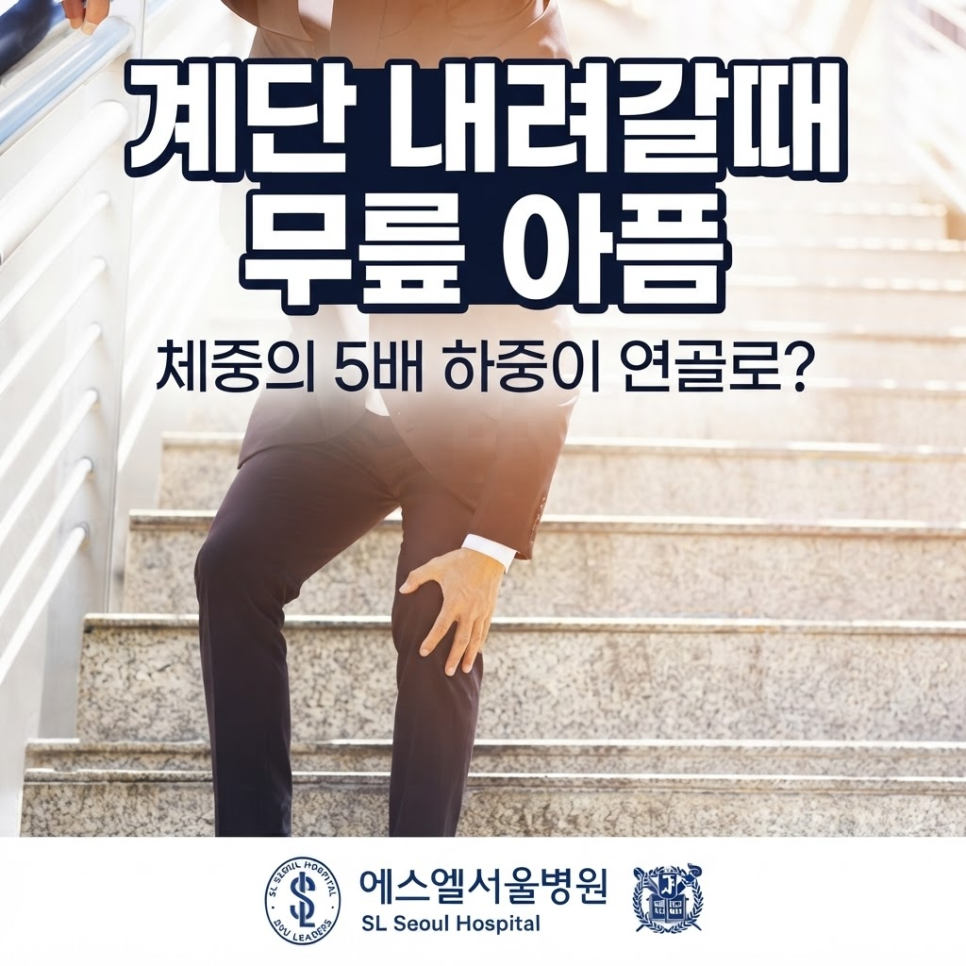

  • Knee Pain Going Down Stairs: Why Cartilage Load May Reach 5x Body Weight

    Knee Pain Going Down Stairs: Why Cartilage Load May Reach 5x Body Weight

    SummaryThis orthopedic guide explains why knee pain going down stairs happens, the symptoms and causes of chondromalacia patella, plus lifestyle habits and quadriceps-strengthening exercises that help ease the load on your knee cartilage.

    Does the front of your knee ache only when you’re going down stairs, even though walking on flat ground feels perfectly fine?

    While everyone else strides down confidently, you’re gripping the handrail and stepping carefully, feeling a bit self-conscious about it.

    But this kind of symptom isn’t just ordinary muscle soreness — it could be a warning sign from your knee cartilage.

    knee pain going down stairs

    In most cases, this symptom isn’t simple muscle soreness — it can be a red flag from your knee cartilage.

    In orthopedics, this condition is known as chondromalacia patella.

    knee pain going down stairs illustration 2

    This article looks at why knee pain going down stairs becomes so much more intense, along with the underlying structural issue of chondromalacia patella.

    We’ve also covered lifestyle habits that reduce strain on the knee cartilage and answered frequently asked questions, so be sure to read through to the end.

    Why Does Knee Pain Get So Much Worse Going Down Stairs?

    That’s because going down stairs is estimated, according to sources such as Hidoc, to concentrate a load of roughly 3 to 5 times your body weight onto the kneecap and cartilage of a single leg.

    Knee pain when descending stairs refers to the pain caused by this sudden load concentrating on the kneecap and cartilage at the front of the knee.

    When walking on flat ground, the load is spread evenly across the feet and legs.

    But when descending stairs, the impact that needs to be absorbed concentrates on the knee cartilage and thigh muscles.

    If your lower body strength is lacking or your knee joint alignment is off, that impact isn’t absorbed properly, and the pain becomes even more noticeable.

    knee pain going down stairs illustration 3

    Key Point
    According to sources such as Hidoc, the load placed on the knee joint when going down stairs is estimated at about 3 to 5 times your normal body weight.
    Per the same source, a person weighing 60 kg (about 132 lb) could experience a momentary impact of nearly 180–300 kg (roughly 400–660 lb) on the knee.
    Movement Load on the Knee
    Walking on flat ground About 1–1.5x body weight
    Climbing stairs About 3x body weight
    Descending stairs About 3–5x body weight

    Figures above are estimates reported by sources such as Hidoc.


    What Is Chondromalacia Patella, the Condition Behind Cartilage Knee Pain?

    Chondromalacia patella refers to a condition in which the soft cartilage on the underside of the kneecap weakens or becomes damaged, causing pain.

    It’s commonly seen in young to middle-aged adults, particularly women.

    Friction that occurs when bending and straightening the knee produces a stiff sensation along with sharp, shooting pain.

    There’s a reason it shows up more often in women.

    Because women tend to have a wider pelvis, the thighbone angles inward more sharply than in men, which increases the outward pull the front thigh muscles exert on the kneecap.

    It typically starts as a dull ache, but if left unaddressed, the cartilage damage can spread and may eventually raise the risk of arthritis.

    knee pain going down stairs illustration 4

    Caution
    If you hear a popping sound in your knee when going down stairs, or feel stiffness at the front of the knee after standing up from prolonged sitting, this could signal cartilage damage and is worth monitoring closely.

    What Lifestyle Habits Help Protect Your Knee Cartilage?

    The first priority is reducing the friction and pressure placed on the knee joint.

    Protecting your knee cartilage means training the surrounding muscles to absorb impact on the cartilage’s behalf.

    Rather than simply enduring the discomfort when your knee feels achy, it’s worth adjusting your habits one at a time.

    Most importantly, strengthening the muscles around the knee — especially the quadriceps — helps those muscles absorb the impact that would otherwise hit the knee cartilage.

    knee pain going down stairs illustration 5

    Checklist
    ✅ Hold the handrail when going down stairs to distribute your body weight.
    ✅ Avoid high heels or flat shoes with little cushioning.
    ✅ Limit squatting or sitting cross-legged.
    ✅ Strengthen your quadriceps with flat-ground walking or stationary cycling.
    Takeaway
    Consistently strengthening your quadriceps and managing these habits may help ease the strain you feel on your knees when going down stairs.

    If it’s hard to manage on your own or the pain keeps recurring, seeing an orthopedic specialist is another option.

    You can find more information at the SL Seoul Hospital Spine & Joint Center homepage.


    Frequently Asked Questions

    1. My knee only hurts when going down stairs — is that okay?
    If the pain is concentrated during descent, it may signal that the cartilage behind the kneecap is being irritated, so it’s best to avoid strenuous exercise and monitor how it progresses.

    2. Is it okay to go hiking if I have knee cartilage pain?
    Because a large load hits the knee cartilage during the descent, it’s advisable to stick to flat-ground walks or stationary cycling instead of hiking while the pain persists.

    3. Should I use heat or ice to relieve the pain?
    Cold compresses are generally recommended for acute pain with swelling or warmth, while heat therapy is generally used for chronic, stiff discomfort by improving blood circulation.

    4. Is chondromalacia patella more common in women?
    Because of pelvic structure, women tend to have a larger Q-angle than men, which increases the pull on the kneecap — making this condition relatively common among younger and middle-aged women.

    knee pain going down stairs illustration 6


    References

    · Hidoc, “Pain in the Front of the Knee When Going Down Stairs May Signal Patellofemoral Syndrome, Not Simple Arthritis,” Hidoc. Link
    · Asan Medical Center, “Chondromalacia,” Asan Medical Center Disease Encyclopedia. Link
    · Seoul National University Hospital, “Chondromalacia of the Patella,” Seoul National University Hospital Medical Information. Link

    knee pain going down stairs illustration 7

    This article is intended for general health information purposes only and is not a substitute for individual diagnosis or treatment. If you’re experiencing symptoms, please consult a medical professional.

  • Herniated Disc Symptoms: 3 Early Warning Signs You Shouldn’t Ignore

    Herniated Disc Symptoms: 3 Early Warning Signs You Shouldn’t Ignore

    SummaryIf your lower back feels stiff every morning and the discomfort radiates down your legs, these could be herniated disc symptoms. This guide covers the causes, why the pain worsens when sitting, a self-check list, non-surgical treatment options offered at hospitals, and everyday habits that help prevent it.

    We’ve all had mornings when our lower back feels stiff the moment we wake up.

    It’s easy to brush it off as simple fatigue, but if the pain keeps coming back day after day, that’s a different story.

    It may not be ordinary muscle soreness at all — it could actually be a herniated disc symptom.

    herniated disc symptoms

    In this article, we’ll explain why morning back stiffness can be a warning sign, what a herniated disc actually is, and why leg numbness often shows up alongside it.

    You’ll also find a self-check list, the non-surgical treatments hospitals offer, and posture habits you can start changing today.

    Herniated disc symptoms illustration 2

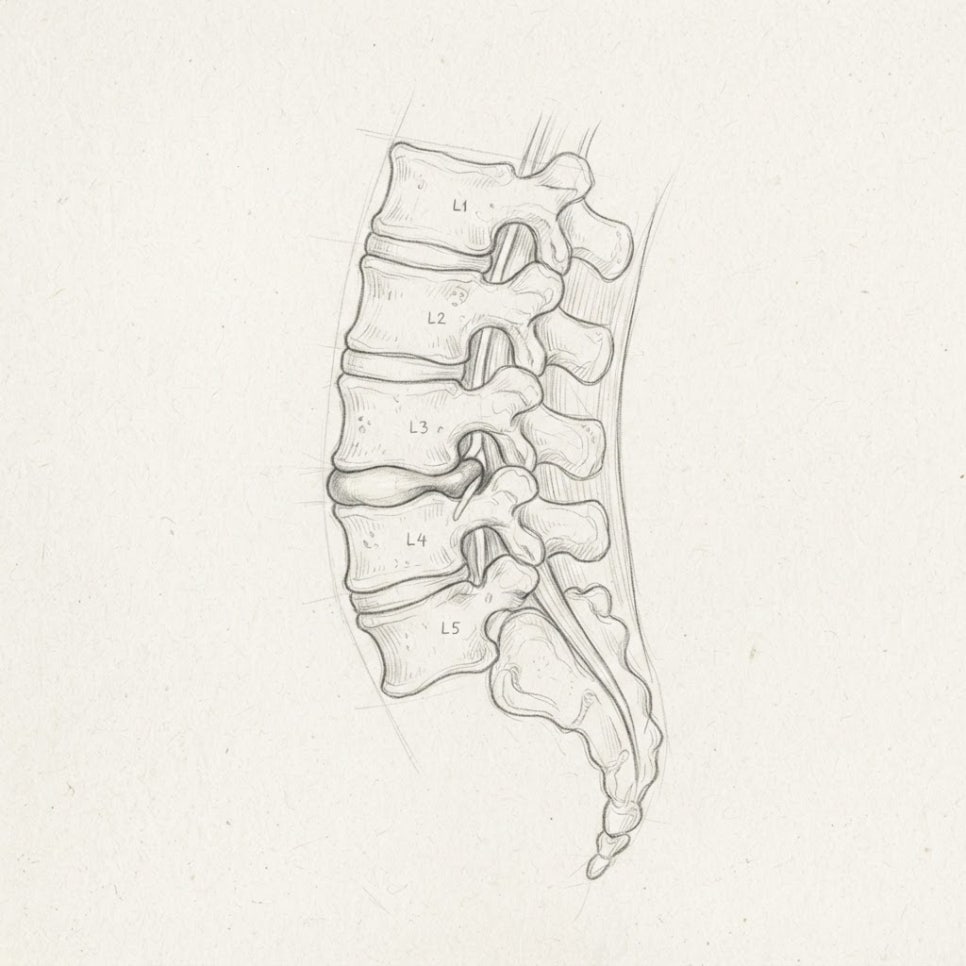
    What Exactly Is a Herniated Disc (Disc Herniation)?

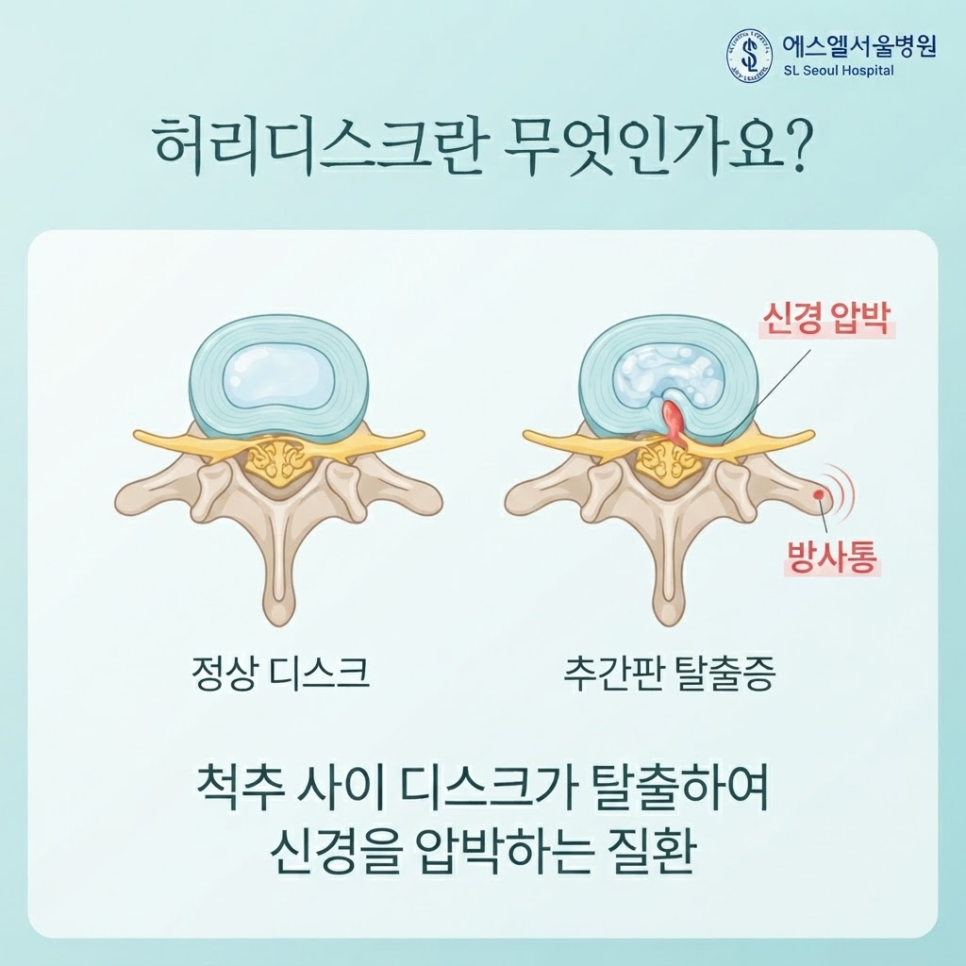
    To put it simply, a herniated disc is a condition in which a spinal disc slips out of place and presses on a nerve, causing pain.

    A herniated disc (disc herniation) occurs when a disc located between the vertebrae moves out of its normal position, compressing a nerve and causing pain.

    According to the Korea Disease Control and Prevention Agency’s National Health Information Portal, most patients improve with non-surgical treatment alone — such as medication, rest, and exercise therapy — and surgery is considered only when severe neurological symptoms, like muscle weakness or bladder and bowel dysfunction, are present.

    So rather than worrying about surgery the moment pain shows up, the first step is to get an accurate exam and find out how advanced the condition is.

    Herniated disc symptoms illustration 3

    Key Points
    ✔ A herniated disc causes pain when a displaced disc presses on a nerve.
    ✔ Early- to mid-stage cases often improve with non-surgical treatment.
    ✔ If pain keeps recurring, get a thorough exam instead of waiting it out.

    Herniated Disc Symptoms: What Early Signs Should You Watch For?

    Herniated disc symptoms generally fall into three main signs.

    The most common are persistent lower back stiffness, numbness radiating down the leg, and pain that worsens while sitting.

    When a disc presses on a nerve, the pain doesn’t stay in the lower back — it can radiate through the hips and down the legs, a pattern known as radiating pain (sciatica).

    Sitting for long periods increases the pressure on the disc in particular, which is why pain often gets worse while seated and eases somewhat after standing up.

    Herniated disc symptoms illustration 4

    Self-Check List
    ✅ I feel persistent stiffness in my lower back
    ✅ Numbness radiates down into my leg
    ✅ The pain gets worse when I sit
    ✅ The pain intensifies when I cough or sneeze

    If two or more of these apply to you, it’s best to get an accurate diagnosis at a hospital rather than brushing it off.


    What Non-Surgical Treatments Do Hospitals Offer?

    When pain persists, orthopedic specialists typically consider non-surgical treatment as the first option, tailored to the stage of the condition.

    Surgery is reserved for a small subset of patients with serious symptoms, such as nerve paralysis or bladder dysfunction.

    Herniated disc symptoms illustration 5

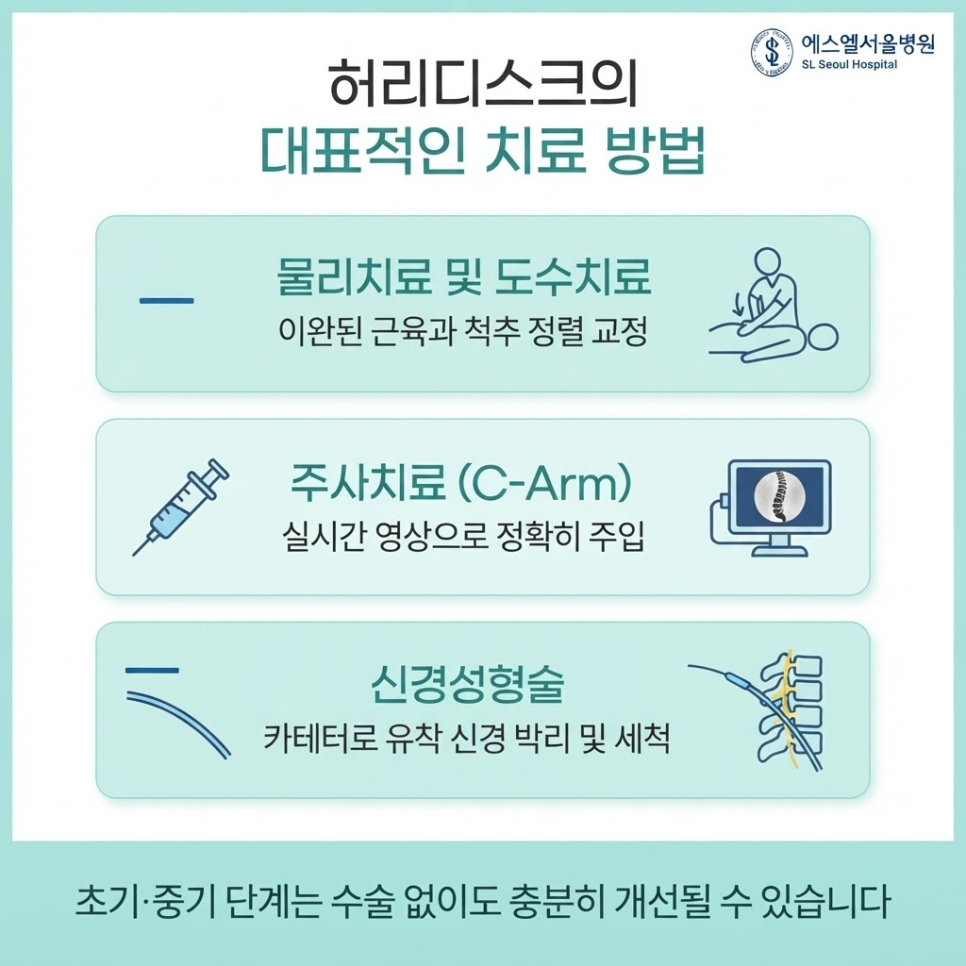
    1. Physical Therapy and Manual Therapy — Relaxes tight muscles around the spine while a therapist uses their hands or specialized tools to help correct spinal alignment and ease pain.
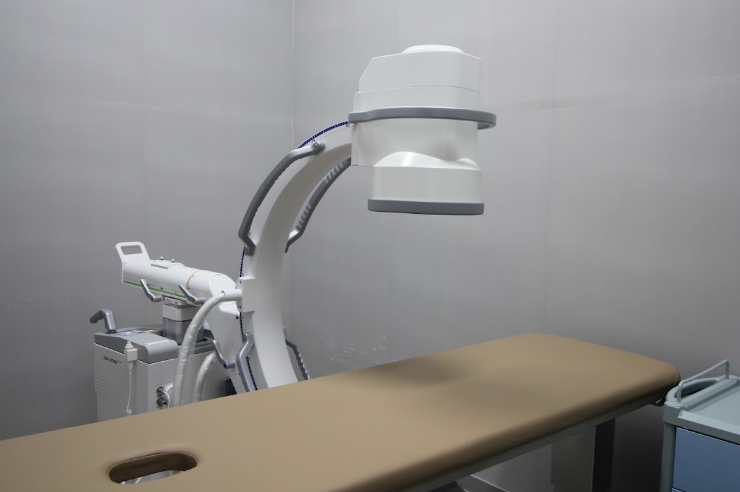
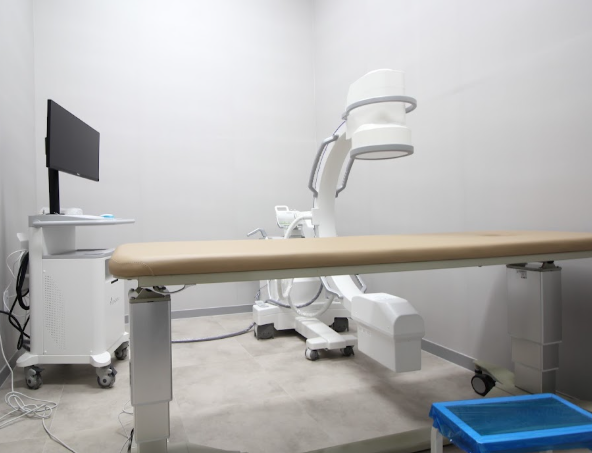
    2. Injection Therapy (C-arm fluoroscopy, etc.) — Uses real-time imaging to locate inflammation near the nerve and deliver medication precisely; the procedure is generally quick and may allow a relatively fast return to daily activities.
    3. Epidural Neuroplasty — A non-surgical procedure that inserts a catheter through the tailbone area to mechanically release adhesions around the nerve and flush out inflammatory substances.

    According to medical information from Asan Medical Center, epidural neuroplasty guides a catheter close to the affected area using imaging equipment, releasing adhesions and delivering medication directly to the site.

    Herniated disc symptoms illustration 6

    Key Points
    ✔ Most early- and mid-stage herniated discs can be managed without surgery.
    ✔ The right treatment depends on the cause and stage of the pain.
    ✔ If pain keeps recurring, don’t put off seeing a doctor for a consultation.

    If you’d like to learn more about the treatment approach that fits your stage of pain, you can find related information on the SL Seoul Spine & Joint Hospital website.


    Why Does a Herniated Disc Happen, and How Can You Prevent It?

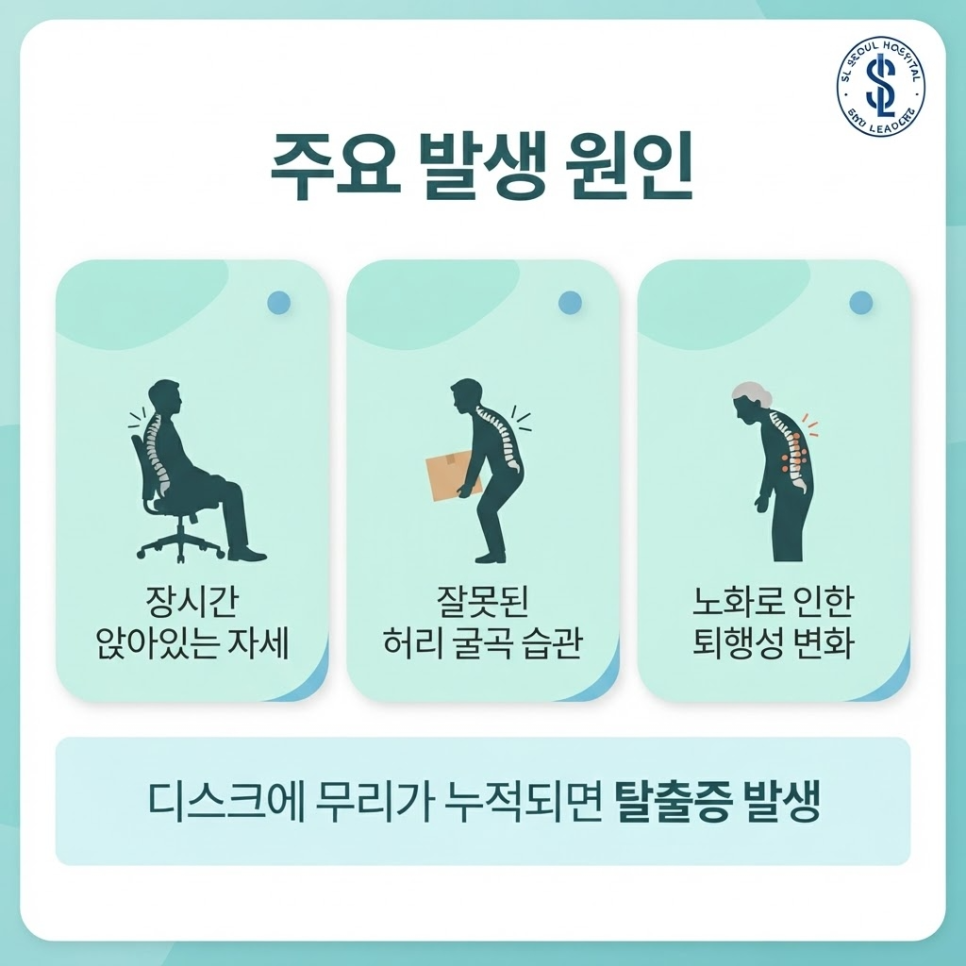
    Poor posture is one of the leading causes of back problems.

    The more time people spend sitting for work, the greater the strain placed on the spine.

    Habits like crossing your legs or slouching forward put repeated stress on the discs over time.

    Herniated disc symptoms illustration 7

    Beyond age-related degenerative changes, poor lifestyle habits are increasingly linked to similar symptoms showing up in younger people as well.

    Fortunately, identifying the cause early and correcting your posture can help reduce the radiating pain caused by nerve compression.

    Herniated disc symptoms illustration 8

    Key Takeaway
    Identifying the cause early and correcting your posture may help reduce the radiating pain caused by nerve compression.

    For prevention, regular stretching to strengthen the muscles around the spine is recommended.

    Avoid staying in one position for too long, and make it a habit to get up and move periodically.

    Light aerobic activities like walking or swimming tend to ease strain on the lower back more than heavy weight training.

    Herniated disc symptoms illustration 9

    A Word of Caution
    When lifting heavy objects, avoid bending at the waist. Instead, bend your knees and keep the object close to your body as you lift — this helps distribute the load away from your lower back.

    A single small posture habit may play a role in whether pain returns.

    We recommend changing your small habits one at a time, starting today.


    Frequently Asked Questions

    1. Does having a herniated disc always require surgery?
    Not necessarily. In the early stages, non-surgical methods such as physical therapy, manual therapy, and injection therapy can help improve symptoms. Surgery is only considered for patients with severe symptoms, such as nerve paralysis.

    2. How can I tell early herniated disc symptoms apart from simple muscle soreness?
    Simple muscle soreness usually fades within a few days, whereas early herniated disc symptoms tend to involve recurring stiffness along with leg numbness or pain that worsens while sitting.

    3. Is leg numbness also related to a herniated disc?
    Yes. When a herniated disc presses on a nerve, it can cause radiating pain and numbness that extends beyond the lower back into the hips and legs.

    4. What’s the best exercise for preventing back pain?
    Rather than strenuous forward-bending exercises, light walking on flat ground and exercises that stabilize the core muscles can be more beneficial for spine health.

    5. Is there a way to protect my back when sitting for long periods?
    Try standing up and stretching lightly every hour, and get in the habit of sitting with your lower back properly supported against the chair’s backrest.

    Herniated disc symptoms illustration 10

    Herniated disc symptoms illustration 11

    Herniated disc symptoms illustration 12

    Herniated disc symptoms illustration 13

    Herniated disc symptoms illustration 14


    References

    · Korea Disease Control and Prevention Agency, “Herniated Disc (Disc Herniation),” National Health Information Portal, 2024. View source
    · Asan Medical Center, “Epidural Adhesiolysis and Neuroplasty,” Medical Information, Asan Medical Center. View source


    This article is intended for general health information purposes only and is not a substitute for individual diagnosis or treatment. If you’re experiencing symptoms, please consult a medical professional.

  • Wrist Tenosynovitis Self-Check: 4 Signs From Pocheon Orthopedic Clinic

    Wrist Tenosynovitis Self-Check: 4 Signs From Pocheon Orthopedic Clinic

    SummaryIf you feel a sharp, stinging pain every time you bend your wrist, start with this wrist tenosynovitis self-check checklist. Pocheon Orthopedic Clinic breaks down the causes and symptoms of De Quervain’s disease, how it’s diagnosed, and the lifestyle habits that can help shorten recovery time.

    Do you feel a sharp, stinging pain every time you bend your wrist?
    Many people assume it’s just from overusing their hands and brush it off.

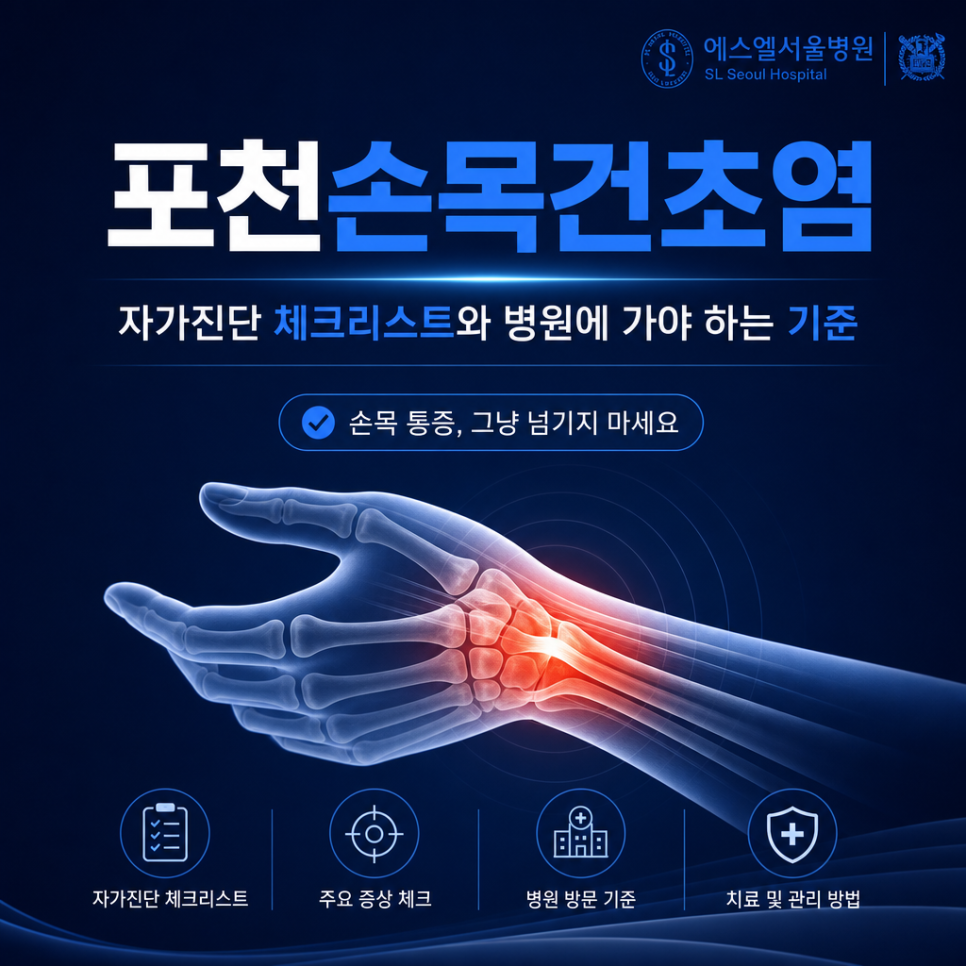
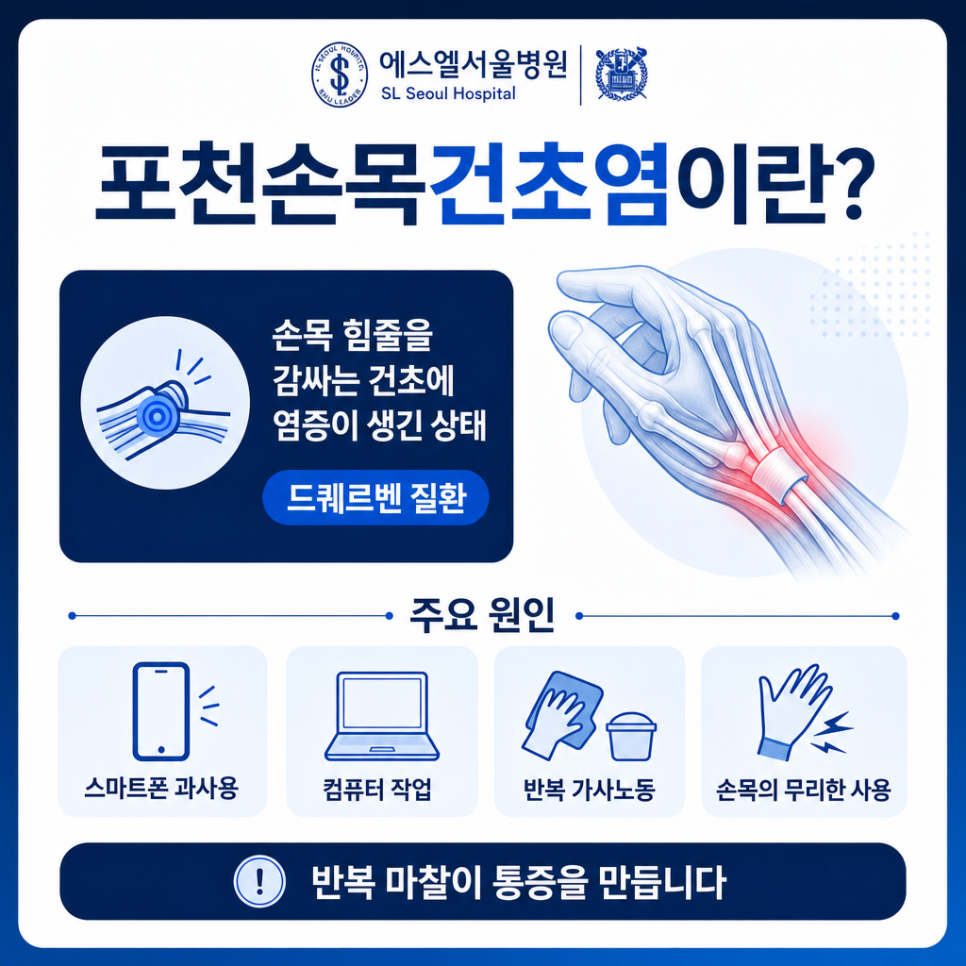
    That pain could actually be wrist tenosynovitis — inflammation of the tissue surrounding the wrist tendons.
    Left unaddressed, it can become chronic and take months to recover from.

    Below, we’ll walk through a wrist tenosynovitis self-check checklist and the signs that mean it’s time to see a doctor.

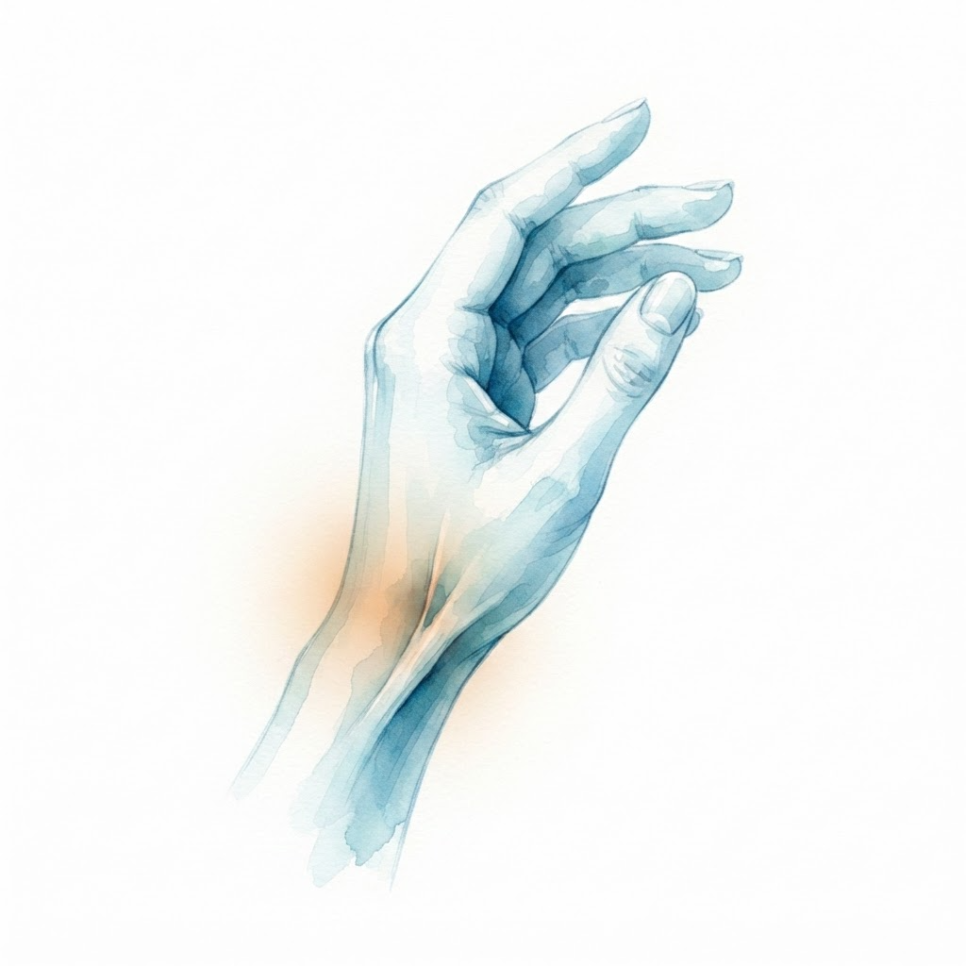
    wrist tenosynovitis self-check

    Key Points
    · We break down the causes and key symptoms of wrist tenosynovitis (De Quervain’s disease).
    · We introduce a wrist tenosynovitis self-check you can try at home right now.
    · We cover the lifestyle habits that can help speed recovery and when to see a doctor.

    wrist tenosynovitis self-check - related image 2

    What Is Wrist Tenosynovitis?

    Put simply, wrist tenosynovitis is inflammation of the sheath surrounding the tendon that runs to the thumb.
    Medically, it’s known by its official name, De Quervain’s disease.

    It tends to show up in people who use their wrists repetitively.
    Pain begins when the tendons that move the thumb pass through a narrow tunnel and repeated friction builds up over time.

    According to medical information from Seoul Asan Hospital, it’s especially common among office workers who use smartphones or computers heavily, as well as homemakers who do repetitive housework.
    It often starts as mild discomfort, but if left unaddressed it can seriously disrupt daily life, which is why early attention matters.

    wrist tenosynovitis self-check - related image 3


    How Can You Self-Check for Wrist Tenosynovitis at Home?

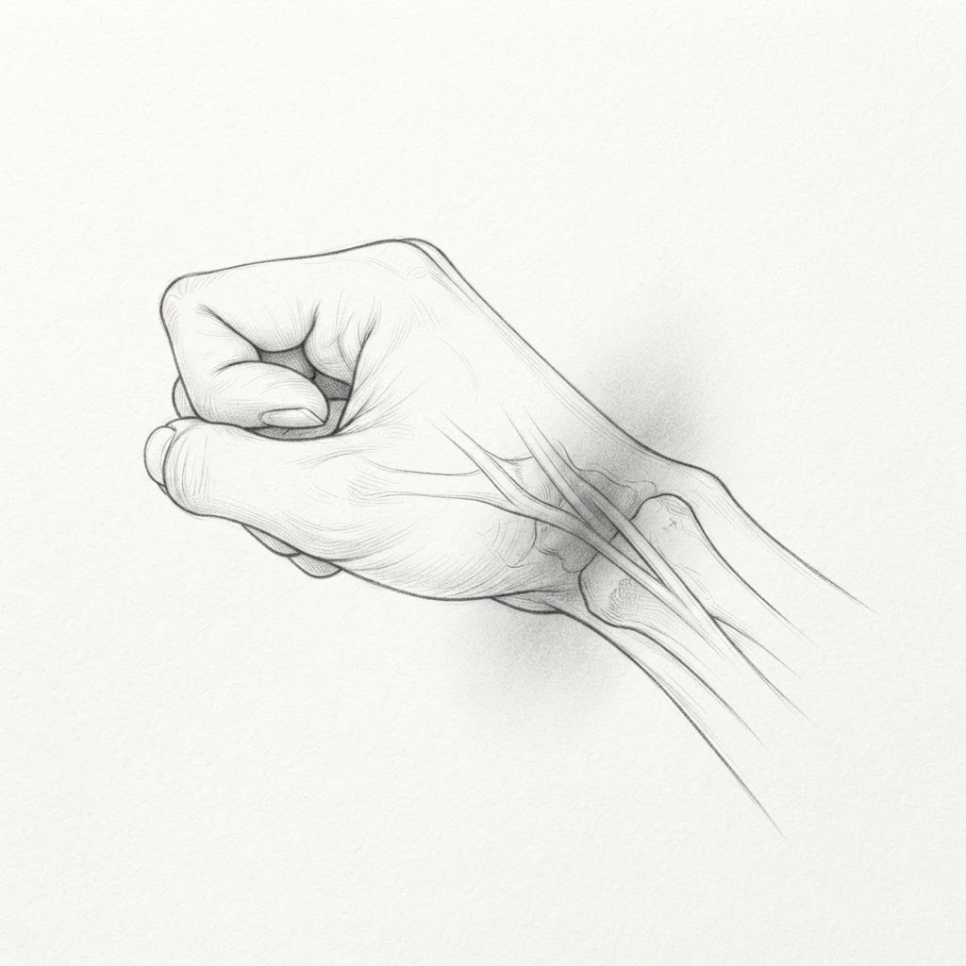
    The simplest method is a self-test known as the Finkelstein test.
    Fold your thumb into your palm, wrap your other four fingers around it to make a fist, then slowly bend your wrist toward your little finger.

    If this brings on sharp pain or a tingling, radiating sensation, wrist tenosynovitis may be the cause.
    Check the list below for other signs to watch for.

    Checklist
    ✅ Pain in the wrist area connecting to the thumb
    ✅ A sharp, stinging feeling when gripping or holding objects
    ✅ A creaking or grinding sensation when moving the wrist
    ✅ Wrist stiffness first thing in the morning

    If two or more of these apply to you, it may be an early sign of tenosynovitis rather than simple fatigue.
    It’s common for people to brush this off at first, only to end up seeing a doctor weeks later once the pain has worsened.

    wrist tenosynovitis self-check - related image 4


    Why Does Wrist Tenosynovitis Happen?

    In short, repetitive overuse of the wrist is the leading cause.
    It’s not a single motion but the same motion repeated over and over that increases friction between the tendon and its surrounding sheath.

    Cause Type Common Examples
    Device overuse Prolonged smartphone or computer use
    Repetitive labor Housework or jobs requiring heavy wrist use
    Poor posture Working for long periods with the wrist bent

    Some reports suggest it occurs more often in women.
    Perhaps because of this, it tends to appear more frequently among those who primarily handle childcare or housework.

    wrist tenosynovitis self-check - related image 5


    How Do Doctors Diagnose and Treat It?

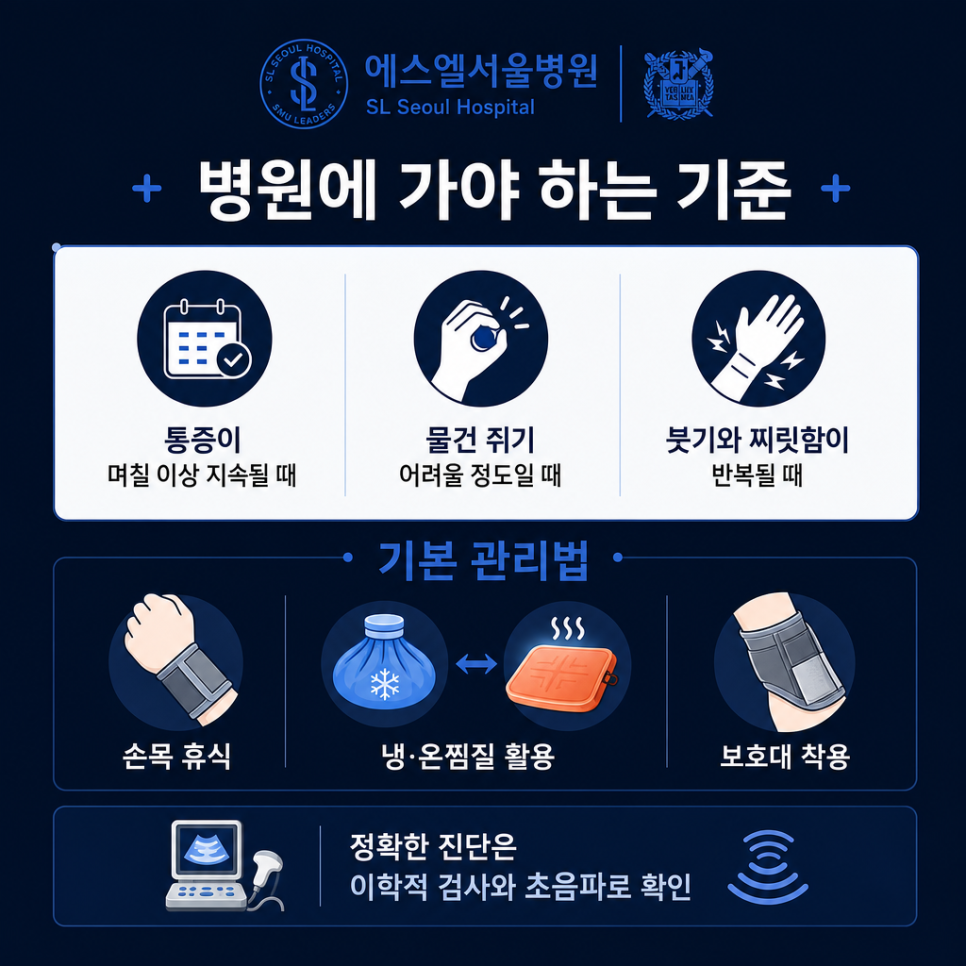
    If your self-check raises concern, it’s best to get an accurate diagnosis at an orthopedic clinic.
    A physical exam combined with an ultrasound can help confirm how inflamed the tendon sheath is.

    wrist tenosynovitis self-check - related image 6

    In the early stages, adequate rest is often combined with physical therapy.
    Depending on the case, medication or injections may also be used to help reduce inflammation.

    That said, treatment outcomes can vary depending on the severity of symptoms and individual lifestyle habits.
    For an accurate assessment and treatment plan, we recommend reviewing the care information on the SL Seoul Hospital for Spine & Joints homepage before scheduling an in-person consultation.


    What Habits Help Shorten Recovery Time?

    Recovery time varies significantly depending on how far the condition has progressed and how well it’s managed.
    Mild cases often improve within a few weeks, but if left unaddressed, it can turn chronic and take several months or longer.

    wrist tenosynovitis self-check - related image 7

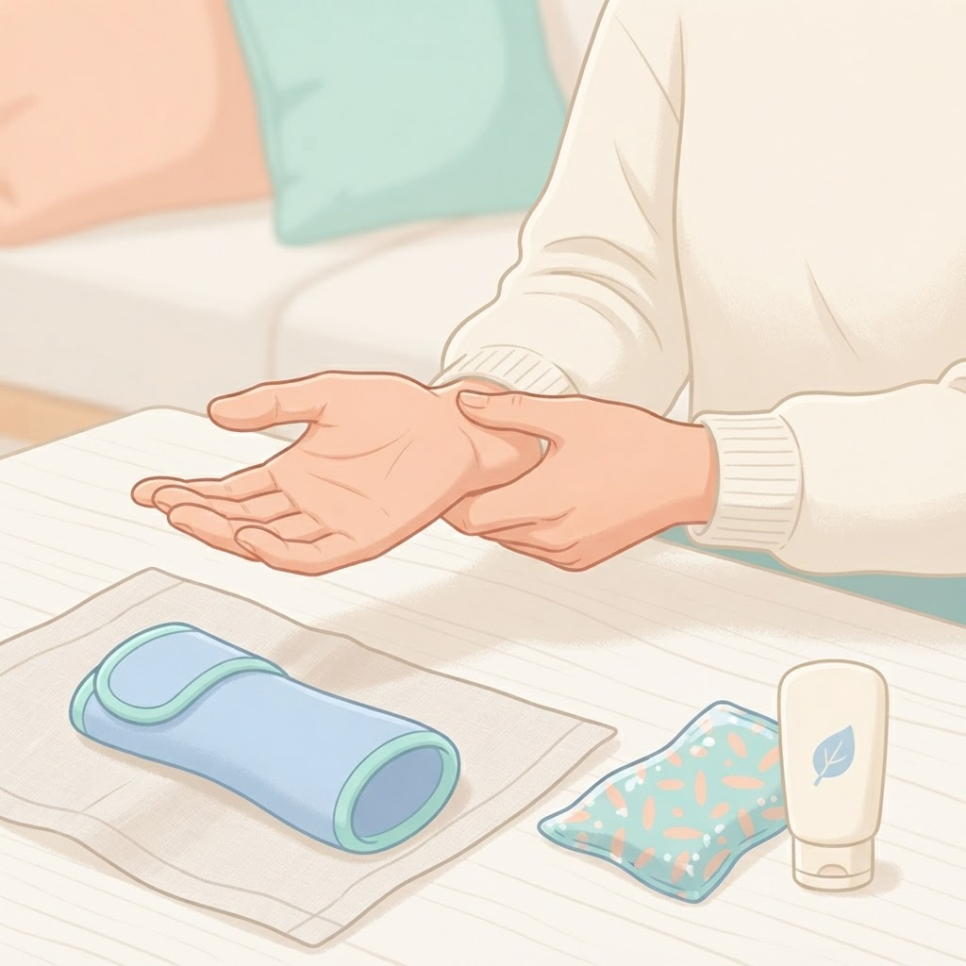
    How to Use Heat, Ice, and Stretching

    Situation Recommended Care
    Acute phase with severe pain Cold compress
    Chronic phase with lingering stiffness Warm compress

    For stretching, extend your arm forward, point your fingers downward, and gently pull them back with your other hand.
    When working, wear a wrist brace to help keep the joint from bending too far.

    wrist tenosynovitis self-check - related image 8

    Takeaway
    Combining rest, compresses, and stretching from the earliest stage of symptoms may help prevent the condition from turning chronic.

    When using your smartphone for long stretches, be sure to give your wrist regular breaks.
    Simply avoiding movements that strain the wrist can help with prevention.

    wrist tenosynovitis self-check - related image 9

    Caution
    Pushing through the pain and continuing to use your wrist is a common reason recovery gets delayed.
    If discomfort lasts more than a few days, don’t put it off — get it checked at a medical facility.

    wrist tenosynovitis self-check - related image 10


    Frequently Asked Questions

    1. Will it heal on its own if I just use a pain-relief patch?
    That may help relieve pain temporarily, but if the underlying cause of the inflammation isn’t addressed, it can easily come back.

    2. What kind of compress should I use?
    Cold compresses can help when there’s heat or swelling, while warm compresses tend to work better for a heavy, achy feeling.

    3. Do I really need to wear a wrist brace?
    Wearing one during work or housework that puts heavy strain on your wrist can help reduce stress on the joint.

    4. Is there a clear sign that means I should see a doctor?
    If the pain lasts more than a few days or it becomes hard to grip objects, it’s safer to visit a clinic for a thorough evaluation.

    5. If my wrist tenosynovitis self-check raises concerns, do I need surgery right away?
    Rest, physical therapy, and medication are generally used as initial treatment, and surgery is typically considered only when symptoms persist over the long term.

    wrist tenosynovitis self-check - related image 11


    References

    · Seoul Asan Hospital, “De Quervain’s Disease,” Easy Medical Terms. View
    · Mayo Clinic Staff, “De Quervain tenosynovitis – Diagnosis and treatment,” Mayo Clinic. View
    · “Management of de Quervain Tenosynovitis,” PMC, National Library of Medicine. View

    wrist tenosynovitis self-check - related image 12

    wrist tenosynovitis self-check - related image 13

    wrist tenosynovitis self-check - related image 14


    This article is intended for general health information purposes only and is not a substitute for individual diagnosis or treatment.
    If you’re experiencing symptoms, please consult a medical professional.