Tag: Midlife Health

  • Knee Pain Going Down Stairs: Why Cartilage Load May Reach 5x Body Weight

    Knee Pain Going Down Stairs: Why Cartilage Load May Reach 5x Body Weight

    SummaryThis orthopedic guide explains why knee pain going down stairs happens, the symptoms and causes of chondromalacia patella, plus lifestyle habits and quadriceps-strengthening exercises that help ease the load on your knee cartilage.

    Does the front of your knee ache only when you’re going down stairs, even though walking on flat ground feels perfectly fine?

    While everyone else strides down confidently, you’re gripping the handrail and stepping carefully, feeling a bit self-conscious about it.

    But this kind of symptom isn’t just ordinary muscle soreness — it could be a warning sign from your knee cartilage.
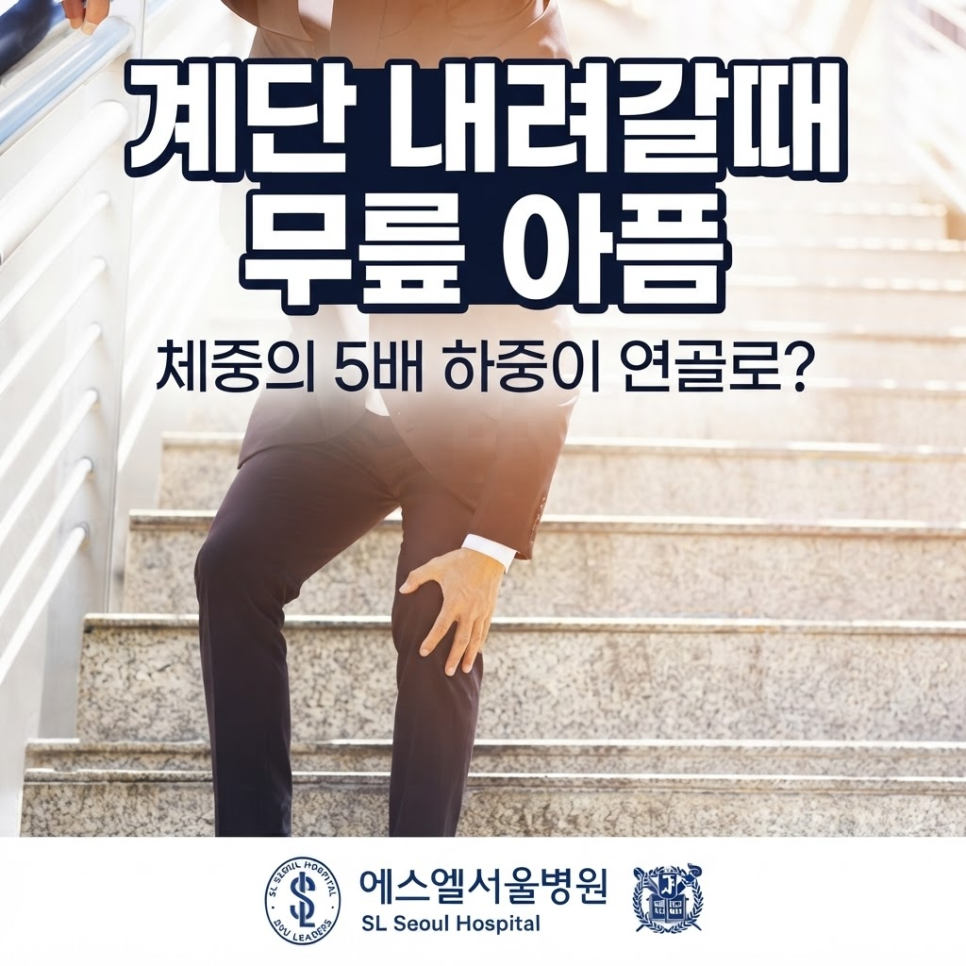
    knee pain going down stairs

    In most cases, this symptom isn’t simple muscle soreness — it can be a red flag from your knee cartilage.

    In orthopedics, this condition is known as chondromalacia patella.

    knee pain going down stairs illustration 2

    This article looks at why knee pain going down stairs becomes so much more intense, along with the underlying structural issue of chondromalacia patella.

    We’ve also covered lifestyle habits that reduce strain on the knee cartilage and answered frequently asked questions, so be sure to read through to the end.

    Why Does Knee Pain Get So Much Worse Going Down Stairs?

    That’s because going down stairs is estimated, according to sources such as Hidoc, to concentrate a load of roughly 3 to 5 times your body weight onto the kneecap and cartilage of a single leg.

    Knee pain when descending stairs refers to the pain caused by this sudden load concentrating on the kneecap and cartilage at the front of the knee.

    When walking on flat ground, the load is spread evenly across the feet and legs.

    But when descending stairs, the impact that needs to be absorbed concentrates on the knee cartilage and thigh muscles.

    If your lower body strength is lacking or your knee joint alignment is off, that impact isn’t absorbed properly, and the pain becomes even more noticeable.
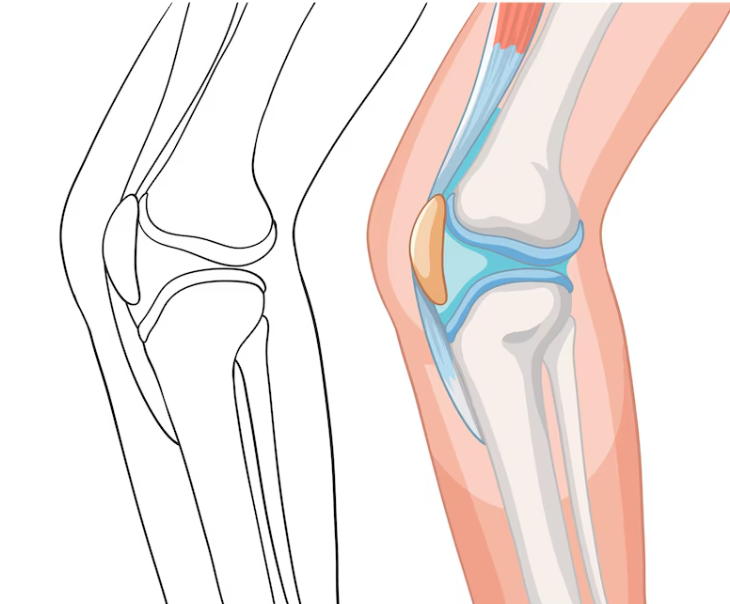
    knee pain going down stairs illustration 3

    Key Point
    According to sources such as Hidoc, the load placed on the knee joint when going down stairs is estimated at about 3 to 5 times your normal body weight.
    Per the same source, a person weighing 60 kg (about 132 lb) could experience a momentary impact of nearly 180–300 kg (roughly 400–660 lb) on the knee.
    Movement Load on the Knee
    Walking on flat ground About 1–1.5x body weight
    Climbing stairs About 3x body weight
    Descending stairs About 3–5x body weight

    Figures above are estimates reported by sources such as Hidoc.


    What Is Chondromalacia Patella, the Condition Behind Cartilage Knee Pain?

    Chondromalacia patella refers to a condition in which the soft cartilage on the underside of the kneecap weakens or becomes damaged, causing pain.

    It’s commonly seen in young to middle-aged adults, particularly women.

    Friction that occurs when bending and straightening the knee produces a stiff sensation along with sharp, shooting pain.

    There’s a reason it shows up more often in women.

    Because women tend to have a wider pelvis, the thighbone angles inward more sharply than in men, which increases the outward pull the front thigh muscles exert on the kneecap.

    It typically starts as a dull ache, but if left unaddressed, the cartilage damage can spread and may eventually raise the risk of arthritis.
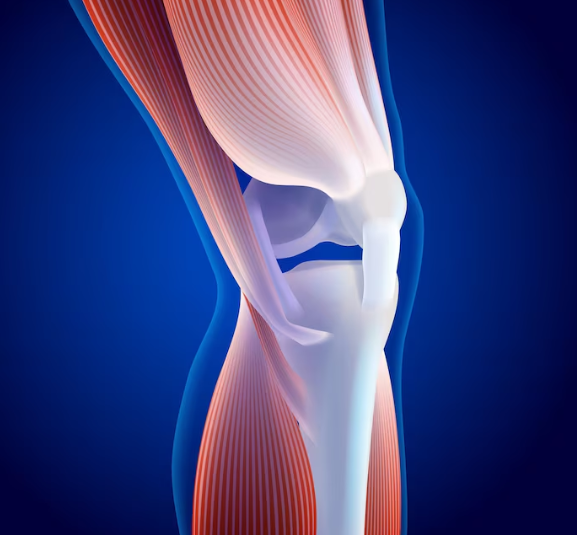
    knee pain going down stairs illustration 4

    Caution
    If you hear a popping sound in your knee when going down stairs, or feel stiffness at the front of the knee after standing up from prolonged sitting, this could signal cartilage damage and is worth monitoring closely.

    What Lifestyle Habits Help Protect Your Knee Cartilage?

    The first priority is reducing the friction and pressure placed on the knee joint.

    Protecting your knee cartilage means training the surrounding muscles to absorb impact on the cartilage’s behalf.

    Rather than simply enduring the discomfort when your knee feels achy, it’s worth adjusting your habits one at a time.

    Most importantly, strengthening the muscles around the knee — especially the quadriceps — helps those muscles absorb the impact that would otherwise hit the knee cartilage.

    knee pain going down stairs illustration 5

    Checklist
    ✅ Hold the handrail when going down stairs to distribute your body weight.
    ✅ Avoid high heels or flat shoes with little cushioning.
    ✅ Limit squatting or sitting cross-legged.
    ✅ Strengthen your quadriceps with flat-ground walking or stationary cycling.
    Takeaway
    Consistently strengthening your quadriceps and managing these habits may help ease the strain you feel on your knees when going down stairs.

    If it’s hard to manage on your own or the pain keeps recurring, seeing an orthopedic specialist is another option.

    You can find more information at the SL Seoul Hospital Spine & Joint Center homepage.


    Frequently Asked Questions

    1. My knee only hurts when going down stairs — is that okay?
    If the pain is concentrated during descent, it may signal that the cartilage behind the kneecap is being irritated, so it’s best to avoid strenuous exercise and monitor how it progresses.

    2. Is it okay to go hiking if I have knee cartilage pain?
    Because a large load hits the knee cartilage during the descent, it’s advisable to stick to flat-ground walks or stationary cycling instead of hiking while the pain persists.

    3. Should I use heat or ice to relieve the pain?
    Cold compresses are generally recommended for acute pain with swelling or warmth, while heat therapy is generally used for chronic, stiff discomfort by improving blood circulation.

    4. Is chondromalacia patella more common in women?
    Because of pelvic structure, women tend to have a larger Q-angle than men, which increases the pull on the kneecap — making this condition relatively common among younger and middle-aged women.

    knee pain going down stairs illustration 6


    References

    · Hidoc, “Pain in the Front of the Knee When Going Down Stairs May Signal Patellofemoral Syndrome, Not Simple Arthritis,” Hidoc. Link
    · Asan Medical Center, “Chondromalacia,” Asan Medical Center Disease Encyclopedia. Link
    · Seoul National University Hospital, “Chondromalacia of the Patella,” Seoul National University Hospital Medical Information. Link

    knee pain going down stairs illustration 7

    This article is intended for general health information purposes only and is not a substitute for individual diagnosis or treatment. If you’re experiencing symptoms, please consult a medical professional.
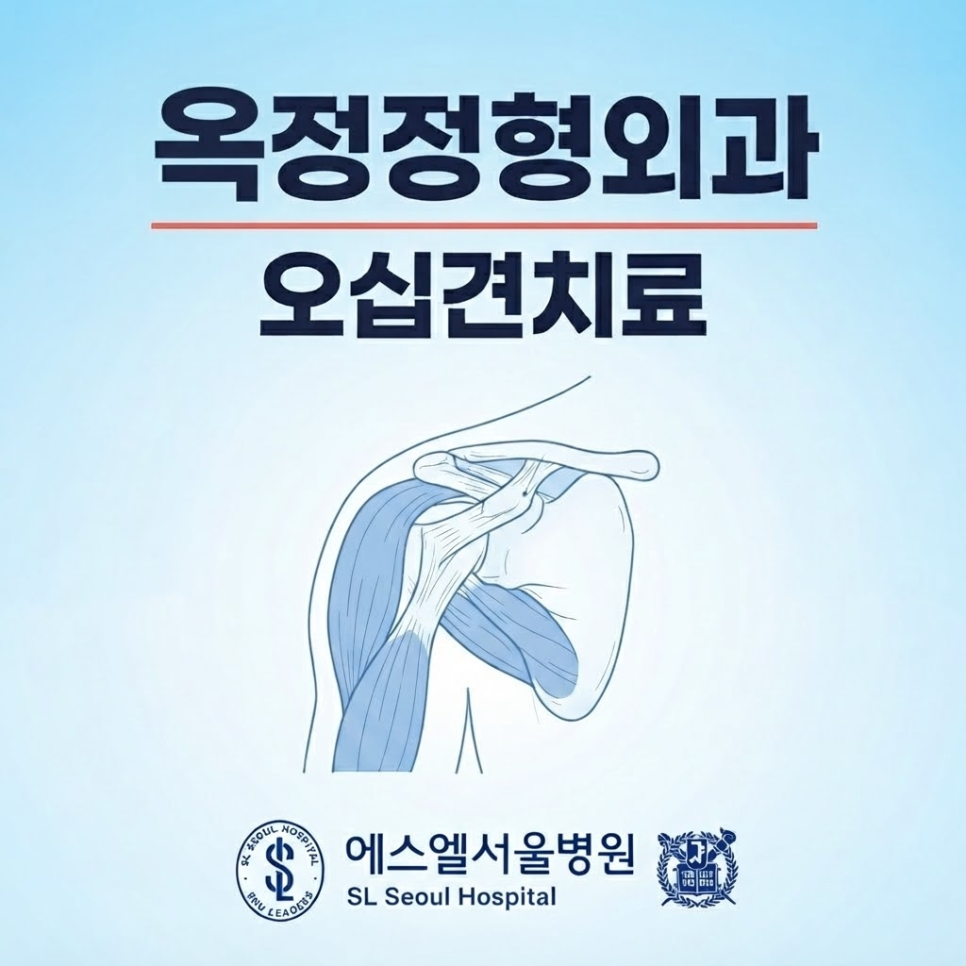
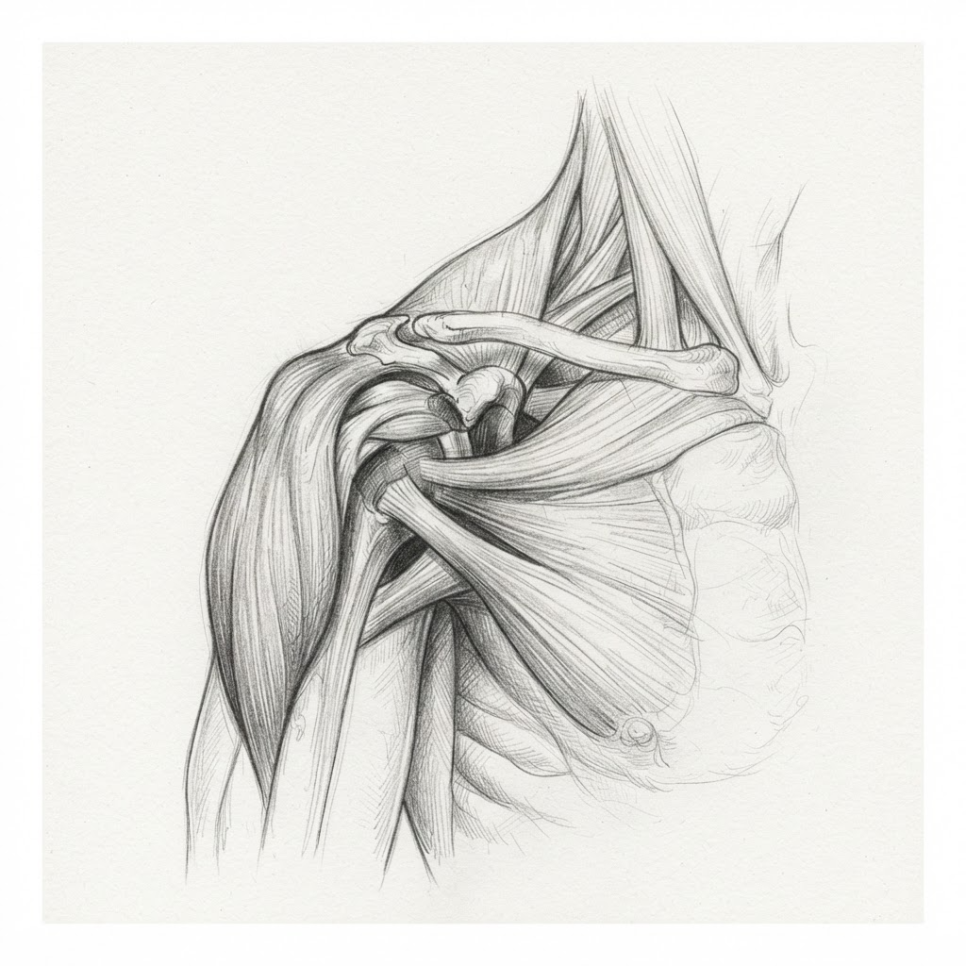
  • Frozen Shoulder Treatment: 3 Exercises Plus a Symptom Checklist

    Frozen Shoulder Treatment: 3 Exercises Plus a Symptom Checklist

    SummaryIf you’re wondering about frozen shoulder treatment, here’s what to know. This guide covers a self-check symptom checklist, how frozen shoulder differs from a rotator cuff tear, causes such as diabetes and thyroid disease, and stage-by-stage frozen shoulder treatment exercises for the acute and chronic phases. We’ll also cover when it’s time to see a specialist.

    Have you ever reached up to wash your hair,
    only to feel your arm lock up in pain?

    If one shoulder has grown stiff for no clear reason — no fall, no bump —
    and the pain keeps you up at night, it may be more than simple muscle fatigue.

    In that case, it’s worth considering frozen shoulder, a condition caused by inflammation of the joint capsule,
    since the symptoms can easily be confused with a rotator cuff tear or shoulder impingement syndrome.

    frozen shoulder treatment

    Before getting into frozen shoulder treatment options,
    it helps to start with a self-check checklist to assess your own shoulder.

    frozen shoulder treatment illustration 2

    For anyone weighing frozen shoulder treatment, this article lays out
    how to tell the symptoms apart, what causes the condition, and
    stage-by-stage management and exercises for the acute and chronic phases, in order.

    Read on to see how inflammation in the joint capsule tends to progress,
    and which exercises you can safely try at home.

    frozen shoulder treatment illustration 3

    What Exactly Is Frozen Shoulder?

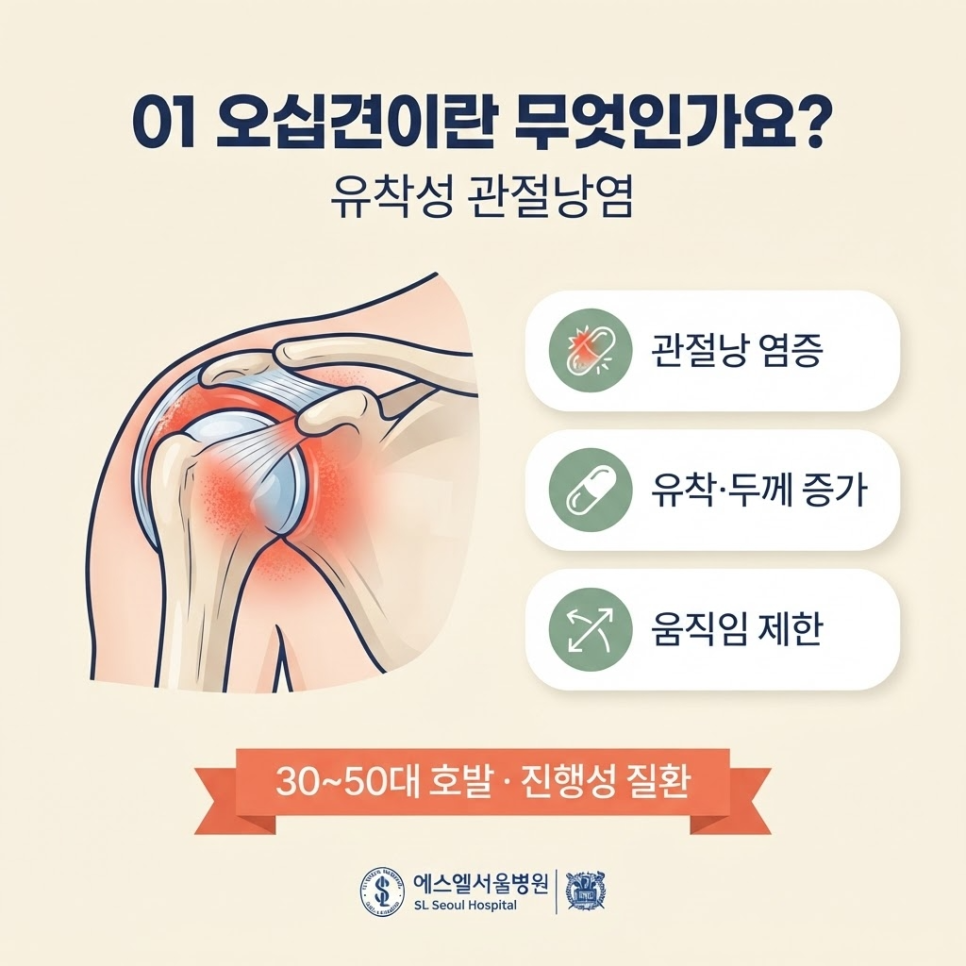
    Frozen shoulder is a condition in which the joint capsule surrounding the shoulder becomes inflamed, thickens, and stiffens.

    Frozen shoulder, medically known as adhesive capsulitis, occurs when inflammation in the joint capsule limits both active and passive shoulder movement.

    According to Korea’s National Health Information Portal, frozen shoulder affects roughly 2% of the general population, making it a fairly common shoulder condition.
    It typically develops after age 50 without any specific injury.
    That said, younger adults who spend long hours on computers and smartphones can also report shoulder pain,
    so it’s worth paying attention to symptoms regardless of age.

    frozen shoulder treatment illustration 4

    Key Point
    The longer frozen shoulder goes untreated, the more the joint capsule can thicken and stiffen,
    and this progressive condition may eventually make it hard to raise your arm on your own.
    Starting frozen shoulder treatment early, as soon as symptoms appear, tends to support a smoother recovery.

    frozen shoulder treatment illustration 5


    What Are the Symptoms, and How Is It Different From Other Shoulder Conditions?

    Not all shoulder pain is frozen shoulder.

    Rotator cuff tears and shoulder impingement syndrome can cause similar pain,
    so an accurate diagnosis matters.

    The key difference: with frozen shoulder, the arm still won’t lift all the way even when someone else raises it for you.
    With a rotator cuff tear, the arm can often move further when someone assists.

    Category Frozen Shoulder Rotator Cuff Tear
    When someone else lifts the arm Doesn’t lift all the way Lifts partway
    Pain pattern Restricted motion in every direction Weakness in specific directions
    Night pain Common May also occur
    Symptom Checklist
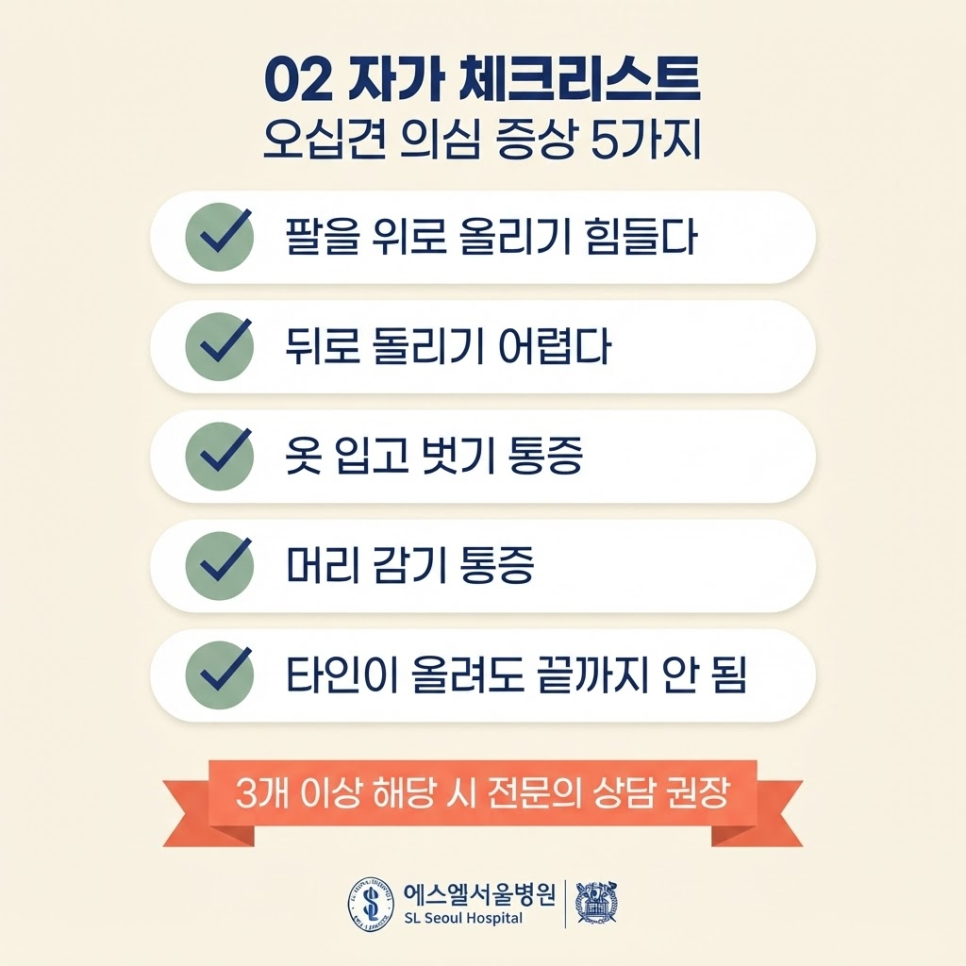
    ✅ Difficulty lifting your arm overhead or rotating it behind your back
    ✅ Pain when getting dressed or washing your hair
    ✅ Pain that radiates from the shoulder down to the elbow
    ✅ Trouble sleeping when lying on the affected side
    ✅ Your arm still won’t lift all the way even when a family member or someone else raises it for you

    frozen shoulder treatment illustration 6


    What Causes Frozen Shoulder?

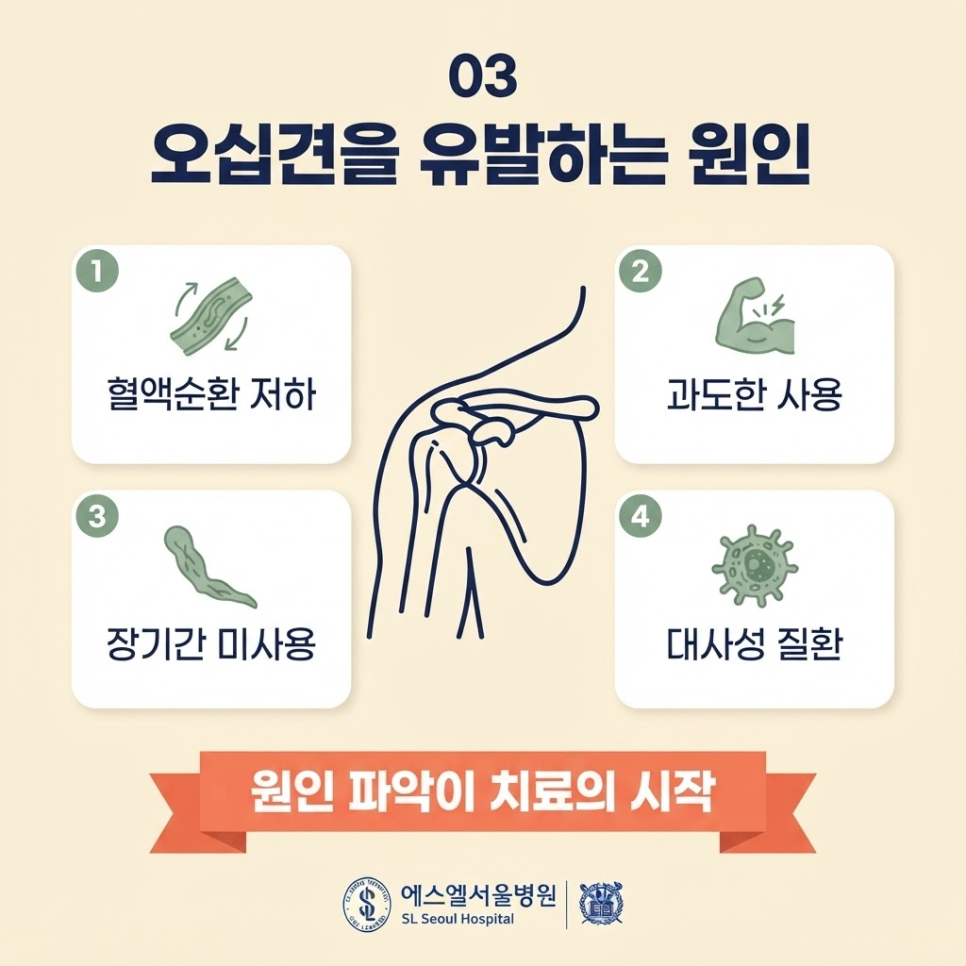
    The main causes of frozen shoulder are reduced blood flow around the joint and an inflammatory response.

    The joint capsule can stiffen from overusing the shoulder — or, just as often, from not moving it enough over a long stretch of time.

    Age-related degenerative changes are also a major factor,
    and some reports suggest that metabolic conditions such as diabetes or thyroid disease can raise the risk of developing frozen shoulder.
    One orthopedic specialist has noted that having diabetes may raise the risk of frozen shoulder by more than fivefold.

    frozen shoulder treatment illustration 7


    How Is Frozen Shoulder Treatment Done?

    Frozen shoulder treatment approaches differ depending on the pain stage.

    During the acute phase, when pain is at its worst, calming the inflammation comes first. Once pain eases into the chronic phase, exercises to loosen the stiffened joint can begin.

    To pinpoint the correct stage, a doctor will first assess the pain pattern,
    and imaging may be used if needed to check the extent of adhesions inside the joint.
    Treatment typically follows each stage in order, with exercises kept within a comfortable, non-strenuous range.

    frozen shoulder treatment illustration 8

    Caution
    Forcing a stretch past the point of pain can actually make the inflammation worse.
    The general rule is to move gently only up to just before pain begins.
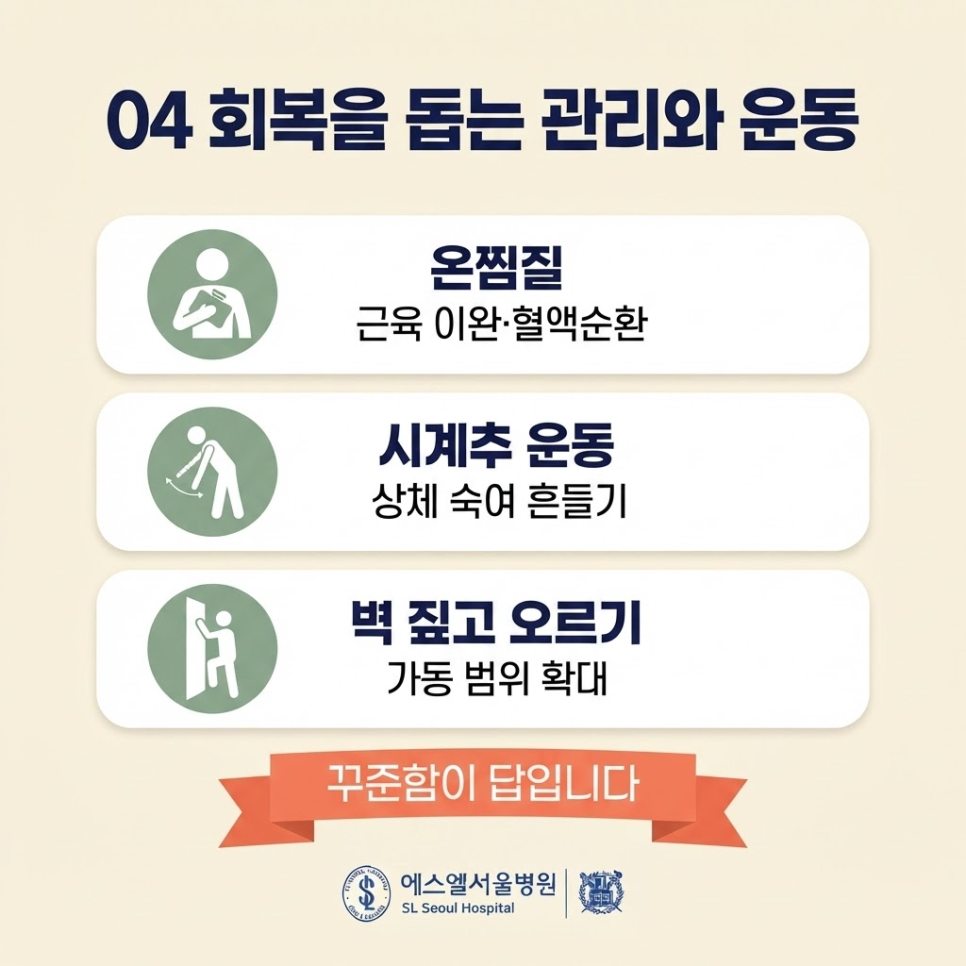
    1. Warm compress: Helps relax muscle tension and supports blood circulation.
    2. Pendulum exercise: Gently hold the affected arm with your unaffected hand, lean your upper body forward, and let the arm swing slowly like a pendulum.
    3. Wall climb (finger walk): Face a wall and slowly walk your fingers upward, gradually increasing your range of motion.
    What to Expect
    With consistent, stage-appropriate management, shoulder range of motion tends to gradually improve over time.
    Recovery speed varies from person to person, though, and can typically take anywhere from several months to one or two years.

    If it’s hard to judge the exact cause and stage on your own,
    we recommend having a specialist evaluate your current condition first.
    You can find related care information on the SLS Seoul Hospital Spine & Joint Center homepage.


    Frequently Asked Questions

    1. Does frozen shoulder go away on its own?
    Some cases do ease with time, but if left untreated, the shoulder can stiffen with reduced function or develop additional pain, so consulting a specialist is recommended.

    2. Is more exercise always better?
    No. Forcing your range of motion past the point of pain can make the inflammation worse. The key is to move within a controlled range and stop just before pain sets in.

    3. How is frozen shoulder treatment carried out at a hospital?
    Since shoulder pain can have many different causes, exercising on your own without an accurate diagnosis can make things worse. It’s safer to have an orthopedic specialist assess the pain pattern — and imaging, if needed — before setting a treatment plan.

    4. Can you tell frozen shoulder and a rotator cuff tear apart at home?
    If your arm still won’t lift all the way even when someone else raises it for you, frozen shoulder is more likely, but imaging is needed for an accurate diagnosis.


    SLS Seoul Hospital supports patients with accurate diagnosis and stage-by-stage management of shoulder pain.

    frozen shoulder treatment illustration 9

    frozen shoulder treatment illustration 10

    frozen shoulder treatment illustration 11

    frozen shoulder treatment illustration 12

    frozen shoulder treatment illustration 13

    frozen shoulder treatment illustration 14


    References

    · Korea Disease Control and Prevention Agency, “Frozen Shoulder (Adhesive Capsulitis),” National Health Information Portal. View source
    · Asan Medical Center Newsroom, “Exercises for Frozen Shoulder Treatment,” Asan Medical Center. View source
    · MediPana, “Frozen Shoulder Linked to Diabetes and Thyroid Disease — Caution Advised for Those 40 and Older,” MediPana News. View source
    · Hankook Ilbo, “Leaving Frozen Shoulder Untreated Can Lead to Chronic Pain — Treatments That Shorten Recovery Time,” Hankook Ilbo, 2025. View source


    This article is intended to provide general health information and is not a substitute for individual diagnosis or treatment.
    If you have symptoms, please consult a specialist.