Tag: Neck Pain

  • Text Neck Headache: How Forward Head Posture Adds 18kg of Strain to Your Neck

    Text Neck Headache: How Forward Head Posture Adds 18kg of Strain to Your Neck

    SummaryWhy does text neck cause headaches, and how can you manage them? This article breaks down how text neck syndrome leads to cervicogenic headaches, how to self-check with a simple wall test, and the everyday habits and stretches that may help reduce strain on your cervical spine.

    That throbbing headache that shows up after a long day at your desk,
    have you been writing it off as just stress?

    In reality, it’s often caused by a forward-curved neck, better known as a text neck headache.
    As screen time on smartphones and computers keeps climbing, the neck’s natural curve flattens out,
    and the effects ripple all the way up to your head.

    This article looks at the root cause of text neck headaches through the lens of changes in cervical spine structure, along with a self-check you can do at home and everyday habits that ease the load on your neck. If you’ve been dealing with a headache that painkillers just won’t shake, read on.

    text neck headache

    text neck headache illustration 2

    What Is Text Neck Syndrome?

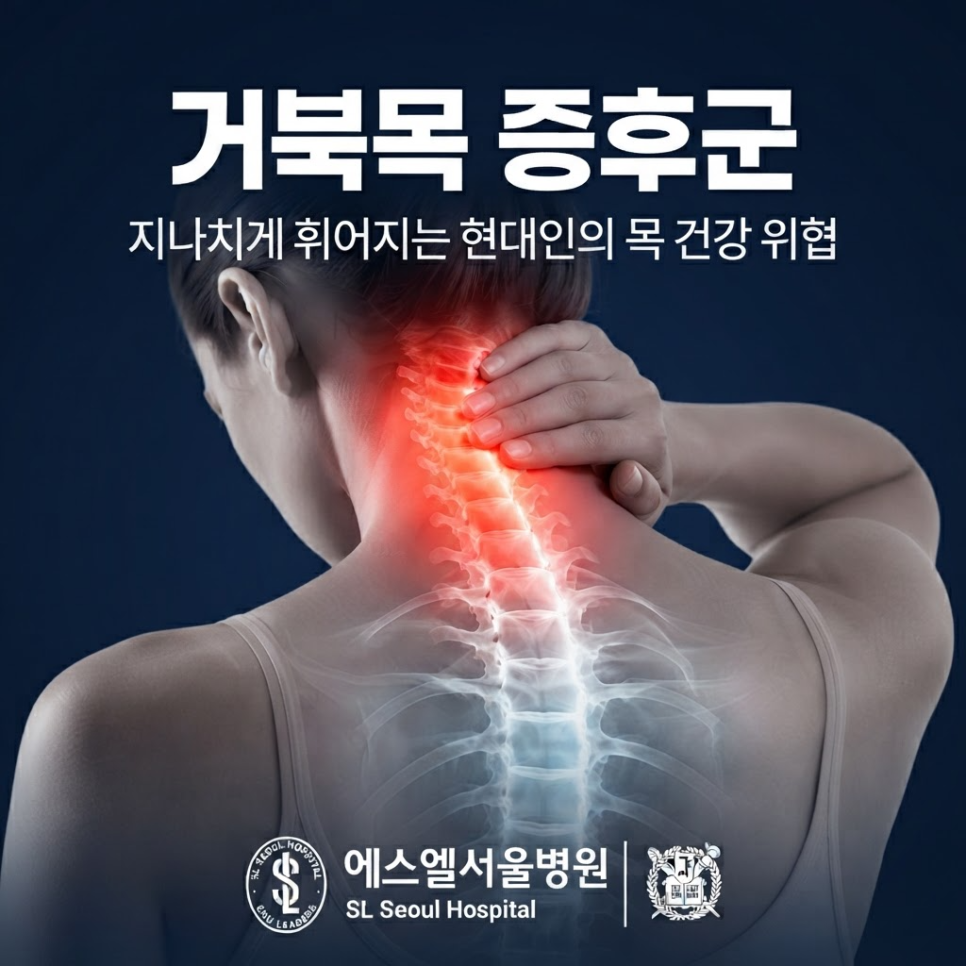
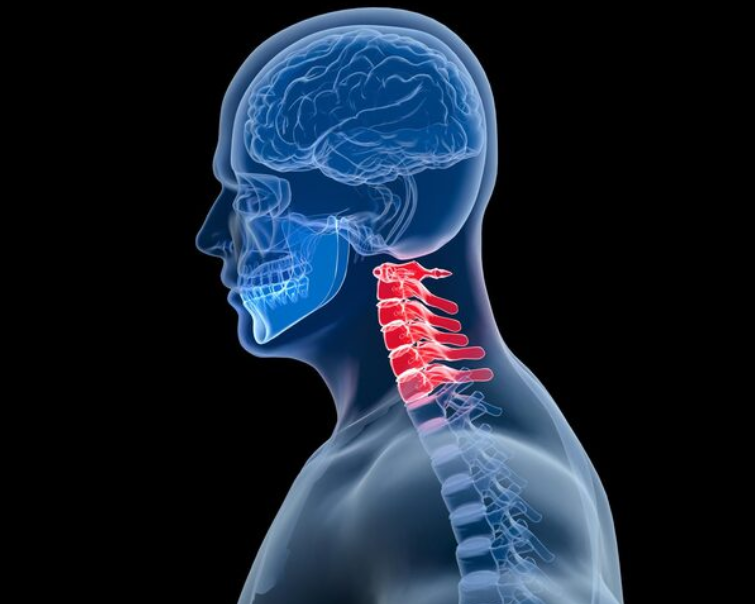
    In short, text neck syndrome is a postural condition in which the neck’s normal C-shaped curve flattens or even reverses, pushing the head forward of the torso.
    Long hours spent looking down at a screen cause this shift to develop gradually.

    It gets its name because the neck juts forward like a turtle poking its head out of its shell.
    The real issue isn’t just appearance, it’s that the load the cervical spine has to bear changes entirely.
    text neck headache illustration 3

    The cervical spine is naturally built with a gentle C-curve designed to evenly distribute the weight of the head.
    But the more the head tilts forward, the more that curve collapses, concentrating stress on a single section of the neck.

    💡 Key Point
    According to a cervical spine load study by Dr. Kenneth Hansraj of New York Spine Surgery & Rehabilitation Medicine, the weight the neck bears is about 5kg (11 lbs) in a neutral position, but jumps to roughly 18kg (40 lbs) at just a 30-degree tilt, and climbs to about 27kg (60 lbs) at 60 degrees.
    In other words, the more you tip your head down to look at your phone, the heavier the load your cervical spine and surrounding muscles have to carry.

    text neck headache illustration 4

    When the muscles and ligaments around the cervical spine stay tense like this over time, it can lead to a heavy, pressing pain in the shoulders.
    A shift in posture like this ultimately throws off the balance of the whole body.


    Why Does Text Neck Cause Headaches?

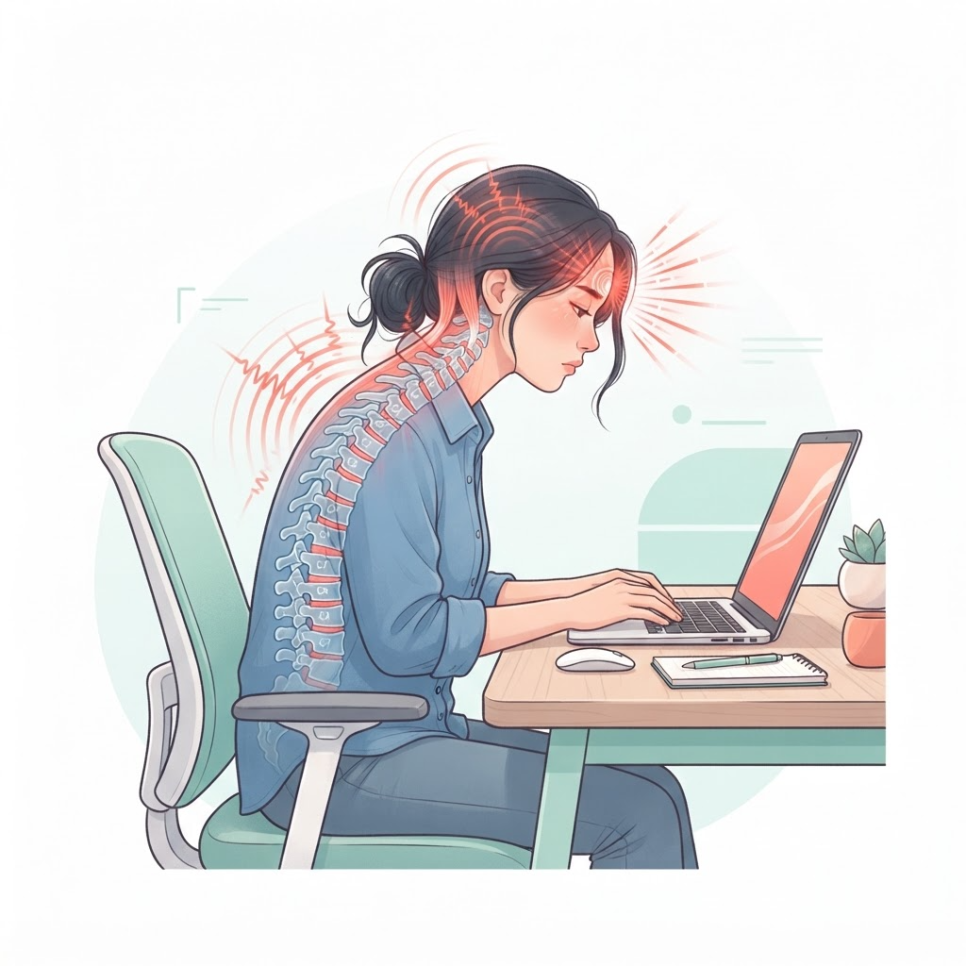
    In short, a text neck headache isn’t a problem in the brain itself, it’s a secondary headache known as a cervicogenic headache, where tension in the neck joints and surrounding muscles is referred up to the head.
    It typically starts at the back of the neck and spreads toward the temples.
    text neck headache illustration 5

    The occipital nerves run along the back of the neck, and when text neck posture causes the neck muscles to tighten, these nerves can become compressed, producing a throbbing pain that runs from the back of the head to the sides.

    Because of this, many people mistake the pain for a brain issue or simple stress,
    but in a good number of cases the real cause is excessive tension in the neck muscles.
    Eye strain, dizziness, and trouble concentrating can show up alongside it as well.

    ⚠️ Caution
    Because a cervicogenic headache originates in the muscles and joints around the neck rather than the brain, over-the-counter painkillers often don’t bring much relief.
    If the pain keeps coming back, it’s important to also address the underlying strain on the neck.

    Can You Self-Diagnose Text Neck Syndrome at Home?

    Yes. Stand with your back and the back of your head against a wall, if the back of your head doesn’t comfortably touch the wall, text neck may be worth looking into.
    This simple test alone can give you a rough sense of your neck’s condition.

    text neck headache illustration 6

    If you spend all day in front of a monitor, you might be surprised at just how far your head sits away from the wall during this test.

    If that’s the case, it’s worth going through the checklist below and taking a closer look at your daily habits.

    📋 Daily Neck Health Checklist
    ✅ Hold your phone up to eye level instead of looking down at it.
    ✅ Do a chin-tuck neck stretch once every hour.
    ✅ Use a monitor stand to bring your screen up to eye level.
    ✅ Swap a high pillow for one that supports your neck’s natural curve.
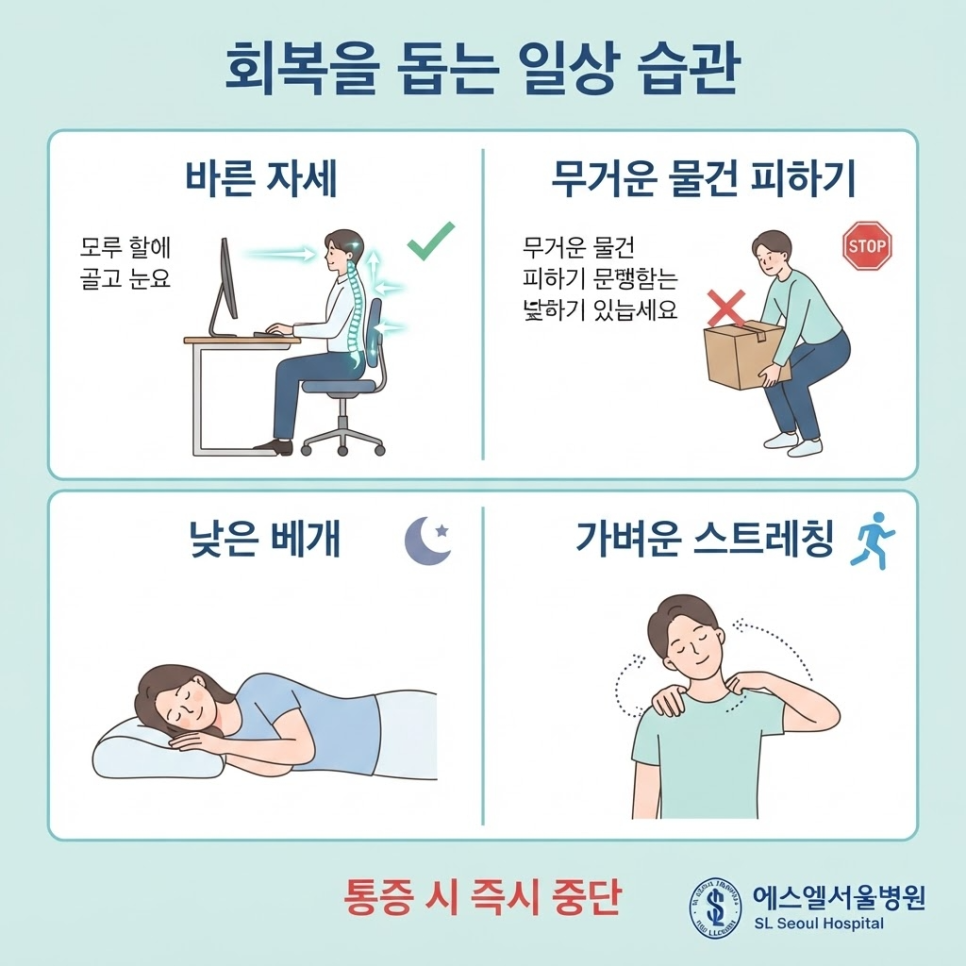
    ✅ During long stretches of sitting, periodically roll your shoulders back and open up your chest.
    text neck headache illustration 7

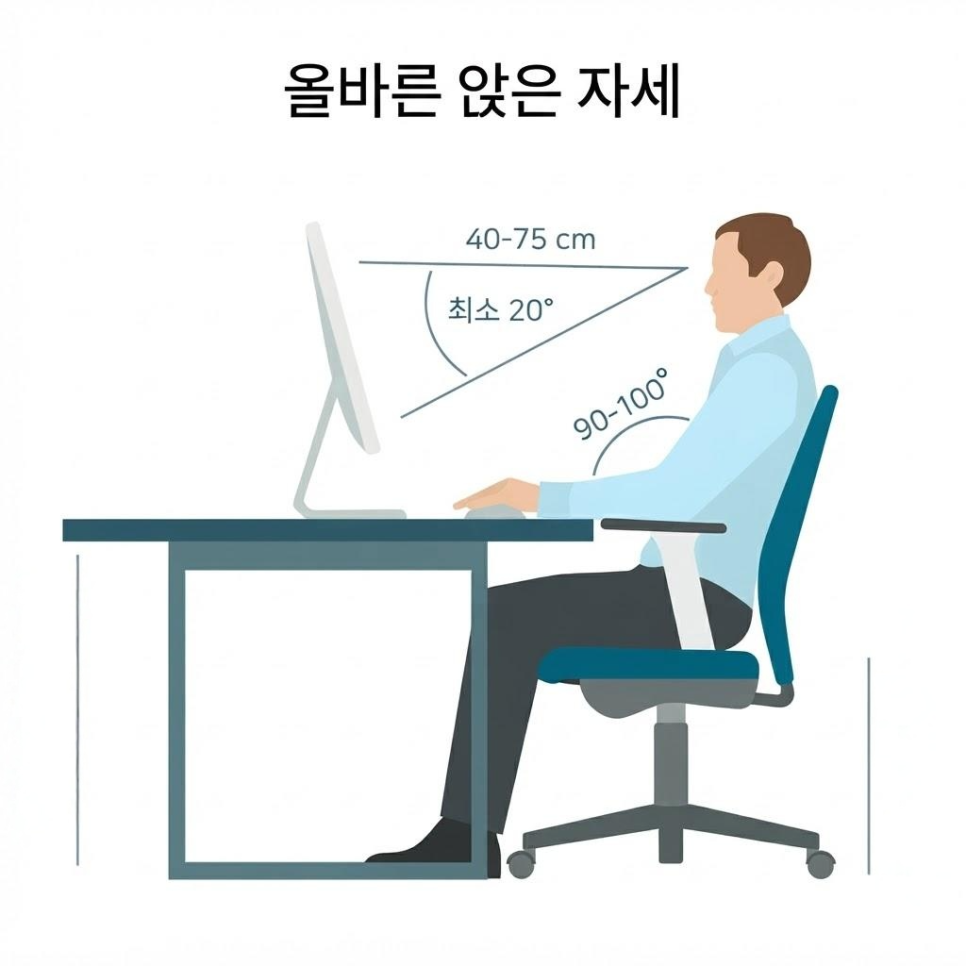
    While working at a computer, make a conscious effort to tuck your chin slightly,
    and add in the occasional shoulder roll to open up your chest.

    Rather than holding one position for long stretches, building the habit of stretching often to release muscle tension matters far more.

    ✅ What You Can Expect
    Consistently combining posture correction with stretching may help ease tension in the neck and shoulder muscles, which in turn can help manage how often headaches occur.
    That said, results vary depending on individual posture and symptom severity, so if the pain persists, it’s safest to see a specialist.

    If your symptoms keep recurring or start interfering with daily life, checking the relevant department information on the SL Seoul Hospital for Spine & Joints website is another option.


    Frequently Asked Questions

    1. How is a text neck headache different from a regular migraine?
    Migraines stem from changes in blood vessels or the brain’s nervous system, while text neck headaches originate from tension and nerve compression in the muscles at the back of the neck, and their intensity tends to shift depending on the angle of the neck.

    2. Does getting frequent massages help relieve the headaches?
    It can help temporarily loosen tight muscles, but if your everyday posture doesn’t change, the muscles tend to tense back up quickly, so pairing massage with posture correction is more likely to help the effect last.

    3. What kind of pillow is best for neck health?
    A pillow that’s too high flattens the neck’s C-curve, so it’s best to choose a moderate-height pillow that supports the neck’s natural curve while you’re lying down.

    4. Which specialist should I see if symptoms are severe?
    If the pain keeps recurring or is interfering with daily life, it’s recommended to get a thorough evaluation from a specialized medical provider, such as orthopedics, neurosurgery, or rehabilitation medicine.

    5. Can stretching alone fully correct text neck?
    Stretching helps relieve muscle tension and improve postural awareness, but in more severe cases, stretching alone is unlikely to fully correct the posture, so it’s best to consult a specialist to build a management plan.

    text neck headache illustration 8


    References

    · Kenneth K. Hansraj, “Assessment of stresses in the cervical spine caused by posture and position of the head,” Surgical Technology International, 2014. View source
    · Korea Disease Control and Prevention Agency, “Straight Neck (Text Neck) Syndrome,” National Health Information Portal. View source
    · Seoul National University Hospital, “Text Neck Syndrome (Forward Head Posture),” SNUH Medical Information. View source


    This article is intended for general health information purposes only and is not a substitute for individual diagnosis or treatment. If you’re experiencing symptoms, please consult a medical professional.
  • Manual Therapy vs Massage: 3 Key Differences You Should Know

    Manual Therapy vs Massage: 3 Key Differences You Should Know

    SummaryManual therapy vs massage — how are they actually different? This guide covers the causes of forward head posture and shoulder pain, the orthopedic exam process, and the lifestyle habits to follow during recovery. If your pain keeps coming back, start with a proper diagnosis.

    If you spend all day hunched over a smartphone or a monitor, you’ve probably felt your neck and shoulders tighten up.
    Many people reach for a massage chair or a massage parlor first when that happens.

    But repeating strong pressure without knowing what’s actually causing the pain can add micro-damage to already-weakened joints and muscles.
    To properly address forward head posture and chronic shoulder pain, you need an approach like manual therapy in Uijeongbu that diagnoses and corrects the underlying structure of the body.

    This article breaks down what causes musculoskeletal pain and how orthopedic clinics approach it.
    We’ll also cover how non-surgical manual therapy works, what the exam process looks like, and how to manage your lifestyle habits during recovery.
    If you’ve ever wondered how manual therapy vs massage actually compare, read on.

    Manual therapy vs massage: Uijeongbu clinic overview

    Manual Therapy vs Massage: How Are They Different?

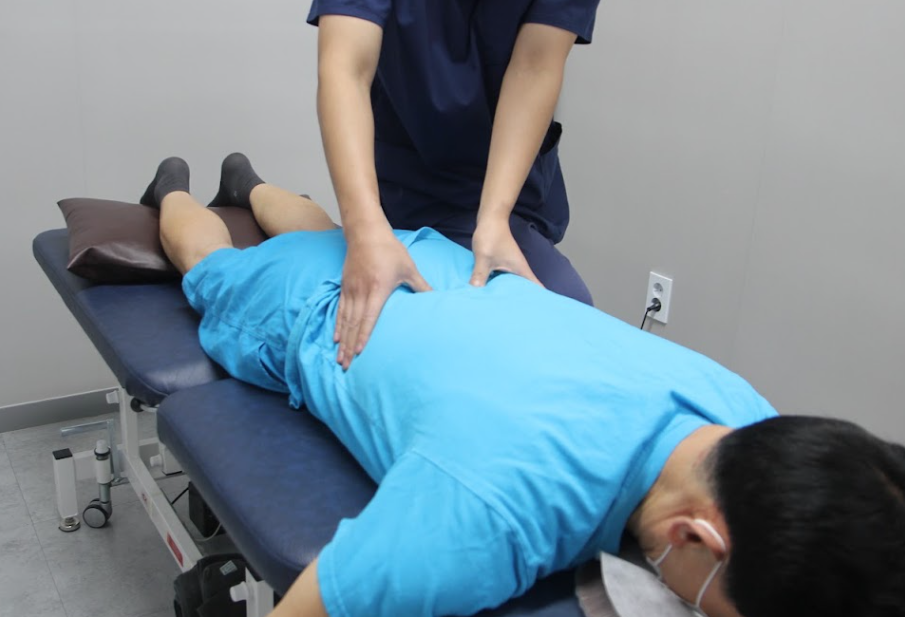
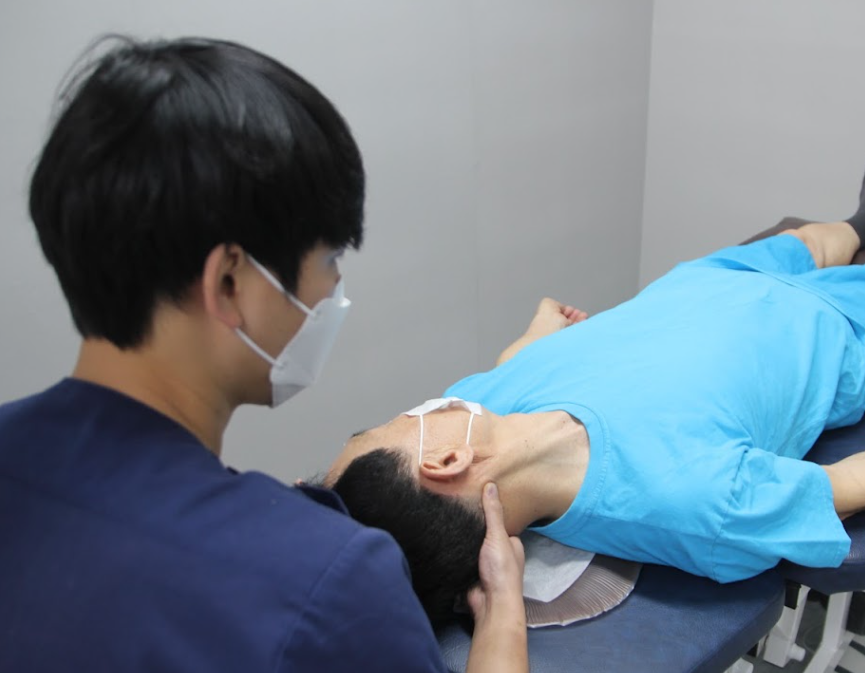
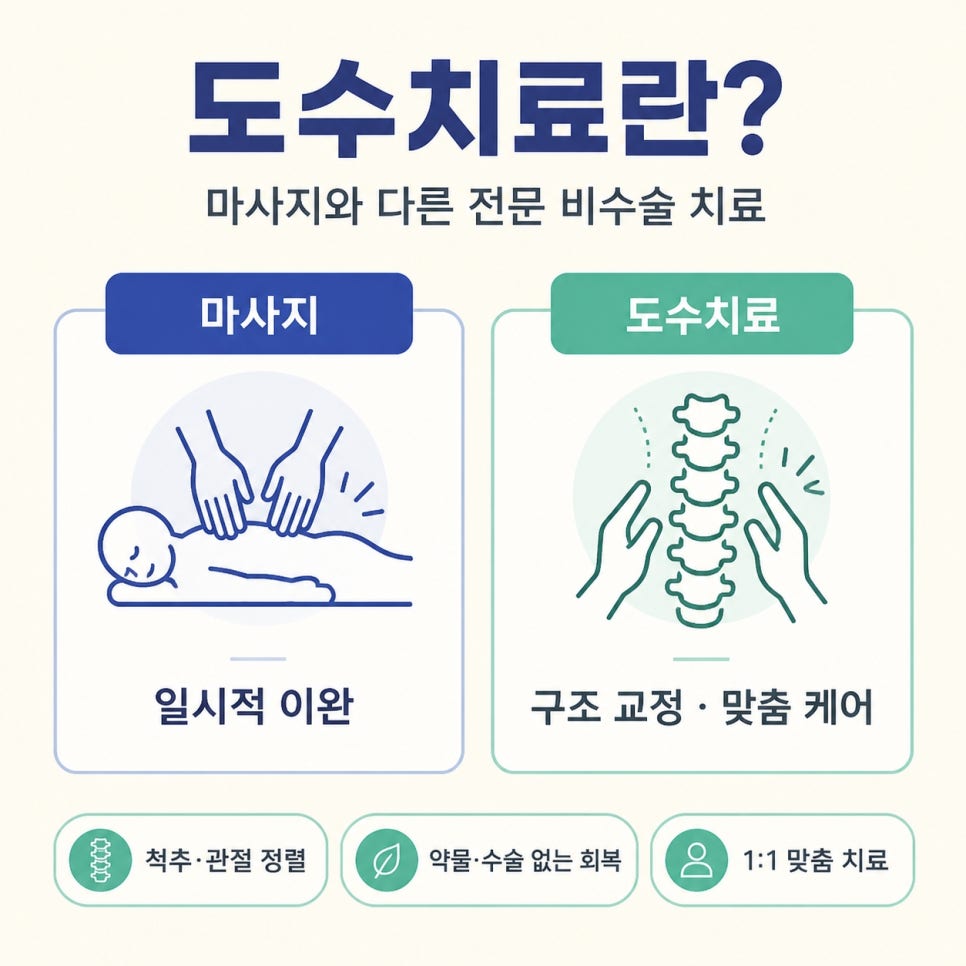
    To put it simply, manual therapy isn’t a relaxation-focused massage — it’s a medical treatment designed to correct the structure of the body.
    Manual therapy is a non-surgical treatment in which a therapist with anatomical training uses their hands to realign imbalances in the spine, joints, and muscles.

    It’s a fundamentally different concept from simply kneading and loosening the body.
    Releasing muscle tension is just the starting point.
    It’s known as a method that can help relieve pain by precisely realigning joints that have shifted out of position.

    Manual therapy in Uijeongbu - image 2

    Comparing Massage and Manual Therapy at a Glance

    Category Massage Manual Therapy
    Purpose Temporary relaxation, stress relief Correcting structural imbalances
    Diagnosis No formal diagnosis beforehand Preceded by history-taking and imaging
    Provider Massage therapist Licensed therapist at a medical clinic
    Approach Muscle-focused pressure and release Includes joint and spinal alignment
    Key Takeaways
    · It may support the body’s natural recovery process without relying on medication or surgery.
    · Treatment plans are tailored to each person’s body type and pain areas.

    Neck and Shoulder Pain: Which Symptoms Call for a Thorough Diagnosis?

    In short, if the symptoms below keep recurring, it’s best not to ignore them and to get a thorough exam instead.
    Poor posture and repetitive daily habits are the biggest reasons modern adults develop musculoskeletal pain.

    Spending long hours on a smartphone or computer means more time spent with your head tilted forward or your back hunched.
    According to Korea’s National Health Information Portal, run by the Korea Disease Control and Prevention Agency, sustaining these postures over time can cause micro-damage to the muscles, ligaments, and discs around the cervical spine, which can eventually lead to pain and headaches.
    Ultimately, this throws off the balance of the spine and triggers a range of symptoms.

    Manual therapy in Uijeongbu - image 3

    Manual therapy in Uijeongbu - image 4

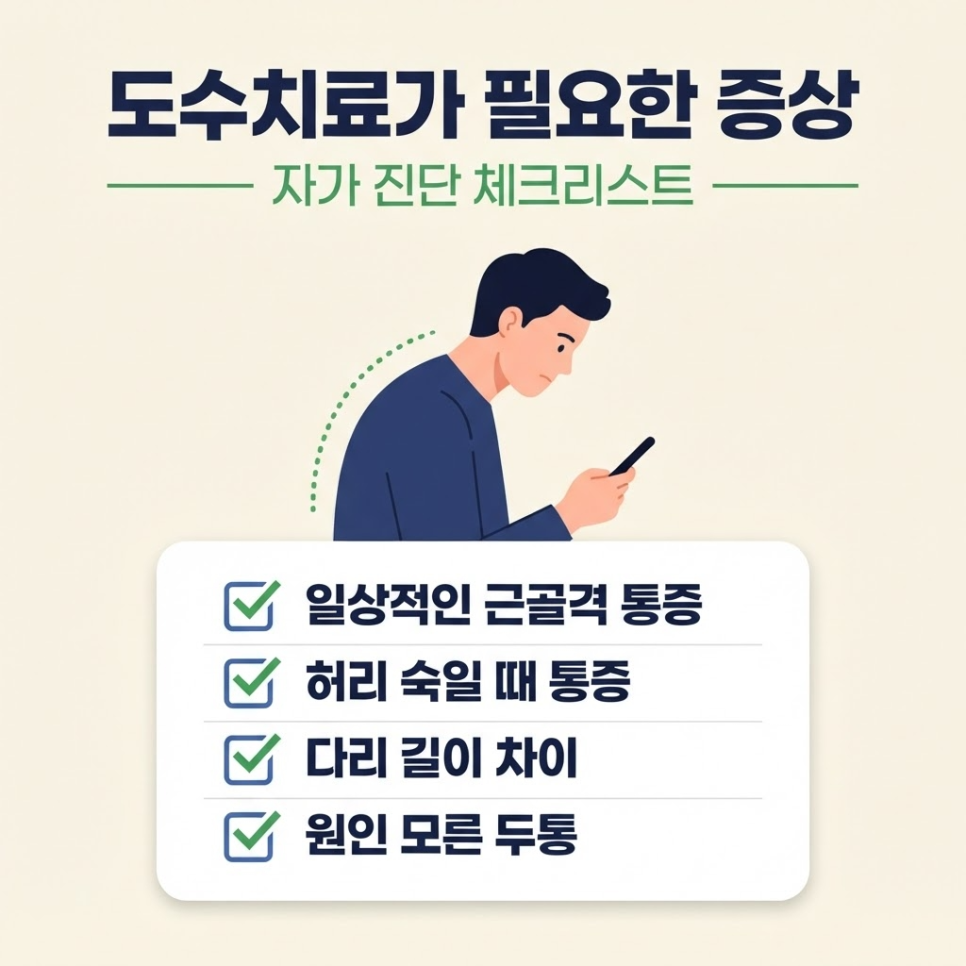
    Checklist
    ✅ Your neck and shoulders feel persistently stiff and sore
    ✅ You feel pain when bending or straightening your back
    ✅ Your pelvis feels tilted, making your legs seem uneven in length
    ✅ You experience ongoing headaches or unexplained joint discomfort

    If these symptoms persist, getting a thorough exam early on is the best way to protect your health.
    Since an accurate diagnosis is essential for building the right treatment plan, we recommend consulting a medical facility such as an orthopedic clinic in the Uijeongbu area.

    Manual therapy in Uijeongbu - image 5


    What Exams and Steps Do Orthopedic Clinics Use Before Manual Therapy?

    A systematic examination process must always come before treatment begins.
    That’s because each patient’s pain and body structure are different.
    Posture analysis and imaging such as X-rays are used to assess joint range of motion and muscle tension as well.

    Manual therapy in Uijeongbu - image 6

    Key Takeaways
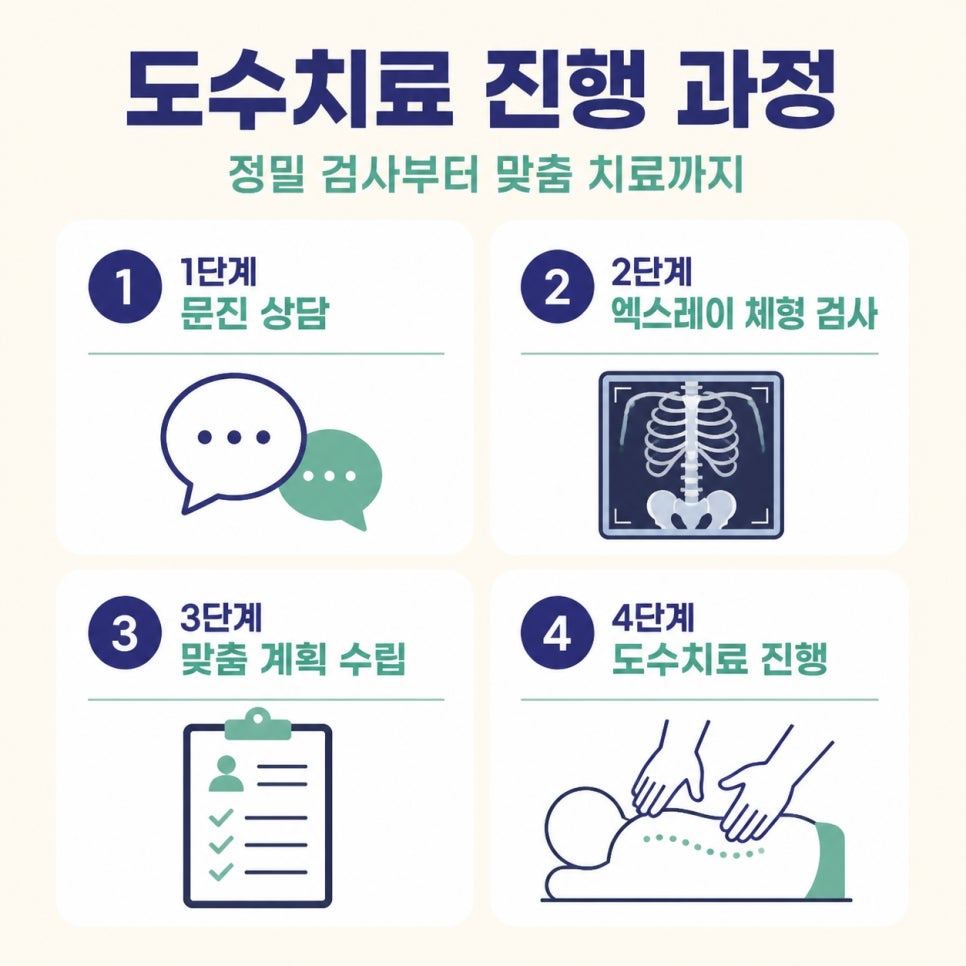
    Step 1: One-on-one consultation and medical history form with a specialist
    Step 2: X-ray and detailed postural-imbalance assessment
    Step 3: Developing a personalized treatment plan based on exam results
    Step 4: Personalized manual therapy delivered by a licensed therapist

    Once a personalized plan is built from the exam results, patients receive focused, one-on-one care from their therapist.
    Safe, effective care depends on an accurate diagnosis, so it’s worth choosing a clinic with a systematic examination process in place.

    Manual therapy in Uijeongbu - image 7


    How Should You Manage Recovery Time and Prevent Symptoms From Returning?

    Recovery time varies depending on how severe your symptoms are and your individual body structure.
    When it comes to manual therapy vs massage, only one of the two is built for lasting structural correction rather than short-term relief.
    A single session may provide temporary relief, but correcting the underlying posture problem usually requires ongoing care.
    It’s common to start with 2-3 sessions a week and adjust the schedule based on progress.

    Manual therapy in Uijeongbu - image 8

    Changes You May Notice When Treatment Is Combined With Better Habits
    · Tight, stiff muscles in the neck and shoulders gradually loosen.
    · A misaligned pelvis and spine slowly settle into a more stable position.
    · It can help reduce how often pain recurs.

    Separate from the treatment itself, making an effort to change daily habits is essential for preventing symptoms from coming back.
    We recommend consistently following the guidelines below.

    Manual therapy in Uijeongbu - image 9

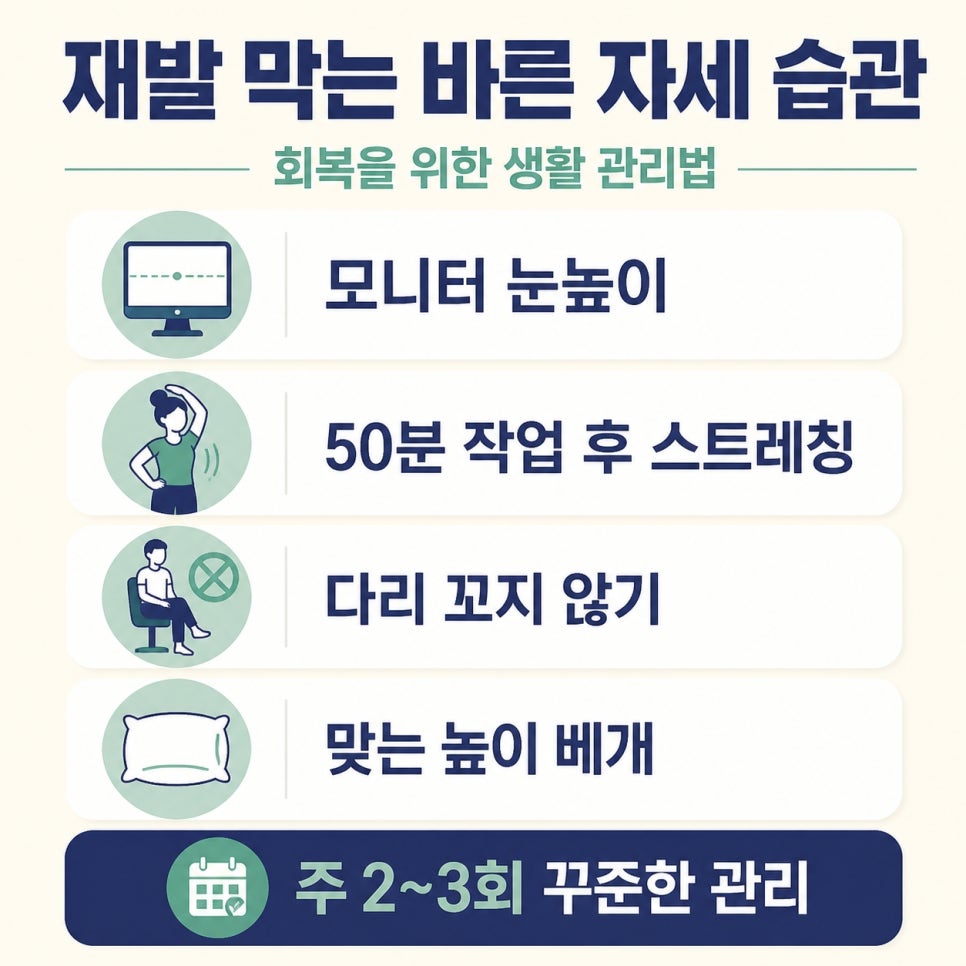
    Preventive Habits for Maintaining Good Posture

    • Keep your monitor at eye level
    • Stretch your spine for 10 minutes after every 50 minutes of work
    • Break the habit of crossing your legs or resting your chin on one hand
    • Use a pillow height that suits your body while sleeping

    Small changes in habit are the first step toward a healthier spine.
    Combining daily self-care with professional support may contribute to steadier recovery.

    If you suspect a structural imbalance, we recommend consulting an orthopedic clinic in the Uijeongbu area that offers a systematic diagnostic process.
    If you sit for long hours at work, checking your everyday posture is a good place to start when it comes to preventing pain.

    If you’d like more information on spine and joint health overall, you can check the department guides on the SL Seoul Hospital spine and joint homepage.

    Manual therapy in Uijeongbu - image 10


    Frequently Asked Questions

    1. Does treatment hurt a lot?
    The intensity is adjusted to each person’s pain tolerance, so you don’t need to worry about excessive pain. Rather than applying force by default, the therapist communicates with you throughout to find the right level of pressure.

    2. How long does a session take?
    A typical session runs about 40 minutes to an hour. This can vary somewhat depending on the area being treated and how the care program is structured.

    3. Can patients with a herniated disc receive treatment?
    In many cases, yes. However, whether treatment is appropriate depends on the severity of the disc issue and the degree of nerve compression, so it’s safest to proceed only after a specialist’s examination.

    4. Are there any side effects or precautions to keep in mind?
    You may feel some temporary stiffness or fatigue after treatment, which is a natural part of the muscles releasing tension. That said, if pain continues, you should be sure to consult your care team.

    Please Note
    If you have a diagnosed disc issue or nerve compression, please do not begin treatment based on self-assessment — confirm with a specialist first that treatment is appropriate for you.

    References

    · Korea Disease Control and Prevention Agency, “Forward Head Posture (Text Neck) Syndrome,” National Health Information Portal, 2024. View source
    · Seoul National University Hospital, “Forward Head Posture,” Medical Information, Seoul National University Hospital. View source
    · National Health Insurance Service, “Manual Therapy,” Non-Covered Medical Fee Information Portal. View source


    This article is intended for general health information purposes only and is not a substitute for individual diagnosis or treatment. If you’re experiencing symptoms, please consult a medical professional.
  • Car Accident Aftereffects: 3 Signs You Need a Dongducheon Orthopedic Exam

    Car Accident Aftereffects: 3 Signs You Need a Dongducheon Orthopedic Exam

    SummaryCar accident aftereffects can appear as neck and shoulder pain or hand tingling even when X-rays come back normal. This guide covers the causes and symptoms of whiplash injury, when to visit a Dongducheon orthopedic clinic, what a detailed exam involves, and daily habits that may support recovery.

    You felt fine right after the accident,
    but a few days later your neck feels stiff and your fingertips start to tingle.

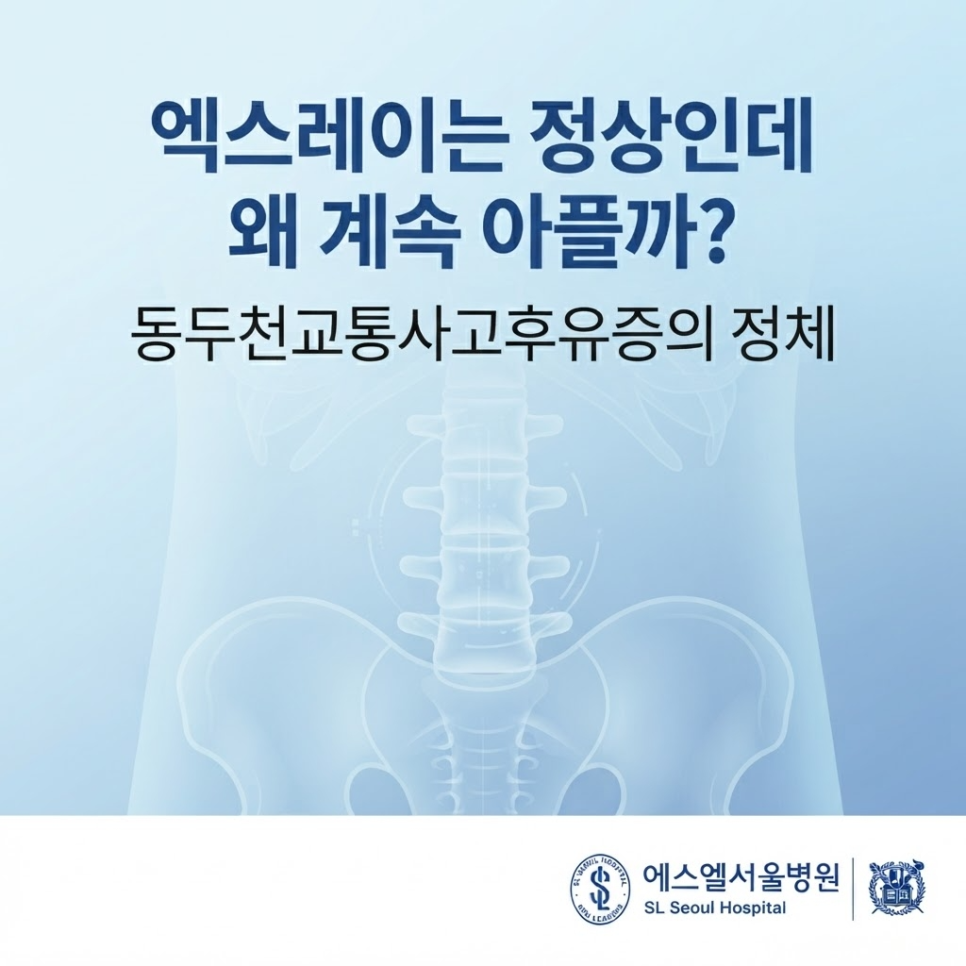
    Even when you get an X-ray at the hospital, car accident aftereffects often don’t show up on bone imaging alone.
    That’s because subtle damage to muscles, ligaments, and nerves doesn’t appear on film.

    If a normal X-ray has made you hesitate to get checked out of fear it’s an overreaction, the information below may help.

    💡 Article Preview
    · We explain why car accident aftereffects don’t show up on X-rays, and how whiplash injury actually happens.
    · We cover exactly when to visit a Dongducheon orthopedic clinic and what a detailed exam typically involves.
    · We also go over daily habits that may support recovery and precautions worth keeping in mind.

    car accident aftereffects

    What Are Car Accident Aftereffects?

    Car accident aftereffects refer to delayed pain that shows up after tissue in the body is subtly damaged by the impact of a collision, often not appearing until some time has passed.

    At the moment of impact, stress hormones like adrenaline are released, which can temporarily dull pain.
    That’s why many people feel fine immediately after a crash.

    But once the body relaxes over the following days, damage to muscles and ligaments can gradually surface as pain.

    car accident aftereffects — related image 3

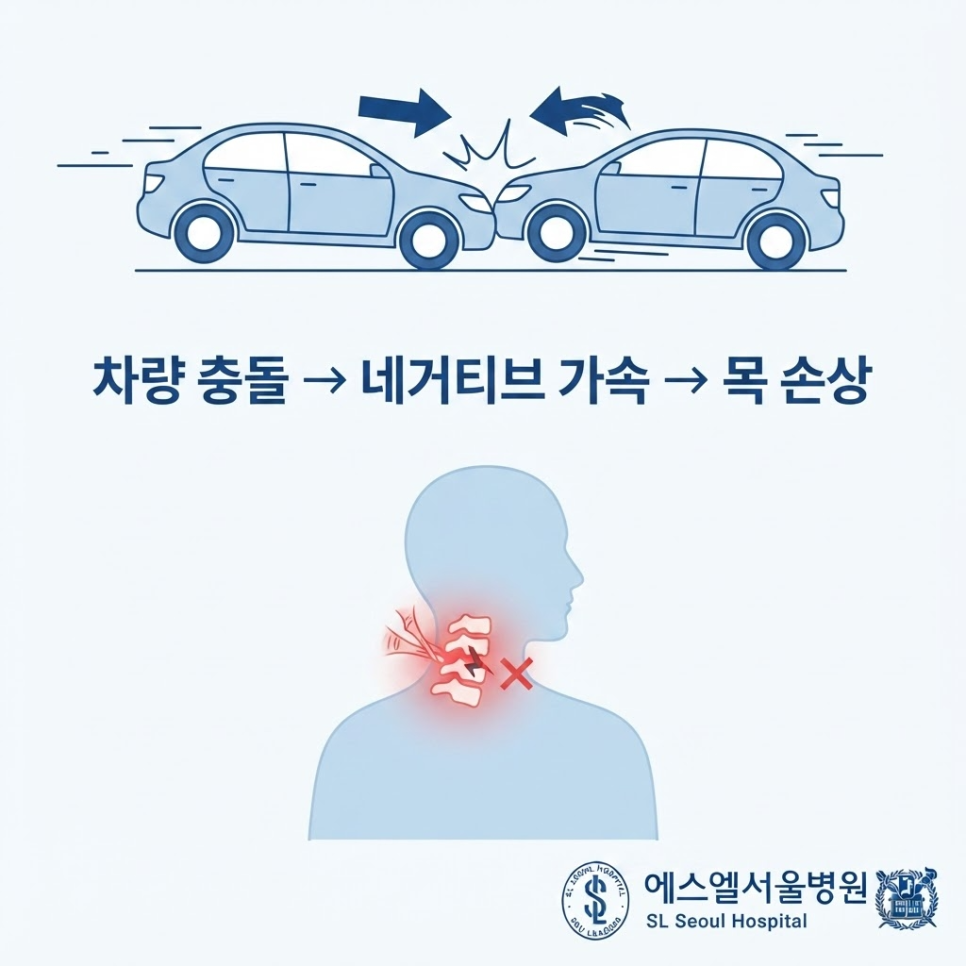
    At the moment a vehicle collides, the body undergoes sudden acceleration and deceleration at the same time.
    The neck snaps forcefully back and forth, and the ligaments and muscles around the cervical spine can stretch or tear — a pattern known as whiplash injury.

    The name comes from the whip-like motion of the neck, and whiplash injuries of this kind are commonly associated with car accidents.
    This is why patients can feel severe pain even when an X-ray shows no problem with the bones themselves.

    🎯 Key Point
    If mistaken for a simple bruise and left unaddressed, whiplash may progress into chronic neck, shoulder, and back pain, along with headaches and dizziness.

    When Should You Visit a Dongducheon Orthopedic Clinic?

    Because symptoms often appear days after the accident rather than right away, many people miss the right time to get checked.

    So what specific signs mean it’s time to visit a specialized medical center such as a Dongducheon orthopedic clinic?

    car accident aftereffects — related image 4

    If stiffness and tightness in your neck and shoulders continue for several days, it’s best not to put off a visit.
    The same goes for tingling in your hands or feet, or unexplained heaviness in your back.

    If nausea, insomnia, or unexplained fatigue show up alongside these symptoms, nerve damage should also be considered.
    If even one of these signs sounds familiar, it’s wise to see a medical professional rather than wait it out.

    car accident aftereffects — related image 5

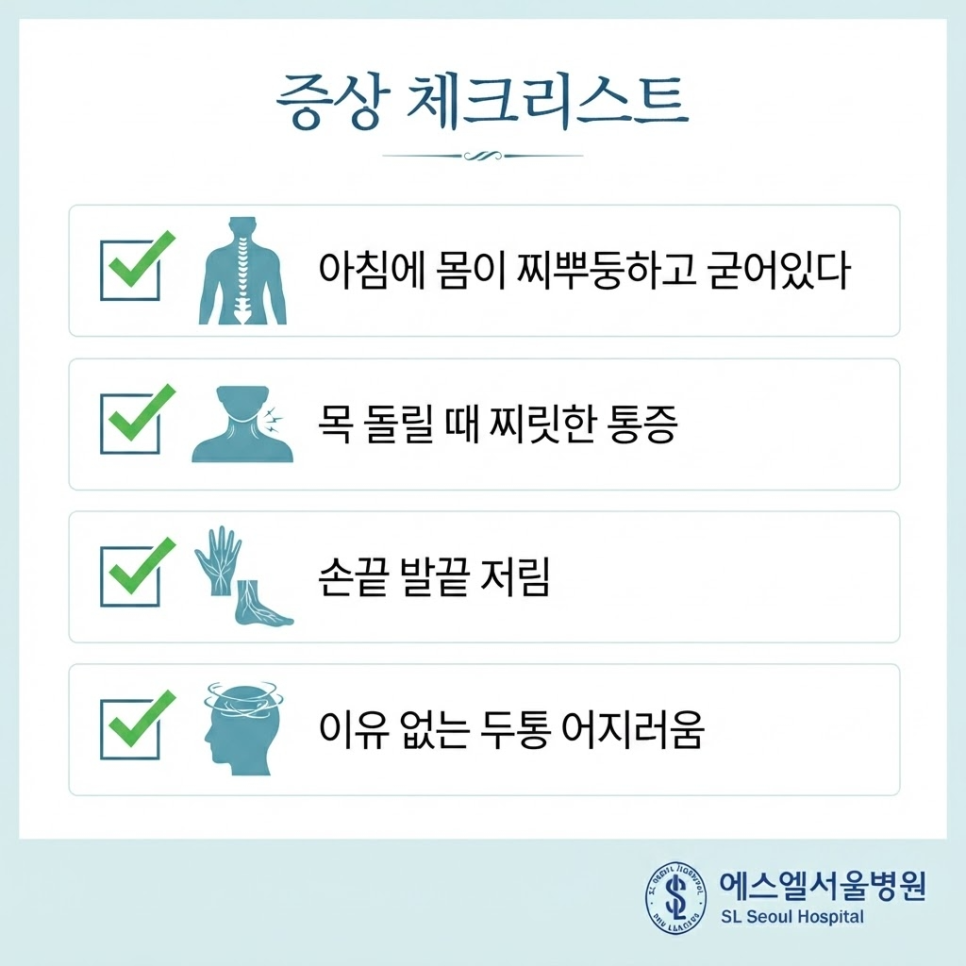
    📋 Symptom Checklist
    ✅ Your body feels stiff and achy when you wake up in the morning
    ✅ You feel a sharp, shooting pain when turning or bending your neck
    ✅ Your fingertips or toes feel numb or tingly
    ✅ Unexplained headaches or dizziness come along with it

    How Do Detailed Exams and Care Work?

    A detailed exam is a diagnostic process aimed at finding hairline fractures and soft-tissue damage that are hard to catch with the naked eye or a standard X-ray.

    These exams are typically carried out in stages, as outlined below.

    🎯 Key Point
    Whiplash symptoms often become more pronounced 2 to 3 days after the accident rather than right away, which is why identifying the extent of the damage early through a detailed exam matters.

    car accident aftereffects — related image 6

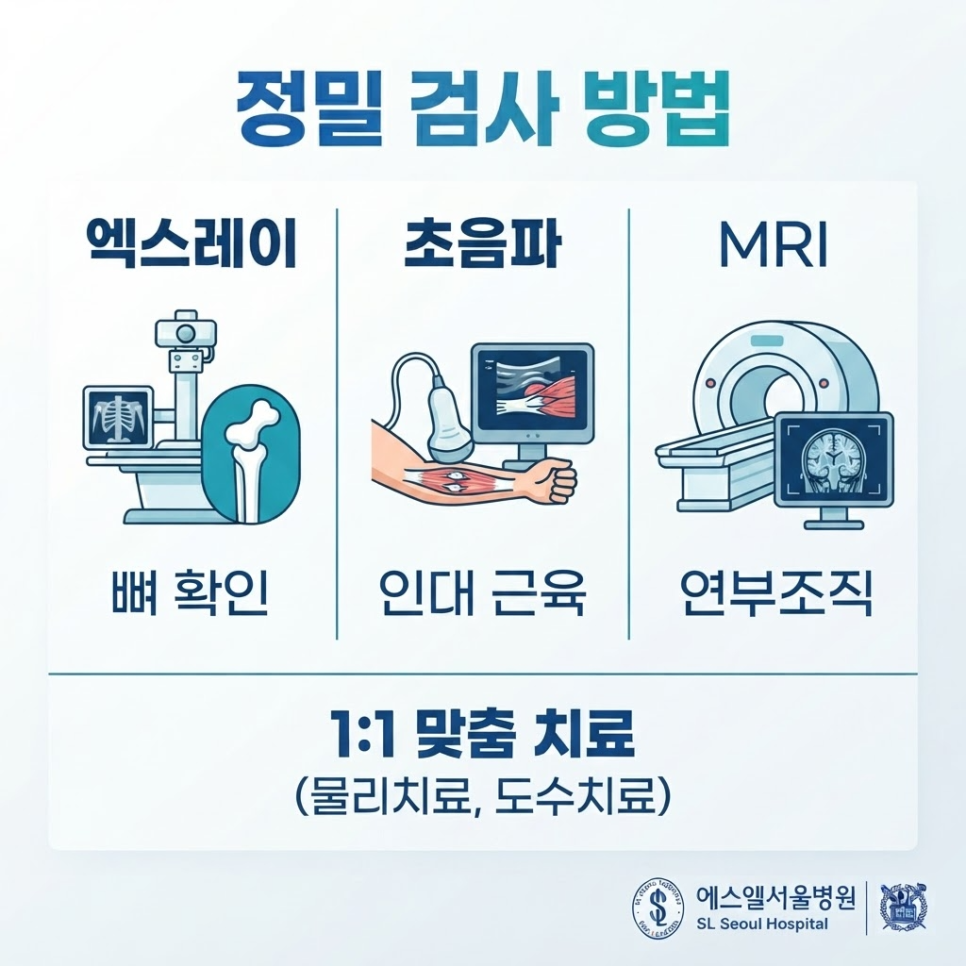
    What Order Do the Exams Follow?

    Stage Exam What It Checks
    Stage 1 X-ray Structural bone issues such as fractures
    Stage 2 Ultrasound Inflammation and damage in muscles and tendons
    Stage 3 MRI Detailed evaluation of soft tissue such as ligaments and nerves

    car accident aftereffects — related image 7

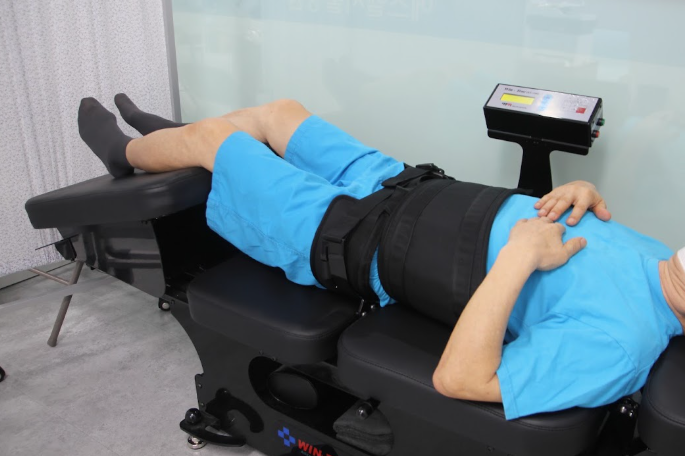
    Based on the exam results, care is tailored one-on-one to each patient’s condition.
    Options range from physical therapy to ease pain to manual therapy that gently loosens tight muscles.

    The SL Seoul Spine & Joint Hospital website also walks through this step-by-step care process in more detail, if you’d like to take a look.

    car accident aftereffects — related image 8

    🚀 Care Approach
    Care is focused on reducing inflammation and restoring joint range of motion, tailored to each person’s pain pattern and degree of injury.

    What Daily Habits Can Support Recovery?

    Day-to-day habits matter just as much as treatment itself.
    The habits you build can make a real difference in how quickly you recover.

    car accident aftereffects — related image 9

    Maintain good posture during the day, and avoid lifting heavy objects when you can.
    At night, use a pillow that isn’t too high to ease the strain on your neck.

    Gentle stretching may help relax tight muscles.
    Try repeating slow, pain-free neck and shoulder rotations on a regular basis.

    car accident aftereffects — related image 10

    ⚠️ Caution
    Stop right away if you feel pain during exercise — pushing through a movement that hurts can slow your recovery instead of helping it.

    Frequently Asked Questions

    1. I didn’t feel any pain right after the accident — can it still show up days later?
    Yes, this is common. Right after a crash, the body is often too tense to register pain clearly, and symptoms tend to surface later once that tension eases.

    2. My X-ray looks normal, so why does it still hurt?
    An X-ray only shows problems with bones, so it can’t reveal subtle damage to muscles, ligaments, or nerves. Soft-tissue injury may be the underlying cause.

    3. How long does recovery usually take?
    It depends on the severity of the injury, age, and individual factors, but consistent care and treatment over several weeks to a few months is often needed.

    4. When can I get back to my normal routine?
    Avoid strenuous activity, but it’s fine to gradually resume light daily activities while keeping an eye on your pain levels.

    5. What should I look for in a Dongducheon orthopedic clinic?
    It’s worth checking whether the clinic offers detailed imaging beyond X-rays — such as ultrasound and MRI — along with personalized physical and manual therapy options.

    car accident aftereffects — related image 11

    car accident aftereffects — related image 12


    References

    · Hidoc Expert Column, “교통사고 후유증으로 인한 경추 손상…’편타손상 증후군’이란?” [Cervical Spine Injury from Car Accident Aftereffects… What Is ‘Whiplash Syndrome’?], Hidoc, 2022. Read more
    · BioTimes, “검사 결과 이상 없다는데 왜 계속 아플까…교통사고 후유증 주의” [Test Results Show Nothing Wrong, So Why Does It Still Hurt… Watch Out for Car Accident Aftereffects], BioTimes, 2026. Read more
    · Hidoc Expert Column, “교통사고 후유증, 언제부터 언제까지 관리해야 할까?” [Car Accident Aftereffects: From When to When Should You Manage Them?], Hidoc, 2026. Read more


    This article is intended for general health information purposes only and is not a substitute for individual diagnosis or treatment. If you’re experiencing symptoms, please consult a medical professional.