Tag: Orthopedic Care

  • Knee Surgery: 3 Key Checks Before Choosing an Orthopedic Surgeon

    Knee Surgery: 3 Key Checks Before Choosing an Orthopedic Surgeon

    SummaryBefore agreeing to knee surgery, here’s a checklist for choosing an orthopedic surgeon, the stages from conservative to surgical treatment, and how to protect your knees after surgery.

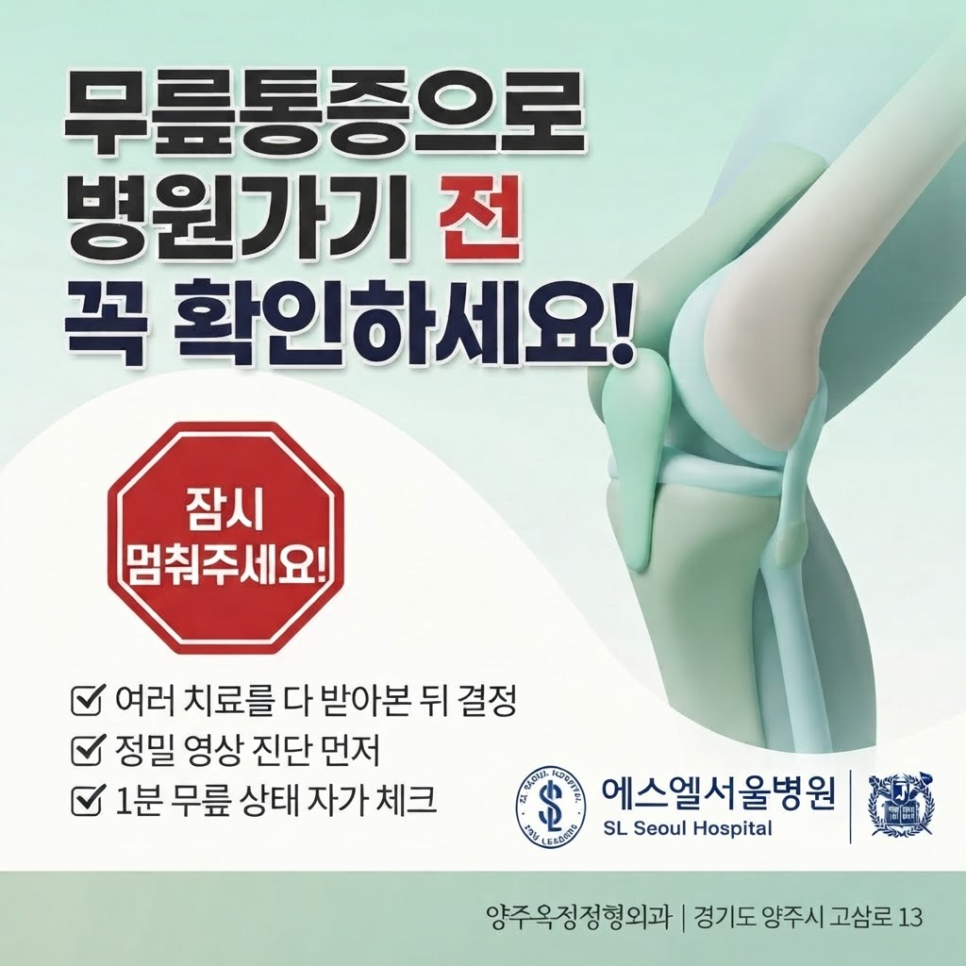
    What would you think if you went to a doctor for knee pain and, without much discussion, surgery was the first thing mentioned?

    If that happens, it’s worth pausing to reconsider how you’re choosing a provider in the first place.

    Knee surgery is generally considered a last resort once conservative treatment has reached its limits, not the first option on the table.

    This article covers what to check when choosing an orthopedic provider before agreeing to knee surgery, the step-by-step criteria from conservative to surgical treatment, and the joint-protection habits that matter whether or not you end up having surgery.

    knee surgery

    knee surgery related image 2

    Why does knee pain happen, and how should you choose an orthopedic surgeon?

    In short, a trustworthy orthopedic practice is one that presents both surgical and non-surgical options in a balanced way.

    An orthopedic surgeon is a physician who evaluates and treats musculoskeletal conditions—bones, joints, and ligaments—through detailed diagnostic testing and staged treatment.

    Because the knee bears the body’s full weight with every step, complaints of knee pain are rising not only among middle-aged and older adults but also among physically active younger people.

    Many people dismiss early knee pain as ordinary muscle soreness and only see a doctor once symptoms have lingered for a long time.

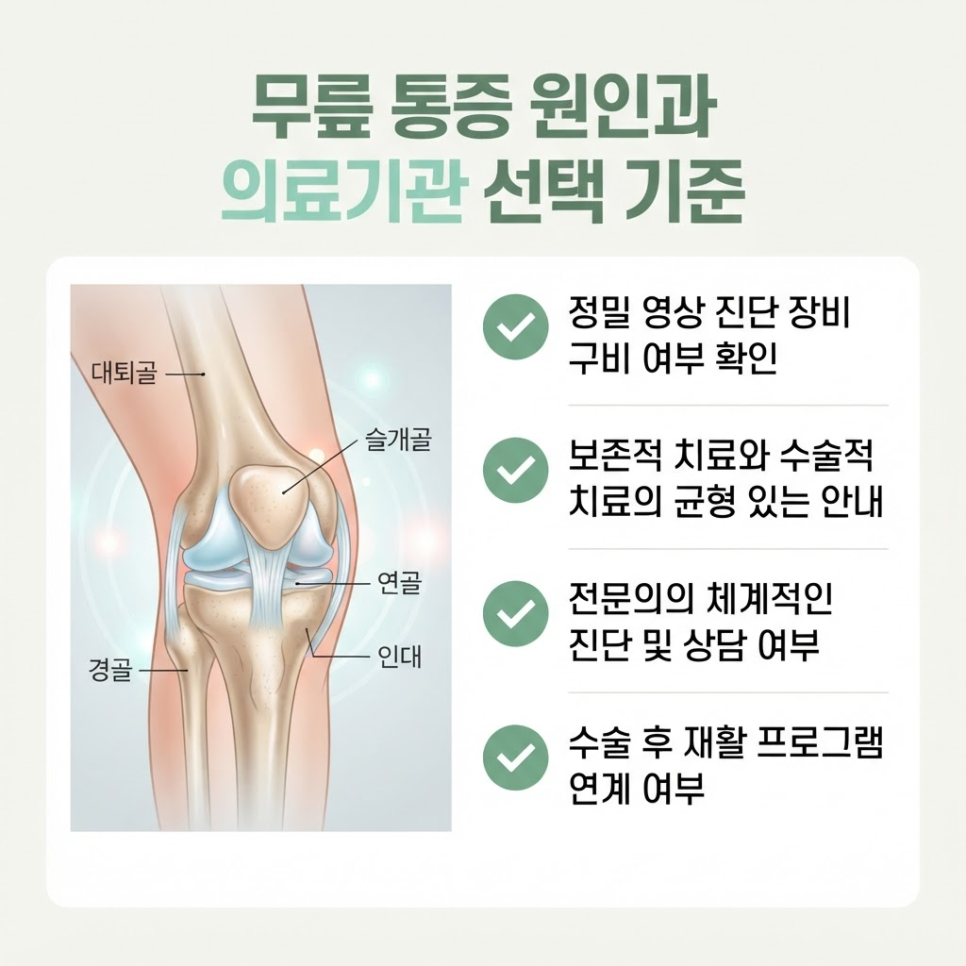
    That’s why, when choosing a provider, you should first check whether the practice has detailed imaging equipment on-site and whether specialist consultations are thorough and systematic.
    knee surgery related image 3

    Orthopedic provider checklist
    ✅ Does the practice have detailed imaging equipment (X-ray, MRI, etc.)?
    ✅ Does it present conservative and surgical treatment options in a balanced way?
    ✅ Are diagnosis and consultation handled systematically by a specialist?
    ✅ Does it offer a connected post-surgical rehabilitation program?

    knee surgery related image 4

    Key takeaway
    The longer knee pain is left untreated, the more diagnosis and treatment tend to be delayed.
    If symptoms persist for more than two weeks, it’s safest to get a thorough diagnostic exam.

    At what stage is knee surgery considered?

    In short, knee surgery is typically the last option considered when pain and functional decline don’t improve with conservative treatment.

    Knee surgery refers to treatment that repairs damaged cartilage or ligaments, or, when necessary, replaces the joint with an artificial implant to restore knee function.

    In earlier stages, conservative treatments such as medication and physical therapy are typically tried first.

    However, when cartilage damage is severe or degenerative arthritis has progressed significantly, conservative treatment alone may not be enough.
    knee surgery related image 5

    Key takeaway
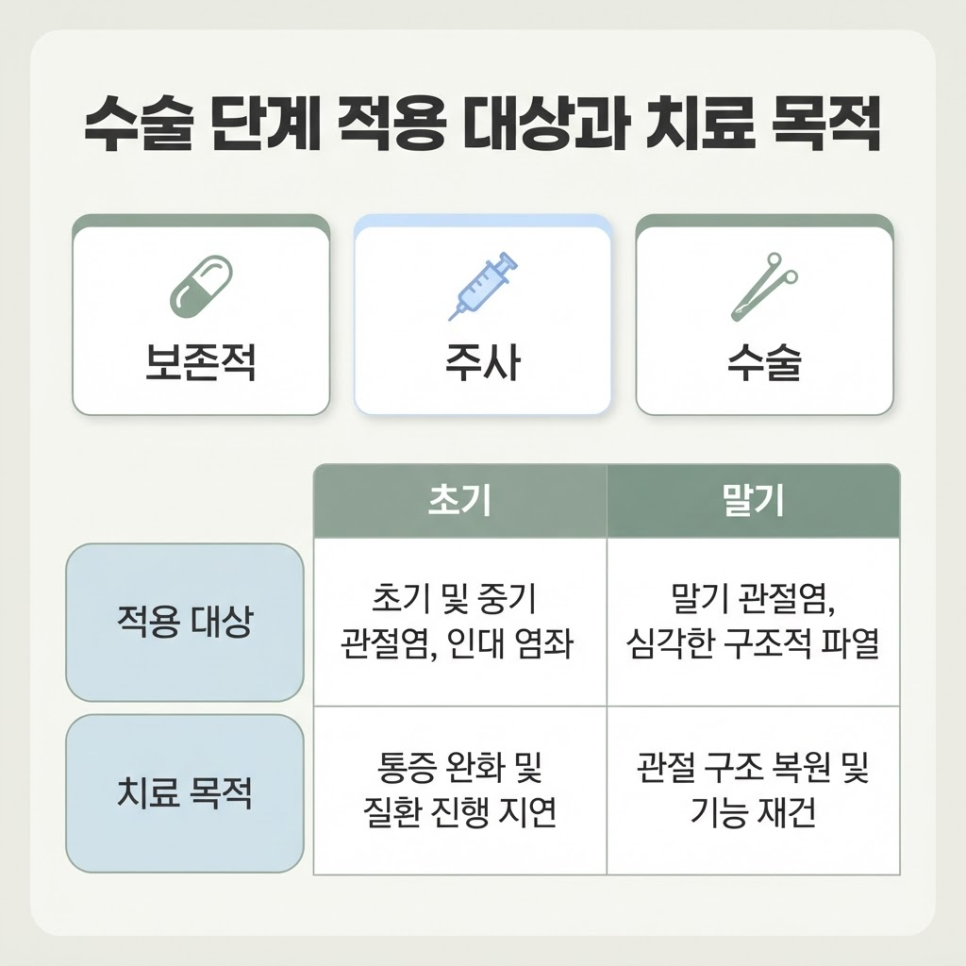
    Stage 1: Medication and exercise therapy (conservative treatment)
    Stage 2: Intra-articular injections with close monitoring
    Stage 3: Arthroscopic surgery or knee replacement considered
    Category Conservative Treatment Surgical Treatment
    Who it’s for Early to moderate arthritis, ligament sprains Advanced arthritis, structural tears
    Treatment goal Pain relief, slowing progression Restoring joint structure and function
    A note of caution
    Pain severity alone isn’t a reliable way to decide whether surgery is needed.
    The decision should always follow imaging that confirms the extent of cartilage damage.

    If you need an accurate diagnosis and consultation, visit the SLS Seoul Hospital Spine & Joint Center homepage for care information.


    What joint-care habits matter regardless of whether you have surgery?

    In short, weight management and thigh-strengthening exercise are the two habits that most affect how long your knees last.

    Joint-protection habits refer to lifestyle practices that reduce the load placed on the knee and strengthen the surrounding muscles to slow down joint damage.
    knee surgery related image 6

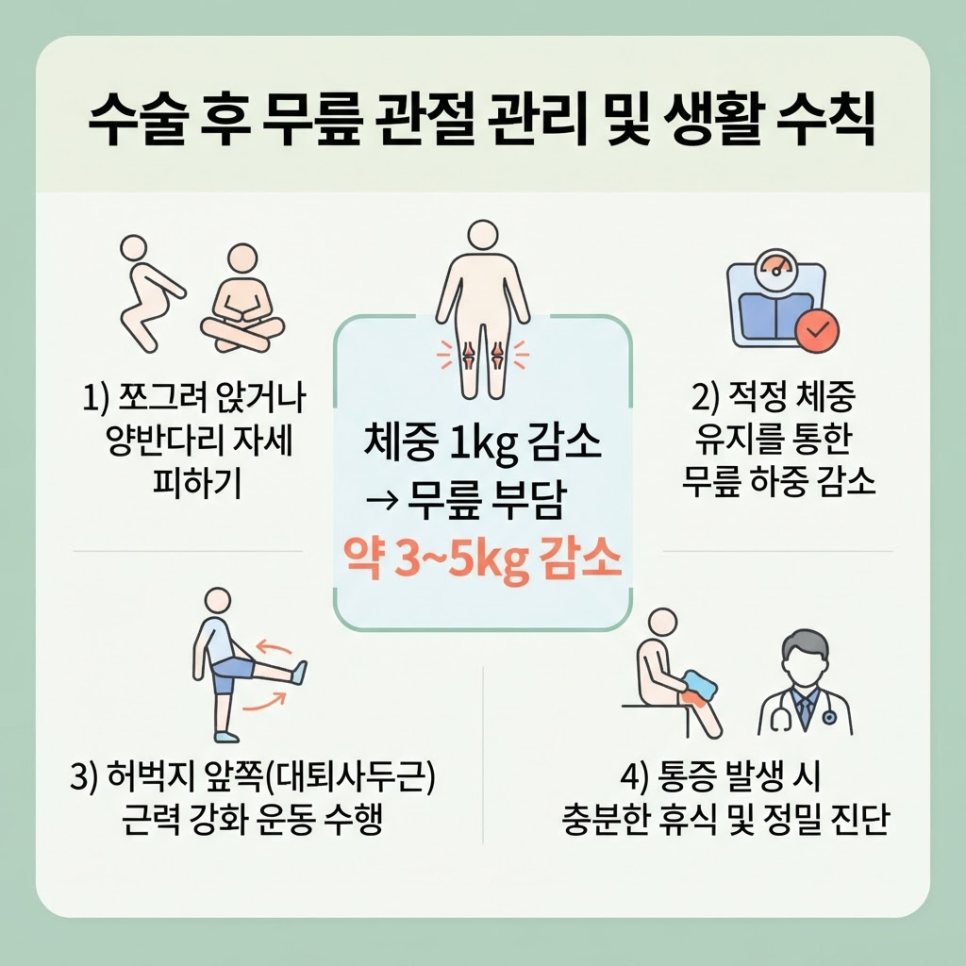
    The effect of weight loss
    According to media reports, losing just 1 kg of body weight is said to reduce the load on the knee by roughly 4 kg, though this can vary by individual.
    Consistent weight management is essentially a way to extend the lifespan of your joints.

    Avoid strenuous hiking or repeated stair climbing, and instead choose low-impact aerobic activities such as walking on flat ground, swimming, or stationary cycling.

    In particular, strengthening the quadriceps—the muscles at the front of the thigh—under professional guidance helps maintain knee stability.

    knee surgery related image 7

    Joint-protection habits
    ✅ Avoid squatting or sitting cross-legged on the floor
    ✅ Maintain a healthy weight to reduce knee load
    ✅ Consistently strengthen the quadriceps (front thigh muscles)
    ✅ Rest when you feel pain and get a thorough evaluation

    Frequently Asked Questions

    1. If I have knee pain, do I automatically need surgery?
    No. In early to moderate stages, conservative treatments like medication, physical therapy, and exercise therapy are tried first. Knee surgery is considered only when sufficient conservative treatment doesn’t improve symptoms or structural damage is severe.

    2. What’s the first thing to check when choosing an orthopedic provider?
    It’s best to first confirm whether the practice has detailed imaging equipment and whether its specialists present both surgical and non-surgical options in a balanced way.

    3. How long does rehabilitation take after knee surgery?
    It varies by the type of surgery and the patient’s condition, but recovery of joint range of motion and strength typically happens gradually over weeks to months.

    4. What’s the best way to protect your knees in daily life?
    Avoiding squatting or sitting cross-legged, walking on flat ground, managing your weight, and consistently strengthening the quadriceps are all effective habits.


    knee surgery related image 8

    knee surgery related image 9

    knee surgery related image 10

    knee surgery related image 11


    References

    · Kookje Ilbo, “A 1 kg Weight Gain Puts 4 kg of Extra Load on the Knee,” Kookje Ilbo, 2019. Read more
    · Korea Disease Control and Prevention Agency (KDCA) National Health Information Portal, “Knee Osteoarthritis: Exercising the Right Way,” KDCA. Read more
    · Seoul National University Hospital, “Degenerative Arthritis,” SNUH Medical Information. Read more

    This article is provided for general health information purposes only and is not a substitute for individual diagnosis or treatment. If you have symptoms, please consult a physician.

  • Wrist Tenosynovitis Self-Check: 4 Signs From Pocheon Orthopedic Clinic

    Wrist Tenosynovitis Self-Check: 4 Signs From Pocheon Orthopedic Clinic

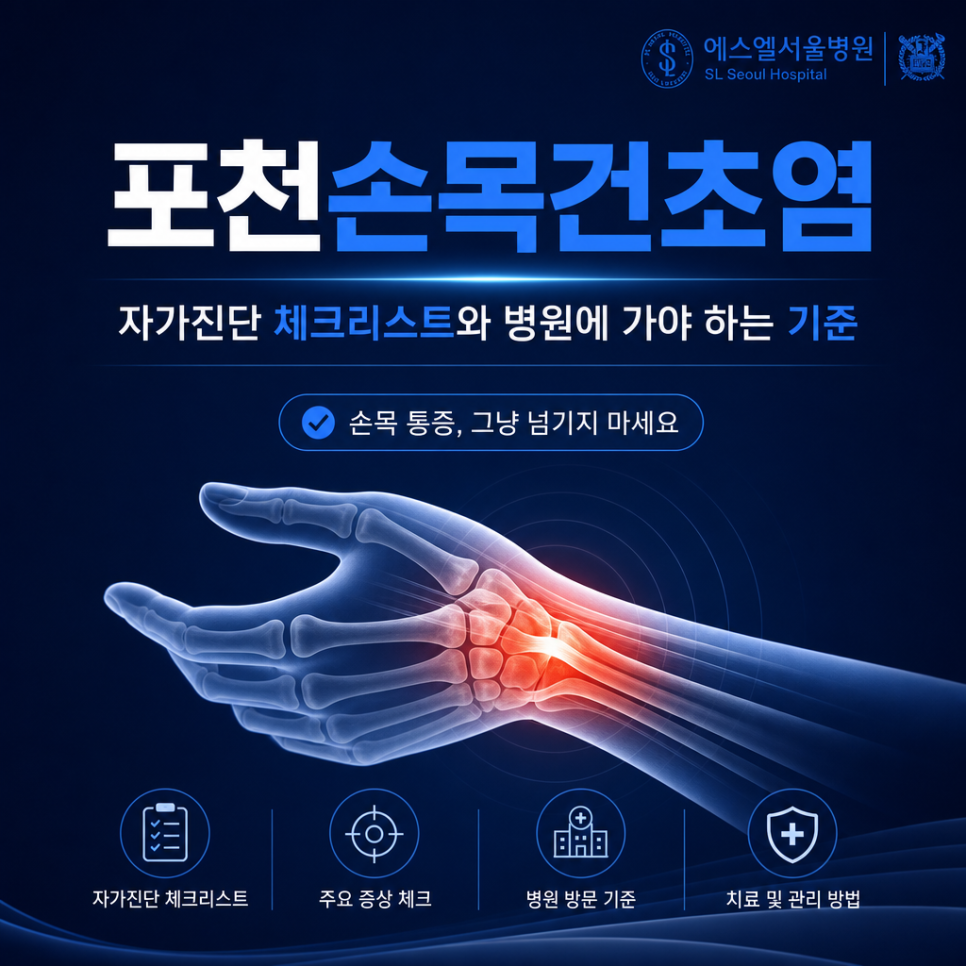
    SummaryIf you feel a sharp, stinging pain every time you bend your wrist, start with this wrist tenosynovitis self-check checklist. Pocheon Orthopedic Clinic breaks down the causes and symptoms of De Quervain’s disease, how it’s diagnosed, and the lifestyle habits that can help shorten recovery time.

    Do you feel a sharp, stinging pain every time you bend your wrist?
    Many people assume it’s just from overusing their hands and brush it off.

    That pain could actually be wrist tenosynovitis — inflammation of the tissue surrounding the wrist tendons.
    Left unaddressed, it can become chronic and take months to recover from.

    Below, we’ll walk through a wrist tenosynovitis self-check checklist and the signs that mean it’s time to see a doctor.

    wrist tenosynovitis self-check

    Key Points
    · We break down the causes and key symptoms of wrist tenosynovitis (De Quervain’s disease).
    · We introduce a wrist tenosynovitis self-check you can try at home right now.
    · We cover the lifestyle habits that can help speed recovery and when to see a doctor.

    wrist tenosynovitis self-check - related image 2

    What Is Wrist Tenosynovitis?

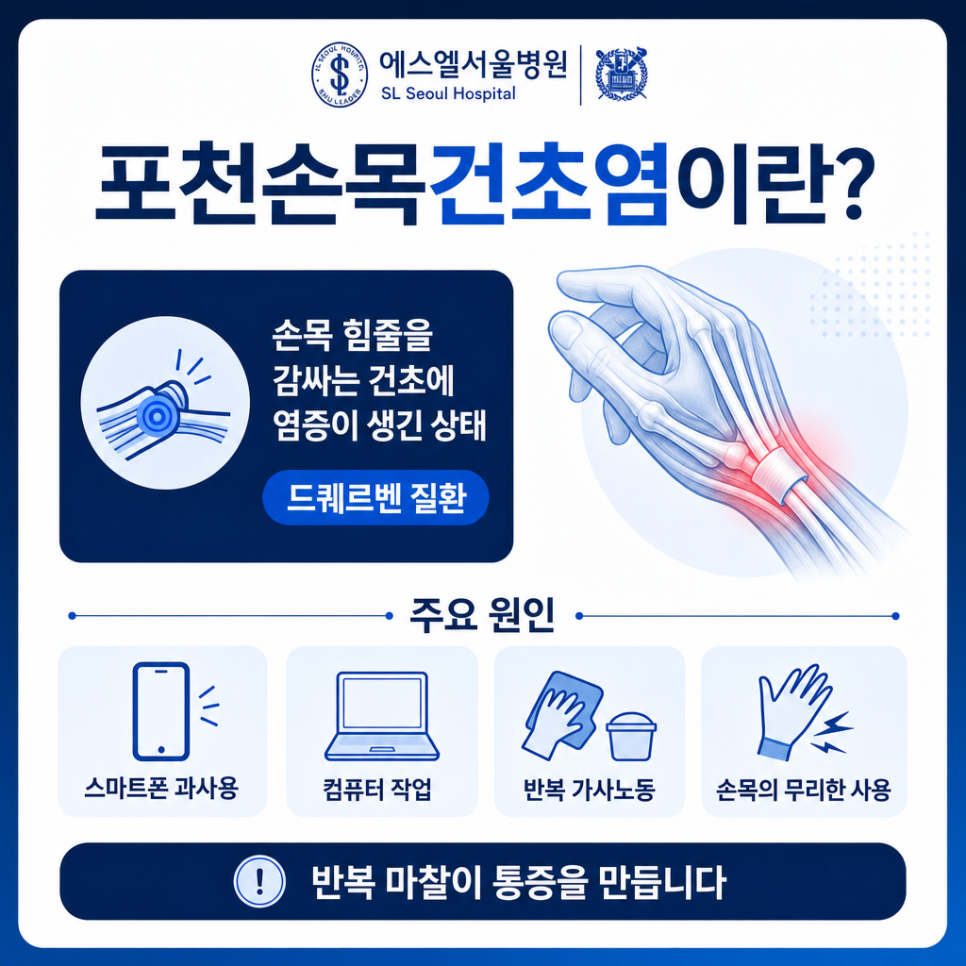
    Put simply, wrist tenosynovitis is inflammation of the sheath surrounding the tendon that runs to the thumb.
    Medically, it’s known by its official name, De Quervain’s disease.

    It tends to show up in people who use their wrists repetitively.
    Pain begins when the tendons that move the thumb pass through a narrow tunnel and repeated friction builds up over time.

    According to medical information from Seoul Asan Hospital, it’s especially common among office workers who use smartphones or computers heavily, as well as homemakers who do repetitive housework.
    It often starts as mild discomfort, but if left unaddressed it can seriously disrupt daily life, which is why early attention matters.

    wrist tenosynovitis self-check - related image 3


    How Can You Self-Check for Wrist Tenosynovitis at Home?

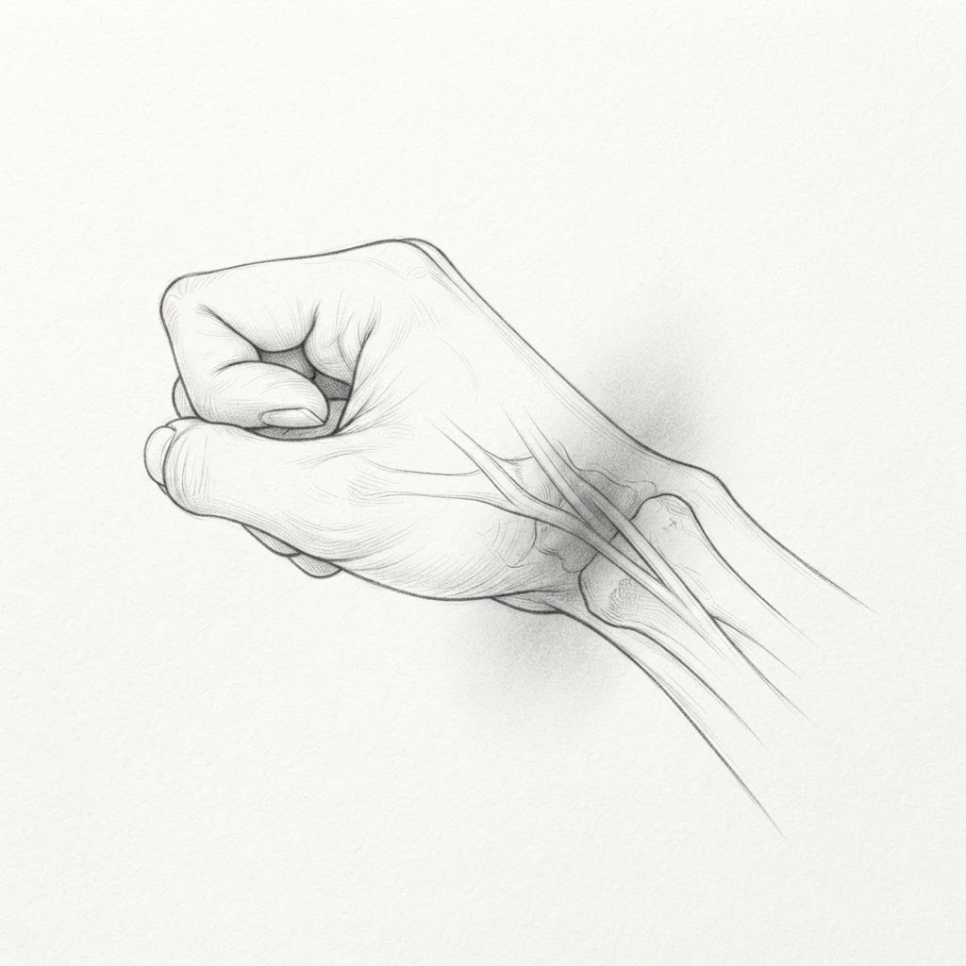
    The simplest method is a self-test known as the Finkelstein test.
    Fold your thumb into your palm, wrap your other four fingers around it to make a fist, then slowly bend your wrist toward your little finger.

    If this brings on sharp pain or a tingling, radiating sensation, wrist tenosynovitis may be the cause.
    Check the list below for other signs to watch for.

    Checklist
    ✅ Pain in the wrist area connecting to the thumb
    ✅ A sharp, stinging feeling when gripping or holding objects
    ✅ A creaking or grinding sensation when moving the wrist
    ✅ Wrist stiffness first thing in the morning

    If two or more of these apply to you, it may be an early sign of tenosynovitis rather than simple fatigue.
    It’s common for people to brush this off at first, only to end up seeing a doctor weeks later once the pain has worsened.

    wrist tenosynovitis self-check - related image 4


    Why Does Wrist Tenosynovitis Happen?

    In short, repetitive overuse of the wrist is the leading cause.
    It’s not a single motion but the same motion repeated over and over that increases friction between the tendon and its surrounding sheath.

    Cause Type Common Examples
    Device overuse Prolonged smartphone or computer use
    Repetitive labor Housework or jobs requiring heavy wrist use
    Poor posture Working for long periods with the wrist bent

    Some reports suggest it occurs more often in women.
    Perhaps because of this, it tends to appear more frequently among those who primarily handle childcare or housework.

    wrist tenosynovitis self-check - related image 5


    How Do Doctors Diagnose and Treat It?

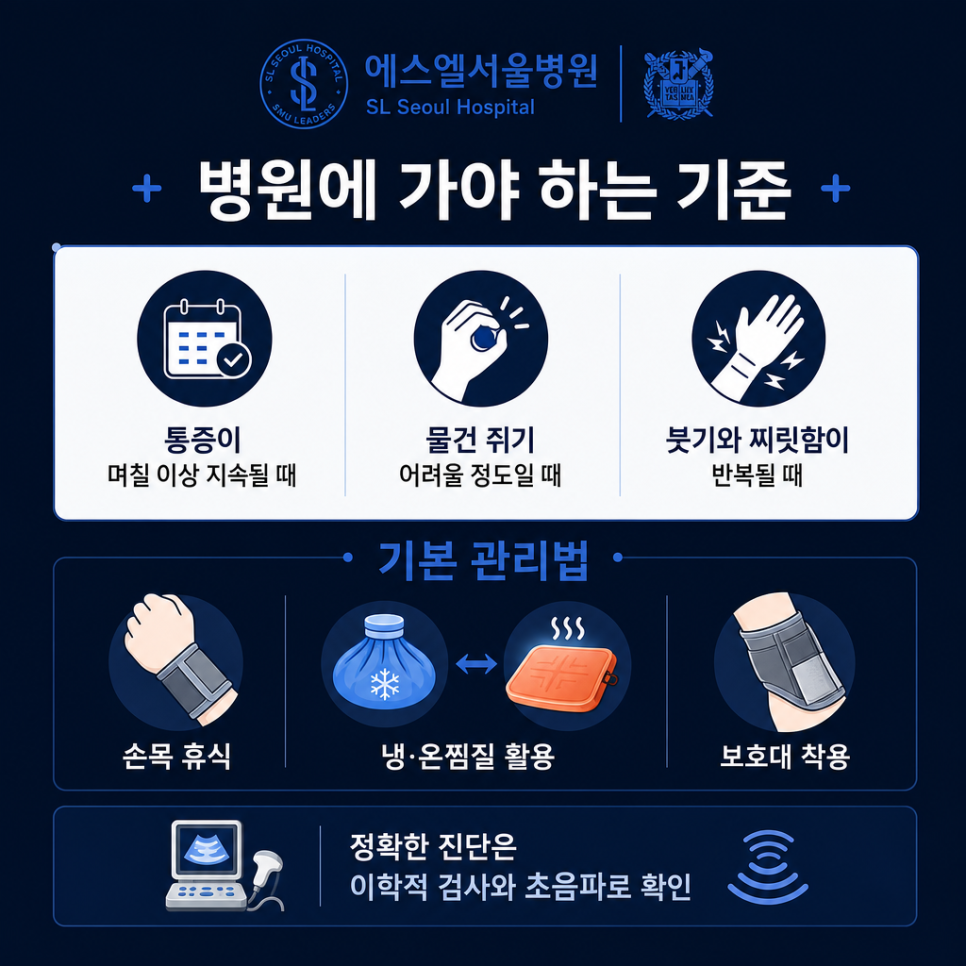
    If your self-check raises concern, it’s best to get an accurate diagnosis at an orthopedic clinic.
    A physical exam combined with an ultrasound can help confirm how inflamed the tendon sheath is.

    wrist tenosynovitis self-check - related image 6

    In the early stages, adequate rest is often combined with physical therapy.
    Depending on the case, medication or injections may also be used to help reduce inflammation.

    That said, treatment outcomes can vary depending on the severity of symptoms and individual lifestyle habits.
    For an accurate assessment and treatment plan, we recommend reviewing the care information on the SL Seoul Hospital for Spine & Joints homepage before scheduling an in-person consultation.


    What Habits Help Shorten Recovery Time?

    Recovery time varies significantly depending on how far the condition has progressed and how well it’s managed.
    Mild cases often improve within a few weeks, but if left unaddressed, it can turn chronic and take several months or longer.

    wrist tenosynovitis self-check - related image 7

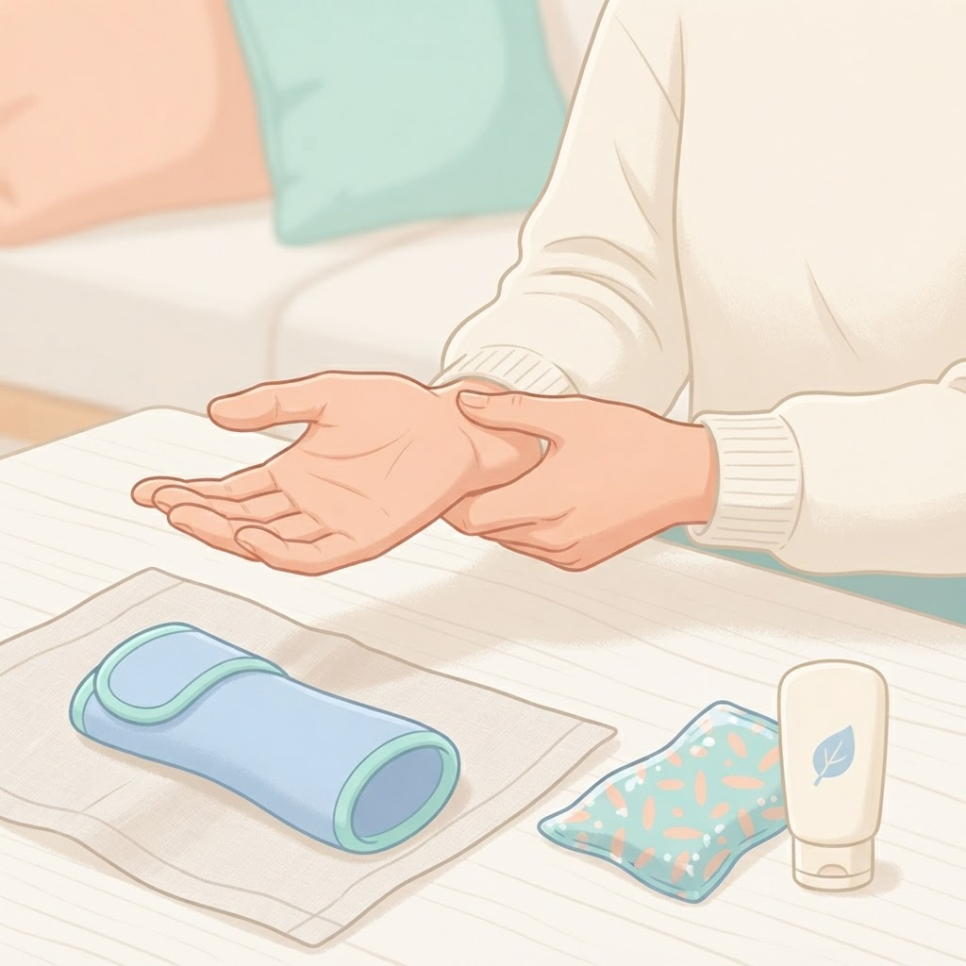
    How to Use Heat, Ice, and Stretching

    Situation Recommended Care
    Acute phase with severe pain Cold compress
    Chronic phase with lingering stiffness Warm compress

    For stretching, extend your arm forward, point your fingers downward, and gently pull them back with your other hand.
    When working, wear a wrist brace to help keep the joint from bending too far.

    wrist tenosynovitis self-check - related image 8

    Takeaway
    Combining rest, compresses, and stretching from the earliest stage of symptoms may help prevent the condition from turning chronic.

    When using your smartphone for long stretches, be sure to give your wrist regular breaks.
    Simply avoiding movements that strain the wrist can help with prevention.

    wrist tenosynovitis self-check - related image 9

    Caution
    Pushing through the pain and continuing to use your wrist is a common reason recovery gets delayed.
    If discomfort lasts more than a few days, don’t put it off — get it checked at a medical facility.

    wrist tenosynovitis self-check - related image 10


    Frequently Asked Questions

    1. Will it heal on its own if I just use a pain-relief patch?
    That may help relieve pain temporarily, but if the underlying cause of the inflammation isn’t addressed, it can easily come back.

    2. What kind of compress should I use?
    Cold compresses can help when there’s heat or swelling, while warm compresses tend to work better for a heavy, achy feeling.

    3. Do I really need to wear a wrist brace?
    Wearing one during work or housework that puts heavy strain on your wrist can help reduce stress on the joint.

    4. Is there a clear sign that means I should see a doctor?
    If the pain lasts more than a few days or it becomes hard to grip objects, it’s safer to visit a clinic for a thorough evaluation.

    5. If my wrist tenosynovitis self-check raises concerns, do I need surgery right away?
    Rest, physical therapy, and medication are generally used as initial treatment, and surgery is typically considered only when symptoms persist over the long term.

    wrist tenosynovitis self-check - related image 11


    References

    · Seoul Asan Hospital, “De Quervain’s Disease,” Easy Medical Terms. View
    · Mayo Clinic Staff, “De Quervain tenosynovitis – Diagnosis and treatment,” Mayo Clinic. View
    · “Management of de Quervain Tenosynovitis,” PMC, National Library of Medicine. View

    wrist tenosynovitis self-check - related image 12

    wrist tenosynovitis self-check - related image 13

    wrist tenosynovitis self-check - related image 14


    This article is intended for general health information purposes only and is not a substitute for individual diagnosis or treatment.
    If you’re experiencing symptoms, please consult a medical professional.