Tag: Orthopedics

  • Knee Pain Causes: 3 Reasons Your Knee Hurts Going Down Stairs

    Knee Pain Causes: 3 Reasons Your Knee Hurts Going Down Stairs

    SummaryIf your knee aches when going down stairs, it may not be simple muscle soreness but a sign of cartilage damage. This article covers two common knee pain causes — osteoarthritis and chondromalacia patellae — along with stage-by-stage symptoms and everyday habits that can help.

    Does the front of your knee sting every time you go down the stairs?

    Most people brush it off as ordinary muscle soreness, but if left unaddressed, the discomfort can develop into throbbing pain that flares up at night.

    Failing to identify the knee pain causes in time can allow cartilage damage to progress quietly, so it’s worth paying attention early.

    knee pain causes

    Key Point
    This article breaks down the difference between osteoarthritis and chondromalacia patellae, two common knee pain causes.
    We’ll also look at symptoms by cartilage damage stage and everyday habits that can help ease the load on your knee joints.

    What Causes Knee Pain When Going Down Stairs?

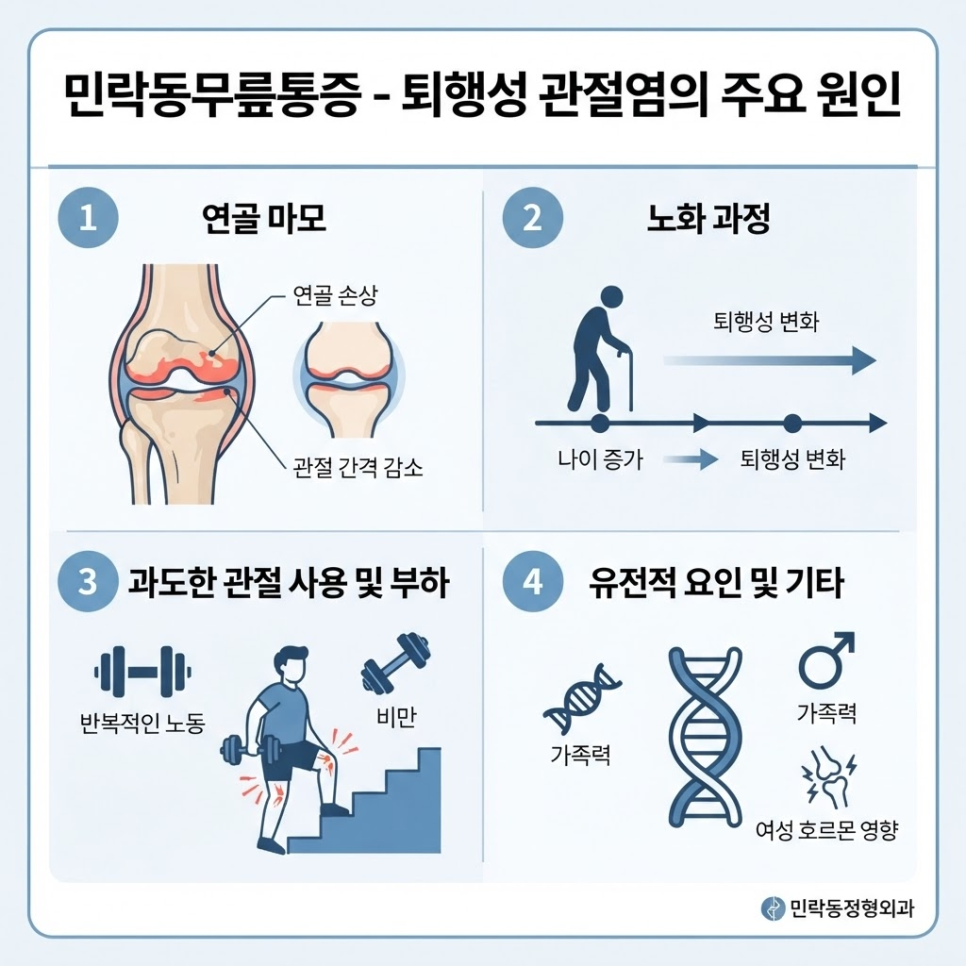
    The reason pain concentrates in the front of the knee when going down stairs is that the joint bears far more weight-bearing load than when climbing up.

    Most knee pain causes come down to cartilage thinning out until bone starts rubbing against bone.

    The knee joint absorbs several times your body weight every single day.
    Because cartilage has no nerve cells, you barely feel anything during the early stages of wear.

    But once enough time passes and the cartilage thins to the point where bones make direct contact, the pain finally becomes noticeable.
    knee pain causes - related image 2

    The causes of knee pain can be grouped below according to which part of the joint is affected.

    Cause Description
    Osteoarthritis A condition in which cartilage gradually wears down due to aging or overuse
    Chondromalacia patellae A condition in which the cartilage behind the kneecap loses firmness and weakens
    Meniscus tear Damage to the cushioning structure inside the knee that absorbs shock

    knee pain causes - related image 3

    Because joints have a limited capacity to heal on their own once damaged, early management is key.
    If you feel pain, it’s safer to stop strenuous exercise right away and rest sufficiently.


    How Are Osteoarthritis and Chondromalacia Patellae Different?

    The two conditions differ in where the cartilage damage occurs and how quickly it progresses.

    Osteoarthritis is a condition in which the cartilage that protects the joint wears away due to aging or repeated stress.
    Chondromalacia patellae, on the other hand, can appear even in relatively younger people and begins when the cartilage behind the kneecap softens.

    According to Korea’s Disease Control and Prevention Agency, the prevalence of osteoarthritis among Korean adults aged 50 and older is around 12.5%, with women affected roughly 3.7 times more often than men.
    Middle-aged and older adults — women in particular — should pay extra attention to joint care.

    Key Point
    Cartilage is a tissue that does not regenerate on its own once it wears down.
    So even if the pain feels mild, if it keeps recurring, it’s best to have it checked early.

    What Stages Does Knee Cartilage Damage Go Through?

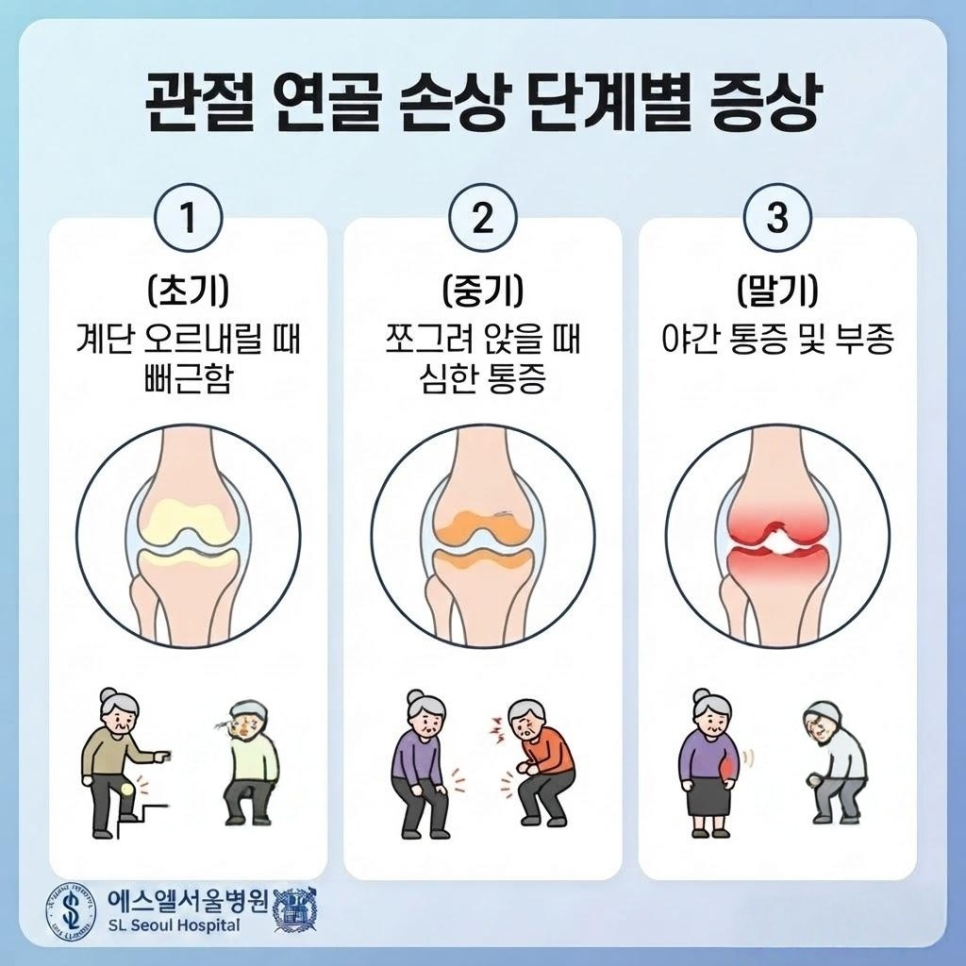
    Joint damage stages are a diagnostic framework based on the degree of cartilage wear.
    As the stage progresses, both the situations that trigger symptoms and their intensity change.

    1. Early stage — Walking on flat ground causes little discomfort, but stiffness appears when climbing or descending stairs.
    2. Moderate stage — Pain becomes noticeable when sitting cross-legged or squatting.
    3. Advanced stage — The joint aches and swells not only while walking but also at night during sleep.
    knee pain causes - related image 4

    knee pain causes - related image 5

    It is generally recommended to pair each stage with appropriate non-surgical, conservative care.

    Checklist
    ✅ The front of your knee feels stiff when using stairs
    ✅ You hear a sound along with pain when moving the joint
    ✅ Sitting cross-legged or squatting is uncomfortable
    ✅ Walking on flat ground is difficult, or you feel pain at night
    If two or more apply, it may be a sign that your knee is under excessive strain.

    What Lifestyle Habits Help Reduce Strain on the Knee Joint?

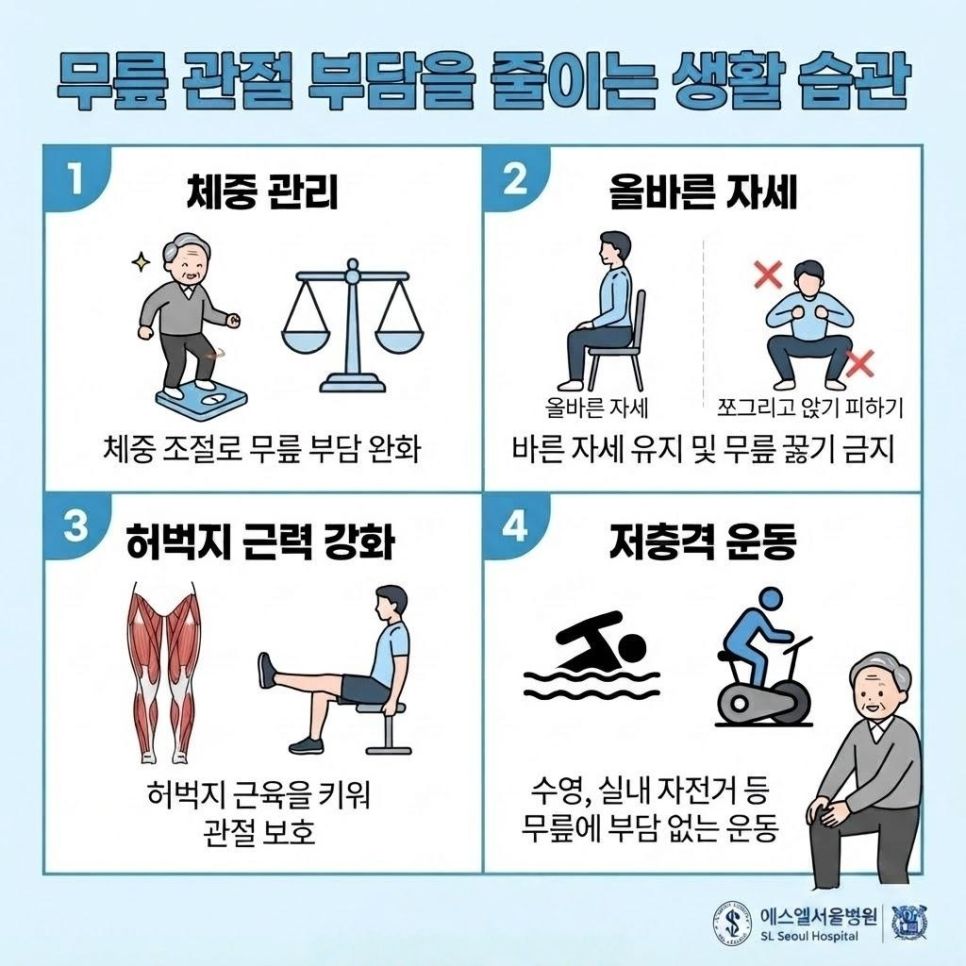
    Strengthening the thigh muscles and adopting habits that distribute body weight more evenly can help protect the joints.

    It’s estimated that for every 1 kg (about 2.2 lb) of body weight gained, the load on the knee joint increases by roughly 3 to 5 kg.
    Simply maintaining a healthy body weight can help reduce common knee pain causes.
    knee pain causes - related image 6

    Habits like squatting to do housework or sitting cross-legged sharply increase pressure on the joint.
    If possible, consider switching to a chair-based routine instead.

    Things to Keep in Mind
    · Avoid deep squatting positions that bend the knee more than 120 degrees
    · Refrain from strenuous hiking or repeated stair climbing while in pain
    · If pain lasts more than 2 weeks, prioritize seeing a doctor over self-care
    knee pain causes - related image 7

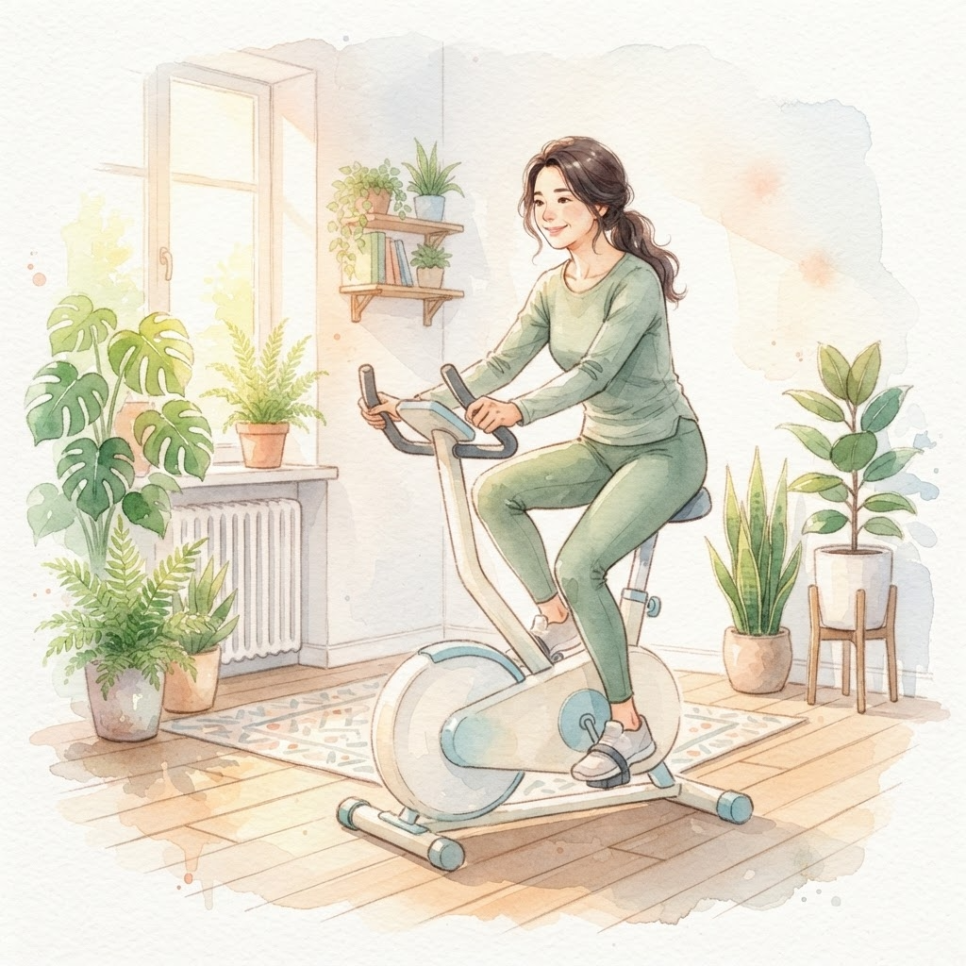
    Try to consistently do exercises like stationary cycling or walking on flat ground to strengthen the quadriceps (front thigh muscles).
    Stronger thigh muscles can help absorb some of the impact that would otherwise land directly on the joint.

    Bottom Line
    Combining consistent lower-body strength training with weight management may help reduce the load placed on your joints.
    However, if pain is already present, don’t rely on self-care alone — it’s recommended to also see an orthopedic specialist.

    If symptoms keep recurring, you can also check the SL Seoul Hospital Spine & Joint Center homepage for information on care options.


    Frequently Asked Questions

    1. If my knee makes noise but doesn’t hurt, do I still need treatment?
    Sound without pain is often just a natural result of friction. However, if pain or swelling is also present, it could indicate cartilage damage, so it’s worth getting checked.

    2. Is heat or ice better for knee pain?
    Ice is more suitable for sudden injuries or swelling accompanied by warmth. For dull, chronic pain, heat therapy that promotes blood circulation tends to work better.

    3. What exercises help prevent arthritis?
    Low-impact activities that put less weight on the knee — such as swimming, water walking, stationary cycling, and slow walking on flat ground — are commonly recommended.

    4. Do I always need to see a doctor for knee pain?
    If pain persists for more than 2 weeks despite rest, or if it’s accompanied by pain at night, it’s safer to get a thorough evaluation from an orthopedic specialist.


    knee pain causes - related image 8

    knee pain causes - related image 9


    References

    · Korea Disease Control and Prevention Agency, “Osteoarthritis,” National Health Information Portal. View source
    · Korea Disease Control and Prevention Agency, “Prevalence of Osteoarthritis Among Korean Adults Aged 50 and Older (2010-2013),” Weekly Health and Disease.View source
    · Hyundai Health Newspaper, “Obesity and Arthritis… Every 1kg of Weight Gain Adds 3-5kg of Knee Load,” 2023.View source
    · Ministry of Health and Welfare, Bokjiro, “Sore Knees in Summer and Monsoon Season… Ice or Heat?”.View source


    knee pain causes - related image 10

    knee pain causes - related image 11

    knee pain causes - related image 12

    This article does not promote any specific procedure and is intended to provide general health information only.
    It cannot replace individual diagnosis or treatment, so please consult a qualified physician if you are experiencing symptoms.
  • Frozen Shoulder Treatment: 3 Exercises Plus a Symptom Checklist

    Frozen Shoulder Treatment: 3 Exercises Plus a Symptom Checklist

    SummaryIf you’re wondering about frozen shoulder treatment, here’s what to know. This guide covers a self-check symptom checklist, how frozen shoulder differs from a rotator cuff tear, causes such as diabetes and thyroid disease, and stage-by-stage frozen shoulder treatment exercises for the acute and chronic phases. We’ll also cover when it’s time to see a specialist.

    Have you ever reached up to wash your hair,
    only to feel your arm lock up in pain?

    If one shoulder has grown stiff for no clear reason — no fall, no bump —
    and the pain keeps you up at night, it may be more than simple muscle fatigue.

    In that case, it’s worth considering frozen shoulder, a condition caused by inflammation of the joint capsule,
    since the symptoms can easily be confused with a rotator cuff tear or shoulder impingement syndrome.

    frozen shoulder treatment

    Before getting into frozen shoulder treatment options,
    it helps to start with a self-check checklist to assess your own shoulder.

    frozen shoulder treatment illustration 2

    For anyone weighing frozen shoulder treatment, this article lays out
    how to tell the symptoms apart, what causes the condition, and
    stage-by-stage management and exercises for the acute and chronic phases, in order.

    Read on to see how inflammation in the joint capsule tends to progress,
    and which exercises you can safely try at home.

    frozen shoulder treatment illustration 3

    What Exactly Is Frozen Shoulder?

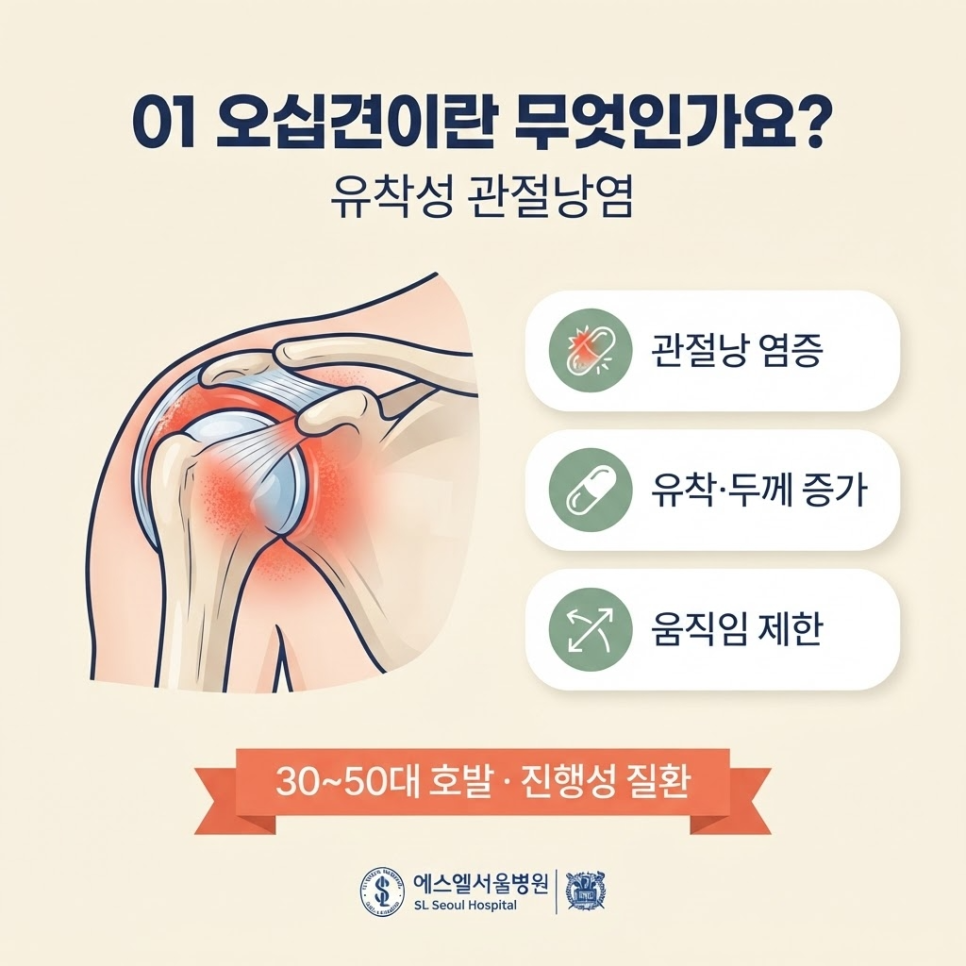
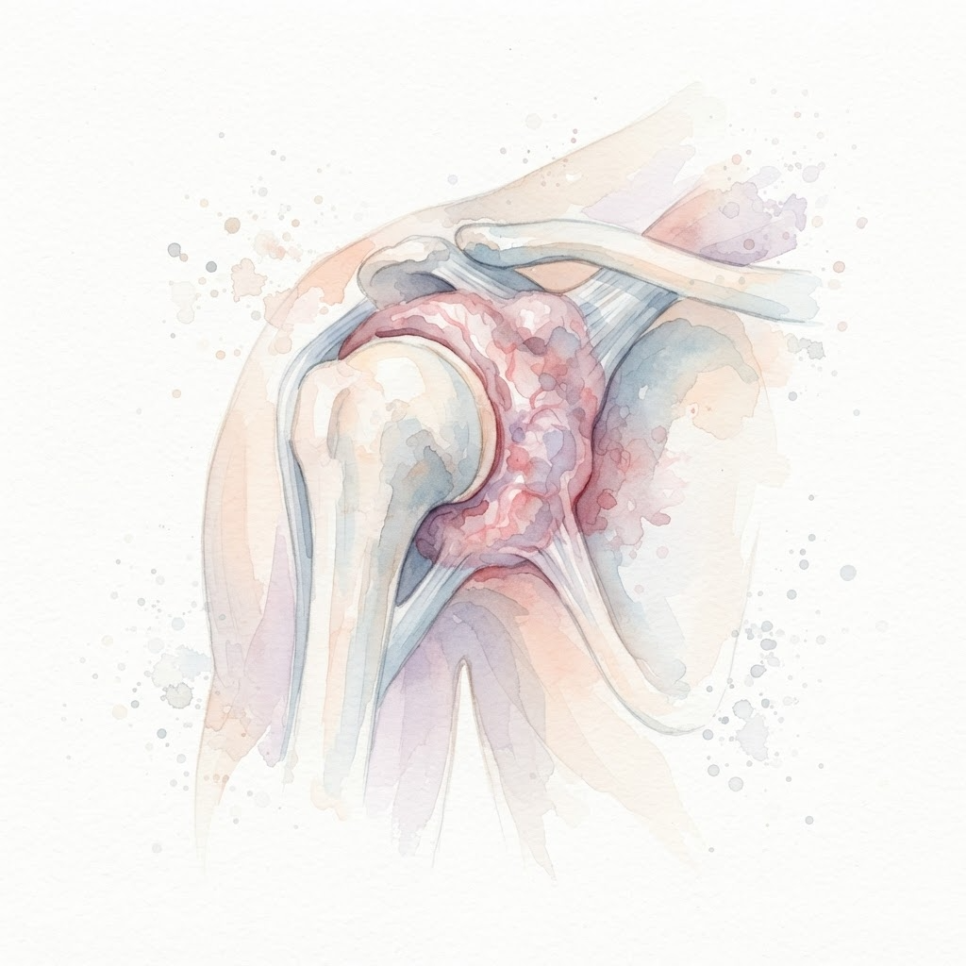
    Frozen shoulder is a condition in which the joint capsule surrounding the shoulder becomes inflamed, thickens, and stiffens.

    Frozen shoulder, medically known as adhesive capsulitis, occurs when inflammation in the joint capsule limits both active and passive shoulder movement.

    According to Korea’s National Health Information Portal, frozen shoulder affects roughly 2% of the general population, making it a fairly common shoulder condition.
    It typically develops after age 50 without any specific injury.
    That said, younger adults who spend long hours on computers and smartphones can also report shoulder pain,
    so it’s worth paying attention to symptoms regardless of age.

    frozen shoulder treatment illustration 4

    Key Point
    The longer frozen shoulder goes untreated, the more the joint capsule can thicken and stiffen,
    and this progressive condition may eventually make it hard to raise your arm on your own.
    Starting frozen shoulder treatment early, as soon as symptoms appear, tends to support a smoother recovery.

    frozen shoulder treatment illustration 5


    What Are the Symptoms, and How Is It Different From Other Shoulder Conditions?

    Not all shoulder pain is frozen shoulder.

    Rotator cuff tears and shoulder impingement syndrome can cause similar pain,
    so an accurate diagnosis matters.

    The key difference: with frozen shoulder, the arm still won’t lift all the way even when someone else raises it for you.
    With a rotator cuff tear, the arm can often move further when someone assists.

    Category Frozen Shoulder Rotator Cuff Tear
    When someone else lifts the arm Doesn’t lift all the way Lifts partway
    Pain pattern Restricted motion in every direction Weakness in specific directions
    Night pain Common May also occur
    Symptom Checklist
    ✅ Difficulty lifting your arm overhead or rotating it behind your back
    ✅ Pain when getting dressed or washing your hair
    ✅ Pain that radiates from the shoulder down to the elbow
    ✅ Trouble sleeping when lying on the affected side
    ✅ Your arm still won’t lift all the way even when a family member or someone else raises it for you

    frozen shoulder treatment illustration 6


    What Causes Frozen Shoulder?

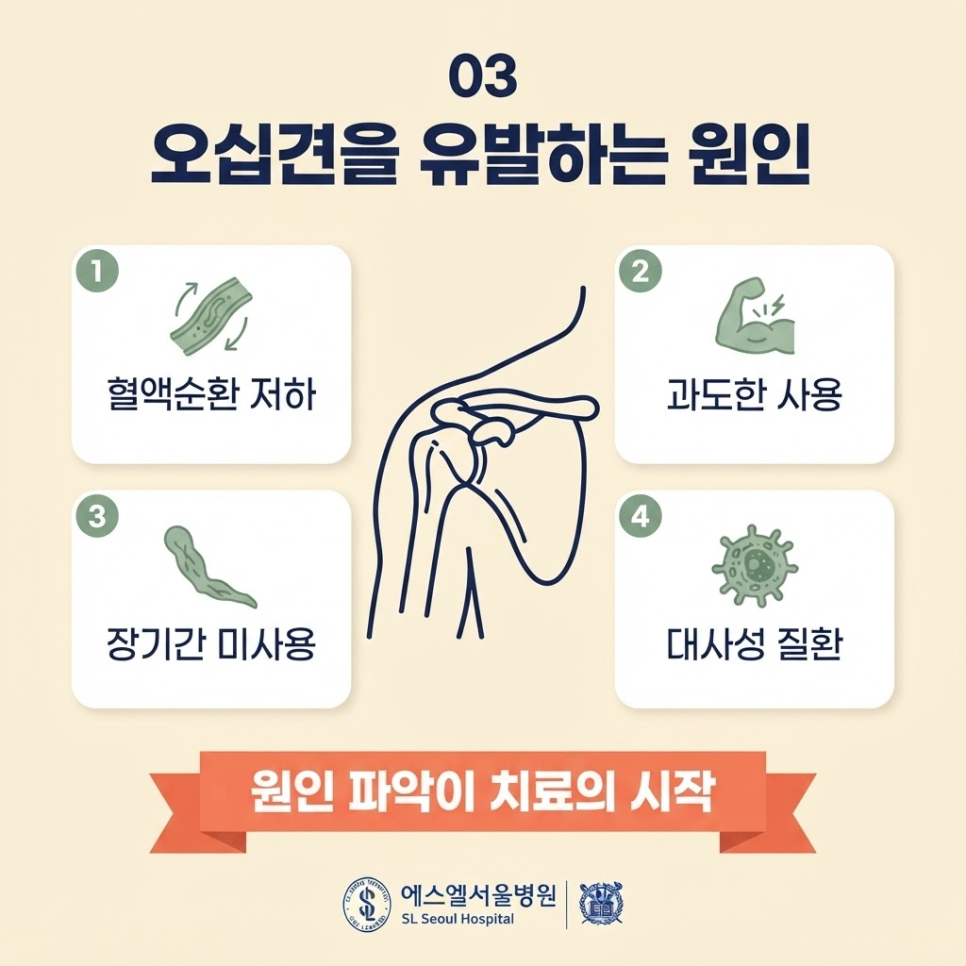
    The main causes of frozen shoulder are reduced blood flow around the joint and an inflammatory response.

    The joint capsule can stiffen from overusing the shoulder — or, just as often, from not moving it enough over a long stretch of time.

    Age-related degenerative changes are also a major factor,
    and some reports suggest that metabolic conditions such as diabetes or thyroid disease can raise the risk of developing frozen shoulder.
    One orthopedic specialist has noted that having diabetes may raise the risk of frozen shoulder by more than fivefold.

    frozen shoulder treatment illustration 7


    How Is Frozen Shoulder Treatment Done?

    Frozen shoulder treatment approaches differ depending on the pain stage.

    During the acute phase, when pain is at its worst, calming the inflammation comes first. Once pain eases into the chronic phase, exercises to loosen the stiffened joint can begin.

    To pinpoint the correct stage, a doctor will first assess the pain pattern,
    and imaging may be used if needed to check the extent of adhesions inside the joint.
    Treatment typically follows each stage in order, with exercises kept within a comfortable, non-strenuous range.

    frozen shoulder treatment illustration 8

    Caution
    Forcing a stretch past the point of pain can actually make the inflammation worse.
    The general rule is to move gently only up to just before pain begins.
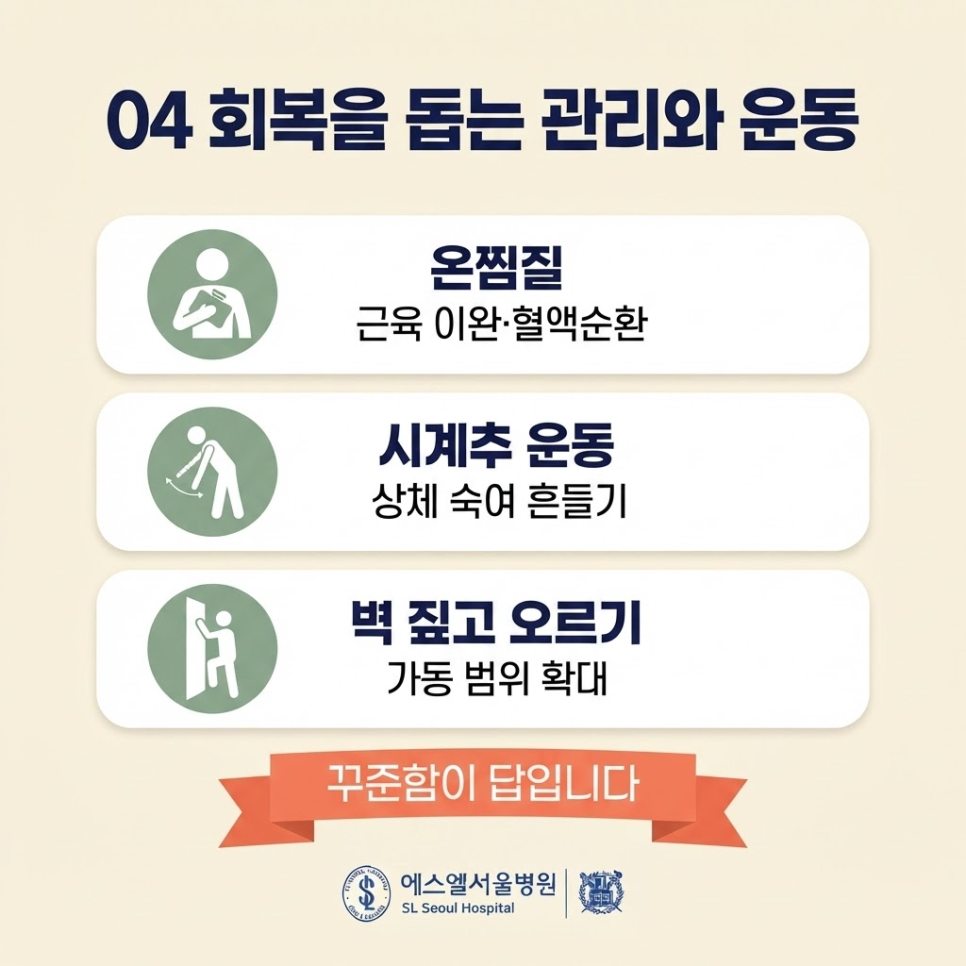
    1. Warm compress: Helps relax muscle tension and supports blood circulation.
    2. Pendulum exercise: Gently hold the affected arm with your unaffected hand, lean your upper body forward, and let the arm swing slowly like a pendulum.
    3. Wall climb (finger walk): Face a wall and slowly walk your fingers upward, gradually increasing your range of motion.
    What to Expect
    With consistent, stage-appropriate management, shoulder range of motion tends to gradually improve over time.
    Recovery speed varies from person to person, though, and can typically take anywhere from several months to one or two years.

    If it’s hard to judge the exact cause and stage on your own,
    we recommend having a specialist evaluate your current condition first.
    You can find related care information on the SLS Seoul Hospital Spine & Joint Center homepage.


    Frequently Asked Questions

    1. Does frozen shoulder go away on its own?
    Some cases do ease with time, but if left untreated, the shoulder can stiffen with reduced function or develop additional pain, so consulting a specialist is recommended.

    2. Is more exercise always better?
    No. Forcing your range of motion past the point of pain can make the inflammation worse. The key is to move within a controlled range and stop just before pain sets in.

    3. How is frozen shoulder treatment carried out at a hospital?
    Since shoulder pain can have many different causes, exercising on your own without an accurate diagnosis can make things worse. It’s safer to have an orthopedic specialist assess the pain pattern — and imaging, if needed — before setting a treatment plan.

    4. Can you tell frozen shoulder and a rotator cuff tear apart at home?
    If your arm still won’t lift all the way even when someone else raises it for you, frozen shoulder is more likely, but imaging is needed for an accurate diagnosis.


    SLS Seoul Hospital supports patients with accurate diagnosis and stage-by-stage management of shoulder pain.

    frozen shoulder treatment illustration 9

    frozen shoulder treatment illustration 10

    frozen shoulder treatment illustration 11

    frozen shoulder treatment illustration 12

    frozen shoulder treatment illustration 13

    frozen shoulder treatment illustration 14


    References

    · Korea Disease Control and Prevention Agency, “Frozen Shoulder (Adhesive Capsulitis),” National Health Information Portal. View source
    · Asan Medical Center Newsroom, “Exercises for Frozen Shoulder Treatment,” Asan Medical Center. View source
    · MediPana, “Frozen Shoulder Linked to Diabetes and Thyroid Disease — Caution Advised for Those 40 and Older,” MediPana News. View source
    · Hankook Ilbo, “Leaving Frozen Shoulder Untreated Can Lead to Chronic Pain — Treatments That Shorten Recovery Time,” Hankook Ilbo, 2025. View source


    This article is intended to provide general health information and is not a substitute for individual diagnosis or treatment.
    If you have symptoms, please consult a specialist.

  • Carpal Tunnel Syndrome Self-Test: 5 Signs to Watch For

    Carpal Tunnel Syndrome Self-Test: 5 Signs to Watch For

    SummaryCarpal tunnel syndrome occurs when the carpal tunnel narrows and compresses the median nerve, causing pain and numbness. This guide covers a carpal tunnel syndrome self-test checklist, diagnostic methods like Tinel’s sign and Phalen’s test, treatment timing, and when to see an orthopedic doctor. It also looks at the common causes of wrist numbness.

    Many people worry that wrist numbness will eventually lead to surgery,
    and that fear alone keeps them from seeing a doctor.

    In reality, though, it’s often the opposite.
    In the early or moderate stages, medication and physical therapy alone are often enough to bring improvement.

    Ignoring carpal tunnel syndrome is actually the far riskier choice.

    This article covers the causes of carpal tunnel syndrome, a carpal tunnel syndrome self-test checklist, the exams performed at an orthopedic clinic, and stretches you can do at home to protect your wrists.
    Let’s look at what signs suggest it’s time to see a doctor when wrist numbness lingers.

    Carpal Tunnel Syndrome Self-Test Basics: What Exactly Is This Condition?

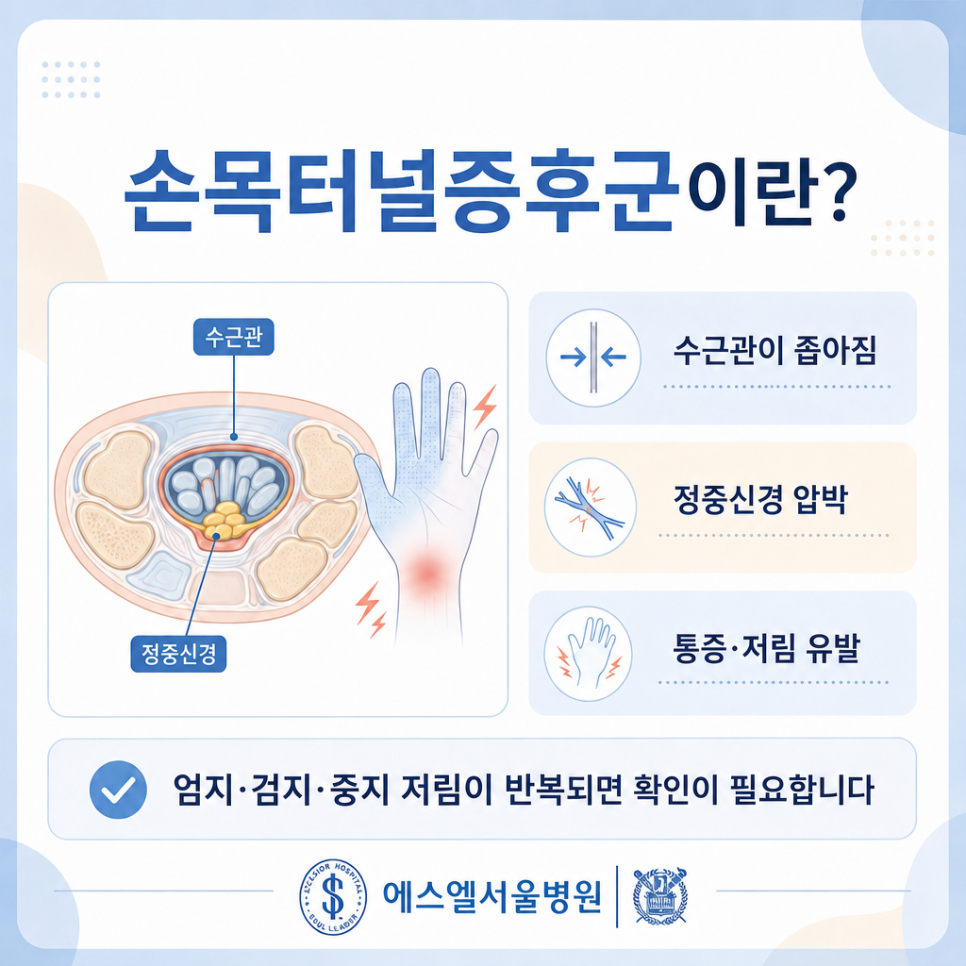
    Carpal tunnel syndrome is a condition in which the carpal tunnel, a narrow passage on the inside of the wrist, becomes compressed and puts pressure on the median nerve, causing pain and numbness.
    It’s also commonly referred to as median nerve compression, and a simple carpal tunnel syndrome self-test can help you spot it early.

    Carpal tunnel syndrome self-test illustration

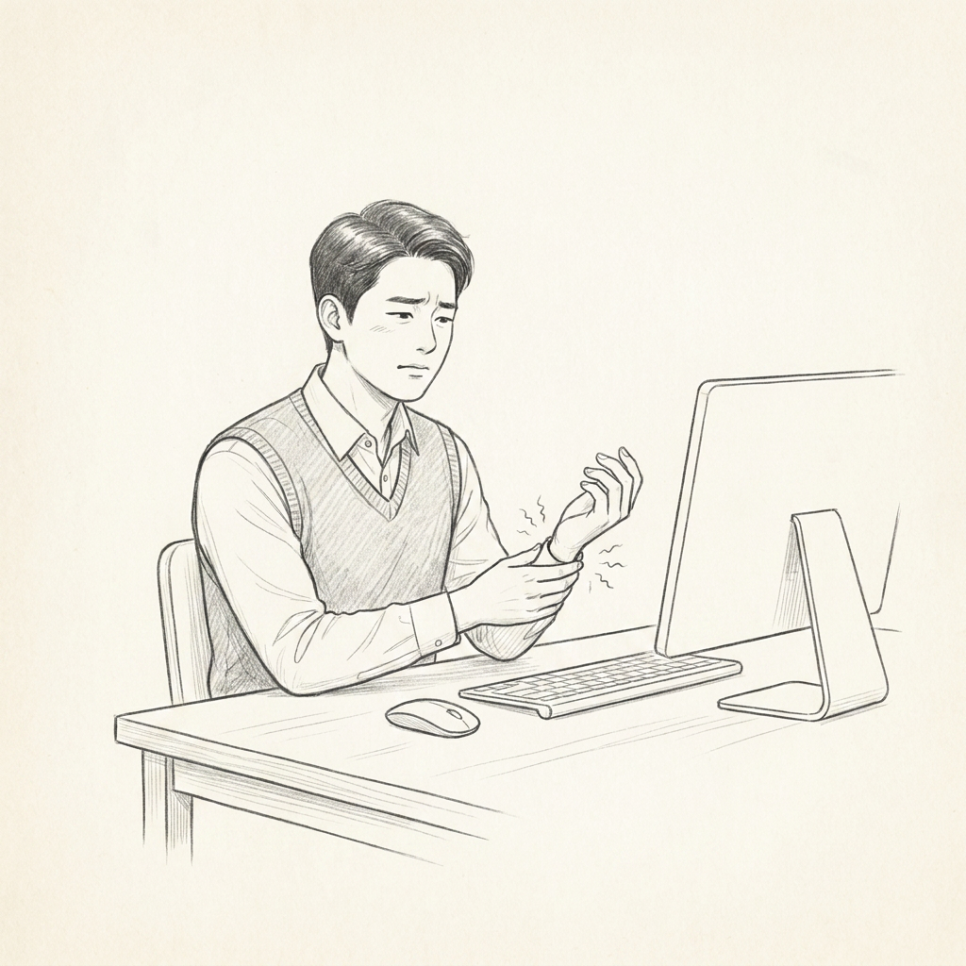
    With how often we use computer keyboards and smartphones these days, this is a genuinely common symptom.

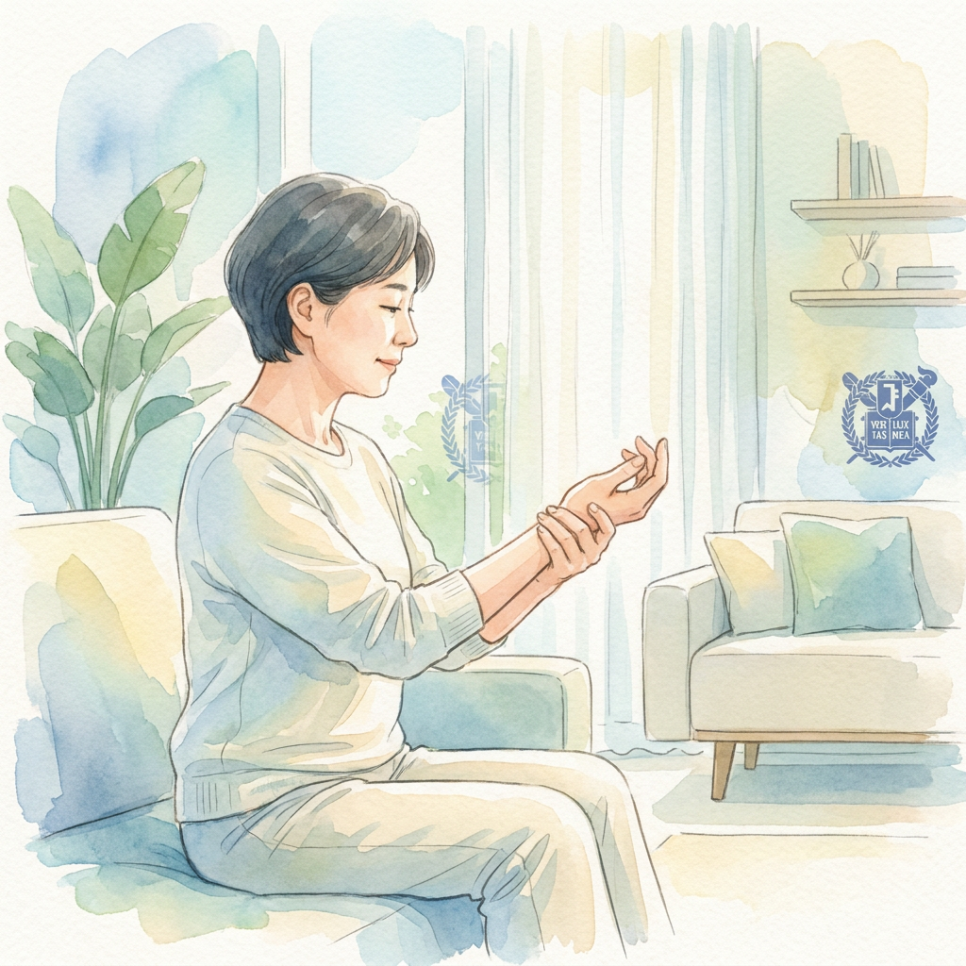
    Brushing off a tingling fingertip as nothing serious can end up making the treatment period longer instead of shorter.

    If it’s dismissed as ordinary fatigue and left alone, the nerve can stay compressed long enough for sensation to become dulled.
    If your job involves repetitive wrist movements, it’s worth paying a little extra attention.

    Carpal tunnel syndrome related image 2

    The Areas the Median Nerve Controls

    Key Point
    The median nerve controls sensation in the thumb, index finger, middle finger, and half of the ring finger.
    If tingling is especially noticeable in these areas, it may be worth considering whether the carpal tunnel is compressed.

    How Do You Do a Carpal Tunnel Syndrome Self-Test? 5 Early Symptoms to Check

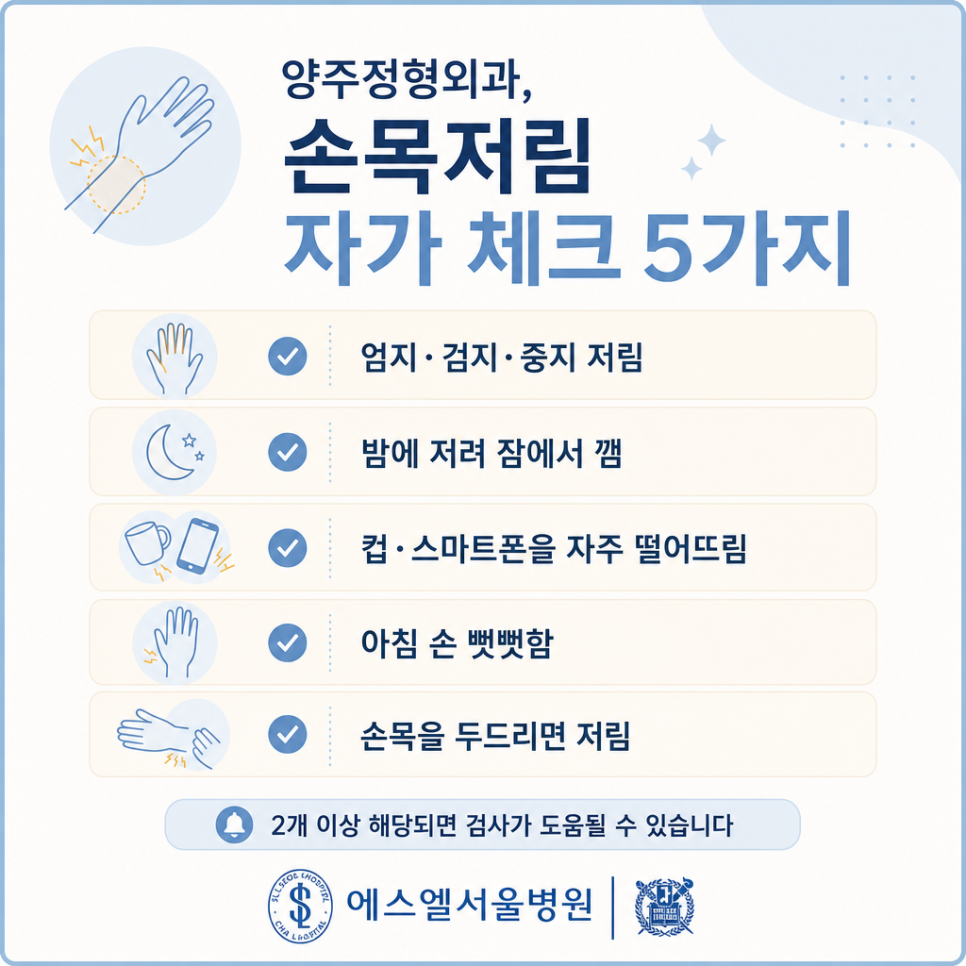
    If two or more of the five items in this carpal tunnel syndrome self-test apply to you, it’s a good idea to get examined.
    Go through them one by one below.

    Carpal tunnel syndrome related image 3

    Carpal Tunnel Syndrome Self-Test Checklist
    ✅ The tips of your thumb, index, and middle fingers feel tingly or numb
    ✅ You often wake up at night because your hand feels numb
    ✅ You’ve dropped a cup or your phone without meaning to
    ✅ Your hand feels stiff in the morning
    ✅ Tapping the inside of your wrist sends a tingling feeling outward

    Carpal tunnel syndrome related image 4

    Why a Carpal Tunnel Syndrome Self-Test Matters: Common Contributing Habits

    Overusing the wrist with repetitive motion, housework, and long hours on a smartphone are among the most common causes.

    It tends to show up especially often in jobs that involve working with the wrist bent for long stretches.
    Women, as well as people with diabetes or thyroid conditions, may also be relatively more prone to it.

    Carpal tunnel syndrome related image 5

    Caution
    The longer symptoms go untreated, the greater the risk of thumb muscle atrophy and permanent nerve damage.
    If numbness keeps recurring, it’s best not to put off getting checked.

    After a Carpal Tunnel Syndrome Self-Test: How Are Orthopedic Exams and Treatment Carried Out?

    If symptoms keep coming back, it’s a good idea not to just tough it out, especially when a carpal tunnel syndrome self-test raises concern, and instead get a thorough exam at an orthopedic clinic.
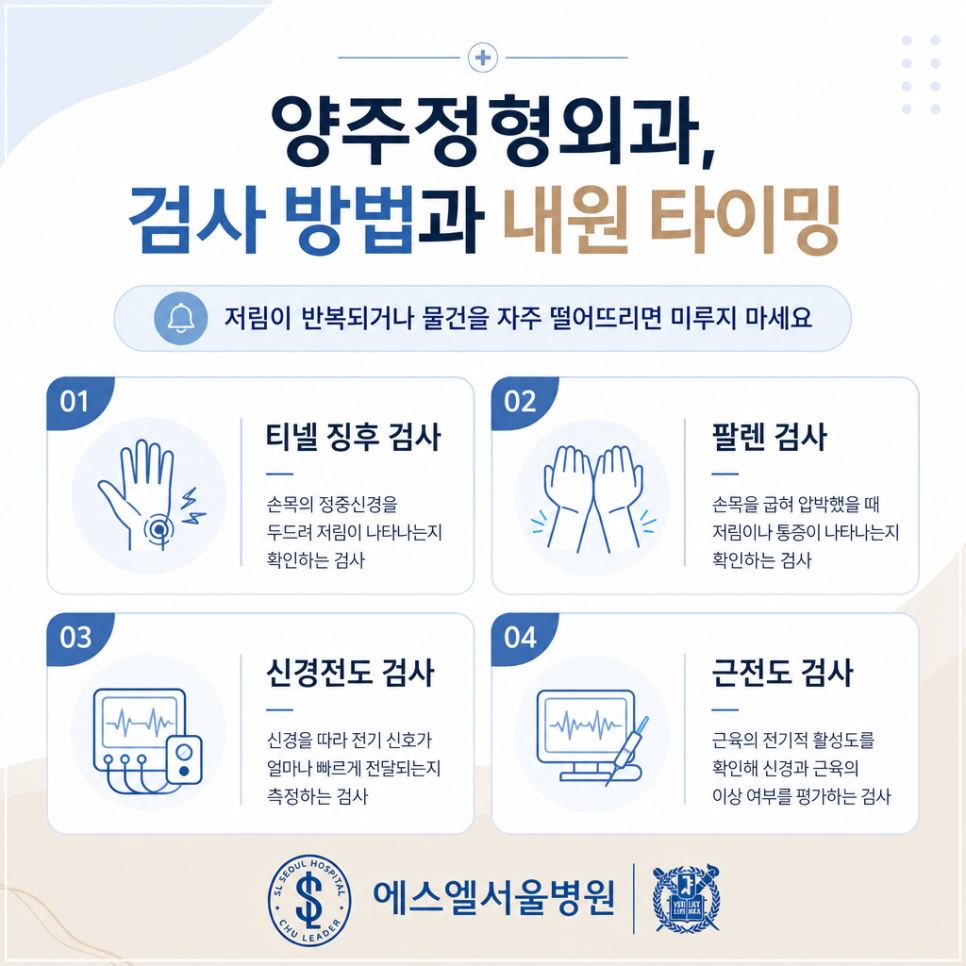
    Depending on your symptoms and condition, the exams below are typically carried out step by step.

    Carpal tunnel syndrome related image 6

    Test Method Purpose
    Tinel’s Sign Test Gently tapping the inside of the wrist Checks for a median nerve stimulation response
    Phalen’s Test Holding the wrist bent for about one minute Checks whether numbness is triggered
    Nerve Conduction / EMG Study Measuring the nerve’s response to electrical stimulation Evaluates the degree of nerve damage in detail
    Key Point
    When caught early, non-surgical options such as medication, physical therapy, or injection therapy are often enough to bring improvement.
    Checking the extent of nerve damage through testing comes first.

    Carpal tunnel syndrome related image 7

    If you’d like more information on diagnosis and treatment options, you can find details on the clinic page at SL Seoul Spine & Joint Hospital.


    How Can You Protect Your Wrists in Daily Life?

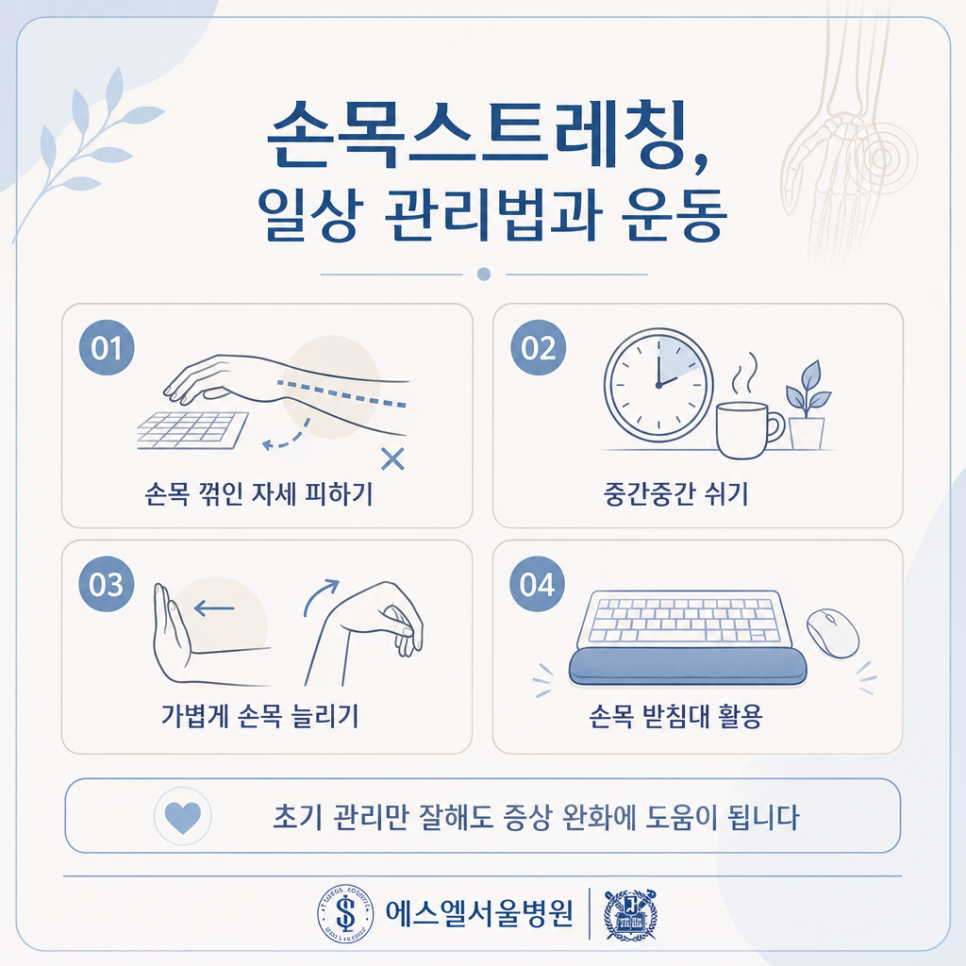
    Simply keeping up good daily habits can help ease symptoms.

    The key is reducing the strain placed on your wrists.

    When using a mouse or keyboard, use a wrist rest to keep your wrist from bending, and check your monitor height and chair position as well.

    Carpal tunnel syndrome related image 8

    4-Step Wrist Stretch

    1. Extend your arm straight out in front of you.
    2. Bend your wrist so your fingertips point toward the floor.
    3. With your other hand, gently pull the back of your hand and hold for about 15 seconds.
    4. Repeat 3 to 5 times on each wrist.
    Result
    Consistent stretching can help lower pressure inside the carpal tunnel and loosen tight ligaments and muscles.

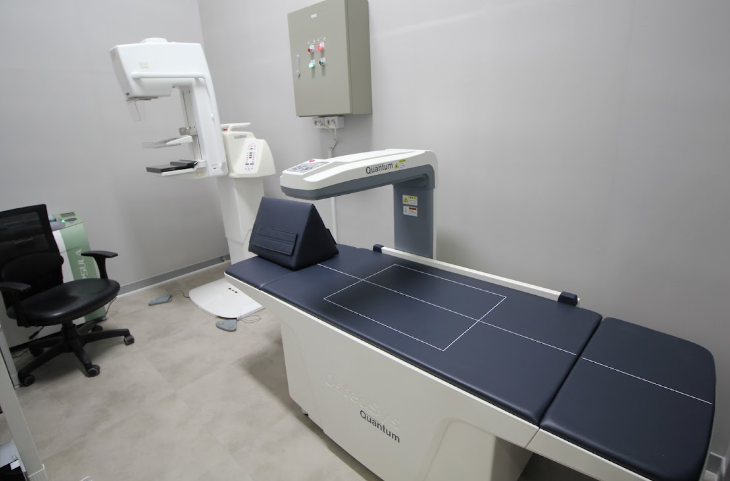
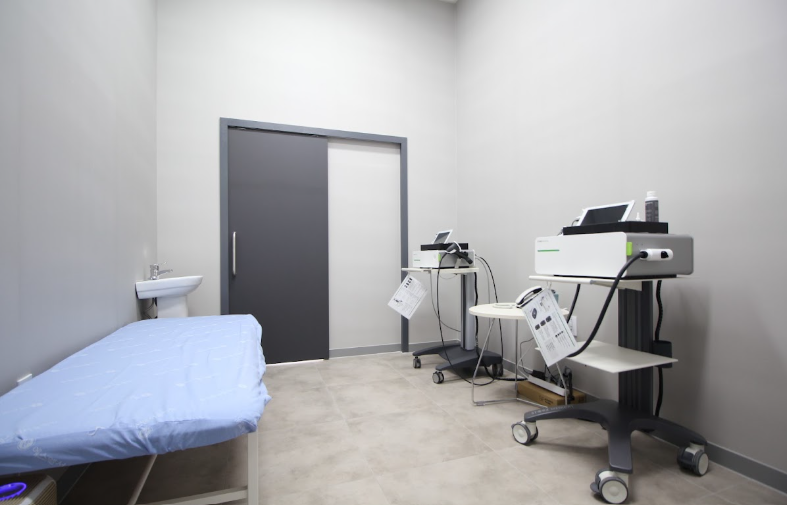
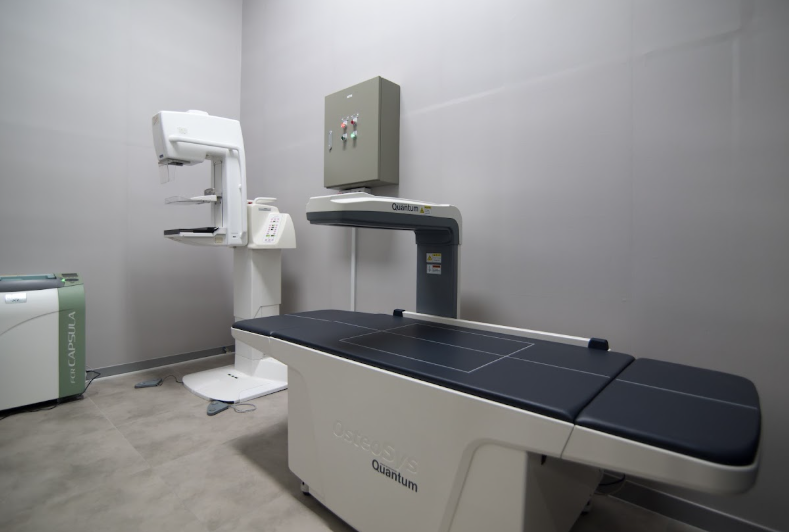
    For anyone curious about the treatment environment, here are a few photos of the clinic space.

    Carpal tunnel syndrome related image 9

    Carpal tunnel syndrome related image 10

    Carpal tunnel syndrome related image 11

    Carpal tunnel syndrome related image 12

    Carpal tunnel syndrome related image 13

    Carpal tunnel syndrome related image 14


    Frequently Asked Questions About the Carpal Tunnel Syndrome Self-Test

    1. Does wrist numbness always mean I’ll need surgery?
    Not necessarily. In the early or moderate stages, non-surgical options like physical therapy or injection therapy can often bring enough improvement.

    2. Does applying heat at home help?
    Heat can help with everyday stiffness, while a cold compress may help more when pain and swelling are severe.

    3. What should I watch out for to help prevent it?
    Avoid working with your wrist bent for long stretches, use a wrist rest when using a mouse or keyboard, and repeat a carpal tunnel syndrome self-test regularly to catch changes early.

    4. How long does recovery take?
    It varies from person to person, but consistent management often leads to improvement over time.

    5. Can carpal tunnel syndrome come back?
    If repetitive strain on the wrist continues, it can recur, which is why managing your posture and habits going forward matters.

    Carpal tunnel syndrome related image 15

    Carpal tunnel syndrome related image 16

    Carpal tunnel syndrome related image 17

    Carpal tunnel syndrome related image 18


    References

    · Korea Disease Control and Prevention Agency, “Carpal Tunnel Syndrome,” National Health Information Portal. View source
    · Asan Medical Center, “Carpal Tunnel Syndrome,” Disease Encyclopedia. View source

    This article is intended for general health information purposes only and is not a substitute for individual diagnosis or treatment. If you have symptoms, please consult a physician.