Have you ever noticed one shoulder sitting lower than the other every time you stand in front of a mirror?
It’s easy to brush off, but a difference in shoulder height can be a sign that the spine is gradually curving.
Rather than heavy weightlifting, three-dimensional movement paired with breathing is at the core of scoliosis exercises.
This article covers why scoliosis exercises matter and how they work, a step-by-step stretching routine you can follow at home, and everyday habits that can work against your results. See how investing just 10 minutes each morning may help support left-right balance.
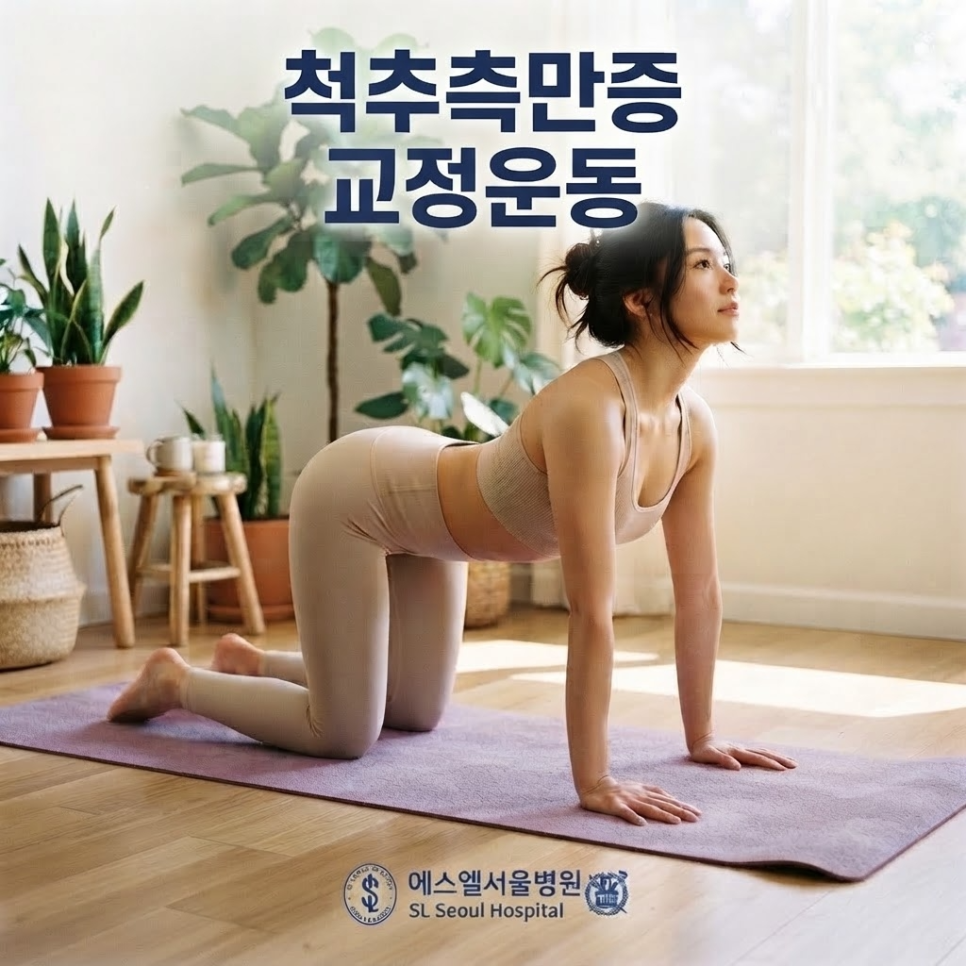
What Are Scoliosis Exercises?
Scoliosis exercises are a tailored exercise approach that strengthens the muscles around a sideways-curved spine to help support left-right balance.
Scoliosis refers to a condition in which the spine, which should look straight when viewed from the front, curves into an S- or C-shape.
As the left-right imbalance worsens, the pelvis can become misaligned, and pain or fatigue tends to show up more easily after long periods of sitting.
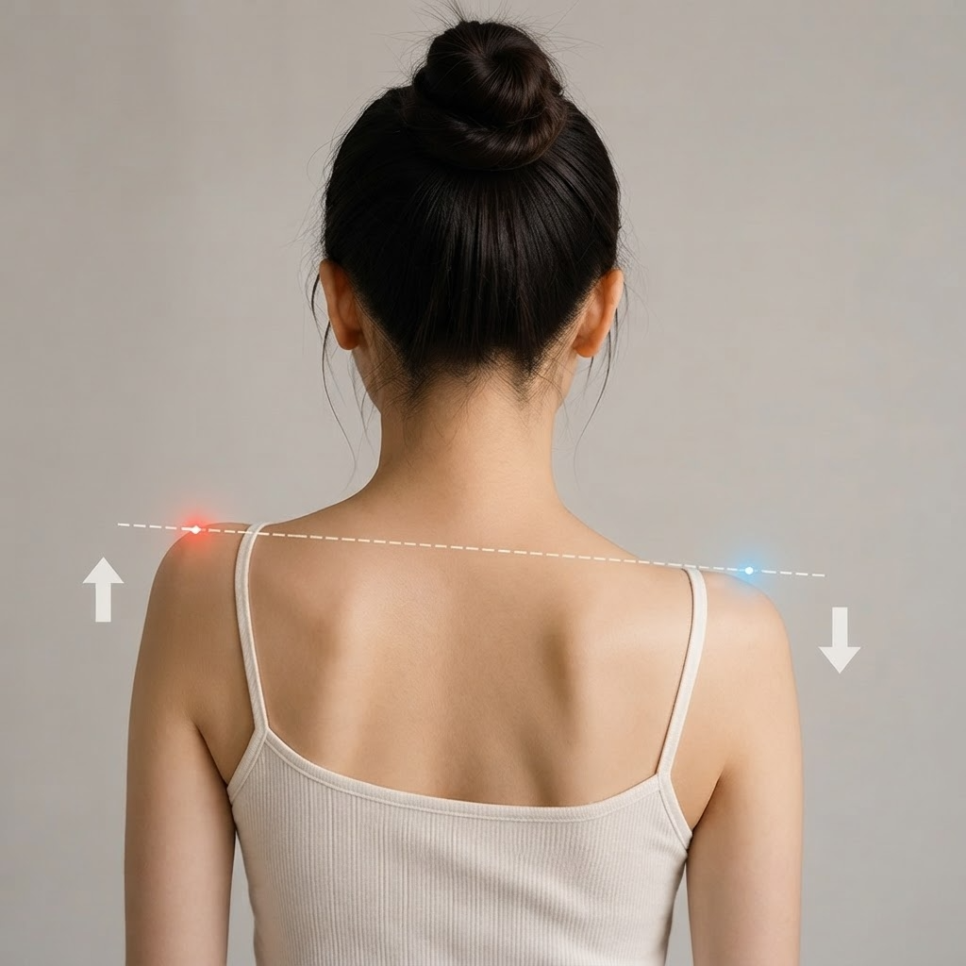
Medical professionals often emphasize three-dimensional corrective exercises performed with breathing rather than jumping straight into high-intensity weight training.
The key is accurately recognizing the body’s imbalance and performing movements that help restore left-right symmetry.
Focusing on the muscles that support the curved spine is an important part of the process.
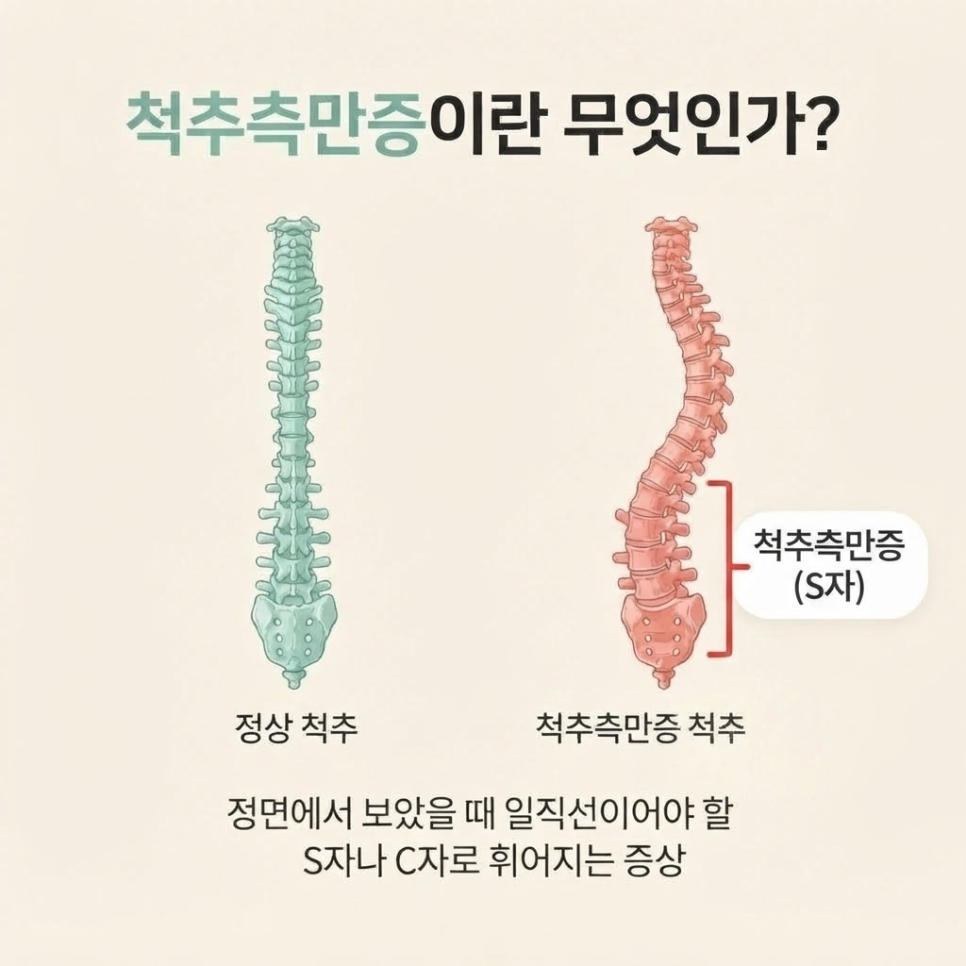
✔ Scoliosis exercise isn’t about building muscle mass — the goal is restoring left-right symmetry.
✔ Three-dimensional corrective movements paired with breathing may help support spinal stabilization.
How Do You Do Scoliosis Stretches at Home?
Simply repeating three movements for 10 minutes each morning may help your body feel lighter.
Office workers who sit hunched over for more than eight hours a day are especially prone to weakened muscles around the spine.
In fact, research on adolescents with idiopathic scoliosis has looked at Schroth exercise programs lasting around 12 weeks, with some studies reporting improvement in thoracic Cobb angle, though results are reported to vary between individuals.
An international systematic review found that scoliosis-specific exercise programs (such as the Schroth method) significantly improved Cobb angle and quality-of-life measures compared with control groups. (See References)
The three stretches below are commonly used to lengthen tightened muscles and help stabilize the spine.
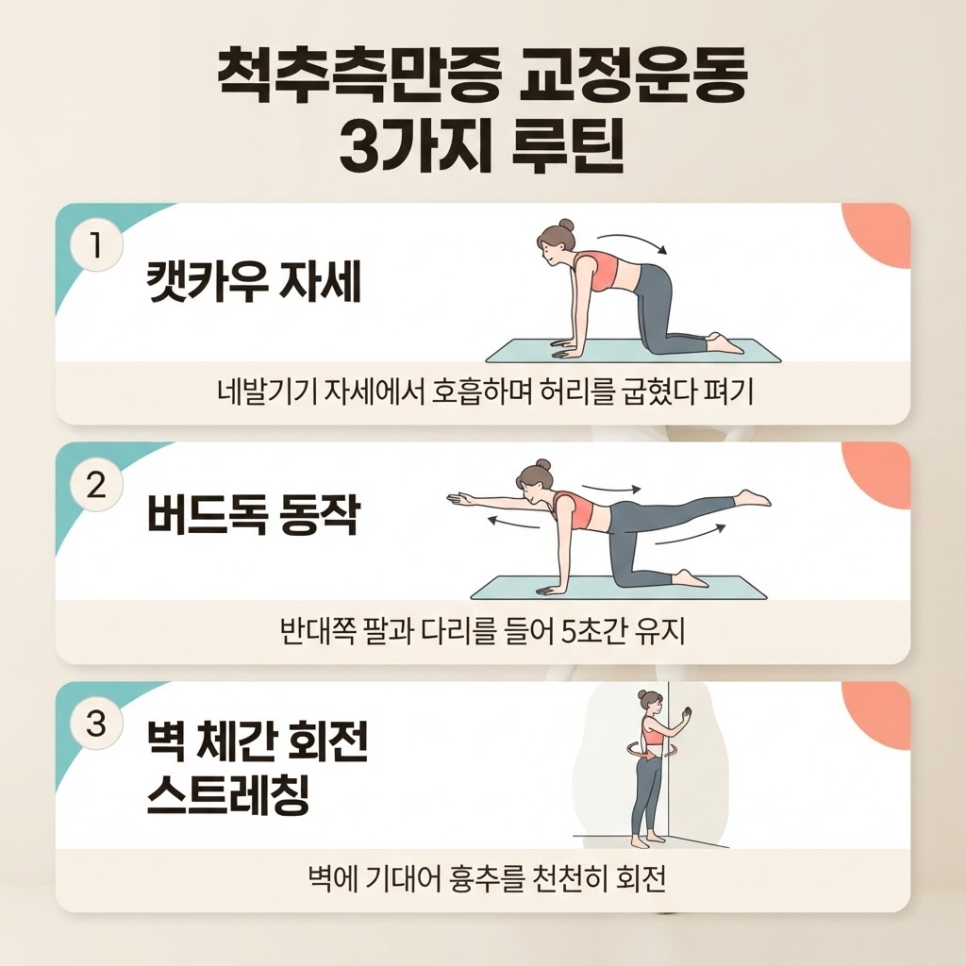
- Cat-Cow Pose — On all fours, inhale as you let your lower back dip down, then exhale as you round your entire back upward.
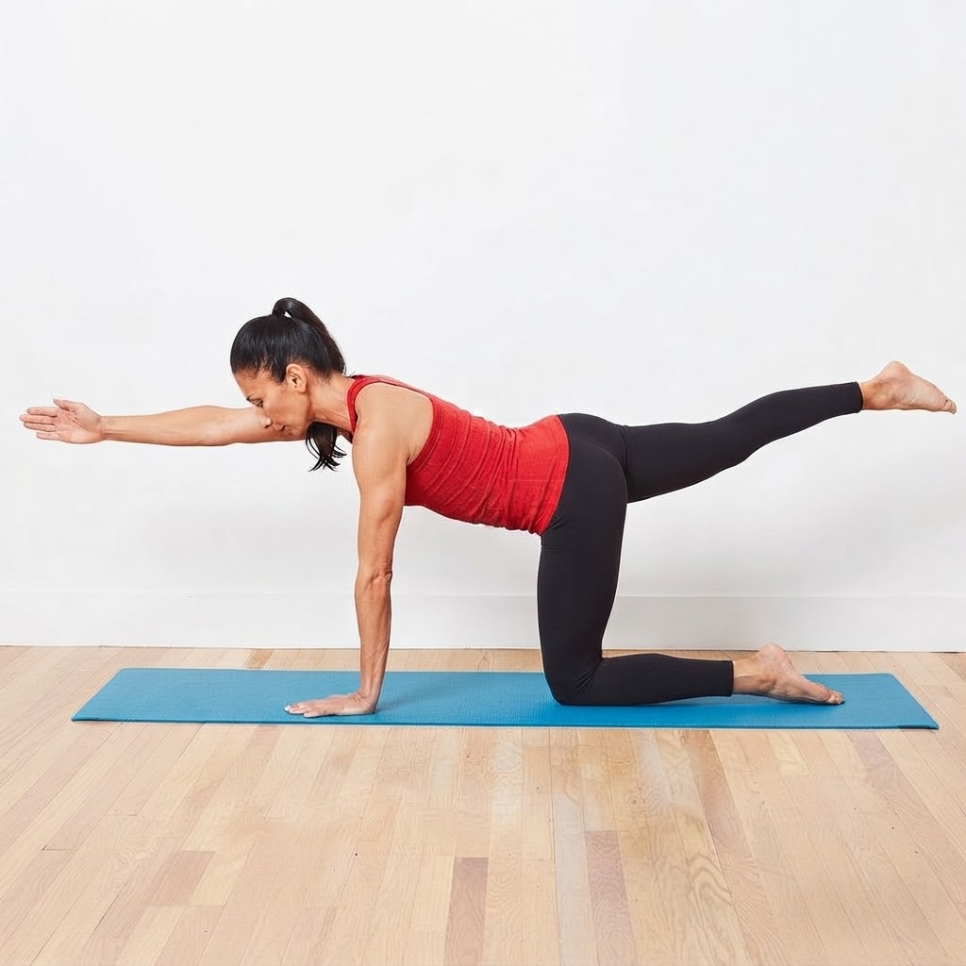
- Bird-Dog — From an all-fours position, extend one arm and the opposite leg out parallel to the floor and hold for 5 seconds.
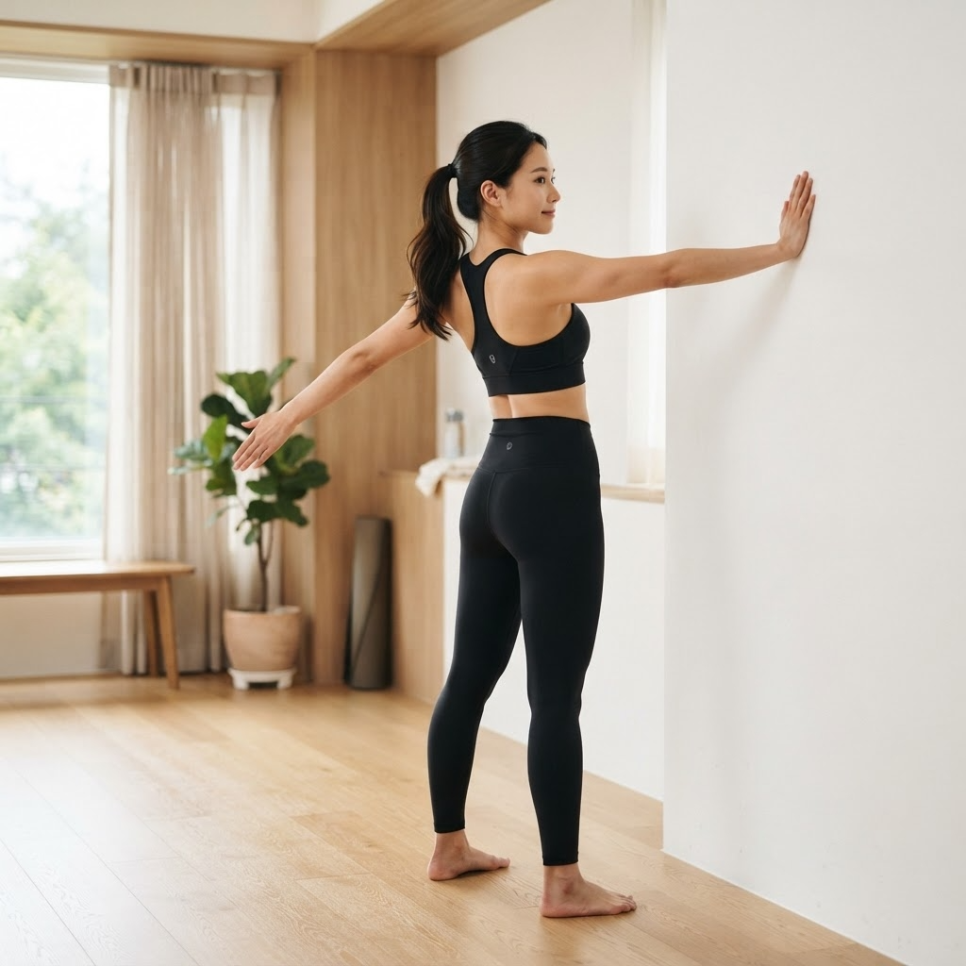
- Wall-Assisted Trunk Rotation Stretch — Stand sideways next to a wall and slowly open up your upper back to release tight muscles.
✅ Move slowly and keep breathing deeply throughout
✅ Engage your core so your lower back doesn’t arch too much
✅ Don’t push through a direction that increases your pain
✅ Do 2-3 extra reps on whichever side feels stiffer
What Daily Posture Habits Should You Watch?
Maintaining good posture also means changing everyday habits.
Try to consciously practice postures that minimize uneven pressure on the spine.
No matter how diligently you exercise, habits like crossing your legs or resting your chin on your hand can work against your progress.
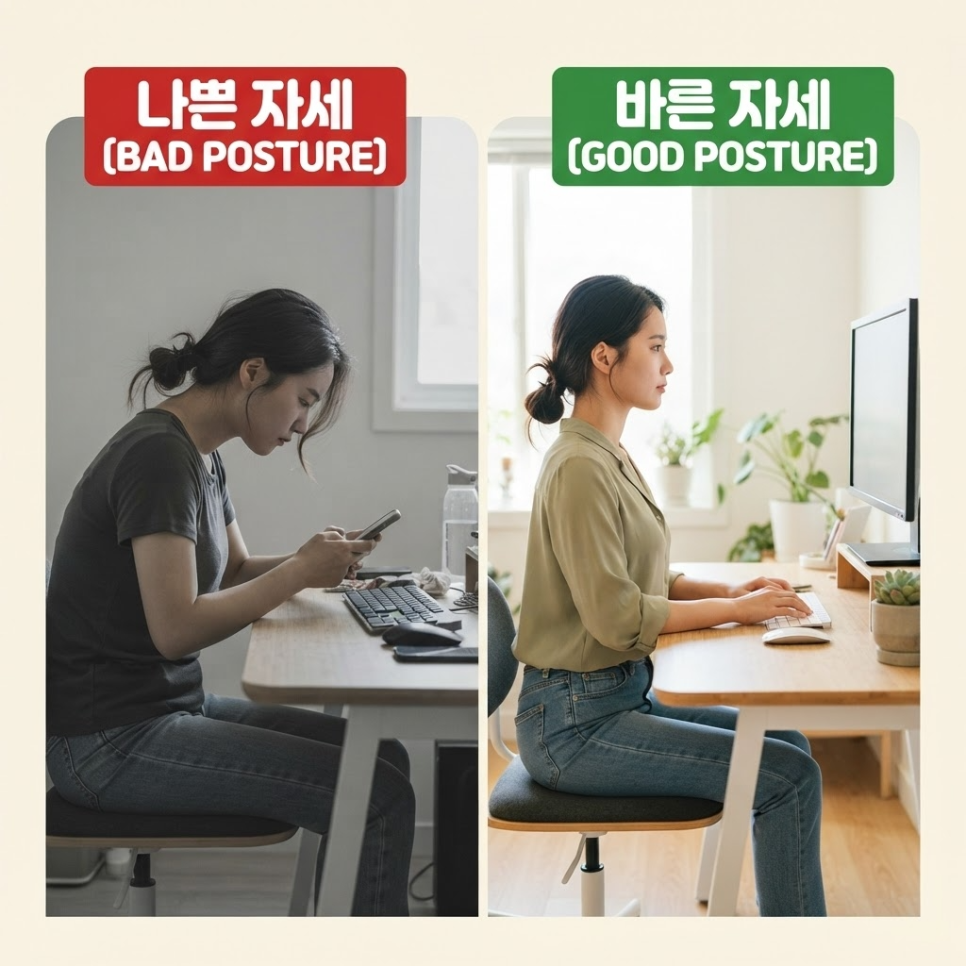
When looking at your phone or monitor, it helps to adjust the height so your gaze isn’t angled too far downward.
You should also avoid standing with your weight shifted onto one leg.
Distributing your weight evenly between both feet is a foundation of good spine health.
Fixing this one habit alone may help reduce lower back fatigue by the end of the day.
It’s best to hold off on heavy weight-bearing exercises until the curve becomes more flexible.
If you feel sharp pain while stretching, stop immediately and consult a specialist.
If symptoms persist, getting an accurate diagnosis at SL Seoul Hospital’s spine and joint center is recommended.
Frequently Asked Questions
1. How long should I do scoliosis exercises each day?
It’s best to do about 10 to 20 minutes consistently every day. Rather than one long, intense session, regular daily practice may help build muscle memory in the muscles surrounding the spine.
2. Can adults also see results from scoliosis exercises?
For structural scoliosis where the bone itself has already fully changed shape, dramatic straightening becomes less likely in adulthood. Still, exercise can play a useful role in correcting muscle imbalances, easing pain, and helping guard against further progression.
3. What should I do if I feel pain during exercise?
If you feel a sharp, shooting, or stiff pain rather than a normal stretching sensation, stop that movement right away. It may simply not suit your particular curve pattern, so getting evaluated by a specialist is recommended.
4. Is it okay to combine this with regular workouts like gym training or yoga?
Basic yoga or Pilates can help with flexibility and core strength. That said, it’s safer to avoid weight training that works only one side of the body or movements that twist the spine forcefully.

References
· Fan Y, et al., “The effectiveness of Schroth exercises in adolescents with idiopathic scoliosis: A systematic review and meta-analysis,” Journal of Bodywork and Movement Therapies, 2019. View Source
· Lee JH, Kim SY, “Comparison of the Effects of Schroth Exercise Therapy and Sling Exercise Therapy on Flexibility, Balance Ability, Spinal Angle, and Chest Expansion in Scoliosis Patients,” Journal of the Korean Society of Physical Medicine, 2014. View Source
· A Case Study of Exercise Therapy Using the Schroth Method for an Adolescent with Idiopathic Scoliosis, Asian Journal of Kinesiology. View Source
This article is intended for general health information purposes only and is not a substitute for individual diagnosis or treatment. If you have symptoms, please consult a physician.