Ever missed a step going down the stairs and felt your ankle twist out from under you?
That sudden loss of strength in the leg that sends you straight to the ground is a familiar feeling.
It’s easy to brush it off and just slap on a pain-relief patch.
But if an ankle sprain isn’t treated properly, it can turn into a lingering, chronic problem that flares up again and again.
When you sprain your ankle, how you respond in the first hours can determine how well—and how quickly—you recover from an ankle sprain.
Having an orthopedic specialist assess the extent of ligament damage, then combining the PRICE principle with staged treatment and rehabilitation exercises, can help prevent chronic instability.
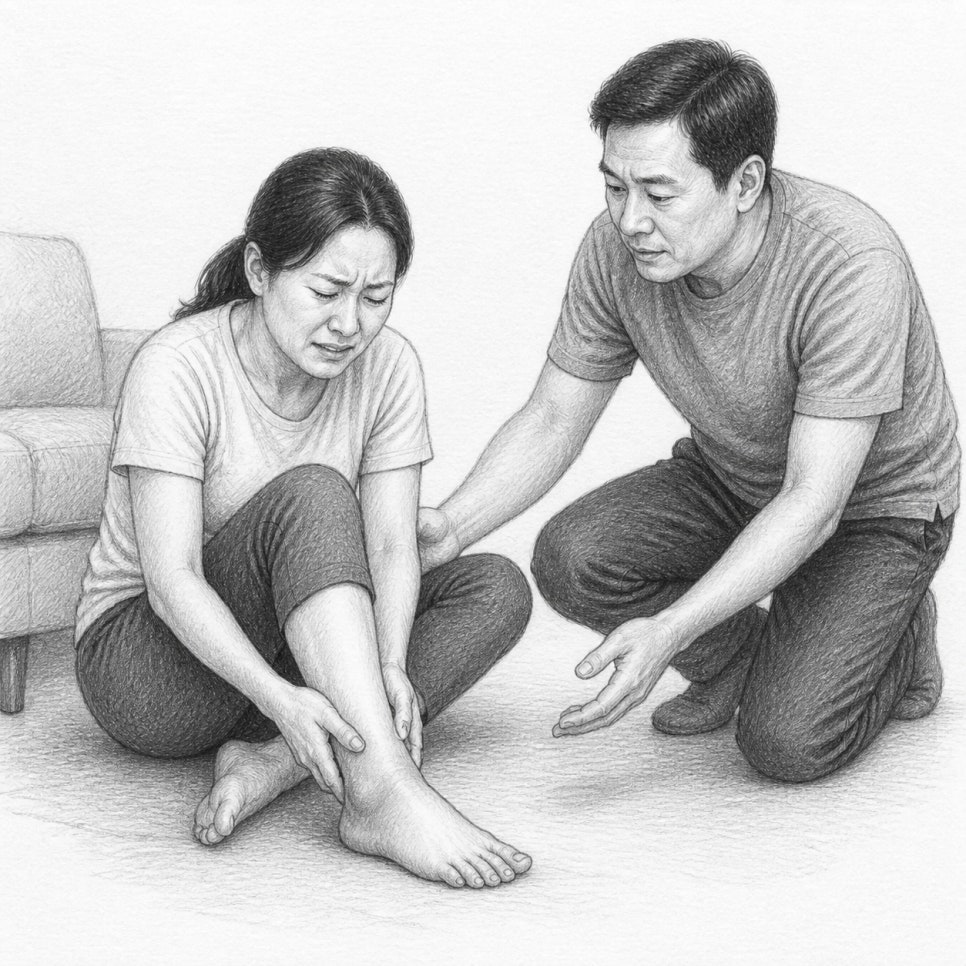
What Is an Ankle Sprain and What Causes It?
An ankle sprain is a common injury in which the ligaments stretch or partially tear, causing pain and swelling.
An ankle sprain refers to a condition in which the ligaments supporting the joint are overstretched or partially damaged, resulting in pain and swelling.
It typically occurs when the ankle rolls inward, concentrating force on the ligaments along the outer ankle.
Common causes include walking on uneven ground, sudden changes of direction during sports, and wearing high heels.
Once a ligament has been overstretched, it rarely regains its original elasticity on its own, which is why identifying the cause accurately matters.
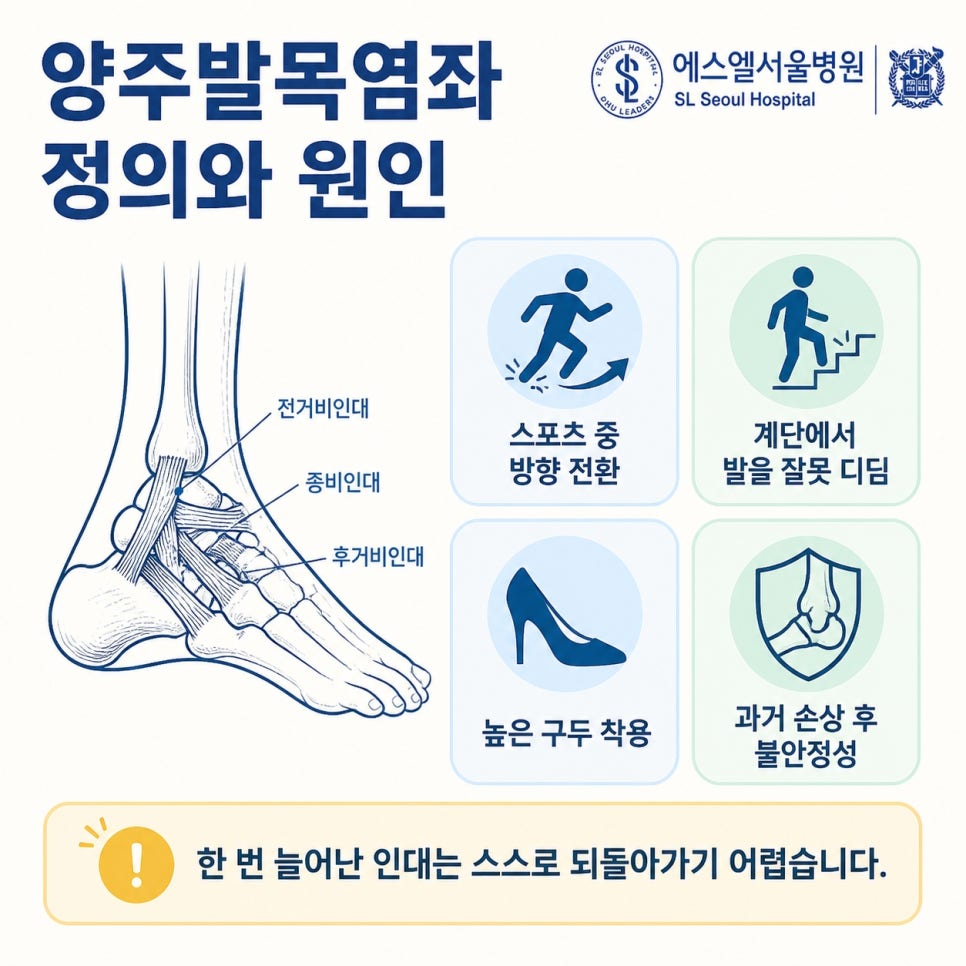
- Sudden landing or direction changes during exercise
- Missteps on flat ground or stairs
- Wearing high, unstable footwear
- Residual ankle instability from a previous injury that didn’t fully heal
The sooner you get a professional diagnosis, the better.

Should You See an Orthopedic Doctor for Suspected Ankle Sprain Symptoms?
If swelling and pain make it difficult to bear weight or walk, you should see an orthopedic doctor.
Signs of a possible ankle sprain include swelling, tenderness, bruising, and difficulty walking.
Right after the injury, you may feel throbbing pain and swelling, along with tenderness when the area is pressed.
In severe cases, a popping sound at the moment of injury can be followed by difficulty even standing.
Ignoring these symptoms can leave the ligaments loose, leading to instability and repeated sprains.

✅ Pain is severe enough to make weight-bearing or walking difficult
✅ The injured area is swollen and bruised
✅ There is tenderness when the area is pressed
✅ You heard or felt a popping sound at the time of injury
✅ Your ankle gives way or rolls frequently
A review published in the Journal of the Korean Orthopaedic Association reports that 10–30% of patients with acute lateral ankle sprains may go on to develop repeat injury or chronic instability.
Stopping treatment just because the pain has eased can allow the ligament to heal in a stretched, weakened state, potentially progressing to chronic instability and arthritis.
Ankle Sprain Treatment: How Is It Diagnosed and Staged?
X-rays and ultrasound are used to assess the extent of the injury, and ankle sprain treatment is planned according to the stage of damage.
A detailed ankle sprain workup involves an X-ray to rule out fracture and an ultrasound to evaluate the extent of ligament tearing and inflammation.
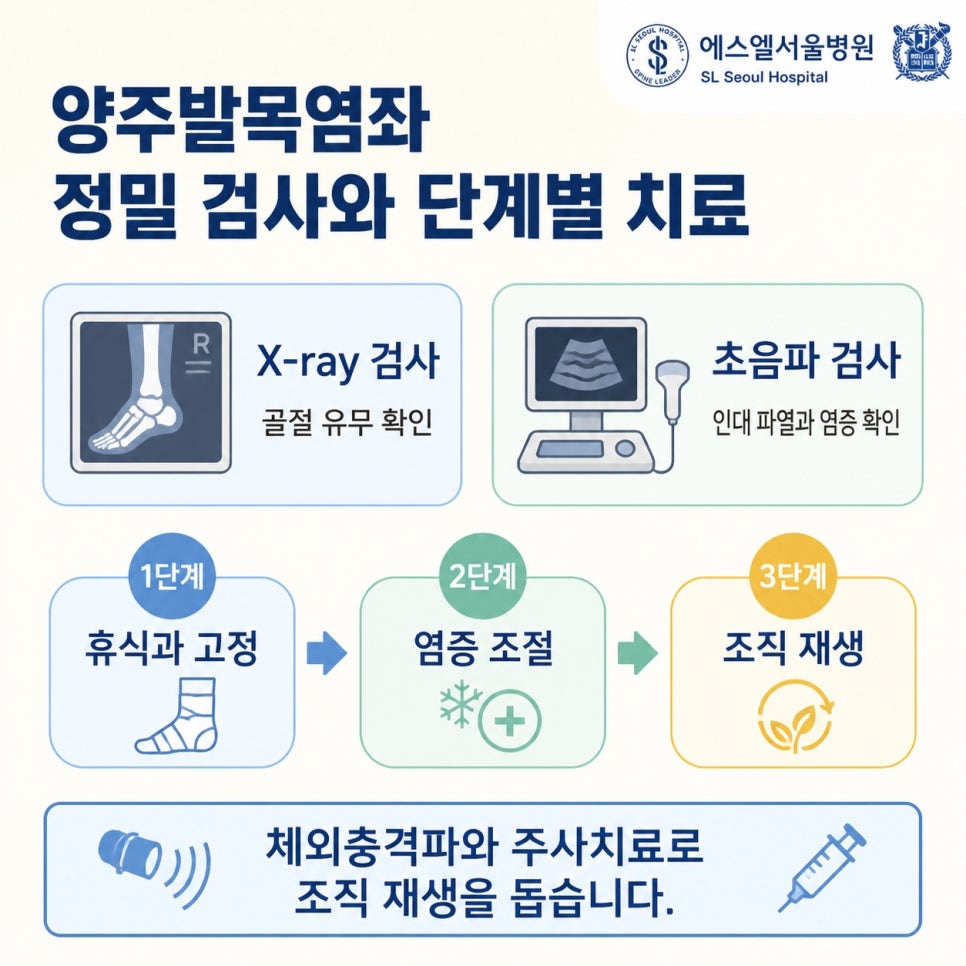
Based on the results, the injury is graded from Stage 1 to Stage 3, and treatment is determined accordingly.
| Injury Stage | Ligament Condition | Treatment Approach |
|---|---|---|
| Stage 1 | Mild stretching | Ankle brace, medication, physical therapy |
| Stage 2 | Partial tear | Immobilization combined with ESWT and/or injection therapy |
| Stage 3 | Complete tear | Surgical treatment may be considered |
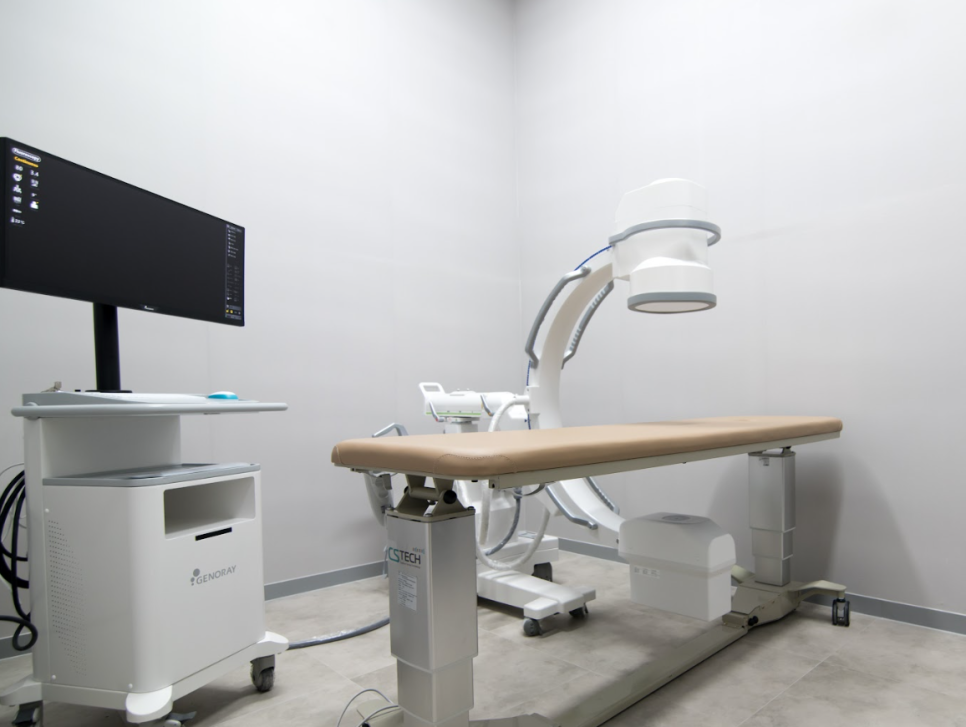
In the early stages, conservative treatments—medication, physical therapy, and bracing—are the first line of care.
Extracorporeal shock wave therapy (ESWT) or injection therapy may be added as needed, which can support tissue repair and help reduce inflammation.

- Rest and immobilization: A cast or brace helps prevent further injury
- Inflammation control: Medication and physical therapy to ease pain
- Tissue recovery: ESWT and manual therapy
Consistent conservative treatment may help restore normal walking and joint stability without surgery.
Ankle Sprain Recovery Time: What Should You Remember?
Following the PRICE principle during the acute phase, then adding gradual rehabilitation exercises once pain subsides, can help prevent recurrence.
The PRICE principle stands for Protection, Rest, Ice, Compression, and Elevation—a method for managing swelling and pain during the acute phase.
During the first 48 hours, icing to constrict blood vessels and reduce swelling is an important step.
Missing this window can slow down recovery.

Once the pain eases, it’s time to start rehabilitation exercises that strengthen the muscles around the ankle.
Exercises like towel scrunches with the toes or calf raises can support ligament flexibility and muscle strength.
- Sit in a chair and scrunch a towel toward you using your toes (repeat 10 times)
- Stand on one foot and hold your balance (20 seconds)
- Trace the alphabet in the air with your ankle (A through Z)
Relying solely on pain patches and putting off proper care often ends up delaying recovery.
That’s how much early treatment can influence how quickly you recover.
If you’re also concerned about gait or weight-distribution issues beyond ankle pain, you can find more information on the SL Seoul Hospital Spine & Joint home page.
SL Seoul Hospital offers non-surgical treatments such as extracorporeal shock wave therapy (ESWT) to support the recovery of damaged tissue.





Frequently Asked Questions
1. Should I use heat or ice when I sprain my ankle?
Within the first 48 hours after the injury, ice is needed to reduce swelling and inflammation. Once the swelling goes down and the pain becomes more chronic, heat can be effective for improving blood flow.
2. Will a pain-relief patch alone heal a stretched ligament?
A pain patch only relieves discomfort temporarily—it does not repair a stretched or torn ligament. Without proper care, the injury can worsen into chronic instability, so an accurate diagnosis is important.
3. Is it okay to exercise during treatment?
While there is acute pain and swelling, you should avoid putting weight on the ankle and rest instead. Once the pain has eased, it’s safer to begin rehabilitation exercises gradually, under a doctor’s guidance.
4. How long should I wear an ankle brace?
An ankle brace is typically worn for about one to two weeks to protect the ligament. However, relying on it for too long can weaken the surrounding muscles, so rehabilitation exercises should be added at the appropriate time.
References
· Seoul National University Hospital, “Ankle Sprain,” Medical Information, Seoul National University Hospital. View source
· Korea Disease Control and Prevention Agency, “Sprain,” National Health Information Portal, KDCA. View source
· The Korean Orthopaedic Association, “Evidence-Based Treatment of Acute Lateral Ankle Sprains,” Journal of the Korean Orthopaedic Association. View source
This article is intended for general health information purposes only and is not a substitute for individual diagnosis or treatment. If you have symptoms, please consult a medical professional.