Tag: Self-Diagnosis

  • Text Neck Headache: How Forward Head Posture Adds 18kg of Strain to Your Neck

    Text Neck Headache: How Forward Head Posture Adds 18kg of Strain to Your Neck

    SummaryWhy does text neck cause headaches, and how can you manage them? This article breaks down how text neck syndrome leads to cervicogenic headaches, how to self-check with a simple wall test, and the everyday habits and stretches that may help reduce strain on your cervical spine.

    That throbbing headache that shows up after a long day at your desk,
    have you been writing it off as just stress?

    In reality, it’s often caused by a forward-curved neck, better known as a text neck headache.
    As screen time on smartphones and computers keeps climbing, the neck’s natural curve flattens out,
    and the effects ripple all the way up to your head.

    This article looks at the root cause of text neck headaches through the lens of changes in cervical spine structure, along with a self-check you can do at home and everyday habits that ease the load on your neck. If you’ve been dealing with a headache that painkillers just won’t shake, read on.
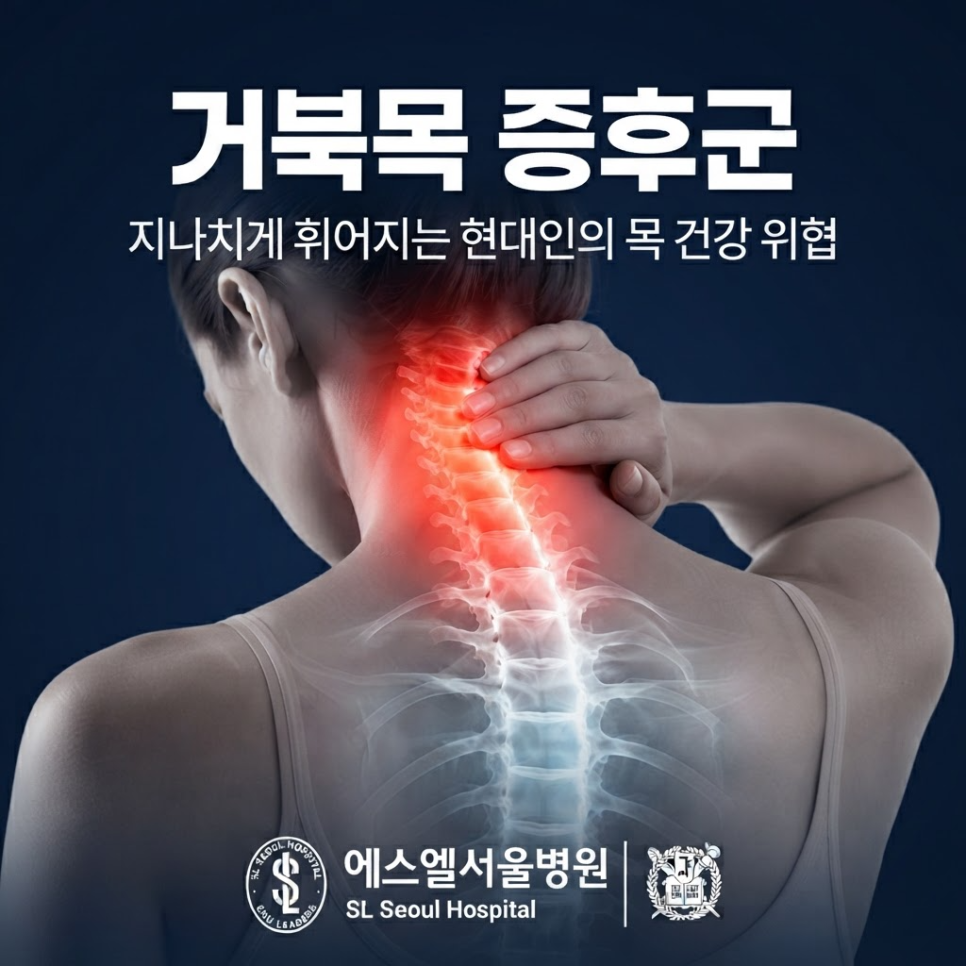

    text neck headache

    text neck headache illustration 2

    What Is Text Neck Syndrome?

    In short, text neck syndrome is a postural condition in which the neck’s normal C-shaped curve flattens or even reverses, pushing the head forward of the torso.
    Long hours spent looking down at a screen cause this shift to develop gradually.

    It gets its name because the neck juts forward like a turtle poking its head out of its shell.
    The real issue isn’t just appearance, it’s that the load the cervical spine has to bear changes entirely.
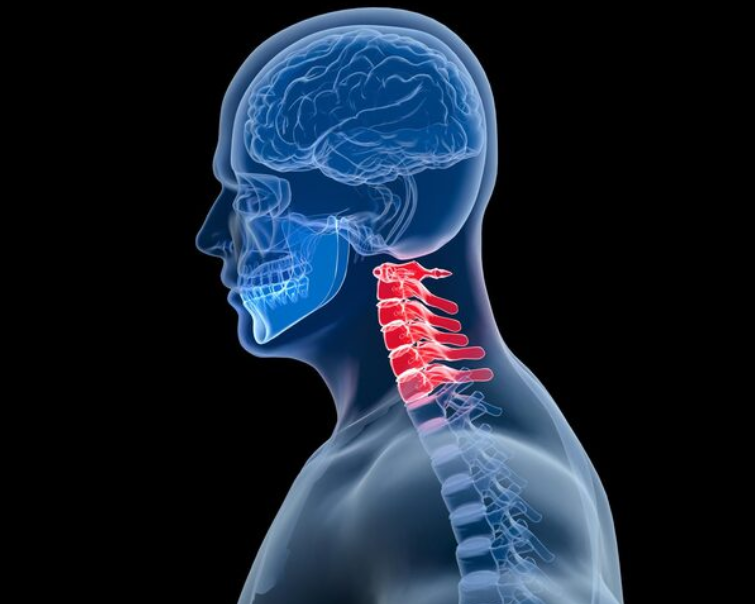
    text neck headache illustration 3

    The cervical spine is naturally built with a gentle C-curve designed to evenly distribute the weight of the head.
    But the more the head tilts forward, the more that curve collapses, concentrating stress on a single section of the neck.

    💡 Key Point
    According to a cervical spine load study by Dr. Kenneth Hansraj of New York Spine Surgery & Rehabilitation Medicine, the weight the neck bears is about 5kg (11 lbs) in a neutral position, but jumps to roughly 18kg (40 lbs) at just a 30-degree tilt, and climbs to about 27kg (60 lbs) at 60 degrees.
    In other words, the more you tip your head down to look at your phone, the heavier the load your cervical spine and surrounding muscles have to carry.

    text neck headache illustration 4

    When the muscles and ligaments around the cervical spine stay tense like this over time, it can lead to a heavy, pressing pain in the shoulders.
    A shift in posture like this ultimately throws off the balance of the whole body.


    Why Does Text Neck Cause Headaches?

    In short, a text neck headache isn’t a problem in the brain itself, it’s a secondary headache known as a cervicogenic headache, where tension in the neck joints and surrounding muscles is referred up to the head.
    It typically starts at the back of the neck and spreads toward the temples.
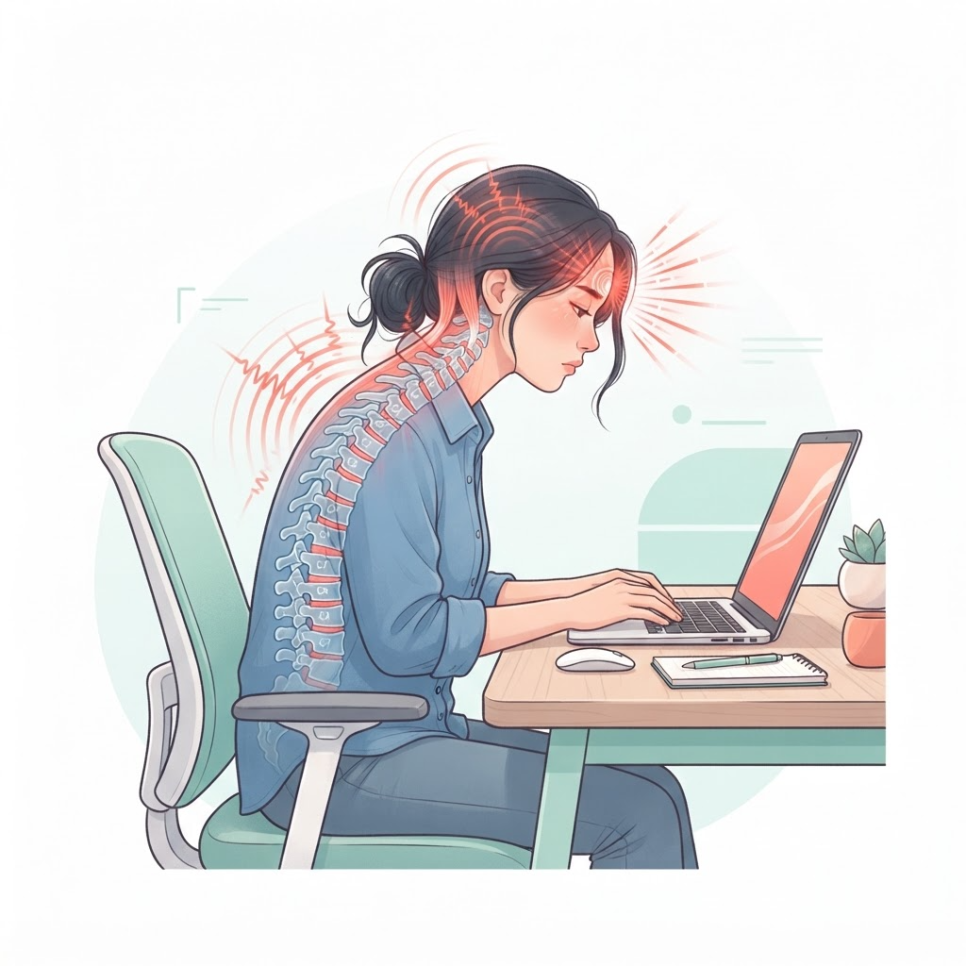
    text neck headache illustration 5

    The occipital nerves run along the back of the neck, and when text neck posture causes the neck muscles to tighten, these nerves can become compressed, producing a throbbing pain that runs from the back of the head to the sides.

    Because of this, many people mistake the pain for a brain issue or simple stress,
    but in a good number of cases the real cause is excessive tension in the neck muscles.
    Eye strain, dizziness, and trouble concentrating can show up alongside it as well.

    ⚠️ Caution
    Because a cervicogenic headache originates in the muscles and joints around the neck rather than the brain, over-the-counter painkillers often don’t bring much relief.
    If the pain keeps coming back, it’s important to also address the underlying strain on the neck.

    Can You Self-Diagnose Text Neck Syndrome at Home?

    Yes. Stand with your back and the back of your head against a wall, if the back of your head doesn’t comfortably touch the wall, text neck may be worth looking into.
    This simple test alone can give you a rough sense of your neck’s condition.

    text neck headache illustration 6

    If you spend all day in front of a monitor, you might be surprised at just how far your head sits away from the wall during this test.

    If that’s the case, it’s worth going through the checklist below and taking a closer look at your daily habits.

    📋 Daily Neck Health Checklist
    ✅ Hold your phone up to eye level instead of looking down at it.
    ✅ Do a chin-tuck neck stretch once every hour.
    ✅ Use a monitor stand to bring your screen up to eye level.
    ✅ Swap a high pillow for one that supports your neck’s natural curve.
    ✅ During long stretches of sitting, periodically roll your shoulders back and open up your chest.
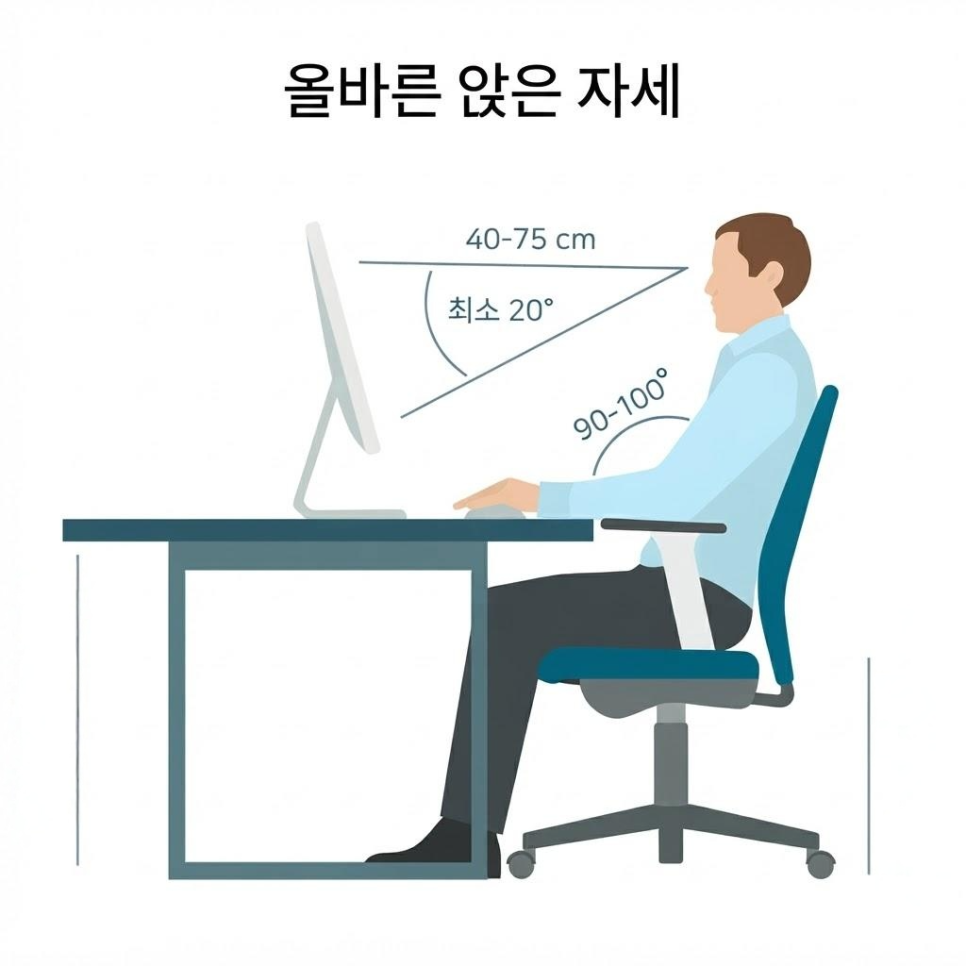
    text neck headache illustration 7

    While working at a computer, make a conscious effort to tuck your chin slightly,
    and add in the occasional shoulder roll to open up your chest.

    Rather than holding one position for long stretches, building the habit of stretching often to release muscle tension matters far more.

    ✅ What You Can Expect
    Consistently combining posture correction with stretching may help ease tension in the neck and shoulder muscles, which in turn can help manage how often headaches occur.
    That said, results vary depending on individual posture and symptom severity, so if the pain persists, it’s safest to see a specialist.

    If your symptoms keep recurring or start interfering with daily life, checking the relevant department information on the SL Seoul Hospital for Spine & Joints website is another option.


    Frequently Asked Questions

    1. How is a text neck headache different from a regular migraine?
    Migraines stem from changes in blood vessels or the brain’s nervous system, while text neck headaches originate from tension and nerve compression in the muscles at the back of the neck, and their intensity tends to shift depending on the angle of the neck.

    2. Does getting frequent massages help relieve the headaches?
    It can help temporarily loosen tight muscles, but if your everyday posture doesn’t change, the muscles tend to tense back up quickly, so pairing massage with posture correction is more likely to help the effect last.

    3. What kind of pillow is best for neck health?
    A pillow that’s too high flattens the neck’s C-curve, so it’s best to choose a moderate-height pillow that supports the neck’s natural curve while you’re lying down.

    4. Which specialist should I see if symptoms are severe?
    If the pain keeps recurring or is interfering with daily life, it’s recommended to get a thorough evaluation from a specialized medical provider, such as orthopedics, neurosurgery, or rehabilitation medicine.

    5. Can stretching alone fully correct text neck?
    Stretching helps relieve muscle tension and improve postural awareness, but in more severe cases, stretching alone is unlikely to fully correct the posture, so it’s best to consult a specialist to build a management plan.

    text neck headache illustration 8


    References

    · Kenneth K. Hansraj, “Assessment of stresses in the cervical spine caused by posture and position of the head,” Surgical Technology International, 2014. View source
    · Korea Disease Control and Prevention Agency, “Straight Neck (Text Neck) Syndrome,” National Health Information Portal. View source
    · Seoul National University Hospital, “Text Neck Syndrome (Forward Head Posture),” SNUH Medical Information. View source


    This article is intended for general health information purposes only and is not a substitute for individual diagnosis or treatment. If you’re experiencing symptoms, please consult a medical professional.
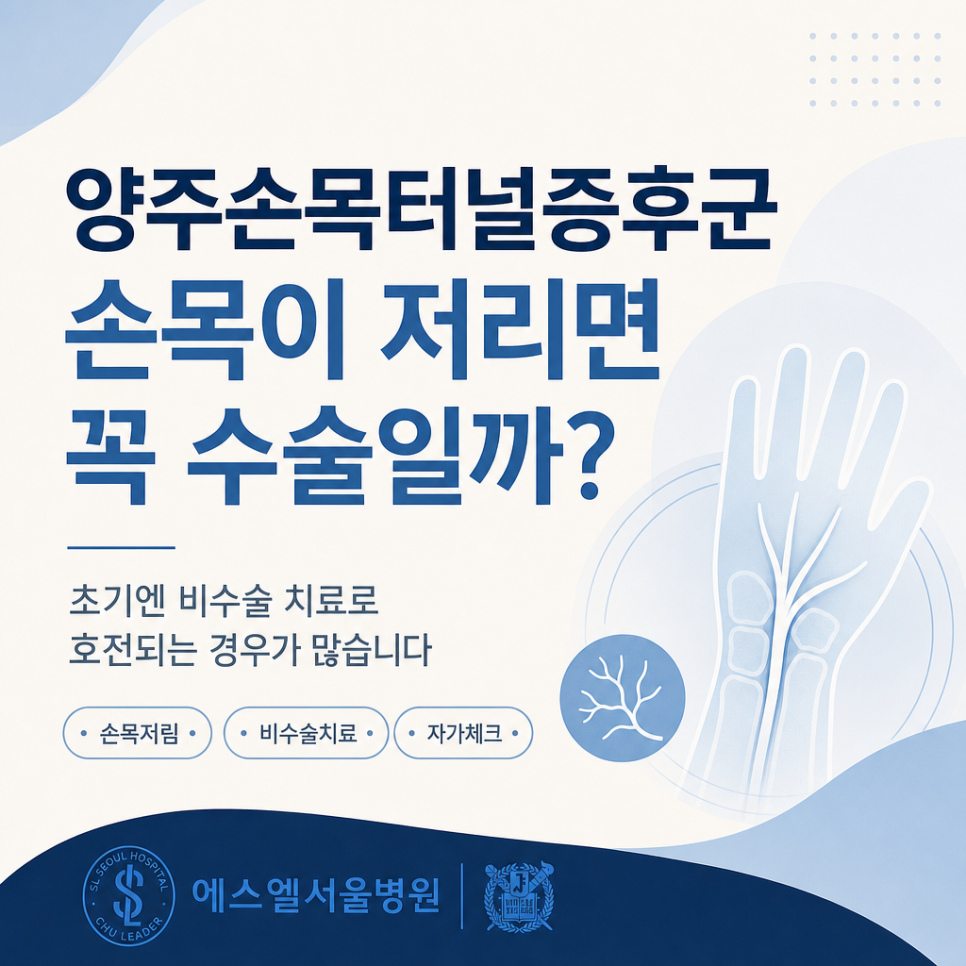
  • Carpal Tunnel Syndrome Self-Test: 5 Signs to Watch For

    Carpal Tunnel Syndrome Self-Test: 5 Signs to Watch For

    SummaryCarpal tunnel syndrome occurs when the carpal tunnel narrows and compresses the median nerve, causing pain and numbness. This guide covers a carpal tunnel syndrome self-test checklist, diagnostic methods like Tinel’s sign and Phalen’s test, treatment timing, and when to see an orthopedic doctor. It also looks at the common causes of wrist numbness.

    Many people worry that wrist numbness will eventually lead to surgery,
    and that fear alone keeps them from seeing a doctor.

    In reality, though, it’s often the opposite.
    In the early or moderate stages, medication and physical therapy alone are often enough to bring improvement.

    Ignoring carpal tunnel syndrome is actually the far riskier choice.

    This article covers the causes of carpal tunnel syndrome, a carpal tunnel syndrome self-test checklist, the exams performed at an orthopedic clinic, and stretches you can do at home to protect your wrists.
    Let’s look at what signs suggest it’s time to see a doctor when wrist numbness lingers.

    Carpal Tunnel Syndrome Self-Test Basics: What Exactly Is This Condition?

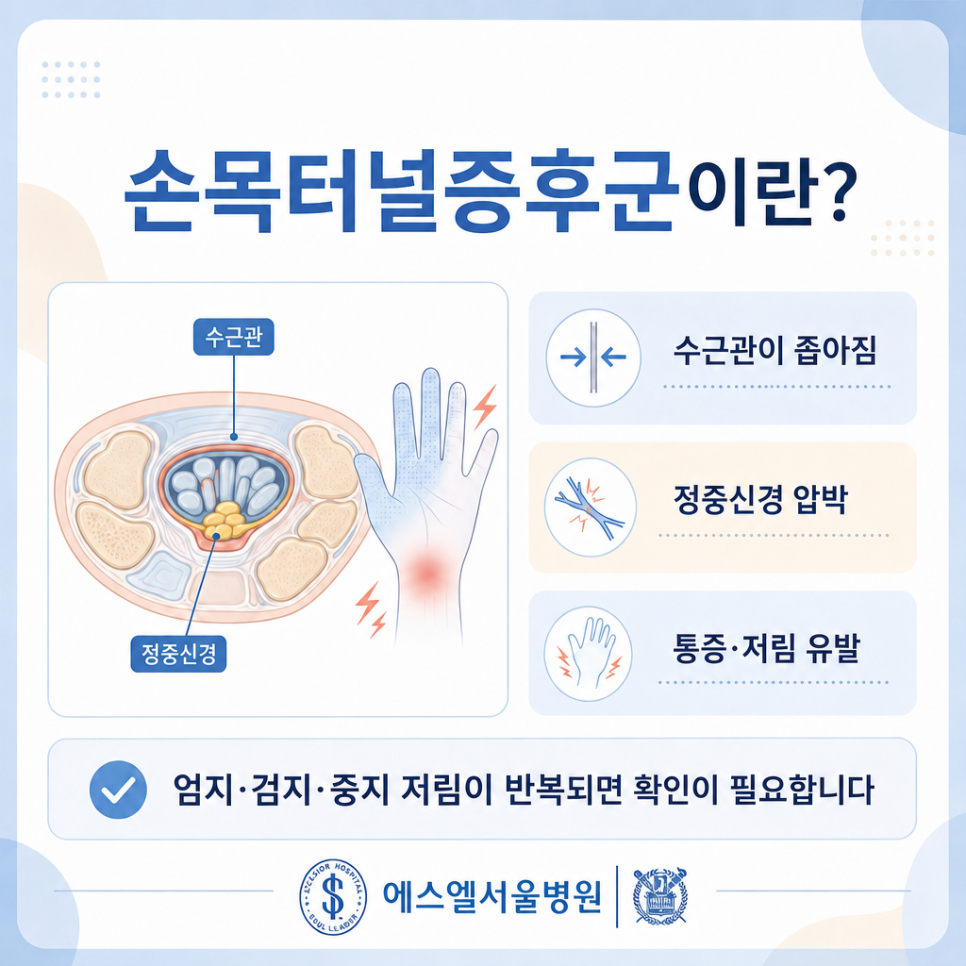
    Carpal tunnel syndrome is a condition in which the carpal tunnel, a narrow passage on the inside of the wrist, becomes compressed and puts pressure on the median nerve, causing pain and numbness.
    It’s also commonly referred to as median nerve compression, and a simple carpal tunnel syndrome self-test can help you spot it early.

    Carpal tunnel syndrome self-test illustration

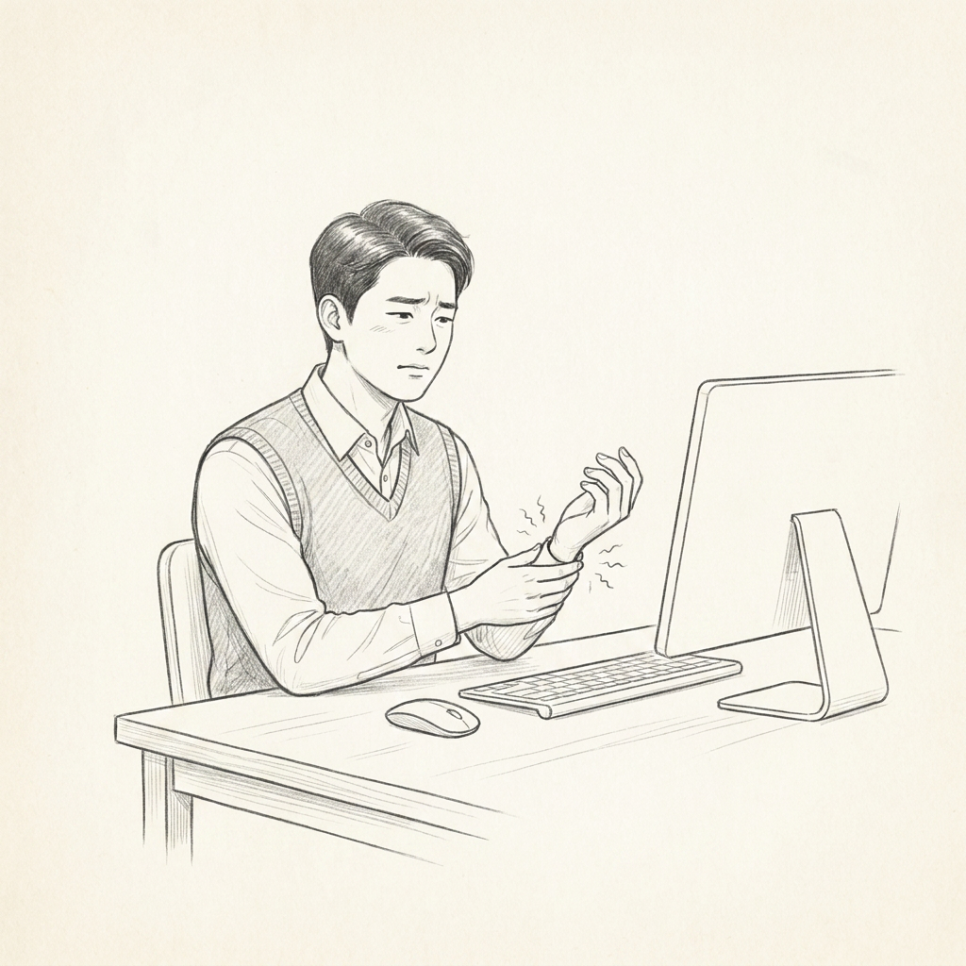
    With how often we use computer keyboards and smartphones these days, this is a genuinely common symptom.

    Brushing off a tingling fingertip as nothing serious can end up making the treatment period longer instead of shorter.

    If it’s dismissed as ordinary fatigue and left alone, the nerve can stay compressed long enough for sensation to become dulled.
    If your job involves repetitive wrist movements, it’s worth paying a little extra attention.

    Carpal tunnel syndrome related image 2

    The Areas the Median Nerve Controls

    Key Point
    The median nerve controls sensation in the thumb, index finger, middle finger, and half of the ring finger.
    If tingling is especially noticeable in these areas, it may be worth considering whether the carpal tunnel is compressed.

    How Do You Do a Carpal Tunnel Syndrome Self-Test? 5 Early Symptoms to Check

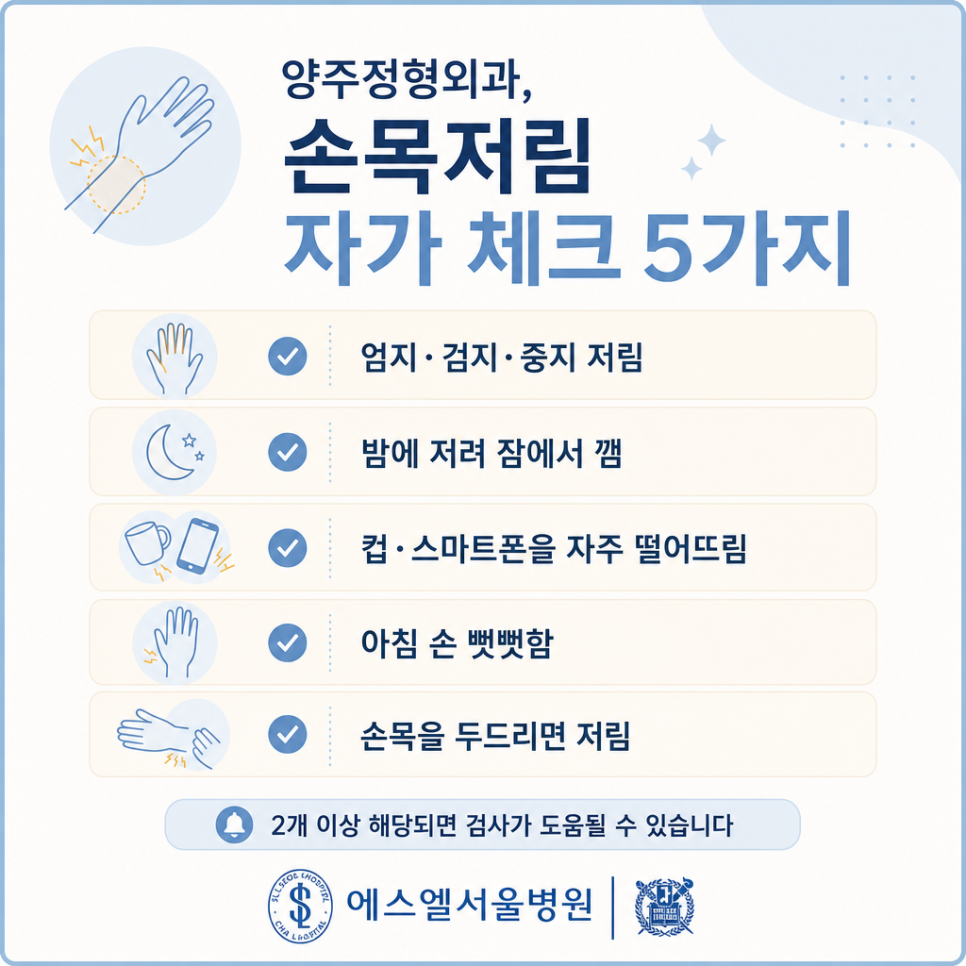
    If two or more of the five items in this carpal tunnel syndrome self-test apply to you, it’s a good idea to get examined.
    Go through them one by one below.

    Carpal tunnel syndrome related image 3

    Carpal Tunnel Syndrome Self-Test Checklist
    ✅ The tips of your thumb, index, and middle fingers feel tingly or numb
    ✅ You often wake up at night because your hand feels numb
    ✅ You’ve dropped a cup or your phone without meaning to
    ✅ Your hand feels stiff in the morning
    ✅ Tapping the inside of your wrist sends a tingling feeling outward

    Carpal tunnel syndrome related image 4

    Why a Carpal Tunnel Syndrome Self-Test Matters: Common Contributing Habits

    Overusing the wrist with repetitive motion, housework, and long hours on a smartphone are among the most common causes.

    It tends to show up especially often in jobs that involve working with the wrist bent for long stretches.
    Women, as well as people with diabetes or thyroid conditions, may also be relatively more prone to it.

    Carpal tunnel syndrome related image 5

    Caution
    The longer symptoms go untreated, the greater the risk of thumb muscle atrophy and permanent nerve damage.
    If numbness keeps recurring, it’s best not to put off getting checked.

    After a Carpal Tunnel Syndrome Self-Test: How Are Orthopedic Exams and Treatment Carried Out?

    If symptoms keep coming back, it’s a good idea not to just tough it out, especially when a carpal tunnel syndrome self-test raises concern, and instead get a thorough exam at an orthopedic clinic.
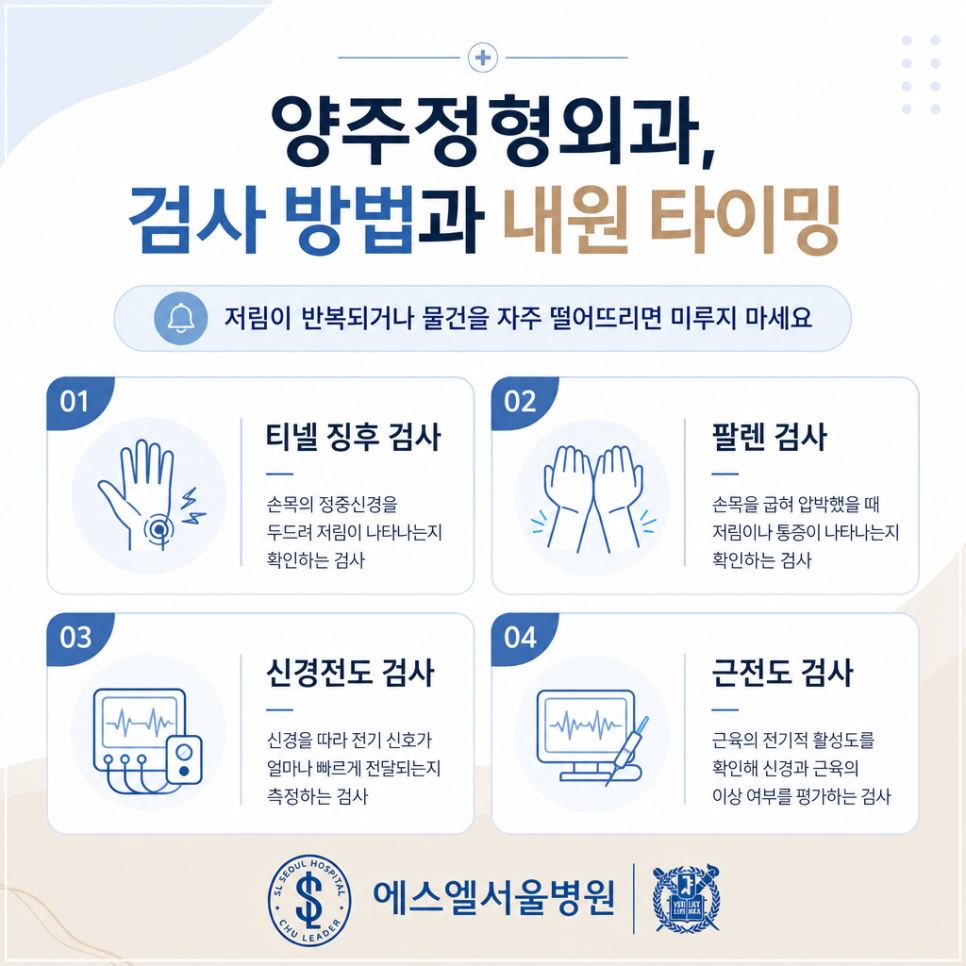
    Depending on your symptoms and condition, the exams below are typically carried out step by step.

    Carpal tunnel syndrome related image 6

    Test Method Purpose
    Tinel’s Sign Test Gently tapping the inside of the wrist Checks for a median nerve stimulation response
    Phalen’s Test Holding the wrist bent for about one minute Checks whether numbness is triggered
    Nerve Conduction / EMG Study Measuring the nerve’s response to electrical stimulation Evaluates the degree of nerve damage in detail
    Key Point
    When caught early, non-surgical options such as medication, physical therapy, or injection therapy are often enough to bring improvement.
    Checking the extent of nerve damage through testing comes first.

    Carpal tunnel syndrome related image 7

    If you’d like more information on diagnosis and treatment options, you can find details on the clinic page at SL Seoul Spine & Joint Hospital.


    How Can You Protect Your Wrists in Daily Life?

    Simply keeping up good daily habits can help ease symptoms.
    The key is reducing the strain placed on your wrists.

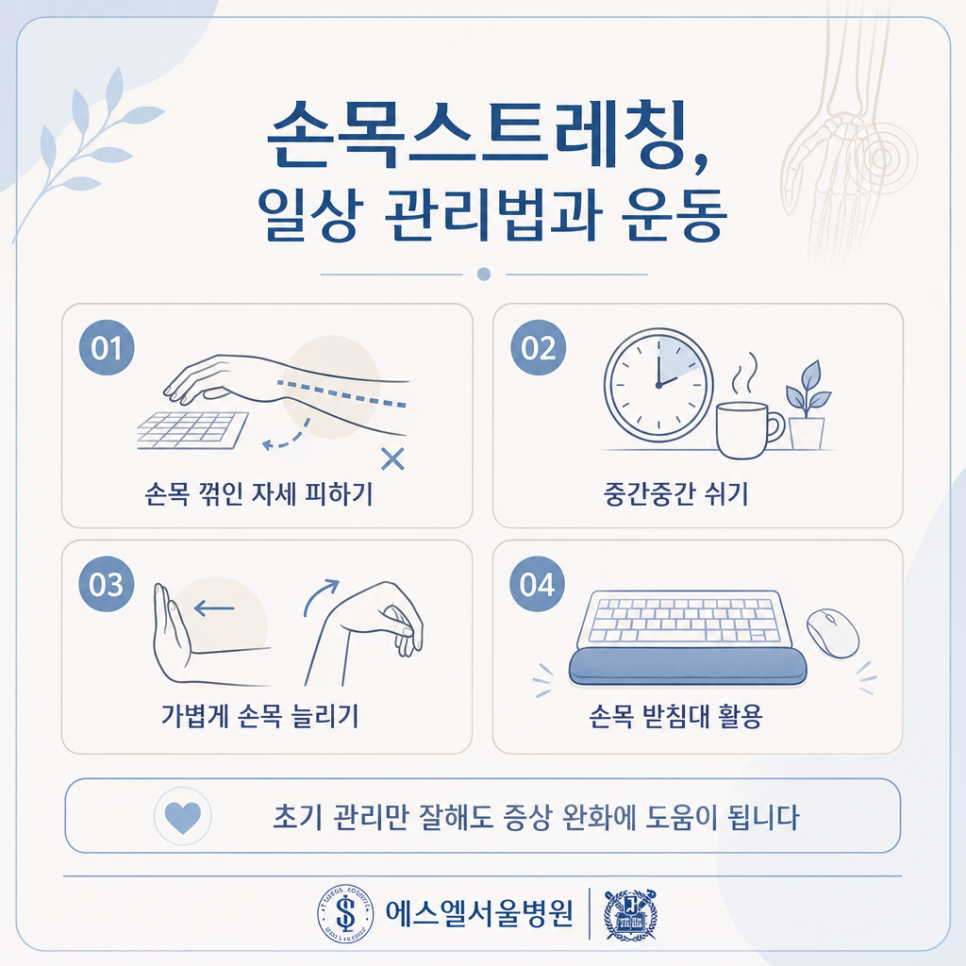
    When using a mouse or keyboard, use a wrist rest to keep your wrist from bending, and check your monitor height and chair position as well.

    Carpal tunnel syndrome related image 8

    4-Step Wrist Stretch

    1. Extend your arm straight out in front of you.
    2. Bend your wrist so your fingertips point toward the floor.
    3. With your other hand, gently pull the back of your hand and hold for about 15 seconds.
    4. Repeat 3 to 5 times on each wrist.
    Result
    Consistent stretching can help lower pressure inside the carpal tunnel and loosen tight ligaments and muscles.

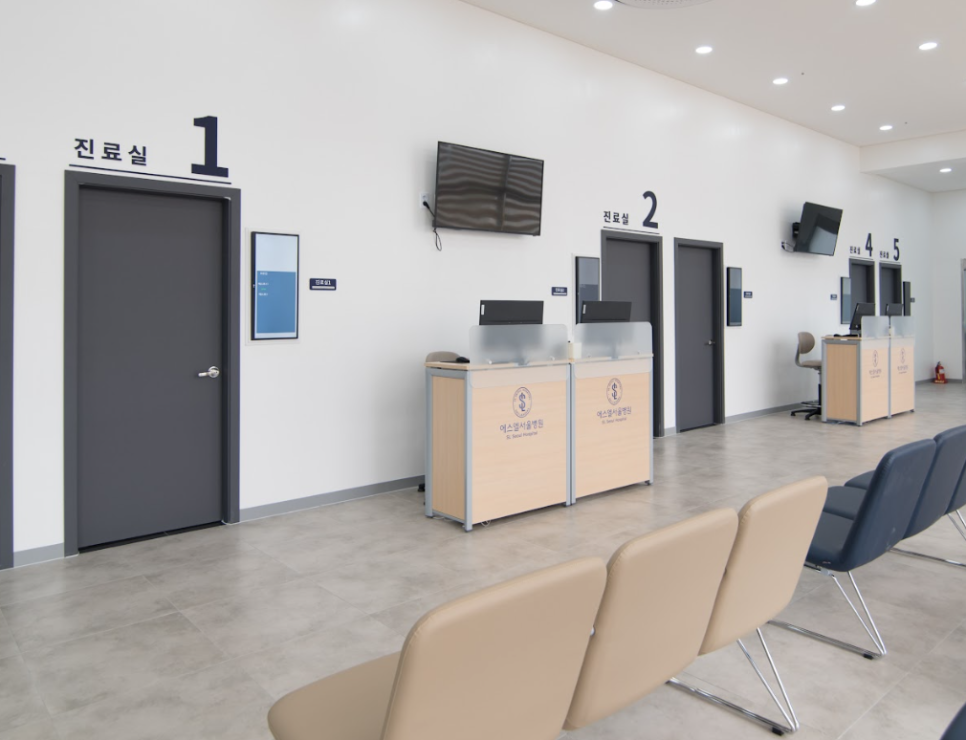
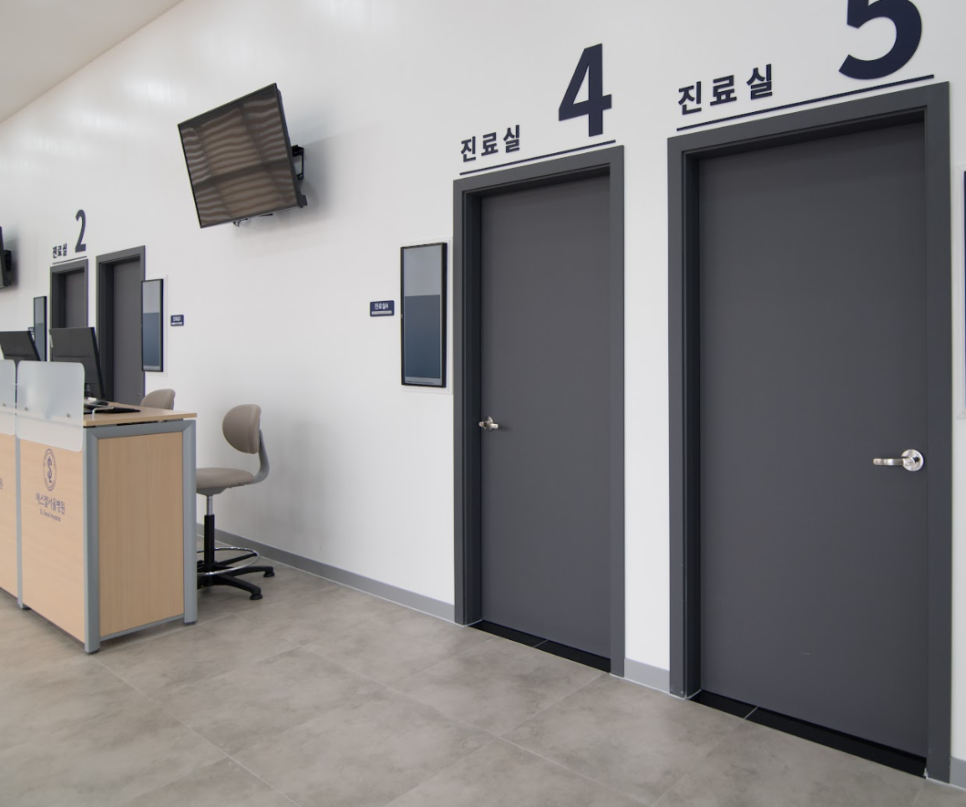
    For anyone curious about the treatment environment, here are a few photos of the clinic space.

    Carpal tunnel syndrome related image 9

    Carpal tunnel syndrome related image 10

    Carpal tunnel syndrome related image 11

    Carpal tunnel syndrome related image 12

    Carpal tunnel syndrome related image 13

    Carpal tunnel syndrome related image 14


    Frequently Asked Questions About the Carpal Tunnel Syndrome Self-Test

    1. Does wrist numbness always mean I’ll need surgery?
    Not necessarily. In the early or moderate stages, non-surgical options like physical therapy or injection therapy can often bring enough improvement.

    2. Does applying heat at home help?
    Heat can help with everyday stiffness, while a cold compress may help more when pain and swelling are severe.

    3. What should I watch out for to help prevent it?
    Avoid working with your wrist bent for long stretches, use a wrist rest when using a mouse or keyboard, and repeat a carpal tunnel syndrome self-test regularly to catch changes early.

    4. How long does recovery take?
    It varies from person to person, but consistent management often leads to improvement over time.

    5. Can carpal tunnel syndrome come back?
    If repetitive strain on the wrist continues, it can recur, which is why managing your posture and habits going forward matters.

    Carpal tunnel syndrome related image 15

    Carpal tunnel syndrome related image 16

    Carpal tunnel syndrome related image 17

    Carpal tunnel syndrome related image 18


    References

    · Korea Disease Control and Prevention Agency, “Carpal Tunnel Syndrome,” National Health Information Portal. View source
    · Asan Medical Center, “Carpal Tunnel Syndrome,” Disease Encyclopedia. View source

    This article is intended for general health information purposes only and is not a substitute for individual diagnosis or treatment. If you have symptoms, please consult a physician.

  • Fallen Arch Symptoms: 4 Warning Signs and a Shoe Sole Self-Check

    Fallen Arch Symptoms: 4 Warning Signs and a Shoe Sole Self-Check

    SummaryIf one side of your shoe sole is noticeably more worn than the other, it may point to fallen arch symptoms. This guide walks through the four most common warning signs — from your feet to your calves, knees, and lower back — along with an at-home footprint self-check and practical ways to manage the condition.

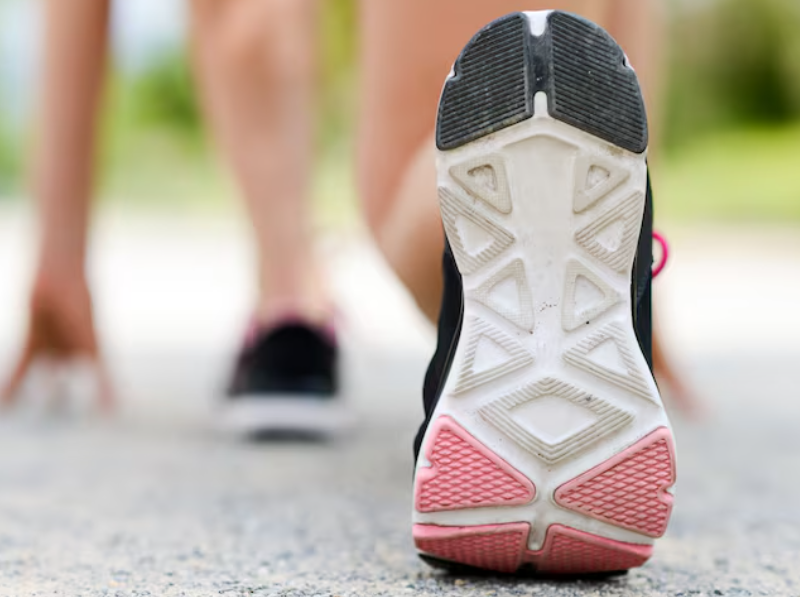
    Have you ever flipped your shoes over to check the soles?

    If the inside edge is noticeably more worn than the rest, it could be a sign of fallen arch symptoms.

    That uneven wear pattern can mean your body weight is shifting toward one side of your foot.

    If you’ve had unexplained tightness in your feet, calves, knees, or lower back, this could be the reason.

    fallen arch symptoms

    In this article, we’ll look at why the foot arch can collapse and cover the four main warning signs.

    We’ll also walk through shoe sole wear patterns, an at-home footprint self-check, and everyday habits that may help.

    illustration related to fallen arch symptoms 2

    What Are Fallen Arch Symptoms?

    Fallen arch symptoms refer to the curved structure on the inside of the foot flattening out over time.

    With every step, the foot’s arch helps absorb the impact of hitting the ground.

    When that curved structure collapses, shock absorption drops off sharply.

    illustration related to fallen arch symptoms 3

    With each step, the ankles and knees end up absorbing more of that impact directly.

    As a result, fatigue can build up not just in the soles of the feet but also in the calves and lower back.

    If this continues over time, it may also start to affect the muscles around the inner knee or pelvis.

    Flat feet are generally described as a condition where the foot’s arch sits lower than normal.

    illustration related to fallen arch symptoms 4

    Key Points
    ✔ The arch of the foot is a key structure for distributing body weight.
    ✔ When it collapses, strain on the ankles, knees, and lower back can increase.

    What Signs Can Your Shoes and Pain Reveal?

    There are four common signs that your foot arch may be collapsing.

    If the inside of your sole feels a sharp twinge even after walking a short distance, it’s worth paying closer attention.

    Checking the wear pattern on your shoe heels is another useful way to check.

    illustration related to fallen arch symptoms 5

    If the inner edge of your shoe sole is noticeably more worn than the rest,
    it’s a sign that your weight is shifting inward.

    A sharp pain in the heel with your first steps in the morning is another common sign.

    This kind of pain often results from repeated strain on the plantar fascia.

    If these signs are ignored and you keep walking on it, the area of discomfort can gradually spread.

    illustration related to fallen arch symptoms 6

    Checklist
    ✅ The soles of your feet feel heavy or sore even without much walking
    ✅ The inner sole of your shoes or sneakers wears out noticeably fast
    ✅ Your ankle feels like it’s rolling or collapsing inward
    ✅ Your sole feels a sharp twinge when you start walking in the morning

    How Can You Self-Check Your Arch at Home?

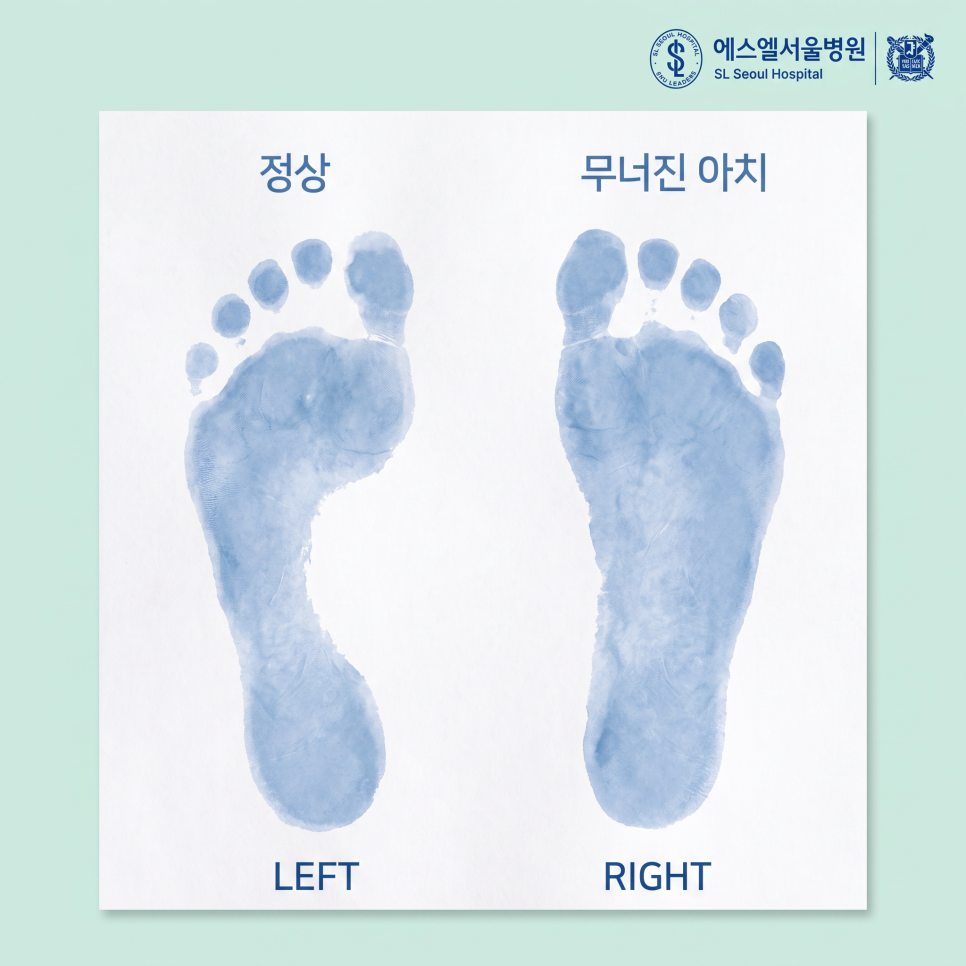
    A footprint test is a self-check method where you wet the sole of your foot and press it onto paper to see the shape of your arch.

    It’s a simple way to get a rough sense of your foot condition before seeing a doctor.

    1. Fill a basin with water and thoroughly wet the soles of your feet.
    2. Step naturally onto a dry towel or a sheet of paper.
    3. Lift your foot and check the shape of the inner portion of the footprint left behind.

    illustration related to fallen arch symptoms 7

    Footprint Shape What It May Indicate
    A clear, narrow gap on the inner edge Typical arch shape
    The inner edge is fully filled in May suggest a fallen arch; consulting a specialist is recommended
    Result
    Check whether the inner, waist-like portion of the footprint shows a clear narrow gap.
    If it’s completely filled in, it’s a good idea to consider seeing a specialist for further evaluation.

    This self-check is meant for reference only —
    for an accurate assessment, it’s best to see a specialist.


    How Should You Manage a Fallen Arch?

    Fully reversing an already-collapsed arch structure isn’t easy.

    However, small changes to daily habits may help slow its progression.

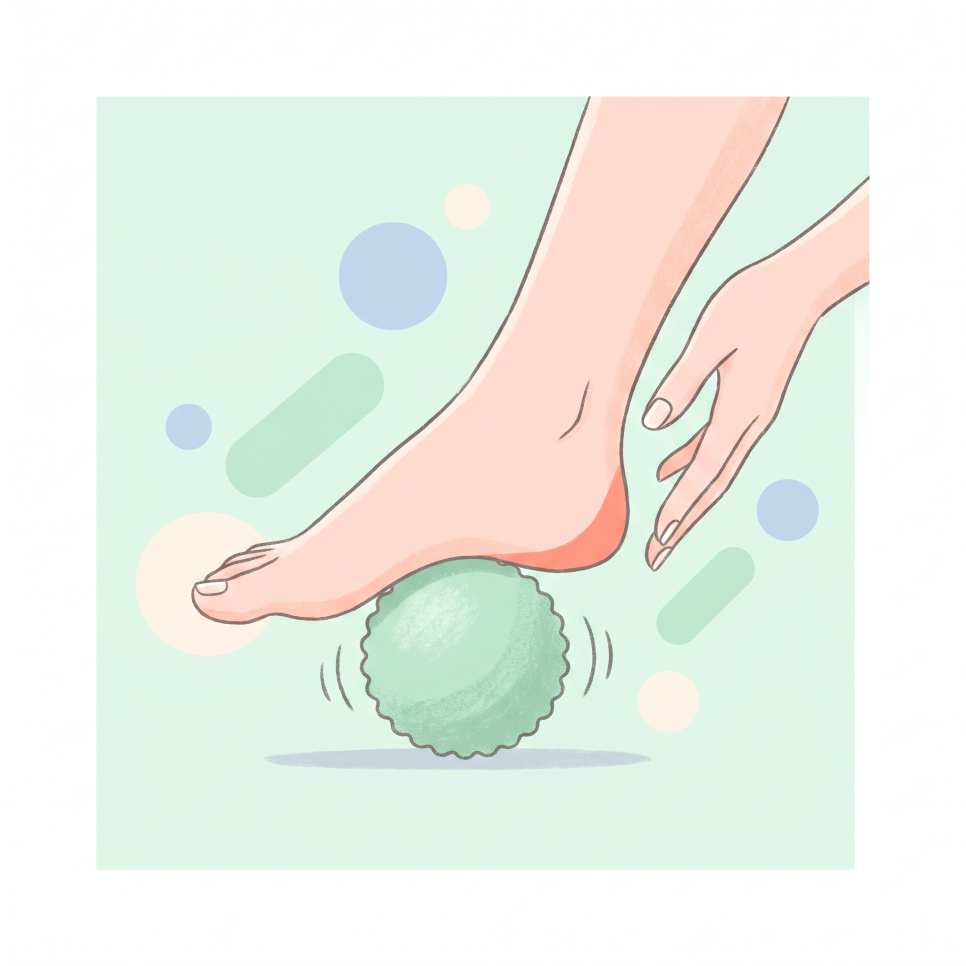
    Gently massaging the muscles in the sole of the foot can be a helpful part of this.

    illustration related to fallen arch symptoms 8

    Placing a small ball under your foot and rolling it gently may help ease fatigue.

    It’s also best to avoid shoes with an overly stiff sole or no heel support at all.

    Picking up a towel with your toes for about 5 minutes a day is another exercise worth trying consistently.

    Caution
    Walking barefoot on hard surfaces for extended periods can actually place more strain on your feet.
    If pain persists or worsens, consulting a specialist should take priority over self-care alone.

    If you suspect fallen arch symptoms, it’s best not to ignore them and to get checked instead.

    If your self-check results are unclear or the pain continues, it’s advisable to get a thorough evaluation rather than guessing on your own.

    SL Seoul Hospital (Spine & Joint) home offers evaluations that look at how your foot, knee, and lower back conditions may be connected.


    Frequently Asked Questions

    1. If my foot structure has collapsed, will I definitely need surgery?
    If it’s in an early stage or isn’t significantly affecting daily life, it can often be managed with supportive devices or exercise.

    2. What kind of shoes can help?
    Cushioned shoes that absorb impact well and offer moderate arch support are a good choice.

    3. Is it okay to walk barefoot often?
    Walking barefoot on hard surfaces for long periods can place extra strain on your feet, so caution is advised.

    4. Are there simple exercises I can do at home?
    Picking up a towel with your toes or doing regular sole stretches can help.

    illustration related to fallen arch symptoms 9


    References

    · Asan Medical Center, “Plantar Fasciitis,” Disease Encyclopedia, 2026. View source
    · Seoul National University Hospital, “Flat Feet (Pes Planus),” Medical Information, 2026. View source
    · Hidoc, “‘Huh? It Wasn’t Like This Before’ — The Sudden Onset of Adult-Acquired Flat Foot,” Hidoc Health Talk, 2026. View source


    This article is provided for general health information purposes only and is not a substitute for individual diagnosis or treatment.
    If you’re experiencing symptoms, please consult a specialist.