Tag: Shoulder Pain

  • Shoulder Pain Causes: 5 Warning Signs of Frozen Shoulder or Rotator Cuff Tear

    Shoulder Pain Causes: 5 Warning Signs of Frozen Shoulder or Rotator Cuff Tear

    SummaryShoulder pain causes include frozen shoulder, rotator cuff tears, calcific tendinitis, and more. This guide covers the risks of leaving it untreated, a self-check checklist, non-surgical orthopedic treatments, and national health insurance statistics.

    Have you ever felt a sharp, stabbing pain in your shoulder while changing clothes or reaching overhead?

    It’s easy to brush off as nothing serious,
    but leaving the underlying shoulder pain causes untreated can let it progress into a condition like frozen shoulder or a rotator cuff tear, both of which take far longer to treat.
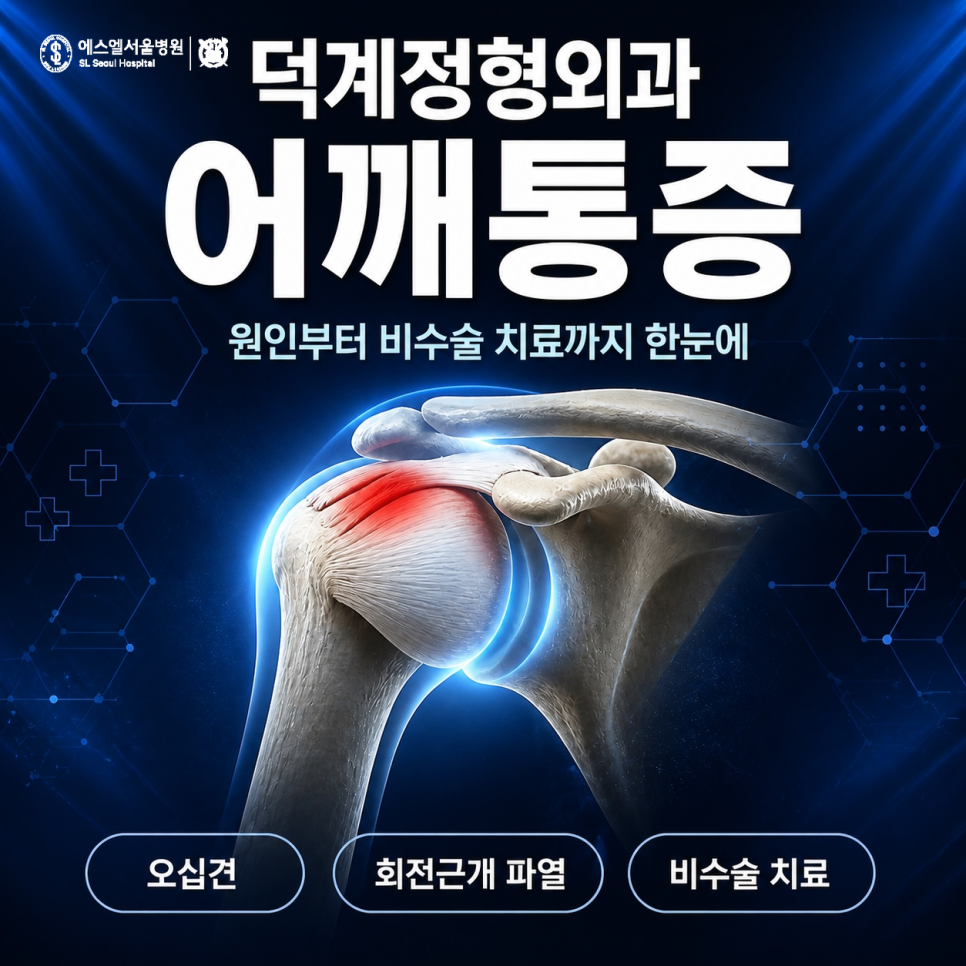
    shoulder pain causes

    Key Takeaways
    Shoulder pain causes generally fall into three categories — frozen shoulder (adhesive capsulitis), rotator cuff tears, and calcific tendinitis — and they tend to show up differently depending on age and daily habits.
    This article walks through a self-check method for telling these causes apart by symptom, the non-surgical treatments orthopedic clinics use, and daily habits that help prevent a recurrence.

    Shoulder Pain Causes: What Are They?
    shoulder pain causes illustration 2

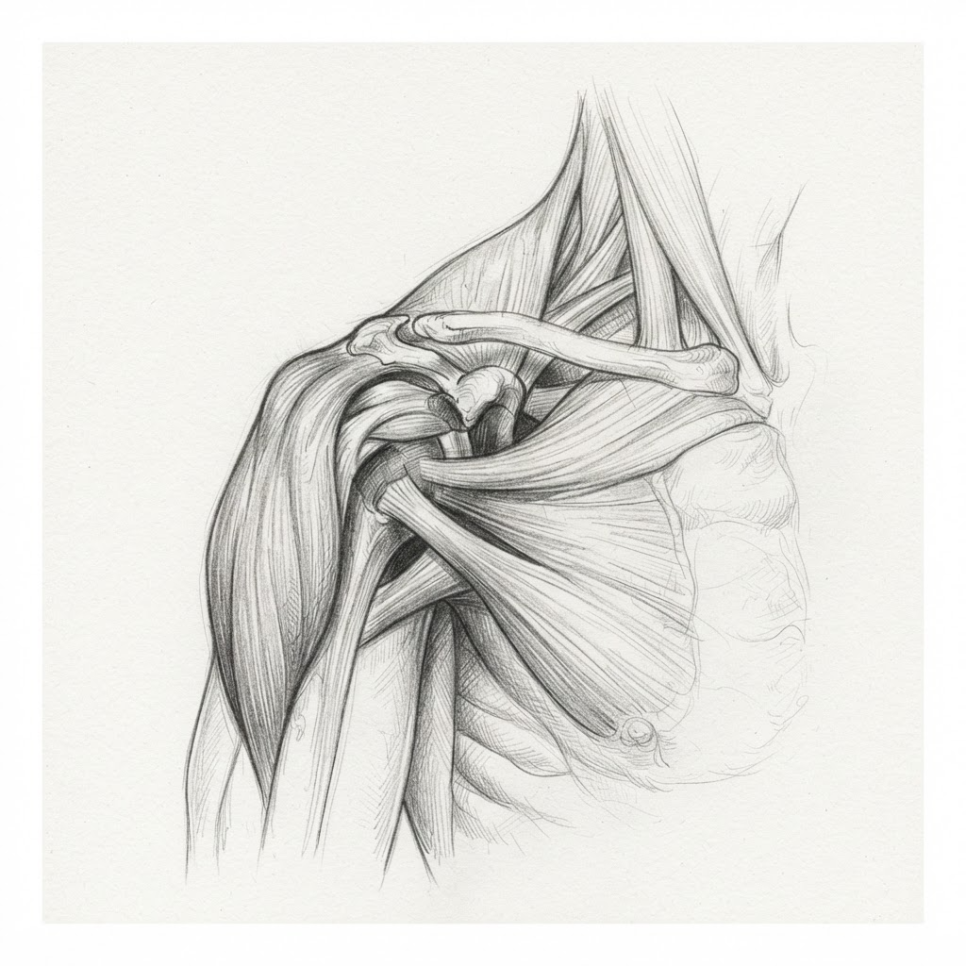
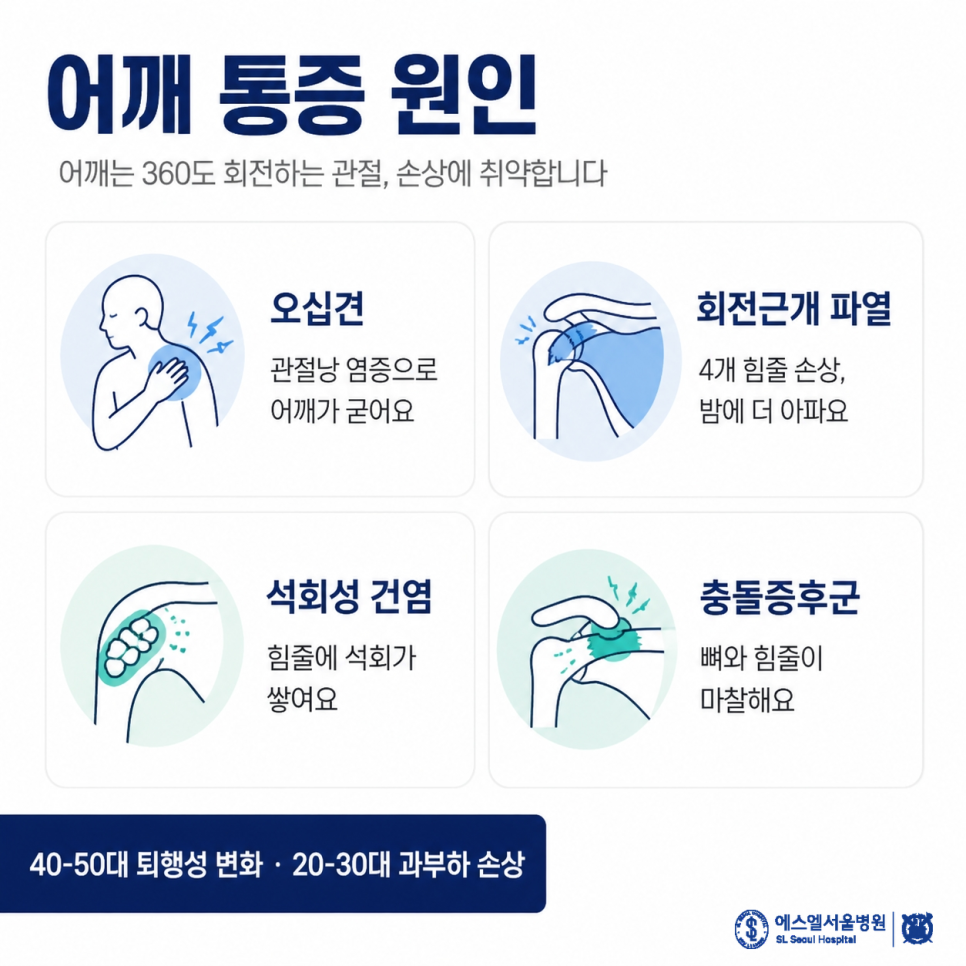
    Shoulder pain causes generally break down into three types: inflammation of the joint capsule, tendon damage, and friction between bone and tendon.

    The shoulder is the only joint in the body that rotates through nearly 360 degrees,
    and that wide range of motion is exactly what makes it so easy to injure.
    shoulder pain causes illustration 3

    The 3 Most Common Causes of Shoulder Pain

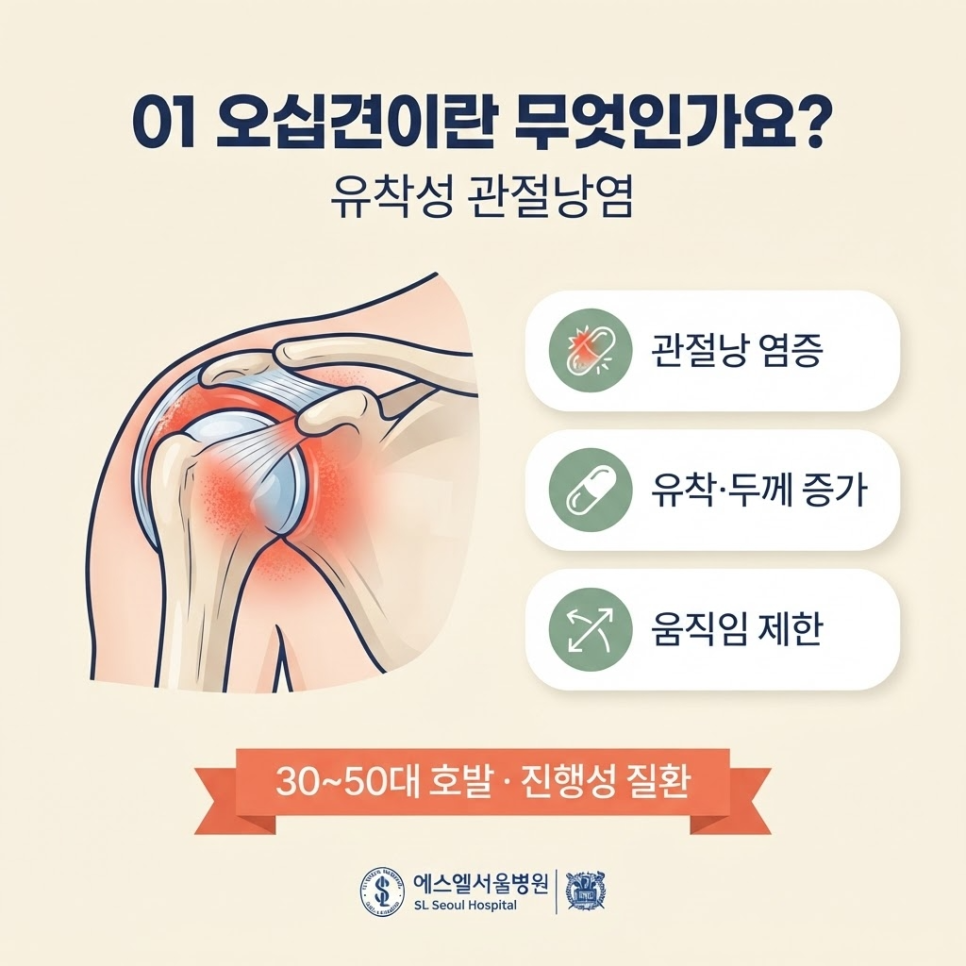
    • Frozen shoulder (adhesive capsulitis) — Inflammation of the capsule surrounding the joint causes the shoulder to stiffen up. A defining feature is that the arm won’t lift easily, whether you try to raise it yourself or someone else helps.
    • Rotator cuff tear — One or more of the four tendons that support the shoulder becomes torn or damaged. Pain typically worsens when lifting the arm to a specific angle, and night pain is common.
    • Other conditions — Calcific tendinitis, where calcium deposits build up in the tendon, and impingement syndrome, where bone and tendon rub against each other, are also common causes.
    Key Points
    ✅ Ages 40-50 and up: Frozen shoulder and degenerative changes in the rotator cuff are cited as the leading causes.
    ✅ Ages 20-30: Sports injuries or repetitive shoulder overuse from smartphone and computer use can also be a factor.

    shoulder pain causes illustration 4

    These age-related patterns are general reference information — the actual cause needs to be confirmed with a detailed examination.

    National statistics show that shoulder pain is far from a rare problem.
    According to Korea’s Health Insurance Review and Assessment Service, the number of frozen shoulder patients rose from 731,346 in 2015 to 789,403 in 2019 — a 7.9% increase over five years.
    Over the same period, the increase among male patients was 12.51%, more than double the rate for women (4.93%), and clinic visits peaked in March each year.

    According to the Korea Disease Control and Prevention Agency’s health information portal, frozen shoulder is a common condition affecting about 2% of the general population.


    How Do You Tell Frozen Shoulder Apart From a Rotator Cuff Tear?

    With frozen shoulder, the joint itself is stiff, so it won’t move freely even when someone else lifts your arm for you. With a rotator cuff tear, there’s pain, but the arm can still be raised with assistance — that’s the key difference.

    Both conditions are easy to mistake for simple muscle soreness early on, which is why an accurate diagnosis matters.

    Frozen Shoulder vs. Rotator Cuff Tear

    Category Frozen Shoulder Rotator Cuff Tear
    When someone else lifts your arm Doesn’t lift easily Lifts relatively well
    Pain pattern Stiffness throughout the whole shoulder Concentrated when moving in a specific direction
    Course Most cases improve within 1-2 years Tear can widen if left untreated

    “Frozen shoulder is one of the most common conditions causing chronic shoulder pain and restricted movement, and it resolves on its own in most cases within one to two years.”

    That’s how the Korea Disease Control and Prevention Agency’s health information portal describes frozen shoulder.

    shoulder pain causes illustration 5

    Check These Signs If You Have Shoulder Pain

    Self-Check Checklist
    ✅ It’s hard to reach behind your back to get dressed or wash your hair
    ✅ Pain gets worse at night and frequently wakes you up
    ✅ You feel a catching sensation or hear a clicking sound inside the shoulder when raising your arm
    ✅ A tingling or numb feeling spreads from the shoulder down the arm to the fingers
    ✅ The pain continues for more than 2 weeks even with rest
    Important
    If two or more of these apply to you, it may be more than simple fatigue — we recommend getting a thorough evaluation at an orthopedic clinic.

    What Non-Surgical Treatments Do Orthopedic Clinics Use?

    Seeking care early means non-surgical treatment alone may be enough to see improvement.

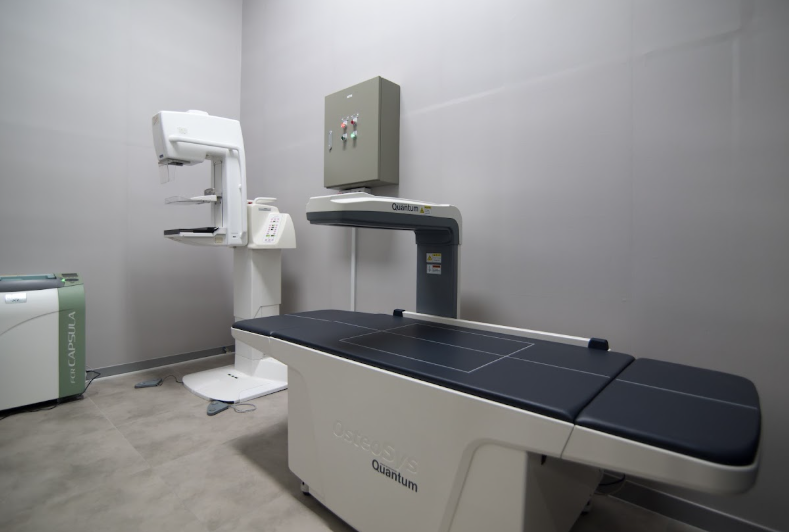
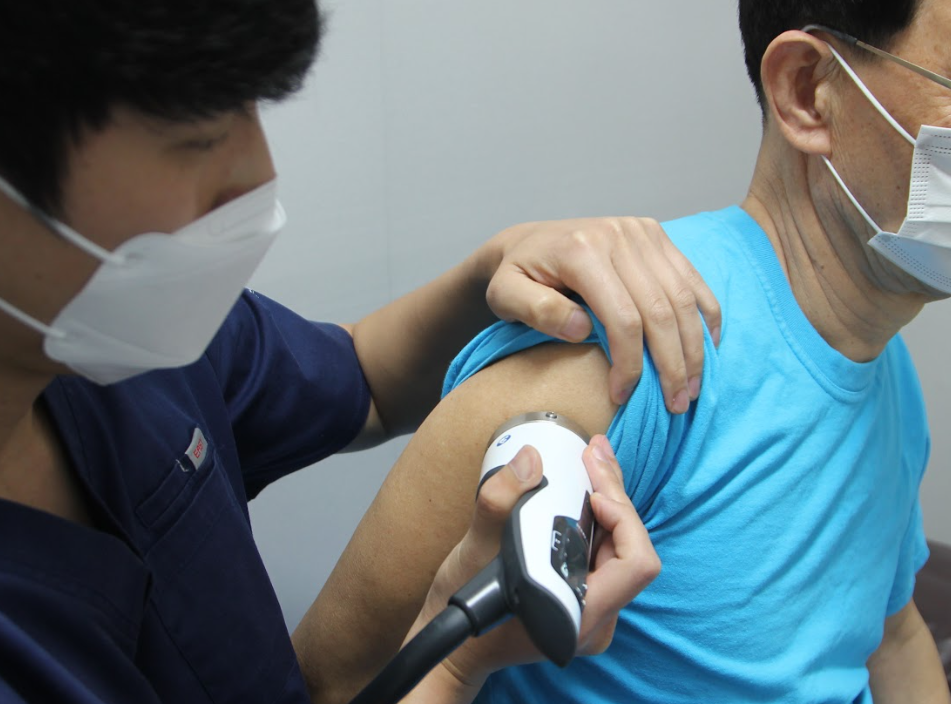
    Orthopedic clinics typically start with an X-ray or ultrasound to assess the condition, then choose a treatment approach based on the symptoms and extent of damage.
    shoulder pain causes illustration 6

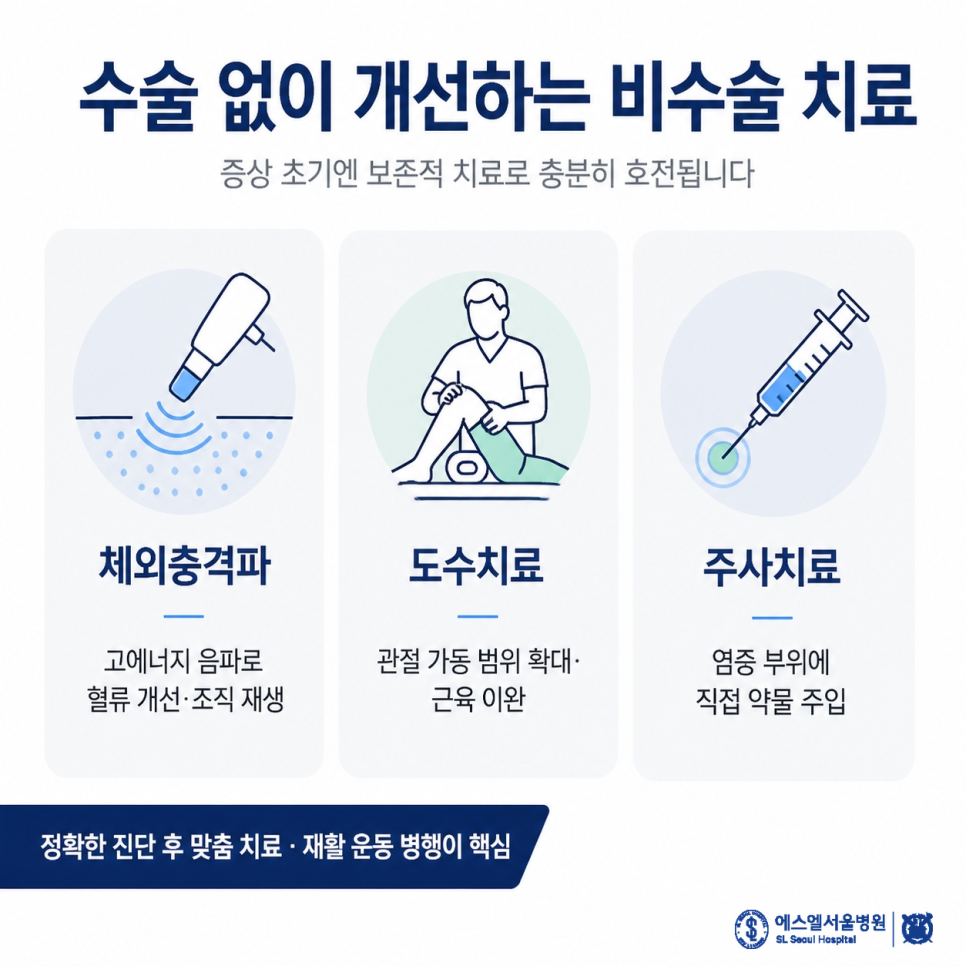
    3 Common Non-Surgical Treatments

    Treatment How It Works
    Extracorporeal Shock Wave Therapy (ESWT) Delivers high-energy sound waves to the painful area to help improve blood flow and encourage tissue repair
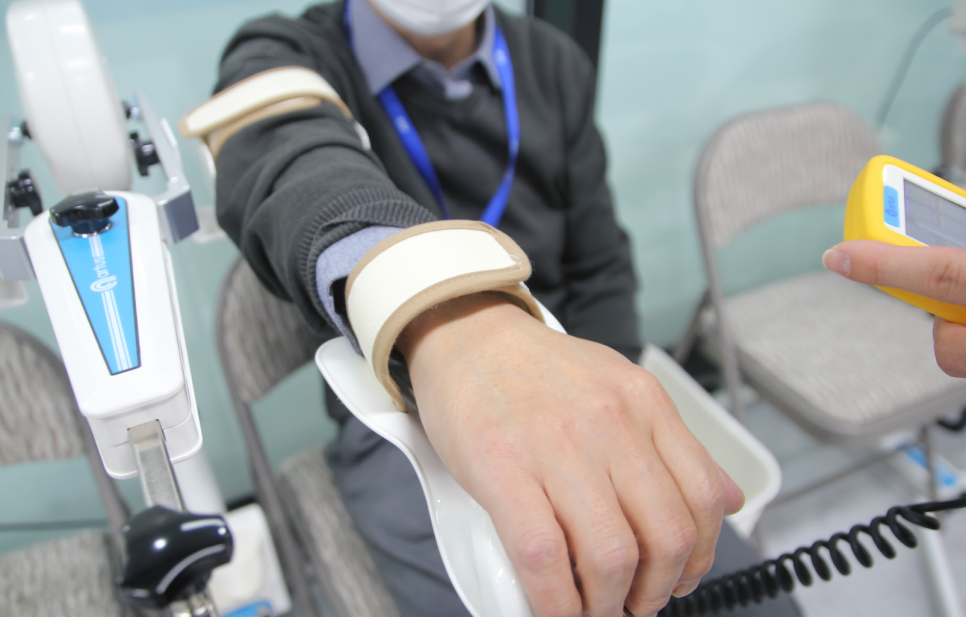
    Manual Therapy A physical therapist uses hands-on techniques that may help increase joint range of motion and relieve muscle tension
    Injection Therapy Medication is injected directly into the inflamed area to help reduce pain and support recovery

    shoulder pain causes illustration 7

    In orthopedic care, surgery isn’t usually the automatic first recommendation — non-surgical treatment is typically tried first, alongside rehabilitation exercises.

    That said, in cases such as a complete rotator cuff tear, where the tendon isn’t able to heal on its own, a detailed exam is needed first to check how far the damage has progressed.
    shoulder pain causes illustration 8


    How Do You Choose a Good Orthopedic Clinic, and How Should You Manage Your Shoulder Day to Day?

    Shoulder joint treatment calls for a careful, individualized approach, so it’s worth looking at how a clinic is set up rather than choosing one just because it’s nearby.

    shoulder pain causes illustration 9

    Key Points
    ✅ Whether a board-certified orthopedic specialist provides the care directly and has solid clinical experience
    ✅ Whether the clinic has detailed diagnostic equipment and offers one-on-one rehabilitation programs
    ✅ Whether the clinic looks beyond pain relief to address the underlying cause and daily habits

    Aftercare matters just as much as the treatment itself.
    Without it, symptoms can easily come back.
    shoulder pain causes illustration 10

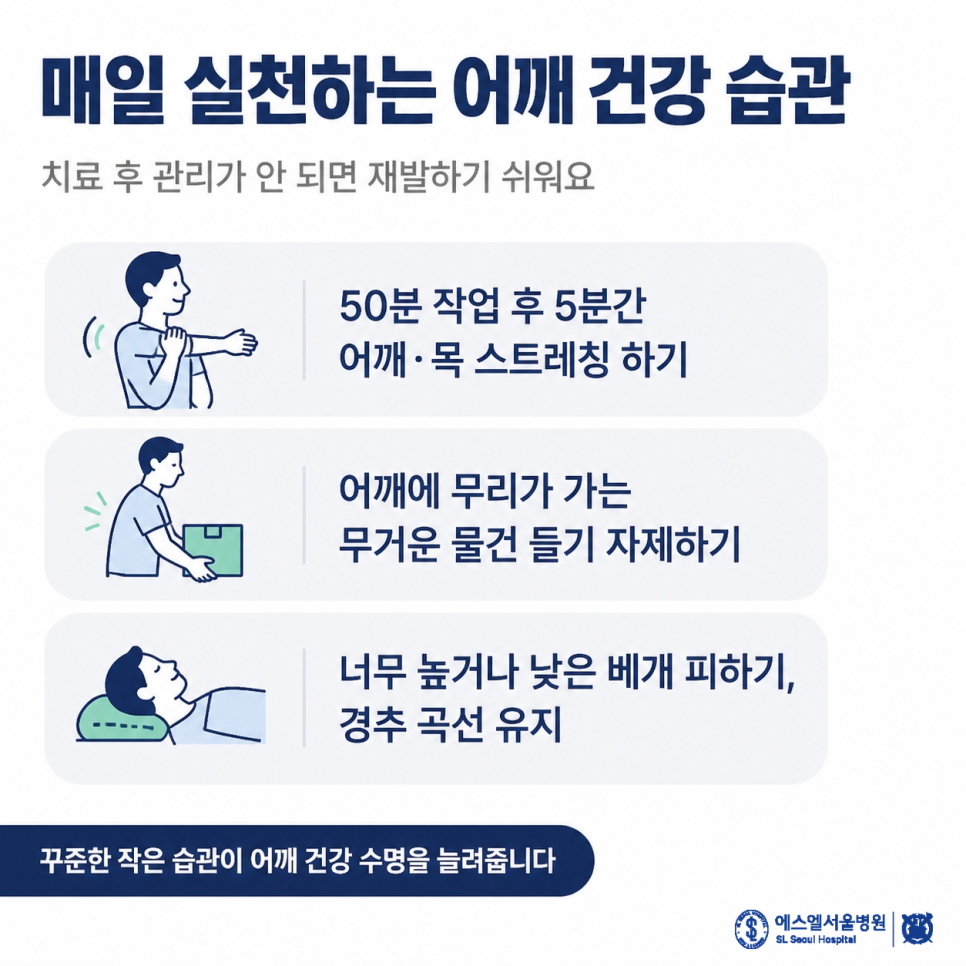
    Daily Habits That Support Shoulder Health

    • After 50 minutes of work, take a 5-minute break to gently stretch your shoulders and neck
    • Avoid lifting heavy objects that strain the shoulder whenever possible
    • Use a pillow that supports the natural curve of your neck instead of one that’s too high or too low

    Keeping up these habits consistently can help maintain your recovery after treatment and lower the risk of recurrence.

    shoulder pain causes illustration 11

    If your discomfort continues and you’re not sure what’s behind your shoulder pain, don’t hesitate to get evaluated by an orthopedic specialist.

    For more information on spine and joint health, visit the SLS Seoul Hospital for Spine & Joints homepage.


    shoulder pain causes illustration 12

    shoulder pain causes illustration 13

    shoulder pain causes illustration 16


    Frequently Asked Questions

    1. Should I just rest completely when my shoulder hurts?
    Rest is important during the acute inflammation phase, but staying still for too long risks stiffening the joint. It’s best to combine rest with gentle stretching, within a range that doesn’t aggravate the pain.

    2. Does rotator cuff damage heal on its own?
    With a partial tear or simple inflammation, conservative treatment can bring noticeable improvement, but a completely torn tendon is unlikely to reattach on its own. A detailed exam is needed to check how far it has progressed.

    3. Is extracorporeal shock wave therapy very painful?
    You may feel some mild soreness or discomfort as the shock wave energy is delivered. The intensity can be adjusted during treatment, so just discuss it with your therapist.

    4. How can you tell frozen shoulder apart from a rotator cuff tear?
    With frozen shoulder, the joint itself is often so stiff that the arm won’t lift even with someone else’s help. With a rotator cuff tear, there’s pain, but the arm can still be raised with assistance.


    References

    · Korea Disease Control and Prevention Agency, National Health Information Portal, “Frozen Shoulder (Adhesive Capsulitis).” View source
    · Newsis, “Frozen Shoulder No Longer Just a Condition for Women in Their 50s,” 2020. (Citing Health Insurance Review and Assessment Service data) View source
    · Korean Orthopaedic Association, “Rotator Cuff Tear.” View source
    · NCBI PMC, “Health Care Utilization for Common Shoulder Disorders: Analysis of the 2010–2019 National Patient Sample Data from the Health Insurance Review and Assessment Service in Korea,” 2024. View source


    This article is intended for general health information purposes only and is not a substitute for individual diagnosis or treatment. If you have symptoms, please consult a specialist.

  • Text Neck Headache: How Forward Head Posture Adds 18kg of Strain to Your Neck

    Text Neck Headache: How Forward Head Posture Adds 18kg of Strain to Your Neck

    SummaryWhy does text neck cause headaches, and how can you manage them? This article breaks down how text neck syndrome leads to cervicogenic headaches, how to self-check with a simple wall test, and the everyday habits and stretches that may help reduce strain on your cervical spine.

    That throbbing headache that shows up after a long day at your desk,
    have you been writing it off as just stress?

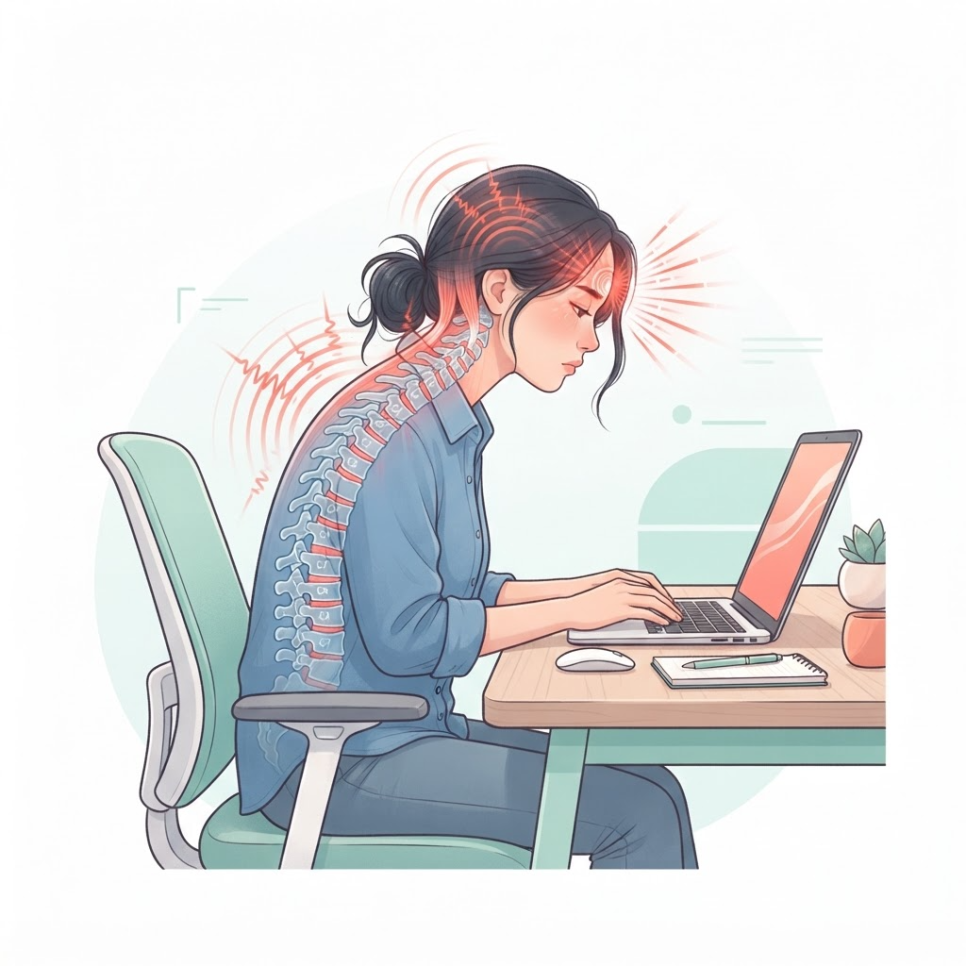
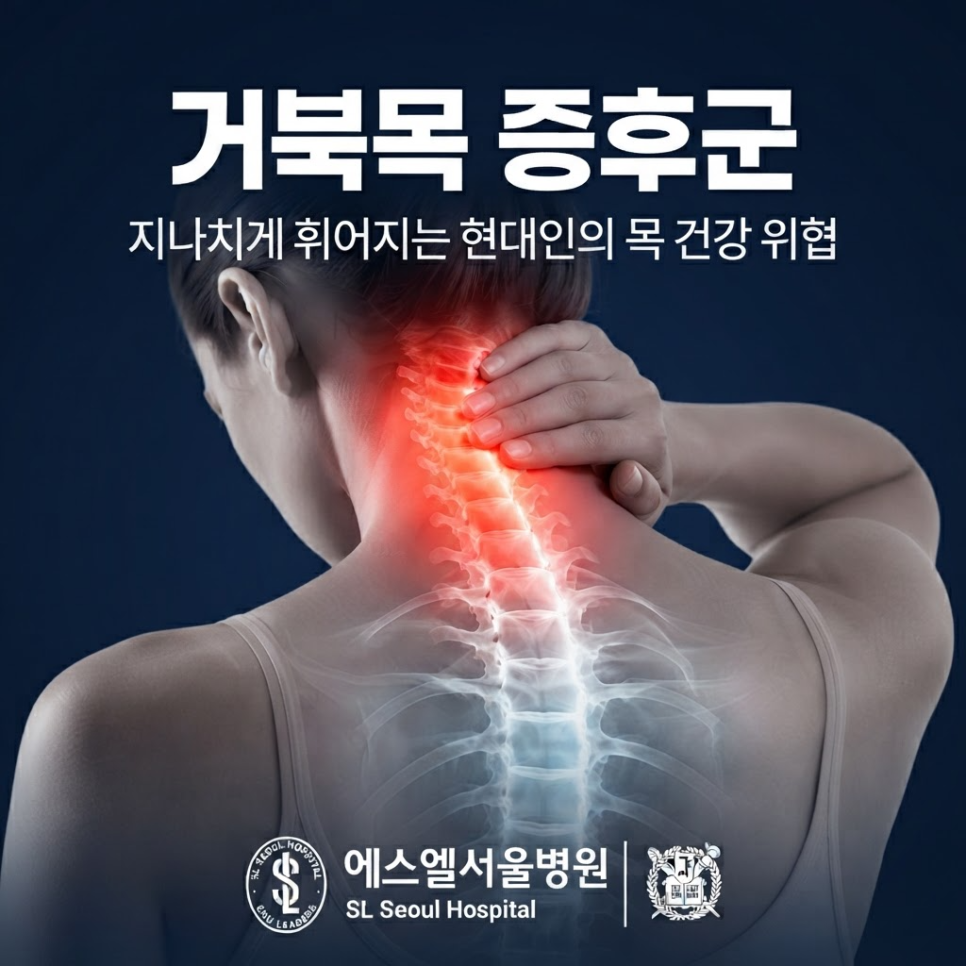
    In reality, it’s often caused by a forward-curved neck, better known as a text neck headache.
    As screen time on smartphones and computers keeps climbing, the neck’s natural curve flattens out,
    and the effects ripple all the way up to your head.

    This article looks at the root cause of text neck headaches through the lens of changes in cervical spine structure, along with a self-check you can do at home and everyday habits that ease the load on your neck. If you’ve been dealing with a headache that painkillers just won’t shake, read on.

    text neck headache

    text neck headache illustration 2

    What Is Text Neck Syndrome?

    In short, text neck syndrome is a postural condition in which the neck’s normal C-shaped curve flattens or even reverses, pushing the head forward of the torso.
    Long hours spent looking down at a screen cause this shift to develop gradually.

    It gets its name because the neck juts forward like a turtle poking its head out of its shell.
    The real issue isn’t just appearance, it’s that the load the cervical spine has to bear changes entirely.

    text neck headache illustration 3

    The cervical spine is naturally built with a gentle C-curve designed to evenly distribute the weight of the head.
    But the more the head tilts forward, the more that curve collapses, concentrating stress on a single section of the neck.

    💡 Key Point
    According to a cervical spine load study by Dr. Kenneth Hansraj of New York Spine Surgery & Rehabilitation Medicine, the weight the neck bears is about 5kg (11 lbs) in a neutral position, but jumps to roughly 18kg (40 lbs) at just a 30-degree tilt, and climbs to about 27kg (60 lbs) at 60 degrees.
    In other words, the more you tip your head down to look at your phone, the heavier the load your cervical spine and surrounding muscles have to carry.

    text neck headache illustration 4

    When the muscles and ligaments around the cervical spine stay tense like this over time, it can lead to a heavy, pressing pain in the shoulders.
    A shift in posture like this ultimately throws off the balance of the whole body.


    Why Does Text Neck Cause Headaches?

    In short, a text neck headache isn’t a problem in the brain itself, it’s a secondary headache known as a cervicogenic headache, where tension in the neck joints and surrounding muscles is referred up to the head.
    It typically starts at the back of the neck and spreads toward the temples.

    text neck headache illustration 5

    The occipital nerves run along the back of the neck, and when text neck posture causes the neck muscles to tighten, these nerves can become compressed, producing a throbbing pain that runs from the back of the head to the sides.

    Because of this, many people mistake the pain for a brain issue or simple stress,
    but in a good number of cases the real cause is excessive tension in the neck muscles.
    Eye strain, dizziness, and trouble concentrating can show up alongside it as well.

    ⚠️ Caution
    Because a cervicogenic headache originates in the muscles and joints around the neck rather than the brain, over-the-counter painkillers often don’t bring much relief.
    If the pain keeps coming back, it’s important to also address the underlying strain on the neck.

    Can You Self-Diagnose Text Neck Syndrome at Home?

    Yes. Stand with your back and the back of your head against a wall, if the back of your head doesn’t comfortably touch the wall, text neck may be worth looking into.
    This simple test alone can give you a rough sense of your neck’s condition.

    text neck headache illustration 6

    If you spend all day in front of a monitor, you might be surprised at just how far your head sits away from the wall during this test.

    If that’s the case, it’s worth going through the checklist below and taking a closer look at your daily habits.

    📋 Daily Neck Health Checklist
    ✅ Hold your phone up to eye level instead of looking down at it.
    ✅ Do a chin-tuck neck stretch once every hour.
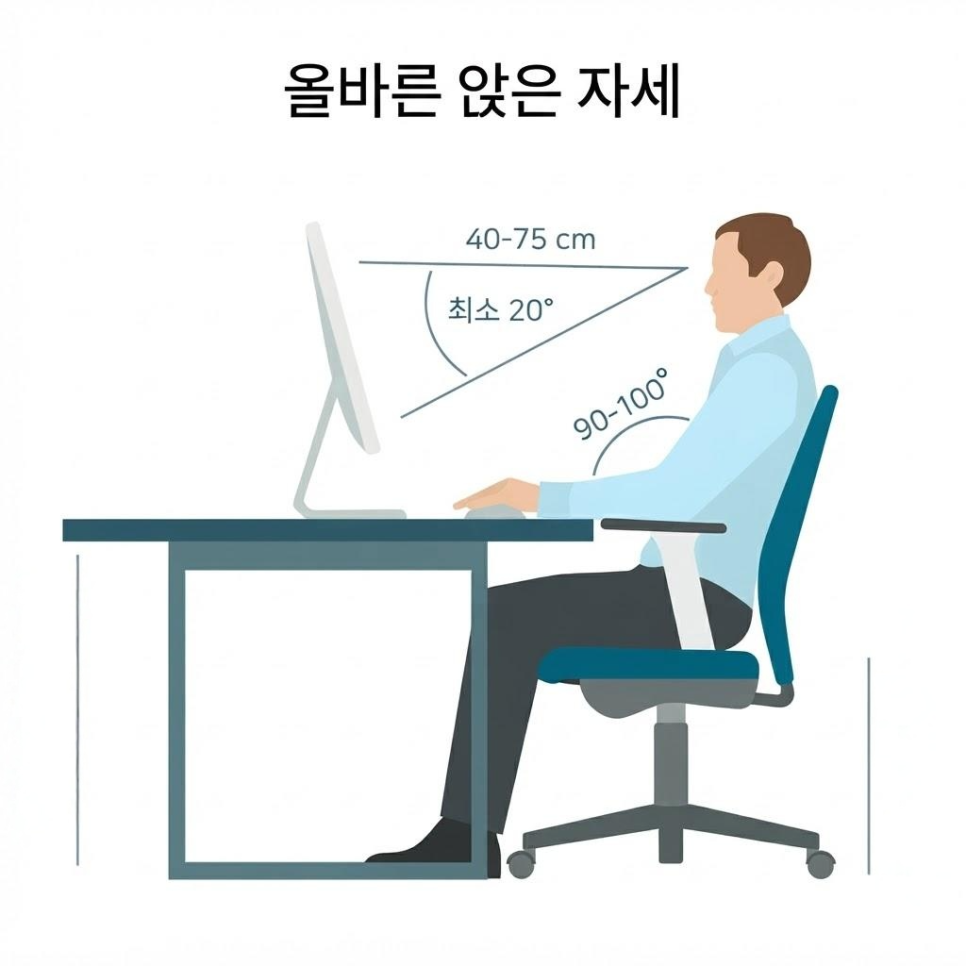
    ✅ Use a monitor stand to bring your screen up to eye level.
    ✅ Swap a high pillow for one that supports your neck’s natural curve.
    ✅ During long stretches of sitting, periodically roll your shoulders back and open up your chest.

    text neck headache illustration 7

    While working at a computer, make a conscious effort to tuck your chin slightly,
    and add in the occasional shoulder roll to open up your chest.

    Rather than holding one position for long stretches, building the habit of stretching often to release muscle tension matters far more.

    ✅ What You Can Expect
    Consistently combining posture correction with stretching may help ease tension in the neck and shoulder muscles, which in turn can help manage how often headaches occur.
    That said, results vary depending on individual posture and symptom severity, so if the pain persists, it’s safest to see a specialist.

    If your symptoms keep recurring or start interfering with daily life, checking the relevant department information on the SL Seoul Hospital for Spine & Joints website is another option.


    Frequently Asked Questions

    1. How is a text neck headache different from a regular migraine?
    Migraines stem from changes in blood vessels or the brain’s nervous system, while text neck headaches originate from tension and nerve compression in the muscles at the back of the neck, and their intensity tends to shift depending on the angle of the neck.

    2. Does getting frequent massages help relieve the headaches?
    It can help temporarily loosen tight muscles, but if your everyday posture doesn’t change, the muscles tend to tense back up quickly, so pairing massage with posture correction is more likely to help the effect last.

    3. What kind of pillow is best for neck health?
    A pillow that’s too high flattens the neck’s C-curve, so it’s best to choose a moderate-height pillow that supports the neck’s natural curve while you’re lying down.

    4. Which specialist should I see if symptoms are severe?
    If the pain keeps recurring or is interfering with daily life, it’s recommended to get a thorough evaluation from a specialized medical provider, such as orthopedics, neurosurgery, or rehabilitation medicine.

    5. Can stretching alone fully correct text neck?
    Stretching helps relieve muscle tension and improve postural awareness, but in more severe cases, stretching alone is unlikely to fully correct the posture, so it’s best to consult a specialist to build a management plan.

    text neck headache illustration 8


    References

    · Kenneth K. Hansraj, “Assessment of stresses in the cervical spine caused by posture and position of the head,” Surgical Technology International, 2014. View source
    · Korea Disease Control and Prevention Agency, “Straight Neck (Text Neck) Syndrome,” National Health Information Portal. View source
    · Seoul National University Hospital, “Text Neck Syndrome (Forward Head Posture),” SNUH Medical Information. View source


    This article is intended for general health information purposes only and is not a substitute for individual diagnosis or treatment. If you’re experiencing symptoms, please consult a medical professional.

  • Orthopedic MRI Scan in Dongducheon: 3 Signs You Need One After 2 Weeks of Pain

    Orthopedic MRI Scan in Dongducheon: 3 Signs You Need One After 2 Weeks of Pain

    SummaryWondering when you should get an orthopedic MRI scan in Dongducheon? Here’s a checklist to run through if your pain has lasted more than 2 weeks, plus what the scan involves and how to manage recovery afterward.

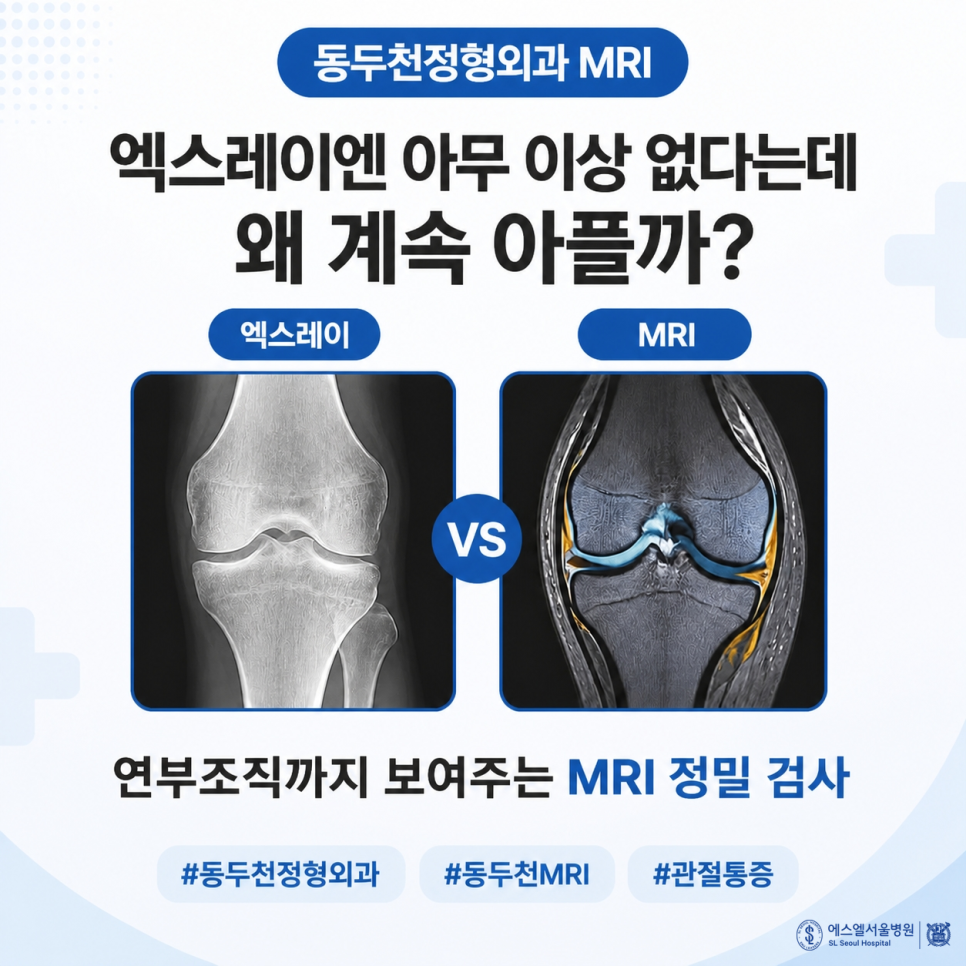
    Your X-ray comes back looking completely normal,
    yet the pain in your shoulder or knee just won’t go away after several days.

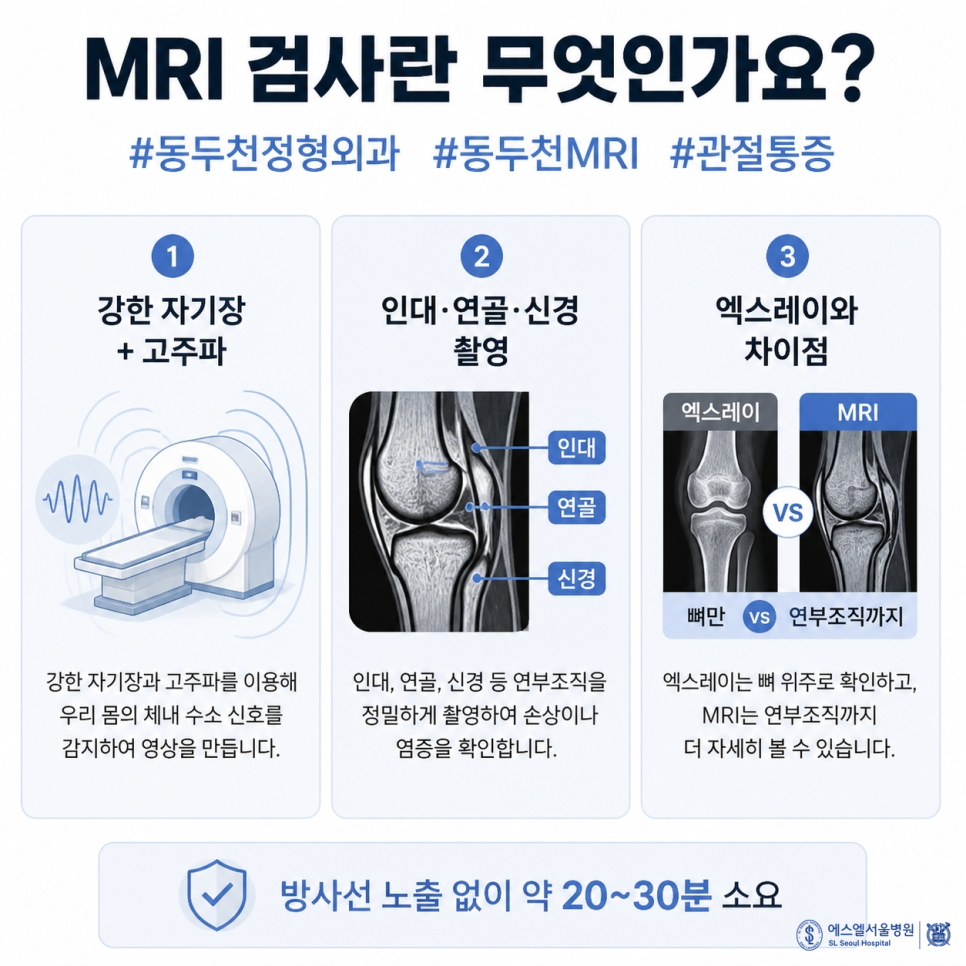
    That’s because a standard X-ray only shows bone in white — it can’t pick up subtle damage to ligaments, cartilage, or nerves.

    For this reason, an orthopedic clinic in Dongducheon will often recommend a more detailed scan to pinpoint the real cause of the pain.

    💡 Quick Preview
    1. Orthopedics identifies the cause of shoulder, knee, and lower back joint pain through detailed imaging such as an MRI scan.
    2. MRI captures ligaments, cartilage, and nerves without radiation exposure, and typically takes about 20–30 minutes depending on the area scanned.
    3. If pain lasts more than 2 weeks, your joint clicks or feels unstable, or the pain disrupts your sleep, it may be time to consider an orthopedic MRI scan.

    orthopedic clinic in Dongducheon

    What Is an MRI Scan?

    An MRI (magnetic resonance imaging) scan is a detailed diagnostic exam that uses magnetic fields and radio waves to capture cross-sectional images of the inside of the body.

    Unlike a standard X-ray, which shows only bone in white, MRI can clearly display soft tissue such as muscles, ligaments, cartilage, and nerves.

    According to health information from Asan Medical Center, MRI offers strong contrast between different types of tissue, which is generally considered useful for diagnosing soft-tissue conditions.

    orthopedic clinic in Dongducheon image 2

    It doesn’t involve radiation exposure, making it a relatively safe option, and it can also help detect conditions in their early stages.

    When the cause of joint pain isn’t clear, an orthopedic MRI scan can help identify what’s actually behind it.

    In that sense, it’s a useful exam for uncovering pain sources that would otherwise stay hidden.

    orthopedic clinic in Dongducheon image 3

    💡 Key Point
    An MRI is a detailed exam that provides a three-dimensional view of not just bone, but fine damage to soft tissue such as ligaments, cartilage, and nerves.

    orthopedic clinic in Dongducheon image 4


    What Symptoms Call for an MRI Scan in Dongducheon?

    A scan is worth considering after a sudden injury or when chronic pain lingers.

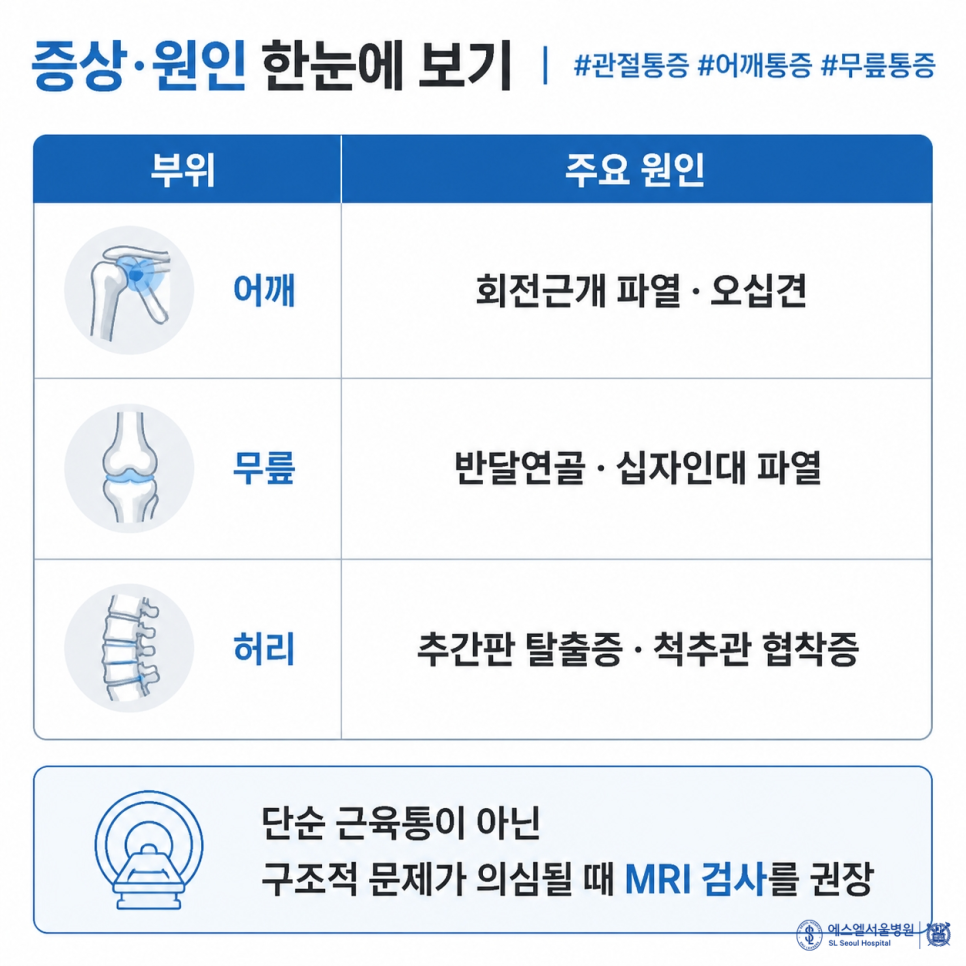
    Common symptoms and their likely causes are summarized in the table below.

    orthopedic clinic in Dongducheon image 5

    Area & Symptom Likely Cause
    Shoulder pain, difficulty raising the arm Rotator cuff tear, frozen shoulder, or other damage to tissue around the joint
    Knee swelling or a feeling of the joint giving way Meniscus tear, ACL/PCL tear, or other sports-related injury
    Lower back pain, numbness or tingling in the legs Herniated disc, spinal stenosis

    When a problem goes beyond simple muscle soreness and a structural issue inside the joint is suspected, this kind of exam can help clarify the likely cause.

    Left unaddressed, though, these symptoms can get worse, so it’s worth paying close attention.

    orthopedic clinic in Dongducheon image 6


    What Should You Look for in an Orthopedic Clinic?

    Joint pain sometimes improves on its own, but if a structural tear or injury is involved, professional care becomes necessary.

    That’s why it matters to be seen by an experienced medical team close to home.

    orthopedic clinic in Dongducheon image 7

    It’s best to choose a clinic staffed with medical professionals who have substantial clinical experience.

    Every patient’s pain has its own cause and pattern, and experienced clinicians can analyze it carefully and recommend an appropriate course of action.

    Being able to get thorough evaluation and treatment close to home — without traveling far — is one practical consideration when choosing an orthopedic clinic in Dongducheon.

    📋 Checklist
    ✅ Has the pain lasted more than 2 weeks?
    ✅ Does the joint click, pop, or feel unstable when you move it?
    ✅ Is the pain severe enough to disrupt your sleep at night?
    If any of these apply to you, it’s advisable to get an orthopedic MRI scan.

    You can also find general information on spine and joint pain on the SL Seoul Spine & Joint Hospital website.

    The clinic is located at 13 Gosam-ro, Yangju-si, Gyeonggi-do — it’s worth factoring in accessibility as well.

    orthopedic clinic in Dongducheon image 11


    How Does an MRI Scan Work, and What Comes After?

    The exam process is simpler than you might expect.

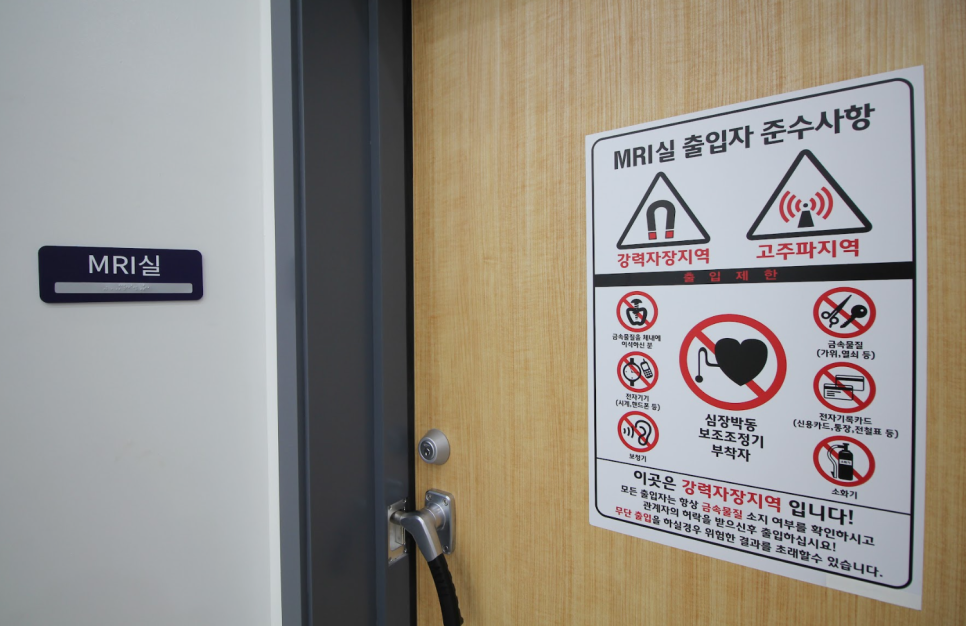
    For safety, you’ll remove all metal objects before entering the exam room.

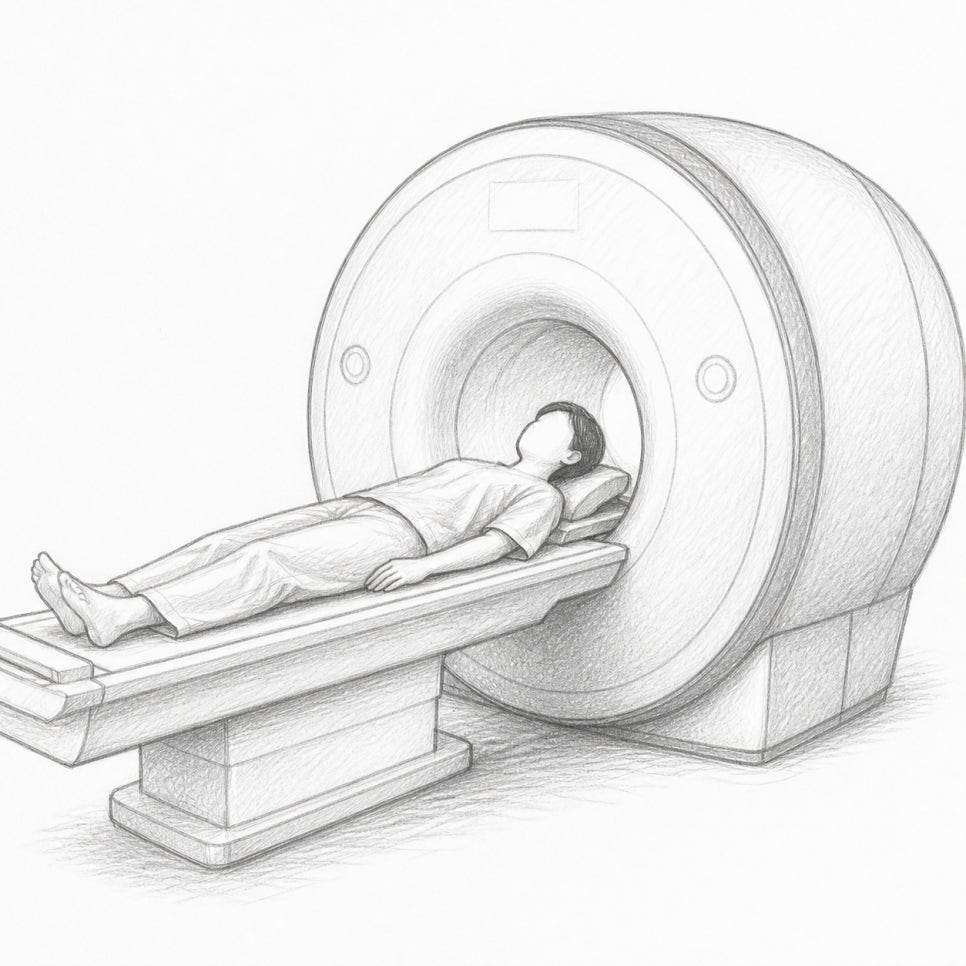
    1. Lie down inside the scanner and breathe normally.
    2. Stay still while the machine is running.
    3. The machine makes noise, but earplugs are provided so it’s not a major discomfort.
    4. You can return to your normal routine right after the scan.

    orthopedic clinic in Dongducheon image 8

    Depending on the results, it’s important to follow up consistently with tailored care such as physical therapy, manual therapy, or injection treatments.
    Precautions
    If you have a metal implant in your body or are in early pregnancy, be sure to talk with your medical team before the scan.

    orthopedic clinic in Dongducheon image 9


    Frequently Asked Questions

    1. How long does the scan take?
    It varies by area and scope, but an orthopedic MRI scan generally takes about 20 to 30 minutes.

    2. Can pregnant patients get an MRI?
    There’s no radiation exposure, but patients in early pregnancy who haven’t reached the more stable second trimester should consult their medical team carefully beforehand.

    3. Do I need to fast before the scan?
    Standard musculoskeletal MRI scans don’t require fasting, but this may be different if contrast dye is used.

    4. Does regular stretching help prevent joint problems?
    Light stretching can strengthen the muscles around your joints and may help reduce the risk of injury.

    orthopedic clinic in Dongducheon image 10

    orthopedic clinic in Dongducheon image 12

    orthopedic clinic in Dongducheon image 13


    References

    · Asan Medical Center, “Magnetic Resonance Imaging (MRI),” Health Information. View source
    · Severance Hospital, “Rotator Cuff Tear,” Health Information Disease Encyclopedia. View source
    · Seoul National University Hospital, “Spinal MRI,” Medical Information Health Encyclopedia. View source

    This article is intended for general health information purposes only and is not a substitute for individual diagnosis or treatment. If you’re experiencing symptoms, please consult a specialist.

  • Shoulder Tension Stretches: 2 Trapezius Moves in Just 5 Minutes a Day

    Shoulder Tension Stretches: 2 Trapezius Moves in Just 5 Minutes a Day

    SummaryHere’s everything you need to know about shoulder tension stretches: why the trapezius muscle tightens, plus how to choose between heat and cold therapy. Spend just 5 minutes a day building a habit that helps manage neck and shoulder pain.

    Do you find yourself rubbing your shoulders the moment you wake up?
    Most of us have felt that letdown when a massage only helps for a little while.

    The truth is, just a few minutes of shoulder tension stretches can make a real difference.
    The cause usually isn’t a lack of massages — it’s the small posture habits you repeat every day.

    어깨결림 스트레칭

    📌 Quick Preview
    This article covers the root causes of a tight trapezius and two shoulder tension stretches you can do right at your desk.
    Reviewing your posture habits alongside these stretches can also help prevent tension from coming back.

    Why Does Shoulder Tension Keep Coming Back?

    Shoulder tension develops when the trapezius and surrounding neck and shoulder muscles stay tight for extended periods.
    Shoulder tension refers to a condition where the trapezius and nearby muscles remain persistently tight, causing pain and stiffness.

    A common cause is forward head posture from long hours spent looking at a computer or smartphone.
    According to information shared through Korea’s national policy briefing service, every 1 cm the head shifts forward adds roughly 2–3 kg of extra load on the cervical spine.

    어깨결림 스트레칭 관련 이미지 2

    This forces the muscles at the back of the neck to bear an excessive share of the head’s weight.
    Over time, fatigue-related byproducts build up in the muscle and blood circulation is disrupted as well.

    When these muscles become tightly knotted, it can even contribute to headaches or eye strain, so it’s worth paying attention early.
    Left unaddressed, the tension can progress into chronic pain, which is why releasing it early matters.

    어깨결림 스트레칭 관련 이미지 3

    ⚠️ Main Causes of Shoulder Tension
    · Maintaining poor posture for long periods
    · Muscle tension caused by stress
    · Lack of exercise and reduced blood circulation

    What Shoulder Tension Stretches Can You Do at Home?

    Shoulder tension stretches are movements that slowly lengthen a tight trapezius to support blood circulation and ease tension.
    They’re simple enough to do right where you’re sitting.

    Move 1: Trapezius Stretch

    1. Sit up straight and place your right hand on the left side of your head.
    2. Gently tilt your neck to the right, as if pulling it in that direction.
    3. When you feel a comfortable stretch, hold for 15 seconds while breathing slowly.
    4. Repeat on the other side.

    어깨결림 스트레칭 관련 이미지 4

    Repeating this may help loosen up tightness along the neck and shoulder line.

    어깨결림 스트레칭 관련 이미지 5

    Move 2: Shoulder Blade Squeeze

    1. Raise both arms to a 90-degree angle.
    2. Open your chest as if drawing your shoulder blades together.
    3. Keep your shoulders pulled down so they don’t rise up toward your ears.
    4. Repeat consistently at least 3 times a day.
    📌 Key Points to Remember Before Stretching
    · Stretch only to the point of a comfortable pulling sensation, not pain
    · Keep breathing slowly instead of holding your breath during each move
    📋 Stretching Routine Checklist
    ✅ Neck stretch, left and right (15 seconds x 3 sets)
    ✅ Shoulder blade squeeze to open the chest (10 seconds x 5 sets)
    ✅ Big shoulder rolls backward (10 reps)
    ✅ Changes You May Notice With Consistent Practice
    · May help reduce tension in tight muscles
    · May help improve blood circulation around the neck and shoulders

    What Daily Habits Help Prevent Shoulder Pain?

    Preventing pain relies just as much on maintaining good posture throughout the day as it does on stretching.
    If you don’t change your everyday habits, tension tends to come right back no matter how much you stretch.

    It helps to adjust your monitor so the screen sits at eye level.
    When looking at your phone, try raising it to eye level instead of tilting your head down.

    어깨결림 스트레칭 관련 이미지 6

    If your work requires staying in one position for long stretches, the general rule is to take a short break every 50 minutes.
    Even something as simple as stretching your arms overhead or marching lightly in place can make a real difference.

    When Should You Use Heat vs. Cold Therapy?

    When managing an area that’s already tight, it’s important to use the right type of therapy.

    Category Cold Therapy Heat Therapy
    When to Use First 24–48 hours after acute pain begins Chronic tightness or tension
    Main Effect Reduces swelling and inflammation Promotes circulation, relaxes muscles
    Recommended Duration 15–20 minutes 15–20 minutes

    If pain keeps recurring even after combining stretches with better posture habits, it may be worth consulting a specialized medical center.
    Visit SL Seoul Hospital for Spine & Joints to learn more.

    🚀 Benefits of Maintaining Good Posture
    · May help reduce physical strain on the neck and shoulders
    · May help support recovery from fatigue through improved circulation
    · May help prevent chronic headaches and postural changes

    Frequently Asked Questions

    1. What should I do if stretching causes sharp pain?
    If you feel pain, stop the movement right away and reduce the intensity. Pushing through pain can actually damage the muscle.

    2. Is heat or cold therapy better for a tight shoulder?
    For tension that has lasted a while, heat therapy can help by supporting circulation. However, if there’s a sudden injury or acute inflammation, cold therapy should be applied first.

    3. How many times a day should I do shoulder tension stretches?
    Rather than sticking to a fixed schedule, it’s more effective to stretch frequently throughout the day. Try to move your shoulders and neck at least once an hour.

    4. If pain continues even with regular stretching, should I see a doctor?
    If pain keeps recurring or is accompanied by symptoms like arm numbness even after weeks of stretching and posture correction, it’s recommended to see a specialist such as an orthopedist.

    어깨결림 스트레칭 관련 이미지 7


    References

    · Korea Disease Control and Prevention Agency, “Text Neck (Forward Head) Syndrome,” National Health Information Portal. View source
    · Korea.kr Policy Briefing, “Stretches That Help Correct Forward Head Posture,” Ministry of Culture, Sports and Tourism. View source
    · St. Carollo Hospital, “Cold vs. Heat Therapy: When Should You Use Each?,” Health Information. View source


    This article is intended for general health information purposes only and is not a substitute for individual diagnosis or treatment. If you’re experiencing symptoms, please consult a licensed physician.

  • Shoulder Stiffness Stretches: 5 Minutes a Day, 2 Moves to Release Tight Traps

    Shoulder Stiffness Stretches: 5 Minutes a Day, 2 Moves to Release Tight Traps

    SummaryThis guide covers shoulder stiffness stretches, why the trapezius muscle tightens, and when to use heat versus cold therapy. Spend just 5 minutes a day building a habit that helps manage neck and shoulder discomfort.

    Do you find yourself rubbing your shoulders the moment you wake up?
    Most of us have felt that frustration of a massage helping only for a moment before the tension creeps right back.

    The truth is, just a few minutes of shoulder stiffness stretches may help.
    The cause usually isn’t a lack of massages — it’s the small posture habits we repeat every day.

    shoulder stiffness stretches

    📌 Quick Preview
    This article breaks down the root cause of trapezius tightness and two shoulder stiffness stretches you can do right at your desk.
    Reviewing your posture habits alongside these stretches can also help reduce recurrence.

    Why Does Shoulder Stiffness Keep Coming Back?

    Shoulder stiffness develops when the trapezius and the muscles around the neck and shoulders stay tense for extended periods.
    Shoulder stiffness refers to a state in which the trapezius and surrounding muscles remain chronically tense, causing pain and tightness.

    One common cause is the forward head posture that happens when we stare at a computer or smartphone for long stretches.
    According to information shared through South Korea’s official policy briefing service, every 1 cm the head shifts forward can add roughly 2–3 kg of extra load onto the cervical spine.

    Image related to shoulder stiffness stretches 2

    That’s because the muscles at the back of the neck end up bearing far more of the head’s weight than they should.
    Over time, fatigue byproducts build up in the muscle and blood circulation gets disrupted as well.

    When these muscles become tightly knotted, it can even lead to headaches or eye strain, so it’s worth paying attention early.
    Left unaddressed, the tension can progress into chronic pain, which is why releasing it early matters.

    Image related to shoulder stiffness stretches 3

    ⚠️ Main Causes of Shoulder Stiffness
    · Maintaining poor posture for long periods
    · Muscle tension from stress
    · Lack of exercise and poor circulation

    How to Do Shoulder Stiffness Stretches at Home

    Shoulder stiffness stretches are movements that slowly lengthen a tight trapezius to support circulation and ease tension.
    They’re simple enough to do right from your chair.

    Move 1. Trapezius Stretch

    1. Sit up straight and place your right hand on the left side of your head.
    2. Gently tilt your neck to the right, as if pulling with your hand.
    3. Once you feel a comfortable stretch, hold for 15 seconds while breathing slowly.
    4. Repeat on the opposite side.

    Image related to shoulder stiffness stretches 4

    Repeating this may help loosen the tight muscles along your neck and shoulder line.

    Image related to shoulder stiffness stretches 5

    Move 2. Shoulder Blade Squeeze

    1. Raise both arms to a 90-degree angle.
    2. Open your chest as if trying to bring your shoulder blades together.
    3. Keep your shoulders pulled down rather than letting them creep up toward your ears.
    4. Repeat consistently at least 3 times a day.
    📌 Key Points to Remember Before Stretching
    · Only stretch to the point of a comfortable pull, never to the point of pain
    · Keep breathing slowly throughout — don’t hold your breath
    📋 Stretching Routine Checklist
    ✅ Neck stretch, left and right (15 seconds x 3)
    ✅ Shoulder blade squeeze to open the chest (10 seconds x 5)
    ✅ Big shoulder rolls backward (10 reps)
    ✅ Changes You May Notice With Consistent Practice
    · May help reduce tension in tight muscles
    · May help support circulation around the neck and shoulders

    Daily Habits That Help Prevent Shoulder Pain

    Preventing pain relies just as much on maintaining good posture throughout the day as it does on stretching.
    If your everyday habits don’t change, the stiffness tends to come right back no matter how often you stretch.

    It helps to set your monitor at eye level.
    When looking at your phone, try raising it to eye level instead of tilting your head down.

    Image related to shoulder stiffness stretches 6

    If you do need to stay in one position for long stretches of work, the general rule is to take a short break every 50 minutes.
    Even something as simple as stretching your arms overhead or marching in place for a moment may help.

    When Should You Use Heat vs. Cold Therapy?

    When managing an area that’s already tight, it’s important to use the right type of compress.

    Category Cold Therapy Heat Therapy
    When to Use Within 24–48 hours of acute pain onset Chronic tightness or stiffness
    Main Effect Reduces swelling and inflammation Promotes circulation, relaxes muscles
    Recommended Duration 15–20 minutes 15–20 minutes

    If pain keeps coming back even after combining stretching with better posture habits, it may be worth having it evaluated at a specialized clinic.
    SL Seoul Hospital Spine & Joint Center homepage has more information on this topic.

    🚀 Benefits of Maintaining Good Posture
    · May help reduce physical strain on the neck and shoulders
    · May support recovery from fatigue through better circulation
    · May help prevent chronic headaches and postural changes

    Frequently Asked Questions

    1. What should I do if a stretch causes significant pain?
    Stop the movement immediately and ease off the intensity. Pushing through pain can end up damaging the muscle instead of helping it.

    2. Is heat or cold better for tight shoulders?
    For long-standing tightness and stiffness, heat therapy tends to help by supporting circulation. However, if there’s a sudden injury or acute inflammation, cold therapy should be applied first.

    3. How often should I do shoulder stiffness stretches each day?
    Rather than sticking to a fixed schedule, doing them frequently throughout the day tends to work better. Try to move your shoulders and neck at least once an hour.

    4. If the pain continues even with consistent stretching, should I see a doctor?
    If pain keeps recurring after several weeks of stretching and posture correction, or if it’s accompanied by symptoms like arm numbness, it’s advisable to see a specialist such as an orthopedic doctor.

    Image related to shoulder stiffness stretches 7


    References

    · Korea Disease Control and Prevention Agency, “Text Neck (Forward Head) Syndrome,” National Health Information Portal. View Source
    · Korea.kr Policy Briefing, “Stretches That Help Correct Forward Head Posture,” Ministry of Culture, Sports and Tourism. View Source
    · St. Carollo Hospital, “Cold vs. Heat Therapy: When Should You Use Each?,” Health Information. View Source


    This article is intended for general health information purposes only and is not a substitute for individual diagnosis or treatment. If you’re experiencing symptoms, please consult a medical professional.

  • Frozen Shoulder Treatment: 3 Exercises Plus a Symptom Checklist

    Frozen Shoulder Treatment: 3 Exercises Plus a Symptom Checklist

    SummaryIf you’re wondering about frozen shoulder treatment, here’s what to know. This guide covers a self-check symptom checklist, how frozen shoulder differs from a rotator cuff tear, causes such as diabetes and thyroid disease, and stage-by-stage frozen shoulder treatment exercises for the acute and chronic phases. We’ll also cover when it’s time to see a specialist.

    Have you ever reached up to wash your hair,
    only to feel your arm lock up in pain?

    If one shoulder has grown stiff for no clear reason — no fall, no bump —
    and the pain keeps you up at night, it may be more than simple muscle fatigue.

    In that case, it’s worth considering frozen shoulder, a condition caused by inflammation of the joint capsule,
    since the symptoms can easily be confused with a rotator cuff tear or shoulder impingement syndrome.

    frozen shoulder treatment

    Before getting into frozen shoulder treatment options,
    it helps to start with a self-check checklist to assess your own shoulder.

    frozen shoulder treatment illustration 2

    For anyone weighing frozen shoulder treatment, this article lays out
    how to tell the symptoms apart, what causes the condition, and
    stage-by-stage management and exercises for the acute and chronic phases, in order.

    Read on to see how inflammation in the joint capsule tends to progress,
    and which exercises you can safely try at home.

    frozen shoulder treatment illustration 3

    What Exactly Is Frozen Shoulder?

    Frozen shoulder is a condition in which the joint capsule surrounding the shoulder becomes inflamed, thickens, and stiffens.

    Frozen shoulder, medically known as adhesive capsulitis, occurs when inflammation in the joint capsule limits both active and passive shoulder movement.

    According to Korea’s National Health Information Portal, frozen shoulder affects roughly 2% of the general population, making it a fairly common shoulder condition.
    It typically develops after age 50 without any specific injury.
    That said, younger adults who spend long hours on computers and smartphones can also report shoulder pain,
    so it’s worth paying attention to symptoms regardless of age.

    frozen shoulder treatment illustration 4

    Key Point
    The longer frozen shoulder goes untreated, the more the joint capsule can thicken and stiffen,
    and this progressive condition may eventually make it hard to raise your arm on your own.
    Starting frozen shoulder treatment early, as soon as symptoms appear, tends to support a smoother recovery.

    frozen shoulder treatment illustration 5


    What Are the Symptoms, and How Is It Different From Other Shoulder Conditions?

    Not all shoulder pain is frozen shoulder.

    Rotator cuff tears and shoulder impingement syndrome can cause similar pain,
    so an accurate diagnosis matters.

    The key difference: with frozen shoulder, the arm still won’t lift all the way even when someone else raises it for you.
    With a rotator cuff tear, the arm can often move further when someone assists.

    Category Frozen Shoulder Rotator Cuff Tear
    When someone else lifts the arm Doesn’t lift all the way Lifts partway
    Pain pattern Restricted motion in every direction Weakness in specific directions
    Night pain Common May also occur
    Symptom Checklist
    ✅ Difficulty lifting your arm overhead or rotating it behind your back
    ✅ Pain when getting dressed or washing your hair
    ✅ Pain that radiates from the shoulder down to the elbow
    ✅ Trouble sleeping when lying on the affected side
    ✅ Your arm still won’t lift all the way even when a family member or someone else raises it for you

    frozen shoulder treatment illustration 6


    What Causes Frozen Shoulder?

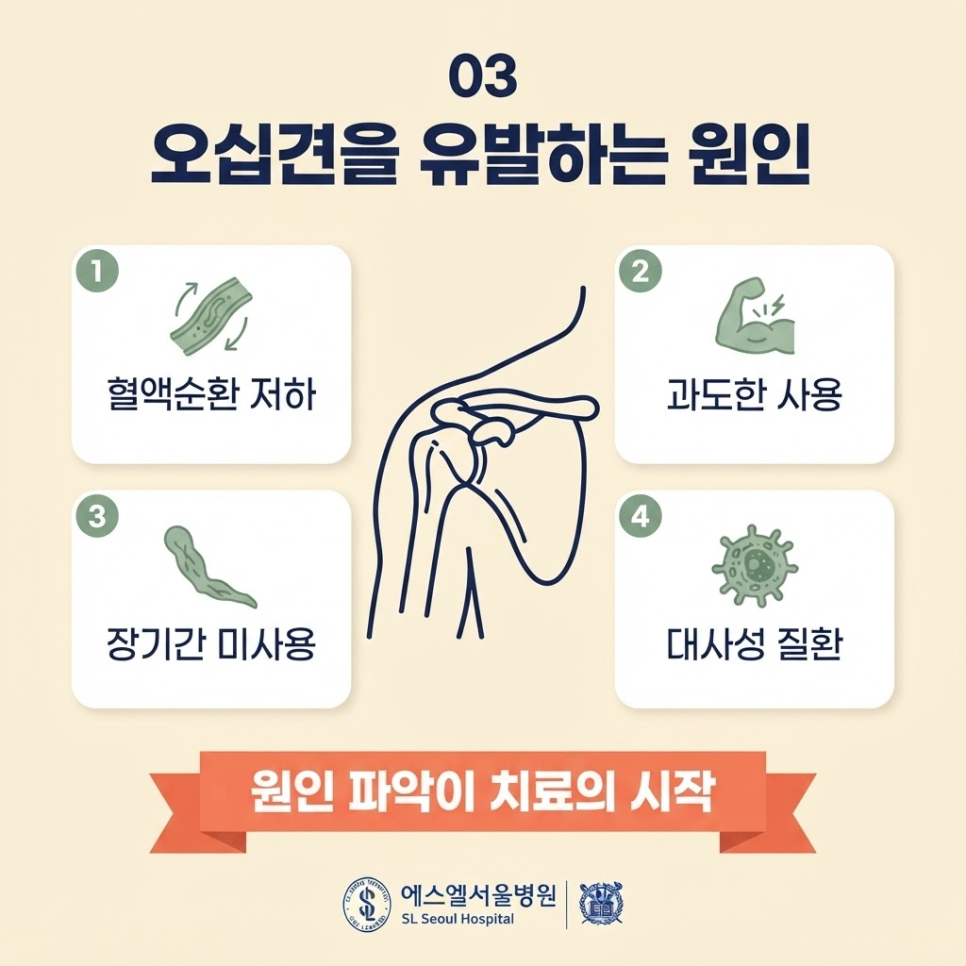
    The main causes of frozen shoulder are reduced blood flow around the joint and an inflammatory response.

    The joint capsule can stiffen from overusing the shoulder — or, just as often, from not moving it enough over a long stretch of time.

    Age-related degenerative changes are also a major factor,
    and some reports suggest that metabolic conditions such as diabetes or thyroid disease can raise the risk of developing frozen shoulder.
    One orthopedic specialist has noted that having diabetes may raise the risk of frozen shoulder by more than fivefold.

    frozen shoulder treatment illustration 7


    How Is Frozen Shoulder Treatment Done?

    Frozen shoulder treatment approaches differ depending on the pain stage.

    During the acute phase, when pain is at its worst, calming the inflammation comes first. Once pain eases into the chronic phase, exercises to loosen the stiffened joint can begin.
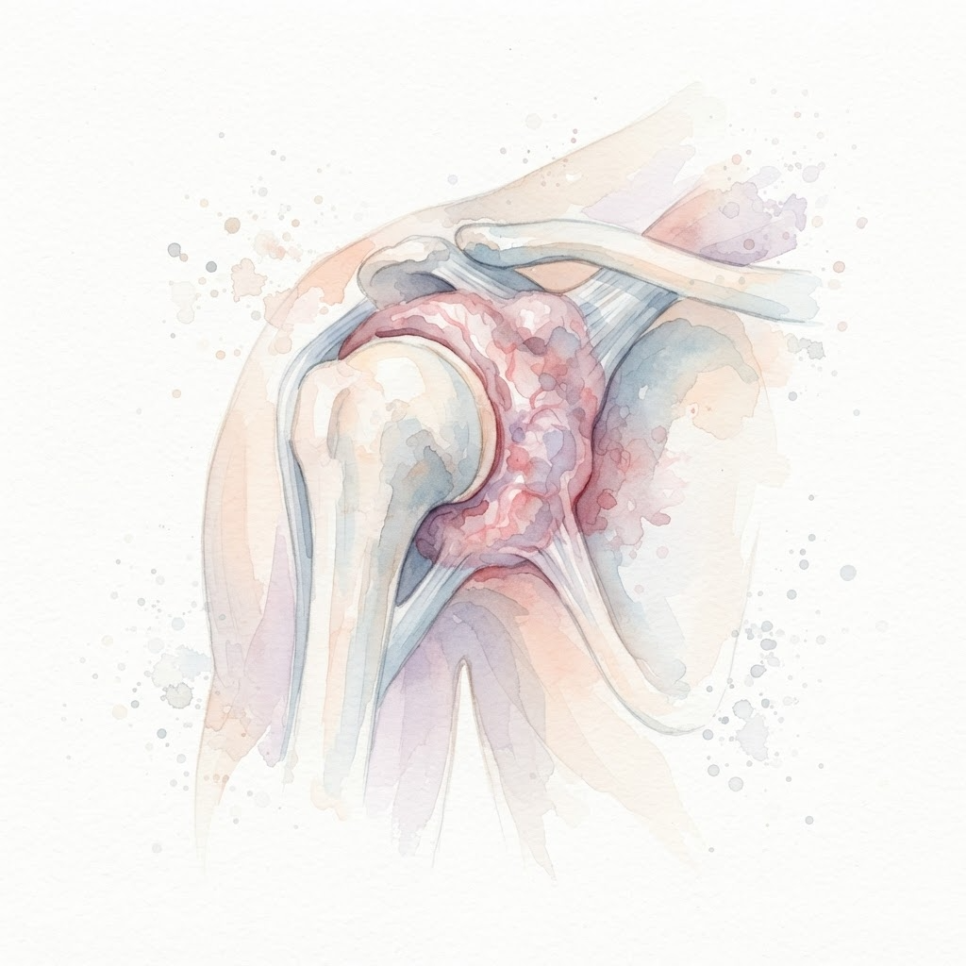
    To pinpoint the correct stage, a doctor will first assess the pain pattern,
    and imaging may be used if needed to check the extent of adhesions inside the joint.
    Treatment typically follows each stage in order, with exercises kept within a comfortable, non-strenuous range.

    frozen shoulder treatment illustration 8

    Caution
    Forcing a stretch past the point of pain can actually make the inflammation worse.
    The general rule is to move gently only up to just before pain begins.
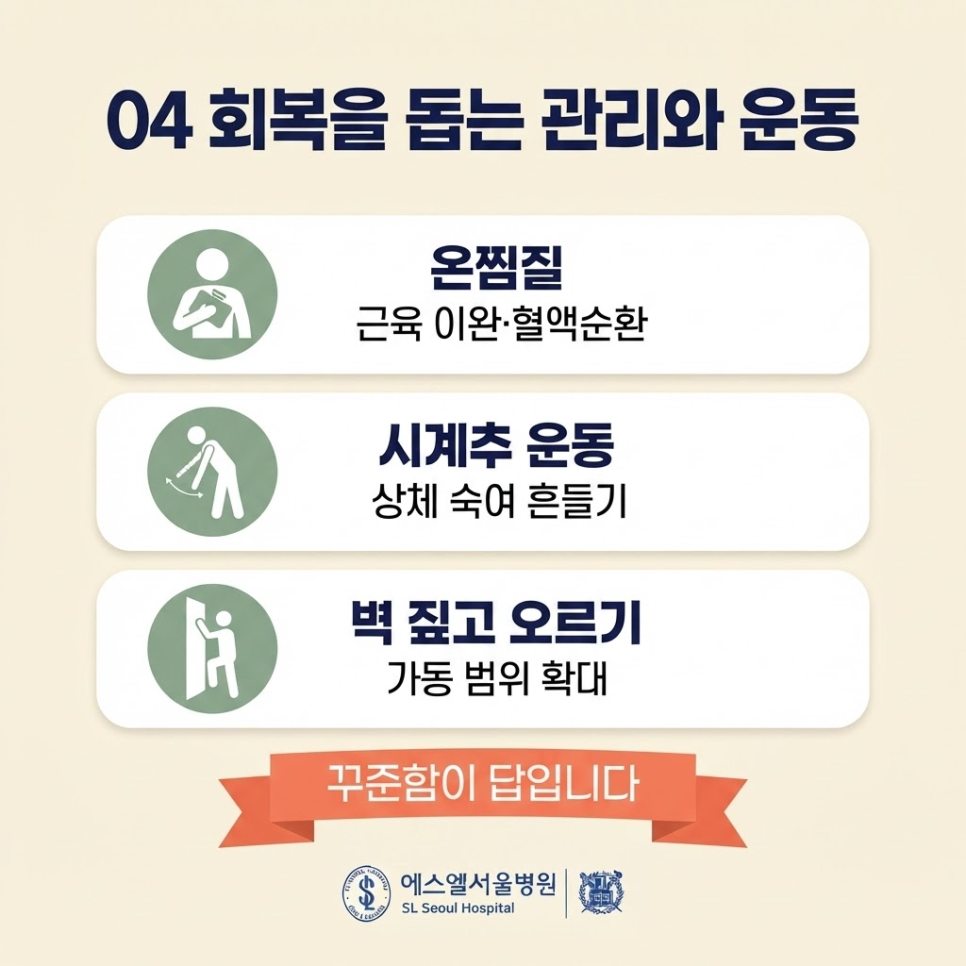
    1. Warm compress: Helps relax muscle tension and supports blood circulation.
    2. Pendulum exercise: Gently hold the affected arm with your unaffected hand, lean your upper body forward, and let the arm swing slowly like a pendulum.
    3. Wall climb (finger walk): Face a wall and slowly walk your fingers upward, gradually increasing your range of motion.
    What to Expect
    With consistent, stage-appropriate management, shoulder range of motion tends to gradually improve over time.
    Recovery speed varies from person to person, though, and can typically take anywhere from several months to one or two years.

    If it’s hard to judge the exact cause and stage on your own,
    we recommend having a specialist evaluate your current condition first.
    You can find related care information on the SLS Seoul Hospital Spine & Joint Center homepage.


    Frequently Asked Questions

    1. Does frozen shoulder go away on its own?
    Some cases do ease with time, but if left untreated, the shoulder can stiffen with reduced function or develop additional pain, so consulting a specialist is recommended.

    2. Is more exercise always better?
    No. Forcing your range of motion past the point of pain can make the inflammation worse. The key is to move within a controlled range and stop just before pain sets in.

    3. How is frozen shoulder treatment carried out at a hospital?
    Since shoulder pain can have many different causes, exercising on your own without an accurate diagnosis can make things worse. It’s safer to have an orthopedic specialist assess the pain pattern — and imaging, if needed — before setting a treatment plan.

    4. Can you tell frozen shoulder and a rotator cuff tear apart at home?
    If your arm still won’t lift all the way even when someone else raises it for you, frozen shoulder is more likely, but imaging is needed for an accurate diagnosis.


    SLS Seoul Hospital supports patients with accurate diagnosis and stage-by-stage management of shoulder pain.

    frozen shoulder treatment illustration 9

    frozen shoulder treatment illustration 10

    frozen shoulder treatment illustration 11

    frozen shoulder treatment illustration 12

    frozen shoulder treatment illustration 13

    frozen shoulder treatment illustration 14


    References

    · Korea Disease Control and Prevention Agency, “Frozen Shoulder (Adhesive Capsulitis),” National Health Information Portal. View source
    · Asan Medical Center Newsroom, “Exercises for Frozen Shoulder Treatment,” Asan Medical Center. View source
    · MediPana, “Frozen Shoulder Linked to Diabetes and Thyroid Disease — Caution Advised for Those 40 and Older,” MediPana News. View source
    · Hankook Ilbo, “Leaving Frozen Shoulder Untreated Can Lead to Chronic Pain — Treatments That Shorten Recovery Time,” Hankook Ilbo, 2025. View source


    This article is intended to provide general health information and is not a substitute for individual diagnosis or treatment.
    If you have symptoms, please consult a specialist.