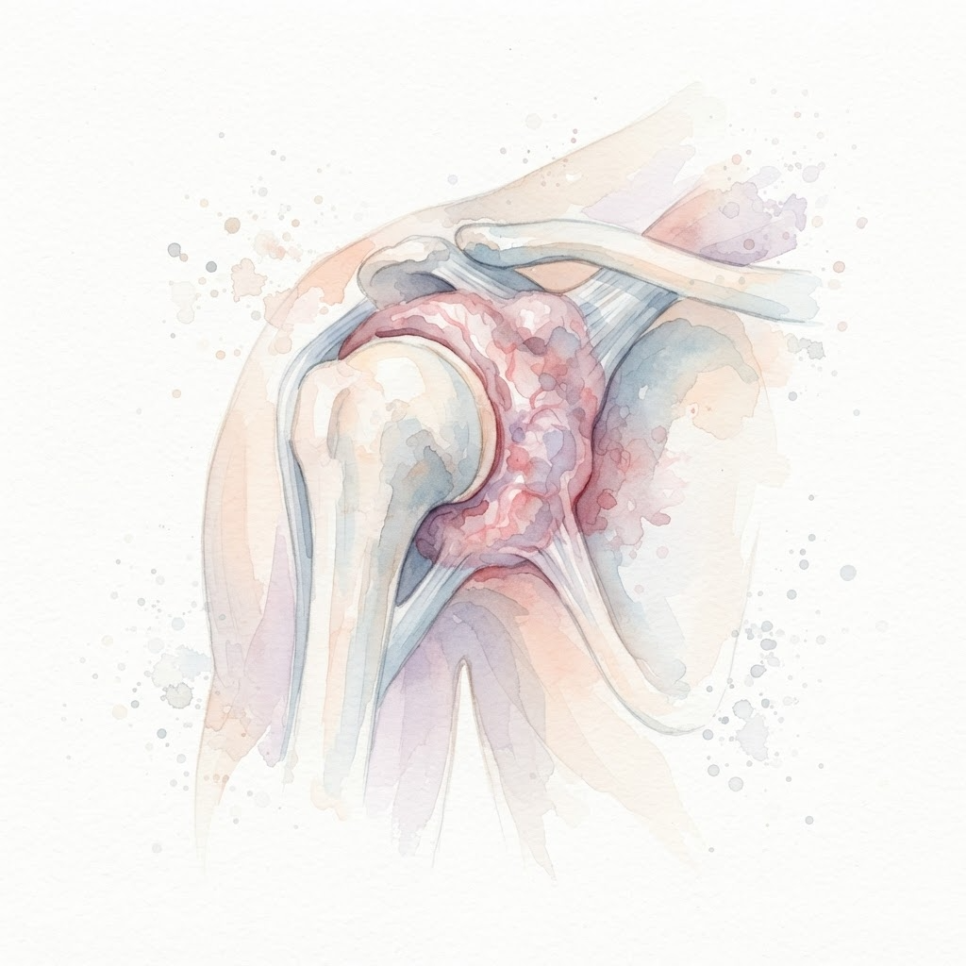
Tag: Shoulder Stretching

  • Shoulder Pain Causes: 5 Warning Signs of Frozen Shoulder or Rotator Cuff Tear

    Shoulder Pain Causes: 5 Warning Signs of Frozen Shoulder or Rotator Cuff Tear

    SummaryShoulder pain causes include frozen shoulder, rotator cuff tears, calcific tendinitis, and more. This guide covers the risks of leaving it untreated, a self-check checklist, non-surgical orthopedic treatments, and national health insurance statistics.

    Have you ever felt a sharp, stabbing pain in your shoulder while changing clothes or reaching overhead?

    It’s easy to brush off as nothing serious,
    but leaving the underlying shoulder pain causes untreated can let it progress into a condition like frozen shoulder or a rotator cuff tear, both of which take far longer to treat.
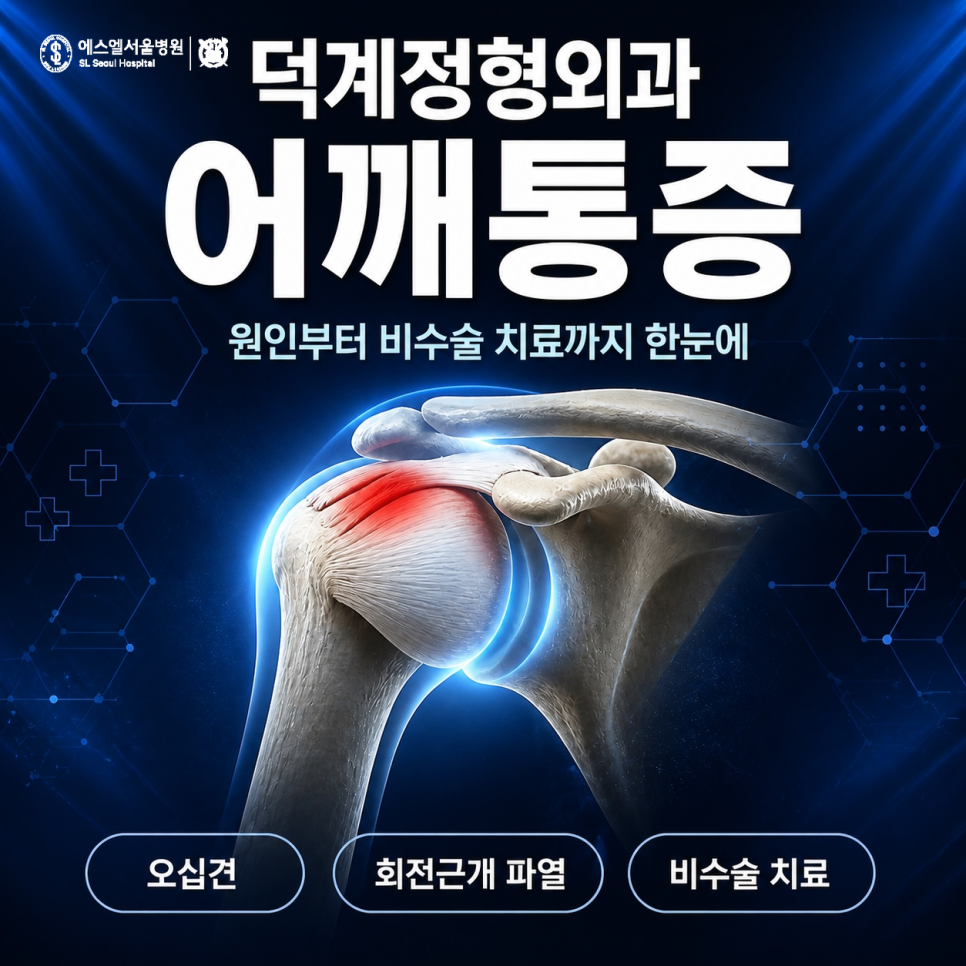
    shoulder pain causes

    Key Takeaways
    Shoulder pain causes generally fall into three categories — frozen shoulder (adhesive capsulitis), rotator cuff tears, and calcific tendinitis — and they tend to show up differently depending on age and daily habits.
    This article walks through a self-check method for telling these causes apart by symptom, the non-surgical treatments orthopedic clinics use, and daily habits that help prevent a recurrence.

    Shoulder Pain Causes: What Are They?
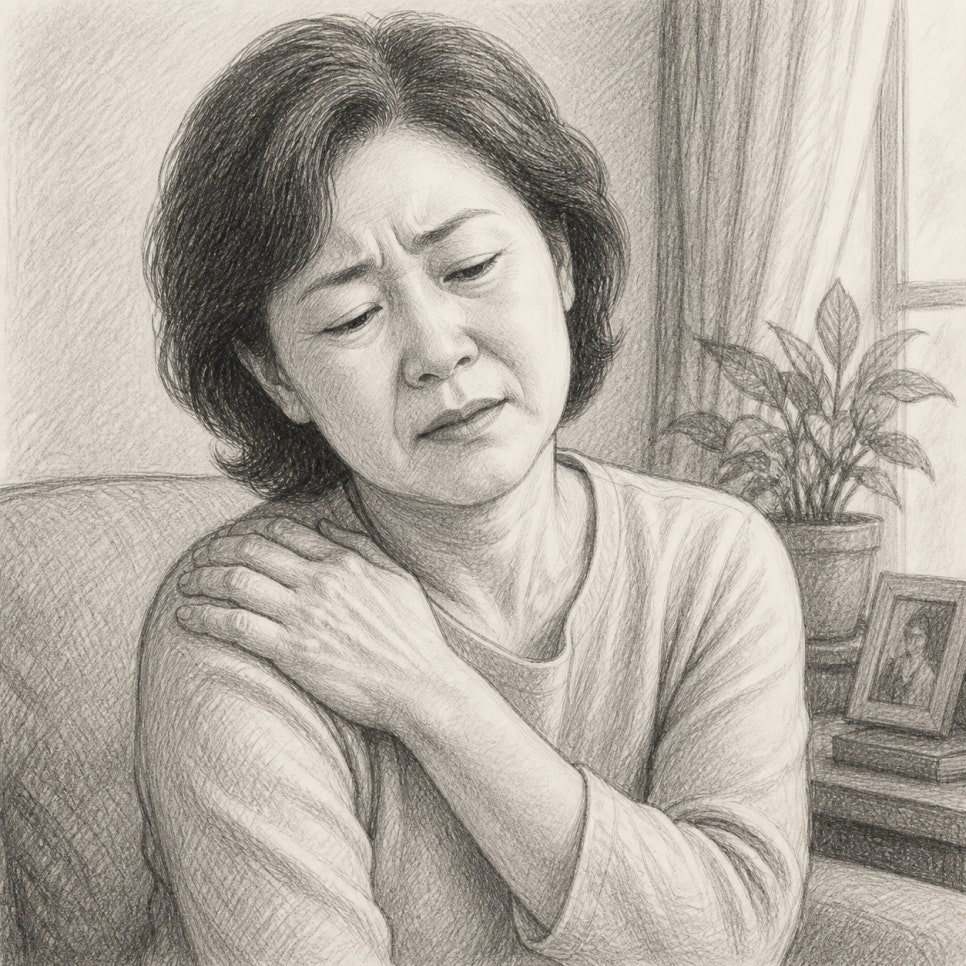
    shoulder pain causes illustration 2

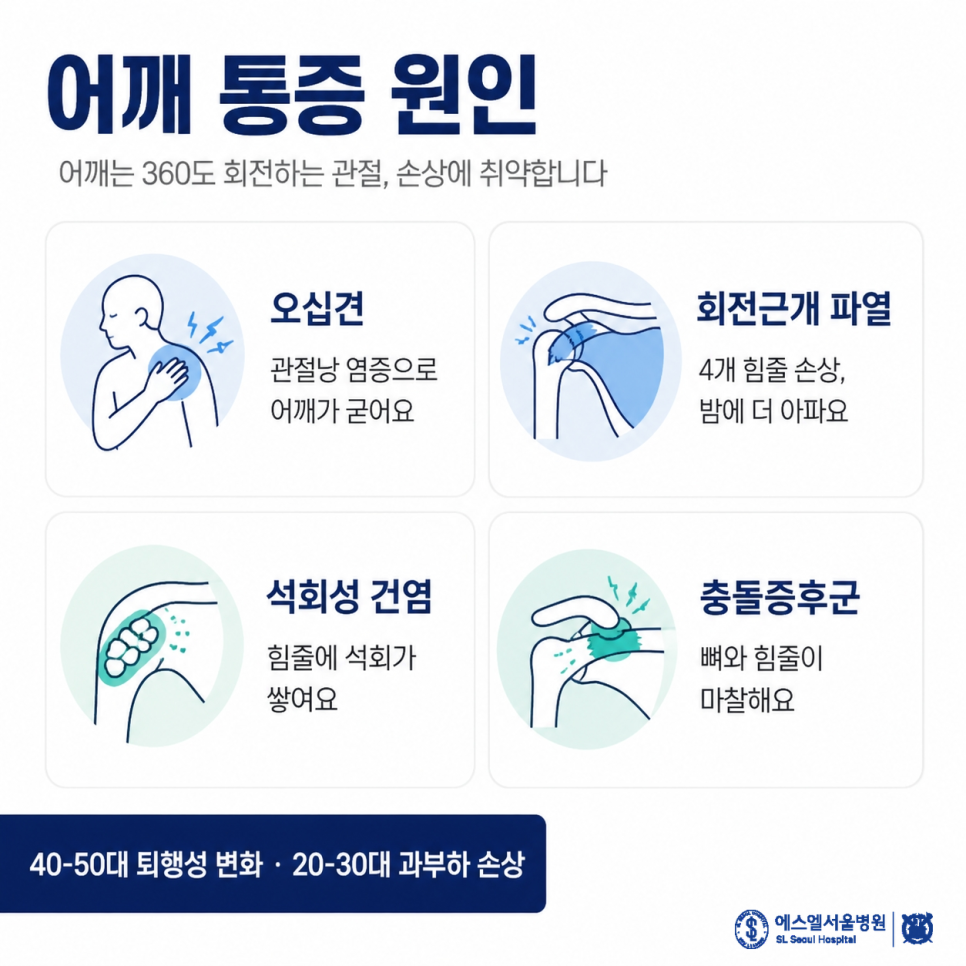
    Shoulder pain causes generally break down into three types: inflammation of the joint capsule, tendon damage, and friction between bone and tendon.

    The shoulder is the only joint in the body that rotates through nearly 360 degrees,
    and that wide range of motion is exactly what makes it so easy to injure.
    shoulder pain causes illustration 3

    The 3 Most Common Causes of Shoulder Pain

    • Frozen shoulder (adhesive capsulitis) — Inflammation of the capsule surrounding the joint causes the shoulder to stiffen up. A defining feature is that the arm won’t lift easily, whether you try to raise it yourself or someone else helps.
    • Rotator cuff tear — One or more of the four tendons that support the shoulder becomes torn or damaged. Pain typically worsens when lifting the arm to a specific angle, and night pain is common.
    • Other conditions — Calcific tendinitis, where calcium deposits build up in the tendon, and impingement syndrome, where bone and tendon rub against each other, are also common causes.
    Key Points
    ✅ Ages 40-50 and up: Frozen shoulder and degenerative changes in the rotator cuff are cited as the leading causes.
    ✅ Ages 20-30: Sports injuries or repetitive shoulder overuse from smartphone and computer use can also be a factor.

    shoulder pain causes illustration 4

    These age-related patterns are general reference information — the actual cause needs to be confirmed with a detailed examination.

    National statistics show that shoulder pain is far from a rare problem.
    According to Korea’s Health Insurance Review and Assessment Service, the number of frozen shoulder patients rose from 731,346 in 2015 to 789,403 in 2019 — a 7.9% increase over five years.
    Over the same period, the increase among male patients was 12.51%, more than double the rate for women (4.93%), and clinic visits peaked in March each year.

    According to the Korea Disease Control and Prevention Agency’s health information portal, frozen shoulder is a common condition affecting about 2% of the general population.


    How Do You Tell Frozen Shoulder Apart From a Rotator Cuff Tear?

    With frozen shoulder, the joint itself is stiff, so it won’t move freely even when someone else lifts your arm for you. With a rotator cuff tear, there’s pain, but the arm can still be raised with assistance — that’s the key difference.

    Both conditions are easy to mistake for simple muscle soreness early on, which is why an accurate diagnosis matters.

    Frozen Shoulder vs. Rotator Cuff Tear

    Category Frozen Shoulder Rotator Cuff Tear
    When someone else lifts your arm Doesn’t lift easily Lifts relatively well
    Pain pattern Stiffness throughout the whole shoulder Concentrated when moving in a specific direction
    Course Most cases improve within 1-2 years Tear can widen if left untreated

    “Frozen shoulder is one of the most common conditions causing chronic shoulder pain and restricted movement, and it resolves on its own in most cases within one to two years.”

    That’s how the Korea Disease Control and Prevention Agency’s health information portal describes frozen shoulder.
    shoulder pain causes illustration 5

    Check These Signs If You Have Shoulder Pain

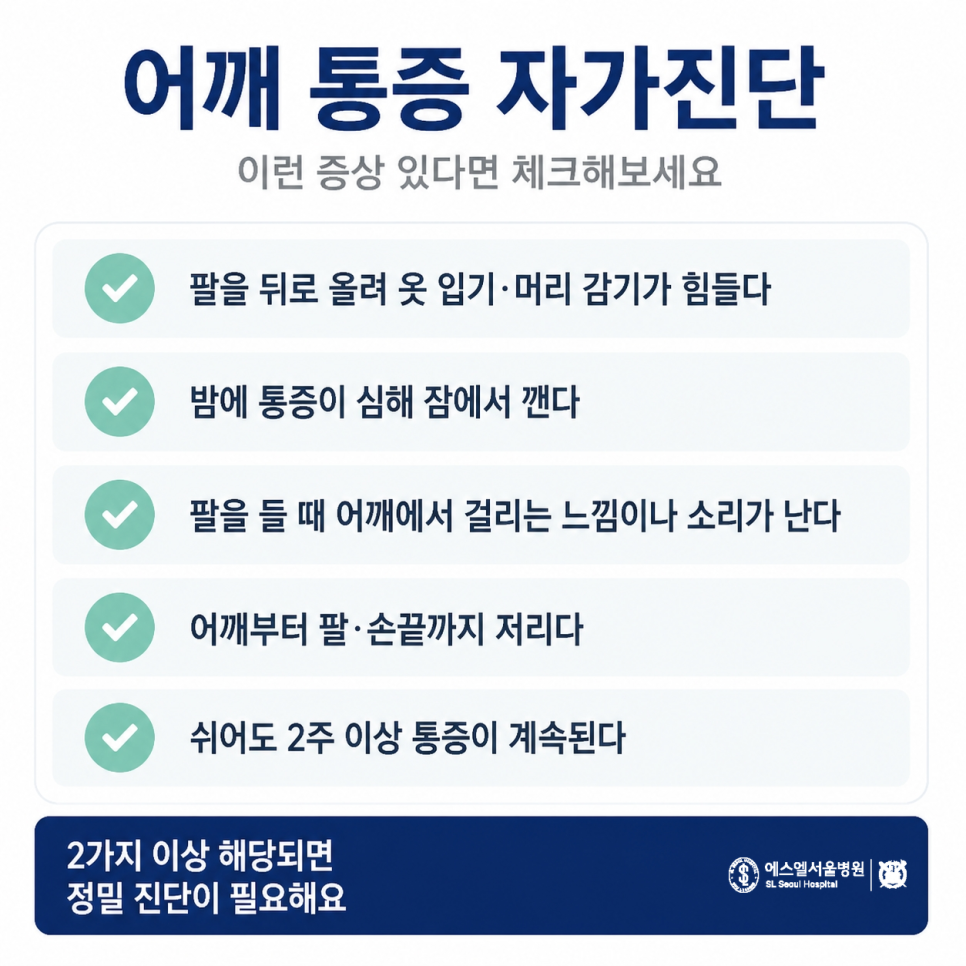
    Self-Check Checklist
    ✅ It’s hard to reach behind your back to get dressed or wash your hair
    ✅ Pain gets worse at night and frequently wakes you up
    ✅ You feel a catching sensation or hear a clicking sound inside the shoulder when raising your arm
    ✅ A tingling or numb feeling spreads from the shoulder down the arm to the fingers
    ✅ The pain continues for more than 2 weeks even with rest
    Important
    If two or more of these apply to you, it may be more than simple fatigue — we recommend getting a thorough evaluation at an orthopedic clinic.

    What Non-Surgical Treatments Do Orthopedic Clinics Use?

    Seeking care early means non-surgical treatment alone may be enough to see improvement.

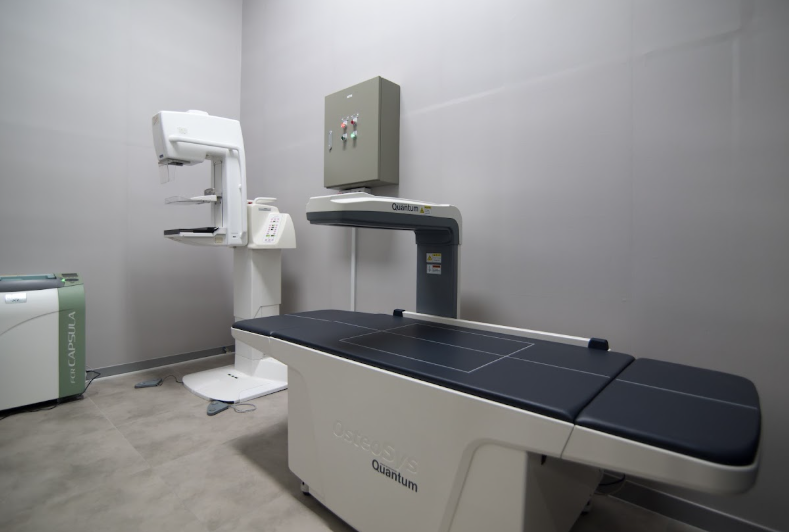
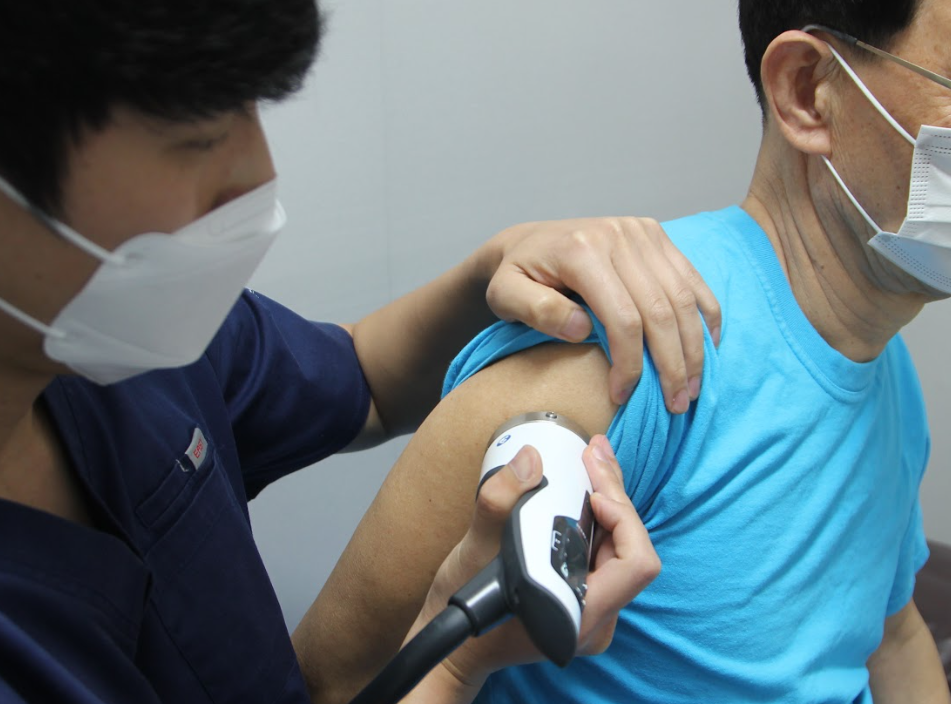
    Orthopedic clinics typically start with an X-ray or ultrasound to assess the condition, then choose a treatment approach based on the symptoms and extent of damage.
    shoulder pain causes illustration 6

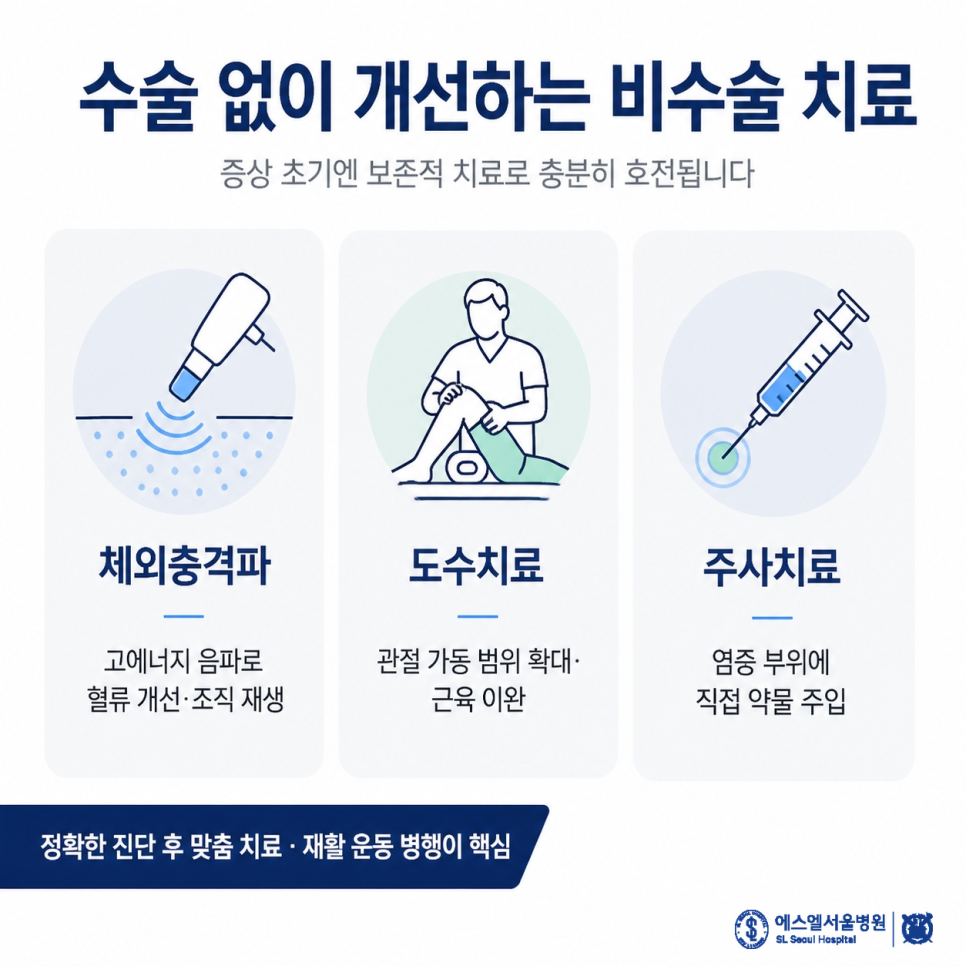
    3 Common Non-Surgical Treatments

    Treatment How It Works
    Extracorporeal Shock Wave Therapy (ESWT) Delivers high-energy sound waves to the painful area to help improve blood flow and encourage tissue repair
    Manual Therapy A physical therapist uses hands-on techniques that may help increase joint range of motion and relieve muscle tension
    Injection Therapy Medication is injected directly into the inflamed area to help reduce pain and support recovery

    shoulder pain causes illustration 7

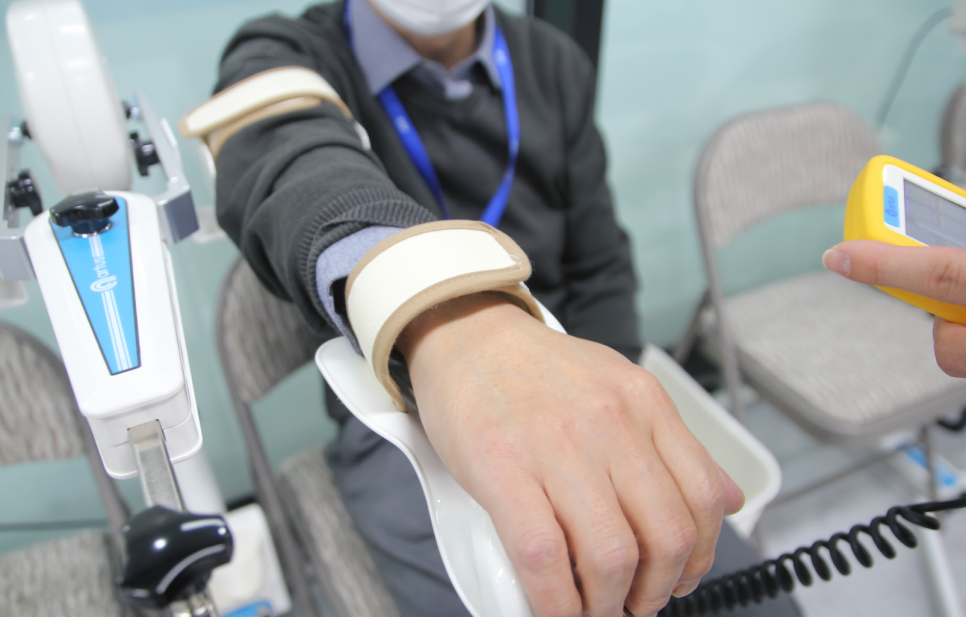
    In orthopedic care, surgery isn’t usually the automatic first recommendation — non-surgical treatment is typically tried first, alongside rehabilitation exercises.

    That said, in cases such as a complete rotator cuff tear, where the tendon isn’t able to heal on its own, a detailed exam is needed first to check how far the damage has progressed.
    shoulder pain causes illustration 8


    How Do You Choose a Good Orthopedic Clinic, and How Should You Manage Your Shoulder Day to Day?

    Shoulder joint treatment calls for a careful, individualized approach, so it’s worth looking at how a clinic is set up rather than choosing one just because it’s nearby.

    shoulder pain causes illustration 9

    Key Points
    ✅ Whether a board-certified orthopedic specialist provides the care directly and has solid clinical experience
    ✅ Whether the clinic has detailed diagnostic equipment and offers one-on-one rehabilitation programs
    ✅ Whether the clinic looks beyond pain relief to address the underlying cause and daily habits

    Aftercare matters just as much as the treatment itself.
    Without it, symptoms can easily come back.
    shoulder pain causes illustration 10

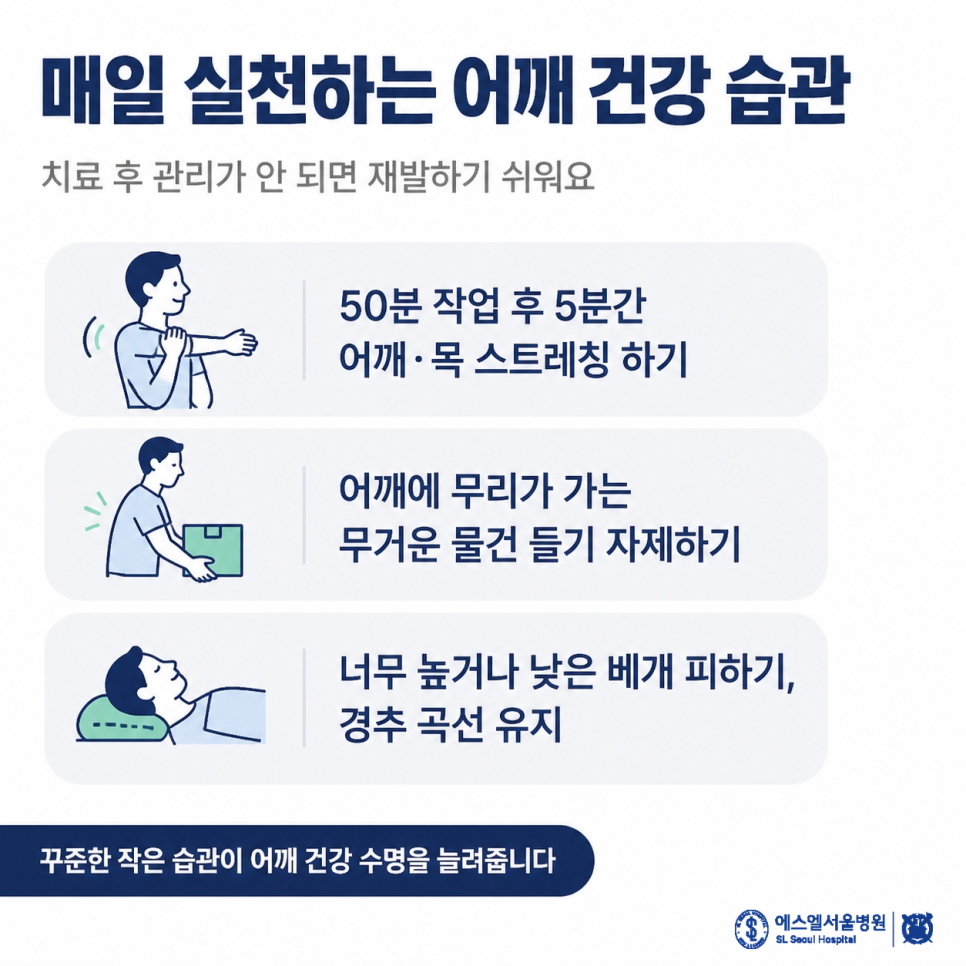
    Daily Habits That Support Shoulder Health

    • After 50 minutes of work, take a 5-minute break to gently stretch your shoulders and neck
    • Avoid lifting heavy objects that strain the shoulder whenever possible
    • Use a pillow that supports the natural curve of your neck instead of one that’s too high or too low

    Keeping up these habits consistently can help maintain your recovery after treatment and lower the risk of recurrence.

    shoulder pain causes illustration 11

    If your discomfort continues and you’re not sure what’s behind your shoulder pain, don’t hesitate to get evaluated by an orthopedic specialist.

    For more information on spine and joint health, visit the SLS Seoul Hospital for Spine & Joints homepage.


    shoulder pain causes illustration 12

    shoulder pain causes illustration 13

    shoulder pain causes illustration 16


    Frequently Asked Questions

    1. Should I just rest completely when my shoulder hurts?
    Rest is important during the acute inflammation phase, but staying still for too long risks stiffening the joint. It’s best to combine rest with gentle stretching, within a range that doesn’t aggravate the pain.

    2. Does rotator cuff damage heal on its own?
    With a partial tear or simple inflammation, conservative treatment can bring noticeable improvement, but a completely torn tendon is unlikely to reattach on its own. A detailed exam is needed to check how far it has progressed.

    3. Is extracorporeal shock wave therapy very painful?
    You may feel some mild soreness or discomfort as the shock wave energy is delivered. The intensity can be adjusted during treatment, so just discuss it with your therapist.

    4. How can you tell frozen shoulder apart from a rotator cuff tear?
    With frozen shoulder, the joint itself is often so stiff that the arm won’t lift even with someone else’s help. With a rotator cuff tear, there’s pain, but the arm can still be raised with assistance.


    References

    · Korea Disease Control and Prevention Agency, National Health Information Portal, “Frozen Shoulder (Adhesive Capsulitis).” View source
    · Newsis, “Frozen Shoulder No Longer Just a Condition for Women in Their 50s,” 2020. (Citing Health Insurance Review and Assessment Service data) View source
    · Korean Orthopaedic Association, “Rotator Cuff Tear.” View source
    · NCBI PMC, “Health Care Utilization for Common Shoulder Disorders: Analysis of the 2010–2019 National Patient Sample Data from the Health Insurance Review and Assessment Service in Korea,” 2024. View source


    This article is intended for general health information purposes only and is not a substitute for individual diagnosis or treatment. If you have symptoms, please consult a specialist.


  • Shoulder Pain When Lifting Your Arm: 3 Causes and Stretches That Help

    Shoulder Pain When Lifting Your Arm: 3 Causes and Stretches That Help

    SummaryIf shoulder pain when lifting your arm keeps coming back, it may not be simple fatigue — it could be shoulder impingement syndrome, frozen shoulder, or a rotator cuff tear. Getting the right diagnosis comes first. Here’s how to tell the causes apart, a self-check list, and towel stretches you can try at home.

    You’ve probably felt it before — a sudden jolt of pain in your shoulder while reaching up to grab something off a shelf.

    Shoulder pain when lifting your arm, which you may have brushed off as simple muscle fatigue, can end up throbbing at night and keeping you awake.

    If you’ve been putting off a doctor’s visit, it’s worth pinpointing the exact cause first.

    How you manage this pain depends entirely on what’s causing it.
    Below, we break down the differences between the three most common causes — shoulder impingement syndrome, frozen shoulder, and rotator cuff tear — and walk through shoulder stretches you can do at home.

    shoulder pain when lifting arm

    Is Shoulder Impingement Syndrome Causing Shoulder Pain When Lifting Your Arm?

    Yes — if pain repeatedly occurs at a specific angle when you raise your arm, shoulder impingement syndrome is a likely cause.

    Shoulder impingement syndrome occurs when the rotator cuff tendons become repeatedly pinched in the narrow space beneath the acromion bone, causing inflammation.

    A hallmark sign is a pinching sensation or pain when raising your arm through the 60-to-120-degree range.

    Pain is often milder during the day, when gravity works in your favor, but tends to worsen at night.

    Overusing the shoulder or holding poor posture for long periods can raise the risk of developing it.

    shoulder pain when lifting arm - image 2

    Without proper early care, it can progress to tendon damage — in other words, a rotator cuff tear — so caution is warranted.

    shoulder pain when lifting arm - image 3

    Sleeping on your stomach or lying with the painful shoulder facing down can easily make symptoms worse.
    It’s best to sleep with the affected shoulder facing up whenever possible.

    💡 Key Point
    When you feel pain, avoid forcing your arm upward and prioritize adequate rest first.
    If the pain persists for more than two weeks even after rest, it’s best to see a specialist.

    How Do You Tell Frozen Shoulder and a Rotator Cuff Tear Apart?

    The easiest way to tell them apart is to check whether your arm can be raised when someone else lifts it for you.

    Frozen shoulder (adhesive capsulitis) occurs when the joint capsule tightens and becomes inflamed, causing the entire shoulder joint to stiffen.

    shoulder pain when lifting arm - image 4

    A rotator cuff tear, by contrast, occurs when the tendons that move the shoulder are themselves damaged.

    The two conditions can look similar, but they show a clear difference in passive range of motion.

    shoulder pain when lifting arm - image 5

    Category Frozen Shoulder (Adhesive Capsulitis) Rotator Cuff Tear
    Passive Motion Arm doesn’t lift well even when someone else raises it Arm lifts fine when someone else raises it
    Pain Location Overall shoulder pain and stiffness Localized pain and muscle weakness
    Key Symptom Restricted range of motion in every direction Arm may suddenly drop due to weakness when lifting

    shoulder pain when lifting arm - image 6

    📋 Shoulder Pain Self-Check List
    ✅ You have trouble putting on clothes by reaching behind your back
    ✅ Shoulder pain worsens at night and disrupts your sleep
    ✅ You hear a click or feel catching in your shoulder when raising your arm
    ✅ Pain occurs only at certain angles and eases once your arm is fully raised
    ✅ Your arm has gone weak enough to drop something you were holding
    💡 Key Point
    Frozen shoulder sometimes improves gradually on its own over time, but a rotator cuff tear can widen the longer it goes untreated, so early diagnosis matters.

    What Stretches Help Relieve Shoulder Pain?

    Doing gentle towel stretches consistently, within a pain-free range, can help restore your shoulder’s range of motion.

    Restoring shoulder range of motion refers to gradually loosening the muscles and ligaments around a stiffened joint to regain movement.

    shoulder pain when lifting arm - image 7

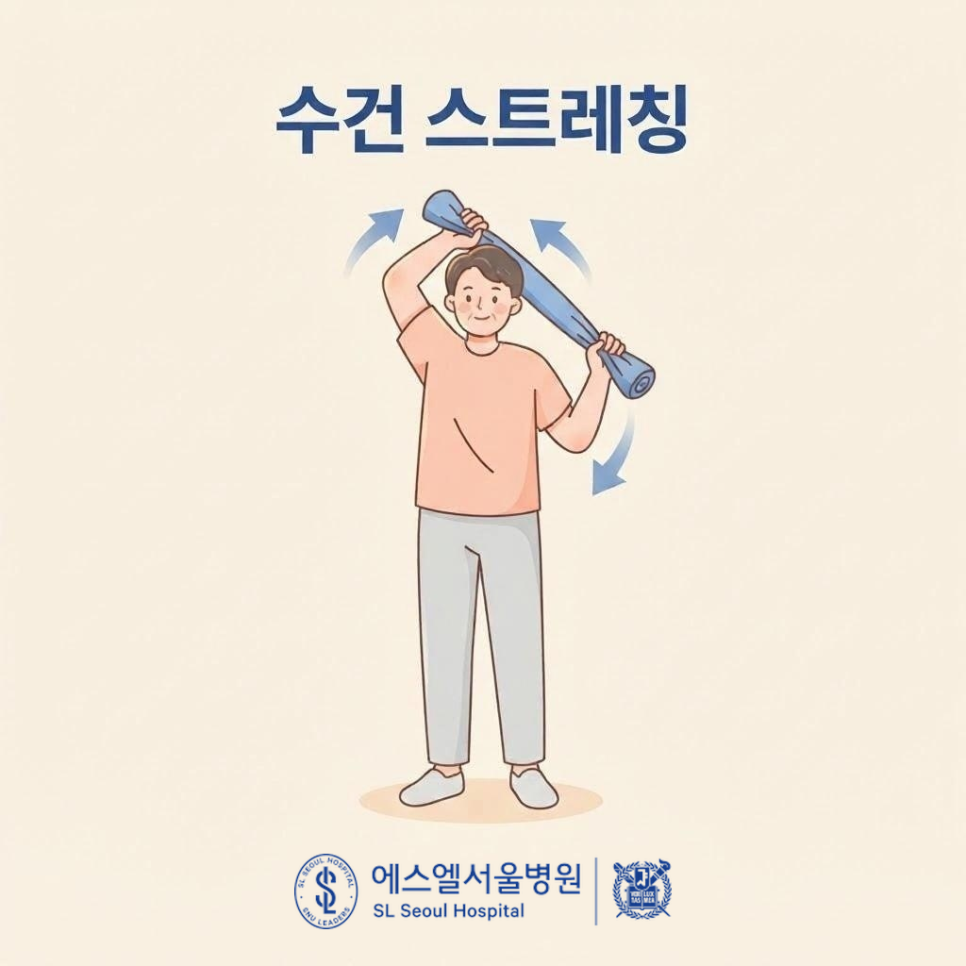
    Here’s a simple towel stretch you can try at home:

    1. Hold each end of a towel with your hands.
    2. Slowly raise your arms as far as you can without pain.
    3. Hold for 2 to 3 seconds, then lower slowly.
    4. Repeat about 10 times per session, 2 to 3 times a day.

    shoulder pain when lifting arm - image 8

    🚀 A Note on Stretching Safely
    Forcing the stretch with bouncing movements while in significant pain can make symptoms worse.
    If the pain lasts more than two weeks or disrupts your sleep at night, we recommend getting an accurate diagnosis at Spine & Joint SL Seoul Hospital.

    Frequently Asked Questions

    1. Is heat or ice better for shoulder pain?
    For acute pain or right after an injury, ice may help reduce inflammation and swelling. For chronic stiffness like frozen shoulder, heat can help by improving blood circulation.

    2. Can I keep exercising if my shoulder hurts?
    You should avoid heavy movements that trigger pain. It’s best to stick to light mobility exercises and stretches that stay within a pain-free range.

    3. What happens if shoulder pain is left untreated?
    Avoiding movement because of the pain can cause the joint to stiffen further and lose range of motion. It’s important to identify the exact cause and address it early.

    4. Can shoulder impingement syndrome heal on its own?
    In early stages, rest and stretching can sometimes lead to improvement, but if symptoms keep recurring or worsening, it may progress to rotator cuff damage — professional evaluation is needed.

    shoulder pain when lifting arm - image 9


    References

    · Myongji Hospital Sports Medicine Center, “Frozen Shoulder and Rotator Cuff Tear,” Myongji Hospital. View source
    · Barunsesang Hospital, “Shoulder Impingement Syndrome: Symptoms, Causes, and Treatment,” Barunsesang Hospital. View source
    · St. Luke’s Hospital, “Heat or Ice for Shoulder Stiffness and Pain?,” St. Luke’s Hospital. View source

    This article is intended for general health information purposes only and is not a substitute for individual diagnosis or treatment. If you’re experiencing symptoms, please consult a medical professional.

  • Frozen Shoulder Treatment: 3 Exercises Plus a Symptom Checklist

    Frozen Shoulder Treatment: 3 Exercises Plus a Symptom Checklist

    SummaryIf you’re wondering about frozen shoulder treatment, here’s what to know. This guide covers a self-check symptom checklist, how frozen shoulder differs from a rotator cuff tear, causes such as diabetes and thyroid disease, and stage-by-stage frozen shoulder treatment exercises for the acute and chronic phases. We’ll also cover when it’s time to see a specialist.

    Have you ever reached up to wash your hair,
    only to feel your arm lock up in pain?

    If one shoulder has grown stiff for no clear reason — no fall, no bump —
    and the pain keeps you up at night, it may be more than simple muscle fatigue.

    In that case, it’s worth considering frozen shoulder, a condition caused by inflammation of the joint capsule,
    since the symptoms can easily be confused with a rotator cuff tear or shoulder impingement syndrome.

    frozen shoulder treatment

    Before getting into frozen shoulder treatment options,
    it helps to start with a self-check checklist to assess your own shoulder.

    frozen shoulder treatment illustration 2

    For anyone weighing frozen shoulder treatment, this article lays out
    how to tell the symptoms apart, what causes the condition, and
    stage-by-stage management and exercises for the acute and chronic phases, in order.

    Read on to see how inflammation in the joint capsule tends to progress,
    and which exercises you can safely try at home.

    frozen shoulder treatment illustration 3

    What Exactly Is Frozen Shoulder?

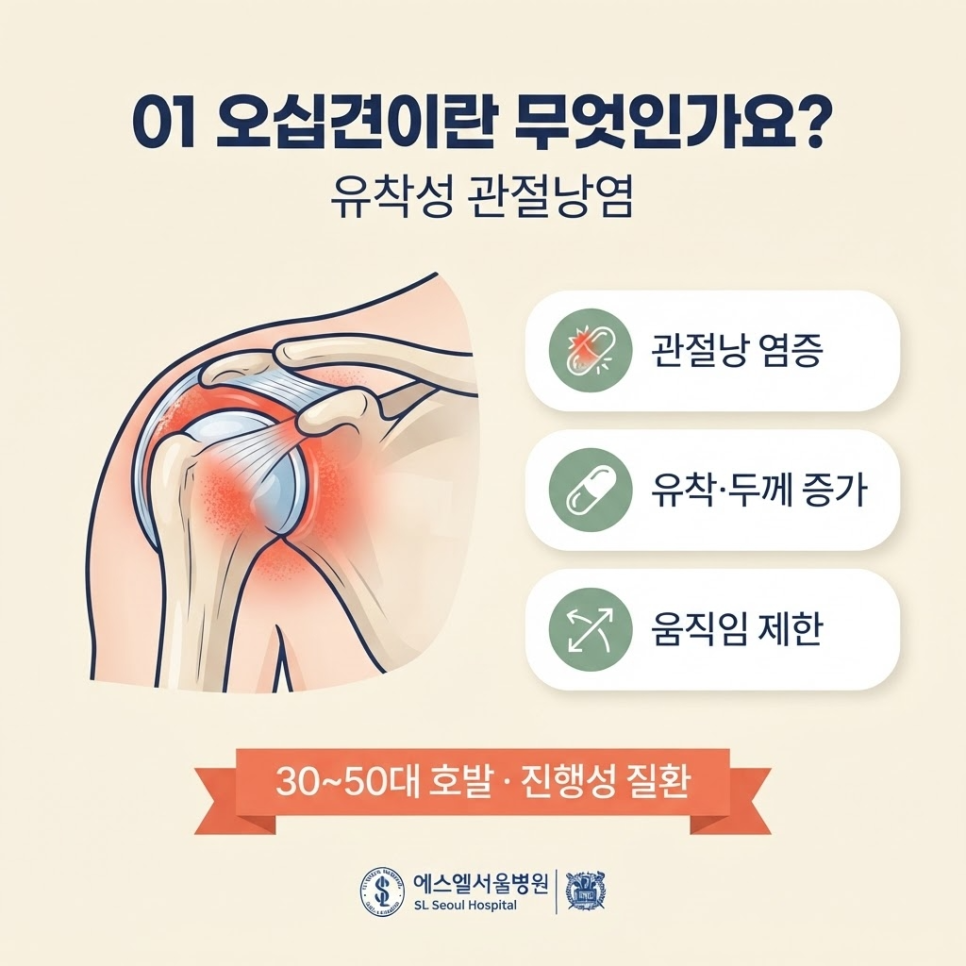
    Frozen shoulder is a condition in which the joint capsule surrounding the shoulder becomes inflamed, thickens, and stiffens.

    Frozen shoulder, medically known as adhesive capsulitis, occurs when inflammation in the joint capsule limits both active and passive shoulder movement.

    According to Korea’s National Health Information Portal, frozen shoulder affects roughly 2% of the general population, making it a fairly common shoulder condition.
    It typically develops after age 50 without any specific injury.
    That said, younger adults who spend long hours on computers and smartphones can also report shoulder pain,
    so it’s worth paying attention to symptoms regardless of age.

    frozen shoulder treatment illustration 4

    Key Point
    The longer frozen shoulder goes untreated, the more the joint capsule can thicken and stiffen,
    and this progressive condition may eventually make it hard to raise your arm on your own.
    Starting frozen shoulder treatment early, as soon as symptoms appear, tends to support a smoother recovery.

    frozen shoulder treatment illustration 5


    What Are the Symptoms, and How Is It Different From Other Shoulder Conditions?

    Not all shoulder pain is frozen shoulder.

    Rotator cuff tears and shoulder impingement syndrome can cause similar pain,
    so an accurate diagnosis matters.

    The key difference: with frozen shoulder, the arm still won’t lift all the way even when someone else raises it for you.
    With a rotator cuff tear, the arm can often move further when someone assists.

    Category Frozen Shoulder Rotator Cuff Tear
    When someone else lifts the arm Doesn’t lift all the way Lifts partway
    Pain pattern Restricted motion in every direction Weakness in specific directions
    Night pain Common May also occur
    Symptom Checklist
    ✅ Difficulty lifting your arm overhead or rotating it behind your back
    ✅ Pain when getting dressed or washing your hair
    ✅ Pain that radiates from the shoulder down to the elbow
    ✅ Trouble sleeping when lying on the affected side
    ✅ Your arm still won’t lift all the way even when a family member or someone else raises it for you

    frozen shoulder treatment illustration 6


    What Causes Frozen Shoulder?

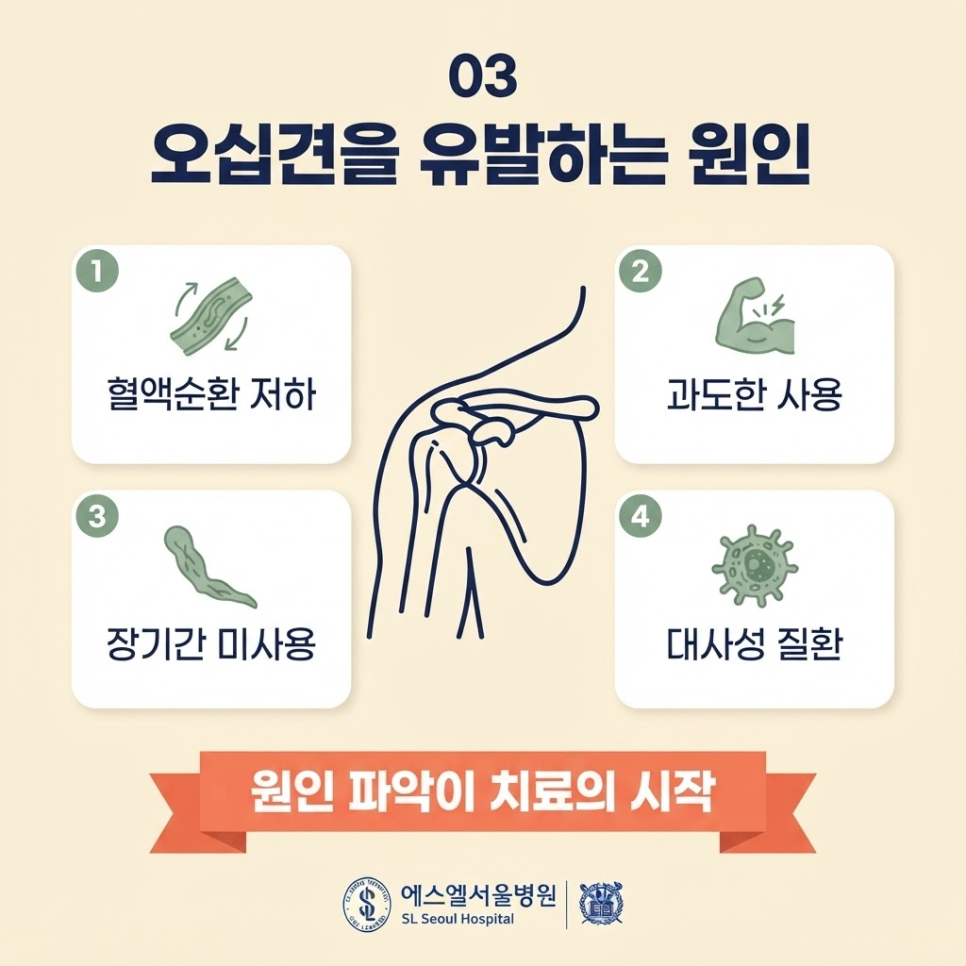
    The main causes of frozen shoulder are reduced blood flow around the joint and an inflammatory response.

    The joint capsule can stiffen from overusing the shoulder — or, just as often, from not moving it enough over a long stretch of time.

    Age-related degenerative changes are also a major factor,
    and some reports suggest that metabolic conditions such as diabetes or thyroid disease can raise the risk of developing frozen shoulder.
    One orthopedic specialist has noted that having diabetes may raise the risk of frozen shoulder by more than fivefold.

    frozen shoulder treatment illustration 7


    How Is Frozen Shoulder Treatment Done?

    Frozen shoulder treatment approaches differ depending on the pain stage.

    During the acute phase, when pain is at its worst, calming the inflammation comes first. Once pain eases into the chronic phase, exercises to loosen the stiffened joint can begin.

    To pinpoint the correct stage, a doctor will first assess the pain pattern,
    and imaging may be used if needed to check the extent of adhesions inside the joint.
    Treatment typically follows each stage in order, with exercises kept within a comfortable, non-strenuous range.

    frozen shoulder treatment illustration 8

    Caution
    Forcing a stretch past the point of pain can actually make the inflammation worse.
    The general rule is to move gently only up to just before pain begins.
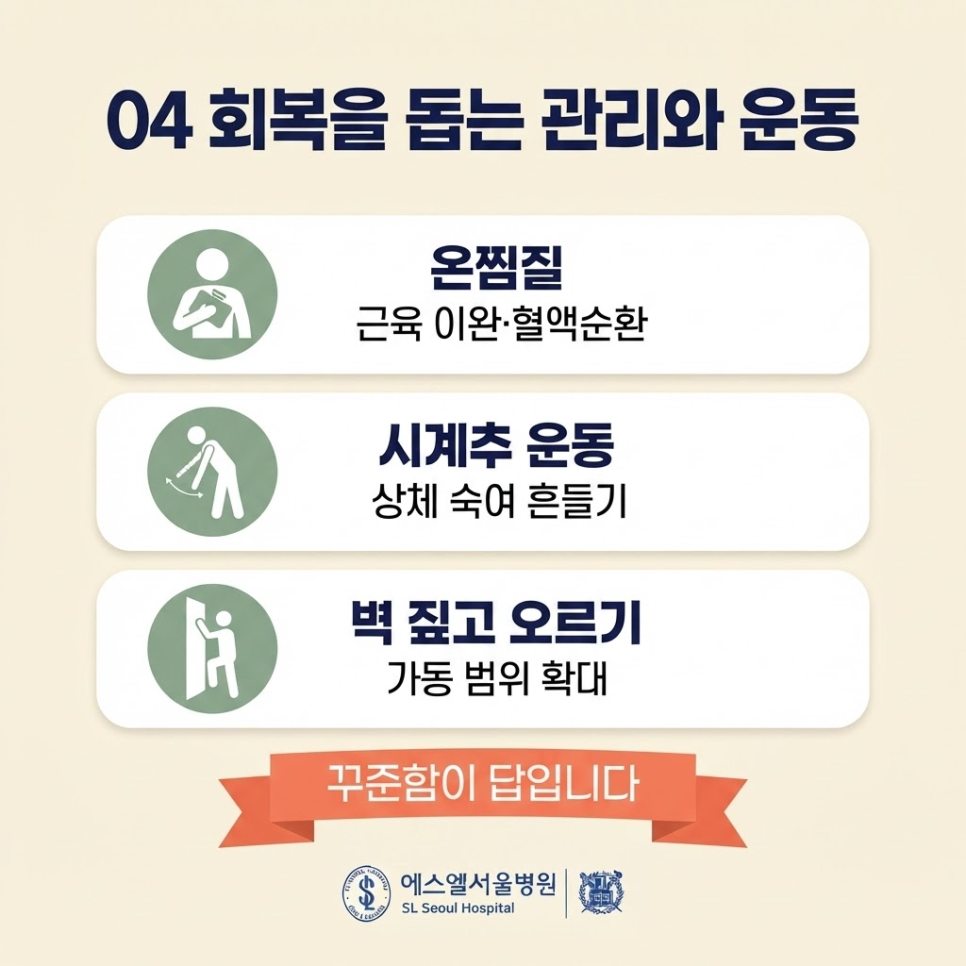
    1. Warm compress: Helps relax muscle tension and supports blood circulation.
    2. Pendulum exercise: Gently hold the affected arm with your unaffected hand, lean your upper body forward, and let the arm swing slowly like a pendulum.
    3. Wall climb (finger walk): Face a wall and slowly walk your fingers upward, gradually increasing your range of motion.
    What to Expect
    With consistent, stage-appropriate management, shoulder range of motion tends to gradually improve over time.
    Recovery speed varies from person to person, though, and can typically take anywhere from several months to one or two years.

    If it’s hard to judge the exact cause and stage on your own,
    we recommend having a specialist evaluate your current condition first.
    You can find related care information on the SLS Seoul Hospital Spine & Joint Center homepage.


    Frequently Asked Questions

    1. Does frozen shoulder go away on its own?
    Some cases do ease with time, but if left untreated, the shoulder can stiffen with reduced function or develop additional pain, so consulting a specialist is recommended.

    2. Is more exercise always better?
    No. Forcing your range of motion past the point of pain can make the inflammation worse. The key is to move within a controlled range and stop just before pain sets in.

    3. How is frozen shoulder treatment carried out at a hospital?
    Since shoulder pain can have many different causes, exercising on your own without an accurate diagnosis can make things worse. It’s safer to have an orthopedic specialist assess the pain pattern — and imaging, if needed — before setting a treatment plan.

    4. Can you tell frozen shoulder and a rotator cuff tear apart at home?
    If your arm still won’t lift all the way even when someone else raises it for you, frozen shoulder is more likely, but imaging is needed for an accurate diagnosis.


    SLS Seoul Hospital supports patients with accurate diagnosis and stage-by-stage management of shoulder pain.

    frozen shoulder treatment illustration 9

    frozen shoulder treatment illustration 10

    frozen shoulder treatment illustration 11

    frozen shoulder treatment illustration 12

    frozen shoulder treatment illustration 13

    frozen shoulder treatment illustration 14


    References

    · Korea Disease Control and Prevention Agency, “Frozen Shoulder (Adhesive Capsulitis),” National Health Information Portal. View source
    · Asan Medical Center Newsroom, “Exercises for Frozen Shoulder Treatment,” Asan Medical Center. View source
    · MediPana, “Frozen Shoulder Linked to Diabetes and Thyroid Disease — Caution Advised for Those 40 and Older,” MediPana News. View source
    · Hankook Ilbo, “Leaving Frozen Shoulder Untreated Can Lead to Chronic Pain — Treatments That Shorten Recovery Time,” Hankook Ilbo, 2025. View source


    This article is intended to provide general health information and is not a substitute for individual diagnosis or treatment.
    If you have symptoms, please consult a specialist.