Tag: Posture Correction

  • Orthopedic Clinic for Manual Therapy: 3 Criteria for Choosing the Right One

    Orthopedic Clinic for Manual Therapy: 3 Criteria for Choosing the Right One

    SummaryBefore choosing an orthopedic clinic for manual therapy, here’s a rundown of why musculoskeletal pain develops, how it’s diagnosed, how manual therapy differs from regular massage, typical costs, and proper posture habits.

    If neck and shoulder pain doesn’t ease up no matter how much you rest,
    it may not be simple muscle soreness.

    Before looking for an orthopedic clinic for manual therapy,
    it helps to understand the real reason the pain keeps coming back.

    Key Takeaways
    The main driver of chronic pain is often structural imbalance in the spine and joints along with reduced mobility.
    After an accurate diagnostic workup, combining individualized manual therapy with posture correction may help with pain relief and improved body alignment.
    This article covers, in order, what causes the pain, how to choose an orthopedic clinic for manual therapy, and proper posture habits.
    orthopedic clinic for manual therapy

    Why Does Musculoskeletal Pain Happen, and How Is It Diagnosed?

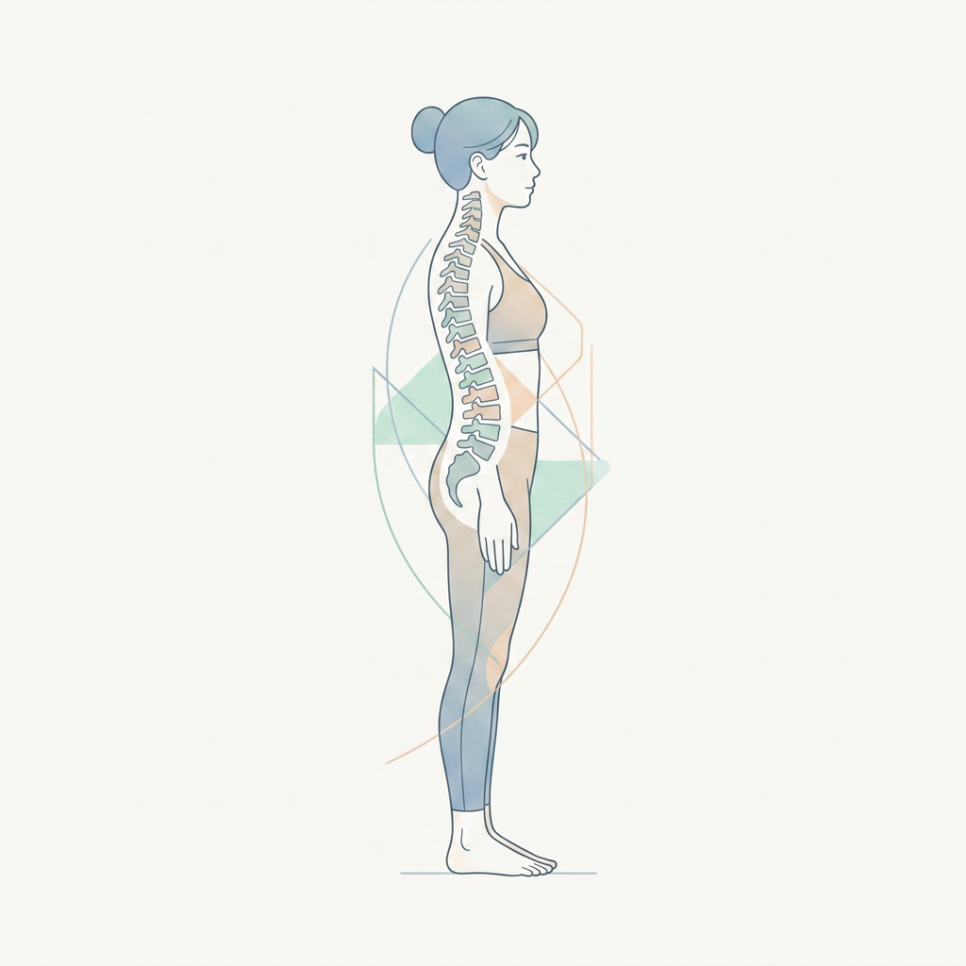
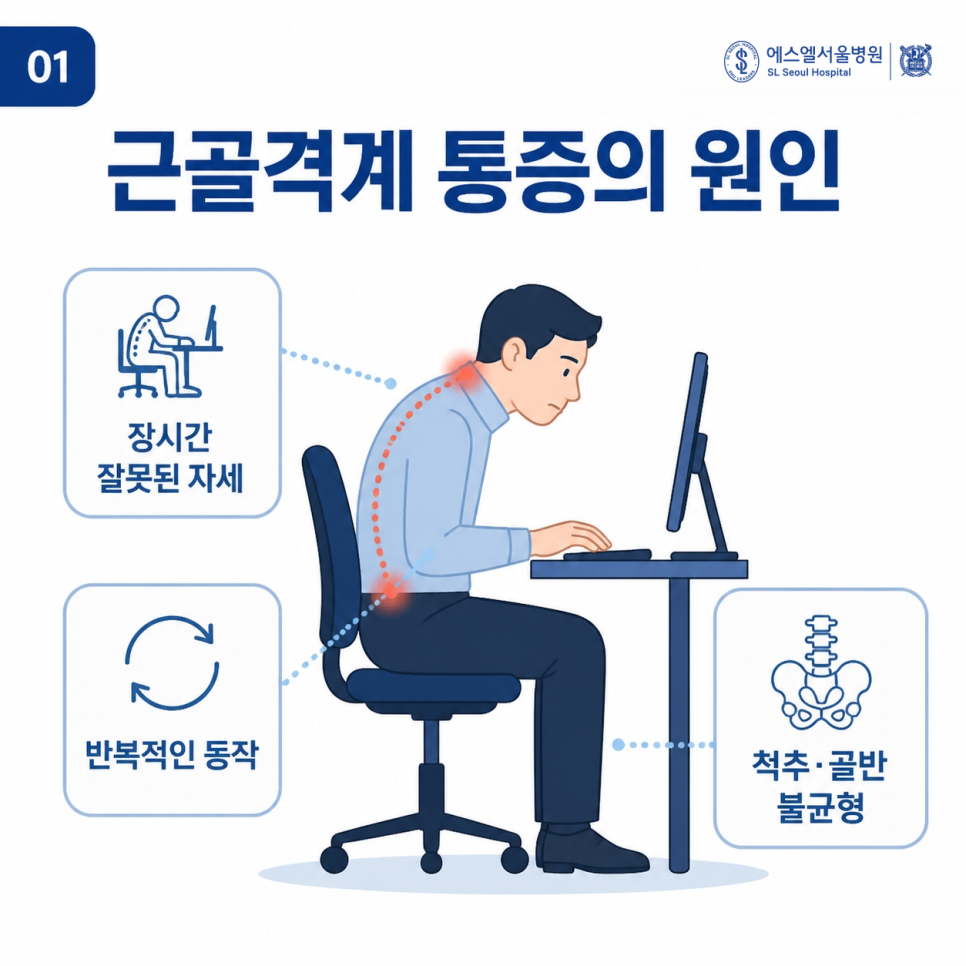
    Musculoskeletal pain refers to pain and functional impairment that develops when the spine, joints, muscles, and tendons are subjected to repeated strain over time.
    It commonly shows up after sitting in the same position for long stretches or repeating the same movements.

    It often starts as mild stiffness that’s easy to brush off.
    But
    left unaddressed, it can gradually worsen into structural imbalance in the spine and joints.
    orthopedic clinic for manual therapy illustration 2

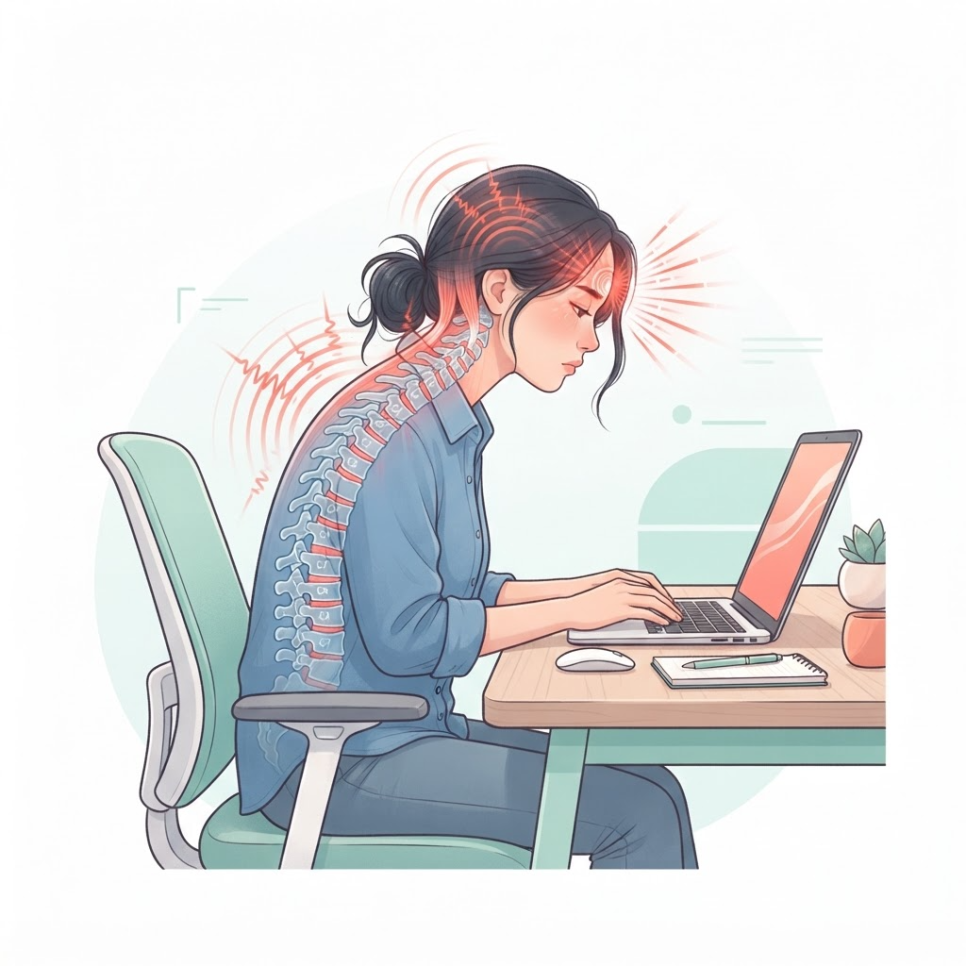
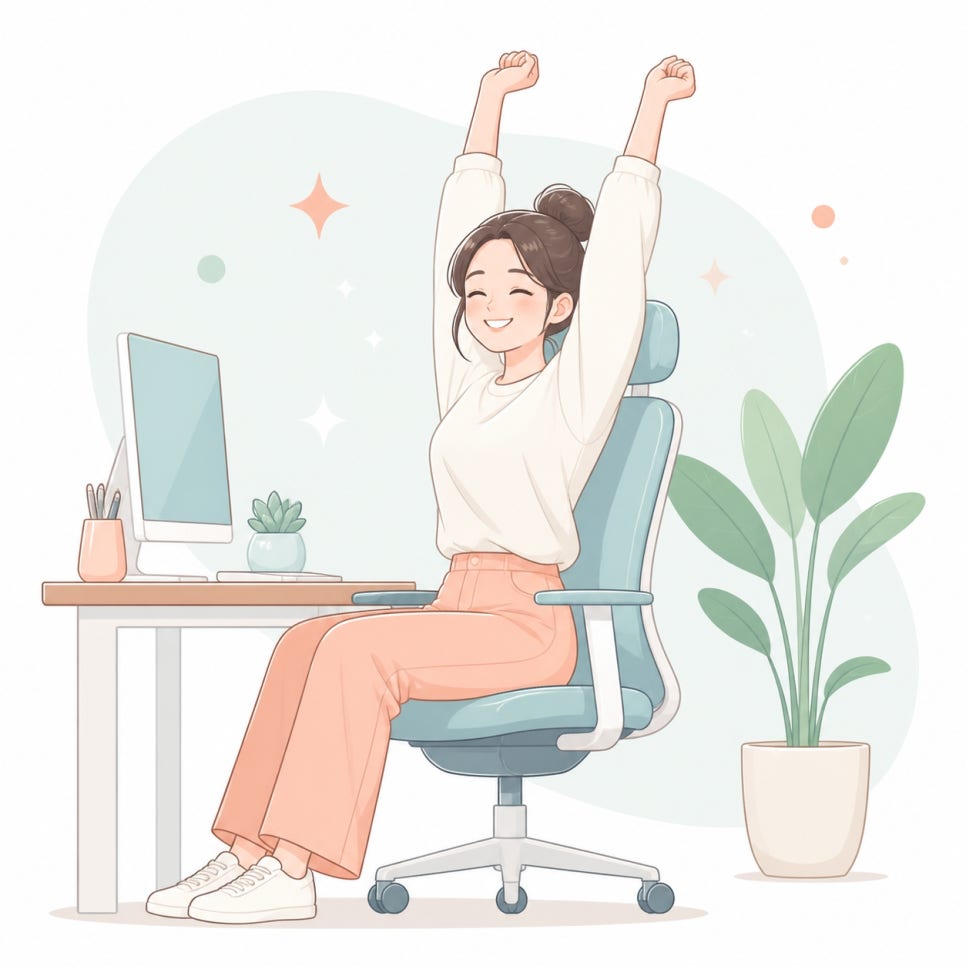
    Office work in particular tends to tighten the neck and shoulder muscles.
    One survey found that 64% of office workers reported neck and shoulder pain consistent with forward head posture, commonly known as “text neck.”

    Dismissing early warning signs as mere fatigue tends to shorten the interval between pain flare-ups.
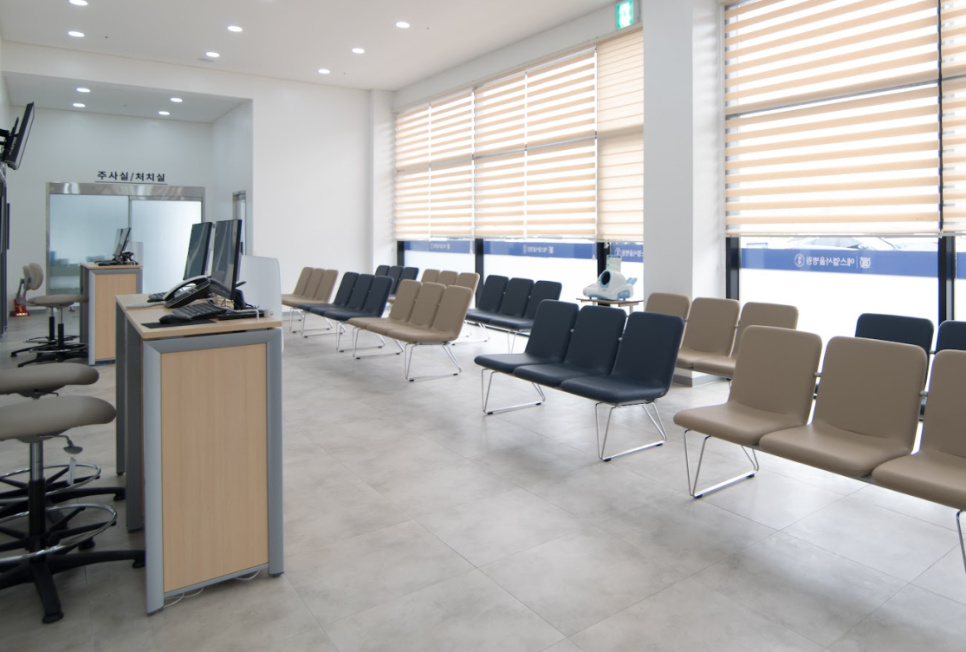
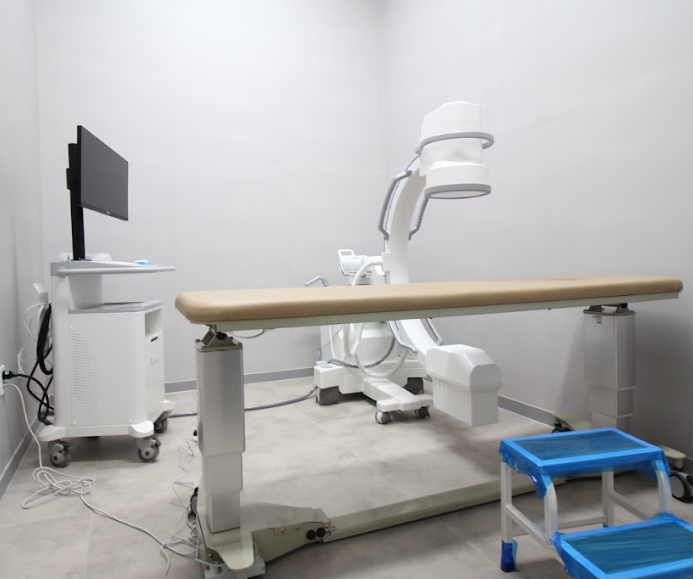
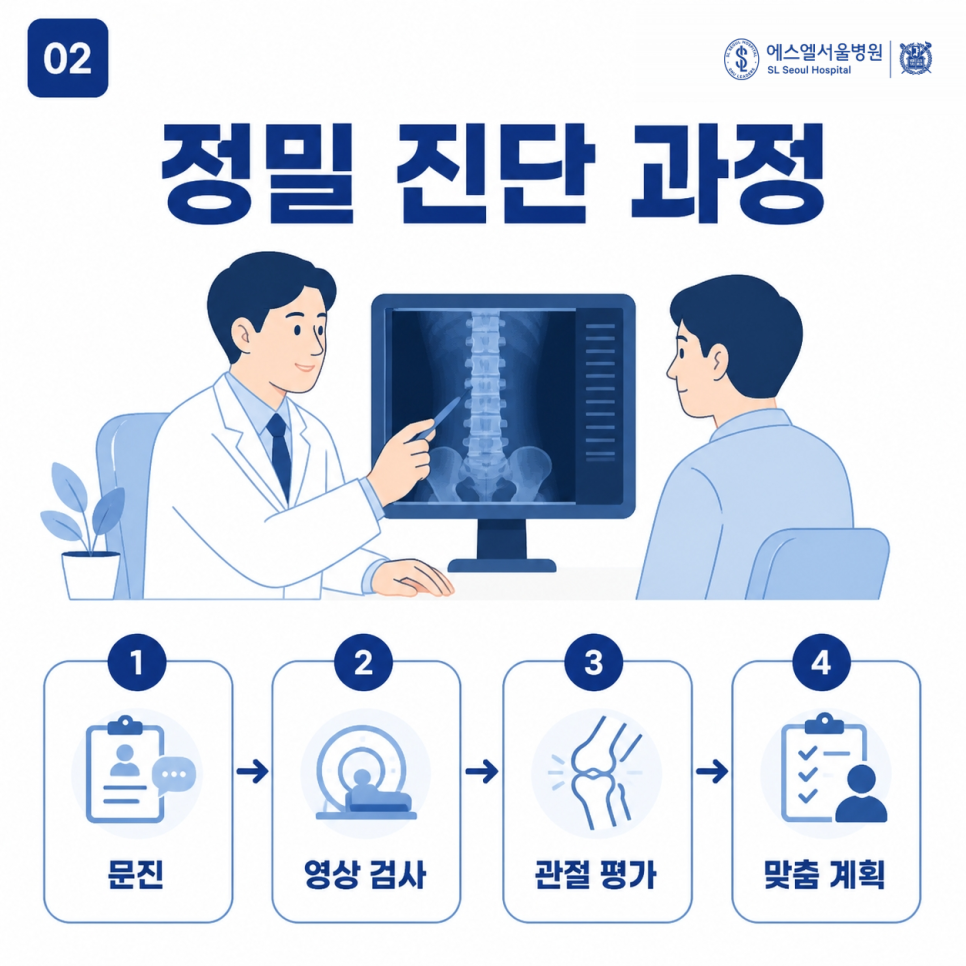
    So if pain keeps recurring, the joints and muscles should first be evaluated with diagnostic imaging such as X-ray or C-arm fluoroscopy.
    orthopedic clinic for manual therapy illustration 3

    orthopedic clinic for manual therapy illustration 4

    A musculoskeletal disorder is a health impairment caused by factors such as repetitive motion, awkward working posture, excessive force, contact with sharp edges, vibration, and temperature, manifesting as a condition affecting the nerves, muscles, and surrounding tissue of the neck, shoulders, lower back, and limbs.

    This is how South Korea’s Ministry of Employment and Labor defines musculoskeletal disorders under its Occupational Safety and Health Standards.
    It’s also why an accurate medical diagnosis needs to come first, before building a management plan tailored to you.
    orthopedic clinic for manual therapy illustration 5

    orthopedic clinic for manual therapy illustration 6

    Key Points
    • Don’t brush off early signs of chronic pain.
    • Poor posture can worsen imbalance in the spine and pelvis.
    • A thorough diagnostic evaluation of the anatomical structures should come first, for safety.

    How Do You Choose an Orthopedic Clinic for Manual Therapy?

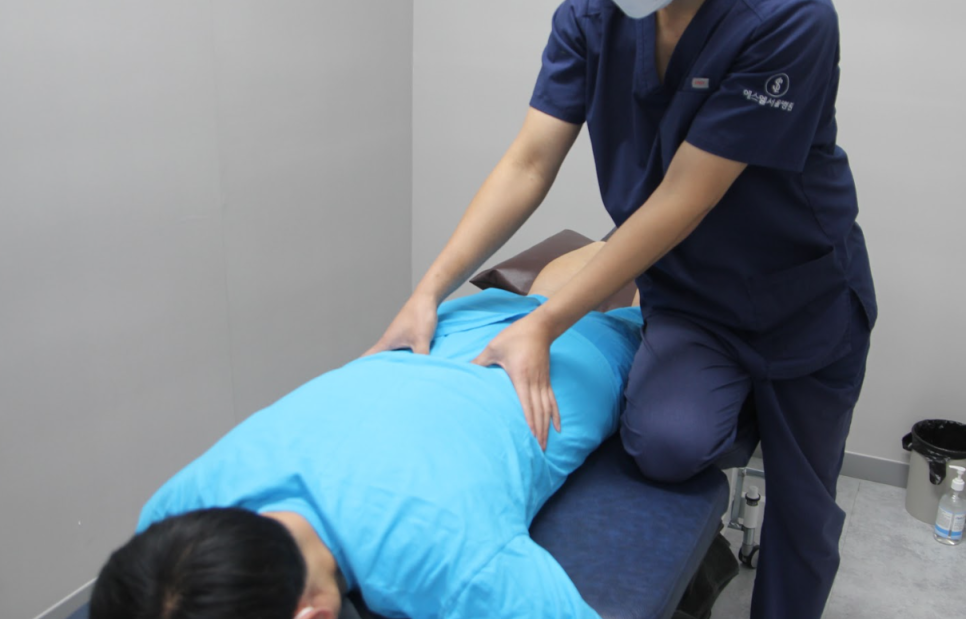
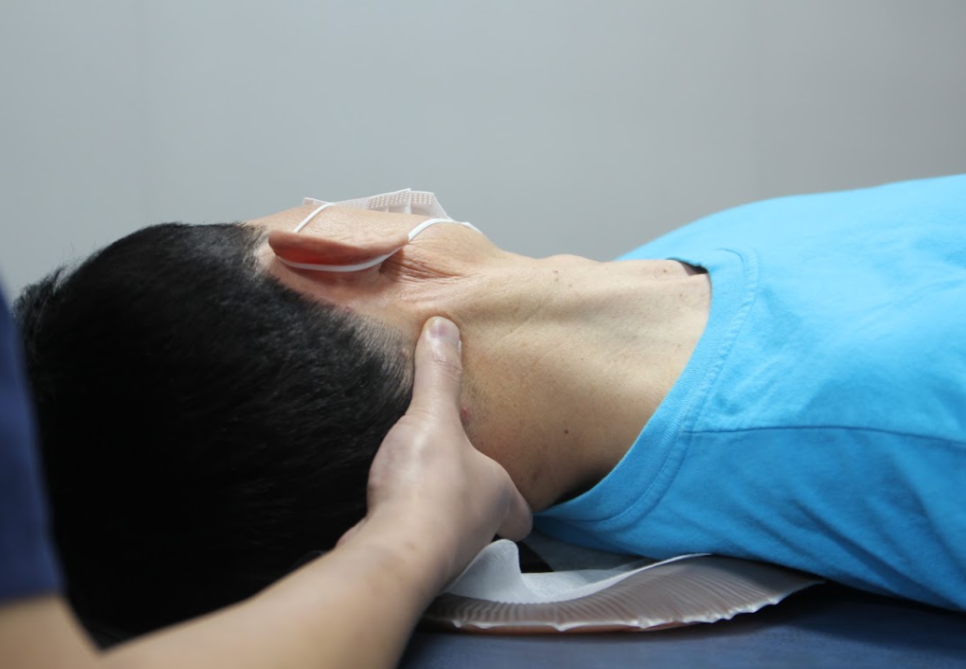
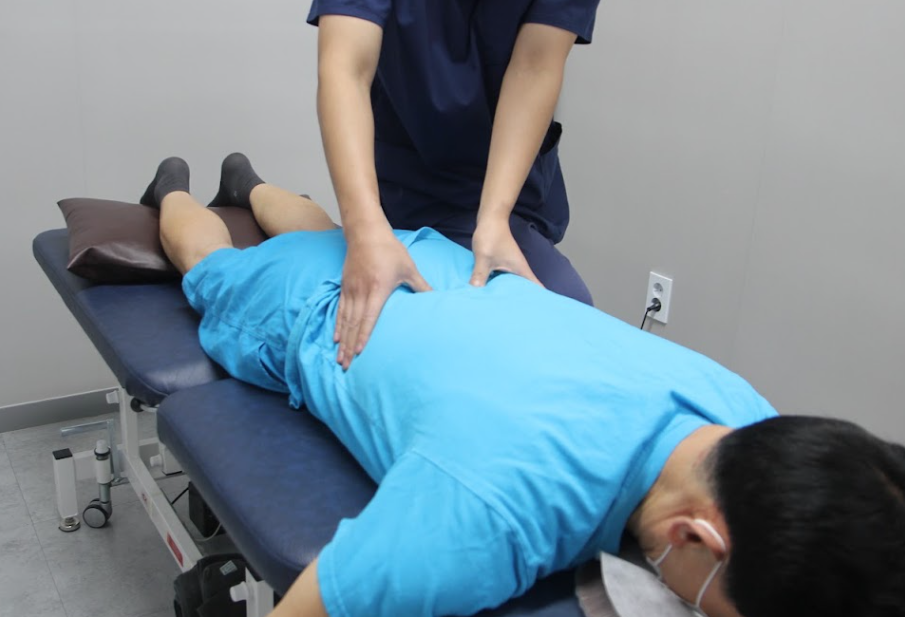
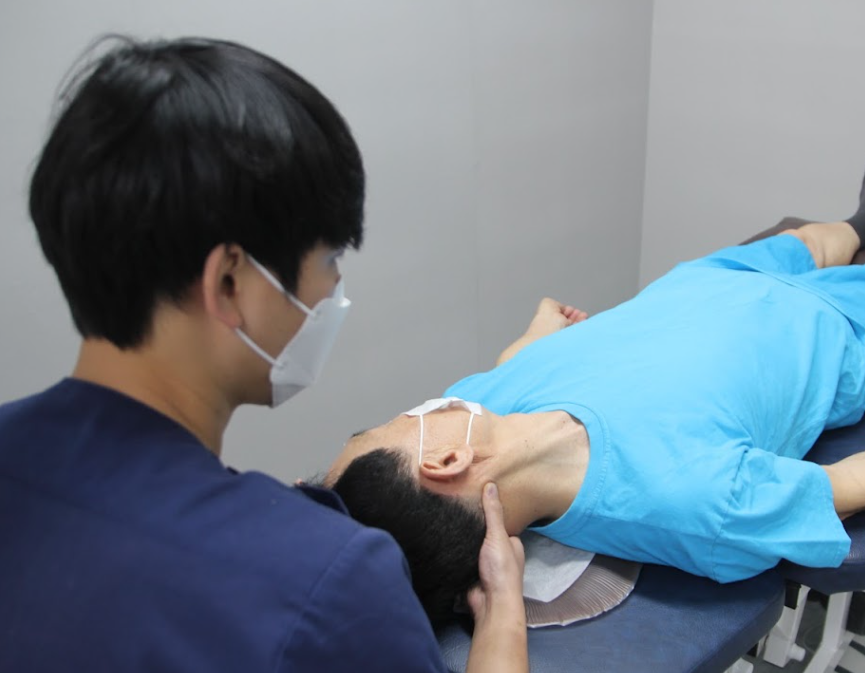
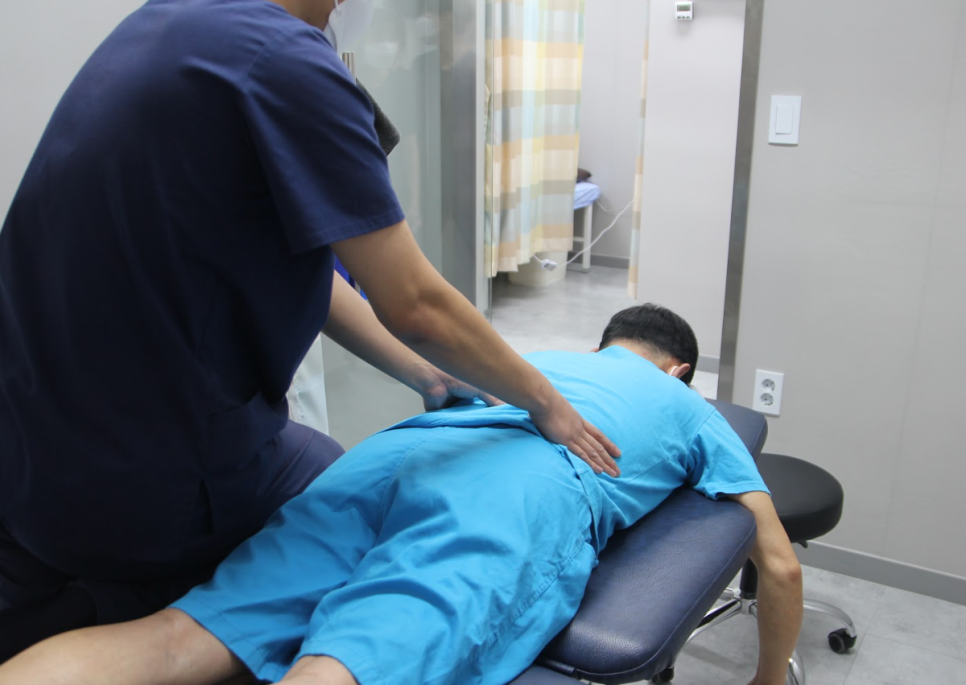
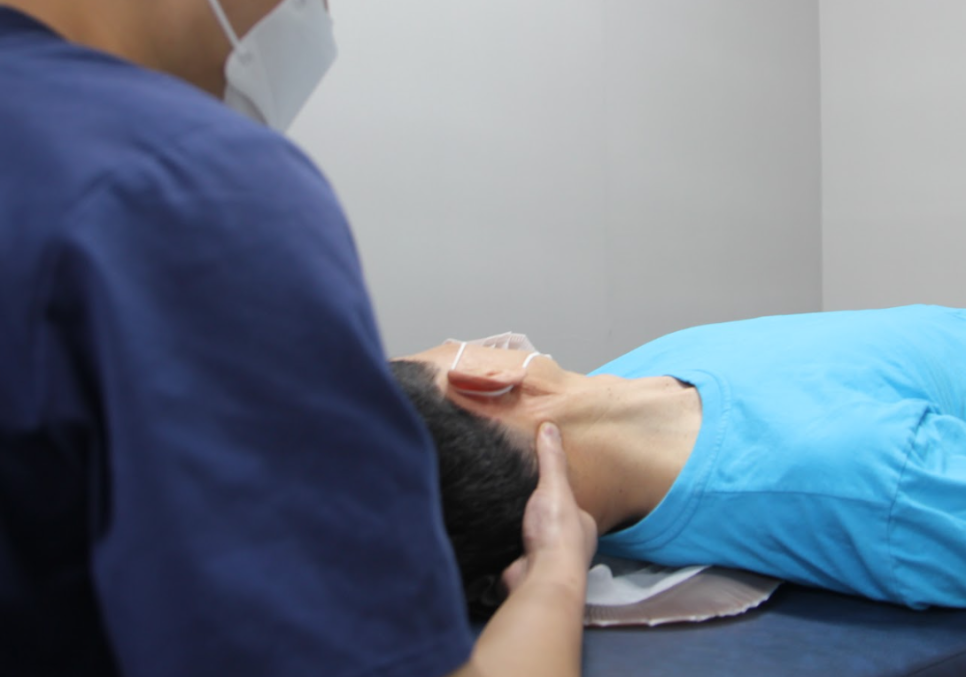
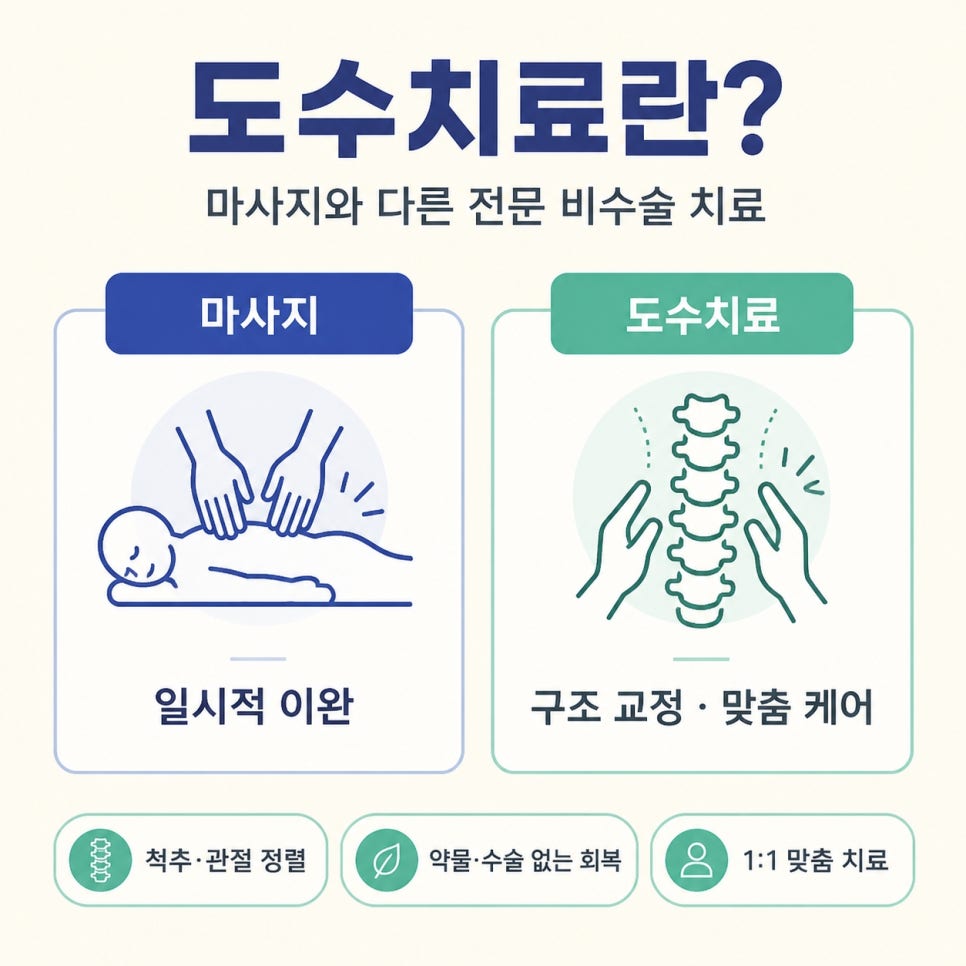
    Manual therapy is a non-surgical, conservative treatment in which a therapist with specialized anatomical training uses their hands to help realign a misaligned spine or joint, aiming to ease pain.
    It places less physical burden on the body than medication or surgery.

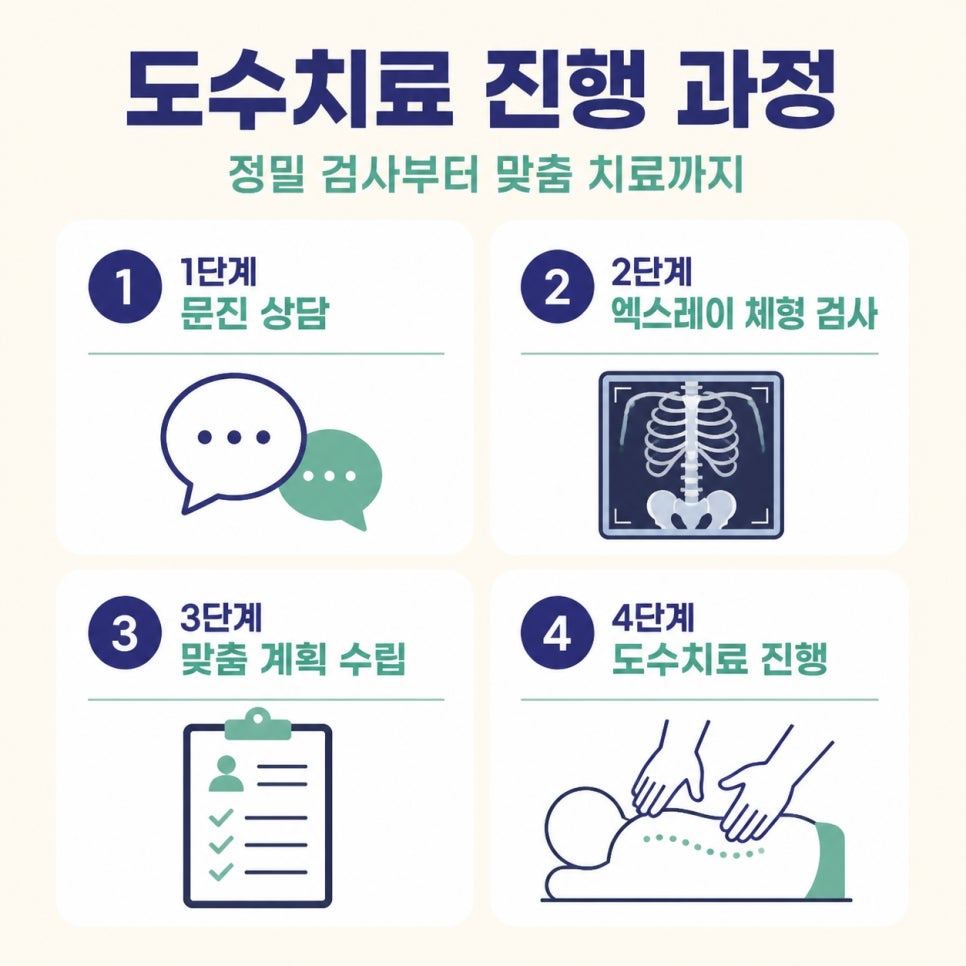
    The key is combining an accurate diagnosis and prescription from an orthopedic specialist with hands-on treatment from an experienced therapist.
    Excessive manipulation that doesn’t account for an individual’s physical characteristics can actually make pain worse,
    so it’s advisable to consult a clinic with substantial clinical experience and a systematic care process.

    orthopedic clinic for manual therapy illustration 7

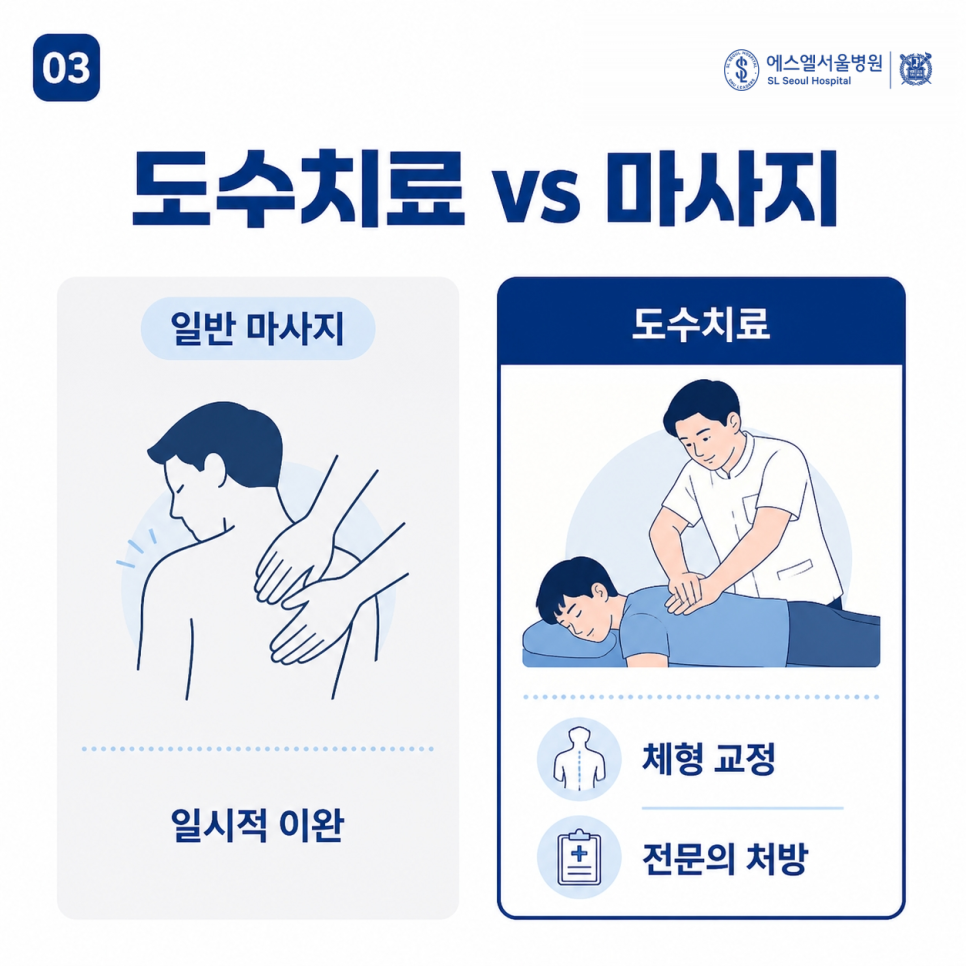
    Comparison Regular Massage Manual Therapy
    Purpose Temporary muscle relaxation, fatigue relief Improving joint function, correcting body imbalance
    Diagnostic process No medical diagnostic process Managed based on a specialist’s diagnosis and prescription
    Cost structure Service fee Non-reimbursed medical procedure

    orthopedic clinic for manual therapy illustration 8

    orthopedic clinic for manual therapy illustration 9

    According to South Korea’s Ministry of Health and Welfare, manual therapy prices used to vary by hospital, averaging around 110,000 KRW per session.
    However,
    starting in July 2024, a managed-benefit scheme took effect, standardizing the price at 43,850 KRW per session (at a 95% patient co-payment rate) for cases that meet the criteria.
    The Health Insurance Review and Assessment Service classifies manual therapy as a non-reimbursed physical therapy item, so sessions beyond the covered number may be fully out-of-pocket.

    Self-Check
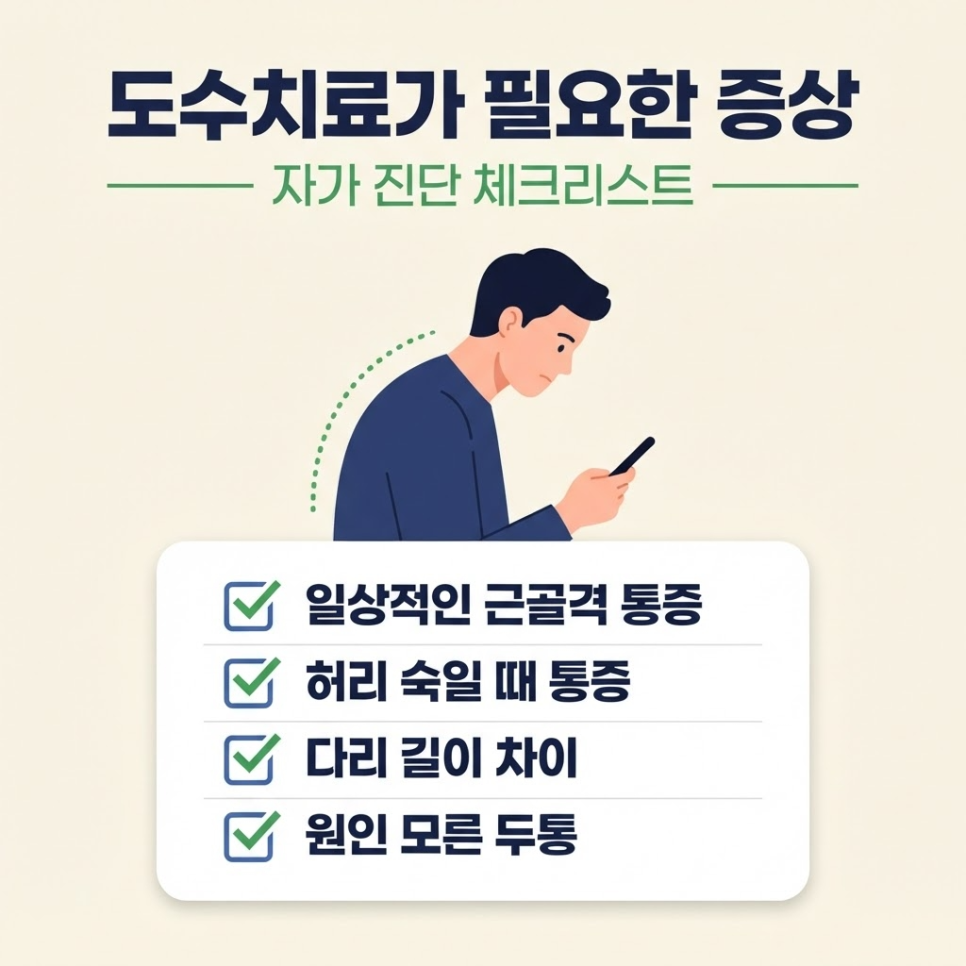
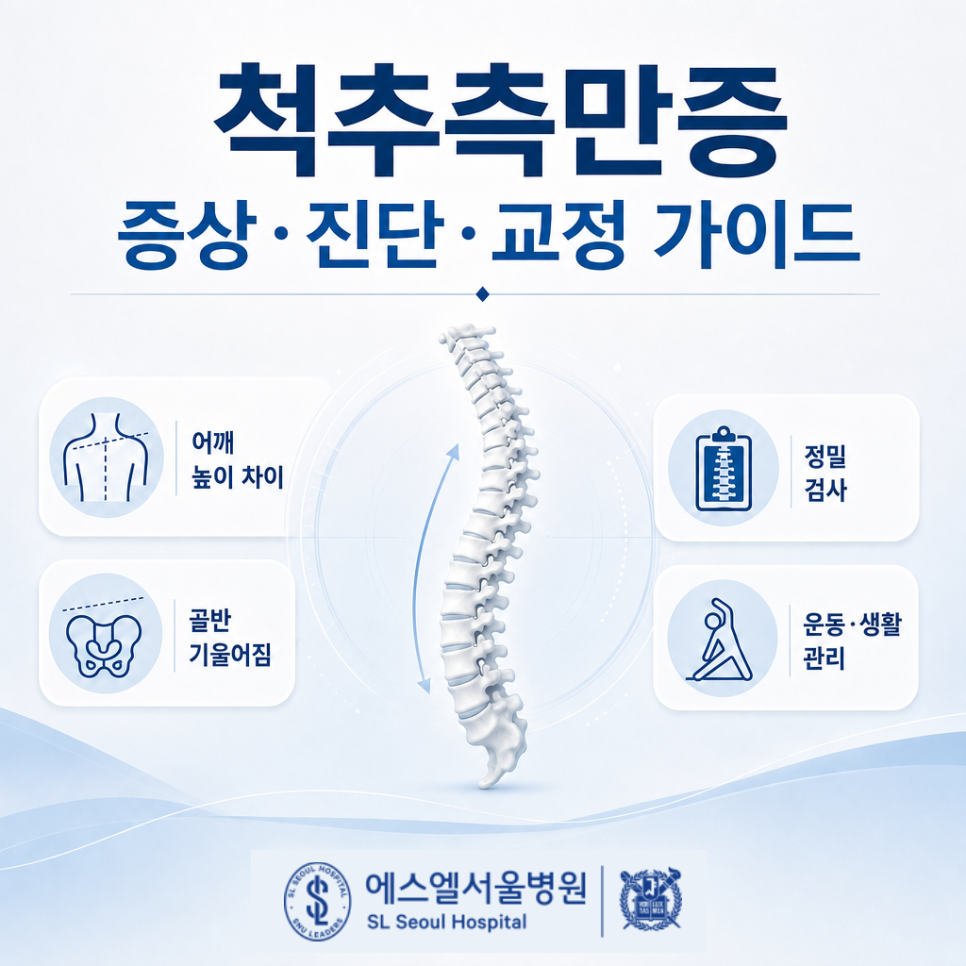
    ✅ Your head juts forward noticeably when looking at a monitor or phone
    ✅ Your pelvis is tilted, so one shoe sole wears out faster than the other
    ✅ Unexplained shoulder tightness and neck pain keep recurring

    If these symptoms keep recurring, you can also check care information at the SL Seoul Hospital Spine & Joint Center homepage.


    What Posture Habits Help Prevent Pain From Coming Back?

    Maintaining the benefits of manual therapy over time depends as much on daily habits as on the treatment itself.
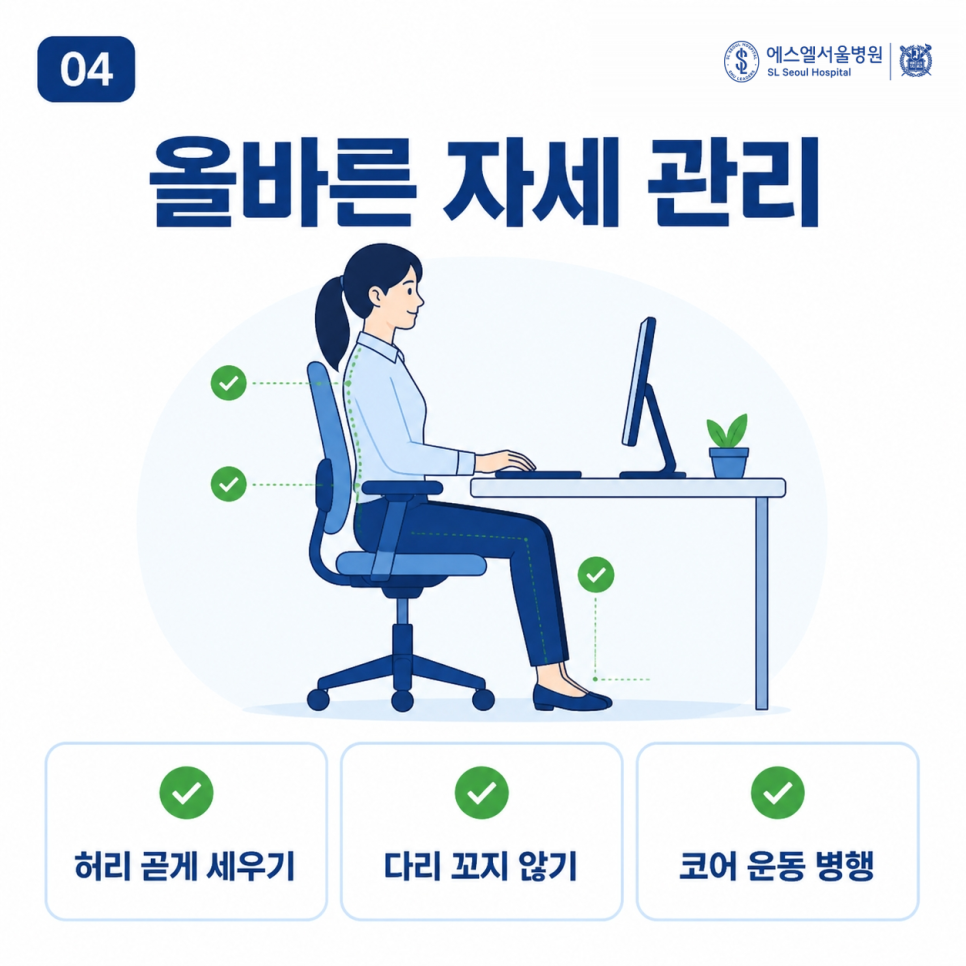
    Try incorporating the habits below.
    orthopedic clinic for manual therapy illustration 10

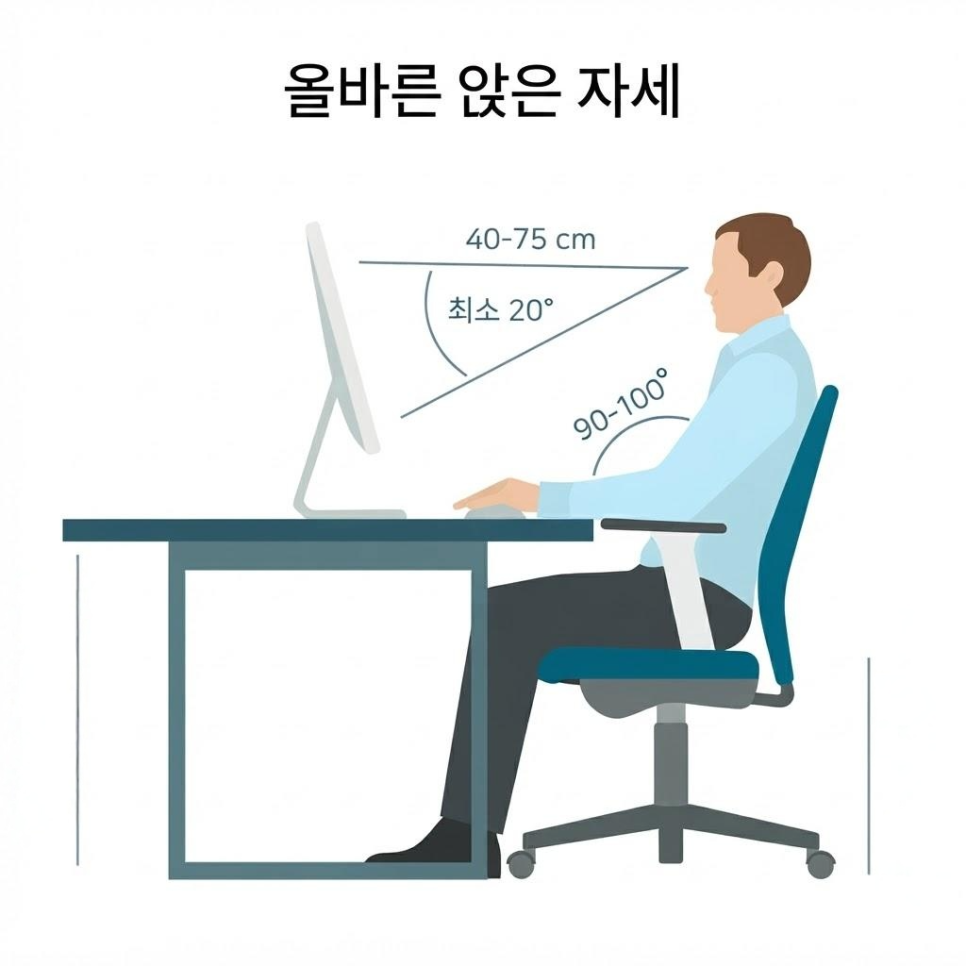
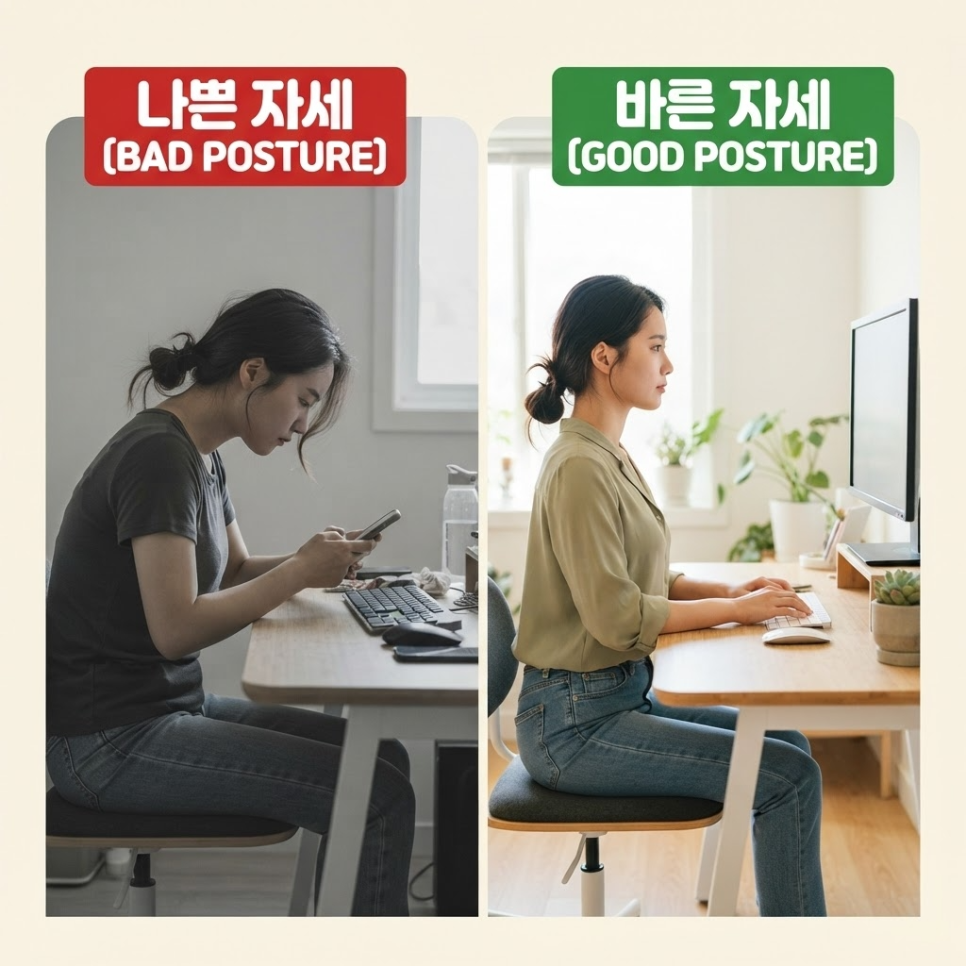
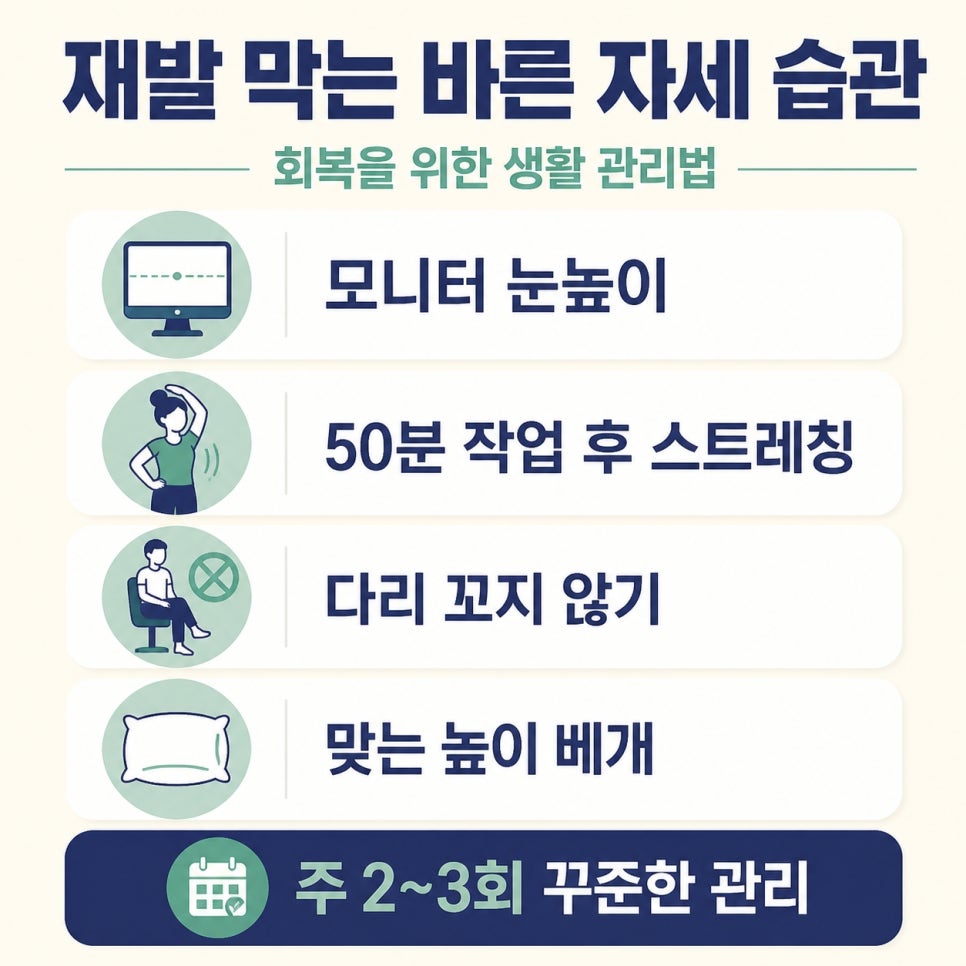
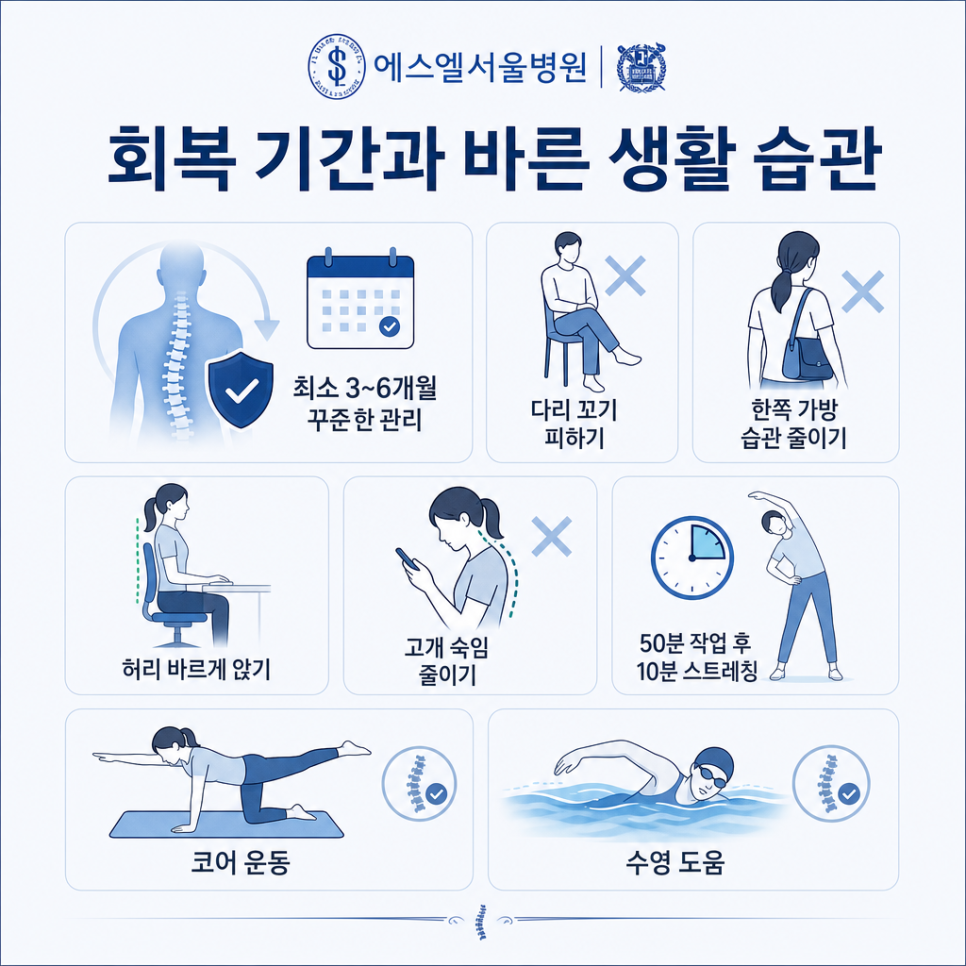
    1. Sit with your lower back straight and avoid crossing your legs.
    2. Set your monitor at eye level so your head doesn’t tilt forward.
    3. Stand up once an hour to gently stretch your neck and shoulders.
    4. Pair manual therapy with core-strengthening exercises.
    Summary and Takeaway
    Persistent musculoskeletal pain can be a warning sign of structural imbalance in the body.
    An accurate diagnosis paired with systematic care can support a return to a healthier daily routine.
    orthopedic clinic for manual therapy illustration 11


    Frequently Asked Questions

    orthopedic clinic for manual therapy illustration 12

    1. How many sessions of manual therapy does it typically take to notice a difference?
    This varies by individual symptoms and degree of body imbalance; outcomes are not guaranteed, but some patients report gradual change after around 5 to 10 or more consistent sessions.

    2. How is orthopedic manual therapy different from regular massage?
    Massage is aimed simply at relaxing the skin and muscle layers, while manual therapy is a medical procedure that helps correct spinal and joint alignment based on a specialist’s medical diagnosis.

    3. Is the treatment painful?
    Intensity is adjusted to each patient’s pain tolerance and inflammation level, so treatment stays within a reasonable range of manipulation and aims to minimize unnecessary discomfort.

    4. Is it covered by private health insurance?
    Since it’s a non-reimbursed treatment item, coverage and scope depend on your specific policy and insurer, so it’s best to confirm directly with your insurance provider.
    orthopedic clinic for manual therapy illustration 13

    orthopedic clinic for manual therapy illustration 16


    References

    · Ministry of Health and Welfare, “Managed Benefit for Manual Therapy Takes Effect July 1, Easing Patients’ Medical Costs,” Ministry of Health and Welfare press release, 2024. Source
    · Ministry of Employment and Labor, “Occupational Safety and Health Standards Rules,” Article 656 (Definitions), Easy-to-Find Statutes Information. Source
    · Nate News, “What Is Forward Head Posture Syndrome? 64% of Office Workers Report Neck and Shoulder Pain,” 2014. Source


    This article is for general health information purposes only and is not a substitute for individual diagnosis or treatment.
    If you’re experiencing symptoms, please consult a specialist.
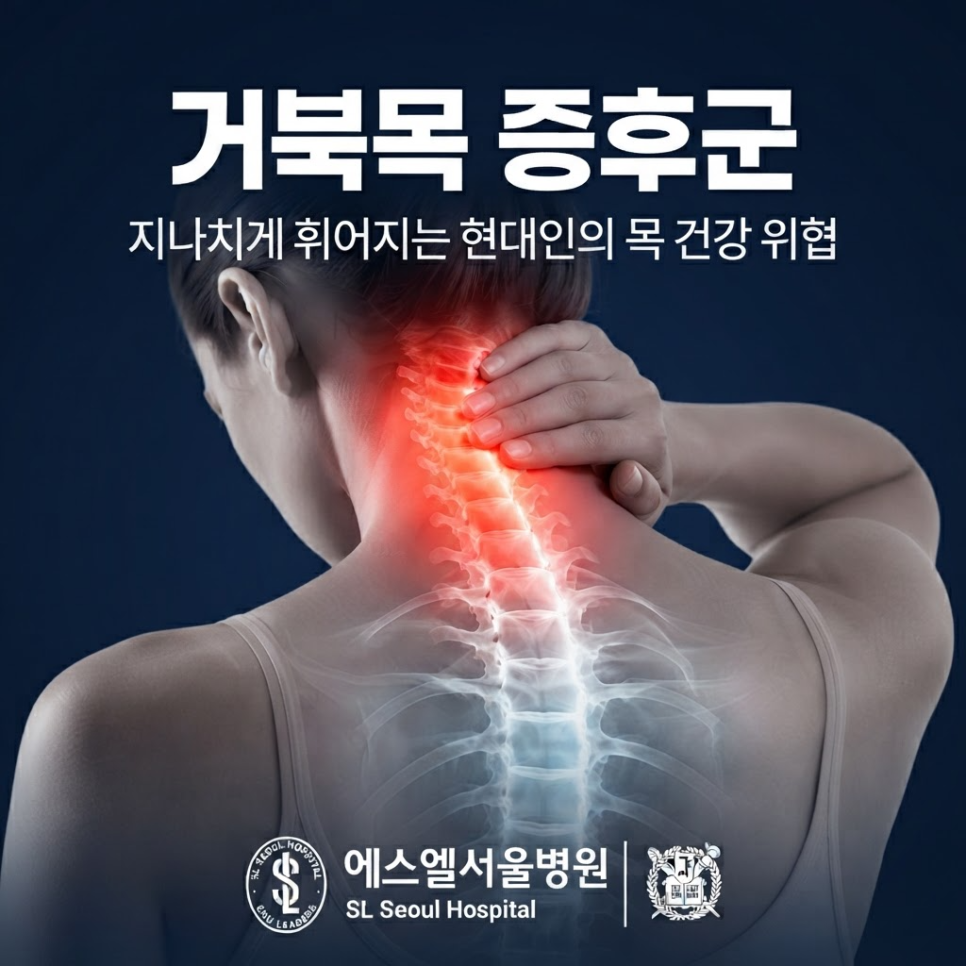
  • Text Neck Headache: How Forward Head Posture Adds 18kg of Strain to Your Neck

    Text Neck Headache: How Forward Head Posture Adds 18kg of Strain to Your Neck

    SummaryWhy does text neck cause headaches, and how can you manage them? This article breaks down how text neck syndrome leads to cervicogenic headaches, how to self-check with a simple wall test, and the everyday habits and stretches that may help reduce strain on your cervical spine.

    That throbbing headache that shows up after a long day at your desk,
    have you been writing it off as just stress?

    In reality, it’s often caused by a forward-curved neck, better known as a text neck headache.
    As screen time on smartphones and computers keeps climbing, the neck’s natural curve flattens out,
    and the effects ripple all the way up to your head.

    This article looks at the root cause of text neck headaches through the lens of changes in cervical spine structure, along with a self-check you can do at home and everyday habits that ease the load on your neck. If you’ve been dealing with a headache that painkillers just won’t shake, read on.

    text neck headache

    text neck headache illustration 2

    What Is Text Neck Syndrome?

    In short, text neck syndrome is a postural condition in which the neck’s normal C-shaped curve flattens or even reverses, pushing the head forward of the torso.
    Long hours spent looking down at a screen cause this shift to develop gradually.

    It gets its name because the neck juts forward like a turtle poking its head out of its shell.
    The real issue isn’t just appearance, it’s that the load the cervical spine has to bear changes entirely.

    text neck headache illustration 3

    The cervical spine is naturally built with a gentle C-curve designed to evenly distribute the weight of the head.
    But the more the head tilts forward, the more that curve collapses, concentrating stress on a single section of the neck.

    💡 Key Point
    According to a cervical spine load study by Dr. Kenneth Hansraj of New York Spine Surgery & Rehabilitation Medicine, the weight the neck bears is about 5kg (11 lbs) in a neutral position, but jumps to roughly 18kg (40 lbs) at just a 30-degree tilt, and climbs to about 27kg (60 lbs) at 60 degrees.
    In other words, the more you tip your head down to look at your phone, the heavier the load your cervical spine and surrounding muscles have to carry.

    text neck headache illustration 4

    When the muscles and ligaments around the cervical spine stay tense like this over time, it can lead to a heavy, pressing pain in the shoulders.
    A shift in posture like this ultimately throws off the balance of the whole body.


    Why Does Text Neck Cause Headaches?

    In short, a text neck headache isn’t a problem in the brain itself, it’s a secondary headache known as a cervicogenic headache, where tension in the neck joints and surrounding muscles is referred up to the head.
    It typically starts at the back of the neck and spreads toward the temples.

    text neck headache illustration 5

    The occipital nerves run along the back of the neck, and when text neck posture causes the neck muscles to tighten, these nerves can become compressed, producing a throbbing pain that runs from the back of the head to the sides.

    Because of this, many people mistake the pain for a brain issue or simple stress,
    but in a good number of cases the real cause is excessive tension in the neck muscles.
    Eye strain, dizziness, and trouble concentrating can show up alongside it as well.

    ⚠️ Caution
    Because a cervicogenic headache originates in the muscles and joints around the neck rather than the brain, over-the-counter painkillers often don’t bring much relief.
    If the pain keeps coming back, it’s important to also address the underlying strain on the neck.

    Can You Self-Diagnose Text Neck Syndrome at Home?

    Yes. Stand with your back and the back of your head against a wall, if the back of your head doesn’t comfortably touch the wall, text neck may be worth looking into.
    This simple test alone can give you a rough sense of your neck’s condition.

    text neck headache illustration 6

    If you spend all day in front of a monitor, you might be surprised at just how far your head sits away from the wall during this test.

    If that’s the case, it’s worth going through the checklist below and taking a closer look at your daily habits.

    📋 Daily Neck Health Checklist
    ✅ Hold your phone up to eye level instead of looking down at it.
    ✅ Do a chin-tuck neck stretch once every hour.
    ✅ Use a monitor stand to bring your screen up to eye level.
    ✅ Swap a high pillow for one that supports your neck’s natural curve.
    ✅ During long stretches of sitting, periodically roll your shoulders back and open up your chest.

    text neck headache illustration 7

    While working at a computer, make a conscious effort to tuck your chin slightly,
    and add in the occasional shoulder roll to open up your chest.

    Rather than holding one position for long stretches, building the habit of stretching often to release muscle tension matters far more.

    ✅ What You Can Expect
    Consistently combining posture correction with stretching may help ease tension in the neck and shoulder muscles, which in turn can help manage how often headaches occur.
    That said, results vary depending on individual posture and symptom severity, so if the pain persists, it’s safest to see a specialist.

    If your symptoms keep recurring or start interfering with daily life, checking the relevant department information on the SL Seoul Hospital for Spine & Joints website is another option.


    Frequently Asked Questions

    1. How is a text neck headache different from a regular migraine?
    Migraines stem from changes in blood vessels or the brain’s nervous system, while text neck headaches originate from tension and nerve compression in the muscles at the back of the neck, and their intensity tends to shift depending on the angle of the neck.

    2. Does getting frequent massages help relieve the headaches?
    It can help temporarily loosen tight muscles, but if your everyday posture doesn’t change, the muscles tend to tense back up quickly, so pairing massage with posture correction is more likely to help the effect last.

    3. What kind of pillow is best for neck health?
    A pillow that’s too high flattens the neck’s C-curve, so it’s best to choose a moderate-height pillow that supports the neck’s natural curve while you’re lying down.

    4. Which specialist should I see if symptoms are severe?
    If the pain keeps recurring or is interfering with daily life, it’s recommended to get a thorough evaluation from a specialized medical provider, such as orthopedics, neurosurgery, or rehabilitation medicine.

    5. Can stretching alone fully correct text neck?
    Stretching helps relieve muscle tension and improve postural awareness, but in more severe cases, stretching alone is unlikely to fully correct the posture, so it’s best to consult a specialist to build a management plan.

    text neck headache illustration 8


    References

    · Kenneth K. Hansraj, “Assessment of stresses in the cervical spine caused by posture and position of the head,” Surgical Technology International, 2014. View source
    · Korea Disease Control and Prevention Agency, “Straight Neck (Text Neck) Syndrome,” National Health Information Portal. View source
    · Seoul National University Hospital, “Text Neck Syndrome (Forward Head Posture),” SNUH Medical Information. View source


    This article is intended for general health information purposes only and is not a substitute for individual diagnosis or treatment. If you’re experiencing symptoms, please consult a medical professional.

  • Scoliosis Exercises: 3 Simple Stretches to Try in 10 Minutes a Day

    Scoliosis Exercises: 3 Simple Stretches to Try in 10 Minutes a Day

    SummaryDiscover how scoliosis exercises may help support left-right shoulder balance. This guide covers a 10-minute daily stretching routine — including cat-cow and bird-dog — plus important precautions.

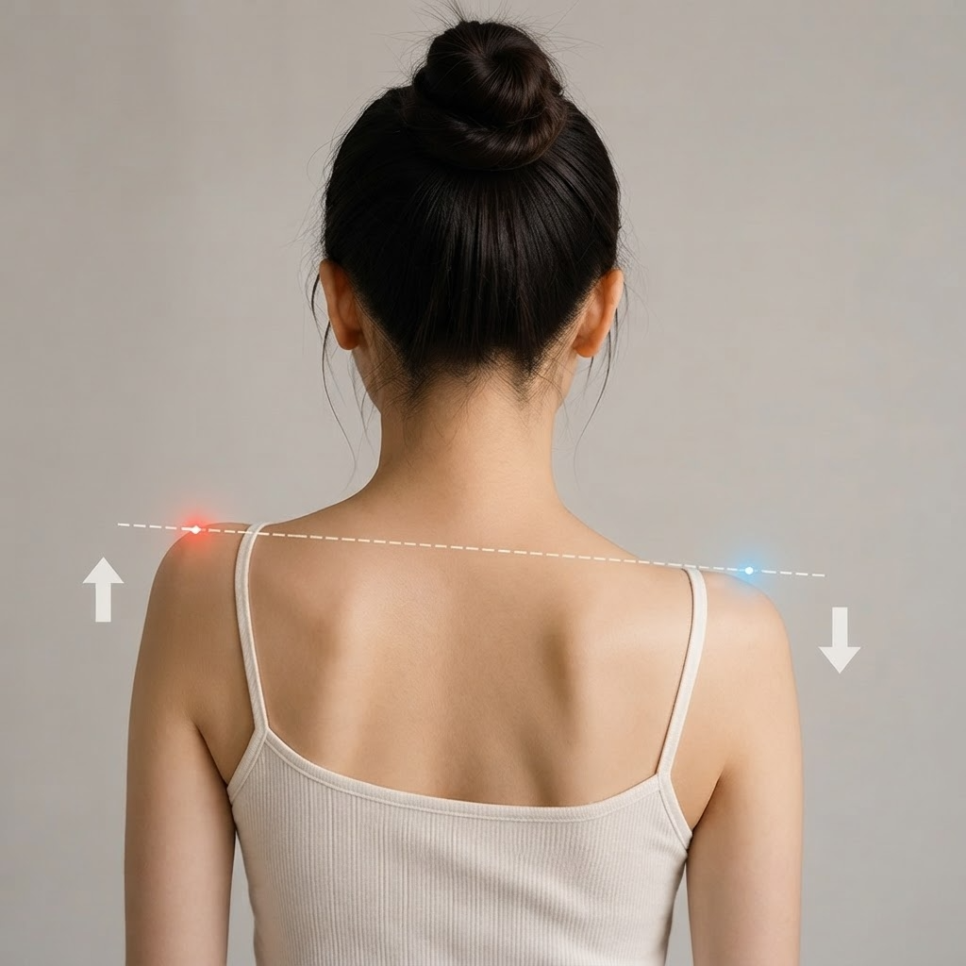
    Have you ever noticed one shoulder sitting lower than the other every time you stand in front of a mirror?

    It’s easy to brush off, but a difference in shoulder height can be a sign that the spine is gradually curving.

    Rather than heavy weightlifting, three-dimensional movement paired with breathing is at the core of scoliosis exercises.

    💡 In This Article
    This article covers why scoliosis exercises matter and how they work, a step-by-step stretching routine you can follow at home, and everyday habits that can work against your results. See how investing just 10 minutes each morning may help support left-right balance.

    scoliosis exercises

    What Are Scoliosis Exercises?

    Scoliosis exercises are a tailored exercise approach that strengthens the muscles around a sideways-curved spine to help support left-right balance.

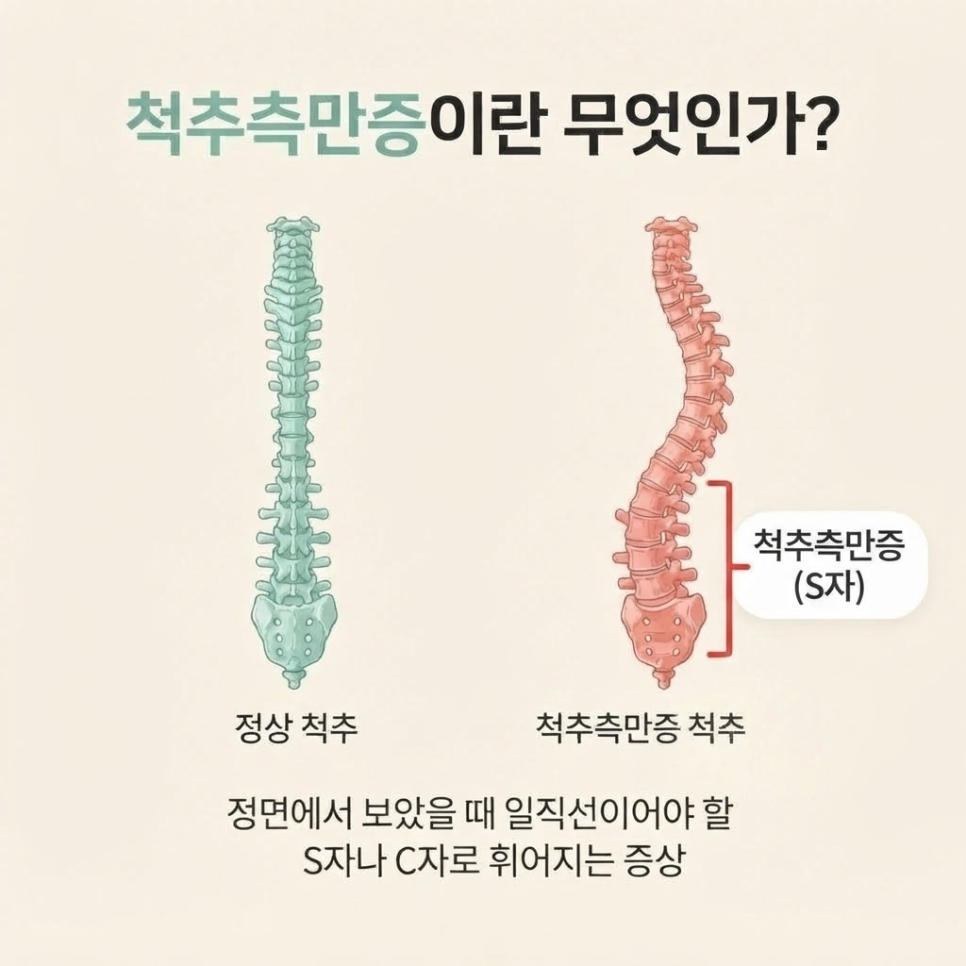
    Scoliosis refers to a condition in which the spine, which should look straight when viewed from the front, curves into an S- or C-shape.

    As the left-right imbalance worsens, the pelvis can become misaligned, and pain or fatigue tends to show up more easily after long periods of sitting.

    Scoliosis exercises illustration 2

    Medical professionals often emphasize three-dimensional corrective exercises performed with breathing rather than jumping straight into high-intensity weight training.

    The key is accurately recognizing the body’s imbalance and performing movements that help restore left-right symmetry.

    Focusing on the muscles that support the curved spine is an important part of the process.

    Scoliosis exercises illustration 3

    💡 Key Points
    ✔ Scoliosis exercise isn’t about building muscle mass — the goal is restoring left-right symmetry.
    ✔ Three-dimensional corrective movements paired with breathing may help support spinal stabilization.

    How Do You Do Scoliosis Stretches at Home?

    Simply repeating three movements for 10 minutes each morning may help your body feel lighter.

    Office workers who sit hunched over for more than eight hours a day are especially prone to weakened muscles around the spine.

    In fact, research on adolescents with idiopathic scoliosis has looked at Schroth exercise programs lasting around 12 weeks, with some studies reporting improvement in thoracic Cobb angle, though results are reported to vary between individuals.

    Scoliosis exercises illustration 4

    📊 Research Findings
    An international systematic review found that scoliosis-specific exercise programs (such as the Schroth method) significantly improved Cobb angle and quality-of-life measures compared with control groups. (See References)

    The three stretches below are commonly used to lengthen tightened muscles and help stabilize the spine.

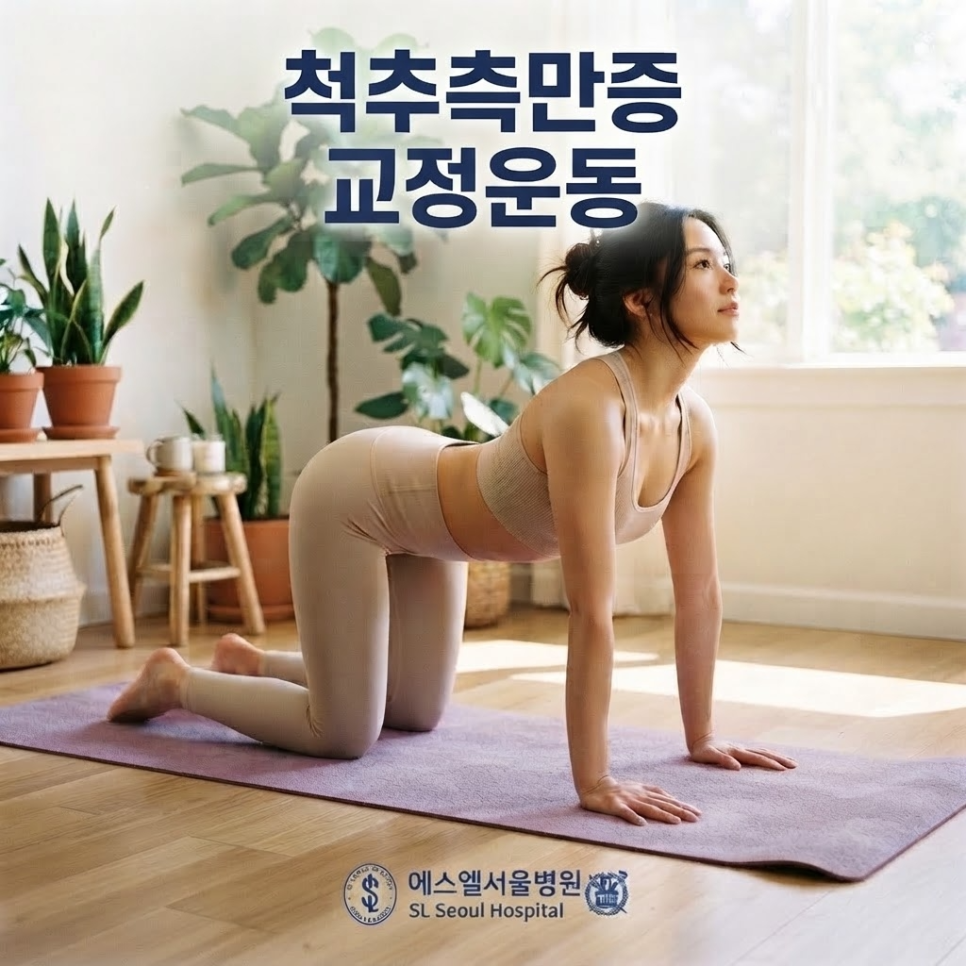
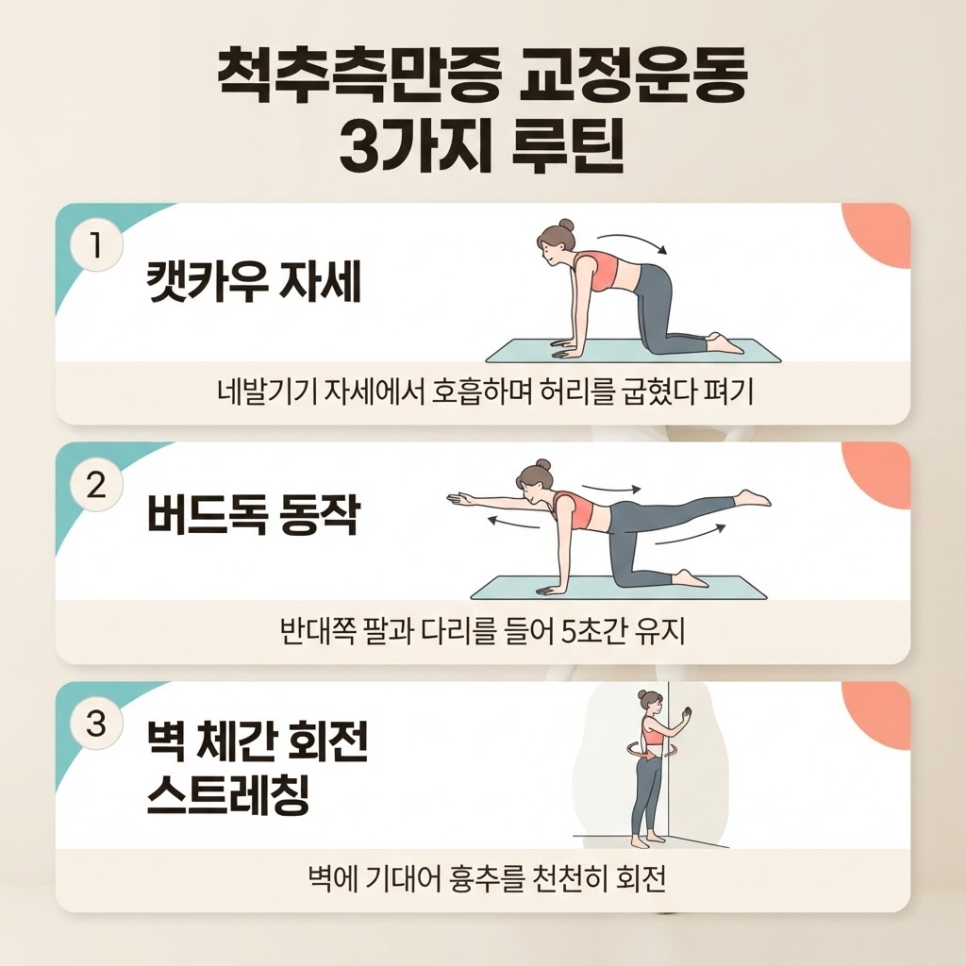
    1. Cat-Cow Pose — On all fours, inhale as you let your lower back dip down, then exhale as you round your entire back upward.
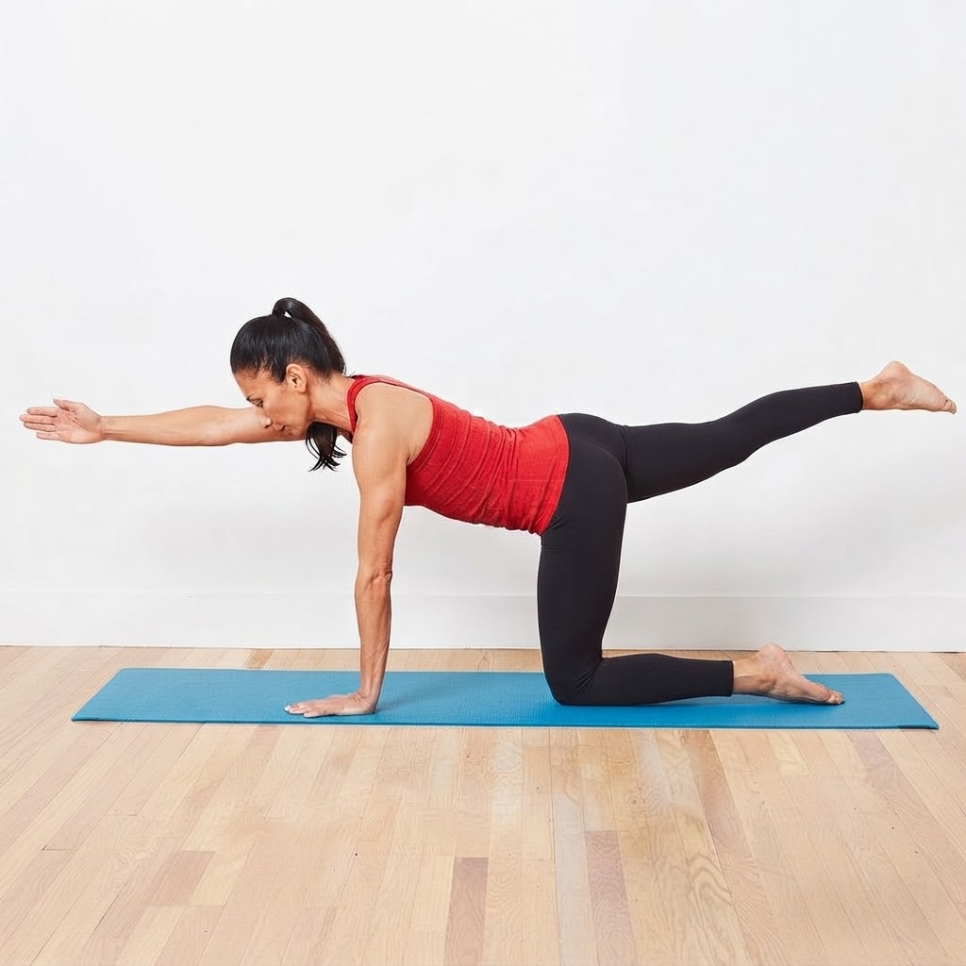
    2. Bird-Dog — From an all-fours position, extend one arm and the opposite leg out parallel to the floor and hold for 5 seconds.
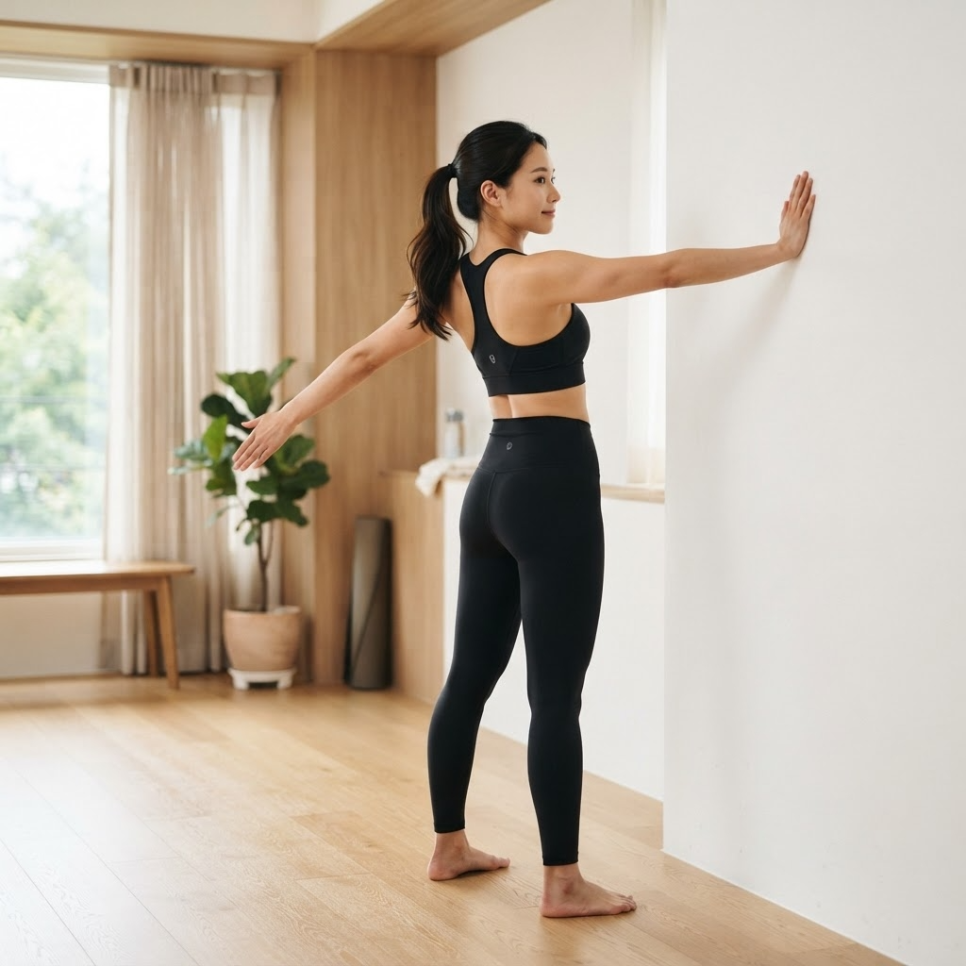
    3. Wall-Assisted Trunk Rotation Stretch — Stand sideways next to a wall and slowly open up your upper back to release tight muscles.

    Scoliosis exercises illustration 5

    📋 Checklist
    ✅ Move slowly and keep breathing deeply throughout
    ✅ Engage your core so your lower back doesn’t arch too much
    ✅ Don’t push through a direction that increases your pain
    ✅ Do 2-3 extra reps on whichever side feels stiffer

    Scoliosis exercises illustration 6


    What Daily Posture Habits Should You Watch?

    Maintaining good posture also means changing everyday habits.

    Try to consciously practice postures that minimize uneven pressure on the spine.

    No matter how diligently you exercise, habits like crossing your legs or resting your chin on your hand can work against your progress.

    Scoliosis exercises illustration 7

    When looking at your phone or monitor, it helps to adjust the height so your gaze isn’t angled too far downward.

    You should also avoid standing with your weight shifted onto one leg.

    Distributing your weight evenly between both feet is a foundation of good spine health.

    Fixing this one habit alone may help reduce lower back fatigue by the end of the day.

    ⚠️ Precautions
    It’s best to hold off on heavy weight-bearing exercises until the curve becomes more flexible.
    If you feel sharp pain while stretching, stop immediately and consult a specialist.
    If symptoms persist, getting an accurate diagnosis at SL Seoul Hospital’s spine and joint center is recommended.

    Frequently Asked Questions

    1. How long should I do scoliosis exercises each day?
    It’s best to do about 10 to 20 minutes consistently every day. Rather than one long, intense session, regular daily practice may help build muscle memory in the muscles surrounding the spine.

    2. Can adults also see results from scoliosis exercises?
    For structural scoliosis where the bone itself has already fully changed shape, dramatic straightening becomes less likely in adulthood. Still, exercise can play a useful role in correcting muscle imbalances, easing pain, and helping guard against further progression.

    3. What should I do if I feel pain during exercise?
    If you feel a sharp, shooting, or stiff pain rather than a normal stretching sensation, stop that movement right away. It may simply not suit your particular curve pattern, so getting evaluated by a specialist is recommended.

    4. Is it okay to combine this with regular workouts like gym training or yoga?
    Basic yoga or Pilates can help with flexibility and core strength. That said, it’s safer to avoid weight training that works only one side of the body or movements that twist the spine forcefully.

    Scoliosis exercises illustration 8


    References

    · Fan Y, et al., “The effectiveness of Schroth exercises in adolescents with idiopathic scoliosis: A systematic review and meta-analysis,” Journal of Bodywork and Movement Therapies, 2019. View Source
    · Lee JH, Kim SY, “Comparison of the Effects of Schroth Exercise Therapy and Sling Exercise Therapy on Flexibility, Balance Ability, Spinal Angle, and Chest Expansion in Scoliosis Patients,” Journal of the Korean Society of Physical Medicine, 2014. View Source
    · A Case Study of Exercise Therapy Using the Schroth Method for an Adolescent with Idiopathic Scoliosis, Asian Journal of Kinesiology. View Source


    This article is intended for general health information purposes only and is not a substitute for individual diagnosis or treatment. If you have symptoms, please consult a physician.

  • Manual Therapy vs Massage: 3 Key Differences You Should Know

    Manual Therapy vs Massage: 3 Key Differences You Should Know

    SummaryManual therapy vs massage — how are they actually different? This guide covers the causes of forward head posture and shoulder pain, the orthopedic exam process, and the lifestyle habits to follow during recovery. If your pain keeps coming back, start with a proper diagnosis.

    If you spend all day hunched over a smartphone or a monitor, you’ve probably felt your neck and shoulders tighten up.
    Many people reach for a massage chair or a massage parlor first when that happens.

    But repeating strong pressure without knowing what’s actually causing the pain can add micro-damage to already-weakened joints and muscles.
    To properly address forward head posture and chronic shoulder pain, you need an approach like manual therapy in Uijeongbu that diagnoses and corrects the underlying structure of the body.

    This article breaks down what causes musculoskeletal pain and how orthopedic clinics approach it.
    We’ll also cover how non-surgical manual therapy works, what the exam process looks like, and how to manage your lifestyle habits during recovery.
    If you’ve ever wondered how manual therapy vs massage actually compare, read on.

    Manual therapy vs massage: Uijeongbu clinic overview

    Manual Therapy vs Massage: How Are They Different?

    To put it simply, manual therapy isn’t a relaxation-focused massage — it’s a medical treatment designed to correct the structure of the body.
    Manual therapy is a non-surgical treatment in which a therapist with anatomical training uses their hands to realign imbalances in the spine, joints, and muscles.

    It’s a fundamentally different concept from simply kneading and loosening the body.
    Releasing muscle tension is just the starting point.
    It’s known as a method that can help relieve pain by precisely realigning joints that have shifted out of position.

    Manual therapy in Uijeongbu - image 2

    Comparing Massage and Manual Therapy at a Glance

    Category Massage Manual Therapy
    Purpose Temporary relaxation, stress relief Correcting structural imbalances
    Diagnosis No formal diagnosis beforehand Preceded by history-taking and imaging
    Provider Massage therapist Licensed therapist at a medical clinic
    Approach Muscle-focused pressure and release Includes joint and spinal alignment
    Key Takeaways
    · It may support the body’s natural recovery process without relying on medication or surgery.
    · Treatment plans are tailored to each person’s body type and pain areas.

    Neck and Shoulder Pain: Which Symptoms Call for a Thorough Diagnosis?

    In short, if the symptoms below keep recurring, it’s best not to ignore them and to get a thorough exam instead.
    Poor posture and repetitive daily habits are the biggest reasons modern adults develop musculoskeletal pain.

    Spending long hours on a smartphone or computer means more time spent with your head tilted forward or your back hunched.
    According to Korea’s National Health Information Portal, run by the Korea Disease Control and Prevention Agency, sustaining these postures over time can cause micro-damage to the muscles, ligaments, and discs around the cervical spine, which can eventually lead to pain and headaches.
    Ultimately, this throws off the balance of the spine and triggers a range of symptoms.

    Manual therapy in Uijeongbu - image 3

    Manual therapy in Uijeongbu - image 4

    Checklist
    ✅ Your neck and shoulders feel persistently stiff and sore
    ✅ You feel pain when bending or straightening your back
    ✅ Your pelvis feels tilted, making your legs seem uneven in length
    ✅ You experience ongoing headaches or unexplained joint discomfort

    If these symptoms persist, getting a thorough exam early on is the best way to protect your health.
    Since an accurate diagnosis is essential for building the right treatment plan, we recommend consulting a medical facility such as an orthopedic clinic in the Uijeongbu area.

    Manual therapy in Uijeongbu - image 5


    What Exams and Steps Do Orthopedic Clinics Use Before Manual Therapy?

    A systematic examination process must always come before treatment begins.
    That’s because each patient’s pain and body structure are different.
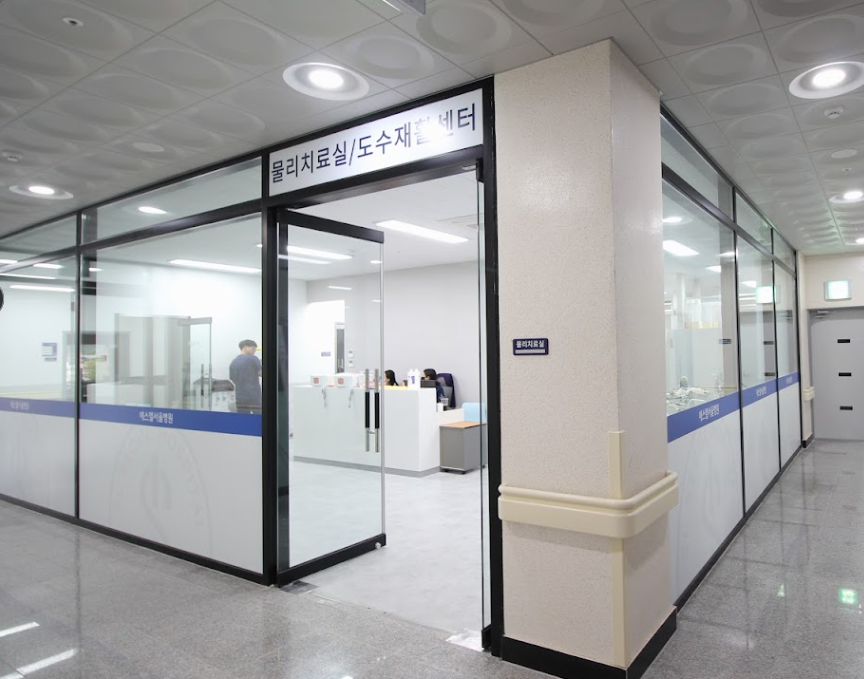
    Posture analysis and imaging such as X-rays are used to assess joint range of motion and muscle tension as well.

    Manual therapy in Uijeongbu - image 6

    Key Takeaways
    Step 1: One-on-one consultation and medical history form with a specialist
    Step 2: X-ray and detailed postural-imbalance assessment
    Step 3: Developing a personalized treatment plan based on exam results
    Step 4: Personalized manual therapy delivered by a licensed therapist

    Once a personalized plan is built from the exam results, patients receive focused, one-on-one care from their therapist.
    Safe, effective care depends on an accurate diagnosis, so it’s worth choosing a clinic with a systematic examination process in place.

    Manual therapy in Uijeongbu - image 7


    How Should You Manage Recovery Time and Prevent Symptoms From Returning?

    Recovery time varies depending on how severe your symptoms are and your individual body structure.
    When it comes to manual therapy vs massage, only one of the two is built for lasting structural correction rather than short-term relief.
    A single session may provide temporary relief, but correcting the underlying posture problem usually requires ongoing care.
    It’s common to start with 2-3 sessions a week and adjust the schedule based on progress.

    Manual therapy in Uijeongbu - image 8

    Changes You May Notice When Treatment Is Combined With Better Habits
    · Tight, stiff muscles in the neck and shoulders gradually loosen.
    · A misaligned pelvis and spine slowly settle into a more stable position.
    · It can help reduce how often pain recurs.

    Separate from the treatment itself, making an effort to change daily habits is essential for preventing symptoms from coming back.
    We recommend consistently following the guidelines below.

    Manual therapy in Uijeongbu - image 9

    Preventive Habits for Maintaining Good Posture

    • Keep your monitor at eye level
    • Stretch your spine for 10 minutes after every 50 minutes of work
    • Break the habit of crossing your legs or resting your chin on one hand
    • Use a pillow height that suits your body while sleeping

    Small changes in habit are the first step toward a healthier spine.
    Combining daily self-care with professional support may contribute to steadier recovery.

    If you suspect a structural imbalance, we recommend consulting an orthopedic clinic in the Uijeongbu area that offers a systematic diagnostic process.
    If you sit for long hours at work, checking your everyday posture is a good place to start when it comes to preventing pain.

    If you’d like more information on spine and joint health overall, you can check the department guides on the SL Seoul Hospital spine and joint homepage.

    Manual therapy in Uijeongbu - image 10


    Frequently Asked Questions

    1. Does treatment hurt a lot?
    The intensity is adjusted to each person’s pain tolerance, so you don’t need to worry about excessive pain. Rather than applying force by default, the therapist communicates with you throughout to find the right level of pressure.

    2. How long does a session take?
    A typical session runs about 40 minutes to an hour. This can vary somewhat depending on the area being treated and how the care program is structured.

    3. Can patients with a herniated disc receive treatment?
    In many cases, yes. However, whether treatment is appropriate depends on the severity of the disc issue and the degree of nerve compression, so it’s safest to proceed only after a specialist’s examination.

    4. Are there any side effects or precautions to keep in mind?
    You may feel some temporary stiffness or fatigue after treatment, which is a natural part of the muscles releasing tension. That said, if pain continues, you should be sure to consult your care team.

    Please Note
    If you have a diagnosed disc issue or nerve compression, please do not begin treatment based on self-assessment — confirm with a specialist first that treatment is appropriate for you.

    References

    · Korea Disease Control and Prevention Agency, “Forward Head Posture (Text Neck) Syndrome,” National Health Information Portal, 2024. View source
    · Seoul National University Hospital, “Forward Head Posture,” Medical Information, Seoul National University Hospital. View source
    · National Health Insurance Service, “Manual Therapy,” Non-Covered Medical Fee Information Portal. View source


    This article is intended for general health information purposes only and is not a substitute for individual diagnosis or treatment. If you’re experiencing symptoms, please consult a medical professional.

  • Scoliosis Self-Test: 4 Signs of Uneven Shoulders

    Scoliosis Self-Test: 4 Signs of Uneven Shoulders

    SummaryIf you’re curious about a scoliosis self-test, start by checking early signs like uneven shoulders and pelvic asymmetry with this checklist. We’ve organized everything from Cobb angle diagnostic criteria to manual therapy, exercise management, and recovery timelines, based on the standards used at Uijeongbu Station Orthopedic Clinic.
    Ever notice one shoulder sitting noticeably higher than the other every time you check the mirror,
    and your clothes keep slipping to one side?

    Most people chalk it up to posture habits, but it could actually be a scoliosis self-test warning sign.

    It might not be simple tech neck — it could be the start of a structural change where the spine curves sideways.

    In this article, we’ll cover the definition and causes of scoliosis, a scoliosis self-test checklist you can do at home, diagnosis and treatment criteria by Cobb angle, and recovery timelines with lifestyle management tips.

    scoliosis self-test

    image related to scoliosis self-test 2

    What Is Scoliosis?

    To cut to the chase, scoliosis is a three-dimensional spinal condition in which the spine curves into an S or C shape while the vertebrae themselves rotate.

    A healthy spine looks straight when viewed from the front and shows a gentle curve when viewed from the side.

    image related to scoliosis self-test 3

    But when this balance breaks down,
    each spinal segment can twist, throwing off the alignment of the whole body.

    According to Korea’s National Health Information Portal, roughly 80–85% of scoliosis cases are classified as idiopathic scoliosis, meaning the exact cause is unknown.

    It develops most often during the rapid-growth years of adolescence, though the number of adult cases linked to poor posture or degenerative changes has also been rising.

    Key Point
    Scoliosis isn’t just a sideways curve — it also involves a three-dimensional rotation of the vertebrae themselves.
    That’s why careful diagnosis matters.

    Scoliosis Self-Test: Can Uneven Shoulder Height Reveal It?

    Yes — a difference in shoulder or pelvic height is a common scoliosis self-test warning sign.

    In the early stages there’s little to no pain, so it’s hard to notice on your own.

    That’s why many people don’t see a doctor until the change in body shape becomes noticeable.

    image related to scoliosis self-test 4

    Uneven shoulder height, a pelvis that tilts to one side, and even one shoe sole wearing down faster than the other are all signs worth checking.

    image related to scoliosis self-test 5

    Checklist
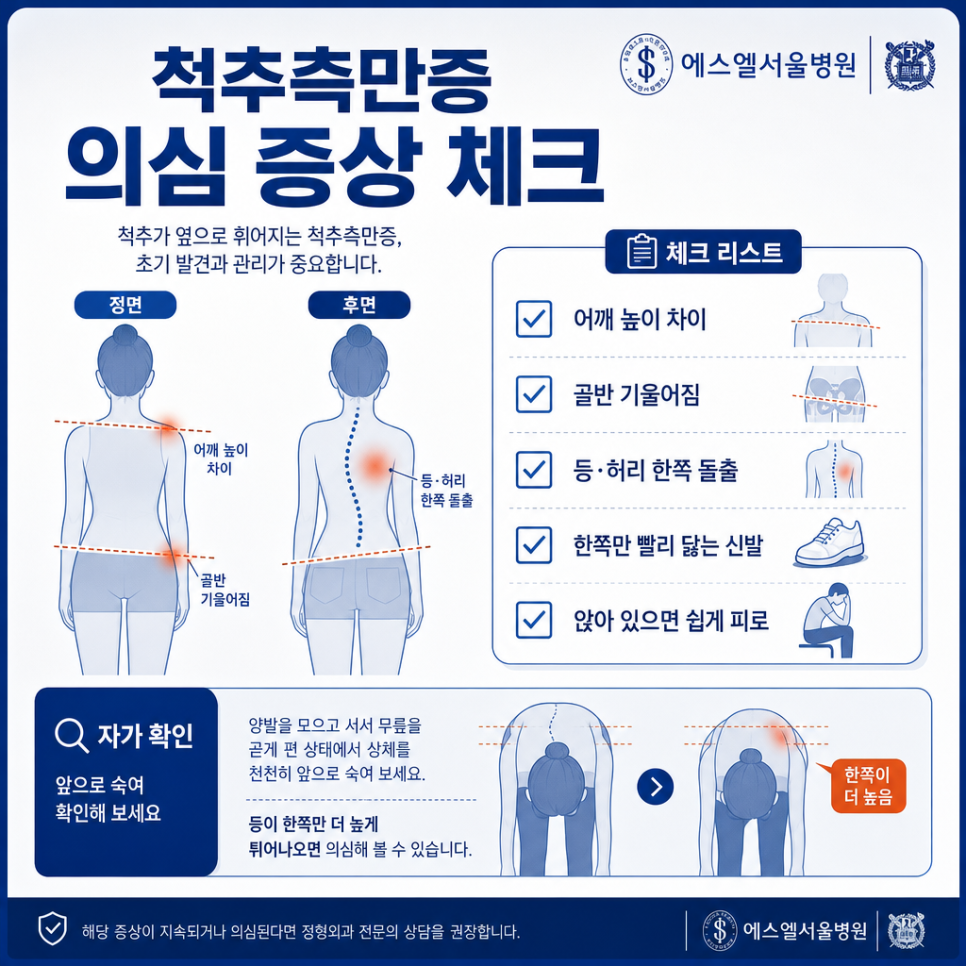
    ✅ One shoulder looks noticeably higher than the other when standing
    ✅ Pelvis height differs from side to side, or pant legs feel uneven in length
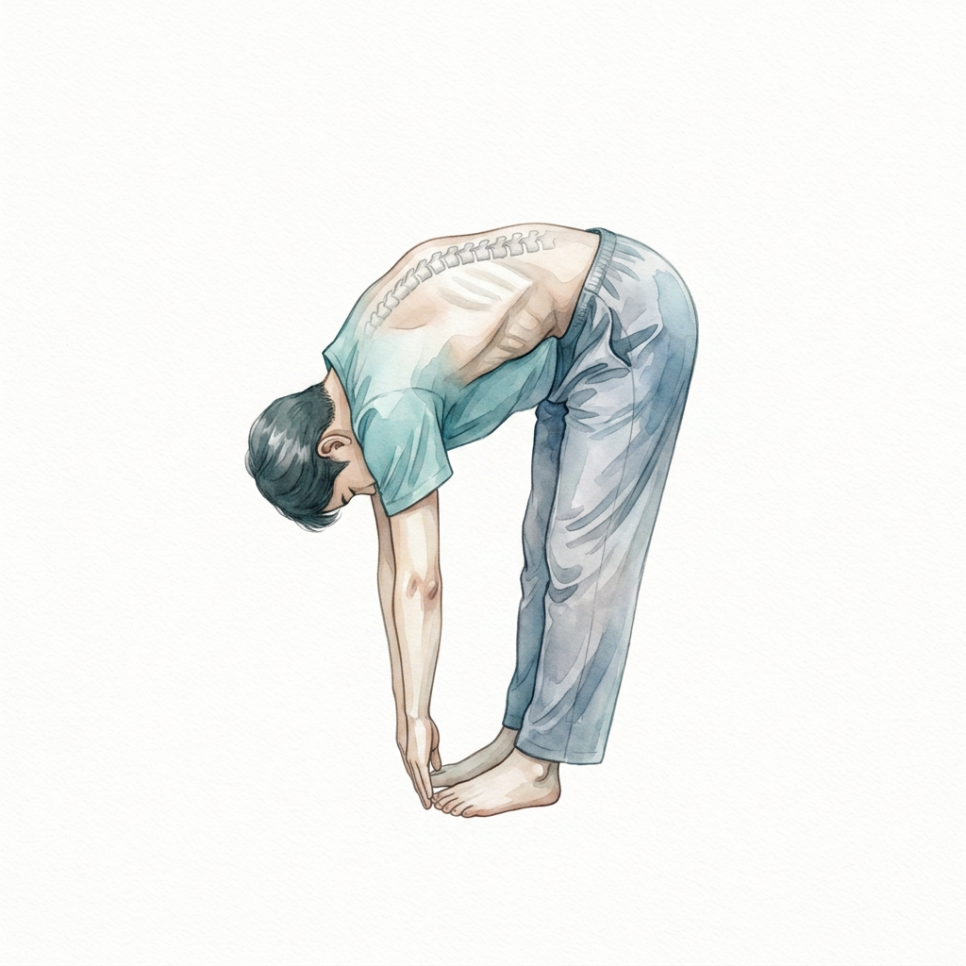
    ✅ Bending forward, one side of the back or waist rises higher than the other
    ✅ Even short periods of sitting leave your lower back and upper back feeling fatigued

    If any of these sound familiar,
    it can help to try the Adam’s forward bend test, where you bend forward at the waist to check for a difference in back height.

    That said, a visual check alone can’t confirm a diagnosis, so an accurate diagnosis requires imaging.


    How Are Scoliosis Diagnosis and Treatment Done?

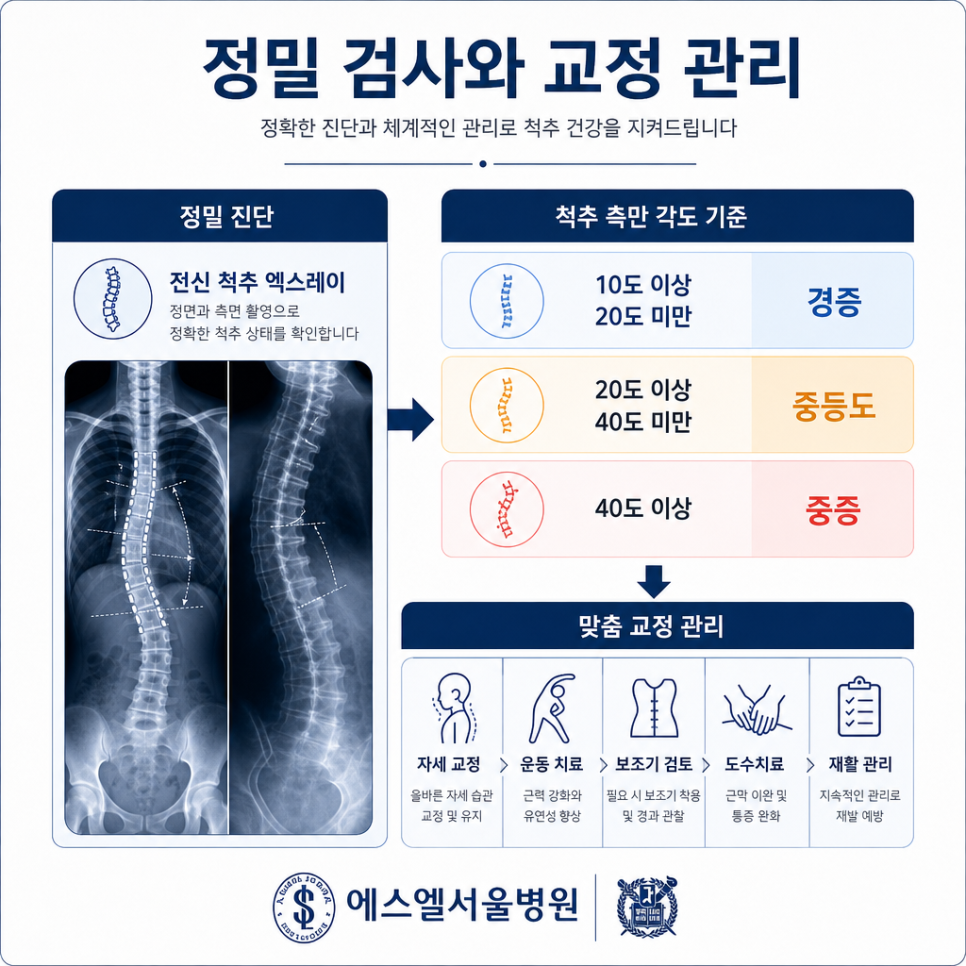
    In short, scoliosis is diagnosed with a full-spine X-ray that measures the Cobb angle.

    image related to scoliosis self-test 6

    According to Seoul Asan Hospital’s medical information, a Cobb angle of 10 degrees or more is what confirms a scoliosis diagnosis.

    Management approach depends on the degree of curvature, summarized in the table below.

    Curve Angle Diagnostic Stage Main Management Approach
    10–20 degrees Mild Posture correction, monitoring, exercise therapy
    20–40 degrees Moderate Consider bracing, manual therapy and rehabilitation
    40 degrees or more Severe Surgical treatment may be considered, close management

    image related to scoliosis self-test 7

    Key Point
    Even at an early stage with a small Cobb angle, the curve can gradually progress year by year if left unmanaged.
    That’s why regular follow-up X-rays matter.

    In early stages where the angle isn’t large, non-surgical treatment is generally tried before surgery.

    Manual therapy, in which a trained therapist works to rebalance a rotated pelvis and spine, is one common option.

    Pairing this with core-strengthening exercises such as sling exercises or Schroth method exercises can help strengthened muscles support the spine and reduce the risk of further deformity.

    Management Tips
    Low-impact, whole-body activities such as swimming (freestyle, backstroke) and core exercises like planks — which place less strain on the spine while engaging muscles evenly — can support healthier body alignment.

    How Long Is Recovery, and What Lifestyle Habits Help?

    Many people want to know how soon things return to normal once treatment starts.

    image related to scoliosis self-test 8

    Spinal changes aren’t corrected in a short time,
    so consistent, ongoing management is essential.

    In general, combining manual therapy with corrective exercise often calls for consistent management over at least 3 to 6 months, and sometimes longer.

    For adolescents who are still growing, an important task is regular monitoring until growth is complete, with the goal of preventing the curve from worsening.

    Everyday Precautions
    ⚠️ Sitting with your legs crossed or always carrying a bag on one shoulder can speed up spinal imbalance.
    ⚠️ When sitting in a chair, get in the habit of sitting with your hips pushed all the way back and keeping your lower back straight.

    image related to scoliosis self-test 9

    When using a smartphone or computer, try to reduce how far you tilt your head down, and take a 10-minute stretch break after every 50 minutes of work — small habits like these lay the groundwork for long-term spinal health.

    image related to scoliosis self-test 10

    At Uijeongbu Station Orthopedic Clinic, we look at each patient’s degree of spinal curvature, bone density, and growth stage together to discuss a personalized non-surgical management plan.

    If a loss of body balance has you concerned, we encourage you to come in for a consultation.

    You can find more information on spine and joint health at the SL Seoul Hospital (Spine & Joint) home page.

    image related to scoliosis self-test 11


    Frequently Asked Questions

    1. Can scoliosis be completely cured?
    It’s difficult to fully straighten a spine that has already changed shape, but appropriate non-surgical corrective treatment and exercise can help reduce pain, slow progression, and support daily life.

    2. Can exercise alone straighten a curved spine?
    Stretching and core exercises help build the strength that supports the spine and may help prevent the angle from worsening, but doing self-guided exercise without a precise diagnosis can sometimes make the imbalance worse, so professional guidance is the safer route.

    3. Can the spine keep curving after adulthood?
    Once growth is finished, rapid changes are less likely, but poor posture, degenerative changes, or muscle weakness can cause the curve to progress slowly — roughly 1 degree or so per year — so adults benefit from ongoing management too.

    4. How often is manual therapy needed?
    This depends on the condition of the spine and severity of symptoms, but it’s typically done 2–3 times a week at first, then adjusted to once a week or 1–2 times a month as things improve.

    5. How do I start a self-test?
    Start in front of a mirror by comparing shoulder and pelvis height on both sides, then try the Adam’s forward bend test to check for a difference in back height when bending forward. If anything feels off, follow up with an X-ray for an accurate diagnosis.

    image related to scoliosis self-test 12


    References

    · Korea Disease Control and Prevention Agency, “Spinal Deformity (Scoliosis),” National Health Information Portal, 2024. View source
    · Seoul Asan Hospital, “Scoliosis,” Disease Encyclopedia, Seoul Asan Hospital Health Information. View source
    · Seoul National University Hospital, “Scoliosis,” Medical Information, Seoul National University Hospital Health Information. View source

    This article is for general health information purposes only and is not a substitute for individual diagnosis or treatment. If you’re experiencing symptoms, please consult a medical professional.

  • Shoulder Tension Stretches: 2 Trapezius Moves in Just 5 Minutes a Day

    Shoulder Tension Stretches: 2 Trapezius Moves in Just 5 Minutes a Day

    SummaryHere’s everything you need to know about shoulder tension stretches: why the trapezius muscle tightens, plus how to choose between heat and cold therapy. Spend just 5 minutes a day building a habit that helps manage neck and shoulder pain.

    Do you find yourself rubbing your shoulders the moment you wake up?
    Most of us have felt that letdown when a massage only helps for a little while.

    The truth is, just a few minutes of shoulder tension stretches can make a real difference.
    The cause usually isn’t a lack of massages — it’s the small posture habits you repeat every day.

    어깨결림 스트레칭

    📌 Quick Preview
    This article covers the root causes of a tight trapezius and two shoulder tension stretches you can do right at your desk.
    Reviewing your posture habits alongside these stretches can also help prevent tension from coming back.

    Why Does Shoulder Tension Keep Coming Back?

    Shoulder tension develops when the trapezius and surrounding neck and shoulder muscles stay tight for extended periods.
    Shoulder tension refers to a condition where the trapezius and nearby muscles remain persistently tight, causing pain and stiffness.

    A common cause is forward head posture from long hours spent looking at a computer or smartphone.
    According to information shared through Korea’s national policy briefing service, every 1 cm the head shifts forward adds roughly 2–3 kg of extra load on the cervical spine.

    어깨결림 스트레칭 관련 이미지 2

    This forces the muscles at the back of the neck to bear an excessive share of the head’s weight.
    Over time, fatigue-related byproducts build up in the muscle and blood circulation is disrupted as well.

    When these muscles become tightly knotted, it can even contribute to headaches or eye strain, so it’s worth paying attention early.
    Left unaddressed, the tension can progress into chronic pain, which is why releasing it early matters.

    어깨결림 스트레칭 관련 이미지 3

    ⚠️ Main Causes of Shoulder Tension
    · Maintaining poor posture for long periods
    · Muscle tension caused by stress
    · Lack of exercise and reduced blood circulation

    What Shoulder Tension Stretches Can You Do at Home?

    Shoulder tension stretches are movements that slowly lengthen a tight trapezius to support blood circulation and ease tension.
    They’re simple enough to do right where you’re sitting.

    Move 1: Trapezius Stretch

    1. Sit up straight and place your right hand on the left side of your head.
    2. Gently tilt your neck to the right, as if pulling it in that direction.
    3. When you feel a comfortable stretch, hold for 15 seconds while breathing slowly.
    4. Repeat on the other side.

    어깨결림 스트레칭 관련 이미지 4

    Repeating this may help loosen up tightness along the neck and shoulder line.

    어깨결림 스트레칭 관련 이미지 5

    Move 2: Shoulder Blade Squeeze

    1. Raise both arms to a 90-degree angle.
    2. Open your chest as if drawing your shoulder blades together.
    3. Keep your shoulders pulled down so they don’t rise up toward your ears.
    4. Repeat consistently at least 3 times a day.
    📌 Key Points to Remember Before Stretching
    · Stretch only to the point of a comfortable pulling sensation, not pain
    · Keep breathing slowly instead of holding your breath during each move
    📋 Stretching Routine Checklist
    ✅ Neck stretch, left and right (15 seconds x 3 sets)
    ✅ Shoulder blade squeeze to open the chest (10 seconds x 5 sets)
    ✅ Big shoulder rolls backward (10 reps)
    ✅ Changes You May Notice With Consistent Practice
    · May help reduce tension in tight muscles
    · May help improve blood circulation around the neck and shoulders

    What Daily Habits Help Prevent Shoulder Pain?

    Preventing pain relies just as much on maintaining good posture throughout the day as it does on stretching.
    If you don’t change your everyday habits, tension tends to come right back no matter how much you stretch.

    It helps to adjust your monitor so the screen sits at eye level.
    When looking at your phone, try raising it to eye level instead of tilting your head down.

    어깨결림 스트레칭 관련 이미지 6

    If your work requires staying in one position for long stretches, the general rule is to take a short break every 50 minutes.
    Even something as simple as stretching your arms overhead or marching lightly in place can make a real difference.

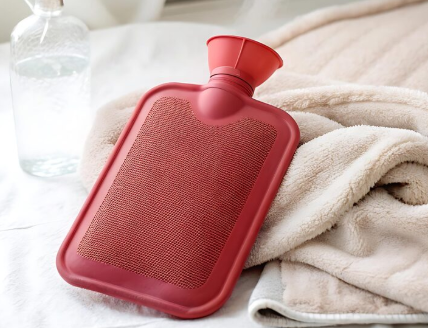
    When Should You Use Heat vs. Cold Therapy?

    When managing an area that’s already tight, it’s important to use the right type of therapy.

    Category Cold Therapy Heat Therapy
    When to Use First 24–48 hours after acute pain begins Chronic tightness or tension
    Main Effect Reduces swelling and inflammation Promotes circulation, relaxes muscles
    Recommended Duration 15–20 minutes 15–20 minutes

    If pain keeps recurring even after combining stretches with better posture habits, it may be worth consulting a specialized medical center.
    Visit SL Seoul Hospital for Spine & Joints to learn more.

    🚀 Benefits of Maintaining Good Posture
    · May help reduce physical strain on the neck and shoulders
    · May help support recovery from fatigue through improved circulation
    · May help prevent chronic headaches and postural changes

    Frequently Asked Questions

    1. What should I do if stretching causes sharp pain?
    If you feel pain, stop the movement right away and reduce the intensity. Pushing through pain can actually damage the muscle.

    2. Is heat or cold therapy better for a tight shoulder?
    For tension that has lasted a while, heat therapy can help by supporting circulation. However, if there’s a sudden injury or acute inflammation, cold therapy should be applied first.

    3. How many times a day should I do shoulder tension stretches?
    Rather than sticking to a fixed schedule, it’s more effective to stretch frequently throughout the day. Try to move your shoulders and neck at least once an hour.

    4. If pain continues even with regular stretching, should I see a doctor?
    If pain keeps recurring or is accompanied by symptoms like arm numbness even after weeks of stretching and posture correction, it’s recommended to see a specialist such as an orthopedist.

    어깨결림 스트레칭 관련 이미지 7


    References

    · Korea Disease Control and Prevention Agency, “Text Neck (Forward Head) Syndrome,” National Health Information Portal. View source
    · Korea.kr Policy Briefing, “Stretches That Help Correct Forward Head Posture,” Ministry of Culture, Sports and Tourism. View source
    · St. Carollo Hospital, “Cold vs. Heat Therapy: When Should You Use Each?,” Health Information. View source


    This article is intended for general health information purposes only and is not a substitute for individual diagnosis or treatment. If you’re experiencing symptoms, please consult a licensed physician.

  • Shoulder Stiffness Stretches: 5 Minutes a Day, 2 Moves to Release Tight Traps

    Shoulder Stiffness Stretches: 5 Minutes a Day, 2 Moves to Release Tight Traps

    SummaryThis guide covers shoulder stiffness stretches, why the trapezius muscle tightens, and when to use heat versus cold therapy. Spend just 5 minutes a day building a habit that helps manage neck and shoulder discomfort.

    Do you find yourself rubbing your shoulders the moment you wake up?
    Most of us have felt that frustration of a massage helping only for a moment before the tension creeps right back.

    The truth is, just a few minutes of shoulder stiffness stretches may help.
    The cause usually isn’t a lack of massages — it’s the small posture habits we repeat every day.

    shoulder stiffness stretches

    📌 Quick Preview
    This article breaks down the root cause of trapezius tightness and two shoulder stiffness stretches you can do right at your desk.
    Reviewing your posture habits alongside these stretches can also help reduce recurrence.

    Why Does Shoulder Stiffness Keep Coming Back?

    Shoulder stiffness develops when the trapezius and the muscles around the neck and shoulders stay tense for extended periods.
    Shoulder stiffness refers to a state in which the trapezius and surrounding muscles remain chronically tense, causing pain and tightness.

    One common cause is the forward head posture that happens when we stare at a computer or smartphone for long stretches.
    According to information shared through South Korea’s official policy briefing service, every 1 cm the head shifts forward can add roughly 2–3 kg of extra load onto the cervical spine.

    Image related to shoulder stiffness stretches 2

    That’s because the muscles at the back of the neck end up bearing far more of the head’s weight than they should.
    Over time, fatigue byproducts build up in the muscle and blood circulation gets disrupted as well.

    When these muscles become tightly knotted, it can even lead to headaches or eye strain, so it’s worth paying attention early.
    Left unaddressed, the tension can progress into chronic pain, which is why releasing it early matters.

    Image related to shoulder stiffness stretches 3

    ⚠️ Main Causes of Shoulder Stiffness
    · Maintaining poor posture for long periods
    · Muscle tension from stress
    · Lack of exercise and poor circulation

    How to Do Shoulder Stiffness Stretches at Home

    Shoulder stiffness stretches are movements that slowly lengthen a tight trapezius to support circulation and ease tension.
    They’re simple enough to do right from your chair.

    Move 1. Trapezius Stretch

    1. Sit up straight and place your right hand on the left side of your head.
    2. Gently tilt your neck to the right, as if pulling with your hand.
    3. Once you feel a comfortable stretch, hold for 15 seconds while breathing slowly.
    4. Repeat on the opposite side.

    Image related to shoulder stiffness stretches 4

    Repeating this may help loosen the tight muscles along your neck and shoulder line.

    Image related to shoulder stiffness stretches 5

    Move 2. Shoulder Blade Squeeze

    1. Raise both arms to a 90-degree angle.
    2. Open your chest as if trying to bring your shoulder blades together.
    3. Keep your shoulders pulled down rather than letting them creep up toward your ears.
    4. Repeat consistently at least 3 times a day.
    📌 Key Points to Remember Before Stretching
    · Only stretch to the point of a comfortable pull, never to the point of pain
    · Keep breathing slowly throughout — don’t hold your breath
    📋 Stretching Routine Checklist
    ✅ Neck stretch, left and right (15 seconds x 3)
    ✅ Shoulder blade squeeze to open the chest (10 seconds x 5)
    ✅ Big shoulder rolls backward (10 reps)
    ✅ Changes You May Notice With Consistent Practice
    · May help reduce tension in tight muscles
    · May help support circulation around the neck and shoulders

    Daily Habits That Help Prevent Shoulder Pain

    Preventing pain relies just as much on maintaining good posture throughout the day as it does on stretching.
    If your everyday habits don’t change, the stiffness tends to come right back no matter how often you stretch.

    It helps to set your monitor at eye level.
    When looking at your phone, try raising it to eye level instead of tilting your head down.

    Image related to shoulder stiffness stretches 6

    If you do need to stay in one position for long stretches of work, the general rule is to take a short break every 50 minutes.
    Even something as simple as stretching your arms overhead or marching in place for a moment may help.

    When Should You Use Heat vs. Cold Therapy?

    When managing an area that’s already tight, it’s important to use the right type of compress.

    Category Cold Therapy Heat Therapy
    When to Use Within 24–48 hours of acute pain onset Chronic tightness or stiffness
    Main Effect Reduces swelling and inflammation Promotes circulation, relaxes muscles
    Recommended Duration 15–20 minutes 15–20 minutes

    If pain keeps coming back even after combining stretching with better posture habits, it may be worth having it evaluated at a specialized clinic.
    SL Seoul Hospital Spine & Joint Center homepage has more information on this topic.

    🚀 Benefits of Maintaining Good Posture
    · May help reduce physical strain on the neck and shoulders
    · May support recovery from fatigue through better circulation
    · May help prevent chronic headaches and postural changes

    Frequently Asked Questions

    1. What should I do if a stretch causes significant pain?
    Stop the movement immediately and ease off the intensity. Pushing through pain can end up damaging the muscle instead of helping it.

    2. Is heat or cold better for tight shoulders?
    For long-standing tightness and stiffness, heat therapy tends to help by supporting circulation. However, if there’s a sudden injury or acute inflammation, cold therapy should be applied first.
    3. How often should I do shoulder stiffness stretches each day?
    Rather than sticking to a fixed schedule, doing them frequently throughout the day tends to work better. Try to move your shoulders and neck at least once an hour.

    4. If the pain continues even with consistent stretching, should I see a doctor?
    If pain keeps recurring after several weeks of stretching and posture correction, or if it’s accompanied by symptoms like arm numbness, it’s advisable to see a specialist such as an orthopedic doctor.

    Image related to shoulder stiffness stretches 7


    References

    · Korea Disease Control and Prevention Agency, “Text Neck (Forward Head) Syndrome,” National Health Information Portal. View Source
    · Korea.kr Policy Briefing, “Stretches That Help Correct Forward Head Posture,” Ministry of Culture, Sports and Tourism. View Source
    · St. Carollo Hospital, “Cold vs. Heat Therapy: When Should You Use Each?,” Health Information. View Source


    This article is intended for general health information purposes only and is not a substitute for individual diagnosis or treatment. If you’re experiencing symptoms, please consult a medical professional.