Category: Uncategorized

  • Morning Foot Pain: 3 Common Causes and Stretches That Help

    Morning Foot Pain: 3 Common Causes and Stretches That Help

    SummaryMorning foot pain happens because the plantar fascia tightens overnight and is then suddenly stretched when you take your first steps. Use this guide to tell plantar fasciitis, Morton’s neuroma, and Achilles tendinitis apart, learn stretches to do right after waking up, and find out how to choose supportive shoes.

    Ever felt a stabbing pain the instant your foot touched the floor after getting out of bed?

    It’s easy to brush it off as “I guess I was just extra tired yesterday,” but if the same pain shows up every single day, it’s a classic sign of morning foot pain.

    It may not be simple fatigue — it could be your foot tendons sending you a warning.

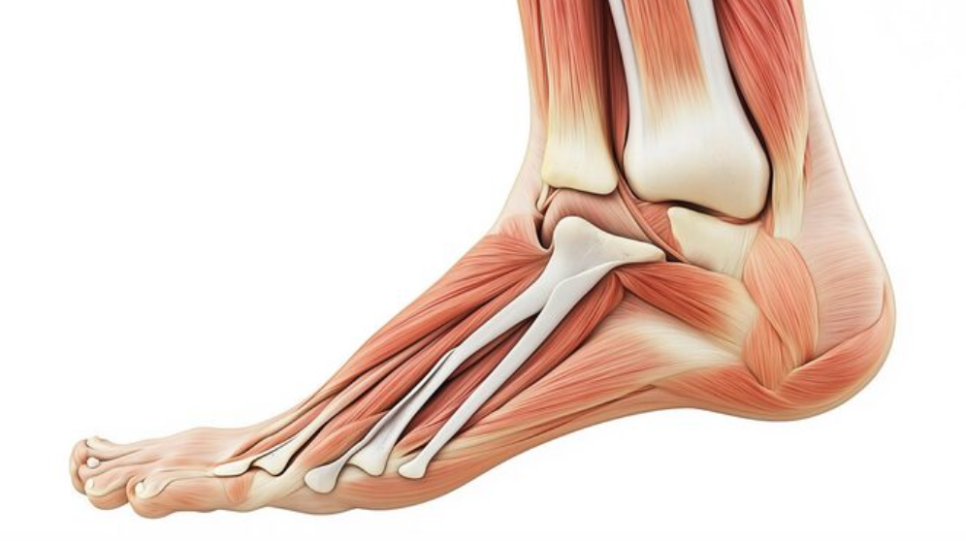
    morning foot pain

    Key takeaway
    Morning foot pain occurs when the plantar fascia (the band of tissue on the sole of your foot), which tightens while you sleep, suddenly has to bear your full body weight the moment you get up — causing tiny amounts of damage.
    Plantar fasciitis, Morton’s neuroma, and Achilles tendinitis are the most common underlying conditions, and if left unaddressed, the pain can progress into a chronic gait problem, which is why early stretching and care matter.

    Why does foot pain get worse the moment you step out of bed?

    The short answer: it’s because the plantar fascia, which tightened overnight, suddenly has to bear your full body weight the moment you get up.
    The plantar fascia is a thick band of fibrous tissue running from the heel bone to the toes, and it supports your foot’s arch while absorbing impact.

    While you sleep, your ankle naturally stays in a relaxed, downward-pointing position.
    During those hours, the plantar fascia stays contracted.

    But the moment you get up in the morning and put weight on your foot,
    the tightened tissue suddenly stretches out and sustains micro-damage.
    That’s what triggers the sharp, stabbing pain.

    morning foot pain illustration 2

    Many people brush it off because the pain seems to ease after a few steps.
    But if this pattern repeats over time, it can worsen into a chronic gait problem that makes walking itself difficult.

    morning foot pain illustration 3

    Key point
    · According to the American Academy of Family Physicians (AAFP), about 94% of plantar fasciitis patients report their pain is most severe during the first steps of the morning.
    · According to National Health Insurance Service data (2010–2014), the number of patients treated for plantar fasciitis roughly doubled over five years, from about 91,000 in 2010 to about 179,000 in 2014.
    A word of caution
    Assuming “it’ll feel better once I’m up and moving” and ignoring the pain can allow it to become chronic, with discomfort lasting all day.

    What are the 3 main conditions that cause morning foot pain?

    Morning foot pain is generally caused by one of three conditions: plantar fasciitis, Morton’s neuroma, or Achilles tendinitis.
    Since the location and cause of the pain differ for each, it’s worth learning to tell them apart.

    Plantar fasciitis is inflammation of the thick band of tissue that runs from the heel bone to the base of the toes.
    Pain tends to concentrate on the inside of the heel,
    and the risk rises with prolonged standing or frequently wearing shoes with little cushioning.

    “Plantar fasciitis is a condition in which repeated strain and overload on the plantar fascia — which supports the foot’s arch and absorbs impact — leads to inflammation and pain.”

    This definition comes from South Korea’s national health information portal, maintained by the Korea Disease Control and Prevention Agency.

    Morton’s neuroma occurs when a nerve leading to the toes becomes compressed and thickens, causing pain in the front of the foot.
    It typically produces a tingling or burning sensation between the third and fourth toes.
    Frequently wearing narrow-toed shoes or high heels raises the risk.
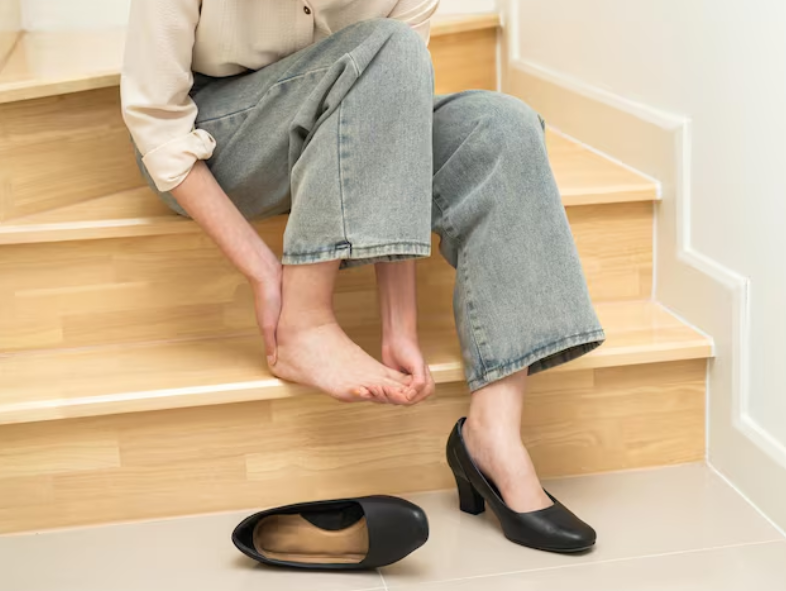
    morning foot pain illustration 4

    Achilles tendinitis is an inflammatory condition caused by overuse of the Achilles tendon at the back of the ankle.
    Pain tends to spread from the upper heel through the entire sole of the foot.
    A sudden jump in exercise intensity or excessive walking are common triggers.

    Condition Pain Location Main Causes
    Plantar fasciitis Inside of the heel Prolonged standing, shoes with little cushioning
    Morton’s neuroma Between the 3rd and 4th toes Narrow-toed shoes, high heels
    Achilles tendinitis Upper heel to entire sole Sudden increase in exercise, excessive walking

    morning foot pain illustration 5

    Checklist
    ✅ Your inner heel feels a sharp twinge when you get up in the morning
    ✅ Your sole feels stiff and achy after sitting for a long time
    ✅ You feel a burning sensation or like you’re stepping on sand between your toes
    ✅ The back of your ankle and your heel feel heavy and sore after exercise
    Key point
    · According to data released by South Korea’s Ministry of Health and Welfare (2016), women were treated for plantar fasciitis about 1.4 times more often than men.
    · If 2 or more items on the checklist above apply to you, it’s a good idea to see an orthopedic specialist.

    How should you stretch and manage morning foot pain?

    In short, just 1–2 minutes of gentle stretching before getting out of bed may help ease the pain.
    The key is to stretch the plantar fascia before you actually stand up.

    1. While still lying in bed, slowly pull your toes and ankle toward your body.
    2. Use your hand to gently pull your toes back and hold for 10–15 seconds.
    3. Alternate between feet and repeat 3–4 times.
    4. After stretching, shift your weight on gradually as you take your first step.
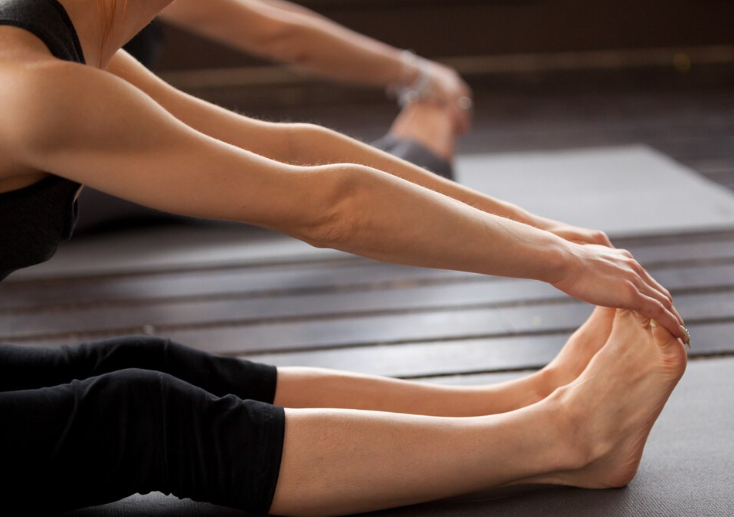
    morning foot pain illustration 6

    Stretching alone, however, may not be enough.
    The shoes you choose also play a big role in managing the pain.

    Look for shoes with shock-absorbing cushioning and an appropriate heel height.
    Walking barefoot on hard floors adds extra impact to the heel and may make the pain worse.

    morning foot pain illustration 7

    Potential benefit
    Consistent plantar fascia stretching combined with supportive footwear may help distribute the body-weight load placed on the sole during walking.

    If symptoms last more than 2 weeks or get worse, self-care alone may not be enough.
    In that case, an accurate diagnosis from an orthopedic or pain management specialist is needed.
    Visit the SL Seoul Spine & Joint Hospital homepage to check available treatments and how to book a consultation.


    Frequently Asked Questions

    1. The pain only happens in the morning and eases once I start walking — is it okay to just leave it alone?
    Answer: In the early stages, pain may ease with activity, but if left unaddressed it can become chronic, with discomfort persisting throughout the day. Getting an accurate assessment and starting care early matters.

    2. Does a warm foot soak help relieve foot pain?
    Answer: A lukewarm foot soak may help improve blood flow around the foot and relax a tight fascia.

    3. Isn’t walking barefoot at home good for my feet?
    Answer: Putting your full weight directly on a hard floor can increase the impact on your heel, so wearing cushioned indoor slippers may offer better protection.

    4. Which specialist should I see?
    Answer: It’s recommended to get a diagnosis from a specialist at a facility that treats foot conditions, such as an orthopedic clinic or a pain management clinic.

    5. How long does it take for morning foot pain to improve?
    Answer: Recovery time varies by person, and consistent stretching and care may help ease symptoms gradually over time. If symptoms persist, a consultation with a specialist is recommended.

    morning foot pain illustration 8


    References

    · South Korea’s Ministry of Health and Welfare, “Plantar Fasciitis — the ‘Sole Pain’ Condition — Nearly Doubled Over 5 Years,” Ministry of Health and Welfare press release, 2016. View source
    · Korea Disease Control and Prevention Agency, “Plantar Fasciitis,” National Health Information Portal, 2024. View source
    · American Academy of Family Physicians, “Plantar Fasciitis,” American Family Physician, 2019. View source


    This article is intended for general health information purposes only and is not a substitute for individual diagnosis or treatment. If you’re experiencing symptoms, please consult a medical professional.
  • Orthopedic Clinic for Manual Therapy: 3 Criteria for Choosing the Right One

    Orthopedic Clinic for Manual Therapy: 3 Criteria for Choosing the Right One

    SummaryBefore choosing an orthopedic clinic for manual therapy, here’s a rundown of why musculoskeletal pain develops, how it’s diagnosed, how manual therapy differs from regular massage, typical costs, and proper posture habits.

    If neck and shoulder pain doesn’t ease up no matter how much you rest,
    it may not be simple muscle soreness.

    Before looking for an orthopedic clinic for manual therapy,
    it helps to understand the real reason the pain keeps coming back.

    Key Takeaways
    The main driver of chronic pain is often structural imbalance in the spine and joints along with reduced mobility.
    After an accurate diagnostic workup, combining individualized manual therapy with posture correction may help with pain relief and improved body alignment.
    This article covers, in order, what causes the pain, how to choose an orthopedic clinic for manual therapy, and proper posture habits.

    orthopedic clinic for manual therapy

    Why Does Musculoskeletal Pain Happen, and How Is It Diagnosed?

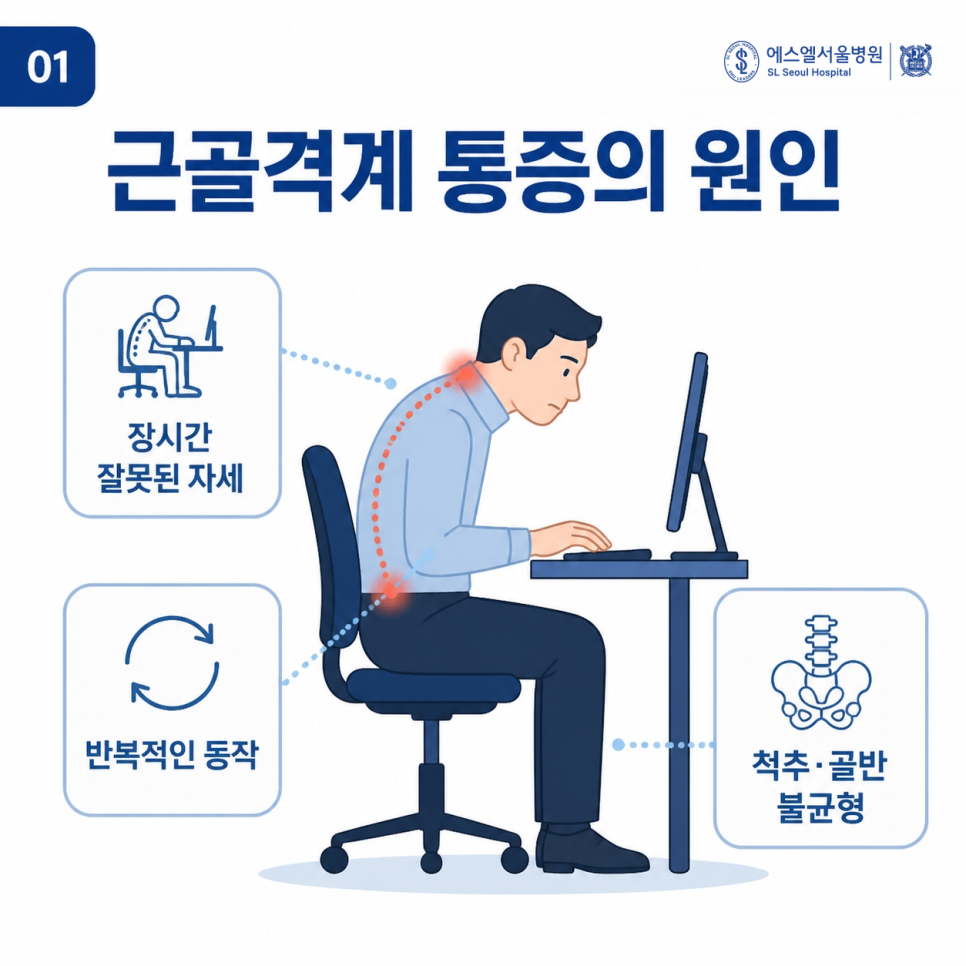
    Musculoskeletal pain refers to pain and functional impairment that develops when the spine, joints, muscles, and tendons are subjected to repeated strain over time.
    It commonly shows up after sitting in the same position for long stretches or repeating the same movements.

    It often starts as mild stiffness that’s easy to brush off.
    But
    left unaddressed, it can gradually worsen into structural imbalance in the spine and joints.

    orthopedic clinic for manual therapy illustration 2

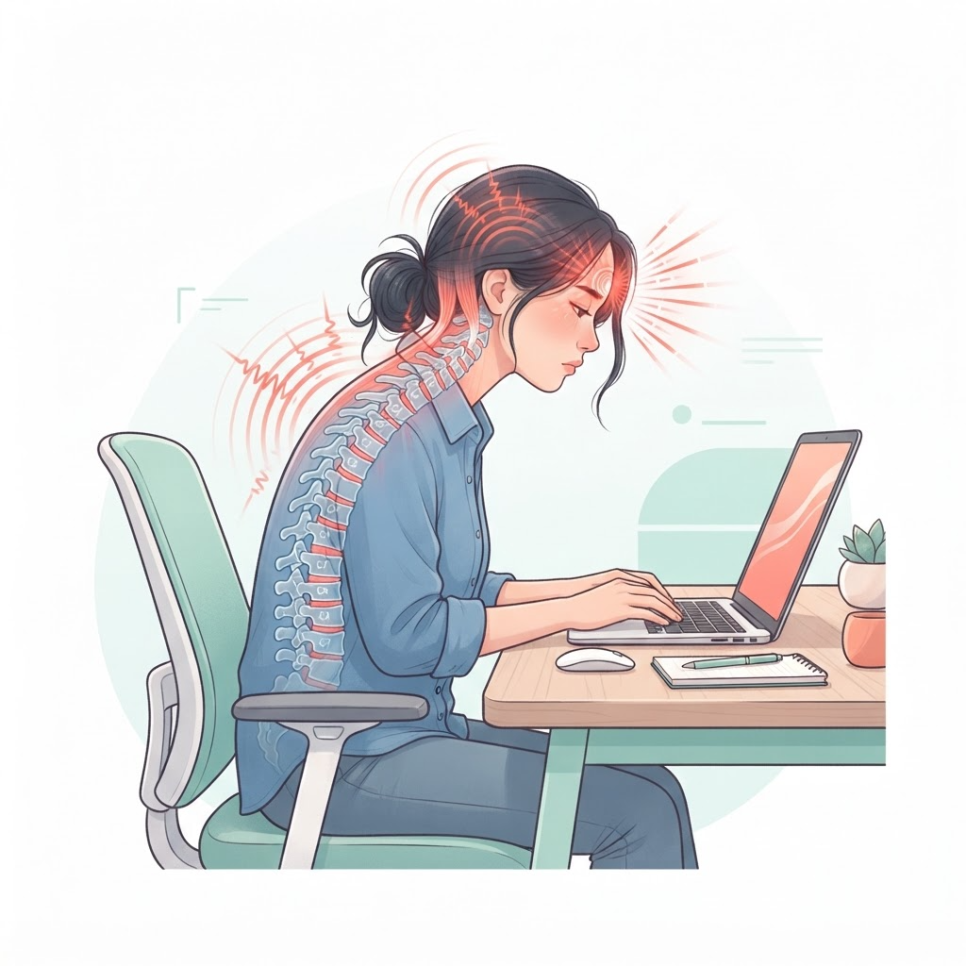
    Office work in particular tends to tighten the neck and shoulder muscles.
    One survey found that 64% of office workers reported neck and shoulder pain consistent with forward head posture, commonly known as “text neck.”

    Dismissing early warning signs as mere fatigue tends to shorten the interval between pain flare-ups.
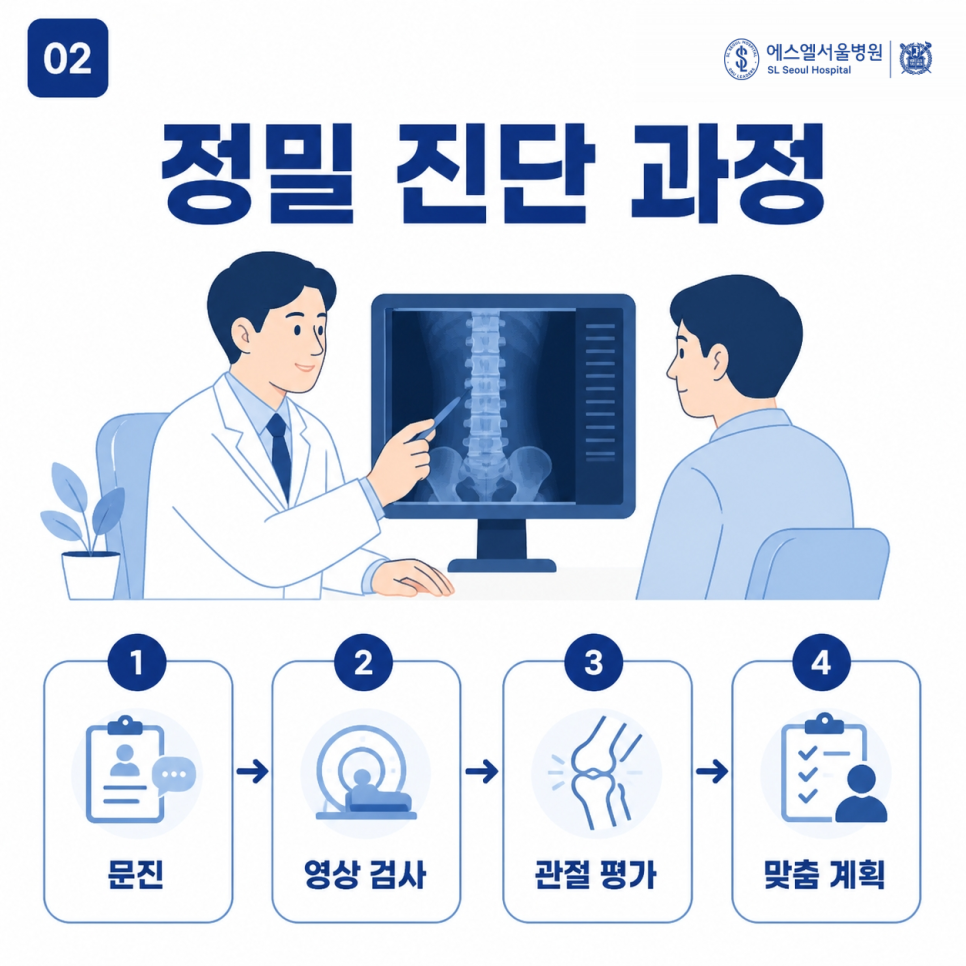
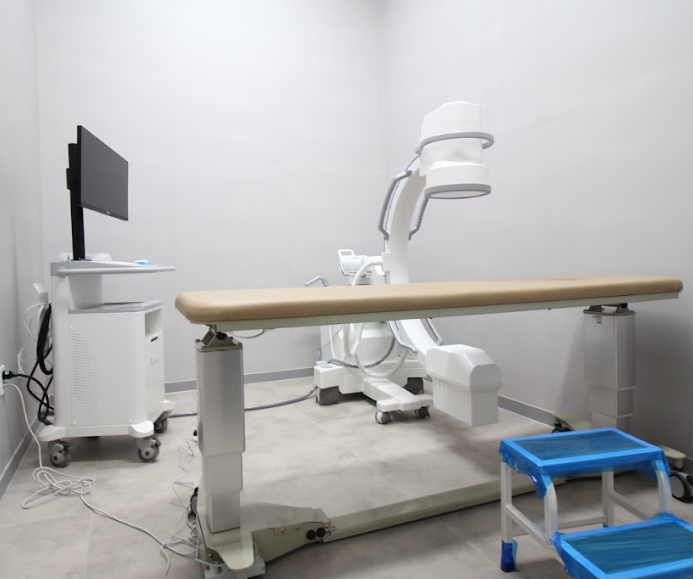
    So if pain keeps recurring, the joints and muscles should first be evaluated with diagnostic imaging such as X-ray or C-arm fluoroscopy.

    orthopedic clinic for manual therapy illustration 3

    orthopedic clinic for manual therapy illustration 4

    A musculoskeletal disorder is a health impairment caused by factors such as repetitive motion, awkward working posture, excessive force, contact with sharp edges, vibration, and temperature, manifesting as a condition affecting the nerves, muscles, and surrounding tissue of the neck, shoulders, lower back, and limbs.

    This is how South Korea’s Ministry of Employment and Labor defines musculoskeletal disorders under its Occupational Safety and Health Standards.
    It’s also why an accurate medical diagnosis needs to come first, before building a management plan tailored to you.

    orthopedic clinic for manual therapy illustration 5

    orthopedic clinic for manual therapy illustration 6

    Key Points
    • Don’t brush off early signs of chronic pain.
    • Poor posture can worsen imbalance in the spine and pelvis.
    • A thorough diagnostic evaluation of the anatomical structures should come first, for safety.

    How Do You Choose an Orthopedic Clinic for Manual Therapy?

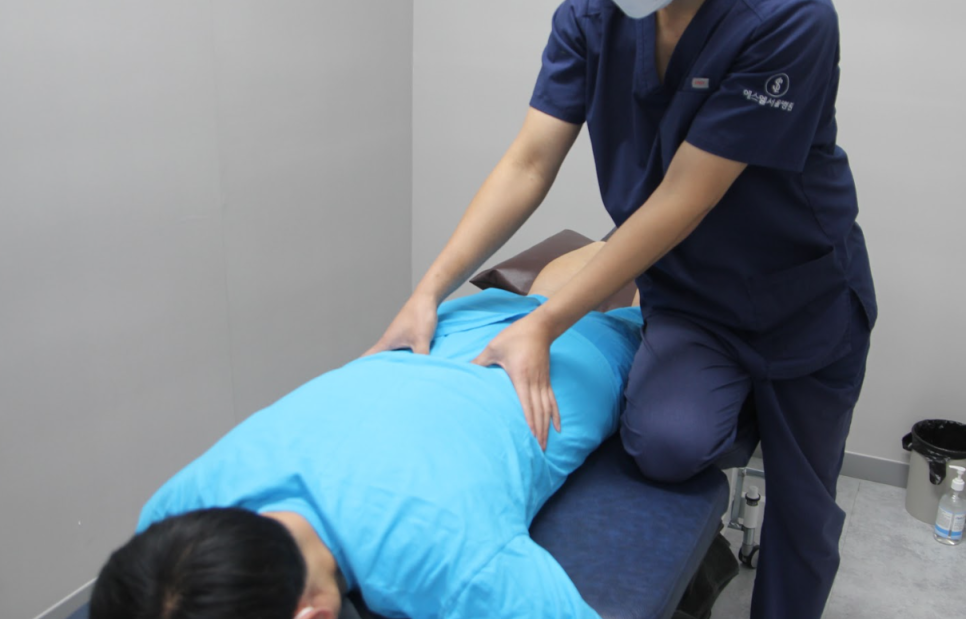
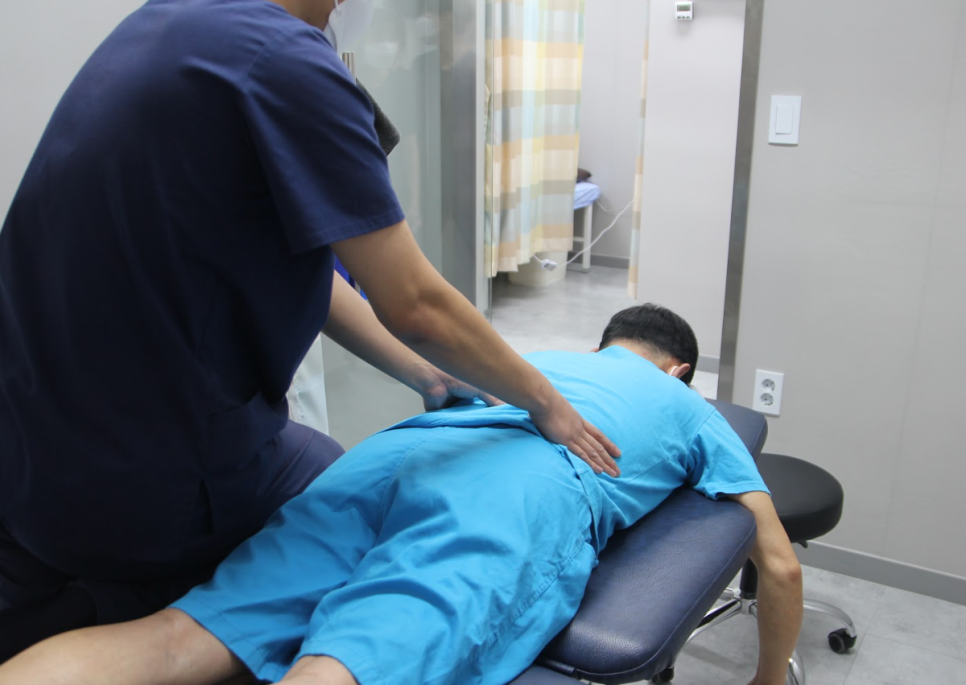
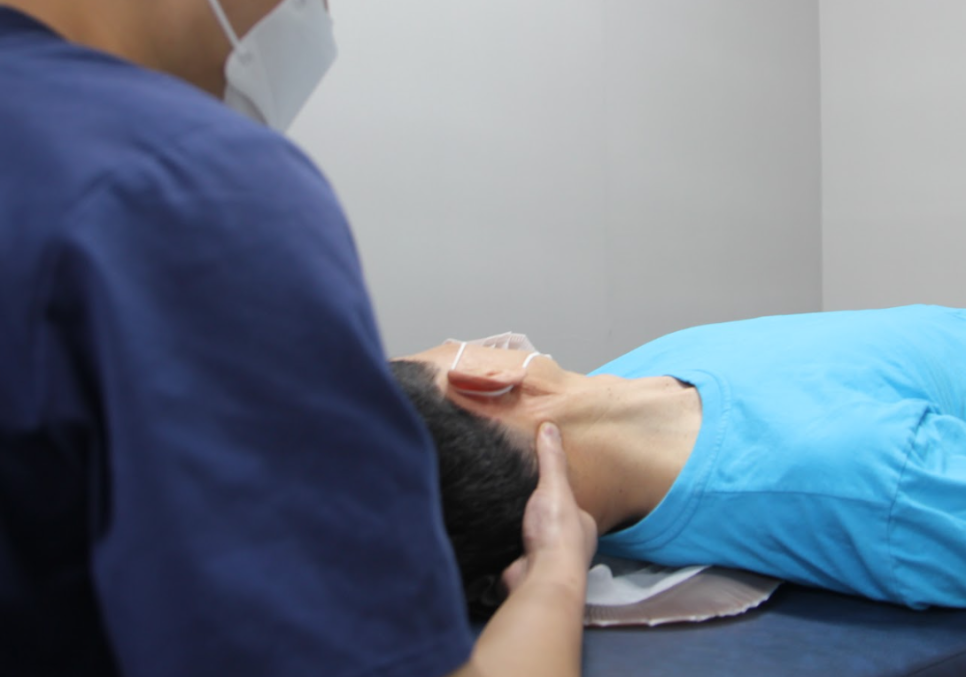
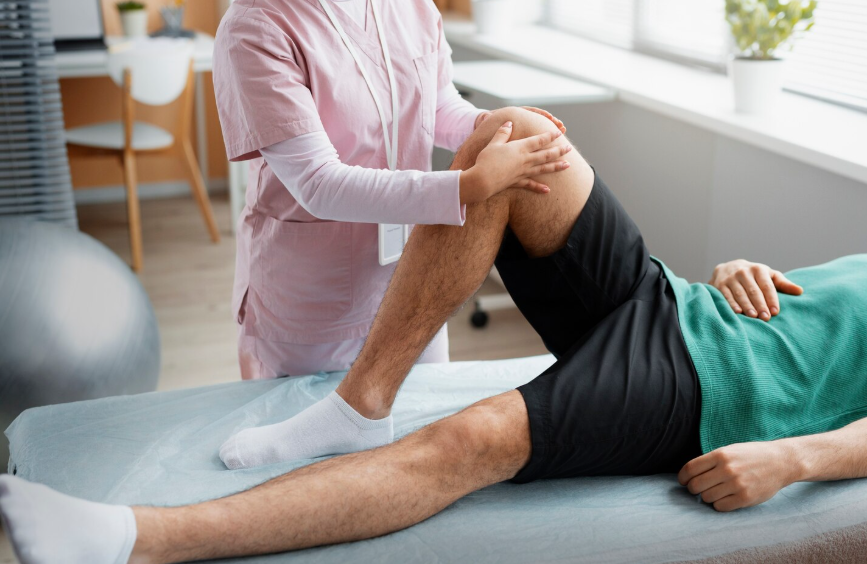
    Manual therapy is a non-surgical, conservative treatment in which a therapist with specialized anatomical training uses their hands to help realign a misaligned spine or joint, aiming to ease pain.
    It places less physical burden on the body than medication or surgery.

    The key is combining an accurate diagnosis and prescription from an orthopedic specialist with hands-on treatment from an experienced therapist.
    Excessive manipulation that doesn’t account for an individual’s physical characteristics can actually make pain worse,
    so it’s advisable to consult a clinic with substantial clinical experience and a systematic care process.

    orthopedic clinic for manual therapy illustration 7

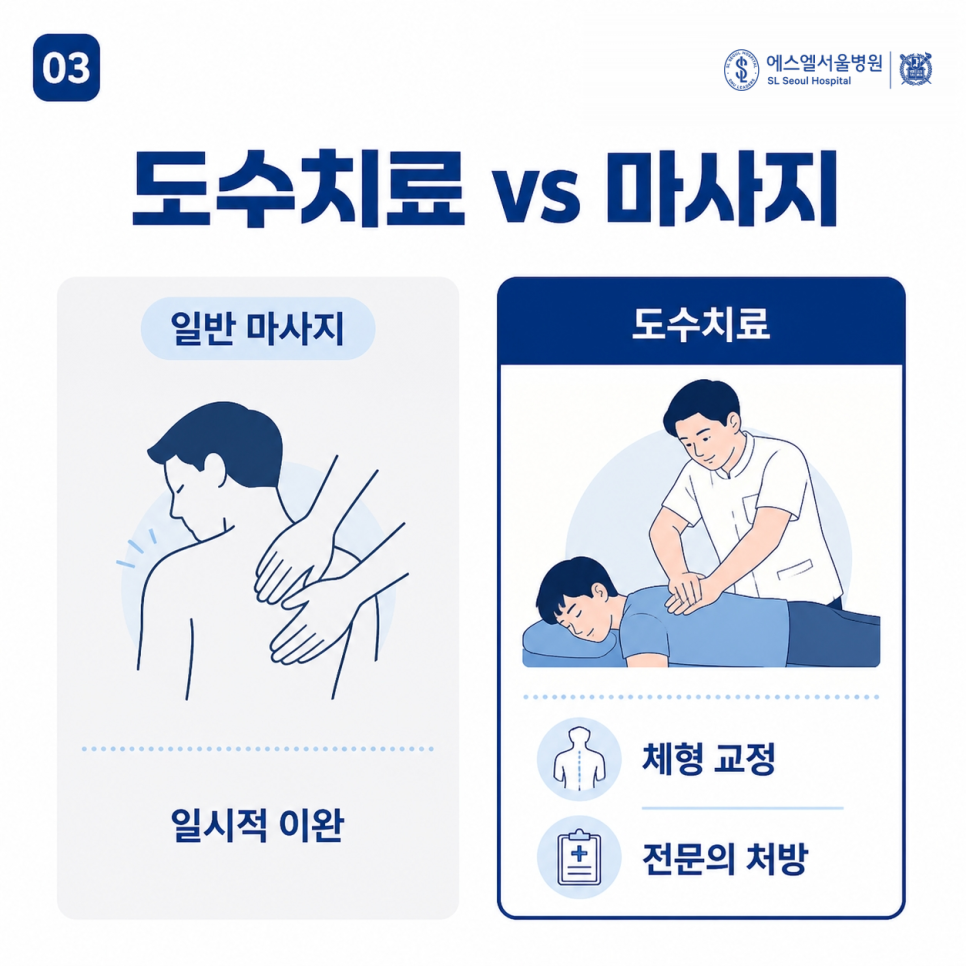
    Comparison Regular Massage Manual Therapy
    Purpose Temporary muscle relaxation, fatigue relief Improving joint function, correcting body imbalance
    Diagnostic process No medical diagnostic process Managed based on a specialist’s diagnosis and prescription
    Cost structure Service fee Non-reimbursed medical procedure

    orthopedic clinic for manual therapy illustration 8

    orthopedic clinic for manual therapy illustration 9

    According to South Korea’s Ministry of Health and Welfare, manual therapy prices used to vary by hospital, averaging around 110,000 KRW per session.
    However,
    starting in July 2024, a managed-benefit scheme took effect, standardizing the price at 43,850 KRW per session (at a 95% patient co-payment rate) for cases that meet the criteria.
    The Health Insurance Review and Assessment Service classifies manual therapy as a non-reimbursed physical therapy item, so sessions beyond the covered number may be fully out-of-pocket.

    Self-Check
    ✅ Your head juts forward noticeably when looking at a monitor or phone
    ✅ Your pelvis is tilted, so one shoe sole wears out faster than the other
    ✅ Unexplained shoulder tightness and neck pain keep recurring

    If these symptoms keep recurring, you can also check care information at the SL Seoul Hospital Spine & Joint Center homepage.


    What Posture Habits Help Prevent Pain From Coming Back?

    Maintaining the benefits of manual therapy over time depends as much on daily habits as on the treatment itself.
    Try incorporating the habits below.

    orthopedic clinic for manual therapy illustration 10

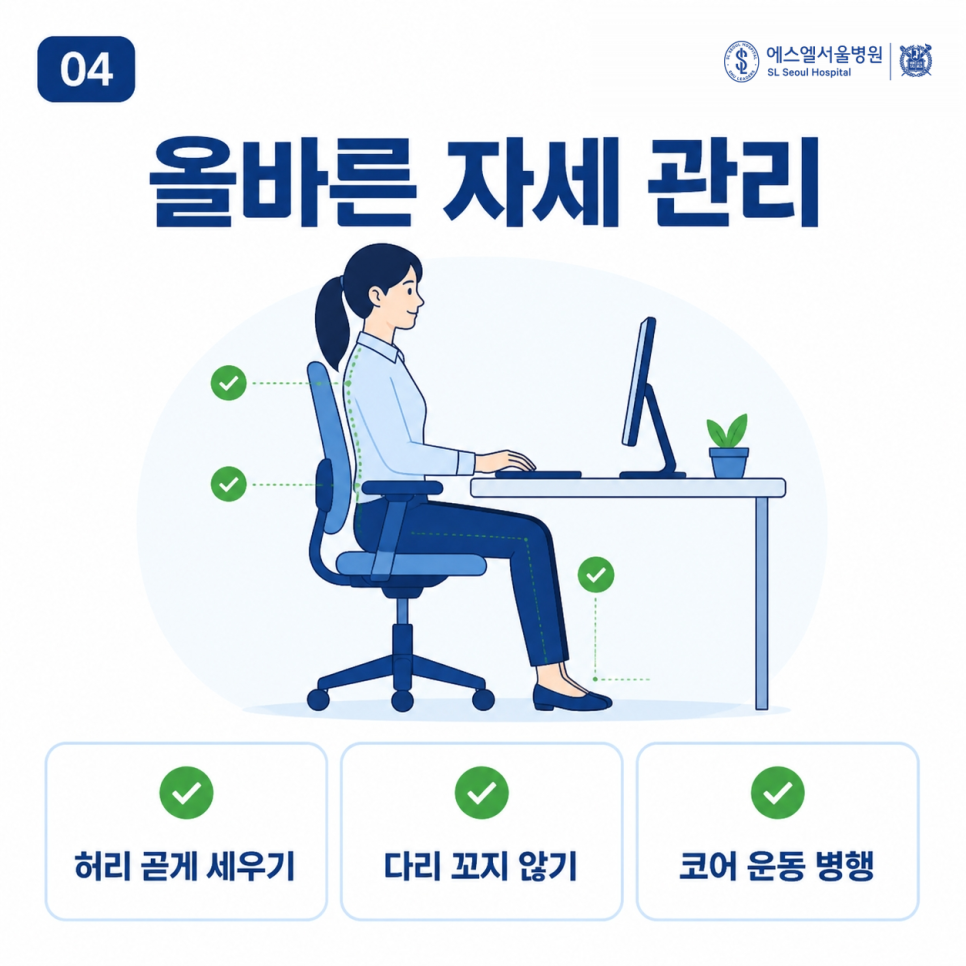
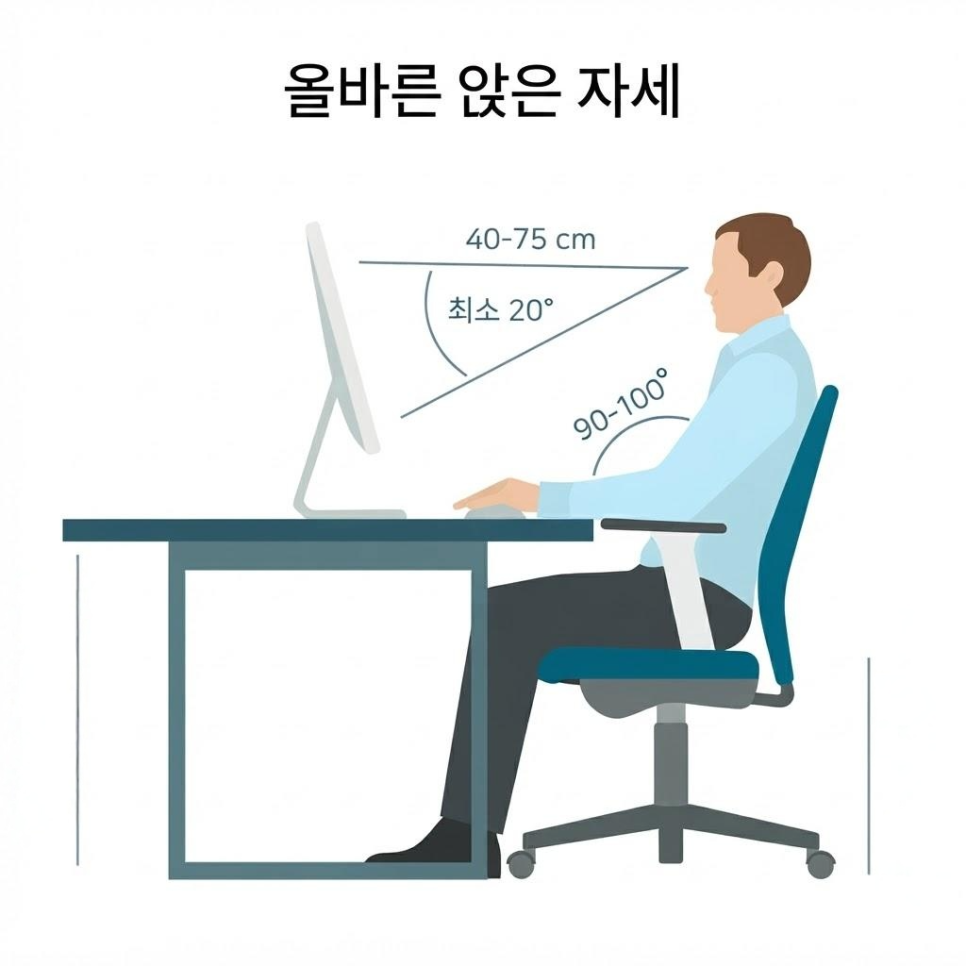
    1. Sit with your lower back straight and avoid crossing your legs.
    2. Set your monitor at eye level so your head doesn’t tilt forward.
    3. Stand up once an hour to gently stretch your neck and shoulders.
    4. Pair manual therapy with core-strengthening exercises.
    Summary and Takeaway
    Persistent musculoskeletal pain can be a warning sign of structural imbalance in the body.
    An accurate diagnosis paired with systematic care can support a return to a healthier daily routine.

    orthopedic clinic for manual therapy illustration 11


    Frequently Asked Questions

    orthopedic clinic for manual therapy illustration 12

    1. How many sessions of manual therapy does it typically take to notice a difference?
    This varies by individual symptoms and degree of body imbalance; outcomes are not guaranteed, but some patients report gradual change after around 5 to 10 or more consistent sessions.

    2. How is orthopedic manual therapy different from regular massage?
    Massage is aimed simply at relaxing the skin and muscle layers, while manual therapy is a medical procedure that helps correct spinal and joint alignment based on a specialist’s medical diagnosis.

    3. Is the treatment painful?
    Intensity is adjusted to each patient’s pain tolerance and inflammation level, so treatment stays within a reasonable range of manipulation and aims to minimize unnecessary discomfort.

    4. Is it covered by private health insurance?
    Since it’s a non-reimbursed treatment item, coverage and scope depend on your specific policy and insurer, so it’s best to confirm directly with your insurance provider.

    orthopedic clinic for manual therapy illustration 13

    orthopedic clinic for manual therapy illustration 16


    References

    · Ministry of Health and Welfare, “Managed Benefit for Manual Therapy Takes Effect July 1, Easing Patients’ Medical Costs,” Ministry of Health and Welfare press release, 2024. Source
    · Ministry of Employment and Labor, “Occupational Safety and Health Standards Rules,” Article 656 (Definitions), Easy-to-Find Statutes Information. Source
    · Nate News, “What Is Forward Head Posture Syndrome? 64% of Office Workers Report Neck and Shoulder Pain,” 2014. Source


    This article is for general health information purposes only and is not a substitute for individual diagnosis or treatment.
    If you’re experiencing symptoms, please consult a specialist.
  • Knee Shockwave Therapy: 3 Things to Check If Stair Pain Lasts 2+ Weeks

    Knee Shockwave Therapy: 3 Things to Check If Stair Pain Lasts 2+ Weeks

    SummaryKnee shockwave therapy is a conservative, non-surgical treatment that uses high-energy sound waves to improve blood flow and support tissue repair, without any incision or anesthesia. If stair-climbing pain has lasted more than 2 weeks, here’s what to know about how it works, who it’s for, and the recommended number of sessions.

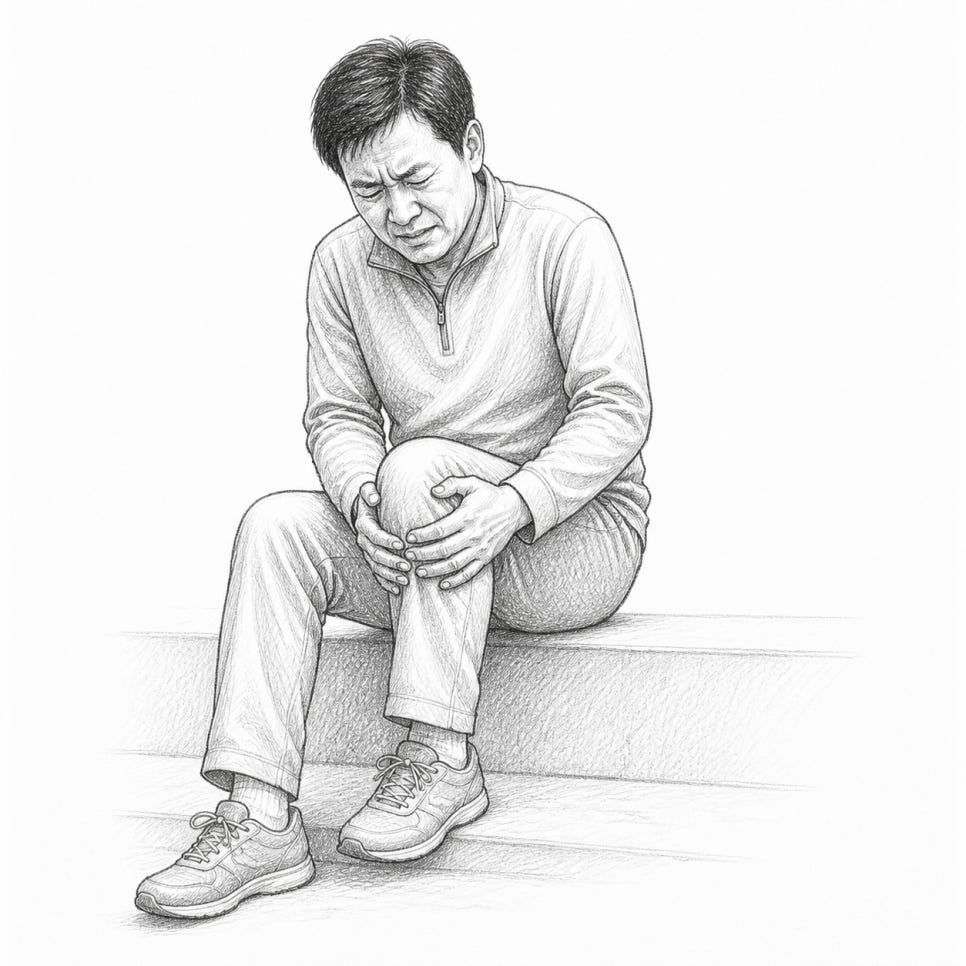
    Most of us have felt that sharp, tingling twinge in the knee while walking down stairs at least once.

    It’s tempting to assume a few days of rest will fix it,
    but many people put off dealing with the pain and only see a doctor once it’s become a bigger problem.

    According to a Newspim report citing Health Insurance Review & Assessment Service data, the number of patients treated for degenerative arthritis rose from about 4.04 million in 2019 to roughly 4.33 million in 2023.
    Pain that feels like ordinary muscle soreness can actually be microscopic damage to a ligament or tendon.

    Key takeaway
    A sharp twinge in the knee when climbing or descending stairs can be a sign that microscopic damage has built up in the cartilage, ligaments, or tendons.
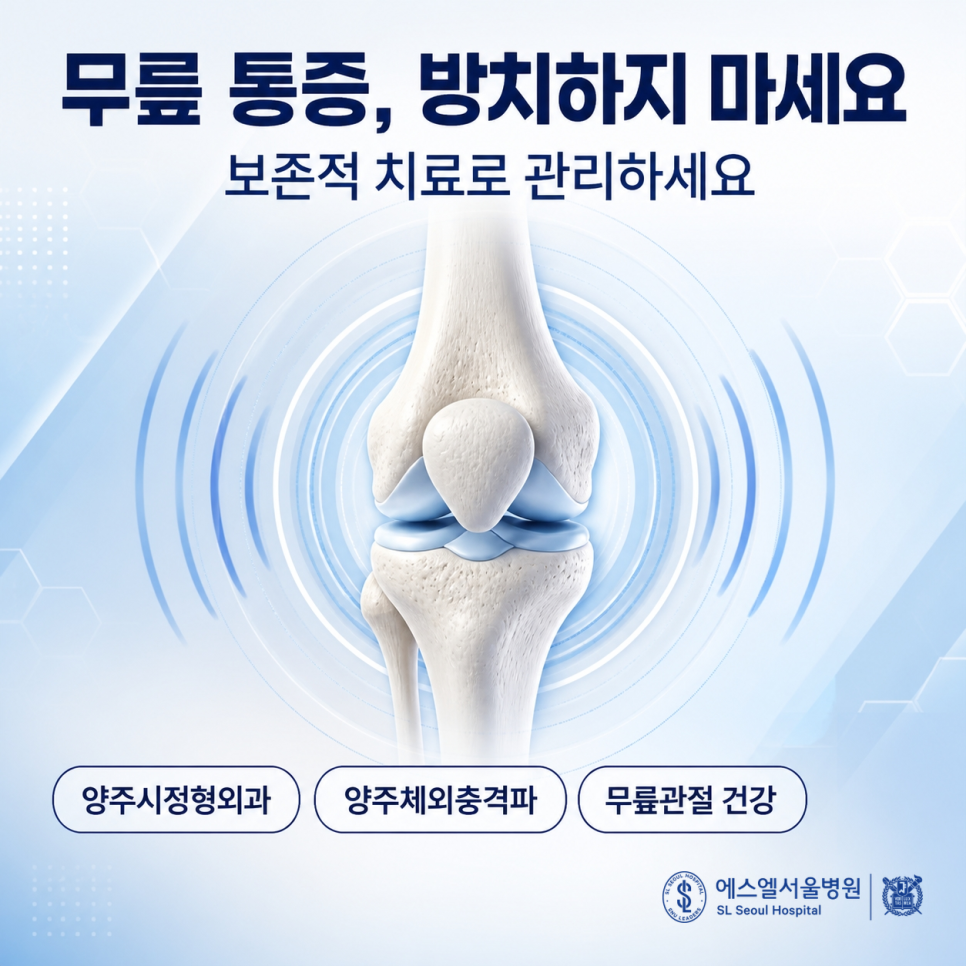
    Knee shockwave therapy is a conservative treatment that uses high-energy sound waves to support blood flow and tissue regeneration, without any incision or anesthesia.
    If symptoms last more than 2 weeks, it’s important to get a thorough exam to identify the underlying cause first.

    knee shockwave therapy

    Why Is It Risky to Ignore Knee Pain?

    The short answer: the longer you dismiss early pain as ordinary fatigue, the more your joint’s range of motion narrows, making it easier for the pain to become chronic.

    Knee pain doesn’t only come from degenerative arthritis, where the cartilage wears down —
    it can also stem from tendinitis, ligament damage, and a range of other causes.

    The Korea Disease Control and Prevention Agency’s National Health Information Portal describes osteoarthritis this way.

    Osteoarthritis is a condition in which the cartilage that cushions the impact between the bones of a joint gradually deteriorates or undergoes degenerative change, causing secondary damage to the bone, joint capsule, and surrounding ligaments — resulting in pain, deformity, and functional impairment.

    The agency also notes that there is currently no treatment that can fully restore a joint that has already undergone degenerative change back to normal.

    That’s exactly why
    identifying and managing the cause of pain early matters so much.

    Knee shockwave therapy illustration 2

    Knee shockwave therapy illustration 3

    Cartilage, ligaments, and tendons all have limited blood supply, which gives them a relatively low capacity for self-repair.

    According to the same Newspim report, 82.3% of degenerative arthritis patients are age 60 or older, and the condition tends to become more common with age.

    Knee shockwave therapy illustration 4

    Checklist
    ✅ You feel a sharp twinge in the knee when climbing or descending stairs
    ✅ Your joint feels stiff when standing up after sitting for more than 30 minutes
    ✅ The area around the joint is frequently swollen or feels warm
    ✅ You hear a sound from your knee while walking, along with pain

    If even one of these applies to you, it’s worth seeing an orthopedic specialist to pinpoint the exact cause.

    Knee shockwave therapy illustration 5


    What Is Knee Shockwave Therapy and How Does It Work?

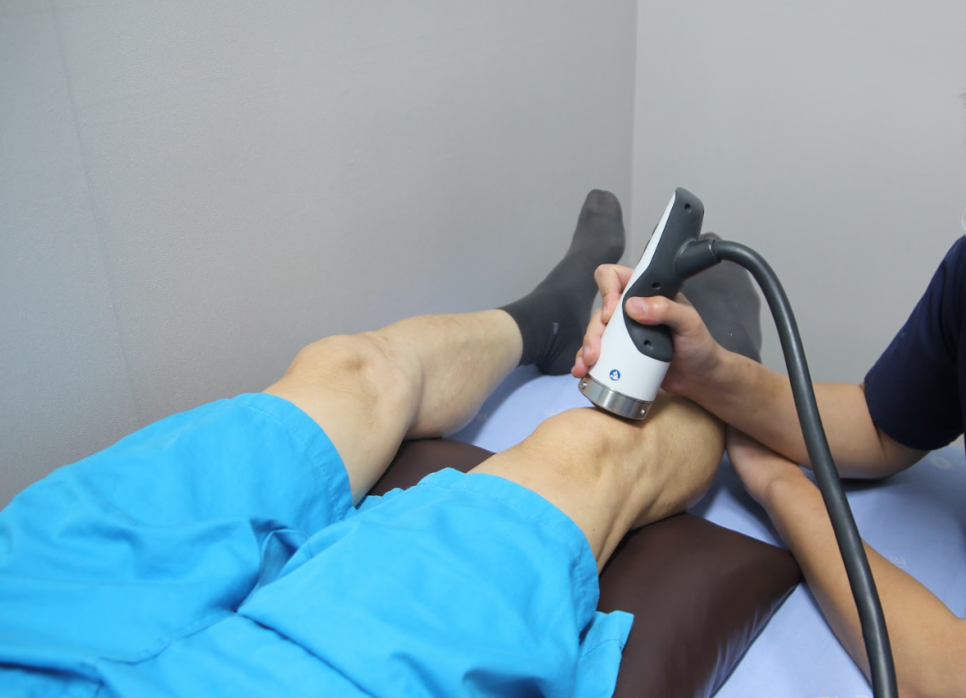
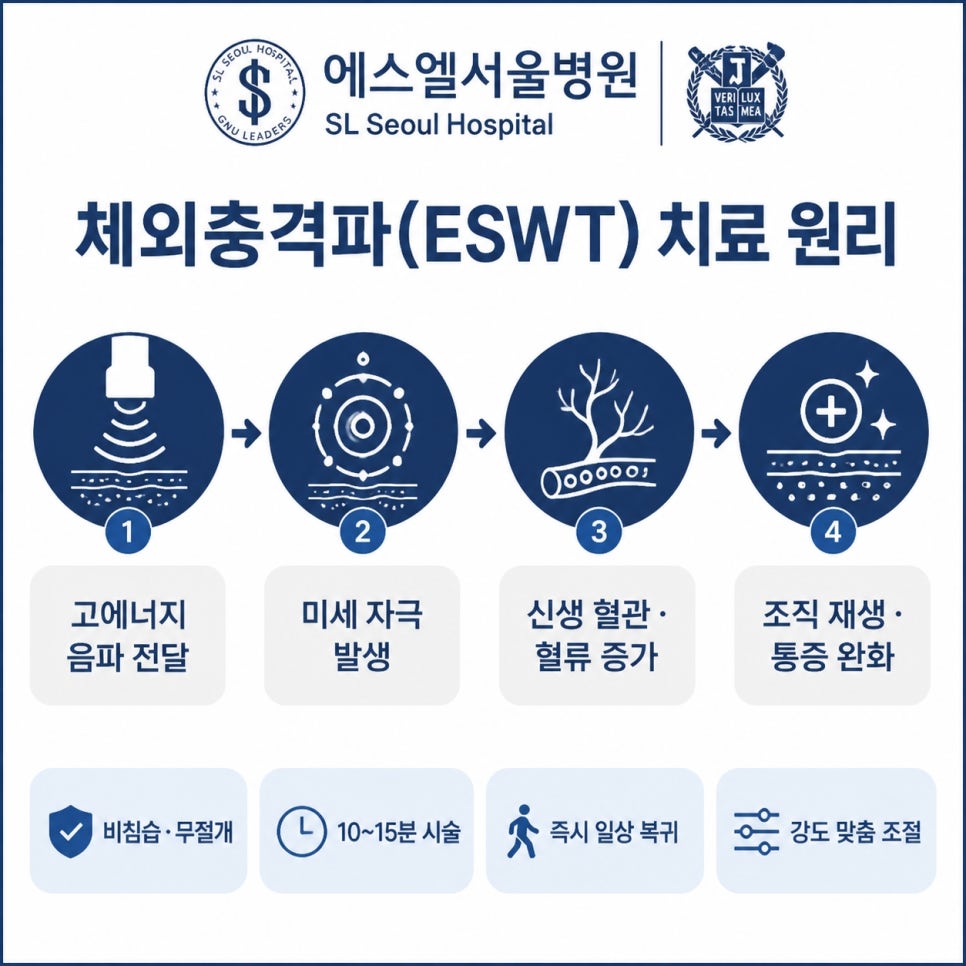
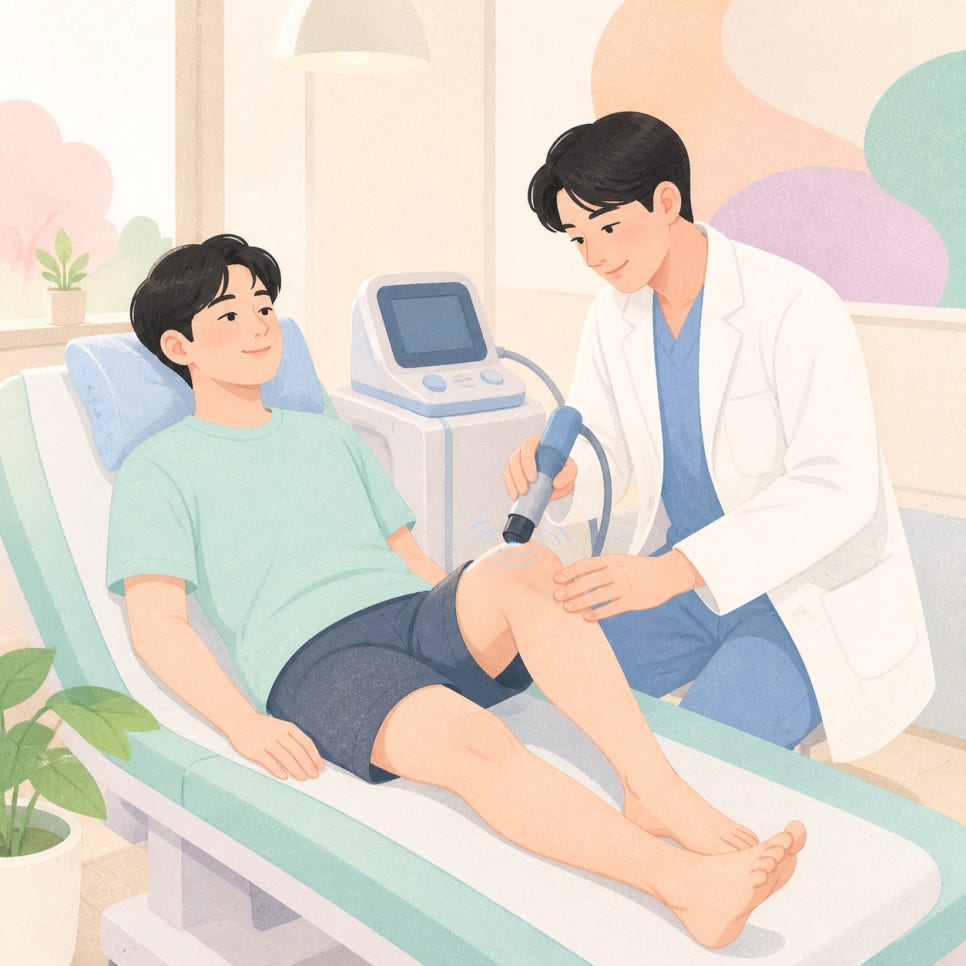
    Extracorporeal shock wave therapy (ESWT) is a non-surgical, conservative treatment that delivers high-energy sound waves to the affected area to help reactivate cells and improve blood flow.

    Because it’s a non-invasive method involving no incision or anesthesia, it places relatively little burden on the body.

    Knee shockwave therapy illustration 6

    A session typically takes only about 10 to 15 minutes,
    so even busy professionals can fit it into their schedule and return to normal activities right afterward.

    Because the depth of the affected tissue and each patient’s pain tolerance differ,
    it’s important for the shockwave intensity to be precisely adjusted on an individual basis.

    Key points
    ✔ A non-invasive treatment performed without incision or anesthesia
    ✔ A short procedure time, typically around 10 to 15 minutes
    ✔ Intensity can be adjusted based on tissue depth and pain tolerance

    Knee shockwave therapy illustration 7

    How shockwave therapy works
    High-energy sound waves are delivered to the affected area → this creates micro-stimulation → which is reported to promote new blood vessel formation and increase blood flow → helping support tissue regeneration and pain relief

    That said, shockwave therapy isn’t applied the same way to every area or every type of pain.

    According to a Nate News report, the body parts classified as eligible under the private supplemental insurance guidelines established in 2026 are listed below.

    Area Representative condition
    Shoulder Calcific tendinitis, rotator cuff tendinopathy
    Elbow Lateral epicondylitis, medial epicondylitis
    Hip Greater trochanteric pain syndrome
    Knee Patellar tendinitis
    Ankle Achilles tendinitis
    Foot Plantar fasciitis
    Spine Cervical/lumbar myofascial pain syndrome

    According to the same report, the guideline recommends up to 6 sessions per area and 12 sessions per year as the standard treatment frequency.

    It was also reported that a single session typically involves 2,000 or more shocks, administered in principle once a week — but it’s best to confirm the exact criteria with your treating medical institution.


    What Should You Check When Choosing a Yangju Orthopedic Clinic?

    Effectively improving knee pain takes more than just reducing the pain itself —
    it starts with a systematic diagnosis and a tailored management plan.

    Knee shockwave therapy illustration 8

    1. Thorough imaging evaluation — Even when symptoms look similar, the extent of internal joint damage varies from person to person, so check whether the clinic builds a tailored treatment plan based on an accurate diagnosis.
    2. Non-surgical, conservative treatment first — Look at whether the clinic combines shockwave therapy with other conservative options suited to your condition, such as medication or physical therapy.
    3. Follow-up care and lifestyle guidance — Proper knee stretching and posture correction after treatment are essential for preventing symptoms from coming back.

    If you’d like more detailed guidance on non-surgical treatment options, you can find more information on the SL Seoul Spine & Joint Hospital homepage.

    Knee shockwave therapy illustration 9

    Things to keep in mind
    After knee shockwave therapy, you may temporarily notice some stiffness or slightly increased soreness.
    This can be a normal part of the tissue-repair process, but if the pain continues, be sure to discuss it with your treating physician.

    Frequently Asked Questions

    1. Does knee shockwave therapy hurt a lot?
    Answer: Because the treatment stimulates the affected area directly, you may feel some mild soreness or discomfort. The intensity is adjusted to match each patient’s pain tolerance.

    2. How many sessions are needed, and how often?
    Answer: Treatment is generally given once or twice a week. Reports indicate that under the 2026 private supplemental insurance guidelines, up to 6 sessions per area and 12 sessions per year may be covered. It’s best to confirm the exact number of sessions and the latest coverage criteria with your medical provider.

    3. Can I return to daily activities right after the procedure?
    Answer: Because it’s a non-invasive treatment, you can typically go back to your normal routine immediately afterward. That said, it’s best to avoid intense exercise or excessive joint use on the day of the procedure.

    4. Are there cases where someone can’t receive shockwave therapy?
    Answer: Treatment may be limited for areas with severe acute inflammation or skin conditions, as well as for pregnant patients or those taking blood thinners, so a consultation beforehand is essential.

    5. Is the cost covered by supplemental insurance?
    Answer: Shockwave therapy is not covered by national health insurance and is billed as an out-of-pocket procedure. Reports indicate that under the 2026 guidelines, private supplemental insurance often only covers up to 6 sessions per area per year and 12 sessions total per year, so it’s worth checking your policy’s terms in advance.

    Knee shockwave therapy illustration 10

    Knee shockwave therapy illustration 11


    References

    · Korea Disease Control and Prevention Agency, “Osteoarthritis,” National Health Information Portal, 2026. Link
    · Newspim, “Degenerative Arthritis Patients Surpass 4 Million — Caution Advised as Winter Worsens Symptoms,” 2026. Link
    · Cheon Dong-il et al., “Recent Advances in Extracorporeal Shock Wave Therapy,” Journal of the Korean Orthopaedic Association, 2024. Link
    · Nate News, “Shockwave Therapy Recommended at Up to 6 Sessions per Area, 12 Sessions per Year — Exceeding the Limit Excludes Insurance Coverage,” 2026. Link

    This article is provided for general health information purposes only and is not a substitute for individual diagnosis or treatment. If you’re experiencing symptoms, please consult a medical professional.
  • Shoulder Pain Causes: 5 Warning Signs of Frozen Shoulder or Rotator Cuff Tear

    Shoulder Pain Causes: 5 Warning Signs of Frozen Shoulder or Rotator Cuff Tear

    SummaryShoulder pain causes include frozen shoulder, rotator cuff tears, calcific tendinitis, and more. This guide covers the risks of leaving it untreated, a self-check checklist, non-surgical orthopedic treatments, and national health insurance statistics.

    Have you ever felt a sharp, stabbing pain in your shoulder while changing clothes or reaching overhead?

    It’s easy to brush off as nothing serious,
    but leaving the underlying shoulder pain causes untreated can let it progress into a condition like frozen shoulder or a rotator cuff tear, both of which take far longer to treat.

    shoulder pain causes

    Key Takeaways
    Shoulder pain causes generally fall into three categories — frozen shoulder (adhesive capsulitis), rotator cuff tears, and calcific tendinitis — and they tend to show up differently depending on age and daily habits.
    This article walks through a self-check method for telling these causes apart by symptom, the non-surgical treatments orthopedic clinics use, and daily habits that help prevent a recurrence.

    Shoulder Pain Causes: What Are They?

    shoulder pain causes illustration 2

    Shoulder pain causes generally break down into three types: inflammation of the joint capsule, tendon damage, and friction between bone and tendon.

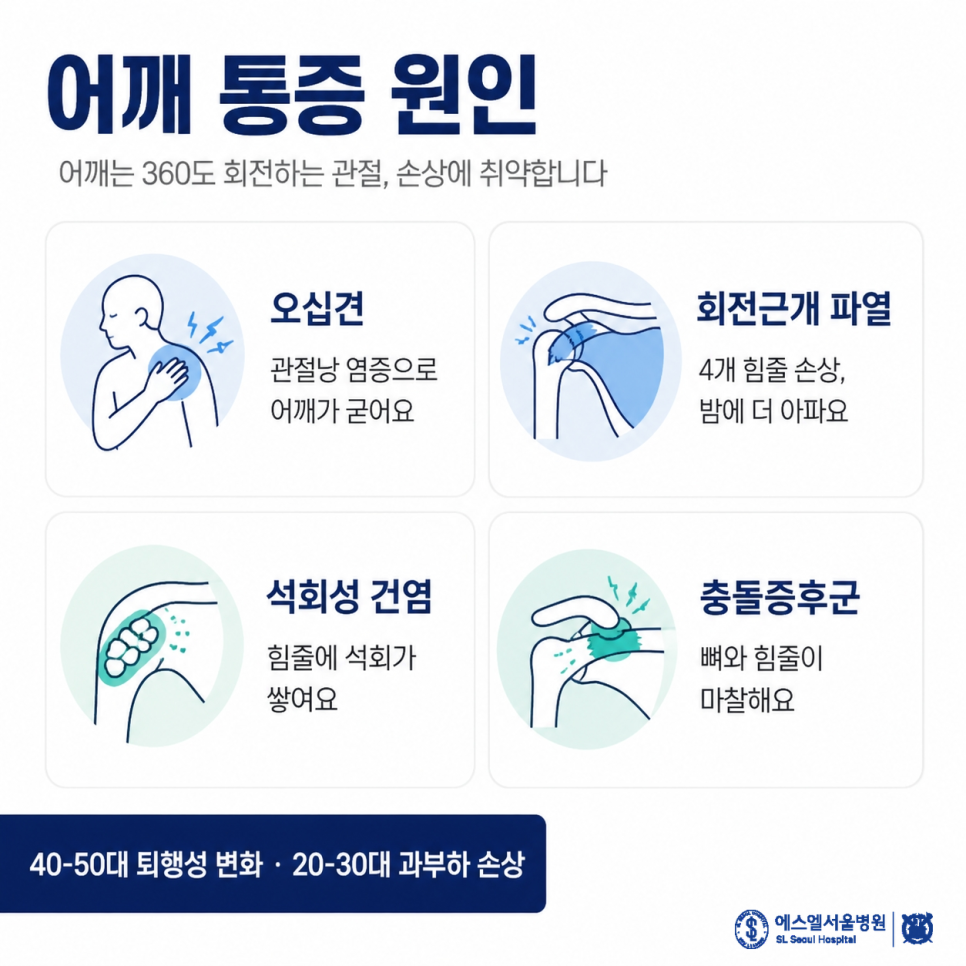
    The shoulder is the only joint in the body that rotates through nearly 360 degrees,
    and that wide range of motion is exactly what makes it so easy to injure.

    shoulder pain causes illustration 3

    The 3 Most Common Causes of Shoulder Pain

    • Frozen shoulder (adhesive capsulitis) — Inflammation of the capsule surrounding the joint causes the shoulder to stiffen up. A defining feature is that the arm won’t lift easily, whether you try to raise it yourself or someone else helps.
    • Rotator cuff tear — One or more of the four tendons that support the shoulder becomes torn or damaged. Pain typically worsens when lifting the arm to a specific angle, and night pain is common.
    • Other conditions — Calcific tendinitis, where calcium deposits build up in the tendon, and impingement syndrome, where bone and tendon rub against each other, are also common causes.
    Key Points
    ✅ Ages 40-50 and up: Frozen shoulder and degenerative changes in the rotator cuff are cited as the leading causes.
    ✅ Ages 20-30: Sports injuries or repetitive shoulder overuse from smartphone and computer use can also be a factor.

    shoulder pain causes illustration 4

    These age-related patterns are general reference information — the actual cause needs to be confirmed with a detailed examination.

    National statistics show that shoulder pain is far from a rare problem.
    According to Korea’s Health Insurance Review and Assessment Service, the number of frozen shoulder patients rose from 731,346 in 2015 to 789,403 in 2019 — a 7.9% increase over five years.
    Over the same period, the increase among male patients was 12.51%, more than double the rate for women (4.93%), and clinic visits peaked in March each year.

    According to the Korea Disease Control and Prevention Agency’s health information portal, frozen shoulder is a common condition affecting about 2% of the general population.


    How Do You Tell Frozen Shoulder Apart From a Rotator Cuff Tear?

    With frozen shoulder, the joint itself is stiff, so it won’t move freely even when someone else lifts your arm for you. With a rotator cuff tear, there’s pain, but the arm can still be raised with assistance — that’s the key difference.

    Both conditions are easy to mistake for simple muscle soreness early on, which is why an accurate diagnosis matters.

    Frozen Shoulder vs. Rotator Cuff Tear

    Category Frozen Shoulder Rotator Cuff Tear
    When someone else lifts your arm Doesn’t lift easily Lifts relatively well
    Pain pattern Stiffness throughout the whole shoulder Concentrated when moving in a specific direction
    Course Most cases improve within 1-2 years Tear can widen if left untreated

    “Frozen shoulder is one of the most common conditions causing chronic shoulder pain and restricted movement, and it resolves on its own in most cases within one to two years.”

    That’s how the Korea Disease Control and Prevention Agency’s health information portal describes frozen shoulder.

    shoulder pain causes illustration 5

    Check These Signs If You Have Shoulder Pain

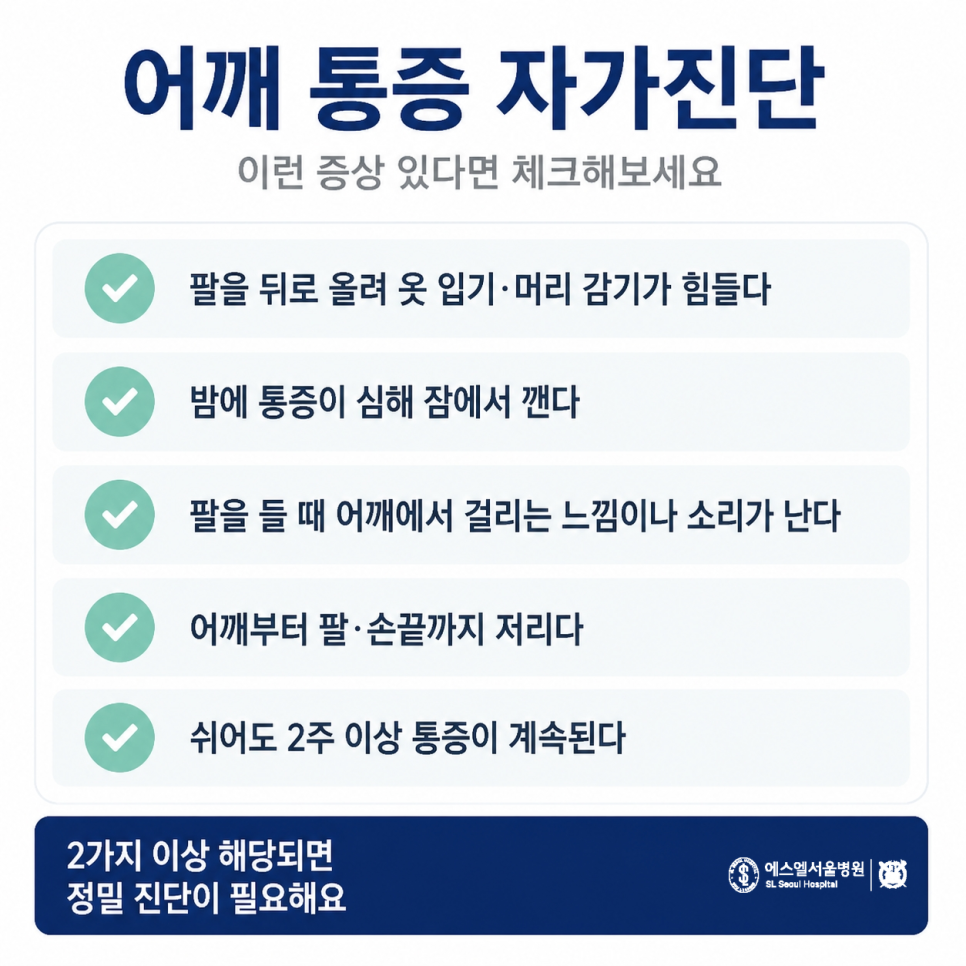
    Self-Check Checklist
    ✅ It’s hard to reach behind your back to get dressed or wash your hair
    ✅ Pain gets worse at night and frequently wakes you up
    ✅ You feel a catching sensation or hear a clicking sound inside the shoulder when raising your arm
    ✅ A tingling or numb feeling spreads from the shoulder down the arm to the fingers
    ✅ The pain continues for more than 2 weeks even with rest
    Important
    If two or more of these apply to you, it may be more than simple fatigue — we recommend getting a thorough evaluation at an orthopedic clinic.

    What Non-Surgical Treatments Do Orthopedic Clinics Use?

    Seeking care early means non-surgical treatment alone may be enough to see improvement.

    Orthopedic clinics typically start with an X-ray or ultrasound to assess the condition, then choose a treatment approach based on the symptoms and extent of damage.

    shoulder pain causes illustration 6

    3 Common Non-Surgical Treatments

    Treatment How It Works
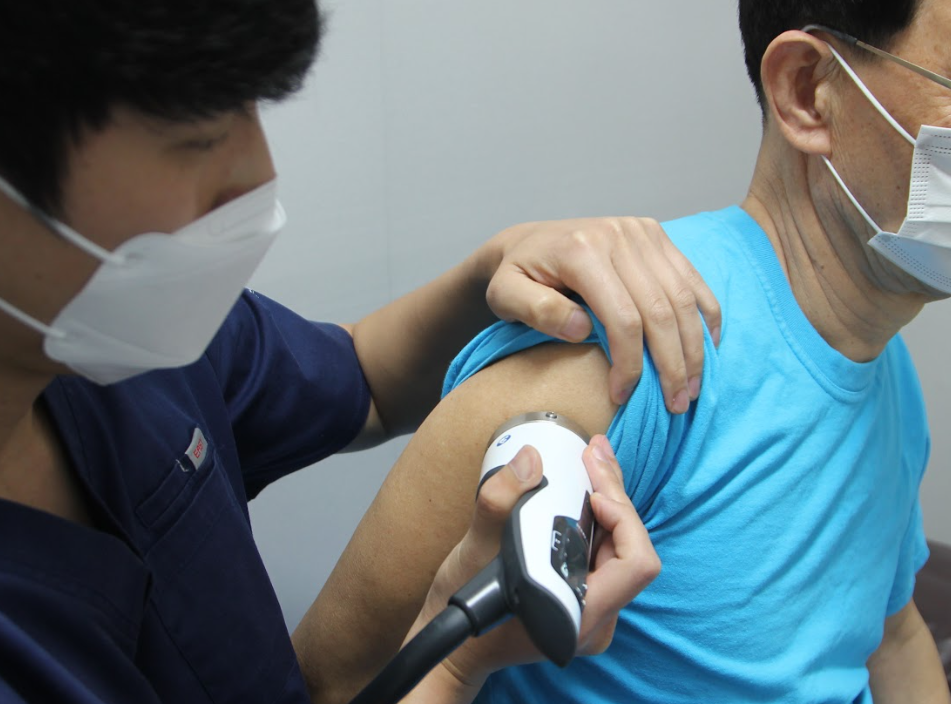
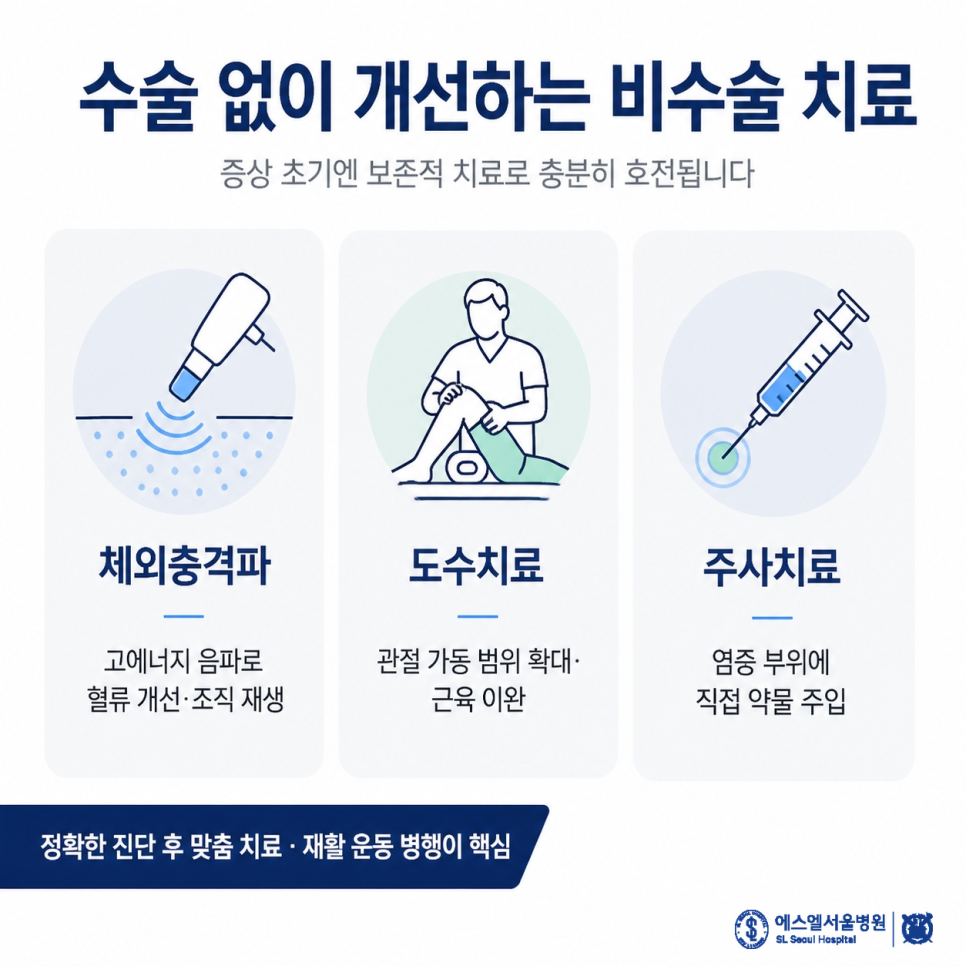
    Extracorporeal Shock Wave Therapy (ESWT) Delivers high-energy sound waves to the painful area to help improve blood flow and encourage tissue repair
    Manual Therapy A physical therapist uses hands-on techniques that may help increase joint range of motion and relieve muscle tension
    Injection Therapy Medication is injected directly into the inflamed area to help reduce pain and support recovery

    shoulder pain causes illustration 7

    In orthopedic care, surgery isn’t usually the automatic first recommendation — non-surgical treatment is typically tried first, alongside rehabilitation exercises.

    That said, in cases such as a complete rotator cuff tear, where the tendon isn’t able to heal on its own, a detailed exam is needed first to check how far the damage has progressed.

    shoulder pain causes illustration 8


    How Do You Choose a Good Orthopedic Clinic, and How Should You Manage Your Shoulder Day to Day?

    Shoulder joint treatment calls for a careful, individualized approach, so it’s worth looking at how a clinic is set up rather than choosing one just because it’s nearby.

    shoulder pain causes illustration 9

    Key Points
    ✅ Whether a board-certified orthopedic specialist provides the care directly and has solid clinical experience
    ✅ Whether the clinic has detailed diagnostic equipment and offers one-on-one rehabilitation programs
    ✅ Whether the clinic looks beyond pain relief to address the underlying cause and daily habits

    Aftercare matters just as much as the treatment itself.
    Without it, symptoms can easily come back.

    shoulder pain causes illustration 10

    Daily Habits That Support Shoulder Health

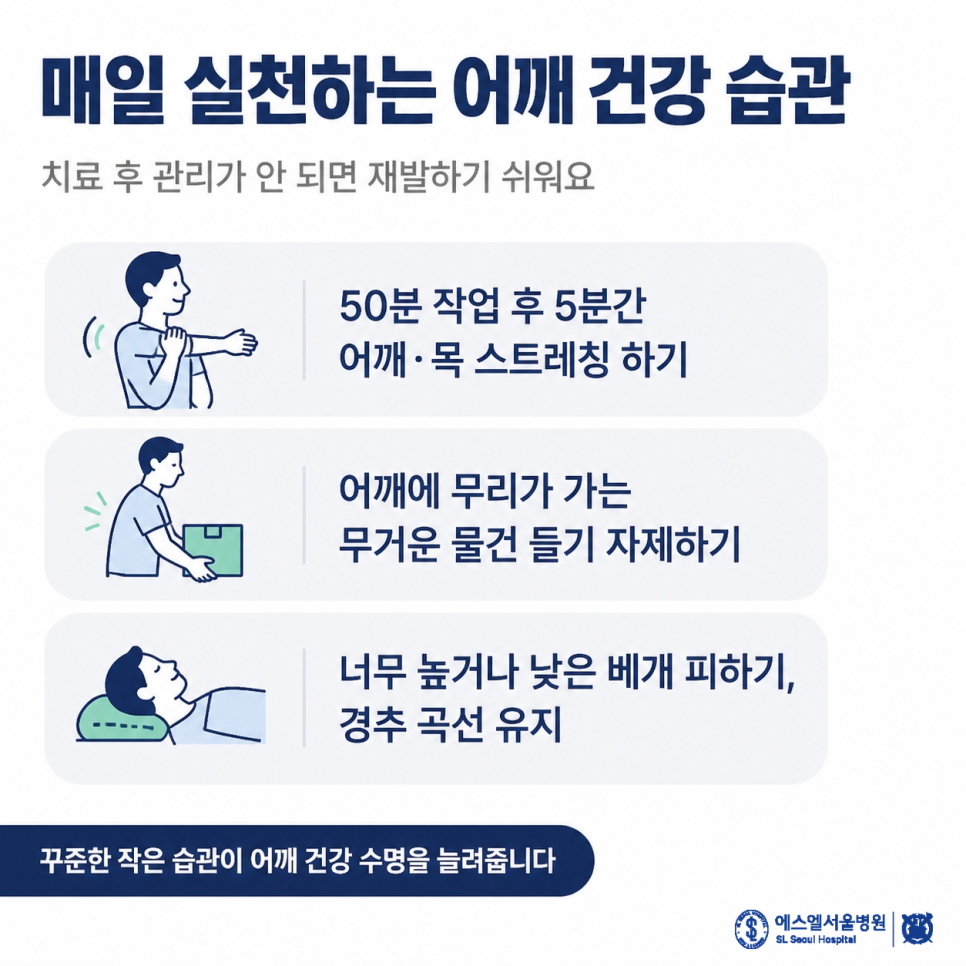
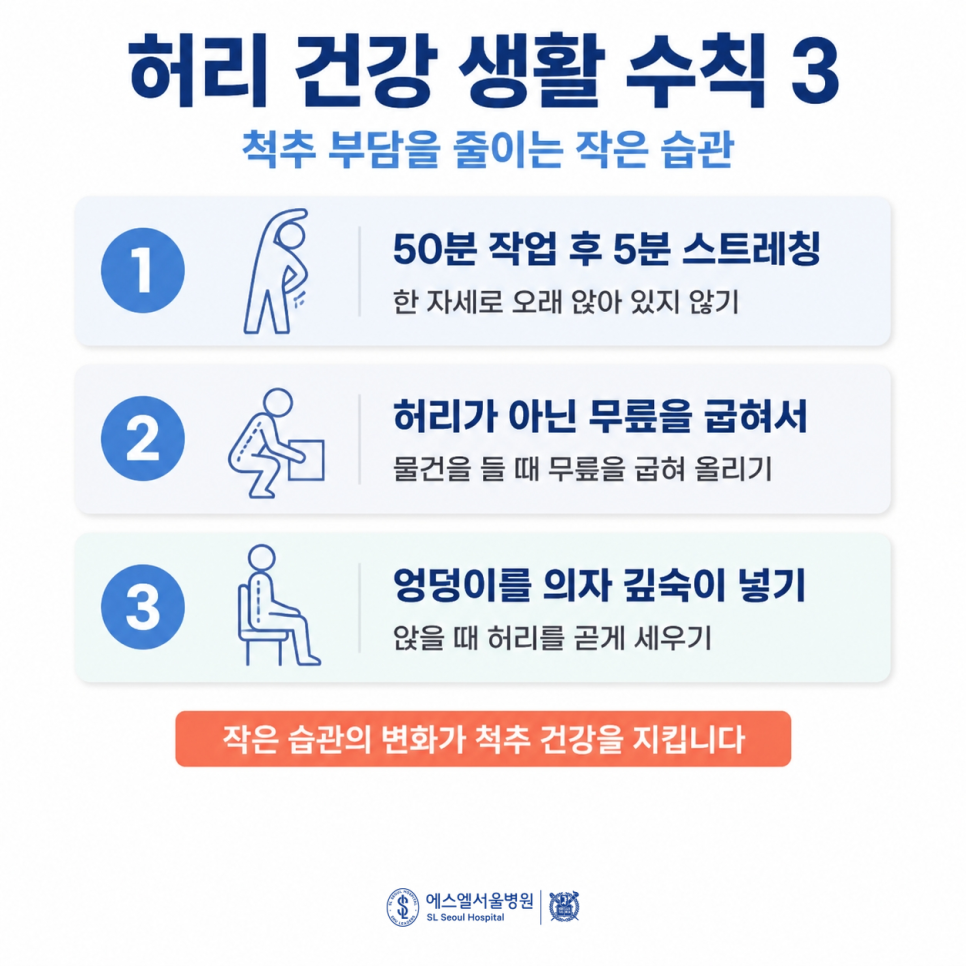
    • After 50 minutes of work, take a 5-minute break to gently stretch your shoulders and neck
    • Avoid lifting heavy objects that strain the shoulder whenever possible
    • Use a pillow that supports the natural curve of your neck instead of one that’s too high or too low
    Keeping up these habits consistently can help maintain your recovery after treatment and lower the risk of recurrence.

    shoulder pain causes illustration 11

    If your discomfort continues and you’re not sure what’s behind your shoulder pain, don’t hesitate to get evaluated by an orthopedic specialist.

    For more information on spine and joint health, visit the SLS Seoul Hospital for Spine & Joints homepage.

    shoulder pain causes illustration 12

    shoulder pain causes illustration 13

    shoulder pain causes illustration 16


    Frequently Asked Questions

    1. Should I just rest completely when my shoulder hurts?
    Rest is important during the acute inflammation phase, but staying still for too long risks stiffening the joint. It’s best to combine rest with gentle stretching, within a range that doesn’t aggravate the pain.

    2. Does rotator cuff damage heal on its own?
    With a partial tear or simple inflammation, conservative treatment can bring noticeable improvement, but a completely torn tendon is unlikely to reattach on its own. A detailed exam is needed to check how far it has progressed.

    3. Is extracorporeal shock wave therapy very painful?
    You may feel some mild soreness or discomfort as the shock wave energy is delivered. The intensity can be adjusted during treatment, so just discuss it with your therapist.

    4. How can you tell frozen shoulder apart from a rotator cuff tear?
    With frozen shoulder, the joint itself is often so stiff that the arm won’t lift even with someone else’s help. With a rotator cuff tear, there’s pain, but the arm can still be raised with assistance.


    References

    · Korea Disease Control and Prevention Agency, National Health Information Portal, “Frozen Shoulder (Adhesive Capsulitis).” View source
    · Newsis, “Frozen Shoulder No Longer Just a Condition for Women in Their 50s,” 2020. (Citing Health Insurance Review and Assessment Service data) View source
    · Korean Orthopaedic Association, “Rotator Cuff Tear.” View source
    · NCBI PMC, “Health Care Utilization for Common Shoulder Disorders: Analysis of the 2010–2019 National Patient Sample Data from the Health Insurance Review and Assessment Service in Korea,” 2024. View source


    This article is intended for general health information purposes only and is not a substitute for individual diagnosis or treatment. If you have symptoms, please consult a specialist.

  • Herniated Disc Symptoms: A 3-Point Checklist for Lower Back Pain Lasting 2+ Weeks While Sitting

    Herniated Disc Symptoms: A 3-Point Checklist for Lower Back Pain Lasting 2+ Weeks While Sitting

    SummaryIf your lower back aches for more than 2 weeks while sitting, you may be dealing with early herniated disc symptoms. Here’s how to tell it apart from simple muscle pain, what an accurate diagnosis involves, and a daily checklist for keeping your spine healthy.

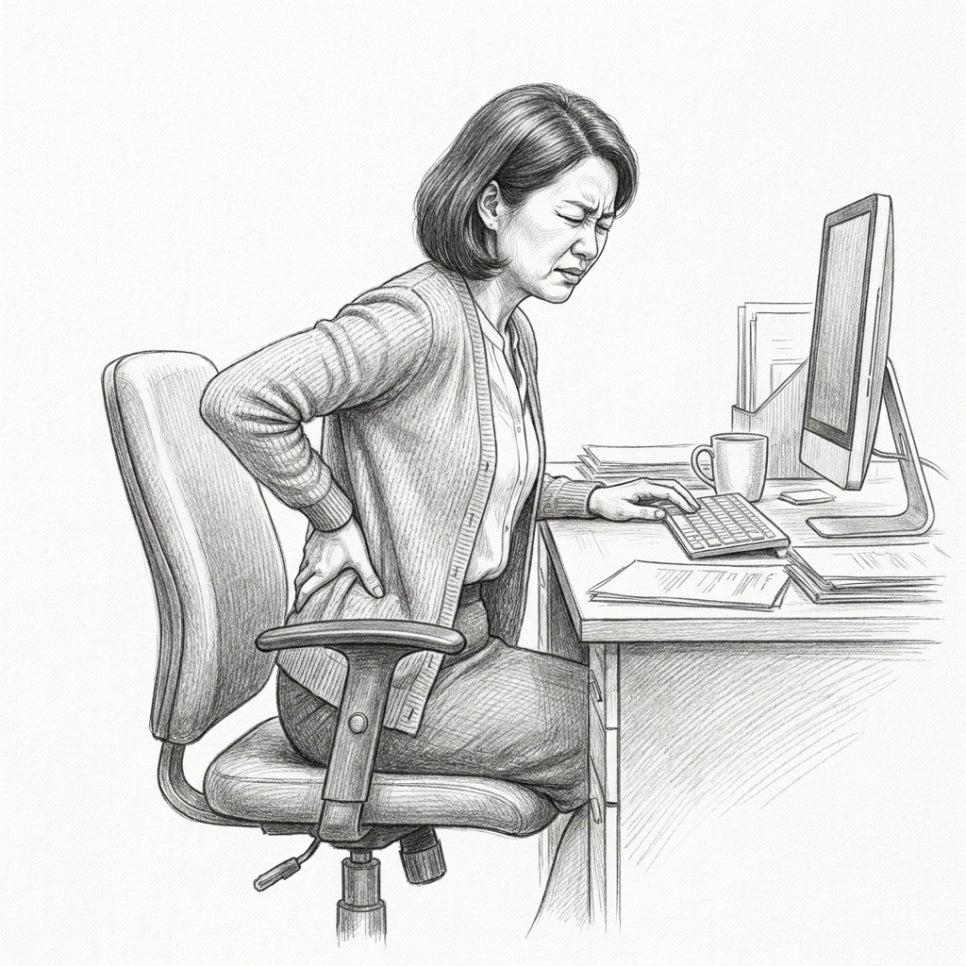
    If your lower back feels stiff and achy just from sitting in a chair,
    it’s easy to chalk it up to simple fatigue.

    But if that pain sticks around for more than 2 weeks, it’s a different story.

    According to South Korea’s Disease Control and Prevention Agency, adults aged 19 and older there spend
    an average of 8.9 hours a day sitting.
    The longer you sit, the more strain builds up on your lower back.

    Key takeaway: If your lower back aches while sitting and the pain lasts more than 2 weeks, it’s worth checking for early herniated disc symptoms.
    Simple muscle pain tends to improve within a few days, while a disc problem often spreads into numbness or tingling down the leg.
    An accurate diagnosis combined with posture correction can help manage the pain and prevent it from becoming chronic.

    early herniated disc symptoms

    Why Does Lower Back Pain Happen While Sitting?

    The short answer: a disc between two vertebrae has shifted out of place and is pressing on a nerve.
    A herniated disc is a condition in which the disc between the vertebrae slips out of its normal position, compressing a nerve and causing inflammation.

    illustration of early herniated disc symptoms 2

    What’s commonly called a “slipped disc” has structural roots.
    Sitting in the same position for long stretches, or repeating poor posture,
    gradually wears down the structure of the spine.

    In fact, sitting is known to place more pressure on the discs than standing does.
    It often starts as mild stiffness, but if left unaddressed, it can spread into numbness down the leg — so it pays to pay attention early.

    illustration of early herniated disc symptoms 3

    Key points
    · Cumulative strain on the spine from long periods of sitting
    · Sudden strain from lifting heavy objects
    · Weakened muscles around the spine from lack of exercise
    · Excessively bending the neck and lower back while using a smartphone or computer

    illustration of early herniated disc symptoms 4


    How Do You Tell Early Herniated Disc Symptoms from Simple Muscle Pain?

    The most important factors are how long the pain lasts and whether it’s accompanied by leg numbness.
    Simple muscle pain usually improves on its own within a few days, while early herniated disc symptoms tend to last more than 2 weeks or come with pain radiating down the leg.

    According to a 2016 report by Etoday, the number of patients treated for herniated discs in South Korea rose 21.8% over five years,
    with patients in their teens through thirties making up as much as 15% of that group.

    In other words, this is a condition that can affect anyone, regardless of age.

    A word of caution
    Just toughing out the pain, or relying only on self-massage and stretching, can make symptoms worse.
    If pain lasts more than 2 weeks or comes with leg numbness, it’s safer to get a proper evaluation rather than guess on your own.
    Category Simple Muscle Pain Early Herniated Disc Symptoms
    Duration Improves within a few days Lasts 2 weeks or more
    Accompanying symptoms Localized stiffness Leg numbness, radiating pain
    Effect of posture Eases with movement Worsens while sitting

    How Is a Herniated Disc Diagnosed and Managed?

    The core of an orthopedic diagnosis is pinpointing the structural cause of the pain through targeted testing.
    A systematic diagnosis involves a patient history and imaging tests to determine the degree of spinal change and the location of nerve compression.

    illustration of early herniated disc symptoms 5

    “Sitting places over 1.5 times more load on the lower back than standing does, so prolonged sitting can make lower back pain worse.”

    – Dr. Jung Seung-young (Spine Center), from an interview with Health Kyunghyang (South Korean outlet)

    Because the degree of spinal change and the cause of pain vary from person to person,
    the right approach to management depends on what the exam finds.

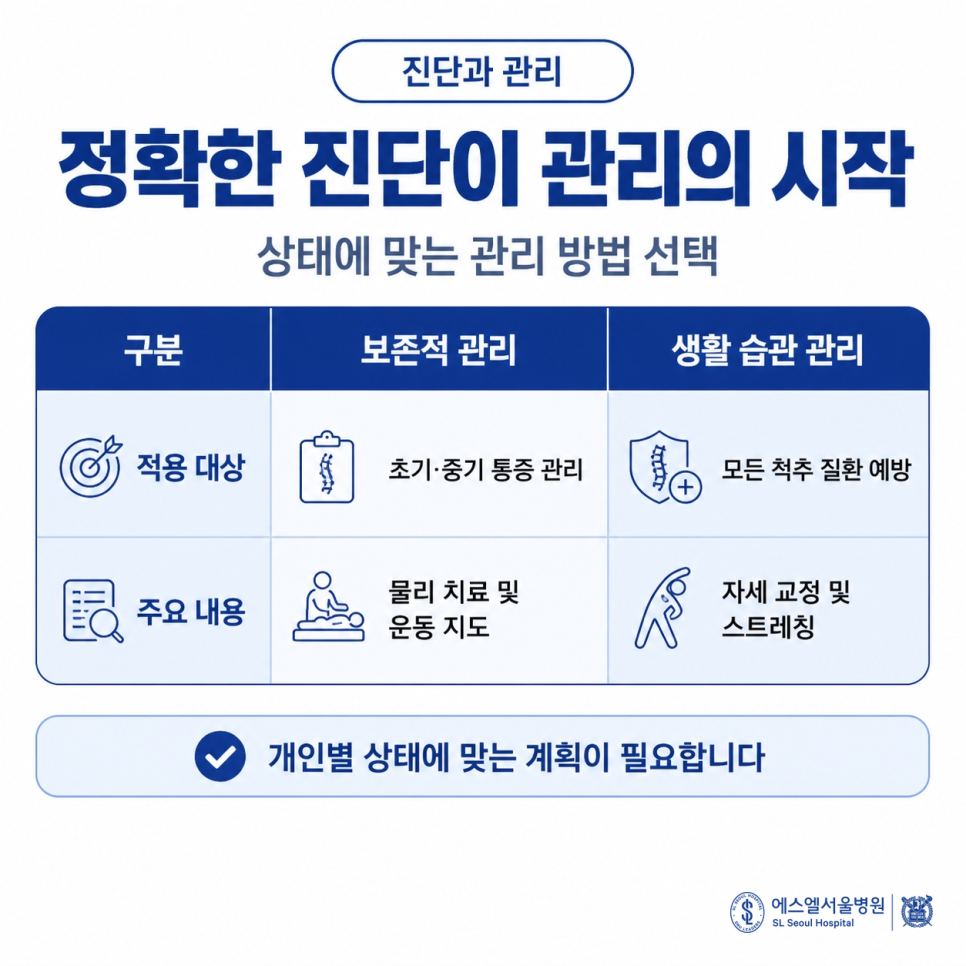
    Category Conservative Care Lifestyle Management
    Who it’s for Managing early- and mid-stage pain Preventing spinal conditions overall
    What it involves Physical therapy and guided exercise Posture correction and stretching
    Key points
    · Overdoing treatment that isn’t suited to your condition can actually add strain
    · It’s safer to progress step by step, following guidance from medical professionals
    · Consistent care combined with accurate information can help speed up recovery

    How Can You Protect Your Spine Health Every Day?

    The key is strengthening the muscles around the spine to reduce the pressure placed on the disc.
    It doesn’t take an intense workout — small, consistent habits can help protect your spine.

    illustration of early herniated disc symptoms 6

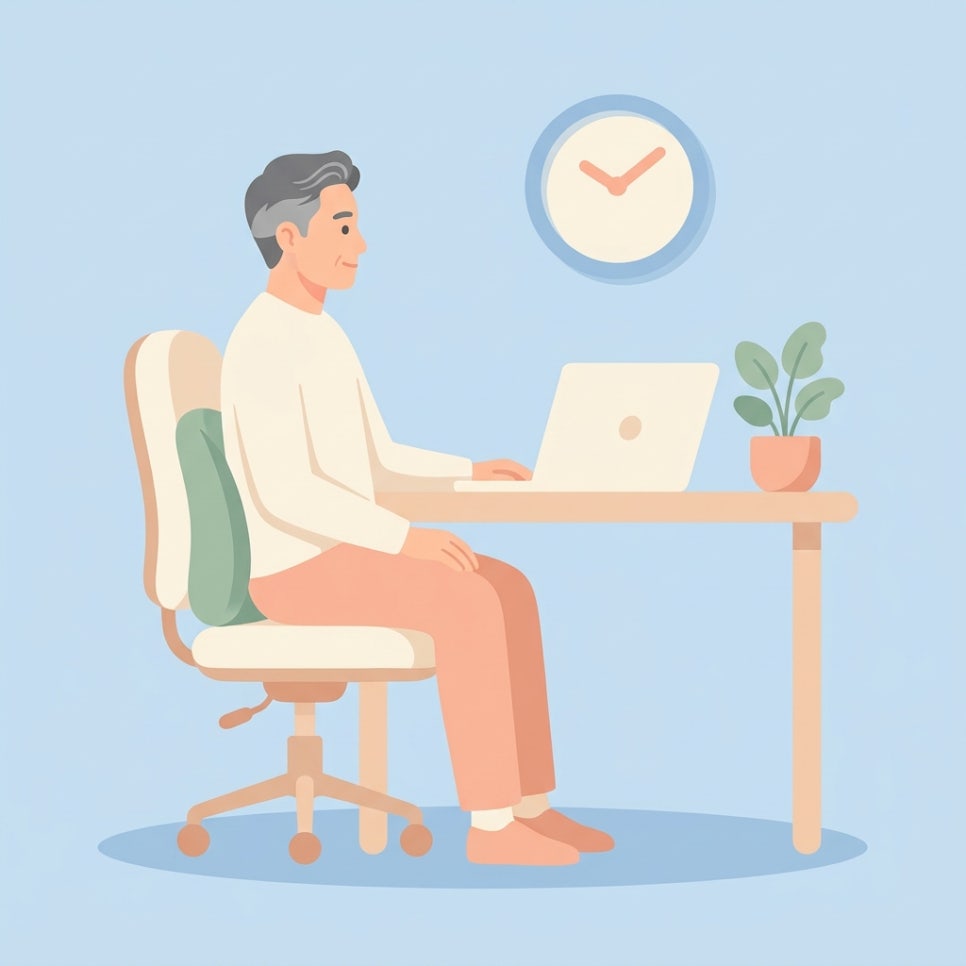
    Making an effort to maintain good posture is an important habit for protecting your spine.
    When sitting in a chair, it helps to keep your lower back pressed against the backrest.

    illustration of early herniated disc symptoms 7

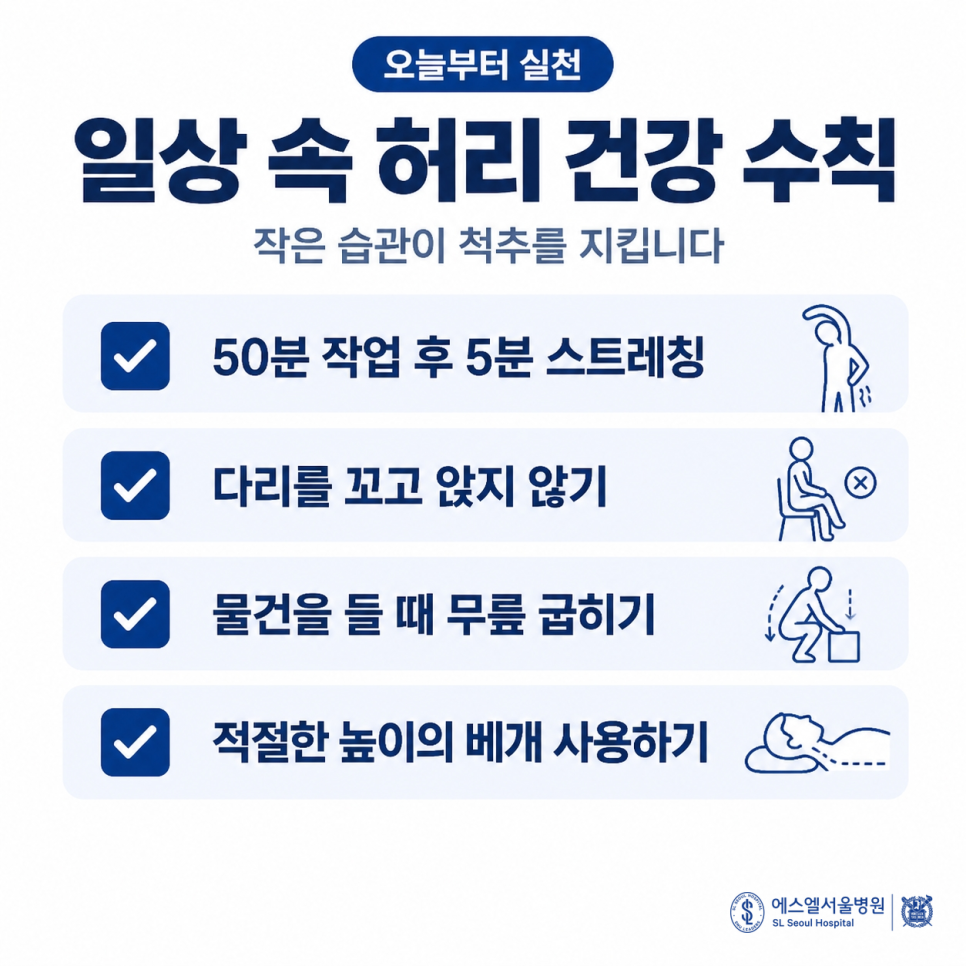
    Checklist
    ✅ Take a 5-minute light stretch break after every 50 minutes of work
    ✅ Break the habit of crossing your legs while seated
    ✅ Bend your knees when lifting heavy objects
    ✅ Sit with your lower back pressed against the backrest
    ✅ Use a pillow of an appropriate height
    The payoff
    When consistent stretching and good posture habits add up,
    the muscles around your spine grow stronger, which can help lower the risk of pain recurring.

    Small efforts can add up to help build a stronger spine over time.

    That said, if pain lasts more than 2 weeks or comes with leg numbness,
    it’s safer to get a proper evaluation rather than rely on self-care alone.

    Visiting a nearby orthopedic clinic or the SL Seoul Hospital Spine & Joint Center homepage to check your spine’s condition is one option.

    illustration of early herniated disc symptoms 8


    Frequently Asked Questions

    1. If I have lower back pain, should I get checked right away?
    If it’s simple muscle pain, rest may be enough to ease it. But if it lasts more than 2 weeks or comes with leg numbness, getting evaluated is recommended so you know exactly what’s going on. Catching it early can help prevent it from turning into a chronic condition.

    2. Can early herniated disc symptoms be fully resolved?
    It depends on the condition of the disc, but starting proper conservative care and lifestyle adjustments early may help ease pain and support a healthy daily routine. Consistency in care is important.

    3. What kinds of exercise are good for spine health?
    Light walking or stretching that strengthens the core muscles can help, while movements that bend the lower back excessively are best avoided. Any activity should be scaled to your pain level rather than pushed too hard.

    4. If my lower back only hurts while sitting, could that still be a disc issue?
    Sitting puts more pressure on the disc than standing does, so if your pain is noticeably worse while seated, it’s worth keeping a disc-related issue in mind and getting it checked out.

    illustration of early herniated disc symptoms 9

    illustration of early herniated disc symptoms 10

    illustration of early herniated disc symptoms 11

    illustration of early herniated disc symptoms 12


    References

    · Korea Disease Control and Prevention Agency, “Herniated Intervertebral Disc,” National Health Information Portal. View source
    · Etoday, “Herniated Disc Patients Rising Every Year — Early Treatment Needed,” Etoday, 2016. View source
    · Health Kyunghyang, “Prolonged Sitting: A Shortcut to Greater Strain on the Lower Back,” Health Kyunghyang, 2024. View source


    This article is intended for general health information purposes only and is not a substitute for individual diagnosis or treatment. If you’re experiencing symptoms, please consult a physician.

  • Text Neck Headache: How Forward Head Posture Adds 18kg of Strain to Your Neck

    Text Neck Headache: How Forward Head Posture Adds 18kg of Strain to Your Neck

    SummaryWhy does text neck cause headaches, and how can you manage them? This article breaks down how text neck syndrome leads to cervicogenic headaches, how to self-check with a simple wall test, and the everyday habits and stretches that may help reduce strain on your cervical spine.

    That throbbing headache that shows up after a long day at your desk,
    have you been writing it off as just stress?

    In reality, it’s often caused by a forward-curved neck, better known as a text neck headache.
    As screen time on smartphones and computers keeps climbing, the neck’s natural curve flattens out,
    and the effects ripple all the way up to your head.

    This article looks at the root cause of text neck headaches through the lens of changes in cervical spine structure, along with a self-check you can do at home and everyday habits that ease the load on your neck. If you’ve been dealing with a headache that painkillers just won’t shake, read on.

    text neck headache

    text neck headache illustration 2

    What Is Text Neck Syndrome?

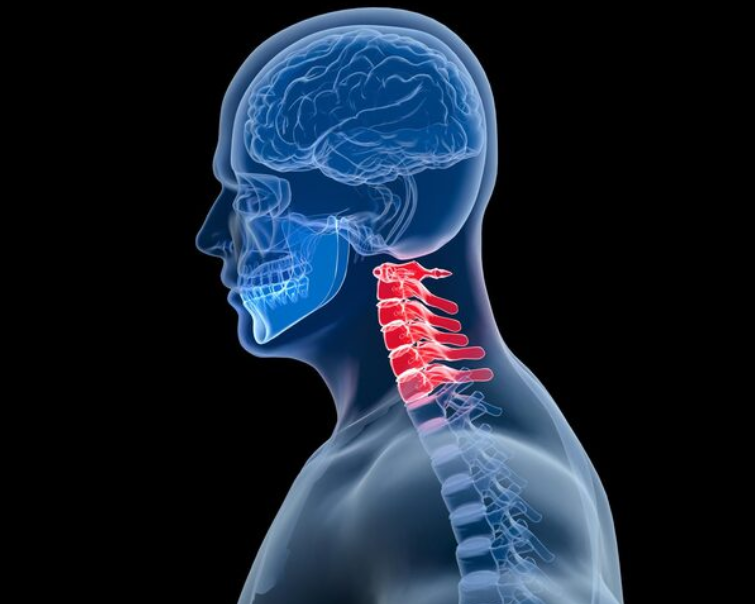
    In short, text neck syndrome is a postural condition in which the neck’s normal C-shaped curve flattens or even reverses, pushing the head forward of the torso.
    Long hours spent looking down at a screen cause this shift to develop gradually.

    It gets its name because the neck juts forward like a turtle poking its head out of its shell.
    The real issue isn’t just appearance, it’s that the load the cervical spine has to bear changes entirely.

    text neck headache illustration 3

    The cervical spine is naturally built with a gentle C-curve designed to evenly distribute the weight of the head.
    But the more the head tilts forward, the more that curve collapses, concentrating stress on a single section of the neck.

    💡 Key Point
    According to a cervical spine load study by Dr. Kenneth Hansraj of New York Spine Surgery & Rehabilitation Medicine, the weight the neck bears is about 5kg (11 lbs) in a neutral position, but jumps to roughly 18kg (40 lbs) at just a 30-degree tilt, and climbs to about 27kg (60 lbs) at 60 degrees.
    In other words, the more you tip your head down to look at your phone, the heavier the load your cervical spine and surrounding muscles have to carry.

    text neck headache illustration 4

    When the muscles and ligaments around the cervical spine stay tense like this over time, it can lead to a heavy, pressing pain in the shoulders.
    A shift in posture like this ultimately throws off the balance of the whole body.


    Why Does Text Neck Cause Headaches?

    In short, a text neck headache isn’t a problem in the brain itself, it’s a secondary headache known as a cervicogenic headache, where tension in the neck joints and surrounding muscles is referred up to the head.
    It typically starts at the back of the neck and spreads toward the temples.

    text neck headache illustration 5

    The occipital nerves run along the back of the neck, and when text neck posture causes the neck muscles to tighten, these nerves can become compressed, producing a throbbing pain that runs from the back of the head to the sides.

    Because of this, many people mistake the pain for a brain issue or simple stress,
    but in a good number of cases the real cause is excessive tension in the neck muscles.
    Eye strain, dizziness, and trouble concentrating can show up alongside it as well.

    ⚠️ Caution
    Because a cervicogenic headache originates in the muscles and joints around the neck rather than the brain, over-the-counter painkillers often don’t bring much relief.
    If the pain keeps coming back, it’s important to also address the underlying strain on the neck.

    Can You Self-Diagnose Text Neck Syndrome at Home?

    Yes. Stand with your back and the back of your head against a wall, if the back of your head doesn’t comfortably touch the wall, text neck may be worth looking into.
    This simple test alone can give you a rough sense of your neck’s condition.

    text neck headache illustration 6

    If you spend all day in front of a monitor, you might be surprised at just how far your head sits away from the wall during this test.

    If that’s the case, it’s worth going through the checklist below and taking a closer look at your daily habits.

    📋 Daily Neck Health Checklist
    ✅ Hold your phone up to eye level instead of looking down at it.
    ✅ Do a chin-tuck neck stretch once every hour.
    ✅ Use a monitor stand to bring your screen up to eye level.
    ✅ Swap a high pillow for one that supports your neck’s natural curve.
    ✅ During long stretches of sitting, periodically roll your shoulders back and open up your chest.

    text neck headache illustration 7

    While working at a computer, make a conscious effort to tuck your chin slightly,
    and add in the occasional shoulder roll to open up your chest.

    Rather than holding one position for long stretches, building the habit of stretching often to release muscle tension matters far more.

    ✅ What You Can Expect
    Consistently combining posture correction with stretching may help ease tension in the neck and shoulder muscles, which in turn can help manage how often headaches occur.
    That said, results vary depending on individual posture and symptom severity, so if the pain persists, it’s safest to see a specialist.

    If your symptoms keep recurring or start interfering with daily life, checking the relevant department information on the SL Seoul Hospital for Spine & Joints website is another option.


    Frequently Asked Questions

    1. How is a text neck headache different from a regular migraine?
    Migraines stem from changes in blood vessels or the brain’s nervous system, while text neck headaches originate from tension and nerve compression in the muscles at the back of the neck, and their intensity tends to shift depending on the angle of the neck.

    2. Does getting frequent massages help relieve the headaches?
    It can help temporarily loosen tight muscles, but if your everyday posture doesn’t change, the muscles tend to tense back up quickly, so pairing massage with posture correction is more likely to help the effect last.

    3. What kind of pillow is best for neck health?
    A pillow that’s too high flattens the neck’s C-curve, so it’s best to choose a moderate-height pillow that supports the neck’s natural curve while you’re lying down.

    4. Which specialist should I see if symptoms are severe?
    If the pain keeps recurring or is interfering with daily life, it’s recommended to get a thorough evaluation from a specialized medical provider, such as orthopedics, neurosurgery, or rehabilitation medicine.

    5. Can stretching alone fully correct text neck?
    Stretching helps relieve muscle tension and improve postural awareness, but in more severe cases, stretching alone is unlikely to fully correct the posture, so it’s best to consult a specialist to build a management plan.

    text neck headache illustration 8


    References

    · Kenneth K. Hansraj, “Assessment of stresses in the cervical spine caused by posture and position of the head,” Surgical Technology International, 2014. View source
    · Korea Disease Control and Prevention Agency, “Straight Neck (Text Neck) Syndrome,” National Health Information Portal. View source
    · Seoul National University Hospital, “Text Neck Syndrome (Forward Head Posture),” SNUH Medical Information. View source


    This article is intended for general health information purposes only and is not a substitute for individual diagnosis or treatment. If you’re experiencing symptoms, please consult a medical professional.
  • Knee Surgery: 3 Key Checks Before Choosing an Orthopedic Surgeon

    Knee Surgery: 3 Key Checks Before Choosing an Orthopedic Surgeon

    SummaryBefore agreeing to knee surgery, here’s a checklist for choosing an orthopedic surgeon, the stages from conservative to surgical treatment, and how to protect your knees after surgery.

    What would you think if you went to a doctor for knee pain and, without much discussion, surgery was the first thing mentioned?

    If that happens, it’s worth pausing to reconsider how you’re choosing a provider in the first place.

    Knee surgery is generally considered a last resort once conservative treatment has reached its limits, not the first option on the table.

    This article covers what to check when choosing an orthopedic provider before agreeing to knee surgery, the step-by-step criteria from conservative to surgical treatment, and the joint-protection habits that matter whether or not you end up having surgery.

    knee surgery

    knee surgery related image 2

    Why does knee pain happen, and how should you choose an orthopedic surgeon?

    In short, a trustworthy orthopedic practice is one that presents both surgical and non-surgical options in a balanced way.

    An orthopedic surgeon is a physician who evaluates and treats musculoskeletal conditions—bones, joints, and ligaments—through detailed diagnostic testing and staged treatment.

    Because the knee bears the body’s full weight with every step, complaints of knee pain are rising not only among middle-aged and older adults but also among physically active younger people.

    Many people dismiss early knee pain as ordinary muscle soreness and only see a doctor once symptoms have lingered for a long time.

    That’s why, when choosing a provider, you should first check whether the practice has detailed imaging equipment on-site and whether specialist consultations are thorough and systematic.

    knee surgery related image 3

    Orthopedic provider checklist
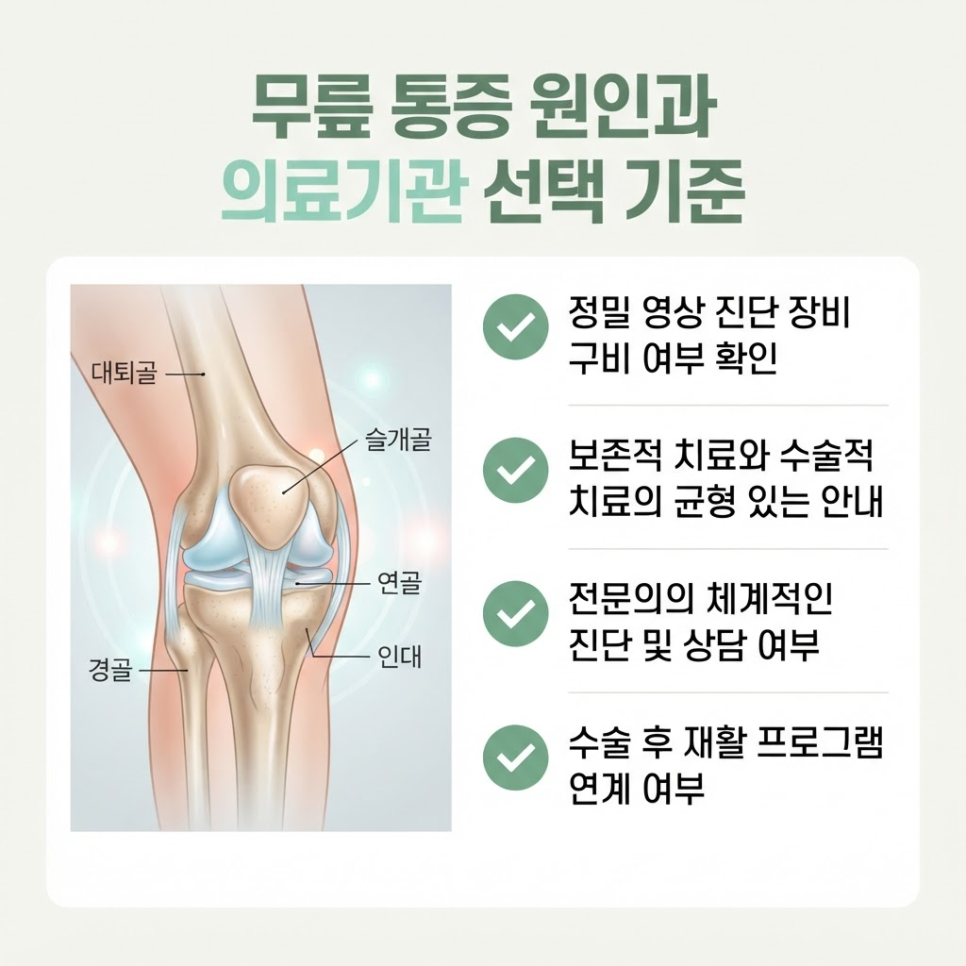
    ✅ Does the practice have detailed imaging equipment (X-ray, MRI, etc.)?
    ✅ Does it present conservative and surgical treatment options in a balanced way?
    ✅ Are diagnosis and consultation handled systematically by a specialist?
    ✅ Does it offer a connected post-surgical rehabilitation program?

    knee surgery related image 4

    Key takeaway
    The longer knee pain is left untreated, the more diagnosis and treatment tend to be delayed.
    If symptoms persist for more than two weeks, it’s safest to get a thorough diagnostic exam.

    At what stage is knee surgery considered?

    In short, knee surgery is typically the last option considered when pain and functional decline don’t improve with conservative treatment.

    Knee surgery refers to treatment that repairs damaged cartilage or ligaments, or, when necessary, replaces the joint with an artificial implant to restore knee function.

    In earlier stages, conservative treatments such as medication and physical therapy are typically tried first.

    However, when cartilage damage is severe or degenerative arthritis has progressed significantly, conservative treatment alone may not be enough.

    knee surgery related image 5

    Key takeaway
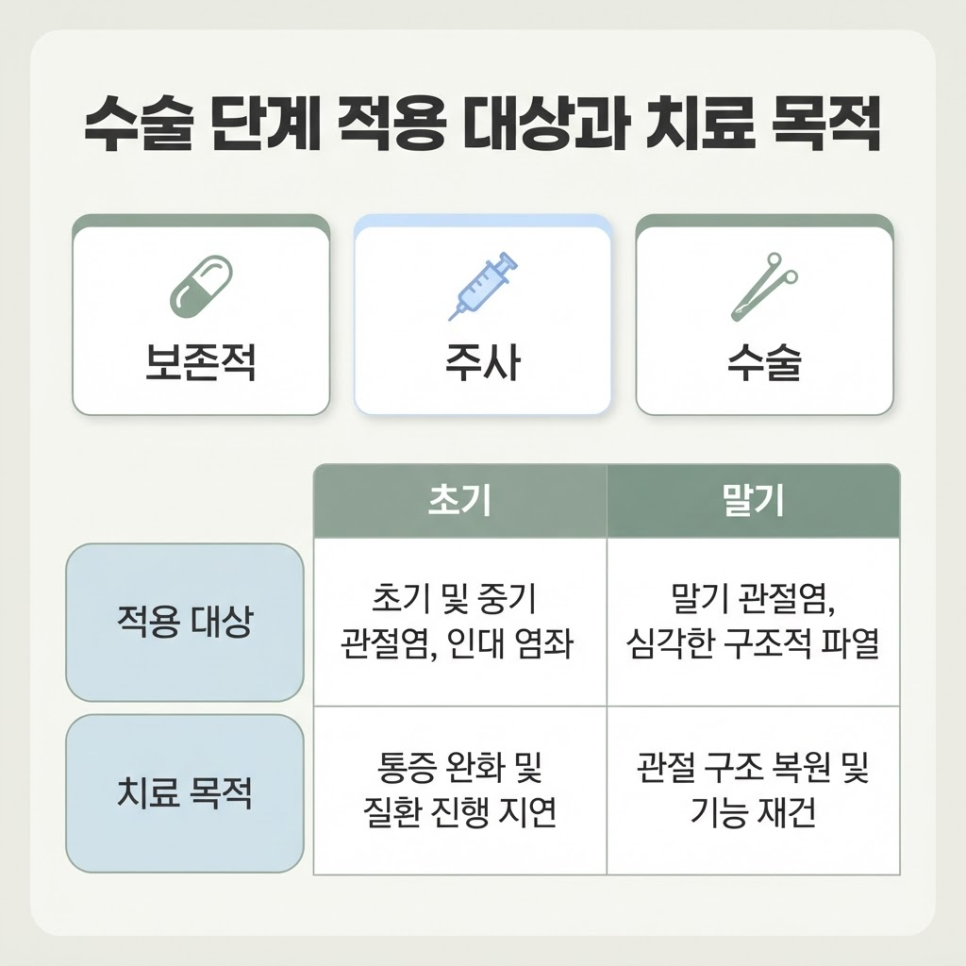
    Stage 1: Medication and exercise therapy (conservative treatment)
    Stage 2: Intra-articular injections with close monitoring
    Stage 3: Arthroscopic surgery or knee replacement considered
    Category Conservative Treatment Surgical Treatment
    Who it’s for Early to moderate arthritis, ligament sprains Advanced arthritis, structural tears
    Treatment goal Pain relief, slowing progression Restoring joint structure and function
    A note of caution
    Pain severity alone isn’t a reliable way to decide whether surgery is needed.
    The decision should always follow imaging that confirms the extent of cartilage damage.

    If you need an accurate diagnosis and consultation, visit the SLS Seoul Hospital Spine & Joint Center homepage for care information.


    What joint-care habits matter regardless of whether you have surgery?

    In short, weight management and thigh-strengthening exercise are the two habits that most affect how long your knees last.

    Joint-protection habits refer to lifestyle practices that reduce the load placed on the knee and strengthen the surrounding muscles to slow down joint damage.

    knee surgery related image 6

    The effect of weight loss
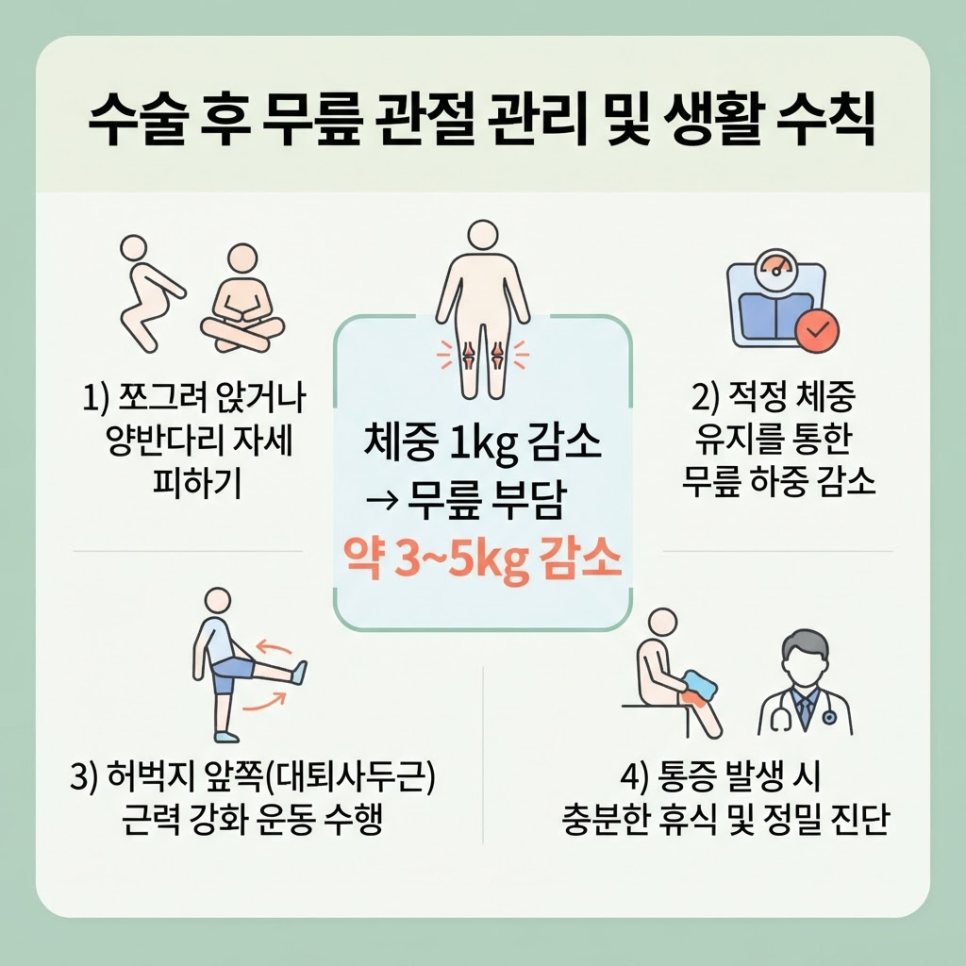
    According to media reports, losing just 1 kg of body weight is said to reduce the load on the knee by roughly 4 kg, though this can vary by individual.
    Consistent weight management is essentially a way to extend the lifespan of your joints.

    Avoid strenuous hiking or repeated stair climbing, and instead choose low-impact aerobic activities such as walking on flat ground, swimming, or stationary cycling.

    In particular, strengthening the quadriceps—the muscles at the front of the thigh—under professional guidance helps maintain knee stability.

    knee surgery related image 7

    Joint-protection habits
    ✅ Avoid squatting or sitting cross-legged on the floor
    ✅ Maintain a healthy weight to reduce knee load
    ✅ Consistently strengthen the quadriceps (front thigh muscles)
    ✅ Rest when you feel pain and get a thorough evaluation

    Frequently Asked Questions

    1. If I have knee pain, do I automatically need surgery?
    No. In early to moderate stages, conservative treatments like medication, physical therapy, and exercise therapy are tried first. Knee surgery is considered only when sufficient conservative treatment doesn’t improve symptoms or structural damage is severe.

    2. What’s the first thing to check when choosing an orthopedic provider?
    It’s best to first confirm whether the practice has detailed imaging equipment and whether its specialists present both surgical and non-surgical options in a balanced way.

    3. How long does rehabilitation take after knee surgery?
    It varies by the type of surgery and the patient’s condition, but recovery of joint range of motion and strength typically happens gradually over weeks to months.

    4. What’s the best way to protect your knees in daily life?
    Avoiding squatting or sitting cross-legged, walking on flat ground, managing your weight, and consistently strengthening the quadriceps are all effective habits.

    knee surgery related image 8

    knee surgery related image 9

    knee surgery related image 10

    knee surgery related image 11


    References

    · Kookje Ilbo, “A 1 kg Weight Gain Puts 4 kg of Extra Load on the Knee,” Kookje Ilbo, 2019. Read more
    · Korea Disease Control and Prevention Agency (KDCA) National Health Information Portal, “Knee Osteoarthritis: Exercising the Right Way,” KDCA. Read more
    · Seoul National University Hospital, “Degenerative Arthritis,” SNUH Medical Information. Read more

    This article is provided for general health information purposes only and is not a substitute for individual diagnosis or treatment. If you have symptoms, please consult a physician.

  • Lower Back Physical Therapy: 4 Self-Checks Before Your First Visit

    Lower Back Physical Therapy: 4 Self-Checks Before Your First Visit

    SummaryInstead of just toughing out lower back pain, here’s an easy-to-follow guide from SL Seoul Hospital, an orthopedic clinic serving the Pocheon area: 4 self-checks to try before starting lower back physical therapy, how traction and electrical stimulation therapy work, and daily habits that help prevent recurrence.

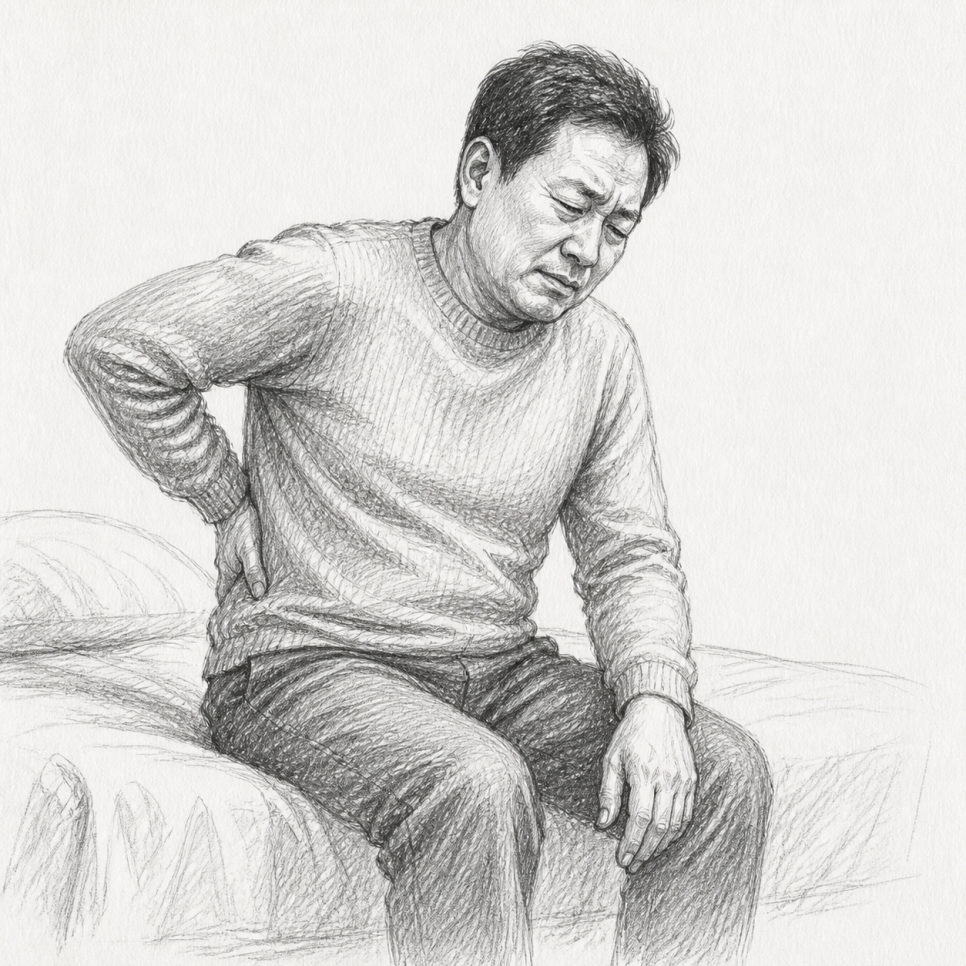
    Many people believe that a sudden twinge in the lower back will heal on its own after a few days of rest.

    In reality, it’s more common for people to push through pain that radiates down the leg, only looking into lower back physical therapy after their condition has worsened.

    Before visiting a clinic, it helps to check for yourself whether your pain is simple muscle soreness or something more.

    lower back physical therapy

    This article covers self-checks you can do before starting lower back physical therapy, along with how physical therapy works for early-stage lower back pain.

    You’ll also find the features of conservative treatments like traction therapy and electrical stimulation therapy, plus daily habits that help treatment results last.

    Lower back physical therapy illustration 2

    Lower back physical therapy illustration 3

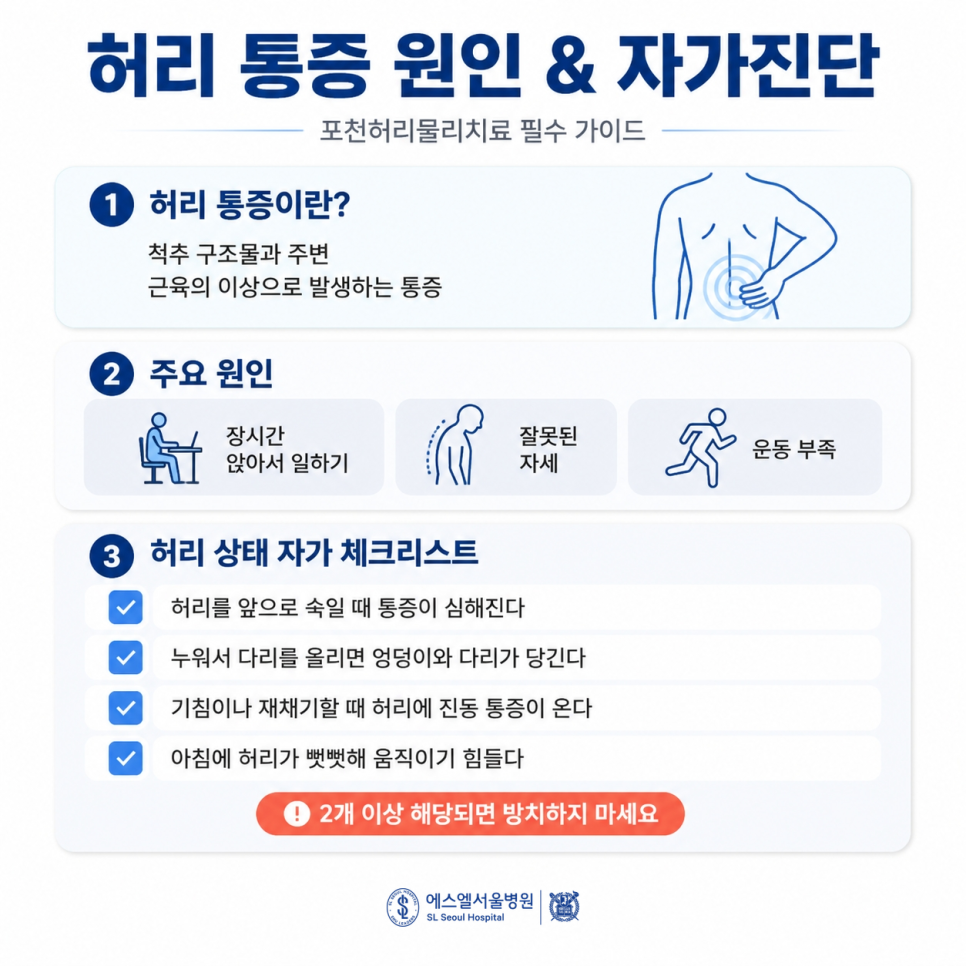
    What Signs of Lower Back Pain Mean You Should See a Doctor?

    In short, if your lower back pain comes with leg numbness or radiating pain, it’s best not to dismiss it as simple muscle soreness.

    Lower back pain refers to pain caused by problems in the vertebrae or the surrounding muscles and ligaments.

    Prolonged sitting and poor posture are commonly cited causes.

    If you experience leg numbness or severe pain, a herniated disc or joint problem may be involved, so it’s safer to get a thorough evaluation at an orthopedic clinic.

    The straight leg raise test (SLR test) is considered one of the most common self-checks for identifying a herniated disc.

    While lying down, slowly raise one leg with the knee kept straight — if you feel sharp pain in the back of the leg or buttock before reaching a 60–70 degree angle, a herniated disc may be a possibility.

    Lower back physical therapy illustration 4

    Key Points
    ✔ If pain intensifies before your leg reaches a 60–70 degree angle, a herniated disc may be a possibility.
    ✔ Sharp, jolting pain in the lower back when coughing or sneezing can also signal nerve compression.
    📋 Lower Back Self-Check Checklist
    ✅ Pain worsens when bending forward
    ✅ Lifting one leg while lying down causes pulling pain in the hip and leg
    ✅ Coughing or sneezing triggers jolting pain in the lower back
    ✅ The lower back feels stiff and hard to move first thing in the morning

    If two or more of these apply to you, it’s advisable to see a doctor rather than let it go untreated.

    Starting appropriate care early can support long-term spine health.


    How Does Lower Back Physical Therapy Relieve Pain?

    In short, lower back physical therapy is a conservative treatment that uses physical stimulation, without surgery, to help reduce pain and support functional recovery.

    Many people worry about needing surgery as soon as they feel pain.

    However, according to the Korea Disease Control and Prevention Agency’s National Health Information Portal, many patients with a herniated disc improve with non-surgical approaches alone, such as medication, rest, and exercise therapy.

    Physical therapy is a key part of that approach.

    Lower back physical therapy illustration 5

    Type Mechanism Main Purpose
    Heat Therapy Blood vessel dilation, increased blood flow Relieves muscle spasms
    Electrical Stimulation Therapy (TENS) Blocks nerve pain signal transmission Reduces pain signals
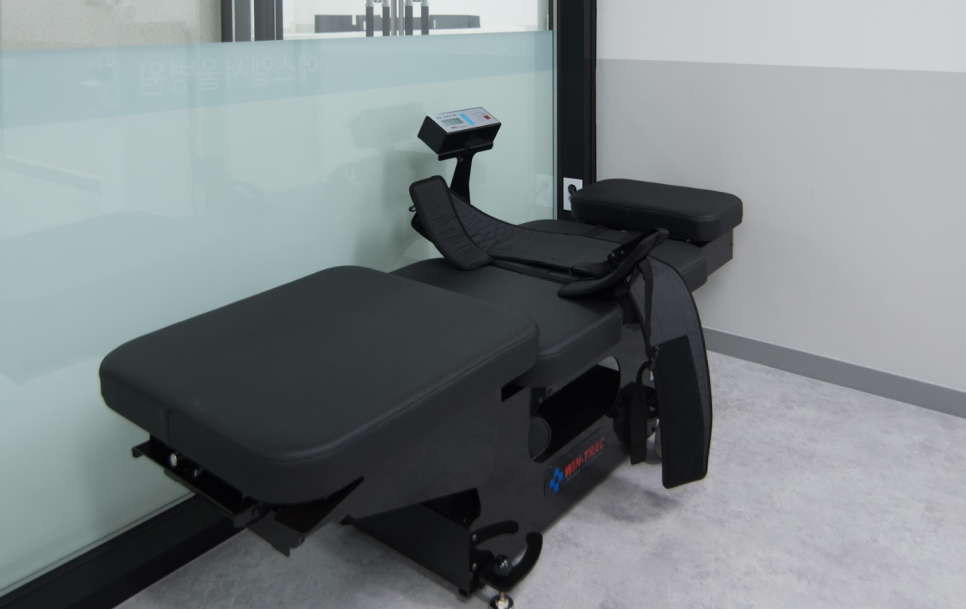
    Traction Therapy Temporarily widens spinal disc spacing Eases nerve compression from disc pressure
    Key Points
    ✔ Traction therapy can widen the spinal disc space and neural foramen, helping to ease nerve compression.
    ✔ Electrical stimulation therapy (TENS) is generally considered safe, but its effect size varies across studies, so it’s often used alongside other treatments rather than on its own.

    Lower back physical therapy illustration 6

    Following a systematic, consistent treatment plan may help relieve pain.

    After a thorough diagnosis, it’s important to build a step-by-step treatment plan tailored to you.

    Lower back physical therapy illustration 7

    Caution
    ⚠ Stopping treatment on your own or increasing its intensity because progress feels slow can actually worsen your symptoms.
    ⚠ If you experience leg numbness or bladder/bowel dysfunction, seek medical attention without delay.

    What Habits Help Your Treatment Results Last Longer?

    In short, correcting your posture and managing daily habits are important factors in maintaining the results of physical therapy.

    Even with effective treatment, pain can easily return if everyday posture isn’t maintained.

    That’s why it’s important to also minimize strain on the spine in daily life.

    Lower back physical therapy illustration 8

    🚀 3 Daily Habits to Reduce Strain on Your Spine
    1. Stretch for 5 minutes after every 50 minutes of work
    2. Bend your knees, not your back, when lifting objects
    3. Sit with your hips pushed all the way back in the chair

    Lower back physical therapy illustration 9

    It’s important to consult with orthopedic staff to find what works for you and to consistently stick with these habits.

    Combining professional treatment with consistent self-care can help support a healthy lower back over time.

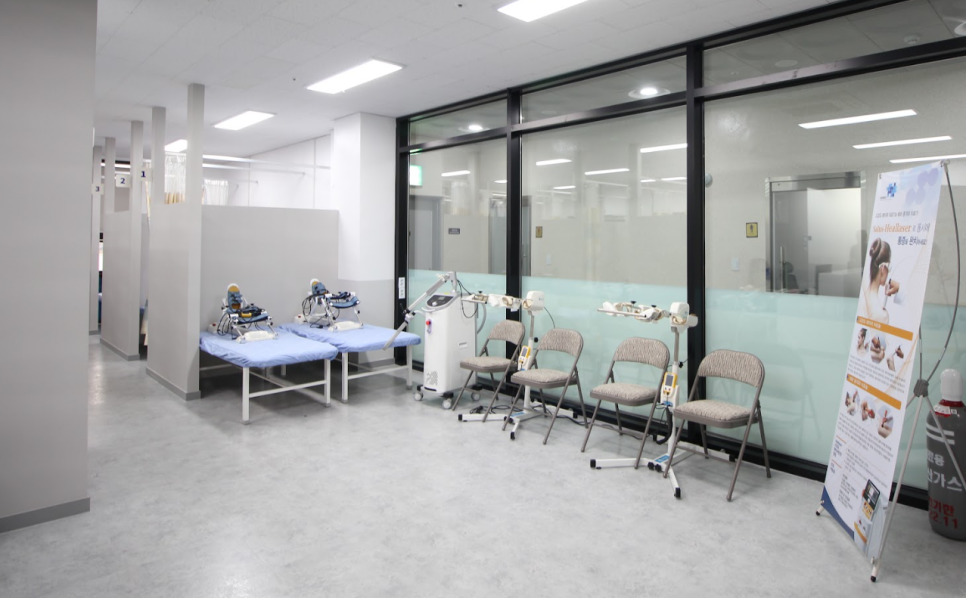
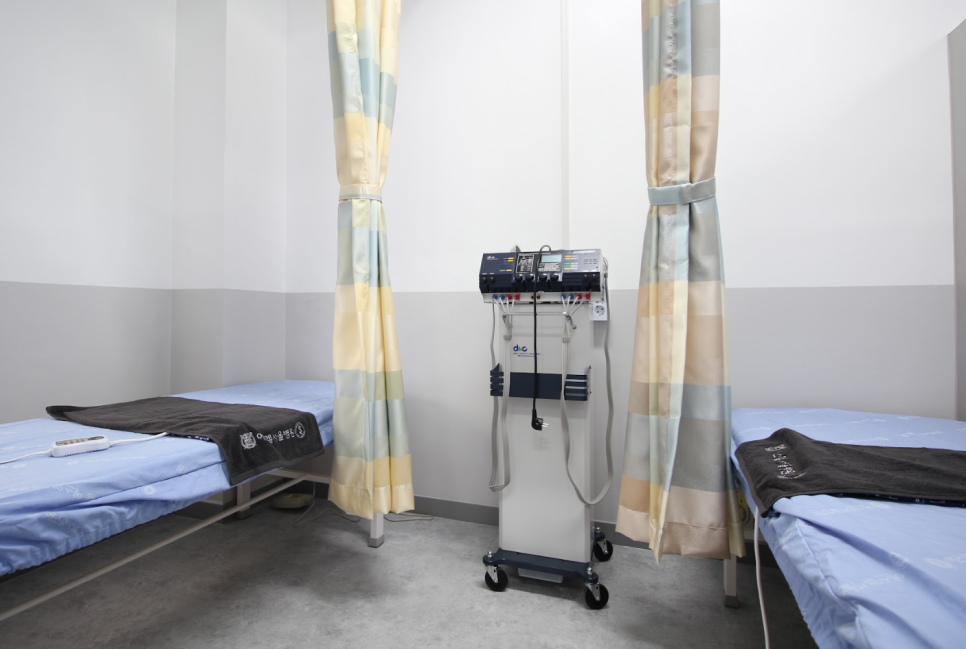
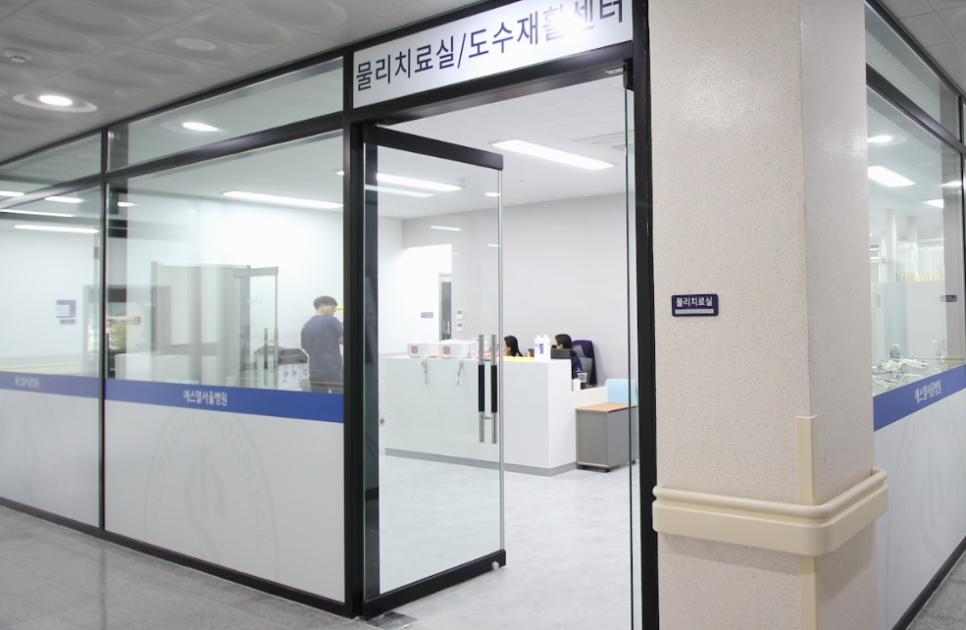
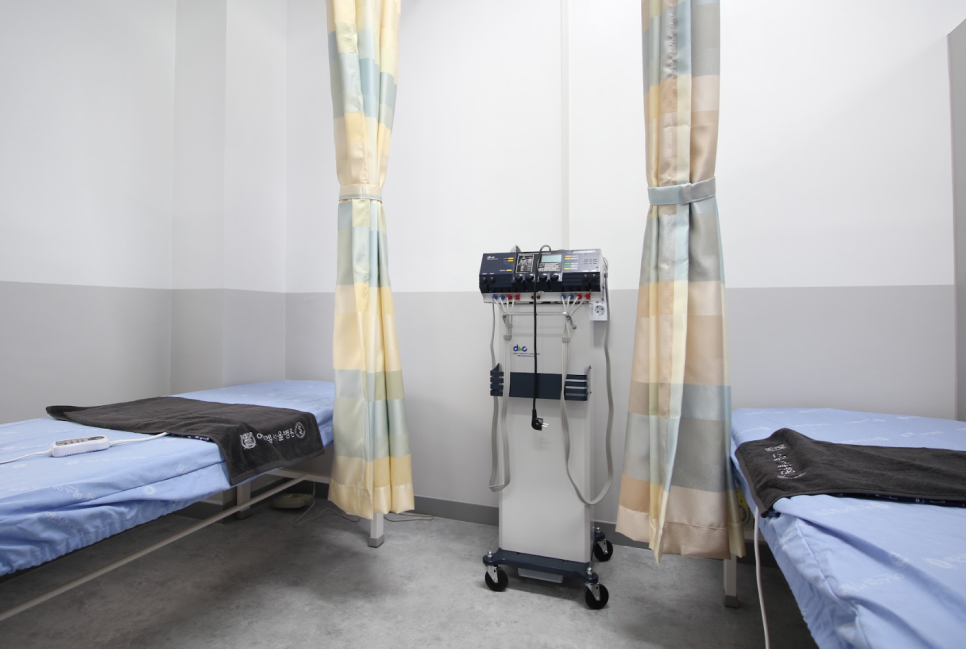
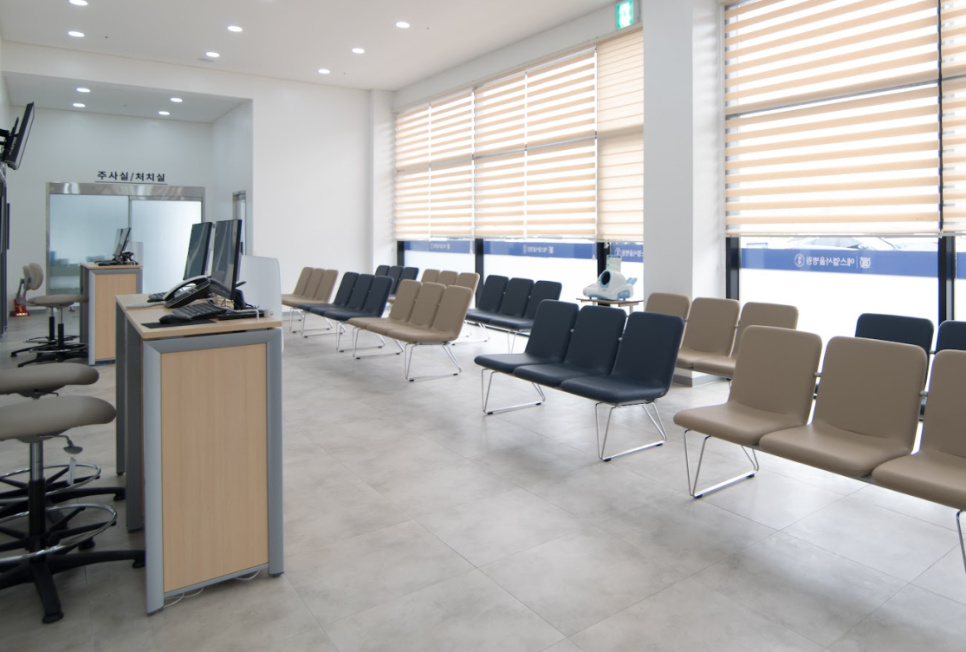
    If you’re considering lower back physical therapy in the Yangju or Pocheon area of Gyeonggi Province, it can help to check out the clinic’s treatment environment before your visit.

    Lower back physical therapy illustration 10

    Lower back physical therapy illustration 11

    Lower back physical therapy illustration 12

    SL Seoul Hospital is located at 13 Gosam-ro, Yangju-si, Gyeonggi-do.

    Lower back physical therapy illustration 16

    Lower back physical therapy illustration 17

    Before your visit, we recommend checking office hours and available departments on the SL Seoul Hospital Spine & Joint Clinic homepage.


    Frequently Asked Questions

    1. Do I need to rest in bed for several days if my lower back hurts?
    A day or two of rest right after acute pain begins can help, but prolonged bed rest can actually weaken your muscles. After a diagnosis, staying lightly active within your pain tolerance tends to be better for recovery.

    2. How often should I get lower back physical therapy?
    This varies based on your symptoms and how far they’ve progressed. Many people start with 2–3 sessions per week and adjust the frequency as their condition improves.

    3. Should I use a heating pad or an ice pack for lower back pain?
    Ice tends to help more in the early, acute stage when there’s swelling, while heat is generally better for chronic stiffness and tight muscles, as it supports blood circulation.

    4. What should I prepare to get an accurate diagnosis at the clinic?
    It helps to note down when your pain started, which postures or times of day make it worse, and any accompanying symptoms like leg numbness, before your appointment.

    References

    · Korea Disease Control and Prevention Agency, “Herniated Disc (Intervertebral Disc Herniation),” National Health Information Portal. View source
    · Asan Medical Center, “Low Back Pain,” Asan Medical Center Health Information Library. View source
    · National Evidence-based healthcare Collaborating Agency (NECA), “Health Technology Reassessment Report: Transcutaneous Electrical Nerve Stimulation for Low Back Pain Patients,” 2024. View source

    This article is intended for general health information purposes and is not a substitute for individual diagnosis or treatment. If you have symptoms, please consult a medical professional.
  • Scoliosis Exercises: 3 Simple Stretches to Try in 10 Minutes a Day

    Scoliosis Exercises: 3 Simple Stretches to Try in 10 Minutes a Day

    SummaryDiscover how scoliosis exercises may help support left-right shoulder balance. This guide covers a 10-minute daily stretching routine — including cat-cow and bird-dog — plus important precautions.

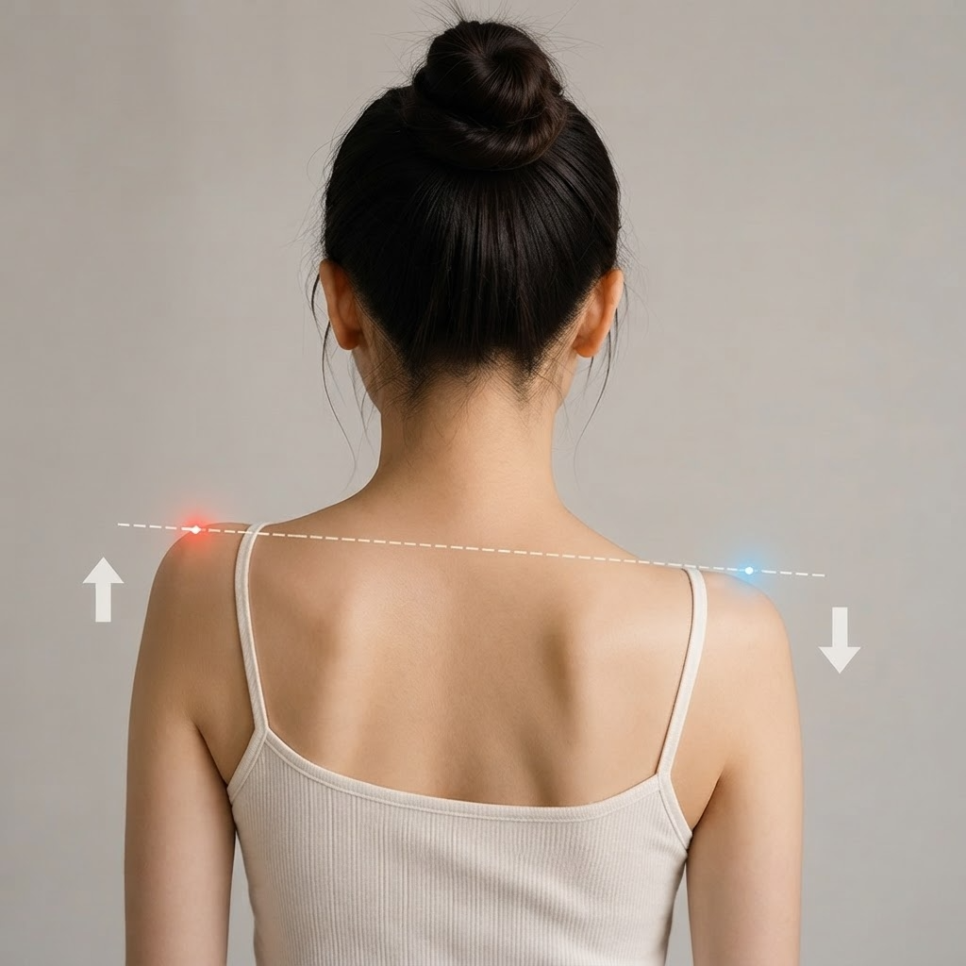
    Have you ever noticed one shoulder sitting lower than the other every time you stand in front of a mirror?

    It’s easy to brush off, but a difference in shoulder height can be a sign that the spine is gradually curving.

    Rather than heavy weightlifting, three-dimensional movement paired with breathing is at the core of scoliosis exercises.

    💡 In This Article
    This article covers why scoliosis exercises matter and how they work, a step-by-step stretching routine you can follow at home, and everyday habits that can work against your results. See how investing just 10 minutes each morning may help support left-right balance.

    scoliosis exercises

    What Are Scoliosis Exercises?

    Scoliosis exercises are a tailored exercise approach that strengthens the muscles around a sideways-curved spine to help support left-right balance.

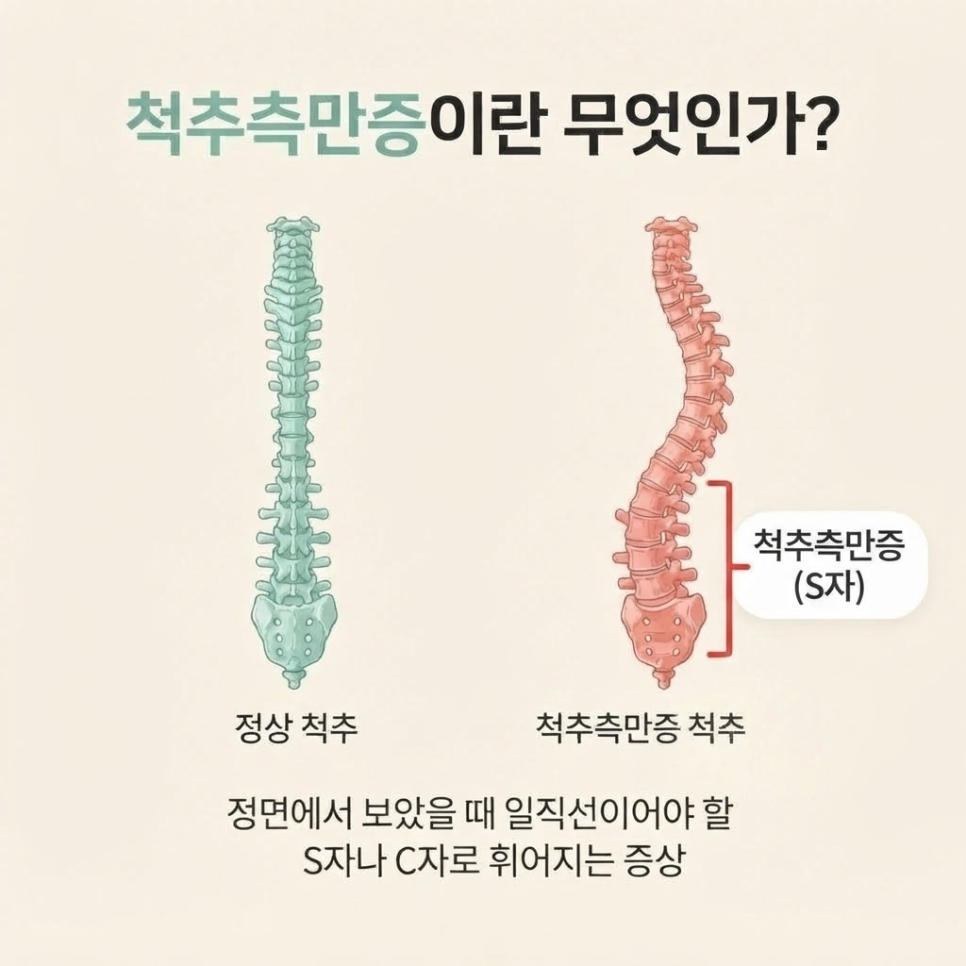
    Scoliosis refers to a condition in which the spine, which should look straight when viewed from the front, curves into an S- or C-shape.

    As the left-right imbalance worsens, the pelvis can become misaligned, and pain or fatigue tends to show up more easily after long periods of sitting.

    Scoliosis exercises illustration 2

    Medical professionals often emphasize three-dimensional corrective exercises performed with breathing rather than jumping straight into high-intensity weight training.

    The key is accurately recognizing the body’s imbalance and performing movements that help restore left-right symmetry.

    Focusing on the muscles that support the curved spine is an important part of the process.

    Scoliosis exercises illustration 3

    💡 Key Points
    ✔ Scoliosis exercise isn’t about building muscle mass — the goal is restoring left-right symmetry.
    ✔ Three-dimensional corrective movements paired with breathing may help support spinal stabilization.

    How Do You Do Scoliosis Stretches at Home?

    Simply repeating three movements for 10 minutes each morning may help your body feel lighter.

    Office workers who sit hunched over for more than eight hours a day are especially prone to weakened muscles around the spine.

    In fact, research on adolescents with idiopathic scoliosis has looked at Schroth exercise programs lasting around 12 weeks, with some studies reporting improvement in thoracic Cobb angle, though results are reported to vary between individuals.

    Scoliosis exercises illustration 4

    📊 Research Findings
    An international systematic review found that scoliosis-specific exercise programs (such as the Schroth method) significantly improved Cobb angle and quality-of-life measures compared with control groups. (See References)

    The three stretches below are commonly used to lengthen tightened muscles and help stabilize the spine.

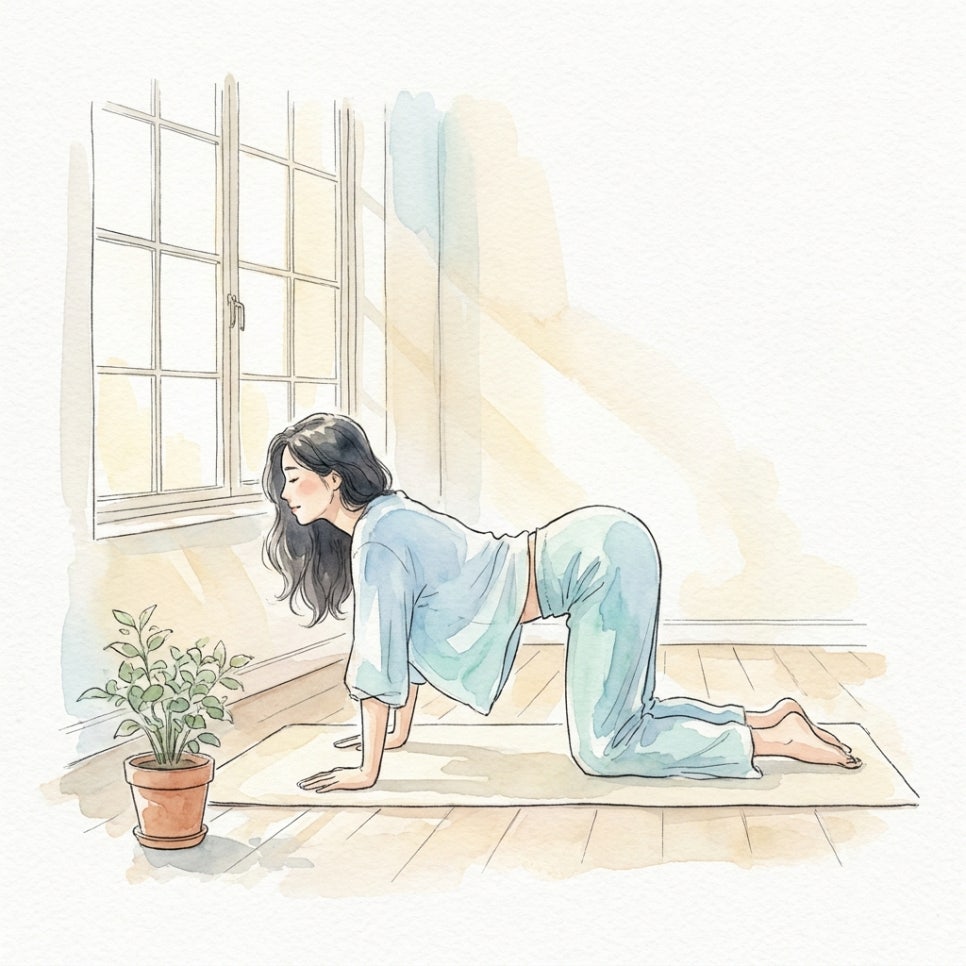
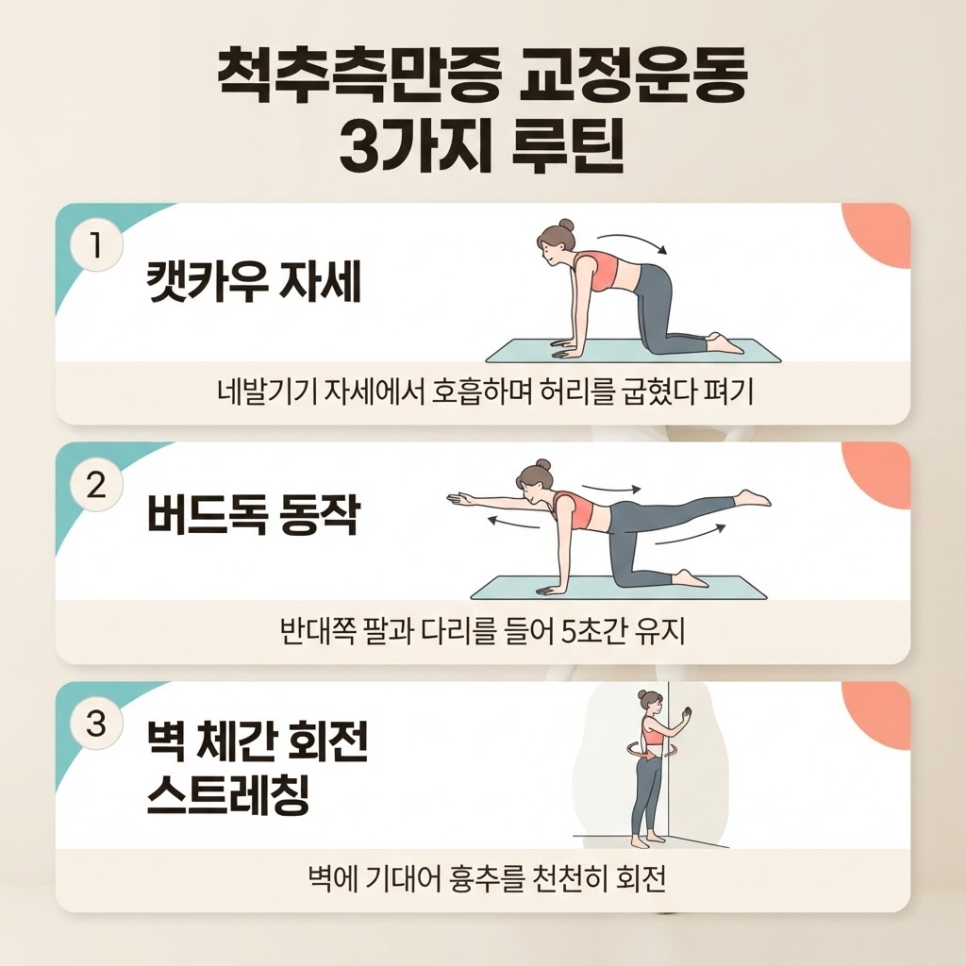
    1. Cat-Cow Pose — On all fours, inhale as you let your lower back dip down, then exhale as you round your entire back upward.
    2. Bird-Dog — From an all-fours position, extend one arm and the opposite leg out parallel to the floor and hold for 5 seconds.
    3. Wall-Assisted Trunk Rotation Stretch — Stand sideways next to a wall and slowly open up your upper back to release tight muscles.

    Scoliosis exercises illustration 5

    📋 Checklist
    ✅ Move slowly and keep breathing deeply throughout
    ✅ Engage your core so your lower back doesn’t arch too much
    ✅ Don’t push through a direction that increases your pain
    ✅ Do 2-3 extra reps on whichever side feels stiffer

    Scoliosis exercises illustration 6


    What Daily Posture Habits Should You Watch?

    Maintaining good posture also means changing everyday habits.

    Try to consciously practice postures that minimize uneven pressure on the spine.

    No matter how diligently you exercise, habits like crossing your legs or resting your chin on your hand can work against your progress.

    Scoliosis exercises illustration 7

    When looking at your phone or monitor, it helps to adjust the height so your gaze isn’t angled too far downward.

    You should also avoid standing with your weight shifted onto one leg.

    Distributing your weight evenly between both feet is a foundation of good spine health.

    Fixing this one habit alone may help reduce lower back fatigue by the end of the day.

    ⚠️ Precautions
    It’s best to hold off on heavy weight-bearing exercises until the curve becomes more flexible.
    If you feel sharp pain while stretching, stop immediately and consult a specialist.
    If symptoms persist, getting an accurate diagnosis at SL Seoul Hospital’s spine and joint center is recommended.

    Frequently Asked Questions

    1. How long should I do scoliosis exercises each day?
    It’s best to do about 10 to 20 minutes consistently every day. Rather than one long, intense session, regular daily practice may help build muscle memory in the muscles surrounding the spine.

    2. Can adults also see results from scoliosis exercises?
    For structural scoliosis where the bone itself has already fully changed shape, dramatic straightening becomes less likely in adulthood. Still, exercise can play a useful role in correcting muscle imbalances, easing pain, and helping guard against further progression.

    3. What should I do if I feel pain during exercise?
    If you feel a sharp, shooting, or stiff pain rather than a normal stretching sensation, stop that movement right away. It may simply not suit your particular curve pattern, so getting evaluated by a specialist is recommended.

    4. Is it okay to combine this with regular workouts like gym training or yoga?
    Basic yoga or Pilates can help with flexibility and core strength. That said, it’s safer to avoid weight training that works only one side of the body or movements that twist the spine forcefully.

    Scoliosis exercises illustration 8


    References

    · Fan Y, et al., “The effectiveness of Schroth exercises in adolescents with idiopathic scoliosis: A systematic review and meta-analysis,” Journal of Bodywork and Movement Therapies, 2019. View Source
    · Lee JH, Kim SY, “Comparison of the Effects of Schroth Exercise Therapy and Sling Exercise Therapy on Flexibility, Balance Ability, Spinal Angle, and Chest Expansion in Scoliosis Patients,” Journal of the Korean Society of Physical Medicine, 2014. View Source
    · A Case Study of Exercise Therapy Using the Schroth Method for an Adolescent with Idiopathic Scoliosis, Asian Journal of Kinesiology. View Source


    This article is intended for general health information purposes only and is not a substitute for individual diagnosis or treatment. If you have symptoms, please consult a physician.

  • Ankle Sprain Treatment: 3 Stages to Help Prevent Chronic Instability

    Ankle Sprain Treatment: 3 Stages to Help Prevent Chronic Instability

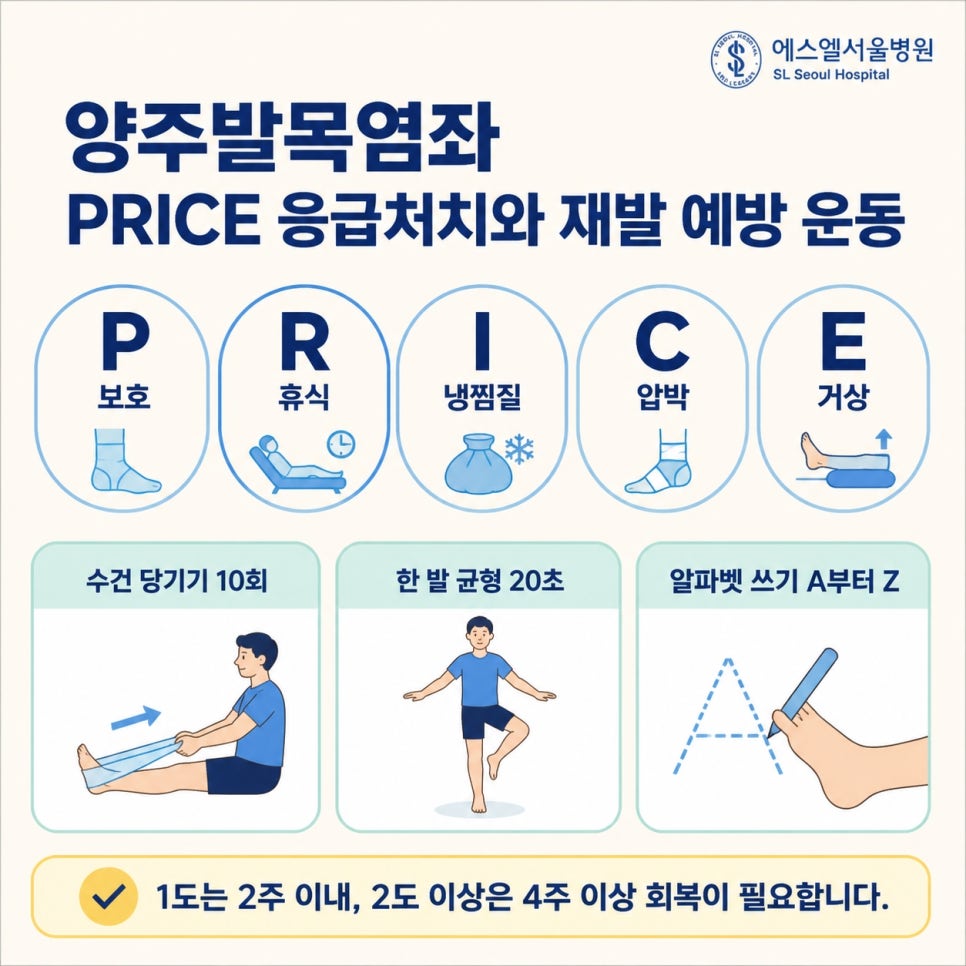
    SummaryWhen you twist your ankle while walking, prompt ankle sprain treatment matters. Left untreated, an ankle sprain can progress to chronic instability and arthritis. This guide covers accurate diagnosis, step-by-step treatment based on the PRICE principle, and rehabilitation exercises.

    Ever missed a step going down the stairs and felt your ankle twist out from under you?

    That sudden loss of strength in the leg that sends you straight to the ground is a familiar feeling.

    It’s easy to brush it off and just slap on a pain-relief patch.

    But if an ankle sprain isn’t treated properly, it can turn into a lingering, chronic problem that flares up again and again.

    ankle sprain

    Quick Overview
    When you sprain your ankle, how you respond in the first hours can determine how well—and how quickly—you recover from an ankle sprain.
    Having an orthopedic specialist assess the extent of ligament damage, then combining the PRICE principle with staged treatment and rehabilitation exercises, can help prevent chronic instability.

    ankle sprain illustration 2

    What Is an Ankle Sprain and What Causes It?

    An ankle sprain is a common injury in which the ligaments stretch or partially tear, causing pain and swelling.

    An ankle sprain refers to a condition in which the ligaments supporting the joint are overstretched or partially damaged, resulting in pain and swelling.

    It typically occurs when the ankle rolls inward, concentrating force on the ligaments along the outer ankle.

    Common causes include walking on uneven ground, sudden changes of direction during sports, and wearing high heels.

    Once a ligament has been overstretched, it rarely regains its original elasticity on its own, which is why identifying the cause accurately matters.

    ankle sprain illustration 3

    • Sudden landing or direction changes during exercise
    • Missteps on flat ground or stairs
    • Wearing high, unstable footwear
    • Residual ankle instability from a previous injury that didn’t fully heal

    The sooner you get a professional diagnosis, the better.

    ankle sprain illustration 4


    Should You See an Orthopedic Doctor for Suspected Ankle Sprain Symptoms?

    If swelling and pain make it difficult to bear weight or walk, you should see an orthopedic doctor.

    Signs of a possible ankle sprain include swelling, tenderness, bruising, and difficulty walking.

    Right after the injury, you may feel throbbing pain and swelling, along with tenderness when the area is pressed.

    In severe cases, a popping sound at the moment of injury can be followed by difficulty even standing.

    Ignoring these symptoms can leave the ligaments loose, leading to instability and repeated sprains.

    ankle sprain illustration 5

    Checklist
    ✅ Pain is severe enough to make weight-bearing or walking difficult
    ✅ The injured area is swollen and bruised
    ✅ There is tenderness when the area is pressed
    ✅ You heard or felt a popping sound at the time of injury
    ✅ Your ankle gives way or rolls frequently

    A review published in the Journal of the Korean Orthopaedic Association reports that 10–30% of patients with acute lateral ankle sprains may go on to develop repeat injury or chronic instability.

    Caution
    Stopping treatment just because the pain has eased can allow the ligament to heal in a stretched, weakened state, potentially progressing to chronic instability and arthritis.

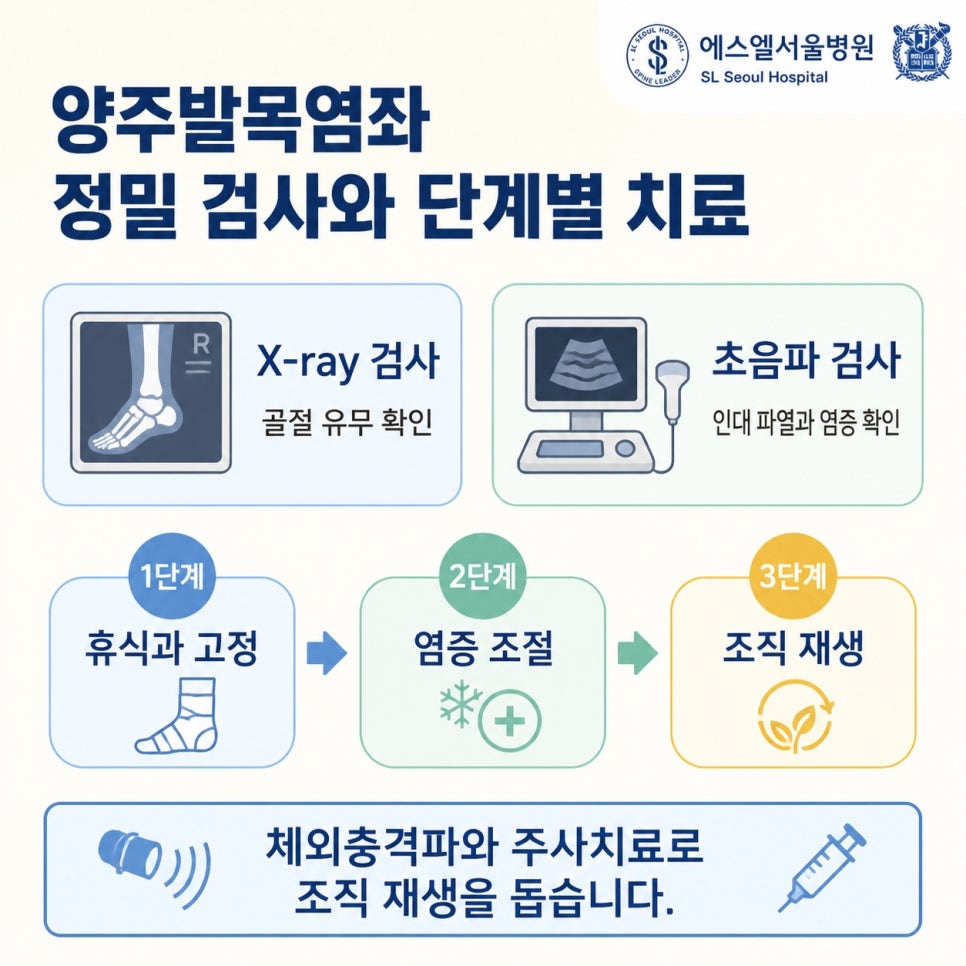
    Ankle Sprain Treatment: How Is It Diagnosed and Staged?

    X-rays and ultrasound are used to assess the extent of the injury, and ankle sprain treatment is planned according to the stage of damage.

    A detailed ankle sprain workup involves an X-ray to rule out fracture and an ultrasound to evaluate the extent of ligament tearing and inflammation.

    ankle sprain illustration 6

    Based on the results, the injury is graded from Stage 1 to Stage 3, and treatment is determined accordingly.

    Injury Stage Ligament Condition Treatment Approach
    Stage 1 Mild stretching Ankle brace, medication, physical therapy
    Stage 2 Partial tear Immobilization combined with ESWT and/or injection therapy
    Stage 3 Complete tear Surgical treatment may be considered

    ankle sprain illustration 7

    In the early stages, conservative treatments—medication, physical therapy, and bracing—are the first line of care.

    Extracorporeal shock wave therapy (ESWT) or injection therapy may be added as needed, which can support tissue repair and help reduce inflammation.

    ankle sprain illustration 8

    1. Rest and immobilization: A cast or brace helps prevent further injury
    2. Inflammation control: Medication and physical therapy to ease pain
    3. Tissue recovery: ESWT and manual therapy
    What to Expect
    Consistent conservative treatment may help restore normal walking and joint stability without surgery.

    Ankle Sprain Recovery Time: What Should You Remember?

    Following the PRICE principle during the acute phase, then adding gradual rehabilitation exercises once pain subsides, can help prevent recurrence.

    The PRICE principle stands for Protection, Rest, Ice, Compression, and Elevation—a method for managing swelling and pain during the acute phase.

    Key Point
    During the first 48 hours, icing to constrict blood vessels and reduce swelling is an important step.
    Missing this window can slow down recovery.

    ankle sprain illustration 9

    Once the pain eases, it’s time to start rehabilitation exercises that strengthen the muscles around the ankle.

    Exercises like towel scrunches with the toes or calf raises can support ligament flexibility and muscle strength.

    1. Sit in a chair and scrunch a towel toward you using your toes (repeat 10 times)
    2. Stand on one foot and hold your balance (20 seconds)
    3. Trace the alphabet in the air with your ankle (A through Z)

    Relying solely on pain patches and putting off proper care often ends up delaying recovery.

    That’s how much early treatment can influence how quickly you recover.

    If you’re also concerned about gait or weight-distribution issues beyond ankle pain, you can find more information on the SL Seoul Hospital Spine & Joint home page.

    SL Seoul Hospital offers non-surgical treatments such as extracorporeal shock wave therapy (ESWT) to support the recovery of damaged tissue.

    ankle sprain illustration 10

    ankle sprain illustration 11

    ankle sprain illustration 12

    ankle sprain illustration 13

    ankle sprain illustration 17

    ankle sprain illustration 18


    Frequently Asked Questions

    1. Should I use heat or ice when I sprain my ankle?
    Within the first 48 hours after the injury, ice is needed to reduce swelling and inflammation. Once the swelling goes down and the pain becomes more chronic, heat can be effective for improving blood flow.

    2. Will a pain-relief patch alone heal a stretched ligament?
    A pain patch only relieves discomfort temporarily—it does not repair a stretched or torn ligament. Without proper care, the injury can worsen into chronic instability, so an accurate diagnosis is important.

    3. Is it okay to exercise during treatment?
    While there is acute pain and swelling, you should avoid putting weight on the ankle and rest instead. Once the pain has eased, it’s safer to begin rehabilitation exercises gradually, under a doctor’s guidance.

    4. How long should I wear an ankle brace?
    An ankle brace is typically worn for about one to two weeks to protect the ligament. However, relying on it for too long can weaken the surrounding muscles, so rehabilitation exercises should be added at the appropriate time.


    References

    · Seoul National University Hospital, “Ankle Sprain,” Medical Information, Seoul National University Hospital. View source
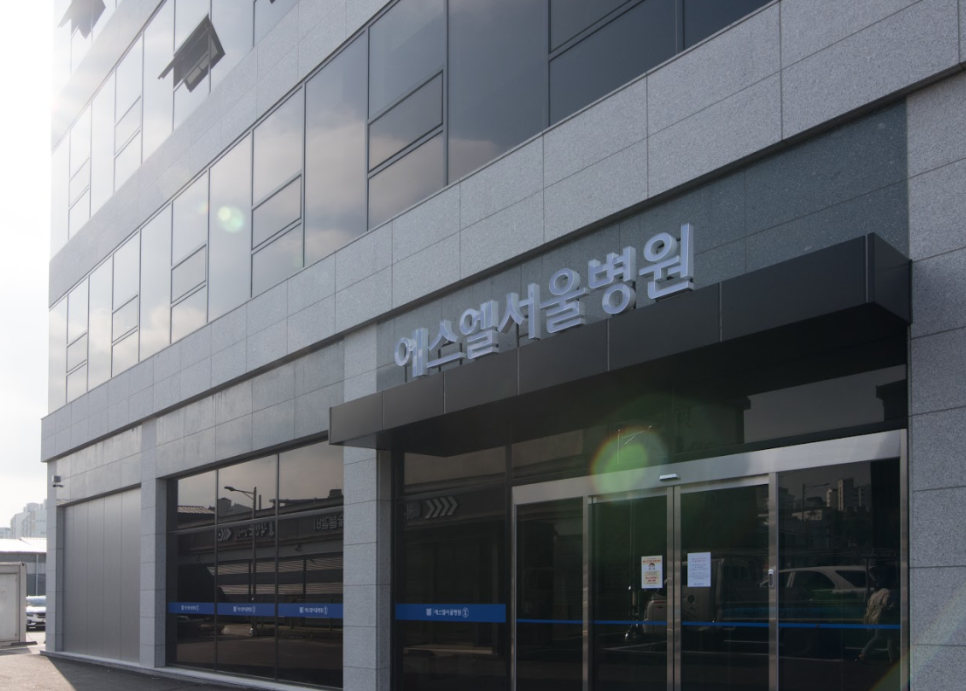
    · Korea Disease Control and Prevention Agency, “Sprain,” National Health Information Portal, KDCA. View source

    · The Korean Orthopaedic Association, “Evidence-Based Treatment of Acute Lateral Ankle Sprains,” Journal of the Korean Orthopaedic Association. View source
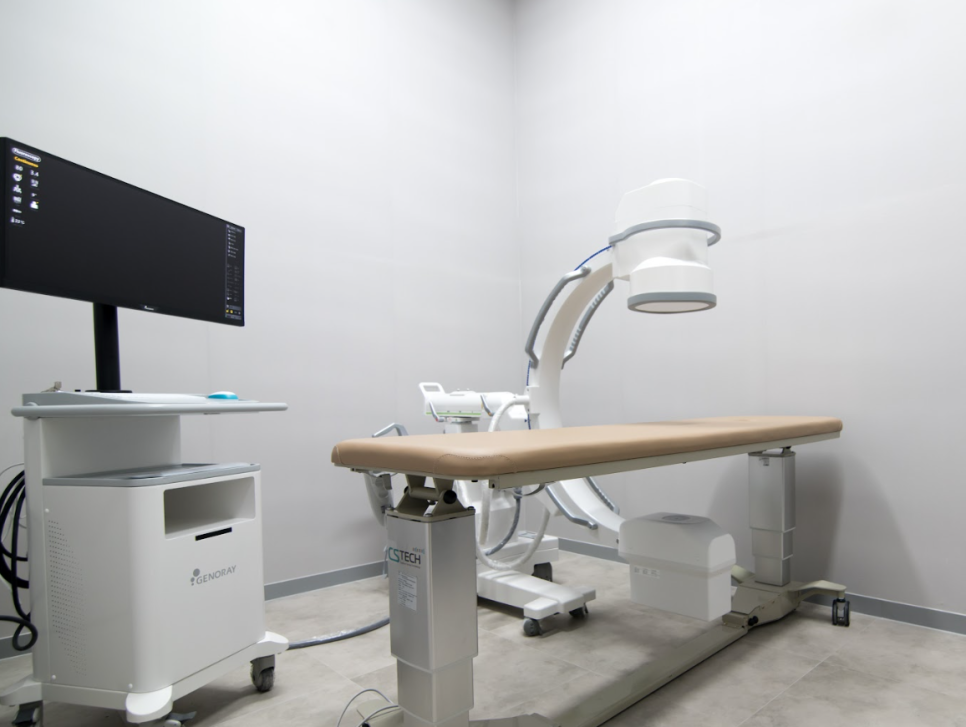

    This article is intended for general health information purposes only and is not a substitute for individual diagnosis or treatment. If you have symptoms, please consult a medical professional.