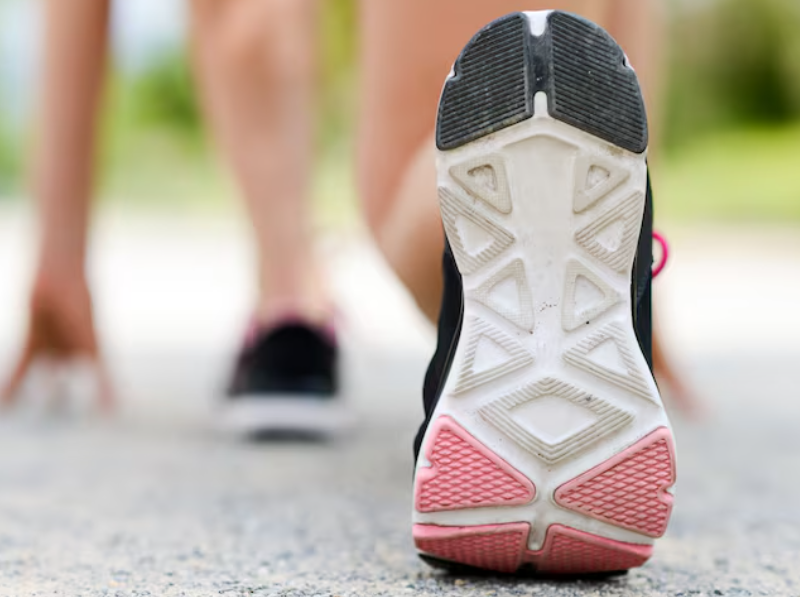
Have you ever flipped your shoes over to check the soles?
If the inside edge is noticeably more worn than the rest, it could be a sign of fallen arch symptoms.
That uneven wear pattern can mean your body weight is shifting toward one side of your foot.
If you’ve had unexplained tightness in your feet, calves, knees, or lower back, this could be the reason.

In this article, we’ll look at why the foot arch can collapse and cover the four main warning signs.
We’ll also walk through shoe sole wear patterns, an at-home footprint self-check, and everyday habits that may help.

What Are Fallen Arch Symptoms?
Fallen arch symptoms refer to the curved structure on the inside of the foot flattening out over time.
With every step, the foot’s arch helps absorb the impact of hitting the ground.
When that curved structure collapses, shock absorption drops off sharply.

With each step, the ankles and knees end up absorbing more of that impact directly.
As a result, fatigue can build up not just in the soles of the feet but also in the calves and lower back.
If this continues over time, it may also start to affect the muscles around the inner knee or pelvis.
Flat feet are generally described as a condition where the foot’s arch sits lower than normal.

✔ The arch of the foot is a key structure for distributing body weight.
✔ When it collapses, strain on the ankles, knees, and lower back can increase.
What Signs Can Your Shoes and Pain Reveal?
There are four common signs that your foot arch may be collapsing.
If the inside of your sole feels a sharp twinge even after walking a short distance, it’s worth paying closer attention.
Checking the wear pattern on your shoe heels is another useful way to check.

If the inner edge of your shoe sole is noticeably more worn than the rest,
it’s a sign that your weight is shifting inward.
A sharp pain in the heel with your first steps in the morning is another common sign.
This kind of pain often results from repeated strain on the plantar fascia.
If these signs are ignored and you keep walking on it, the area of discomfort can gradually spread.
✅ The soles of your feet feel heavy or sore even without much walking
✅ The inner sole of your shoes or sneakers wears out noticeably fast
✅ Your ankle feels like it’s rolling or collapsing inward
✅ Your sole feels a sharp twinge when you start walking in the morning
How Can You Self-Check Your Arch at Home?
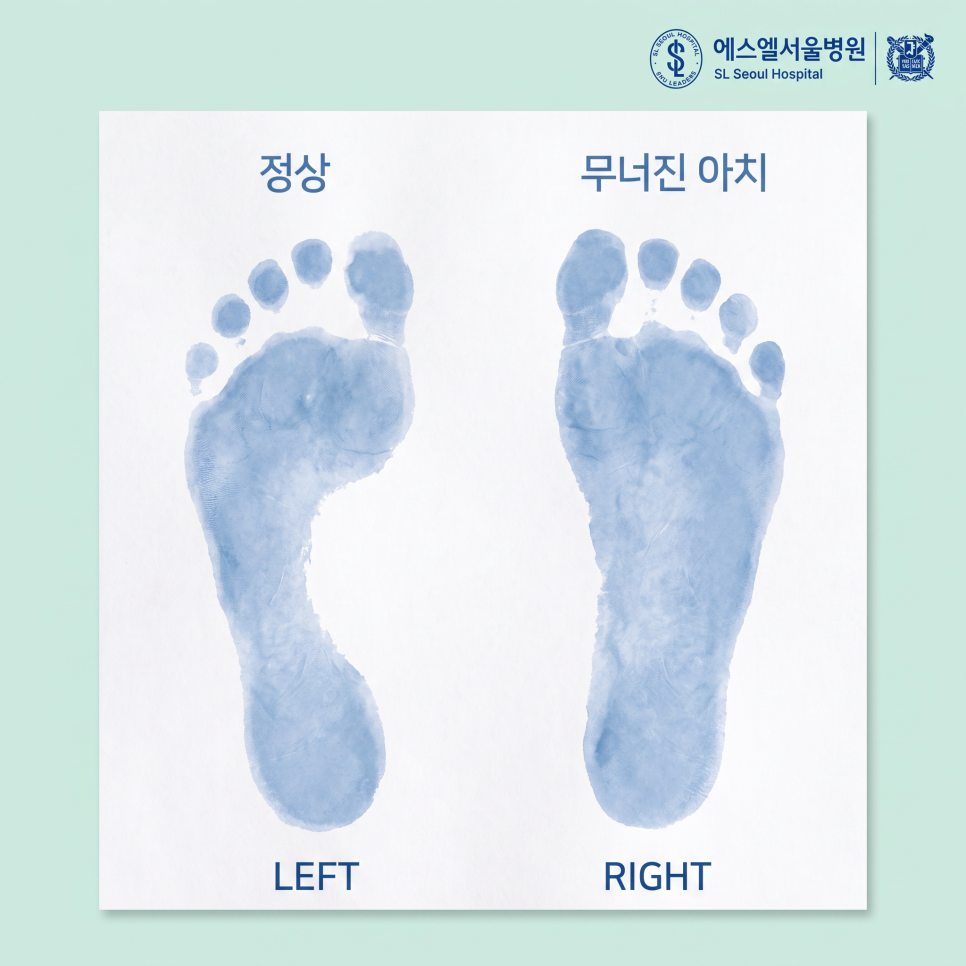
A footprint test is a self-check method where you wet the sole of your foot and press it onto paper to see the shape of your arch.
It’s a simple way to get a rough sense of your foot condition before seeing a doctor.
- Fill a basin with water and thoroughly wet the soles of your feet.
- Step naturally onto a dry towel or a sheet of paper.
- Lift your foot and check the shape of the inner portion of the footprint left behind.
| Footprint Shape | What It May Indicate |
|---|---|
| A clear, narrow gap on the inner edge | Typical arch shape |
| The inner edge is fully filled in | May suggest a fallen arch; consulting a specialist is recommended |
Check whether the inner, waist-like portion of the footprint shows a clear narrow gap.
If it’s completely filled in, it’s a good idea to consider seeing a specialist for further evaluation.
This self-check is meant for reference only —
for an accurate assessment, it’s best to see a specialist.
How Should You Manage a Fallen Arch?
Fully reversing an already-collapsed arch structure isn’t easy.
However, small changes to daily habits may help slow its progression.
Gently massaging the muscles in the sole of the foot can be a helpful part of this.
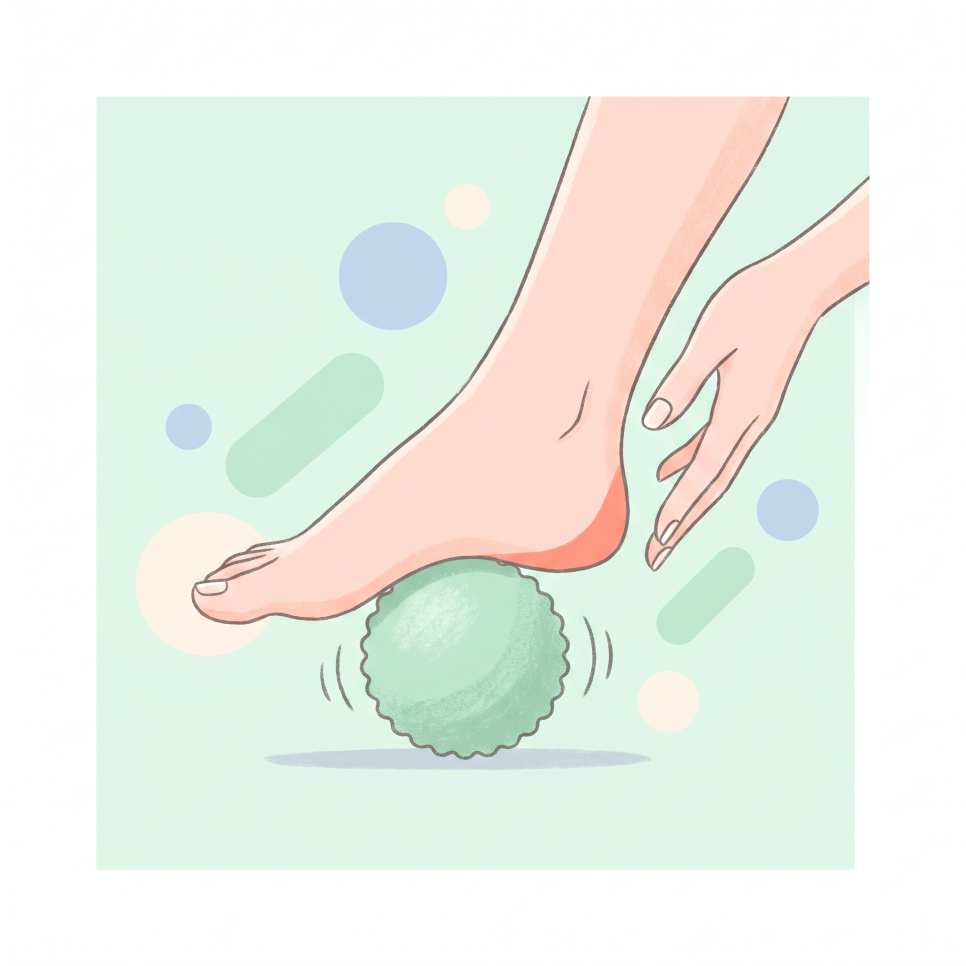
Placing a small ball under your foot and rolling it gently may help ease fatigue.
It’s also best to avoid shoes with an overly stiff sole or no heel support at all.
Picking up a towel with your toes for about 5 minutes a day is another exercise worth trying consistently.
Walking barefoot on hard surfaces for extended periods can actually place more strain on your feet.
If pain persists or worsens, consulting a specialist should take priority over self-care alone.
If you suspect fallen arch symptoms, it’s best not to ignore them and to get checked instead.
If your self-check results are unclear or the pain continues, it’s advisable to get a thorough evaluation rather than guessing on your own.
SL Seoul Hospital (Spine & Joint) home offers evaluations that look at how your foot, knee, and lower back conditions may be connected.
Frequently Asked Questions
1. If my foot structure has collapsed, will I definitely need surgery?
If it’s in an early stage or isn’t significantly affecting daily life, it can often be managed with supportive devices or exercise.
2. What kind of shoes can help?
Cushioned shoes that absorb impact well and offer moderate arch support are a good choice.
3. Is it okay to walk barefoot often?
Walking barefoot on hard surfaces for long periods can place extra strain on your feet, so caution is advised.
4. Are there simple exercises I can do at home?
Picking up a towel with your toes or doing regular sole stretches can help.
References
· Asan Medical Center, “Plantar Fasciitis,” Disease Encyclopedia, 2026. View source
· Seoul National University Hospital, “Flat Feet (Pes Planus),” Medical Information, 2026. View source
· Hidoc, “‘Huh? It Wasn’t Like This Before’ — The Sudden Onset of Adult-Acquired Flat Foot,” Hidoc Health Talk, 2026. View source
This article is provided for general health information purposes only and is not a substitute for individual diagnosis or treatment.
If you’re experiencing symptoms, please consult a specialist.
Leave a Reply