Ever felt fine after resting a few days,
only to have the pain creep back?
A marathon session of dishwashing,
or hours spent at the computer,
and suddenly your elbow starts throbbing — sound familiar?
The truth is, when elbow pain eases up for a while,
that doesn’t mean it’s fully resolved.
Without proper care,
the pain can return at any time.
This article walks through why elbow pain keeps coming back,
the difference between tennis elbow and golfer’s elbow,
how orthopedic exams work, and at-home
elbow pain treatment methods you can start today.
Here’s why you shouldn’t let your guard down
even after the pain fades.
Why Does Elbow Pain Keep Coming Back?
Elbow pain usually develops when repetitive arm movements cause tiny amounts of tendon damage to build up over time.
It’s common not only among people who do a lot of dishwashing or cooking,
but also office workers who spend long hours at a computer.
The name depends on where the pain shows up.
Pain on the outside of the elbow is called tennis elbow,
while pain on the inside is called golfer’s elbow.

Tennis elbow involves tiny tears and inflammation in the wrist extensor tendon that attaches to the outer bony bump of the elbow (lateral epicondyle).
The pain tends to worsen when you bend your wrist backward.
Golfer’s elbow, on the other hand, involves degeneration of the tendon on the inside of the elbow,
causing pain when you bend your wrist inward.
| Category | Tennis Elbow (Lateral Epicondylitis) | Golfer’s Elbow (Medial Epicondylitis) |
|---|---|---|
| Pain location | Outside of the elbow | Inside of the elbow |
| Movement that triggers pain | Bending the wrist backward | Bending the wrist inward |
| Main cause | Repeated use of wrist extensor muscles | Repeated use of wrist flexor muscles |
✔ Tennis elbow: pain on the outside of the elbow when bending the wrist back
✔ Golfer’s elbow: pain on the inside of the elbow when bending the wrist inward
✔ Both conditions stem from tendon damage caused by repetitive use
✅ The outside of your elbow hurts when you make a fist and bend your wrist back
✅ You struggle to grip when turning a doorknob or wringing out a towel
✅ Even lifting something light causes a sharp twinge in your elbow
✅ The pain eases after a few days of rest but returns once you use your arm again
How Do Orthopedic Doctors Diagnose Elbow Pain?
Orthopedic evaluation typically starts with a history and physical exam, then moves on to X-ray, ultrasound, and MRI as needed to pinpoint the cause.
If symptoms last more than two weeks,
it’s worth seeing an orthopedic specialist for an accurate assessment.
The doctor will first take a history
to understand the pattern and onset of your pain,
then perform a physical exam to locate the affected area.

X-rays are routinely used to rule out fractures or degenerative bone changes.
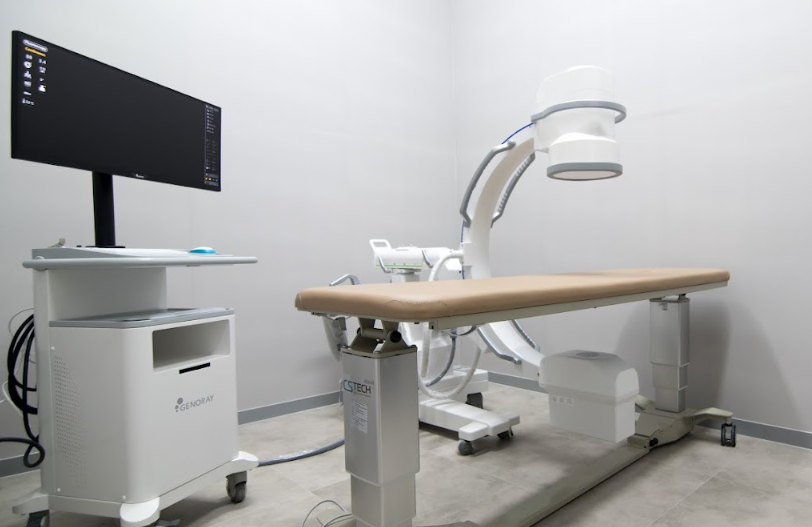
To assess the extent of tendon or ligament damage in more detail, though,
ultrasound or MRI is often used alongside X-ray.
Ultrasound has the advantage of showing
tendon tears and inflammation
in real time.

Getting a thorough evaluation early can help prevent the condition from getting worse, and non-surgical treatment may help improve symptoms.
What Elbow Pain Treatment Can You Do at Home?
In the early stage, rest and cold compresses come first; once the acute pain settles, heat therapy and stretching can gradually be added — that’s the basic framework of elbow pain treatment.
When pain first starts,
the elbow needs rest above all else.
Stop movements that strain the joint,
and pair this with compresses or physical therapy where helpful.
In the early stage, when symptoms aren’t severe,
consistent stretching can help.
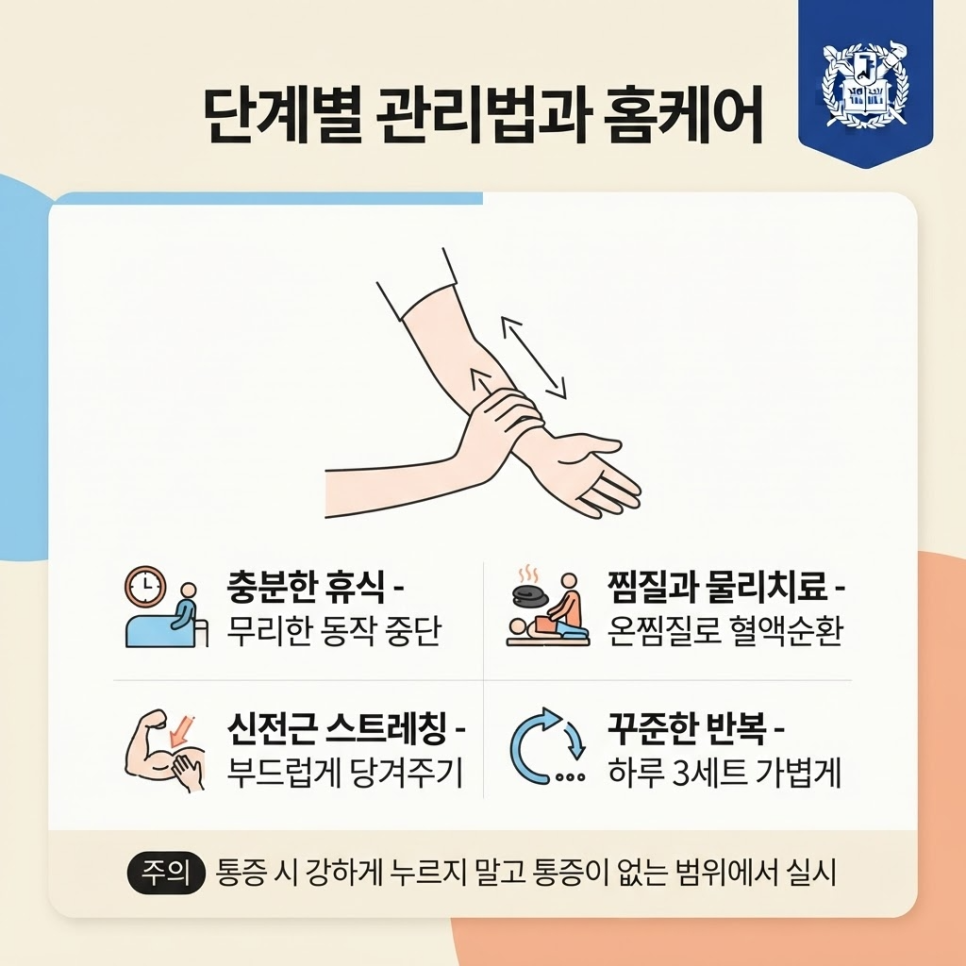
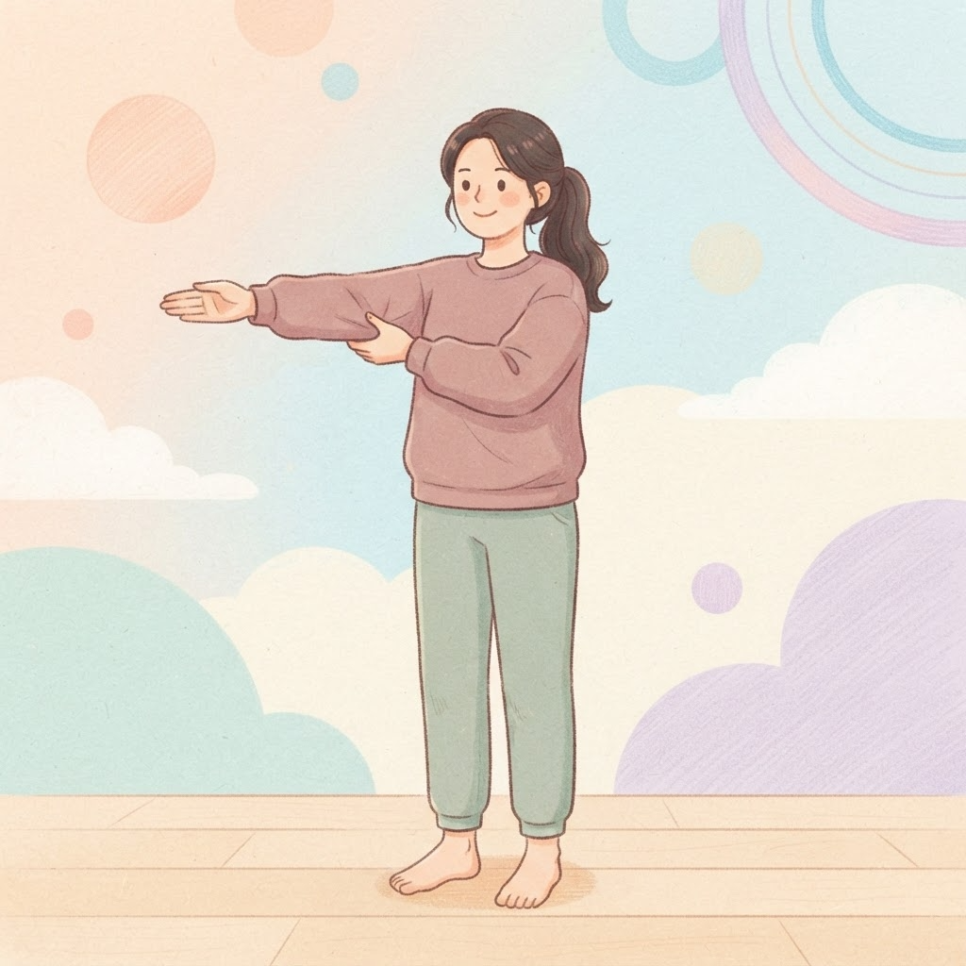
How to Do a Wrist Extensor Stretch
- Extend your arm straight out in front of you with your palm facing down.
- With your other hand, grasp the back of your hand and gently pull the wrist downward.
- Hold for 15–30 seconds, feeling a stretch in the muscles around the elbow.
- Repeat 3 sets a day, every day, staying within a pain-free range.
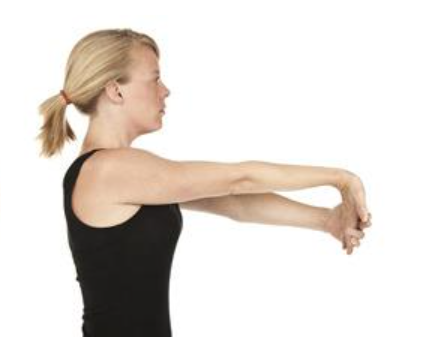
This stretch may help relax tight muscles around the elbow.
Rather than forcing it,
pull gently and gradually.
Stretching slowly and only within a pain-free range is safer,
and doing it consistently may help sustain the benefits over time.
✔ During the most painful, acute phase, cold compresses and rest take priority over stretching
✔ Once the pain has eased, combine heat therapy with gentle stretching
✔ Aim for about 3 sets a day, staying within a pain-free range
How Long Does Recovery Take, and How Do You Prevent Recurrence?
Full recovery from elbow pain can take anywhere from several weeks to several months, and rushing back into activity too soon makes recurrence more likely.
Elbow conditions can take
longer to fully heal than most people expect.
Depending on the individual,
recovery generally takes several weeks to several months.
If you push yourself to use your arm again too soon out of impatience,
the pain is likely to come back.

Adjusting daily habits matters
because it reduces the everyday strain placed on your arm.
When lifting heavy objects,
keep your palm facing up,
and consider wearing an elbow brace for support.
Remember that small changes in habit
may support your recovery.
Just because the pain is gone doesn’t mean it’s safe to jump straight into intense exercise or heavy housework. Loading the tendon again before it has fully healed can lead to chronic pain.
If you’re unsure how to judge your own condition, or the pain keeps returning,
it’s safest to consult a nearby orthopedic clinic.
You can also check the SL Seoul Hospital homepage for information on appointments and care.
If you’re considering an in-person visit,
it may help to review the clinic’s location and visit information as well.

Frequently Asked Questions
1. Can elbow pain go away on its own?
Mild pain in the early stage sometimes improves with rest alone. But if symptoms keep recurring, the condition can become chronic, so it’s worth paying attention.
2. Is heat or cold therapy better?
Cold compresses help when pain has just started or there’s noticeable warmth or swelling, while heat therapy can support blood flow when the area feels chronically stiff.
3. Should I wear an elbow brace all day?
It’s best worn only during daily activities or housework. Wearing it all day can actually weaken the surrounding muscles.
4. Should I stretch even when it hurts?
Avoid stretching during the most painful, acute phase. It’s safer to start with gentle stretching once the pain has eased somewhat.
5. When should I see a doctor?
If rest and self-care for more than two weeks don’t relieve the pain, or it gets worse, it’s a good idea to get a thorough evaluation at an orthopedic clinic.
References
· Korean Orthopaedic Association, “Tennis Elbow,” Orthopedic Health Information, Korean Orthopaedic Association. View source
· St. Carollo Hospital, “Cold Compress vs. Heat Compress: When Should You Use Which?”, Health Information, St. Carollo Hospital. View source
This article is for general health information purposes only and is not a substitute for individual diagnosis or treatment. If you have symptoms, please consult a medical professional.
Leave a Reply